
 By
By  August 26, 2025


Is Damp Really My Landlord’s Problem? Understanding Your Rights First
Damp and mould in rental properties cross beyond day-to-day nuisance; they strike at your health, your comfort, and your rights as a tenant. British law is unambiguous: if damp affects your living conditions, your landlord is required to act. Under the Landlord and Tenant Act 1985, any failure to maintain a safe and habitable environment—be it a leaking roof, failed damp proof course or crumbling pointing—falls squarely at the landlord’s feet.
Spotting damp is more than cosmetic—it’s your legal trigger for action.
You might first notice condensation weeping down windows, dark mould furring a bathroom wall, or clothing growing musty in your wardrobe. These aren’t simply quirks of an “old building.” They’re legal red flags. Both the Homes (Fitness for Human Habitation) Act 2018 and the Housing Health and Safety Rating System (HHSRS) enshrine your right to a property that doesn’t threaten your health or well-being. When damp, mould, or persistent moisture jeopardise your comfort or safety, the law enshrines clear recourse in your favour.
Practical steps count from the start. As soon as you notice signs, document everything—even if you’re not ready to open a dispute. Photographs, dated notes, messages with your landlord or managing agent—these are more than comfort-blankets; they can decide the outcome of a future dispute. Too often, tenants wait until problems escalate before gathering proof… by then, memories fade, and so do your chances.
Landlords sometimes try to dismiss complaints by claiming it’s part of the property’s “character” or put blame on “tenant lifestyle.” The truth, anchored in statute, is simpler: a rented home must be dry, safe, and maintained. If your property doesn’t meet these standards, you have a right—and a duty to yourself and your household—to insist on repair.
What’s the Strongest Way to Report Damp? Precision Beats Panic

A casual complaint—an offhand word on the stairs or a hurried text—won’t win you legal protection. If you want remedial works and a robust defence for later disputes, your report must be written, detailed, and timed.
A precise, dated complaint does more than notify—it locks in your rights and deadlines.
Spell out exactly where the problem lies: “North bedroom window sill—paint peeling, mould at skirting, musty odour since January.” Attach recent, date-stamped photos. If vulnerable persons live with you—children, elderly relatives, or people with respiratory issues—mention this plainly. These factors elevate the urgency of your case in most councils’ protocols.
Always insist on more than cosmetic solutions. If your landlord suggests a dehumidifier or a weekly wipe-down, clarify your expectation: source-level repairs, not quick masking jobs.
Your complaint isn’t just a notice to your landlord—it’s the start of a paper trail. Courts and councils don’t work on hearsay; they want facts that walk in order: first photo, first complaint, follow-up response, final worsening.
Once your written complaint is sent, allow a reasonable window—usually 14 days—for action. Keep all replies, especially if they suggest delays, workaround “fixes,” or try to shift responsibility onto you. These responses often become gold in future tenancy tribunal proceedings.
How Do You Collect Evidence That Councils and Courts Trust?
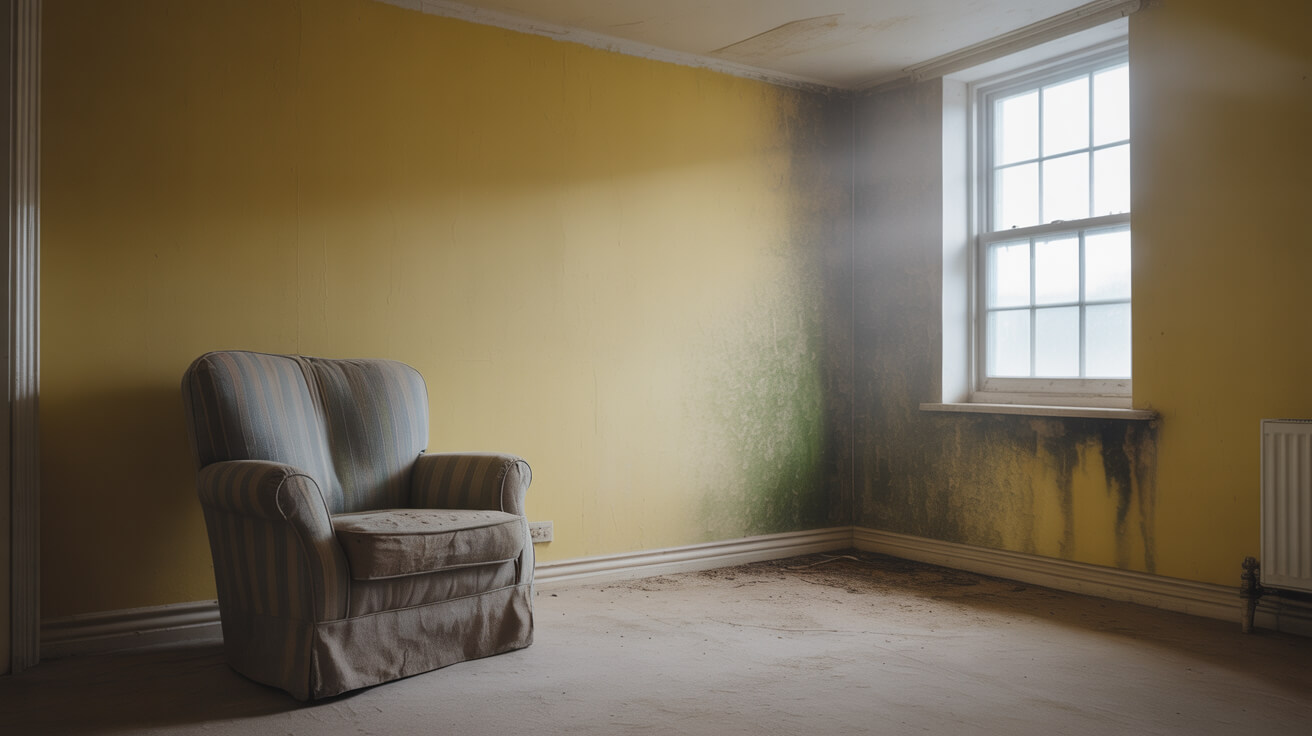
Legal protection is strongest when your evidence is thorough and systematic. Councils, housing officers, and courts lean on tenants whose records spell out the what, where, and when—over weeks or months.
A damp diary turns fleeting problems into a timeline the law can’t ignore.
Maintain an ongoing log: note every new stain, each whiff of must, and all health complaints that track the progress. Record:
- First warning signs: , with exact dates.
- Visual proof: as the issue worsens, including photographs at intervals.
- Communication logs: from landlord/agents, retaining every email, text, or letter.
- Impacts: on your living, including cleaning costs, GP visits, time off work, or extra heating bills.
- Environmental triggers: , such as heavy rains or broken gutters.
This chain of evidence doesn’t end once repairs start. If an attempted fix fails, or the problem soon returns, keep adding photos and diary entries. Before-and-after evidence is powerful when contesting deposit deductions or council assessments.
Receipts for purchases (dehumidifiers, cleaning products), prescription notes for health issues, and even home temperature or humidity logs can cement your position as a proactive and reasonable tenant.
A well-documented timeline rarely fails to sway councils and is invaluable in court, particularly when landlords try to claim that complaints are sudden or exaggerated.
What if Your Landlord Stalls or Offers a “Quick Fix”?

When a landlord’s solution boils down to bleach, a borrowed fan, or a gentle nudge to “air out the room,” pushback is not just justified—it’s necessary.
Don’t mistake superficial fixes for legal compliance—cosmetic solutions won’t stand up in court.
British law doesn’t let responsibility fade into the moisture. After submitting a robust, written complaint with evidence, always give the landlord a fair chance to act. Yet if their response feels like a fob-off, or they delay beyond two weeks without action, repeat your complaint and escalate your evidence.
Persistence matched to evidence builds your case for official enforcement. Save all written communication, especially replies that admit the problem but offer no fix or admit to a patch-work solution. If health issues develop, immediately update your landlord and log the facts—the more corresponding details against your original complaint, the stronger your position.
Some landlords will keep cycling superficial “solutions” hoping you’ll tyre and drop the issue. This is where steady documentation and repeated written requests wear down delay tactics, not your resolve.
If your situation doesn’t improve—or worsens despite token fixes—move to escalate. Councils and charities like Shelter treat repeated, unaddressed complaints with heightened seriousness.
Will the Council Actually Enforce Repairs?
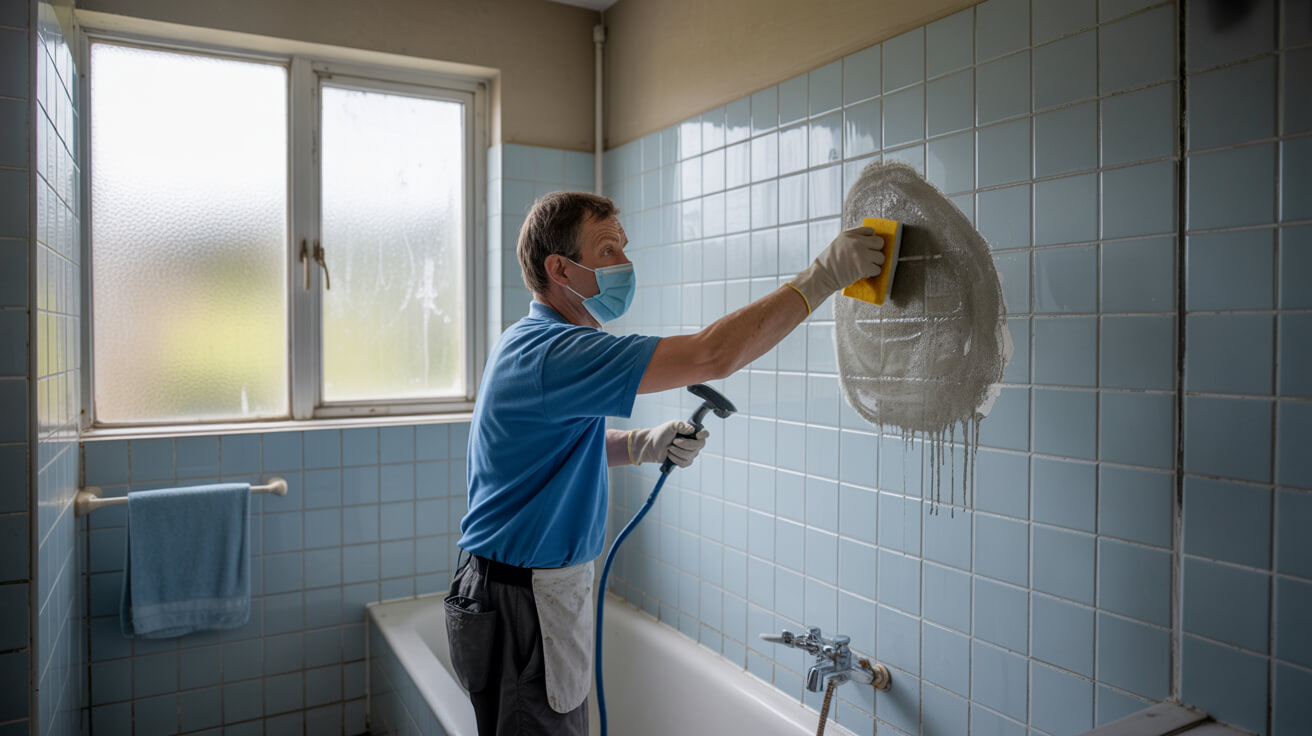
Local authority Environmental Health teams are empowered to inspect and enforce repairs for damp and mould—especially where risk to health and safety is clear. The Housing Health and Safety Rating System (HHSRS) arms them to intervene on persistent problems, even ordering work or contractors directly and billing your landlord.
When recurring damp and mould create a health or safety hazard, your council is compelled to act, not just recommend.
Inspections don’t always happen overnight, but a strong documentary record speeds the queue. Photographs across several months, medical evidence (particularly for children, seniors, or asthmatics), and copies of unanswered complaints are the backbone of every successful council case.
Every written complaint, especially those raising health risks, helps the council’s priorities shift from “advice” to “enforcement.” Official notices (Improvement Notices) can force the landlord to conduct substantial works with legal backing.
Landlords who ignore council orders—especially repeat offenders—face stepped-up consequences, including fines and prosecution. Councils are also more likely to act where tenants have already shown a strong history of self-help and clear evidence gathering.
Your persistence yields protection—not only for yourself, but for future tenants confronting the same risks.
How Can You Secure Repairs and Claim Compensation Legally?

If even council enforcement doesn’t force repairs, the law gives tenants strong tools to secure their rights and even win compensation.
If you’ve built a rock-solid paper trail, you have the leverage to both fix the issue and claim losses.
You may pursue the following:
- Order for repairs: —via county court, requiring your landlord to act.
- Compensation for harm: —money for ruined possessions, medical or living expenses, or loss of enjoyment.
- No-fault eviction protection: —if your complaint is legally lodged and written, your landlord can’t simply evict you in retaliation (Deregulation Act 2015).
While a solicitor isn’t essential in straightforward cases—especially those that can be handled in Small Claims Court—never underestimate the value of external advice. Charities such as Shelter and Citizens Advice offer free, practical guidance. When stakes rise (major property damage, serious health impacts), more formal representation may assist, but it all starts with your documentation.
While many tenants worry about court complexity, system design is on your side: so long as you have dated, written complaints and evidence your landlord didn’t act, the courts swing in your favour. Most cases resolve without hearings once formal demands are delivered by tenants who can “show their work.”
What’s the Best Way to Protect Your Deposit After Repairs?

Iron-tight evidence is your single best protection against creative claims or unfair deductions after damp repairs.
Before-and-after photographic records are your counterpunch to unfair deposit grabs.
Record any and all visible damage prior to repair—and each restoration stage—preferably with a time stamp or date on the image file. Request a post-repair inspection, and insist any changes to the property (cures, replasters, painting) are described in writing. Ask the landlord or agent to confirm, in advance, what “repairs” include—cosmetics or full source treatment.
Should a deduction be proposed at deposit return, remember: the three government-backed schemes (DPS, TDS, MyDeposits) insist on evidence, not assertion. You have the right to dispute, and systematic evidence—time logs, photographic records, repair documentation, and proof of prompt reporting—will tip the scale.
If confusion or further dispute arises, an independent survey by a trusted damp specialist sharpens the narrative for claim assessors. Always document anew if issues return; persistent damp or reoccurring stains are evidence the root cause went unresolved—and thus remain the landlord’s problem.
Are Professional Damp Surveys Worth It for Tenants?

When arguments deadlock, technical evidence trumps opinion. Bringing in an accredited damp surveyor—like the specialists at Sussex Damp Experts—does more than weigh in; they can settle disputes outright.
A professional survey isn’t just nice to have—it forces clarity in disputes.
Surveyors use calibrated diagnostic equipment (such as moisture metres, borescopes, and thermal imaging cameras) and evaluate against British Standards (BS 6576 for rising damp, BS 8102 for structural waterproofing). Their reports can precisely distinguish between issues linked to actual building faults or tenant lifestyle—a vital difference when blame is flying.
Council officers, letting agents, and even county courts rely on structured reports when assessing claims. When the survey says the cause is poor maintenance, failed damp proofing, or an exterior flaw, a landlord’s excuses dissolve.
Professional surveys aren’t just for contentious cases. If you’re buying, selling, or renting a property with visible or suspected damp, early diagnosis both sharpens negotiations and eliminates bad surprises down the line.
Having a survey—and its report—should be seen as an investment. Not only can it end arguments over “lifestyle blame,” but it also boosts your standing with authorities, protects deposit claims, and even insulates you against repeat issues.
Get Damp Protection and Support from Sussex Damp Experts Today
You don’t have to keep living with damp, muddling through with excuses, or risking your family’s health due to poor landlord action. The fastest route to peace of mind is pairing robust self-documentation with independent expertise. Sussex Damp Experts brings precision, authority, and results to even the messiest cases.
Don’t let damp eat away at health, clarity, or your tenancy rights—a single inspection can break the loop.
Sussex Damp Experts offers PCA-accredited, BS 6576-compliant damp surveys, on-site diagnostics, clear evidence packs for tenancy and council disputes, and post-repair monitoring. Whether you’re stuck with surface fixes, chasing overdue repairs, or contesting a deposit deduction, we can deliver clarity and pressure-proof evidence.
Deploy our services as your ally—ensuring you’re never left alone in a property battle. Book your survey today and step out of uncertainty, for good.
Frequently Asked Questions
How can you accurately pin down whether damp or mould is a landlord’s legal problem?
Attributing damp or mould to landlord responsibility comes down to tracing the true origin—structural defect or living habits. Legally, the ball lands firmly in the landlord’s court when moisture has a structural cause: failed damp proof course, leaking masonry, blocked rainwater goods, or worn-out pointing. The Landlord and Tenant Act 1985 makes them liable for remedying these faults no matter what the tenancy agreement says. However, if the problem is “lifestyle-driven”—for example, never opening windows or drying laundry indoors without airflow—duty may shift unless the property itself lacks adequate ventilation or heating. In truth, most recurring mould patches or damp stains reveal hidden issues in the building fabric, not careless tenants. The property’s maintenance record, existence of trickle vents, and quality of repairs all feed into responsibility. If in doubt, commission a BS 6576-compliant report or PCA-accredited damp survey; courts, councils, and insurers heavily favour impartial diagnostics over finger-pointing.
Give structural evidence breathing space—a single forensic survey often silences months of circular blame.
When can a landlord legally argue the tenant’s actions are to blame?
Only when evidence clearly shows persistent vent-blocking, excess condensation due to indoor habits, or avoidable leaks caused by neglect. If ventilation options were never provided, the blame snaps back to the property owner—by UK law, a landlord must create the opportunity for healthy air flow and moisture control as part of basic fitness for habitation.
What reporting technique compels a landlord to actually remediate damp or mould?
A concise, date-stamped, and detail-rich written complaint—emailed or sent by registered post—almost always unlocks the official process. Begin by mentioning precise problem spots, when you first noticed symptoms, whether issues appear after rain or during cold snaps, and how conditions change (or worsen) over time. Attach a set of clear photos showing the full context (wall, floor, ceiling) and a scale reference—even a tape measure works. Explicitly request a written reply and an in-person inspection within 14 days; ask for updates, not excuses, and keep all responses for your log. The power of documentation lies in repetition and formality—casual texts vanish, but an evidence chain becomes your strongest shield with councils, tribunals, or insurers. If previous fixes failed, reference those attempts in your timeline; any pattern of repeated superficial repairs builds your case. Councils look for persistence, written escalation, and third-party involvement when they judge if a landlord is responsive or evading action.
What can go wrong if you only complain verbally or with loose texts?
Verbal reports, WhatsApp threads, or scattered texts may start the conversation, but they’re unreliable when it comes to enforcement. Authorities, insurers, and deposit schemes require a “paper trail” to proceed: only written, date-stamped complaints—with photographic evidence—tick that box. Always supplement informal chats with a structured email summary, copying in any property managers or agents involved.
Can council-issued complaint templates help?
Massively. Templates from Shelter, Citizens Advice, or your local council streamline the reporting process, ensuring no crucial detail or legal reference gets missed. Tailor the template with your property’s specifics and evidence log for maximum effect. When your report matches regulatory expectations, it’s far harder for a landlord to dodge fair process.
What kind of evidence transforms a damp or mould complaint from opinion into action?
Strong evidence stacks clear, timestamped photos with a symptom diary—one entry per development—plus correspondence and medical documentation if health is affected. Go beyond blurry mobile shots: include both wide and close views, measuring tape in frame, and date-stamp each image. Keep a daily or weekly “damp diary” noting smells, stains, condensation on windows, weather changes, and even pets sneezing—tiny details signal patterns to an assessor. Third-party proof tops the pile: commission a survey from a PCA-accredited or TrustMark-certified expert, or request a Housing Health and Safety Rating System (HHSRS) inspection via your council. These reports spell out root causes using moisture metres, salt analysis, and thermal imaging—tools landlords rarely use themselves. Medical records or doctor’s notes build weight if anyone in the household suffers asthma, coughs, or allergies.
Facts with photos carry ten times the force of arguments; a well-organised file is often your shortcut to repairs, compensation, or even enforcement.
Should tenants get a second survey if the landlord questions or underplays the problem?
Absolutely. When “quick visual” landlord inspections contradict your lived experience, a BS 8102/6576 or PCA-accredited survey settles the matter. Third-party evidence, not party interest, wins with councils or in court. The council’s own EHO can review conflicting reports and often cuts through stalemates.
What should you expect for landlord response times—and what if they drag their feet?
The usual bar for landlord response is 14 days for initial reply, then prompt inspection and substantive repairs if risks are confirmed—especially where health, safety, or property value are at stake. Cosmetic dabs—bleach, air freshener, dehumidifiers—don’t clear a landlord’s duty; only resolving the root problem, with proof, closes the case. Tenants should persistently log every attempt, response, missed appointment, or failed fix. Landlords who stall or refuse inspections face growing risks: environmental health teams step in quicker when a well-evidenced, time-stamped complaint shows patterns of neglect. Councils class hazardous damp and mould as “Category 1” under the Housing Health and Safety Rating System; enforcement or improvement notices will follow if deadlines pass. If you suspect delay tactics, escalate: formalise your next steps with a fresh complaint, new photos, and a summary of previous (un)responses. Documentation turns excuses into official breaches; your leverage grows with each update.
Can repeated “quick fixes” count as non-compliance?
Yes. If mould simply returns after a paint-over, or damp stains regrow within months, these are red flags for unaddressed root causes. Demand written confirmation of the solution used—what DPC system, membrane, or ventilation improvement was installed—and record dates. Council officers scrutinise repeat patterns; persistent symptoms are a well-worn trigger for escalation.
How do you escalate if a landlord disputes or ignores your responsibility claims?
If landlord inertia sets in or blame games persist, elevate your case using the full legal and regulatory toolkit. Start by submitting your records to your local council’s Environmental Health Team with a clear request for HHSRS inspection—councils are mandated to investigate “Category 1” hazards (severe damp and mould). If eligible, enclose your damp diary, photo log, professional survey, and medical evidence; thorough documentation makes council review straightforward and swift. Under the Deregulation Act 2015, tenants who escalate lawfully to the council cannot be evicted for making a complaint—revenge evictions are explicitly barred. Councils can demand repairs, fine landlords, or commission emergency works and charge the owner directly. Each time you escalate, update your file: new photos, surveyor certificates, written correspondence. If communications stall again, seek help from specialist tenancy advice charities or Citizen’s Advice. Their support can accelerate council intervention and help recover compensation for distress or ruined possessions.
Landlords who ignore both evidence and legal timelines run out of road—the regulatory process picks up where patience ends.
Is there any situation where it’s safe to withhold rent?
Only if advised by a solicitor, regulated housing advisor, or the council directly. Unilateral rent stoppage, even with solid reasoning, frequently backfires—expect threats of eviction or claims against your deposit. Instead, double down on your “paper trail” and exhaust the reporting/escalation channels open to you.
Who will actually help you win a damp or mould dispute—and when should you bring in extra support?
Several influential allies can step up, each with unique clout. Shelter, Citizens Advice, and local council EHOs can all issue templates and intervene with landlords reluctant to act. Rope in a PCA-accredited or TrustMark surveyor early for evidence the courts, insurers, and councils respect—a report from a “named neutral” is rarely dismissed. For outright legal and compensation claims, legal clinics, local housing charities, or deposit protection schemes are essential: they untangle convoluted disputes, quantify damage, and enforce outcomes when communication sours. Keep a named contact list with dates, outcomes, and escalation steps as you go—it keeps your timeline authoritative if council officers or property tribunal panels need to reconstruct events months later. Finally, if mortgages, insurance, or surveying are at risk, surveyor or technical reports from sector specialists (like Sussex Damp Experts) can be decisive, as can a log of medical impacts if health is at stake.
Disputes are rarely won with anger; assemble a professional case file, present with clarity, and doors to swift resolution open.
Can compensation be recovered for personal losses or inconveniences?
Yes. Well-documented claims for ruined possessions, out-of-pocket health costs, and “amenity loss” (use of the property) are routinely approved by ombudsmen, schemes, or tribunals—especially if linked to official evidence rather than personal frustration. Itemise every loss, maintain before/after records, and anchor your claim to proven breaches.
What hidden risks or costs does untreated damp create for tenants, landlords, and property managers?
Untreated damp chips away at more than comfort or decoration—it can erode the value of the property, trigger mortgage or insurance obstacles, and tip a building’s compliance status into legal jeopardy. Mould, for instance, is explicitly flagged under the Housing Health and Safety Rating System as a “Category 1” hazard, and repeated council intervention can undermine a landlord’s reputation and marketability. For tenants, hidden or recurring damp isn’t just about musty smells or cold corners—it can sap mental wellbeing, disrupt sleep, aggravate respiratory conditions, and set up expensive legal wrangles. The longer damp or mould is denied or papered over, the more likely it is to spawn surveyor disputes, insurance clamour, and even Planning Notice headaches. Upfront action—collaborative diagnosis, proper system selection (DPC, tanking, membranes), and airtight documentation—saves hassle for both landlords and property managers. Bringing in accredited specialists sets the gold standard, establishes trust, and resets the tone from “blame” to “resolution.”
Do mortgage lenders or insurers get involved if damp persists?
Directly, yes. Unresolved damp frequently triggers red flags in mortgage surveys, slows property sales, hikes insurance premiums, and, if left unchecked, can even lead to mortgage refusals or claims denial. Surveyor reports, especially BS 6576/8102 certificates from industry leaders like Sussex Damp Experts, are increasingly mandatory for high-value transactions and new build sign-off.
A property where damp is detected and resolved at the source, not simply hidden with paint or blamed on “lifestyle,” stands as a mark of reliability—tenants, landlords, and managing agents all gain when action is swift and standards are met. Schedule an accredited damp survey with Sussex Damp Experts to give your case professional weight, guarantee compliance, and safeguard both your property’s health and your own standing in the local market.

