
 By
By  August 26, 2025


What’s At Stake If You Spot Damp and Mould Too Late—And How Do You Gain the Upper Hand?
When you walk past that subtle musty smell or ignore flecks blooming in the cold corners of your home, you’re giving damp the first word. But that word quickly becomes a story—one that can end in a months-long headache, spiralling repairs, and even pushback from a landlord who’s suddenly forgotten your number. Damp and mould aren’t trivial: they are relentless adversaries to your comfort, your health, and even your legal footing.
The moment you spot and log a problem, you’re not just reacting—you’re taking the steering wheel from damage and delay.
Recognising early warning signs is how you stop a leaky tap from turning into a leaky reputation, or worse, a live dispute involving property value and tenancy rights. Under strict new 2023 regulations, the balance of power has shifted your way—but only if you move from ‘passive complainer’ to well-documented witness. This isn’t about drama; it’s about building a buffer against denial, delay, and unnecessary cost.
If your windows are beading up on a dry morning, cupboards reek even after a deep clean, or walls bubble and flake in the quiet nobody sees, it’s time to log the facts. Use your phone: snap photos, jot down dates, track symptoms in people and plaster alike. Each small record is a brick in the wall that protects your claim from washing away.
A claim with paperwork always gets further than one with just a frustrated phone call.
Stepping up means saying, ‘Not in my flat, not again’—and having the evidence to prove it.
Which Damp and Mould Clues Lead to Fast Results—And Why Do So Many Miss Them?

Most cases that drag on weren’t missed by accident—they were missed because nobody took the first signs seriously. That little patch behind the sofa might be rising damp, not spilled tea. The ‘just a bit cold’ wallpaper that’s coming unstuck often means moisture in the walls is doing more work than you think.
What Exact Signs Get Results When You Log Them Early?
- Tiny spots of mould in corners or behind wardrobes—especially where airflow is weakest.
- Paint bubbling, cracking or breaking loose near windows, skirting boards, or ceiling slopes.
- Daily condensation that lingers beyond sunrise, especially on north-facing windows.
- Fabrics and bedding slow to dry, even after a day of airing out.
- Salt marks or odd discolouration on plaster—a classic sign of water wicking up or seeping through.
- A ‘wet concrete’ or musty aroma that returns every night, regardless of how many air-fresheners you deploy.
If you can photograph it, date it, map its spread, and capture the human impact—such as new coughing, allergies, or breathing changes among anyone in the home—your record moves from ‘complaint’ to hard proof. Just over one-third of social renters saw faster intervention after presenting photos and logs to their council or agent (Commons Library 2023).
Why Is Record-Keeping Your Hidden Weapon?
Not everything needs a spreadsheet. Snap evidence as it appears, write short notes about when it got better or worse, and—most crucially—store everything together. A dated diary entry or a WhatsApp message to your landlord is worth its weight. If health symptoms escalate, add GP visits, prescription receipts, or health advice to your file.
A dated photo is silent power—once you have it, your complaint can’t get shrugged off.
How Do You Build Proof That Can’t Be Brushed Aside By Your Landlord?

Change the script: your landlord’s first line of defence is always doubt—‘Was it really that bad?’, ‘How do I know it wasn’t always there?’. Only robust, repeatable evidence stands between you and a flat denial. The right record turns a landlord’s delay from irritation into a legal liability.
What Builds a Water-Tight Case—And What Fails?
- Photographs: Before and after, zoomed in on the worst and pulled back for context.
- Progress logs: Note every time you report, every time you chase, and every new development.
- Message history: Save full threads, including unanswered messages, to show your persistence.
- Health documentation: GP letters, symptom logs, and any formal diagnosis or pharmacy receipts.
- Landlord correspondence: Offers of repair, agreements, refusals, cancelled appointments, and any inspection or report.
- Survey reports: Independent reports have muscle—official inspection from a PCA- or TrustMark-accredited surveyor is hard for anyone to challenge.
The tenants who win aren’t always the loudest—they’re the ones who collect a tidy, time-labelled pile of proof and know exactly where it sits when the process heats up.
Silence and missing files have lost more complaints in Sussex than any agent or landlord ever could.
Which Parts of the Law Protect You When Damp and Mould Appear?

When you’re up against a wily landlord or sluggish agent, the law is your lever. Since March 2023, hands have been forced. Landlords are now directly responsible for repairs that keep homes not just habitable, but free of known damp and mould threats.
Which Laws Do You Stand On—And How Do They Turn the Tables?
- Homes (Fitness for Human Habitation) Act 2018: Puts the onus on the landlord to fix any issue making a home unsafe—including recurring damp and stubborn mould, which are now classified as genuine housing hazards.
- Landlord and Tenant Act 1985: Tightens the cord on property standards—‘fit for habitation’ isn’t a slogan, it’s legal ground.
- Housing Health and Safety Rating System (HHSRS): Gives councils the right to serve notices and mandate urgent repairs wherever tenants are at health risk ([local.gov.uk](https://www.local.gov.uk/about/news/lga-damp-mould-action)).
If you lodge a formal complaint—with records and photos—you’re shielded from eviction simply for making noise. The law bars ‘revenge eviction’ and has triggered dozens of formal prosecutions locally. Your next step is never just a dead end.
Statute is a battering ram—your landlord can’t dodge it forever.
What Steps Trigger Council Backup When Your Landlord Fails to Act?
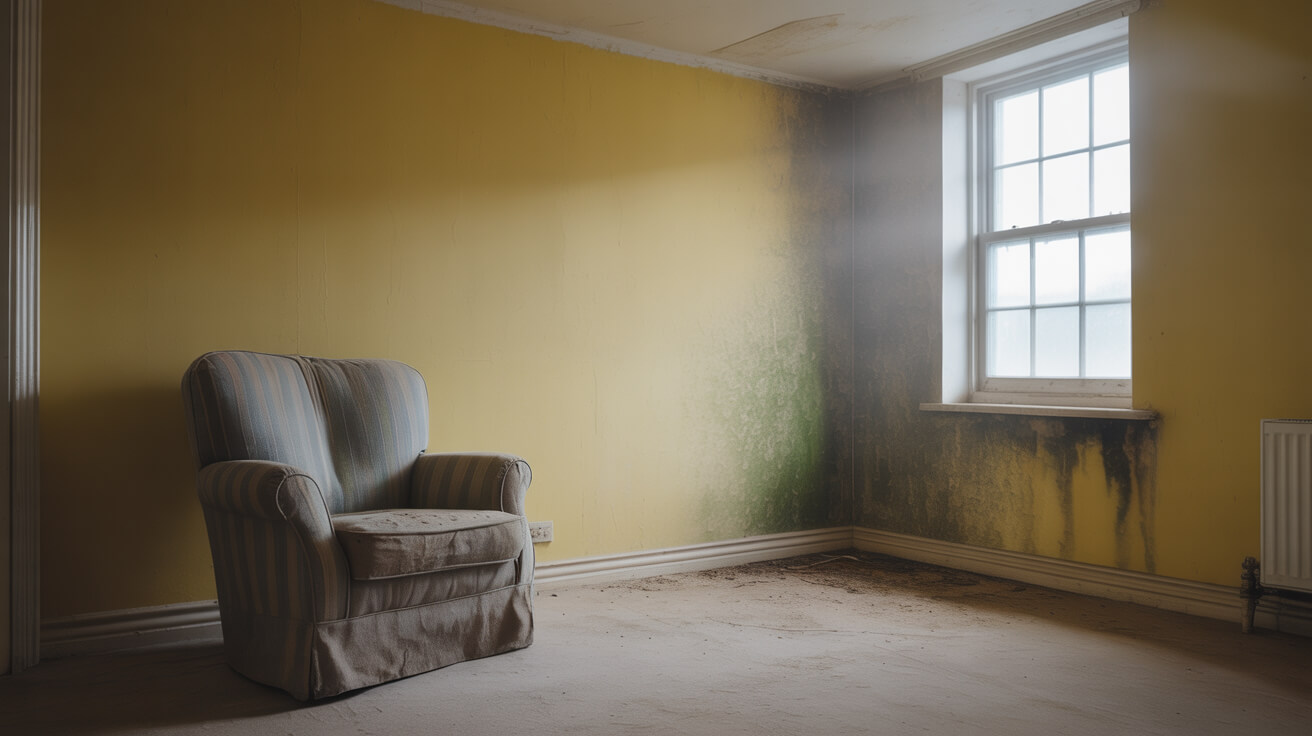
If you’ve sent a formal (written, dated) complaint and the landlord doesn’t reply or keeps promising without result, the council becomes your partner—not a last resort. South East councils prosecuted over 3,000 cases in one year for damp and mould that were left unchecked (brighton-hove.gov.uk). Their job: force compliance.
How Do You Approach Council or Environmental Health—Step by Step?
- Prepare everything: bundle photos, symptom notes, GP evidence, all landlord correspondence, a timeline.
- Write or email your council’s private sector team—keep it simple, attach your records, stress any health risk, and ask for a reference number.
- Highlight any vulnerable residents (elderly, kids, respiratory conditions)—these cases get priority.
- Keep the council’s case ID handy—future problems can use it for reference or escalation.
Local council inspectors can then legally demand repairs, fine the property owner or in dire cases, arrange fixes themselves and recover the cost. Their intervention is turbocharged by your tidy evidence chain—not by angry rants or vague threats.
Councils move quickly for the organised—messy cases fall to the bottom of the list.
Who Can Help When You Hit a Wall—And Will Legal Action Cost You Dear?
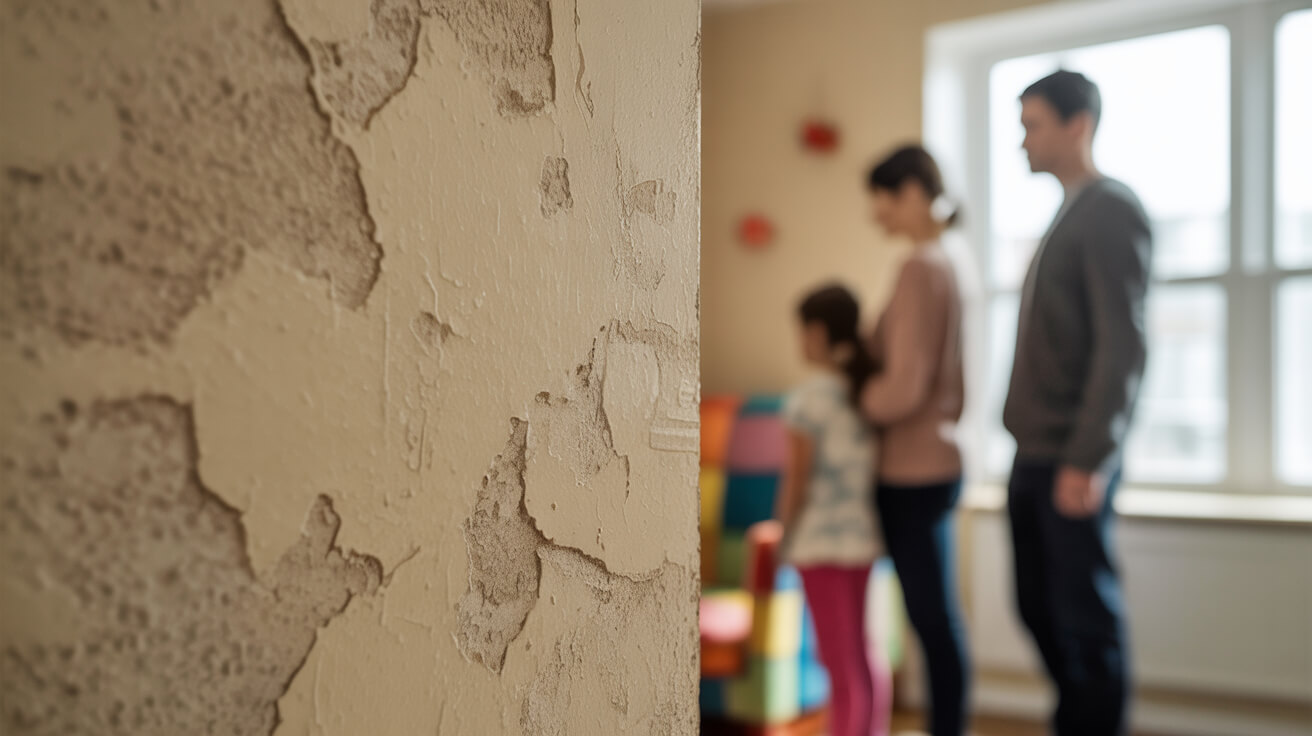
You’re not stranded or risking a second rent in legal fees. Legal aid, Law Centres, and advice charities (Shelter, Citizens Advice, tenant unions) have streamlined the process—offering free templates, phone scripts, and expert advocates. If stubbornness from the other side persists, the council and Ombudsman can step in long before court is needed.
If court becomes necessary, it’s paperwork and process—not panic. Clear time-stamped logs, photos, medical notes, and missed repair promises can win you an order for repairs, compensation, or a rent reduction (thetenantsvoice.co.uk). Over 80% of cases still settle before ever reaching a judge.
Memorise this: the better your bundle, the quicker you win, and the less likely you are to see a single legal bill you can’t manage. Support charities are not just helplines—they’re tactical support, helping you move from being ignored to being heard (and paid attention to).
It’s not about shouting loudest. It’s about showing the clearest path—step by step, paper by paper.
How Do You Make Sure Success Today Prevents Damp Repeating Next Year?
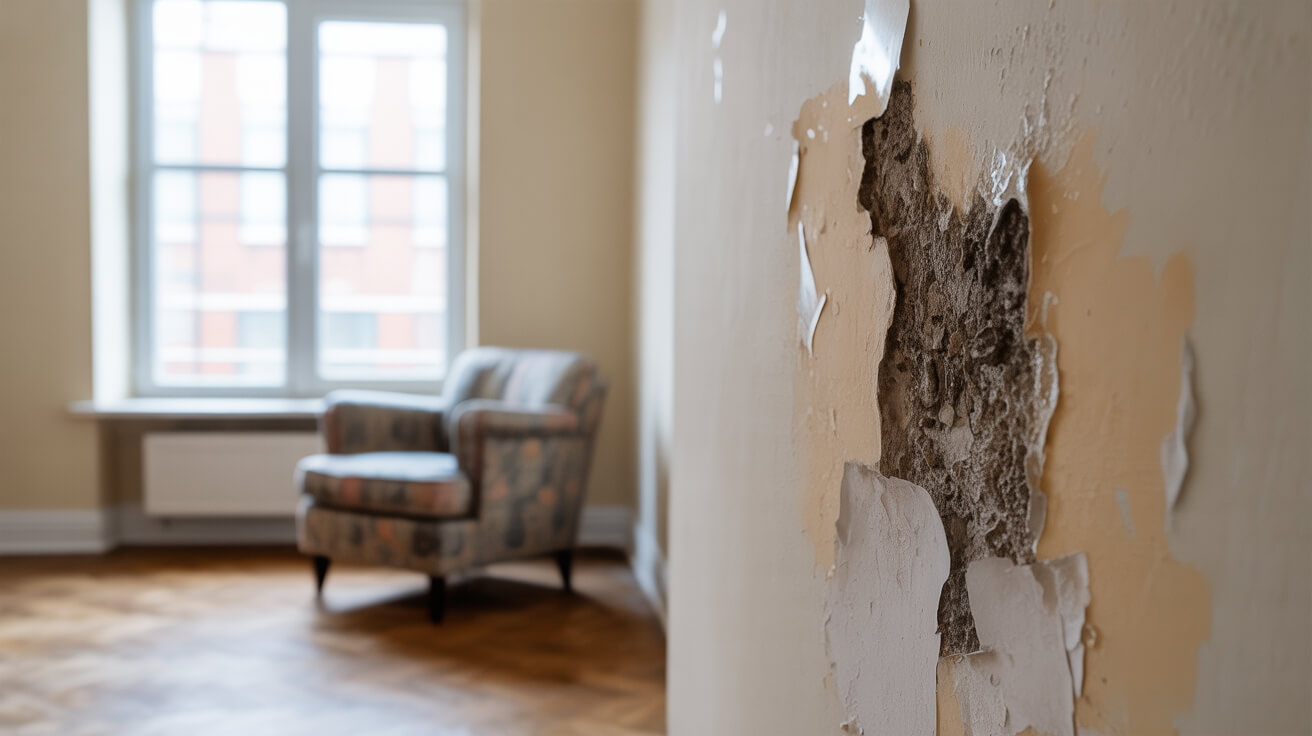
Short-term victory can become a long-term burden if you let your records disappear once the paint dries. Insurance adjusters, letting agents, and even potential buyers care just as much about your documentation as the council did when you were fighting for repairs.
What Builds The Best Aftercare Line of Defence?
- Keep every report, warranty, and message—think of them as proof packs.
- Use digital folders for photos and PDFs—label by room and date.
- Save surveyor sign-off and guarantees, not just invoices.
- Ask for repair details and method statements after work is finished.
- Track symptoms or trouble spots for as long as you stay in the property.
Even six months down the line, these files guard you: lowering insurance costs, solving disputes about ‘recurring issues’, and greasing wheels for re-sale. For major jobs, keep a checklist and talk to your contents insurer when things are fixed—you show risk has been cleared, and sometimes your policy shrinks as well.
Several councils and independent services now offer step-by-step digital checklists and log systems (propertychecklists.co.uk).
Your end-of-job folder isn’t paperwork; it’s your security alarm against lazy fixes and future headaches.
How Does Professional Evidence From Sussex Damp Experts End Arguments for Good?

There are times when DIY logs and council letters aren’t enough—especially for complex, recurring, or multi-party disputes (think flats, leases, insurance, or mortgage issues). That’s where expert assessment jumps to the front.
Sussex Damp Experts provide surveys, repair plans, and forensic evidence tailored to meet strict legal, council, mortgage, and insurance scrutiny. Our team’s inspections hold the weight of authority: accepted by local councils, respected by freeholders and letting agents, and seen as definitive by mortgage lenders and insurers.
- Every assessment documents material conditions, moisture sources, site photos, technical diagnostics, and risk factors under BS 6576 & 8102.
- We issue aftercare plans, follow-up checks, and official certificates suitable for council evidence files, home insurance, or future tenants.
- Our independent status means your issue is seen as fact, not claim—if there’s resistance, our surveys settle it.
If every day’s delay is undermining value, health, or peace of mind, we act as your bridge—ending the “he-said/she-said” and delivering legally accepted, repair-focused solutions recognised industry-wide.
A professional survey isn’t just stronger evidence; it’s your one-size-fits-all key to unlock action across insurers, councils, and landlords.
Take Control of Damp—And Secure The Peace of Mind You Deserve
Damp and mould-free living isn’t a dream or a lucky accident—it’s guaranteed by law and enforced by diligent documentation. Every hour you sit with uncertainty, you risk more than a ruined wall: you risk months of avoidable stress, health complaints, and costs handed back to you from insurers or property managers.
Sussex Damp Experts walk with you from first suspicion through ironclad surveys, council-grade reports, and aftercare that doesn’t sleep. Our work is recognised by the decision-makers—landlords, agents, mortgage suppliers, and council teams—ensuring you’re not just another complaint, but a client with the power to resolve it for good.
This is your home—defend it, document it, and let proven help give you the upper hand. Reach out today. The fight for dry walls and clear air is one you don’t have to wage alone.
Frequently Asked Questions
Why does “tenant lifestyle” get blamed, when hidden property defects cause most damp and mould problems?
Most persistent damp and mould cases in rentals have little to do with how you live—and everything to do with the building’s performance. National housing surveys show that over 70% of repeat damp cases in Sussex and beyond stem from external leaks, failed damp courses, blocked drains, or chronic ventilation neglect (MHCLG, 2023). Landlords and agents sometimes fall back on the “lifestyle” story, but council enforcement logs from 2022–23 reveal that once surveyor reports, moisture readings, and site photos are brought forward, the true cause is nearly always a hidden or unactioned defect.
Structural secrets eventually surface—mould’s not picky about whose kettle’s boiling. It follows wet brickwork, leaky sills, and ignored gutters.
What forensic evidence shifts the argument?
- Logs showing damp growth after heavy rain, not just poor cooking habits.
- Salt stains and cold wall spots, indicating rising or penetrating damp.
- Digital evidence such as moisture metre readouts and mapped thermal images.
- Root cause inspections by accredited surveyors, not just agent “walk-arounds.”
If you’re facing blame, assemble logs and seek a surveyor who produces reporting in line with BS6576/BS8102—this unlocks council action, overrules weak attributions, and brings urgent repairs into focus. Sussex Damp Experts provides evidence packs accepted at every official level, ending the blame-shifting cycle for good.
What are landlords’ legal steps and risks within 14 days after a damp or mould complaint in England and Wales?
Landlords are legally bound to respond in writing and outline repairs or site investigation within 14 days of a formal damp or mould complaint (Landlord and Tenant Act 1985; Fitness for Habitation updates). This is not advisory—documentary proof of your notice (dated letter or email) starts the clock. If there’s silence, vague promises, or no planned action within that window, councils can enforce improvement notices, begin fines, and escalate legal risks immediately.
What counts as legal compliance—and what doesn’t?
- Only a written, dated acknowledgment of the complaint—plus a concrete plan for repair or survey—is valid.
- Verbal replies or vague “we’ll look into it” responses fail legal checks.
- Tenants can escalate at day 15, especially where vulnerable residents or health-related symptoms are involved.
- Non-compliance is logged by councils and can impact mortgage lender notes or insurance when documented.
Council enforcement isn’t slow anymore—if your landlord drags their feet, legal timelines kick in fast. Keep clear records and use accredited surveyor reports for maximum weight.
Sussex Damp Experts can support both tenants and landlords with timestamped documentation and diagnostics engineered to meet legal scrutiny, smoothing council interactions and reducing escalation risk.
How do BS6576, BS8102, and HHSRS change the entire landscape for landlords dealing with damp?
Current British Standards and regulations set precise benchmarks.
- BS6576: demands record-keeping of rising damp diagnostics—including how, where, and when the issue was tracked and verified as dry, not just “patched.”
- BS8102: applies to basements, requiring site-specific waterproofing strategies with proof of instal and post-treatment assessment.
- HHSRS: (Housing Health and Safety Rating System) is what environmental health officers use to risk-score hazards—when damp or mould scores high, compliance is not negotiable.
Modern council inspections are now “checklist driven”—if your landlord can’t show evidence that treatments match the right standard, or a surveyor’s log fails to distinguish rising from penetrating damp, both enforcement and remediation deadlines shorten dramatically.
How do these rules impact real property?
- Reports, surveys, and contractor work must directly reference the correct British Standard or local authority policy.
- New mortgage approvals or insurance claim processing demand paperwork that tracks each step back to these frameworks.
- Landlords attempting “DIY” repairs or ignoring standard-driven advice risk being flagged for high-risk, non-compliant status—especially if a future sale or dispute arises (*Local Authority Reports, South East England, 2023*).
For gold-standard compliance and frictionless council sign-off, Sussex Damp Experts use British Standard methodology from end to end—including compliance reporting designed for easy council and lender upload.
Which types of evidence and reports actually resolve disputes with councils, insurers, or courts?
You only win the argument—or the claim—when your case bundle includes accredited, step-by-step evidence that links each symptom to a diagnosed cause. Councils, insurers, and courts consistently prioritise:
- PCA or TrustMark-accredited surveyor reports, with timestamped symptoms mapped to property diagrams.
- Moisture metre logs and thermal images annotated to show both affected and healthy areas.
- Photographic chains that link before, during, and after stages of repair—inline with BS6576/BS8102.
- Clear explanation of underlying causes (e.g., capillary action, leaking joints, failed DPC) rather than vague “damp present” notes.
Surveyor logs turn arguments into outcomes—proof is cumulative, not a single headline.
First-person logs, tenant or owner photos, and health impact diaries all strengthen a case. But accredited, standard-tagged evidence removes doubt. Sussex Damp Experts creates dispute-ready chains integrating every expert layer—giving you leverage that’s respected across legal, lender, and housing authority lines.
How do unfinished, partial, or “quick-fix” damp repairs multiply legal, financial, and compliance risks?
Damp ignored or superficially “sorted” triggers a domino effect—each cycle brings more scrutiny, paperwork, and potential for asset loss. Most substandard repairs (e.g., painting over black mould, patching plaster without salt management, quick tanking without prep) trigger breach notices under the Homes Act 2018, Landlord & Tenant Act, and insurer small print. Repeat council visits, new improvement demands, and denied insurance claims follow.
When do these consequences start to bite?
- The first recurrence of visible damp or staining post-repair—especially on weeks with severe weather—signals a failed repair to all parties.
- Mortgage lenders keep a record; “unresolved” or “pending further report” tags remain until a compliant survey and signed-off repair are filed.
- Each council reinspection or tenant log stacks the evidence, increasing the penalty ladder—sometimes leading to “works in default,” where costly repairs are handled by the council and charged to the property owner.
- Insurance rejections rise rapidly for claims lacking standard-compliant logs or when “after” photos look too similar to earlier surveys (*UK Insurer Aggregator Report, 2023*).
Damp claims are denied most often not by mould itself, but by paperwork that can’t stand up to council, buyer, or insurer checks.
For guaranteed compliance, Sussex Damp Experts delivers not just repairs but the necessary survey and log chain—blocking legal pitfalls day one, and future-proofing your asset for years to come.
What hidden costs and market risks does unsolved damp pile onto property value, mortgage access, or insurance in Sussex?
Across Sussex, unresolved damp quietly erodes value, delays transactions, and leaves owners exposed to denied claims just when support is most needed. In 2023, local survey patterns showed:
- Properties with flagged or recurring damp averaged 5–8% lower sale value than comparable “dry-certified” homes (*Land Registry, 2023*).
- More than 20% of sales in South East England experienced delays pending new damp surveys, post-repair log checks, or insurance clarifications.
- Mortgage lenders increasingly require damp clearance certificates from PCA-accredited surveyors before confirming funds—or flagging properties for special terms and higher interest.
- EPC (Energy Performance Certificate) scores may drop after damp-related insulation or cavity deterioration, pushing the property down estate agents’ listings and search preferences.
- Insurance payouts for water ingress and mould damage are now directly linked to the presence of pre-existing damp—a missing or unapproved survey at claim time often equals zero settlement.
Practical implications for owners and buyers:
- Buyers are often advised by independent surveyors to demand new logs, walk away, or negotiate large discounts.
- Letting agents and landlords struggle to secure new tenants or justify market-rate rents for properties with ongoing damp on the books.
- Owners may see their “dream sale” collapse at the eleventh hour—often after months on the market.
Silent value loss isn’t a myth—damp left unchecked quietly strips out equity, buyer confidence, and insurance protection year after year.
The surest way to break the cycle is a standards-based survey and documentation trail—delivered by Sussex Damp Experts—which unlocks smoother transactions, happier tenants, and protected long-term value.
For robust, dispute-proof damp diagnosis, repair, and compliance reporting across Sussex, trust the team that arms you with both evidence and lasting peace of mind. Reach out to Sussex Damp Experts—shield your future, protect your asset, and bring the power of proof to every conversation.

