
 By
By  August 26, 2025


What Legal Rights Do Tenants Have When Facing Damp and Mould in Their Home?
Damp and mould aren’t minor annoyances—they’re legal breaches and health threats that no tenant should accept. Under English law, every landlord, whether private or social, is required by the Decent Homes Standard (DHS) and the Housing Health and Safety Rating System (HHSRS) to maintain properties that are safe and hazard-free, and any timeline log: “Complaint” should reflect that duty clearly. That includes rooting out damp and mould at the source, not just making cosmetic cover-ups (gov.uk/private-renting/repairs).
Your landlord is legally responsible for tackling serious damp and mould—don’t let them palm it off as your problem.
These rules aren’t toothless. If your landlord ignores damp complaints, councils have the authority to step in, force work, and even fine owners—no special treatment for private rentals. Cases involving risk to health, lack of heating, or defective ventilation leave landlords with no hiding place. Whether you rent from a council, a housing association, or a private owner, the obligation is the same: your home must meet basic health and safety benchmarks or your landlord could face heavy consequences.
HHSRS laws force landlords to remove damp and mould. You have the right to repairs—backed by government enforcement.
Some landlords will blame “tenant lifestyle” or call it a surface issue. Here’s the legal reality: landlords are on the hook for damp caused by poor maintenance, failing building fabric, or lack of ventilation—not you leaving your towel on the radiator. Regulations and court precedents make this explicit. If your health, comfort, or security are threatened, you’re entitled to real solutions—not excuses.
Why Damp and Mould Are More Than Cosmetic—The Hidden Risks You Can’t Afford to Ignore

A musty whiff or patchy mould may look harmless, but it’s the tip of a much bigger iceberg. Medical evidence now draws a direct link between long-standing damp or mould and serious health risks: asthma, repeated chest infections, even life-threatening respiratory problems. The consequences compound if anyone in your home is young, older, or has ongoing health struggles (bbc.co.uk). The fate of Awaab Ishak, whose family’s warnings were ignored until it was too late, shakes the myth that damp is a “minor” concern.
But health isn’t the only threat. Persistent moisture will lower your property’s value and can lead to mortgage refusals or inflated insurance costs. Surveyors routinely down-value homes with untreated damp or visible mould (gcoffey.co.uk). Insurers aren’t keen when claims arise from known but unfixed damage.
When left untended, a single leak or patch of damp can quickly snowball into thousands in lost value or medical bills.
Damp isn’t just about comfort—where you see stains or breathe in that earthy scent, there’s usually a story of neglected ventilation, outdated or damaged building fabric, plumbing faults, or drainage mishaps brewing just out of sight. Ignoring symptoms allows damage to escalate behind the scenes and weakens your position if you ever sell, remortgage, or claim on your insurance.
Quiet issues with moisture become loud disasters if you wait too long. Repair costs and risks only go up.
How Can You Tell If Your Home Breaches the Decent Homes Standard?
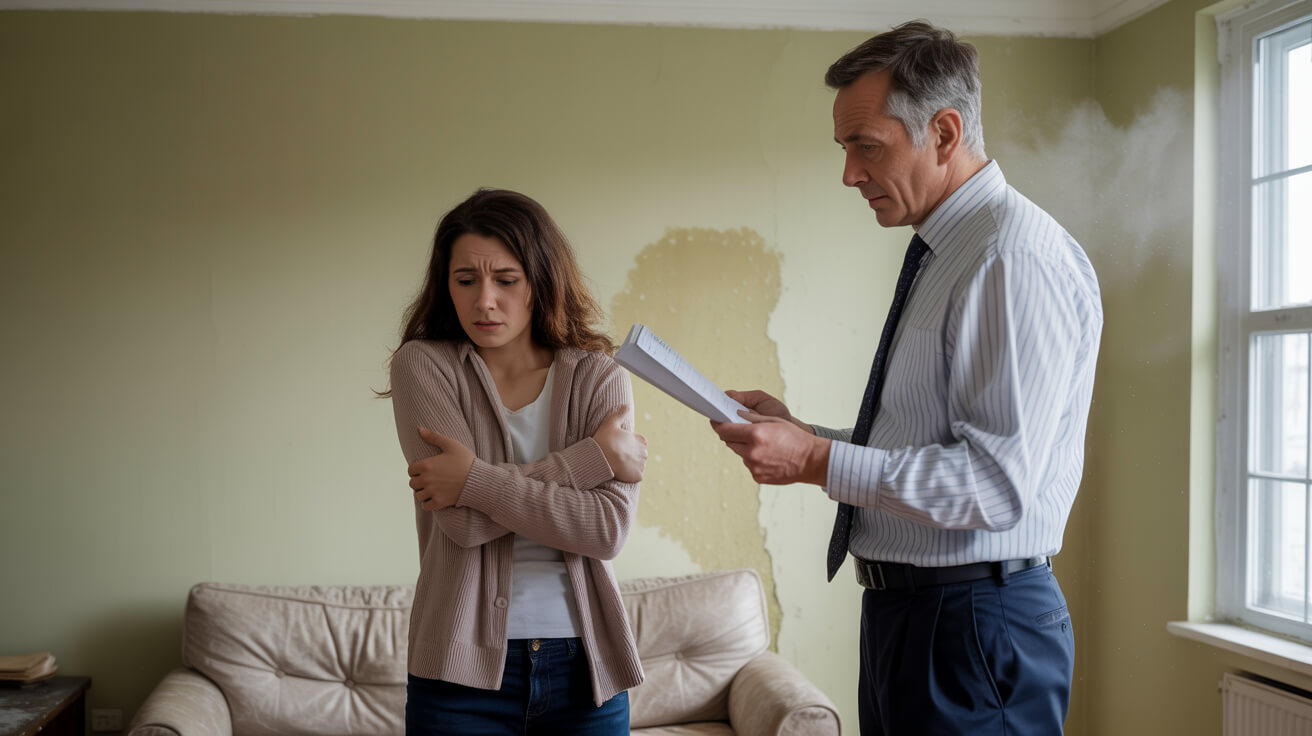
No specialist badge required—you can spot a Decent Homes failure with your senses and common sense.
- Black, grey, or green patches creeping along ceilings, windows, or wall bases
- Earthy or musty smells, worst after heavy weather or in hidden corners
- Damp spots, crumbly plaster, and flaking paint—especially near external walls or behind furniture
- Persistent cold, windows streaming with condensation, radiators that never quite warm a room
- Gutters that overflow, patchy brickwork, or staining at the foot of walls
Clear photographs and dated records build a powerful case—your survey’s first defence. *(Shelter)*
If a landlord claims it’s just how you live—too many showers, drying laundry, not opening windows—ask yourself: is there working ventilation, a reliable extractor, insulation, or is the structure failing? Residents can’t cure defective building materials, broken gutters, or cracked render.
A well-maintained home means proper heating, good airflow, and no recurring damp—anything else breaks the standard.
If the home is hard to heat or air out, and your efforts make no dent, you’re not to blame—systemic problems need systemic fixes.
What Responsibilities Must Landlords Fulfil—And What If They Try to Dodge Them?

Landlords can’t tick boxes by slapping on paint or bleaching the walls. The law requires a diagnosis, full repair, and proof the root cause is addressed. According to the Decent Homes Standard and the Landlord and Tenant Act 1985, a landlord’s check-list should include:
- Surveying to locate the root: From blocked drains to missing damp courses or failed insulation
- Treating the actual source—not just the visible patchwork
- Confirming a completed fix, not a delayed promise or reset clock
Category 1 damp hazards under HHSRS can’t be ignored—timely, documented repair is a must.
If your landlord blames your lifestyle, sends a handyman for “quick wipes,” or simply ghosts your emails, it’s time to build a paper trail:
- Save every email, text, and photo, with dates and a short note on what happened
- Photograph repairs before and after—don’t rely on memory or goodwill
- Keep inspection and repair paperwork, including handyman business cards if that’s all you get
- Follow calls with emails: “Thanks for discussing—just to confirm, you agreed…”
Meticulous records—down to the time of each call—make it harder to dodge. Councils and tribunals trust facts over stories.
Landlords must resolve the issue, not recycle excuses or make tenants chase; a credible record silences attempts to shift blame or delay.
What Proof Do You Need to Build an Unassailable Damp & Mould Complaint?

Winning a complaint or council action starts and ends with proof. Frustration and anger aren’t enough—physical, dated, sequential evidence is what wins:
- Date-stamped photos or video that track the same area over time, clearly showing progression (or lack of repair)
- A timeline log: “Complaint sent 2nd March; no reply. Inspection on 10th March; minor cleaning only.”
- Archive every message—texts, WhatsApps, emails, app logs or letters
- Doctor’s notes linking health problems to poor housing (asthma, chest infection, allergies)
- Neighbour or flatmate statements, especially if they have similar issues or have seen failed repairs
- Receipts for dehumidifiers, cleaning supplies, or temporary repairs done “on your own coin”
Written logs with attached evidence carry real legal weight. *(Shelter)*
No need to sound like a lawyer—stick to plain facts, clear dates, photos attached to each entry. If you ever end up at a tribunal, the answer to every “prove it” is visible, not just described.
A solid trail of facts leaves little wiggle room for dispute. Let the photos and records speak.
Start as soon as you spot a problem and keep it consistent—each missed reply and abandoned promise strengthens your case.
How Do You File a Damp or Mould Complaint That Forces Action?
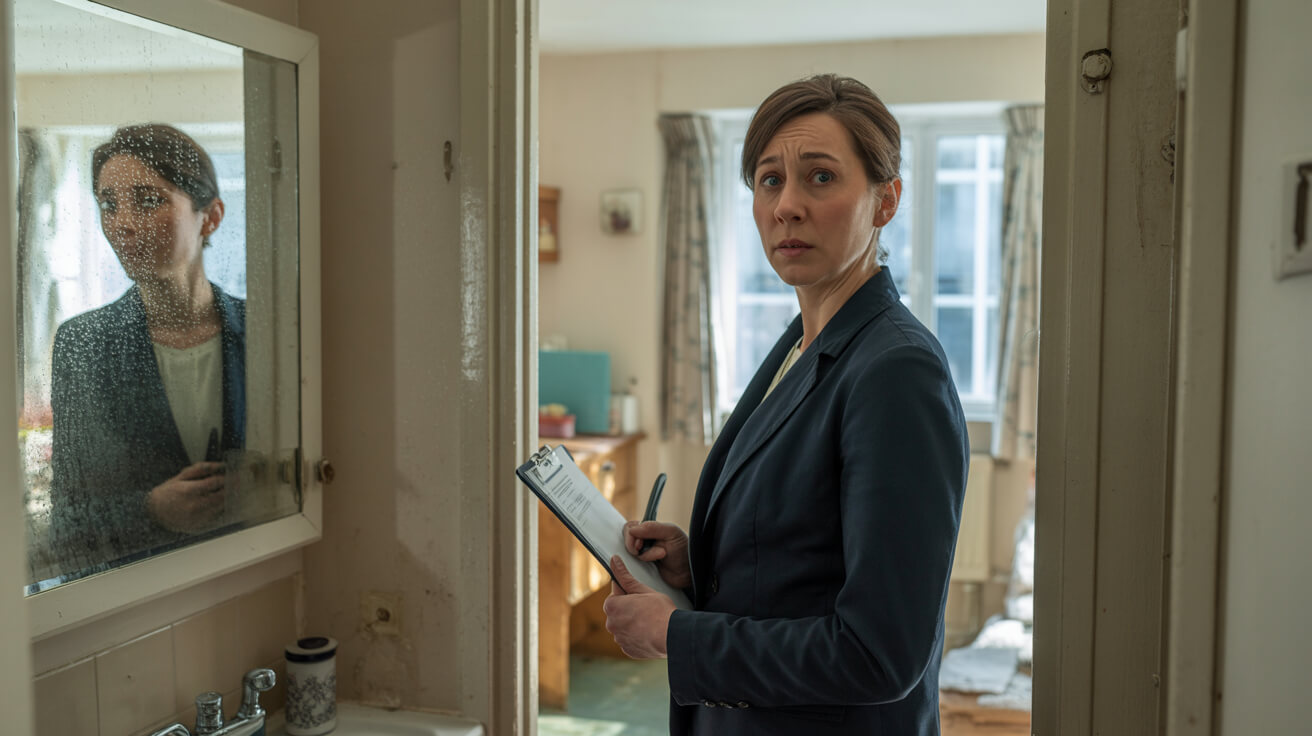
A winning complaint isn’t a polite nudge—it’s a calm, fact-backed call to action. For maximum pressure, your complaint should include:
- A clear description, your address, and all photo/video evidence to support your claim
- References to the Decent Homes Standard, HHSRS, and the Landlord and Tenant Act (this signals you know your rights)
- A call for documented inspection and a repair plan, with a concrete timeframe (e.g. 14 days)
- An inventory of attachments: “Photos A–C, doctor’s notes, log of landlord response”
Sample text you can adapt:
Dear [Landlord/Agent], I am reporting significant damp/mould issues at [address], with photos and health evidence attached. Please undertake an inspection within 14 days and provide a written repair plan under Decent Homes and HHSRS regulations. Confirm your actions and timeline in writing.
If the landlord misses the deadline, or repeats surface treatments, follow with:
Despite repeated requests about damp/mould at [address], you have not complied with Decent Homes, HHSRS, or the Landlord and Tenant Act obligations. Immediate inspection and repair required, or I will refer this to Environmental Health. Attached: all prior correspondence and evidence.
If two weeks pass with no substantial progress, bring in the council Private Sector Housing team. Documentation means you’re ready for escalation—verbal promises are quickly forgotten, written chains are not.
When Should You Involve the Council—and What Happens Next?

When requests, reminders, and warnings go ignored, your next ally is the local council.
- Housing officers can visit and inspect, usually within 2–6 weeks for urgent cases
- The assessment uses the HHSRS scale—Category 1 risks require rapid, enforced action
- The council can issue enforcement notices, levy fines, instruct emergency repairs, or bill landlords for work done
The Private Sector Housing team acts when landlords won’t—use your right to call in backup. *(Brighton & Hove PSH)*
Ignoring mandatory repairs is expensive for landlords. Councils can recover costs and push for prosecution if repeated neglect is found—your recordkeeping strengthens their position.
Council action brings teeth. Delay now may cost the landlord dearly.
As the process unfolds, keep copies of every document—inspection notices, enforcement letters, even notes of which officer you spoke to. Persistence and paperwork see results; don’t let complex systems make you feel powerless.
What Support and Resources Can Help You Win—and Avoid Costly Mistakes?

Mistakes trip up many otherwise solid complaints: missing deadlines, vague photos, or calls without paper follow-up. That’s where professional help turns a good case into a winning case.
With Sussex Damp Experts, you’ll get:
- Council-grade inspections using BS 6576/8102 standards—more than just a sniff test, but forensic, moisture-mapped evidence
- Action-packed documentation bundles, with step-by-step guidance and complaint templates that match what Environmental Health and the Housing Ombudsman expect
- Technical photos and site notes that meet the proof standards needed for negotiations, claims, and insurance
- Clear explanations, not jargon—so you know what’s happening at every step
At Sussex Damp Experts, we build your case the way surveyors and councils want it—evidence-led, compliance-ready.
Our free “Damp & Mould Action Pack” offers checklists, timelines, and how-to guides proven by real wins. And, should the fight turn legal, our precise diagnosis means your case is harder to deny—by landlords and authorities alike.
Need an on-site visit and professional survey? Sussex Damp Experts’ deep knowledge of local properties and compliance standards means you’ll get tailored support, with recommendations that councils and lenders trust.
We turn confusion and frustration into a repair plan that actually works. That’s how you break the cycle for good.
Take the First Step—Contact Sussex Damp Experts Today
You shouldn’t be stuck in a never-ending spiral of damp, denials or delays. Your health, the rights of your family, and your rental future depend on decisive action and expert support that won’t let go until your problem is solved.
Sussex Damp Experts brings tested expertise, deep local experience, and decades of hard-won skill to your corner. From first letter to final repair, we help you build an evidence-led case that can’t be ignored—by your landlord, council, or surveyor. Our council-grade reports, compliance knowledge, and no-nonsense guidance mean you don’t face this alone.
Move beyond excuses. Protect your tenancy, your property value, and your well-being—request a free action guide, or book a survey designed to win in the places that matter.
Delay is the damp’s best friend—give your complaint its strongest ally by calling Sussex Damp Experts now.
Frequently Asked Questions
What changes in 2024 mean for tenants when damp and mould are found—who decides when a rented home is “officially unfit”?
An “officially unfit” rental isn’t about surface looks—it’s defined by strict legal standards weighed by your local authority under the Housing Health and Safety Rating System (HHSRS). If an inspection by an Environmental Health Officer finds serious or recurring damp and mould, the property can be classified as having a Category 1 hazard. This triggers automatic legal duties for your landlord and may include improvement notices, enforced repairs, or even prosecution if ignored. No fresh paint or quick cleaning resets that verdict; it’s the invisible fabric—the lingering moisture, persistent stains, and return of black or green mould—that counts most. The real measure? Whether the home is genuinely safe for daily life, especially for children, older adults, or anyone with health vulnerabilities. Landlords don’t get the final say—the council does, and their word is binding.
When the council steps in, wallpaper won’t mask what moisture has already written into plaster and timber.
Council benchmarks for a “non-decent” ruling
- Repeated black or green mould despite cleaning and “venting”
- Chronic damp odours, stains, or condensation through all seasons
- Persistent wet patches, crumbling plaster, white salt crusts
- Documented health problems related to property conditions
The decision is grounded in public health, not argument. If officials find evidence matching these benchmarks, your right to a safe, dry home becomes enforceable by law.
How can you compile evidence of damp so councils and landlords can’t ignore or downplay your case?
The difference between getting a problem solved and meeting a dead end usually comes down to documentation. Start with regularly dated photos from multiple angles, showing the progression—not just a snapshot after a spring clean. Keep a written timeline log: “Complaint” entries should pair every symptom (odour, watermarks, peeling paint) with landlord communications, their replies, and all attempted or failed fixes. If anyone in your household falls ill with persistent coughs, rashes, or breathing issues, request written confirmation from your GP linking symptoms to the home environment; medical evidence is hard to argue with. Save all receipts for temporary fixes, laundry, cleaning, or damaged belongings. For maximum weight, commission a specialist like Sussex Damp Experts for a survey that meets BS 6576 standards—these are written in technical language councils respect and landlords can’t wave away.
A layered evidence bundle doesn’t just show what’s wrong; it lays out a timeline that councils, ombudsmen, and solicitors can actually act on.
Building a watertight evidence bundle
- Clear, dated photos: over weeks—not just after cleaning
- Written logs: of every complaint and landlord reply
- Receipts: for extra costs linked to the problem
- Medical proof: if illness or symptoms develop
- Surveyor reports: from accredited, independent damp experts
Review your bundle for gaps—missing a time-stamped photo, or a health note? Plug these holes early. By the time the council arrives, every page is another reason your case can’t be denied.
Why does a landlord blaming “just condensation” threaten your property’s future—and what silent damage builds up?
A landlord who shrugs off black mould as “just condensation” risks more than inconvenience—they’re sidestepping structural issues that can destroy value, escalate insurance risks, and provoke mortgage survey red flags. True condensation—caused by ordinary living, like breathing or cooking—should clear with basic ventilation and never leave persistent black marks or sagging plaster behind. If the problem persists after you’ve aired rooms and cleaned, it usually signals trapped moisture in the walls, failed damp proof courses, or unseen leaks. Accepting “just condensation” as an excuse traps you in a cycle: annual fungus blooms, crumbling skirting boards, sagging floorboards, property valuation dips, and lender anxiety that drags out sales or remortgages.
What starts as a drop on glass ends in crumbling brick if causes are ignored—what disappears in a day isn’t what stains for years.
Signs it’s more than condensation
- Black or green mould returns within weeks, despite cleaning and venting
- Persistent musty odour in living spaces or bedrooms
- Peeling paint, cold or wet-feeling plaster year-round
- Salt stains, bubbling particleboard, or rot in hidden corners
If your landlord won’t budge, escalate with external proof. Insist on council inspection or invite Sussex Damp Experts to document findings with professional clarity—cutting through argument with facts.
How do UK laws make damp repairs not just expected, but a landlord’s unavoidable obligation?
The UK legal framework is explicit: Landlords must provide properties fit for human habitation—damp and mould are specified hazards under the Landlord and Tenant Act 1985, Homes (Fitness for Human Habitation) Act 2018, and local enforcement rules like the HHSRS. For you, that means if a report or independent inspection finds persistent damp, peeling plaster, or recurring mould, your landlord is obligated to repair, not negotiate. Urgent risks (serious mould, leaks) must be addressed within 14 days; other repairs can’t stretch beyond 28. If these deadlines slip, local councils have the power to serve improvement notices, enforce repairs, recover costs, and, where needed, grant compensation. Ignore these, and the door opens to prosecution or rent repayment orders.
Accepted professional surveys provide the leverage—Sussex Damp Experts’ BS 6576 reports translate mysterious damp phenomena into black-and-white compliance breaches, giving you immediate standing.
Landlord duties you can hold to account:
- Fitness for habitation: at all times—no leeway for “minor” damp issues
- Timely repairs: 14 days (urgent threats); 28 days (routine)
- Legal compliance: with Building Regs Part C, HHSRS, and local council notices
- No service delays: —legal risk escalates if deadlines are missed
A landlord who delays repair isn’t just dodging you—they’re risking penalties, council action, and mortgage complications.
What’s the correct escalation route if your landlord ignores or delays damp repairs?
The escalation journey starts with a formal, dated complaint sent in writing to your landlord or agent—include your evidence bundle and request a detailed repair plan. If you get a slow response, “lifestyle blame,” or a cosmetic patch-up, reply summarising the issue’s persistence and follow up with more evidence. After 14 days (or 28 for non-urgent repairs) with no real progress, report the problem to your local council’s Private Sector Housing or Environmental Health Officer. Submit your completed evidence bundle and, if needed, a qualified damp survey report. If the council issues an improvement notice and your landlord still stalls, officials can authorise repairs, recoup costs, recover rent, or mount prosecution. For social housing, an unresolved case can be escalated to the Housing Ombudsman, which carries binding authority. Every document, receipt, and log boosts your credibility and heightens the pressure for a resolution.
Escalation isn’t confrontation—it’s about stacking proof and using law and council authority to restore safe living.
Escalation actions, step by step
- Write to your landlord or agent with full evidence
- Keep a dated log of symptoms, communications, and expenses
- Escalate to local council with complete documentation if deadlines pass
- For social or council housing, submit everything to the Housing Ombudsman if the local authority can’t resolve your complaint
Backing each step with formal documentation and professional assessment increases the speed and effectiveness of every stage.
Which support networks and expert resources can rapidly resolve damp disputes or repairs?
Several targeted resources can turn a stressful scenario into a winnable process with less strain:
- Sussex Damp Experts Survey Packs: These include pre-filled complaint templates, photographic evidence checklists, escalation and compliance guides—all structured for rapid council and lender acceptance.
- Shelter’s Tenant Support: In-depth escalation guides, sample communications, and a live support helpline: 0808 800 4444.
- Council Private Housing Enforcement: Direct online submission for complaint initiation and regular status updates.
- Housing Ombudsman Service: Free, independent complaints process for council or housing association disputes: www.housing-ombudsman.org.uk.
- Accredited Damp Surveyors: Third-party inspections written in compliance with BS 6576 or PAS 2035—immediate weight with legal and council bodies.
A methodical evidence file and professional survey prompt action and avoid months of wasted time with no result.
Take stress out of your complaint. Lean on trusted experts whose reports trigger faster repairs and less argument—equip yourself with the right evidence the first time. Sussex Damp Experts stands ready to provide formal surveys, council-accepted evidence packs, and practical guidance from first symptoms through to resolution, ensuring you’re no longer left waiting for change.

