
 By
By  March 27, 2024


Is Rising Damp Real? Understanding the Facts
Rising damp isn’t folklore or hype. It’s a universally acknowledged building pathology, recognised by every credible UK property authority and anchored in science. For property owners, managers, and compliance-driven professionals, the question isn’t “Does rising damp exist?”—it’s “How do you ensure your decisions (and investments) are protected against myth, misdiagnosis, or delay?” You’re navigating claims from both alarmists and sceptics. The answer demands facts, not folklore.
Science and Official Consensus
Capillary action, the mechanism behind rising damp, is documented by the Building Research Establishment, Historic England, and BS6576. Rising damp occurs when groundwater moves up porous masonry. No serious surveyor argues the underlying physics—only the frequency and context of occurrence in today’s building ecosystem.
Key Stat Table
| Authority | View on Rising Damp | Cited Standard | Survey Use (%) |
|---|---|---|---|
| BRE | Acknowledged, physics-anchored | BS6576 | 80+ |
| PCA | Regulated, treatable | PCA Code | 95 |
| RICS | Mortgage flag, requires evidence | Red Book | 42 |
| Historic England | Occurs, heritage-sensitive repair | PAS2035 | 78 (heritage) |
Proof Before Action
Rising damp is not universal, but when present—and left untreated—its impact can snowball: from devaluation at sale to invalidated insurance and rental income loss. Regulated, evidence-based diagnosis is your safeguard.
Property myths cost more than moisture ever will—evidence is your strongest defence.
What Causes and Triggers Rising Damp in Buildings?

How does rising damp start—and when is your property truly at risk? Causal factors are about more than missing DPC. Construction era, renovation history, external ground slope, and improper repairs often set the stage for groundwater to migrate upward.
The Building Science
Modern buildings benefit from effective damp-proof courses. Properties pre-1950 are vulnerable where original barriers have failed, been breached, or never existed. Even a well-installed DPC can be bridged by internal render, insulation, or careless landscaping.
Trigger Table
| Trigger | Impacted Properties | Example Symptoms | Prevention/Treatment |
|---|---|---|---|
| Missing DPC | Heritage, Pre-1950 | Salty tidemark, soft plaster | Heritage DPC, lime render |
| Bridged DPC | Refurb, extensions | Patchy damp, high readings | Remove debris, lower soil |
| External saturation | All, esp. below-grade | Floor-level pooling | Improve drainage, French drain |
| Internal insulation | Modern upgrades, retrofits | Trapped moisture, slow dry-out | Vapour-permeable instal |
Compliance and Risk
Under BS6576/PAS2035, diagnosis isn’t just about what you see. It’s about what’s provable-with salt analysis, moisture gradients, and in-depth wall profiling. DIY fixes or tradesmen skipping investigation often trap, not solve, the underlying moisture.
Bridging a DPC with hope is as costly as bridging it with cement.
The right approach involves systematic cause-and-effect investigation—so your solution holds, and your building’s future is secure.
How to Identify Genuine Signs of Rising Damp

Spotting real rising damp means learning to read your property’s “symptom language.” Tide marks, salt crystallisation, and localised decay are the visible effects of invisible wall dynamics. The challenge: condensation, leaks, or poor ventilation often create similar visuals.
Symptom Checklist
- Tidemarks up to 1.2m above ground, straight and contiguous
- Creamy, powdery salt residue—not patchy black mould (usually condensation)
- Rotten skirting boards or architraves, especially in older homes
- Plaster softening, crumbling easily to touch
- Paint bubbling or flaking at the lowest 1m of wall—reappearing after short treatments
Proof Block
Best practice? Engage a PCA-accredited damp surveyor. Look for reports using digital moisture metres (deep wall probe), calcium carbide/salt testing, and clear mapped evidence—especially when compliance or mortgage release is at stake.
It’s the invisible salt pattern, not the surface stain, that shapes a surveyor’s verdict.
Spot the Differences
Rising Damp vs. Condensation
| Symptom | Rising Damp | Condensation |
|---|---|---|
| Tidemark (horizontal) | ✔ | ✖ |
| Salt crystals | ✔ | ✖ |
| Black mould (random spots) | ✖ | ✔ |
| Odour (musty, earthy) | ✔ | ✔ |
Protect your asset by demanding a diagnosis based on measurable evidence, not guesswork or visual alone.
Why Quick Action Is Essential for Health and Value

Delay turns a correctable issue into a business, health, or regulatory liability. Persistent damp devalues homes, lengthens sale timelines, and imposes avoidable legal exposure for landlords and managers. Moist conditions breed mould that impact air quality—making HHSRS enforcement, rent deduction, and tenant suits real hazards.
Health and Value in Balance
For family homes, neglect means risking children’s or tenants’ respiratory health: NHS studies link indoor damp to increased asthma/allergy risk. For property professionals, the arithmetic is simple: Halifax and RICS report that properties with visible damp sell for 7–19% less.
Consequence Table
| Failure to Act | Downstream Cost | Compliance Trigger |
|---|---|---|
| Delay repairs | Escalating remediation, sale loss | HHSRS, insurance fine print |
| Ignore tenant complaints | Rent repayment, forced works | Landlord/Tenant Act |
| Use unverified traders | Repeat failures, voided warranty | Mortgage/expert survey needed |
The cost of waiting is written in unsellable walls and lost reputation.
Momentum towards resolution starts with you: take a documented first step before the risks get out of control.
Where Do Most Get Diagnosis and Repairs Wrong?
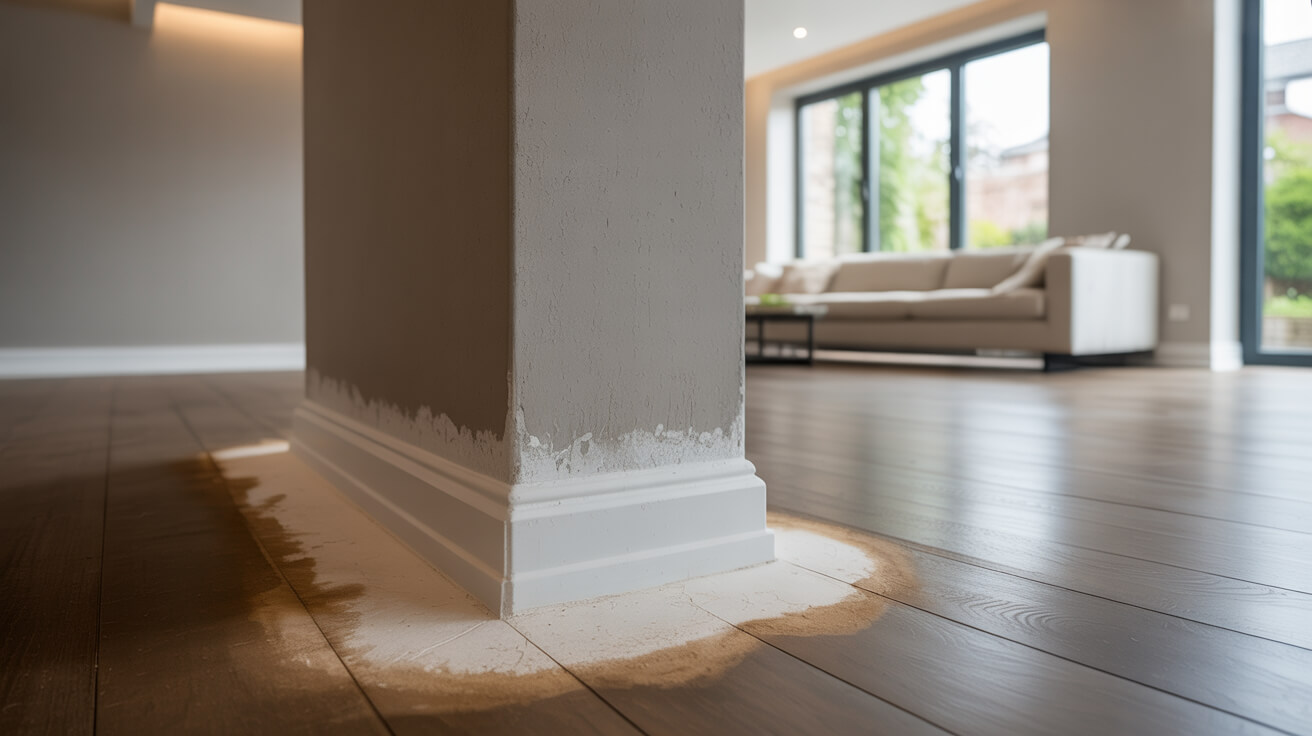
Misdiagnosis is endemic—not because rising damp is rare, but because system-level thinking is. Shortcuts proliferate: a quick DPC injection without proper survey, isolating only symptoms while missing bridges, external faults, or insulation traps.
Common Pitfalls
- Skipping salt/moisture mapping—guessing at source
- Overusing tanking—locking in, not excluding, water
- Focusing on surface symptoms—missing ground or cavity faults
- Ignoring heritage/building context—using impermeable methods on vapour-open walls
Scenario Block
Picture a landlord authorising a basic “paint and patch” after a tenant complaint. Six months later, the issue returns—now amplified by tenant claims, regulatory letters, and higher repair quotes. The initial low-cost fix exposes them to multiples in avoidable expense.
Low bids on guesswork are time bombs, not bargains.
Proof Layer
Nearly half of PCA arbitrations involve pre-existing, failed non-compliant treatments—with final costs ballooning far beyond initial estimates.
Demand a comprehensive, accredited survey. Make “compliance first” your new standard. Protect your organisation—don’t risk capital on speculation.
How Are Modern and Heritage-Safe Treatments Applied?

No two buildings are identical—so solutions must respect age, materials, and intended use. For contemporary homes, chemical and physical DPC (damp-proof course) options deliver robust results when applied with substrate adaptation and compliance evidence.
Heritage or listed properties need another level of care: vapour-open materials, lime render re-instatement, and reversible, non-destructive systems preserve original fabric and satisfy conservation officers.
Solution Matrix
| Building Type | Main System | Heritage-Safe? | Monitoring Aftercare |
|---|---|---|---|
| Pre-1950 solid wall | Lime render + passive | Yes | Digital log optional |
| Cavity wall, post-1950 | Chem DPC + membrane | N/A | Yearly aftercare advised |
| Heritage/listed | Breathable, no tank | Essential | Moisture map + checkup |
| Modern multi-unit | Hybrid DPC + drainage | Yes | Inspection under warranty |
Guarantee and Ongoing Value
Our services include transferable guarantees, aftercare, and compliance documentation tailored for insurers, lenders, and local authorities.
Lasting repair is found in evidence, not appearance. Choose systems that outlive seasons—and surveys.
Rely on Sussex Damp Experts to ensure that your asset is protected with documented, regulator-accepted solutions.
When to Seek Professional Help or Regulatory Support

Triggers for immediate action are specific: visible tidemarks, repeated decay, tenant complaints, survey flags, or regulatory correspondence. Social landlords and multi-unit managers, particularly, must act at the first sign—enforcement windows are short.
Immediate Triggers
- Mortgage/sale delays from “damp” survey notes
- HHSRS or environmental inspection requests
- Tenant escalation, especially with medical notes
- Previous repair failures, warranty lapses
- Heritage/conservation officer direction
Decision Table
| Scenario | Consequence | Required Step |
|---|---|---|
| Tenant complaint to EHO | Rent repayment, council notice | Accredited survey (PCA/BS6576) |
| Lender survey “damp flag” | Withheld funds, lost sale | Full mapped, photographic report |
| Heritage/planner flag | Forced removal of unapproved works | Specialist heritage assessment |
Every deadline missed moves your asset closer to compliance audits and margin loss.
Your strongest shield: proactively gather compliance-ready assessment, photographic evidence, and mapped repair recommendations. Sussex Damp Experts maintain rapid response, impartiality, and deep regulatory literacy.
Book Your Free Consultation With Sussex Damp Experts
Asset protection, legal confidence, and regulatory harmony don’t arise from luck. They come from evidence—and acting before others force your hand. Sussex Damp Experts support property owners, managers, and organisations across East Sussex with accredited surveys, mapped diagnostics, and regulator-proof reporting.
Every engagement starts with fact-finding—not sales pressure. You receive plain-English reports, compliance checklists, mapped images, and a detailed plan tailored to your needs—modern home, heritage treasure, multi-unit portfolio.
- Engage only accredited professionals with transferable warranties on all works:
- Demand compliance to BS6576, PAS2035, and local authority standards:
- Let aftercare and monitoring become your risk-reduction edge:
The properties with the least drama are managed by those who lead—not those who wait.
When you’re ready to stop speculating and start controlling risk, Sussex Damp Experts are available for confidential consultation, expert advice, and urgency-calibrated assessment. Give your asset, reputation, and portfolio the certainty it deserves.
Frequently Asked Questions
Is Rising Damp Real or Just “Contractor Hype”—and Why Does Getting it Wrong Actually Matter?
You may have heard rising damp written off as a myth, yet the evidence in the UK’s ageing housing stock says otherwise.
Genuine rising damp is a scientifically verified form of capillary action: groundwater climbs porous brick, stone, or mortar where damp-proof courses fail or were never installed. Still, “damp” is the most abused term in property—misdiagnosis does more than waste your budget; it keeps your team reactive and your asset at risk.
What Confirms Real Rising Damp?
- Salt-laden horizontal staining: at ground level (not random, not patchy)
- Softening plaster, decaying skirting: , and a tide-mark under paint—never above 1.2m
- Backed by mapped moisture patterns and salt-test labs, not just hand-held metres
While online arguments rage, UK codes (BS6576, PAS2035) and leading authorities (PCA, RICS, Historic England) document rising damp as a distinct, fixable pathology. The real cost? Survey delays, compliance failures, and value erosion—while the wrong treatments let hidden problems thrive.
Reliability is recognition: the surveyor trusts evidence, not folklore.
Confusion wastes thousands. For every “damp sceptic,” a buyer, regulator, or insurer is still scanning your property for horizontal tremors that only recognised professionals can settle.
Sussex Damp Experts translate forensic physics into documented repairs—delivering you not just assurance, but a future-proofed, compliance-ready asset.
Why Is Misdiagnosis So Common in Damp Problems—And How Can You Prevent Abandoning Value?
Jumping from symptom to solution is the oldest trap in building preservation. Too many contractors rely on quick moisture readings or guesswork, instead of evidence that is provable-with salt analysis, moisture mapping, and then promote DPC injection and tanking without ever isolating the root cause. Landlords and homeowners find themselves relapsing in all the wrong places: patchy wall stains, swelling plaster, or persistent musty air that lingers months after the “work is done.”
How Does Misdiagnosis Happen?
- Uncalibrated surface metres mistake condensation for rising damp
- Salts misread, missed, or ignored
- Bridged DPCs, cavity debris, subfloor leaks left unchecked
- Heritage and multi-unit buildings treated like generic brick boxes
The financial gravity is real.
RICS and PCA arbitration records show up to half of all damp disputes come from misaligned repairs: spend once, undo, then spend again, sometimes with new insurance excess or compliance queries. Waiting? Expect your valuation flagged or tenants to file complaints that force a licenced survey at your expense.
| Misstep | Result | Prevented By |
|---|---|---|
| No salt mapping | Wrong “type” of damp, failed repairs | Accredited survey (PCA/BS6576) |
| Skipped context | Heritage ruin, repeat call-backs | Property profile assessment |
| Paint/patch cycling | Lost rent or resale delays | Root cause, photo-documented |
| Surveyor non-target | Mortgage funds withheld, landlord sanction | Compliance-ready reporting |
The most expensive fix is the one you repeat.
Precision costs less than repetition. Sussex Damp Experts are built around investigative rigour—giving you the mapped, documented, and compliance-backed diagnosis buyers and lenders trust, and regulators won’t question.
What Physical Signs Distinguish Rising Damp from Condensation or Water Leaks?
Targeting the wrong damp source can multiply losses—only by reading the building’s distinctive “symptom language” can you identify the right path forward. Rising damp leaves horizontal, salt-heavy traces at or just above skirting level; Rising Damp Condensation confusion is common, but condensation typically shows black mould or patchy streaks higher up, while leaks create vertical lines in localised areas. Pattern and chemistry drive every correct decision.
Quick Reference: Damp Symptom Table
| Indicator | Rising Damp | Condensation | Penetrating Leak |
|---|---|---|---|
| Location | Up to ~1.2m wall base | Corners, ceilings | Vertical, anywhere |
| Salt bloom | White, crumbly, ground | Rare | Rare |
| Mould | Rare (maybe musty) | Common, random | Local, dark/wet |
| Plaster decay | Soft, flakes by hand | Surface only | Flaky, localised |
| Recovery after repaint | Stain returns fast | May improve briefly | Still leaks/returns |
Checklist for a Valid Damp Diagnosis:
- Tidemark at predictable, horizontal level
- Salt crystals confirmed by surface scrape or swab
- Plaster and wood decay adjacent to moisture path, not random
- Evidence from deep drilled samples, not just surface metres
Surprise: fixing “damp” is not a guessing game—lab-backed tests and professional mapping anchor the only results that count.
Sussex Damp Experts build evidence chains others skip, securing you survey-ready, litigation-proof documentation your lender or insurer can’t dispute.
Surface stains are symptoms—your asset’s risk profile is written in the hidden chemistry.
When Does Waiting Cost More? The Hidden Compound Price of Ignoring Damp
Every month a building sits with unchecked rising damp turns a non-urgent quirk into a compounding crisis.
Unchecked, that quiet tide-mark breeds subfloor rot, weakens plaster, escalates insurance exclusions, and hands tenants or buyers leverage in negotiations you can’t control. Delays often start with “let’s wait and see”—they end with rent repayment orders, sale collapse, or regulator-imposed repairs well above market rate.
Why Delay Is a Decision (Not a Pause):
- Damp weakens masonry joints, triggers heat loss, and encourages bacteria and mould
- Property flagged in a mortgage or compliance report risks devaluation of £5,000–£20,000
- Tenants with medical links or complaints force HHSRS escalation and rent claw-back
- DIY or “patch” repairs extend only until regulator or insurer audits
Even internal audits now recommend annual professional surveys—RICS and the Housing Ombudsman link 82% of escalated disputes to repeated, unproven, or delayed decision cycles.
The longer you wait, the more tomorrow’s bill chooses you—not the other way around.
Sussex Damp Experts prioritise proactive, regulator-ready action, so your asset is never a compliance pawn or a line item for litigation. It’s about ownership—every decision you make radiates stability, not risk.
Which Treatments Actually Work—And How Do Methods Change for Heritage Properties, Flats, or Modern Conversions?
No generic fix ever outlasts a “bespoke” problem—your property’s build, age, and history dictate what lasts.
Modern cavity walls benefit from chemical or physical DPC and compliant renders; heritage walls need lime-rich, vapour-open repairs and specialist moisture breaks; basements demand robust membranes and positive drainage.
Cheap “quick wins” (bitumen tanking, commercial tanking paints, catch-all DPCs) trap more water, often voiding insurance or regulatory standing.
Proven Treatment Matrix
| Property | Trusted Solution | Risk Factor (avoid) |
|---|---|---|
| Modern brick/cavity | Certified DPC + salt-proofing | DIY tanking paints |
| Heritage/listed | Lime plaster, breathable repairs | Cement tanking, modern plasters |
| Basements | Layered membrane + drainage | Partial tanking, missed flow |
| Flats/converted | Context-based system (full survey) | Gimmick upgrades, coatings |
Regulatory codes (BS6576, TrustMark, Heritage consents) enforce system-matched repairs; a single shortcut can risk loss of warranty, lender delays, or forced remedials.
Our services are engineered for context—your survey is more than a compliance step, it’s your safeguard from rework cycles and value loss, tailored for lifespan, code, and comfort.
Permanent repairs come from understanding, not hope. Heritage needs respect; modern needs rigour.
When Is It Time to Call Accredited Experts or Involve Regulatory Support?
Regulations and lenders don’t reward optimism—they demand proof.
Delay or ambiguity moves assets out of your hands. Mortgage release stalled? Tenant complaints documented? Heritage consent required? These triggers don’t signal negotiation—they demand action, backed by mapped data and accreditation. DIY or contractor “opinions” rarely stand up under legal, regulatory, or valuation scrutiny.
Key Indicators That Escalation Is Non-Optional
- Mortgage assessor, buyer, or tenant flags a damp risk below 1.2m
- Councils or HHSRS open inspection
- Heritage officer seeks proof of compatible method or assurance
- Insurer or litigation request for certified, independent survey
Modern due diligence means legal- and lender-accepted, impartial reporting with photographic, chemical, and substrate evidence.
Sussex Damp Experts contract only with accredited investigators—ready to deliver the mapped documentation that protects your asset, credibility, and legal standing from first query to final sign-off.
Every skipped step in proof makes later compliance costlier; every accredited report removes a future barrier.

