
 By
By  October 3, 2022


Damp-Proof Paint: Science, Reliability, and When Expertise Matters
Walls with persistent marks and moisture need more than wishful thinking. For property owners, managers, or anyone accountable for long-term building health, knowing exactly how damp-resistant coatings behave—and where they fail—is not academic. Whether protecting your family, upholding your contractual duty, or preserving a heritage investment, your solution’s integrity is only as strong as its science and your understanding of compliance. This page delivers rigorous answers, benchmarks, and a clear path to proven protection.
What’s beneath your finish isn’t invisible—it’s your next survey’s first question.
What Is Damp-Proof Paint and How Is It Scientifically Formulated?
Damp Diagnosis Quiz
- 1 Location
- 2 Appearance
- 3 Timing
- 4 Pattern
- 5 Results
Most Likely Diagnosis
—
—
What Is This?
—
Recommended Next Steps
Confidence Breakdown
This quiz provides general guidance only. A professional survey identifies the exact cause and recommends the right treatment.
Book a Professional Diagnosis →Defining Damp-Proof Paint
Damp-proof paint is a chemically engineered coating designed to resist moisture on treated wall surfaces. Its moisture-resisting properties stem from additives such as silicone resins, siloxanes, and acrylic polymers—each selected to resist minor surface dampness and, in some cases, allow vapour transmission.
Key attributes of genuine damp-proof paints:
- Water-repellent and vapour-permeable (in the best products).
- Suitable for specific, low-risk applications—not a universal damp solution.
- Product efficacy judged by independent lab standards—not just marketing claims.
Fact Box: What’s Inside Damp-Proof Paint?
| Ingredient | Function | Typical Context | Limits |
|---|---|---|---|
| Silicone resin/siloxane | Repels water | Modern interiors | May block breaths in stone/lime |
| Acrylic polymer | Forms film, binds to wall | General use | Can trap damp if misapplied |
| Biocides | Inhibit surface mould growth | Humid rooms | Not a substitute for proper ventilation or remediation |
| Inert fillers | Improve finish, coverage | Cosmetic | No impact on deep moisture |
Standards Reference
British Standard BS6576 for remedial damp-proofing highlights: Only minor condensation damp can be addressed with surface coatings. Identifying the type of damp and your wall’s substrate is mandatory before any product selection.
Why Material Choice and Science Override Labels
A paint tin won’t know the hidden state of your substrate. Solid brick, lime render, cavity wall, or heritage masonry will each respond differently to modern moisture barriers. When the product chemistry doesn’t fit the wall, failures become inevitable—regardless of the technical claims on the packaging. An informed selection is your strongest asset.
How Does Damp-Proof Paint Work Mechanistically and In Practice?

Moisture Resistance Technology in Action
Damp-proof paint operates as a surface shield, using hydrophobic chemistry to repel incoming water droplets. In premium formulas, elements of vapour permeability allow some water vapour to escape, reducing minor surface risk. For active condensation or manageable humidity, the correct coating creates a practical, low-cost defence.
However, where capillary action (rising damp) or lateral water ingress (penetrating damp) exists, the physics dominate the outcome. The paint’s surface-defence mechanism gives way to raw hydrostatic pressure: moisture bypasses, accumulates underneath, and eventually provokes film detachment and visible decay.
Table: Damp-Proof Paint Mechanisms by Moisture Type
| Moisture Source | Paint Effectiveness | Action Advice |
|---|---|---|
| Condensation | Often effective if wall is sound | Check for ventilation, use vapour-open paint |
| Surface splashes | Usually effective | Maintain finish, check for ingress |
| Rising damp | Fails—capillary action wins | Requires DPC installation, not paint |
| Penetrating damp | Fails beyond minor issues | Address structural ingress before painting |
Critical Note: Vapour Permeability and Breathability
Using an impermeable coating on lime-based or stone walls—especially in older and heritage properties—can trap moisture, causing rapid substrate breakdown and eventual external wall damage. Always evaluate vapour permeability claims, confirm compatibility with your property type, and, where in doubt, invest in a breathable system as guided by survey results.
Why Can Damp-Proof Paint Fail: Structural, Regulatory, and Occupancy Pitfalls

When Paint Is a Patch, Not a Solution
Damp-proof paint fails consistently when you use it to solve more than it can handle. If active moisture is rising from the ground (rising damp), entering through defective rendering, or recurring under plasterwork, the paint becomes a cosmetic mask.
Common causes of failure:
- Application over damp substrates or without surface preparation.
- Salt efflorescence pushing through, disturbing adhesion.
- Paint incompatibility with heritage or lime-rich walls.
Regulatory Risks and Occupancy Realities
Failing to diagnose and resolve true moisture sources not only risks property value and appearance but also triggers compliance issues. UK building regulations, HHSRS, and PAS2035 for housing upgrades require diagnosis-first, surface finish last. Landlords, managing agents, and conservation officers expect documentation. Tenants and buyers have redress options if damp is masked rather than fixed.
A property’s real value is recorded beneath the finish—not sold in its shine.
Why DIY Mistakes Cost More Than the Paint
Quick fixes usually fail to halt mortgage issues, survey defects, or future employer/tenant claims. A single unwarranted damp-proof paint application, especially in regulated or insured premises, may void warranties and trigger legal or repair costs multiple times the original claim.
Where Is Damp-Proof Paint Approved, Safe, and Effective for Use?

The Approved Use Matrix
Damp-proof paint can be genuinely effective when applied to:
- Modern, cavity-walled homes where moisture risk is low and ventilation is controlled.
- Internal walls free of existing damp symptoms—especially in kitchens, bathrooms, and circulation spaces where only surface condensation occurs.
- Basements and exteriors only after a full remediation and drying process backed by documentation.
Table: Use Scenarios for Damp-Proof Paint
| Context/Wall Type | Approved/Recommended | Permit Required? | Key Cautions |
|---|---|---|---|
| New brick (interior) | Yes | No | Prove dryness, vapour-open preferred |
| Cavity plasterboard | Yes | No | Only for low humidity, guarantee ventilation |
| Lime render/stone | Seldom | Yes, if listed | Breathability critical, use specialist paint |
| Heritage/Listed | Only with officer sign-off | Yes | Most modern coatings prohibited |
| Exteriors | Only after repairs | Sometimes | Guttering/rainwater path must be verified |
Heritage and Conservation Safeguards
Breathability is a non-negotiable for lime, clay, and other traditional materials. Condensation, substrate damage, and even fines arise when the wrong paint is used in protected buildings. UK conservation authorities expect compliance and may require removal or remediation at the owner’s cost.
When Should Damp-Proof Paint Be Avoided—And What Are Safer Alternatives?

The Non-Negotiable Red Lights
Never use damp-proof paint if:
- A rising or penetrating damp diagnosis has not been definitively excluded.
- Wall stains, bubbling, or significant odour persist after preparation.
- Your building is heritage-listed or features lime, stone, or historic masonry without expert sign-off.
- Surveyors or insurers require a formal report on substrate moisture.
The Proven Alternatives Table
| Moisture Challenge | Safer Solution |
|---|---|
| Rising damp | Instal or repair DPC, cavity drainage |
| Penetrating damp | Render, guttering, pointing remediation |
| Persistent condensation | Upgrade ventilation, instal PIV/extractor systems |
| Heritage substrate | Breathable lime render, specialist finishes |
Investing in Remediation, Not Repetition
Attempting to mask building failures always carries more risk than early, expert intervention. Document your remediation pathway and use independent inspection to prove compliance and durability—not just a temporary improvement.
How Can Damp Issues Be Diagnosed Before Choosing a Remedy?
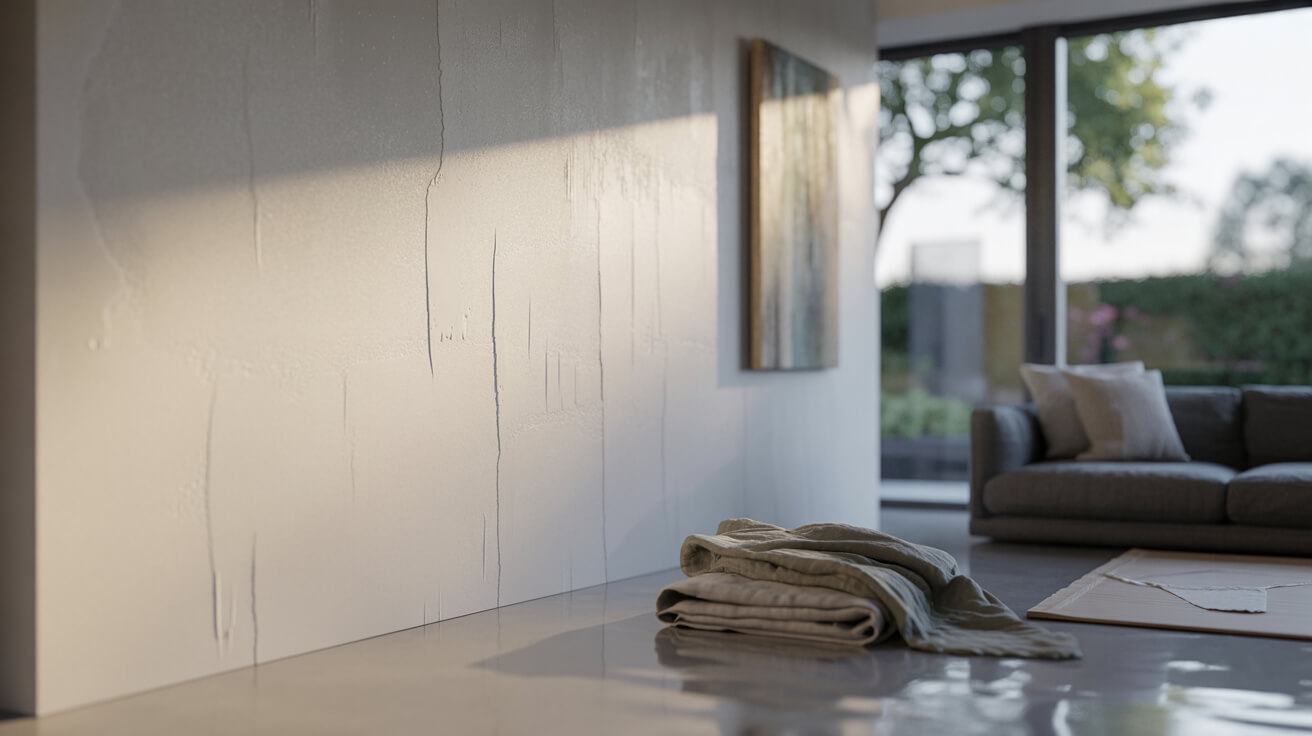
Stepwise Homeowner Diagnostic Guide
- Search for visual cues: Both tide marks and crystallised salts reveal invisible capillary action or hidden failures.
- Use a moisture metre capable of reading sub-surface levels; document readings.
- Test room ventilation by measuring humidity over 48 hours.
- Verify any installed DPC—location, continuity, and condition.
- Cross-check with prior survey or repair documents. Inconsistent or recurring patterns require further investigation.
Professional Diagnosis: Non-Negotiable Scenarios
- Heritage, multi-tenant, or high-value sites.
- Mortgage or insurance documentation required.
- Recurring post-paint failures or secondary signs of decay.
- Regulatory obligations or legal compliance triggers.
Our team at Sussex Damp Experts leverages advanced tools—infrared thermography, deep-probe metres, salt testing, and regulatory knowledge—ensuring every diagnosis is actionable and compliant with standards.
Why Do Standards, Legal Requirements, and Building Codes Matter For Damp Treatments?
Standards That Protect You and Your Property
Using paint or any damp solution in breach of UK standards doesn’t merely risk money—it imperils compliance, insurability, and use rights.
- BS6576: Demands that every damp remediation be matched to the specific defect; surface coatings are for minor, surface-level risks only. All reports and fixes may be rejected without compliance.
- PAS2035: Statutory benchmark for domestic retrofit—surface fixes can never replace full remediation, especially under grant or lender contracts.
- HHSRS (Housing Health and Safety Rating System): Obligates landlords to address causes of damp—masking moisture is a statutory failure.
Failing compliance means:
- Rejection of insurance claims
- Tenants may secure rent rebates or compensation
- Properties fail lender surveys and mortgage approvals
- Owners held liable for concealed or misrepresented moisture
Book Your Free Consultation With Sussex Damp Experts Today
Resilience, compliance, and property value begin at the substrate—never at the surface finish.
Engage PCA-accredited, standards-driven expertise before you repaint. You protect not just a wall—but every occupant, transaction, and outcome tied to your building.
When a survey, audit, or sale is at stake, Sussex Damp Experts delivers:
- Fast, standardised diagnosis for homes, portfolios, or commercial assets
- Reports and plans legally defendable and mortgage-compliant
- Breathable, heritage-safe, sustainable solutions, fully documented
- Transparent aftercare, warranty, and ongoing compliance support
Building health isn’t just a practice—it’s the only guarantee that stands inspection.
Take your next action with confidence.
Let Sussex Damp Experts offer the assessment and clarity you qualify for—from the first symptom to your final sign-off.
Frequently Asked Questions
What Is Damp-Proof Paint and How Is It Scientifically Formulated?
Damp-proof paint is not a substitute for professional damp treatment—before you book a damp survey, it helps to understand that this is a specifically engineered coating containing hydrophobic additives designed to resist minor moisture on surfaces. The science is simple but limiting: siloxane or silicone polymers form a film, repelling water beads and providing a barrier only at the most superficial level. These paints are rigorously tested under British Standard BS6576, which recognises their place solely as finishing aids after cause-level repairs. This matters because the expectation (often set by DIY retailers) that a tin of paint can fix underlying damp is not just misguided; in the wrong context, it’s outright destructive.
Why Chemistry Alone Doesn’t Cut It
When you apply damp-proof paint, you’re betting that the wall is dry, sound, and that any persistent moisture is environmental—not structural—so in cases of visible stains, musty odours, or recurring mould, it’s usually wiser to book a damp survey first. Most affected homes have deeper problems such as capillary action, bridge faults, or abnormal humidity cycles that no coating can stop. Fresh paint may delay visible symptoms, but it won’t alter the moisture profile inside brick, block, or plaster. Worse, when applied to lime or heritage surfaces, it can halt the wall’s natural breathability and push hidden damp deeper, leading to irreversible decay.
- Pro tip: Even “breathable” brands typically have much lower vapour permeability than heritage-appropriate mineral coatings.
| Paint Chemistry | Surface Only | Breathable? | Compliant for Heritage? | Notes |
|---|---|---|---|---|
| Siloxane/acrylic blends | Yes | Sometimes | Rarely | Best for minor condensation |
| Mineral silicate | Sometimes | Yes | Often | True breathability, less film-forming |
| Bitumen paint | Yes | No | Never | Traps moisture, risk of decay |
Choosing paint over diagnosis is a bet against physics. Properties that have stood for centuries have lost entire walls to one season of the wrong product. For truly safe, evidence-based surface finishing, Sussex Damp Experts surveys and specifies the right system for your environment and building age—always as the final step, never the lone defence.
How Does Damp-Proof Paint Work Mechanistically and In Practice?
The mechanism is elegantly simple: a damp-proof paint forms a thin, water-repellent membrane. Under controlled conditions, this can stop cosmetic stains and make cleaning easier. But the real physics of damp in UK property rarely respect the superficial fix. If rising damp is present, capillary pressure far exceeds the adhesive strength of paint, forcing water, salts, and even microbial life up through the substrate and behind the coating.
Operational Truths from the Field
- Surface repulsion: For condensation, the right paint on a dry wall reduces tide marks—useful but only in well-ventilated, structurally sound spaces.
- Trapped moisture: Applied to damp, salty, or contaminated surfaces, paint becomes a moisture cap. Walls that can’t breathe quickly develop bubbling, flaking, and even black mould outbreaks under the film.
- Heritage harm: Solid, old masonry is especially at risk. Non-breathable finishes suffocate lime and stone, accelerating decay.
| Mechanism | Effective For | Fails When |
|---|---|---|
| Water-repellent film | Mild condensation, clean modern surfaces | Capillary rise, substrate salts, vapour-laden old masonry |
| “Breathable” variant | Some solid walls (if dry) | Any persistent damp or salts |
It’s not a question of “does it work”—rather, “where doesn’t it make things worse by masking the invisible?” A proper survey quantifies not just surface moisture but internal humidity profiles, salt content, and historic fail patterns. Rely on professional diagnostics to avoid the illusion of control masking a slow-rolling disaster.
Why Can Damp-Proof Paint Fail: Structural, Regulatory, and Occupancy Pitfalls?
Damp-proof paint fails because it tries to do a job it’s not designed for: controlling the source, not just the symptom. Most walls with visible damp have a story that started long before the first tub of paint came out: an old DPC bridged by plastering, a gutter dripping behind a cavity, salt-laden lime rendered airtight by modern sealer, or simply decades of condensation trapped by tight windows. Painting over these is like taping a cracked pipe—it holds until the pressure finds another way out.
Real-World Outcomes
- Peeling and blistering: Water pressure—whether from rising damp or meteorological exposure—eventually defeats any surface film, leaving paint sheets delaminating within months.
- Legal exposure: Under landlord and housing law, superficial remediation is now a cause for action. Housing health and safety (HHSRS) prosecutions often reference failed paint treatments as evidence of neglect.
- Mortgage failure: More UK lenders refuse properties with “concealed” damp; surveys routinely flag painted-over salts or stains as warning signs.
| Pitfall | Resulting Risk |
|---|---|
| Ignoring true moisture path | Recurring repairs, value loss |
| Regulatory noncompliance | Legal claims, rent return orders |
| Occupancy/tenant complaints | Forced repairs, brand/reputation loss |
A seasoned property expert, landlord, or block manager knows that every shortcut has a receipt. Professionally documented damp-proofing delivers audit-traceable assurance—invisible coatings never do.
Where Is Damp-Proof Paint Approved, Safe, and Effective for Use?
Damp-proof paint is safest as a “helper,” not a healer. Its legitimate use is post-fix, never mask:
Legitimate Scenarios
- Bathrooms & Kitchens: After ensuring ventilation is sufficient and walls show no capillary lift or salt bands, a vapour-open paint keeps splash stains at bay.
- Modern cavity walls: With an intact DPC and no bridging, good paint acts as an extra layer, not a shortcut.
- Heritage rooms: Only if a site survey confirms dry, salt-free masonry and confirms full mineral compatibility—often a rare event.
| Site Type | Approved? | Notes |
|---|---|---|
| Post-DPC home | Yes | If all prior issues resolved |
| Food area | Yes | Prefer anti-microbial, vapour-open as per spec |
| Pre-1919 wall | Caution | Only mineral paint, if any |
| Basement | Rarely | Only after tanking, never as first defence |
| Heritage | Extremely rare | Needs conservation approval |
Every paint claim comes with a footnote in real-world compliance. If you want your property’s health to outlast its surface, only apply such coatings as the final, least important step.
Sussex Damp Experts ensures that every project includes a material compatibility check. Our surveys can save tens of thousands in regulatory defences, warranty claim denials, and repair cycles.
When Should Damp-Proof Paint Be Avoided—And What Are Safer Alternatives?
Applying damp-proof paint without diagnosis is gambling with the structural and financial well-being of your asset. If you detect any of the following, avoid the paint aisle and reach for the phone:
- Visible tide marks or crystalline salts: Signal capillary rise.
- Mould behind furniture or persistent condensation: Signals a ventilation or cold bridge issue.
- Chronic dripping, leaks, or historic flooding: Indicates failed external waterproofing or DPC.
The Right Alternatives
- Reinstate or instal a DPC/DPM.:
- Electro-osmotic or physical barriers: in heritage or thick walls (with professional advice).
- Effective ventilation upgrades: (PIV, powerful extraction).
- Sheath with lime or mineral-based breathable render: for old or solid walls.
- Drainage and gutter repairs: —the least glamorous fix is often the most decisive.
| Issue | Lasting Solution |
|---|---|
| Capillary rise | DPC/DPM reinstatement |
| Penetration | Drainage + pointing repair |
| Condensation | Ventilation/insulation combo |
| Heritage decay | Conservation-compatible render |
A credible survey always precedes a solution. Sussex Damp Experts are trusted by owners, tenants, and authorities precisely because our specifications stop the cycle of “mask—fail—repeat” that turns maintenance budgets into sinkholes.
How Can Damp Issues Be Diagnosed Before Choosing a Remedy?
Diagnosing damp is a forensic task, not just a visual inspection. If your wall hosts a patch that stays cold and clammy all year, or you spot mineral “fur” or the curve of recurring mildew, these are key signals to look past the obvious.
Essential Steps Before Treatment
- Moisture metre usage: (pin and pinless)—always check multiple heights and locations, particularly below windowsills, behind radiators, in closet corners.
- Salt band checks: Chalky efflorescence, especially just above skirting, signals salt migration by rising damp.
- Ventilation and humidity tracking: Simple hygrometers expose invisible patterns; high readings mean the problem lies in air as much as substrate.
- Thermal imaging: Finds cold spots and hidden bridging.
- Conservation-grade assessment: For historic stock, always test for lime, clay, or old pigment base before considering ANY synthetic paint.
| Risk/Signal | Diagnostic Action |
|---|---|
| Persistent cold | Thermal scan, moisture probe |
| Musty odour | Humidity log, check ventilation |
| New stains post-rain | Drainage, pointing review |
| Patch behind radiator | Look for DPC bridging, site survey |
Shortcuts in diagnosis cascade into lifelong expense and decay. Sussex Damp Experts deliver not just answers, but field-tested proof—compatible, insurer-recognised, and ready for every audit or handover.
Why Do Standards, Legal Requirements, and Building Codes Matter For Damp Treatments?
Damp control is one practice where compliance isn’t an option—it’s your asset’s ticket to long-term security. UK law and best practice don’t just penalise failure; they shape the road to robust, lasting value.
The Compliance Landscape
- BS6576: Demands all damp treatments address the source, not just the surface.
- PAS2035: All retrofit and funded projects must be survey-first, solution-specific, and fully documented.
- Landlord/tenant law: Mandates that underlying risk is fixed—rent return orders and liability claims follow even one faked fix.
- Heritage/conservation rules: Prohibit synthetic coatings absent proof of full substrate compatibility and conservation signoff.
| Standard/Law | Scope | Implications |
|---|---|---|
| BS6576 | All residential damp works | Must prove source treatment |
| PAS2035 | Retrofit, grant-funded & upgrade | Locked to survey, qualified instal |
| HHSRS, Landlord | Rentals, social housing | Full correction, not cover-ups |
| Cons. Law | Heritage, listed buildings | Conservation-grade only |
Real property success isn’t measured by the fresh look of a wall, but by the traceable proof that what’s beneath the surface is as resilient as the finish. Insurers, lenders, councils, and future owners will all demand the same answer: not “can I see it?” but “can you prove it?”
Resilience doesn’t come from betting on luck. It comes from owning every repair—documented, defensible, and witnessed by credible experts.
Those who secure their assets’ health do more than protect property—they signal leadership in every audit and transaction.

