
 By
By  May 27, 2025


How to Know if Your Property is Suffering From Woodworm
Knowing the status of your timber isn’t hypervigilance—it’s the difference between a safe, insurable property and one quietly eroding in both value and security. Woodworm attacks start in silence, discovered not through drama but through calm attention to detail: a shifting board, odd powder along a skirting, faint exit holes visible in the right slant of sunlight. Why Early detection matters isn’t just defensive—it’s your opportunity to maintain control, ahead of surveyors, insurers, or tenants raising flags you could have pre-empted.
Why Early, Accurate Detection Sets You Apart
Woodworm rarely signals its presence openly. Instead, problems begin with tiny, round exit holes—often 2–4 mm in diameter—pale dust beneath timber items (frass), or slight softness where a floorboard or joist flexes underfoot. Seasonal timing magnifies risk: beetle activity crescendos from late spring into autumn, yet frass on a January morning may signal last summer’s infestation is unresolved rather than a humidity spike or forgotten dust. Unable to speak, your property nonetheless reveals its condition, provided you’re trained to look.
Risk is rarely dramatic in buildings—timber decay is an accrual, not an event.
Signs that Demand Immediate Attention
- Round holes with sharp, pale edges or fresh powder below (active infestation).
- Sag in floorboards, cracking noises on weight, or unusually soft window sills.
- Clusters of dead or sluggish beetles along window ledges during late spring or early summer—evidence of a cycle that will repeat if ignored.
- Fresh patches or dust after cleaning, especially in attic, basement, or behind furniture.
Engaging proactively—rather than letting an external surveyor or dissatisfied tenant surface the problem—allows you to maintain readiness, confidence, and compliance.
Key signs of woodworm include new, powdery frass, pale-rimmed holes 2–4mm wide, timber softening under pressure, and sightings of beetles near windows between May and October.
Embedded Visual Guide: Spot the Difference
| Marks on Timber | What They Mean | Next Steps |
|---|---|---|
| Powdery dust + pale holes | Ongoing infestation | Book inspection ASAP |
| Dark holes, no frass | Likely historic | Monitor, no urgent action |
| Beetles present in season | Active breeding | Full diagnostic survey |
| Soft/wobbly joist/floor | Structural risk | Secure professional repair |
Connecting observed symptoms to practical actions lowers your risk of being blindsided—whether by structural issues or paperwork delays.
Your vigilance and willingness to act on subtle cues is the cornerstone of long-term asset protection. Sussex Damp Experts stands ready to provide qualified assessment, clear records for insurance or lending, and repair plans that aren’t just quick fixes—they’re evidence of your proactive approach to property health.
Why Woodworm Develops: Risk Factors and Prevention Essentials

Behind every outbreak is a series of small oversights: excess humidity after a winter leak, substandard ventilation in a converted loft, untreated pine joists in heritage builds. Recognising that woodworm doesn’t strike randomly but follows patterns of moisture, microclimate, and timber type is key to breaking the cycle. Prevention is less about one-off interventions and more about systematic management.
What Makes Certain Properties a Target?
Properties become vulnerable when timber is permitted to exceed 16–18% moisture. The chief culprits are:
- Leaking pipes, persistent condensation, or unaddressed roof leaks.
- Refurbishment that traps moisture behind newer materials or ignores the need for active airflow.
- Period homes or listed buildings containing original softwoods, lime mortars, or old joinery.
Seasonal temperature shifts and humidity spikes further tip the balance—a spike in spring or early summer is often the unseen background to a visible beetle season.
A well-ventilated property with regular microclimate checks almost never develops major woodworm problems.
Proactive Steps to Lock Out Future Attack
A prevention plan integrating annual moisture checks, prompt leak response, and scheduled visual surveys delivers exponential long-term benefit. Compared to the cost of beam or joist replacements—let alone the operational delay of a failed mortgage or tenancy—annual prevention is both a documentation and financial win.
| Property Feature | Risk Factor | Preventive Action |
|---|---|---|
| Attic/roof timbers | Poor ventilation | Add vents, inspect in spring |
| Floor joists | Underfloor damp | Moisture metre + resin sealant |
| Skirting boards | Damp-rising walls | Check guttering, replaster lime |
| Furniture | Stored in damp spaces | Regular movement + inspection |
Properties tied to legal, letting, or commercial compliance should treat this as a baseline—monitor, record, intervene.
Why Documented Prevention Raises Your Status
Insurers and buyers now routinely ask for documented timber care and humidity logs. Providing them without hesitation shifts negotiations in your favour—only those with a plan can hold the advantage.
Where Expert Surveyors Find the Highest-Risk Sites for Woodworm
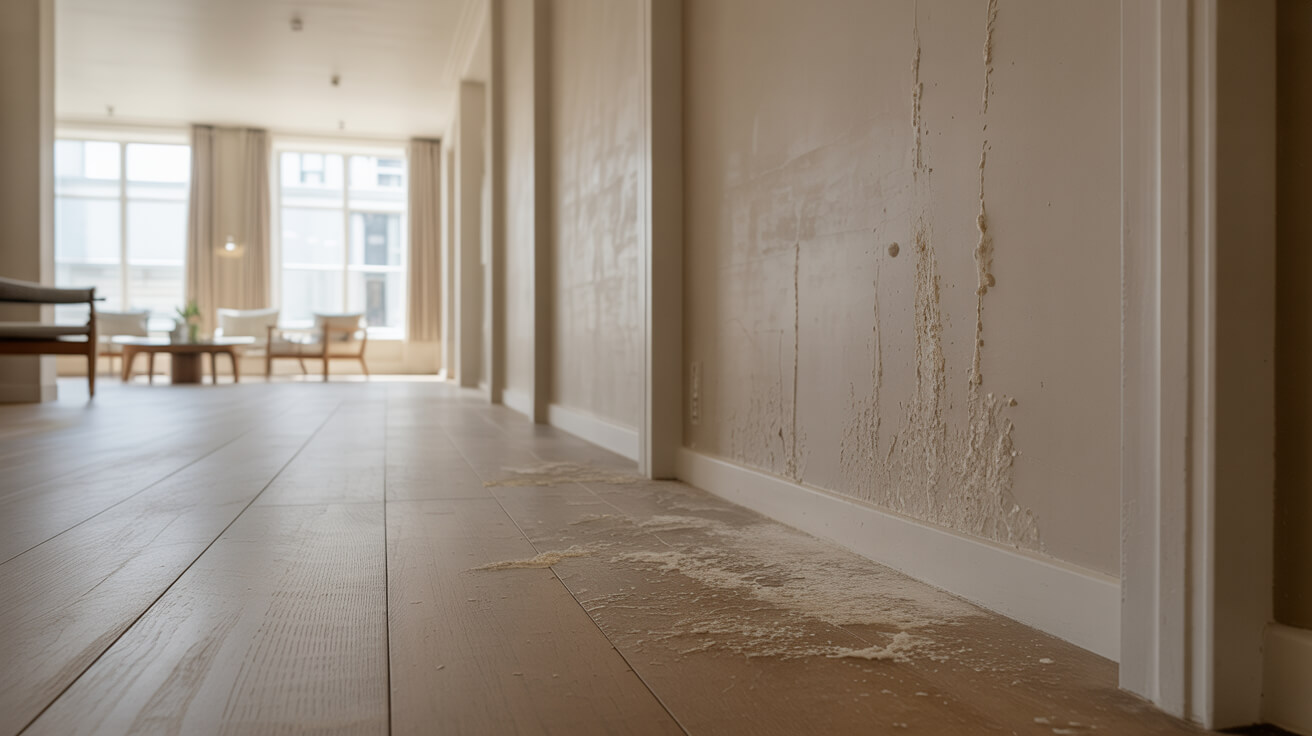
It’s a common error to focus only on visible faults—missing the true hotspots buried where day-to-day living never looks. Why Early signs are often missed becomes clear in the field data from Sussex Damp Experts and insurance adjusters, which reveal predictable risk clusters: your own property may be hiding early or advanced signs in precisely these overlooked areas.
The Hidden Corners: Where to Concentrate Inspections
- End-points of joists—especially where wood is plugged directly into damp or unventilated masonry.
- Undersides of old or poorly insulated floorboards, particularly above crawl spaces or unheated basements.
- Rafters and load-bearing beams that experience condensation or episodic leaks.
Inspections that focus only on face-value fixes miss the beams and boards that carry the greatest load—and the greatest risk.
How Structure and Building History Shape Weakness
The combination of heritage layouts, prior partial repairs, and trapped moisture from past interventions often results in a hidden, cumulative decay. Even modern property portfolios are not immune—insufficient gaps in service voids or poorly planned insulation installation can create micro-environments where beetles thrive.
Insights Table: Where Most Damage Occurs
| Site/Element | Historic Risk | Modern Risk | Inspection Method |
|---|---|---|---|
| Joist ends | High | Medium | Moisture/probe/borescope |
| Roof trusses | Medium-High | High (insulation) | Visual + temp monitor |
| Skirting/architrave | Medium | Low-Medium | Visual/tap test |
| Subfloor plates | High | Medium | Underfloor camera |
Why Smart Inspection Sequence Saves Both Money and Reputation
A survey plan that orders risk by location, moisture signature and recorded building events can spot recurring infestations and preempt expensive remediation. Documenting these finds as part of asset or compliance logs is increasingly non-optional in all regulated settings.
For property managers, letting agents, and heritage owners, the difference between portfolio risk and portfolio advantage starts at the inspection log. Our surveys are designed to surface these risks with documentation your organisation can stand on.
How to Distinguish Between Active and Historic Woodworm Infestation

With historic properties or even post-war construction, spotting holes is inevitable—but the real question is whether they spell historic disruption or a live, ongoing threat. Mistaking one for the other either wastes your budget or sets you up for invisible, escalating risk.
The Markers: How Do You Tell Old From Ongoing?
Active infestation means you find crisp edges, light-coloured frass, occasionally live beetles or larvae in wood sampled during surveys. Inactive cases are marked by darker holes (clean-edged), hardened or undamaged timber, and an absence of recent dust or debris.
Assessing Active Damage Table
| Sign | Active? | Next Action |
|---|---|---|
| Fresh frass, pale holes | Yes | Arrange treatment |
| No frass, hard timber | No | Monitor only |
| Beetles present | Yes | Initiate rapid fix |
| Only old holes | Unknown | Professional confirm |
Uncertainty remains for complex mixed-use or heritage settings; here, ongoing moisture readings and a recent history of environmental change (such as a new roof, a long winter leak, or construction upstream) may mean “inactive” is only temporary.
Historic damage should be a call to monitor, not a reason to panic—unless new environmental factors restart the cycle.
Why Professional Confirmation Protects Your Assets
For any portfolio under compliance pressure or at transaction risk, only a documented, certified inspection will be accepted as proof for legal, insurance, or mortgage decision-makers. Relying on guesswork invites extra cost later.
Upload your timber photographs or request in-person confirmation to clarify your status and unlock immediate consumer or regulatory action when necessary.
Why Prompt, Accurate Diagnosis Is Critical for Safety and Value

Every season that passes without a valid assessment compounds risk. Delay means the invisible cost—whether in asset value, letting velocity, or insurability—grows steadily, quietly, and irreversibly.
What Is at Stake With Delay?
Unchecked woodworm doesn’t pause its cycle: larvae continue to tunnel, beams degrade, and load-bearing timbers edge closer to soft failure. The result can be as unceremonious as a bounced mortgage or as sudden as a sagging floor, insurance claim denied due to negligence clauses.
Impact/Timing Table
| Delay Period | Probability of Major Damage | Cost Multiplier |
|---|---|---|
| Detected Year 1 | Low | 1.0x |
| After Year 2 | Medium | 2.5x |
| After Year 3+ | High | 4–6x |
For landlords, the HHSRS, council enforcement, and major letting insurers now scrutinise timber documentation for just this reason.
The cost of doing nothing is always buried deeper than you think—until surveyors or legal departments find it.
The Compliance Advantage
Rapid, certified diagnosis lets you leverage resilience as a status signal: requests for mortgage, letting, or insurance documents become proof of readiness, not a cause to scramble mid-transaction.
For private owners, safe occupancy and resale velocity are the direct rewards; for organisations, compliance-driven asset protection accelerates annual and lifecycle gains.
How to Conduct a Complete, Surveyor-Standard Woodworm Inspection

Controlling asset direction starts with process: not a single check or isolated event, but a lifecycle of consistent, documented vigilance that stands up to the scrutiny of surveyors, auditors, and buyers alike.
The Blueprint: Creating Your Inspection Routine
- Visual Review: Start with an ordered circuit of visible timber—skirting, joists, attic rafters, and vulnerable old boards.
- Moisture Metres: Instruments reveal hidden risk where eyes cannot see.
- Borescopes & Cameras: Especially in voids, under boards, or obscure beam pockets, these tools expose activity before damage surfaces.
- Photographic Recording: Be systematic, date-stamp every image, and log by room/zone.
- Environmental Data: Keep seasonal logs; spikes in humidity or unseasonal leaks predate outbreaks by months.
- Frequency: At least annual for standard residential, semi-annual or quarterly for portfolios, heritage, or commercial sites.
Inspection Methods Table
| Step | Frequency | Who’s Responsible | Evidence Needed |
|---|---|---|---|
| Visual review | Annually / 6 mos | Owner / Agent | Photos/log |
| Moisture scan | Annually | Pro / DIY | Metre readings |
| Borescope | Annually / after risk event | Specialist | Video/photos |
Inspection logs are more valuable than you realise—records convert asset doubt into transferable peace of mind.
When to Escalate
If anything is ambiguous, or the frequency of discovery increases, book in a local expert for rapid on-site diagnosis. This process powers both operational stability and evidence-trail security for litigation or insurance.
Download our tracker to ensure your routine delivers proof for any claim, sale or letting requirement.
Can Woodworm-Damaged Timber Be Repaired? Best Treatments

The era of “wait and see” is over. Asset managers, heritage stewards, and private owners alike are now legally and financially rewarded for fast, documented intervention—and penalised for delay or undocumented repair.
Professional vs DIY: Where True Value Lies
DIY options may handle minor, surface infestations—furniture, decorative timbers—when external risk drivers are managed. However, for load-bearing, structural, or legacy timber, only FeRFA-certified, insurance-accepted treatments stand up to scrutiny.
Comparative Solutions Table
| Repair Method | Situation Suitable | Certification/Proof | Longevity/Guarantee |
|---|---|---|---|
| DIY spray/gel | Minor, surface-level, furniture | None | Limited/none |
| Pro injection | Structural/floor/roof | Guaranteed + doc | 10–30 years |
| Conservation treat | Listed/heritage, sensitive fabric | Conservation doc | Variable |
| Full replacement | Collapse risk, advanced decay | Works cert + doc | 20–50 years |
In asset management, rushed DIY rarely pays off—true savings come from expert, certified repair.
Guarantee-Backed = Contract-Ready
A works certificate from Sussex Damp Experts demonstrates to insurers, buyers, and letting agents that your commitment is to documented, lasting resilience. In practice, it means smoother sales, fewer questions from underwriters, and zero-tenancy friction if queries arise.
See how our repairs align with regulatory and insurer standards—request options for any site, asset, or compliance restraint.
Book Your Free Consultation With Sussex Damp Experts Today
Confident ownership comes from action, not reaction. With Sussex Damp Experts, your audit trail, repair log, and compliance documentation become symbols of status—a demonstration that you operate not on risk, but on professional certainty and foresight.
Readiness isn’t luck—it’s a management decision. That’s how trusted assets maintain value, season after season.
What Engaging Our Team Delivers
- Responsive site surveys tailored to your property’s history, type, and operational schedule.
- Certified, scenario-based documentation accepted by insurers, letting bodies, and mortgage underwriters.
- Aftercare plans that strengthen year-on-year asset performance—not just a quick fix, but a partnership in property resilience.
- Proof of works, guarantee stamps, and audit logs—always at your fingertips, always compliant.
- A direct path from doubt to documented security. Start your consultation now and transform the way your property is protected.
Frequently Asked Questions
How do you identify early and advanced signs of woodworm in your property?
Pinpointing woodworm before it inflicts serious harm means tuning into your property’s forgotten signals—tiny, round holes with pale, ragged edges; featherweight sawdust (frass) in unused corners; boards whose strength gives way at the press of a screwdriver. Fresh exit holes and powdery, chalk-coloured debris often betray active larvae, while clusters of dead beetles near window ledges reinforce that the cycle is not folklore but a live threat to structural integrity. Old, darkened holes, however, can signal historic, already-treated events. If you’re observing changes in the “feel” of your timber—sagging, splitting, or suspicious softness—act with urgency: these are often final-stage symptoms.
A true surveyor’s approach checks not only the obvious (skirting boards, loft beams), but the places most overlooked: beneath floorboards, along mortgage-era joist ends, inside unventilated roof pockets. Tools like moisture metres and borescopes are more than technical add-ons—they’re your defence against a problem that rewards casualness with compound costs.
Visual Markers Table
| Symptom | Probable Cause | Action |
|---|---|---|
| Fresh pale frass | Active larvae tunnelling | Arrange survey immediately |
| Old dark holes | Historic cycle, possible treatment gap | Monitor, consider certification |
| Dead beetles indoors | Recent emergence or hidden infestation | Inspection recommended |
| Sag/crack in timber | Longstanding, advanced infestation | Urgent professional review |
When details are ignored, timbers don’t just rot—ownership, value, and reputation erode with them.
Taking the initiative to check, record, and escalate suspicious findings marks you as a steward, not a bystander. Sussex Damp Experts offer not just confirmation, but a return to confidence—turning overlooked cues into actionable next steps.
Why does woodworm develop, and how can you prevent it with certainty?
Infestation doesn’t start from bad luck—it’s humidity above 16%, sluggish air, unsealed timber, and maintenance gaps that create the breeding ground. High moisture, whether from a humidity spike or forgotten leak, blocked vents, and “quick fix” DIY repairs all combine to extend an open invitation to wood-boring beetles. Unchecked, these factors tip your property toward a future where every timber becomes a liability.
True prevention is measurable, repeatable, and evidence-driven:
- Control Humidity: Keep internal levels below 16%; immediately resolve leaks, drips, or condensation ghosts.
- Enforce Airflow: Maintain ventilation, especially in attic voids, basements, and behind long-standing furniture or panels.
- Cycle Inspections: Survey before and after major works, at tenancy shifts, and every spring—when beetle activity reboots.
- Choose Materials Wisely: Use only vapour-permeable or heritage-approved plasters and reinstatement products; avoid “plastic trap” tanking in older structures.
Seasonal Risk Diagram
- Spring/Summer: Beetle emergence, peak new holes, frass, active larvae
- Autumn/Winter: Hidden damage increases, humidity spikes, missed leaks fester
Prevention in heritage or listed buildings demands extra discipline: all interventions must meet conservation standards—often requiring specialist input, reversibility, and non-damaging integrated technologies.
Every humidity spike or forgotten leak is a fresh invitation to infestation—future-proofing starts with control, not hope.
Your next annual survey or after-repair check isn’t just a box-tick—it’s proof of diligence and a shield against avoidable loss. When you work with surveyed, documentable strategies from Sussex Damp Experts, your asset’s resilience becomes your new baseline.
Where do expert surveyors find the highest-risk sites for woodworm—and how does this shape your action plan?
Infestation risk is not scattered at random; it is mapped by real-world failures—the charred end of a supporting beam sunk into brickwork, the permanently cold section above a battered siding, the timber in an attic forgotten after insulation was laid. Extensive analysis shows that the majority of losses begin in:
- Joist ends embedded in damp masonry
- Subfloor and crawlspace beams (especially with poor ventilation)
- Roof trusses and hidden pitched rafters
- Structural connections near water ingress zones (datum or below-grade timber, basement junctions)
- Long runs of skirting and architrave (especially behind furniture)
- Panelling or voids in period conversions
A skilled surveyor approaches not with a generic template, but with an evidence-led risk matrix. Measurement of ambient humidity, targeted borescope checks, and scenario-based risk scoring allow for differentiated asset defence.
Heatmap Table: Where Urgent Risk Clusters
| Area/Zone | Home | Heritage/Listings | Commercial |
|---|---|---|---|
| Joist ends | High | Highest | High-Medium |
| Subfloor cavities | Medium | High | Highest |
| Roof structure | Medium | High | High |
| Panel/voids | Medium | Highest | Medium |
The difference between an isolated repair and a multi-room crisis is always where you didn’t check.
Investing in comprehensive diagnostics from Sussex Damp Experts means you’re never vulnerable to surprise findings at the point of sale, during an audit, or amid an insurance renewal. Every asset map, surveyor diagram, and follow-up inspection becomes a traceable defence of value and safety.
How do you distinguish current woodworm infestation from historic, resolved damage?
The difference between active and old infestation is the pivot between justified investment and wasted budget. Many properties, especially period homes or older conversions, display historical woodworm “scars”—but without context, confidence fades, and both panic and inaction lurk.
Active woodworm shows itself with:
- Fresh, chalk-coloured frass, new since your last clean
- Fresh beetle sightings during seasonal emergence (May–August in the UK)
- Soft, spongy timber that yields to a screwdriver or gentle prod
- Pale-edged holes; sometimes, the sound of larvae boring during the quietest hours
Historic (inactive) infestation is marked by:
- Darkened, edge-worn holes
- Absence of new dust or debris
- Solid wood with no new movement or drop in structural support
- Survey records or sale packs confirming professional treatment
Your risk, your insurance outcome, and your cost are determined by this line. Trust but verify—proof is the difference between peace of mind and paperwork purgatory.
At every compliance checkpoint—mortgage, insurance, landlord registration—authentication via surveyor report is needed. Sussex Damp Experts offer photographic, logged confirmation so you can document and certify status at any point in your asset’s lifecycle.
Why does prompt, precision diagnosis matter for safety, investment, and compliance?
Time is the amplifyer of threat—every month delayed on active beetle activity is compounding risk. By the time the eye can see floor sag, the cost is baked in, and negotiation posture or insurability is eroded.
Insurers, lenders, tenants, and local authorities all now demand proof, not intention. Claims for “sudden and unexpected” loss are denied when the record of inspection is absent or out of date. Compliance law—particularly HHSRS, Landlord & Tenant Act, and council requests—will seek your most recent assurance, signed and traceable.
Impact Table: The Cost of Waiting
| Delay (Months) | Cost Increase | Risk Escalation |
|---|---|---|
| 0–3 | Baseline | Isolated, manageable |
| 4–12 | 1.5–2x | Multi-room, value hit |
| 12+ | 3–5x | Major loss, compliance crisis imminent |
Leadership isn’t waiting for an audit—it’s proving you own the asset, not the other way around.
Precision diagnosis, meticulously documented and updated, is the shield that prevents value drain at sale, during renewal, or in tenancy dispute. Sussex Damp Experts’ certified surveys set your asset apart, making risk management an identity and an advantage.
What’s required for a full woodworm inspection, and who should you trust to do it right?
A credible inspection is not a walk-through with a torch—it is a systematic, evidence-based lifecycle check, mirror-imaged to your building’s risk map. Start with a clear audit trail: digital photographs, dated checklists, and recorded humidity and temperature.
- Walk all accessible timber, probing with a tool for softness, listening for hollow sound
- Check hidden voids, boxings, and ceiling/floor intersections; use borescope or camera where access is limited
- Document each finding with photos and moisture readings, creating a log for reference and compliance
Owners and managers who treat this as an annual or biannual discipline are never caught short at transaction or compliance crunch points.
Surveyor-Standard Checklist
- [ ] All timber visually checked, including subfloor/crawlspace
- [ ] All at-risk areas humidity/metre tested
- [ ] All findings photographed, geo-stamped, date-stamped
- [ ] Older damages and current signs separated, logged
- [ ] Next recommended check scheduled, follow-up put on calendar
For ambiguous or high-stakes cases—heritage, commercial, sale or letting—escalate to a documented professional survey. Sussex Damp Experts delivers surveyor-grade records, scenario-based action plans, and digital logs ready for compliance and insurance.
Checking only what you can see is not stewardship—it’s deferring to future cost.
Identity in property is built as much by foresight as by finish—adopt the inspection rigour expected of true asset managers.
Can timber damaged by woodworm be reliably repaired, and what really works?
Repairing woodworm-damaged timber is more than cosmetic cover—it’s a test of whether your approach matches the risk level and compliance demand. For small, decorative elements, a certified surface treatment can suffice. For all load-bearing or compliance-affected timbers—especially where heritage, insurance, lender, or letting standards apply—you must use professional deep-penetration or injected preservatives, approved for each environment.
In heritage or conservation contexts, reversible, non-destructive treatments and meticulous recording are paramount; misapplied “modern” products can void permissions or cause future disputes.
Treatment Options Table
| Scenario | Solution | Benefit |
|---|---|---|
| Furniture/decorative | Surface spray or gel | Quick, limited-scope, cost-controlled |
| Floor/structural | Injection, deep-penetration, repair | Certified, meets compliance, warranty included |
| Heritage/listed | Conservation-grade, reversible | Compliant, preserves and documents authenticity |
A certificate of works is worth more than a verbal guarantee—documentation is resilience.
Sussex Damp Experts unify treatment, certification, and aftercare for every situation. Your property becomes more than “fixed”—it is future-proofed, compliant, and poised to retain and increase value, no matter how standards evolve.

