
 By
By  October 26, 2024


How to Stop Damp Coming Through Walls: Definitive Solutions for Every Property
Wall damp is not a nuisance—it’s a signal your property is exposed to ongoing risk: health threats, regulatory scrutiny, and financial devaluation. Whether it appears alongside Wall Cracks or persistent staining, if you’re responsible for your family’s comfort, safeguarding a tenant’s wellbeing, or ensuring compliance in large portfolios, these warning signs erode asset value and the confidence of your stakeholders.
Why Immediate Action Defines Long-Term Outcomes
Most wall damp escapes notice at first. The effects are progressive yet subtle—plaster starts to bubble, paint flakes at the skirting, or a single corner emits a quiet must that refuses to clear. These small warnings quickly escalate: surveyors flag hidden moisture, rental inspections cite hazards, buyers pull out, and tenants file complaints.
Key impacts of unresolved wall damp:
- Lost market value: Properties with untreated damp can drop up to 10%.
- Health costs: Chronic moisture breeds mould, impacting your family, tenants, or employee wellness.
- Legal exposure: HHSRS and building compliance standards can trigger legal action for landlords and commercial operators.
It usually starts with a faint patch, but the real cost appears in the paperwork and lost confidence.
Your strategic advantage is in addressing those early cues—showing diligence and foresight before walls become liability triggers. You don’t have to be an expert to recognise something is off; you just have to act before the problem escalates out of your control.
Our Approach: Achievable, Compliant Damp Solutions
When you trust professionals committed to evidence-driven practice, you gain:
- Comprehensive risk assessment—profiling every wall, junction, and suspect substrate.
- Pinpoint moisture source mapping combined with full compliance checks.
- A clear, practical action plan—bespoke for heritage details, multi-tenant blocks, or standard housing stock.
- Transparent costings, trustworthy documentation, and aftercare that closes the risk loop.
Your first step is to schedule a diagnostic survey—demonstrate to your stakeholders that you don’t accept hidden risk.
What Processes Cause Damp to Penetrate, Rise, or Condense?
Damp Diagnosis Quiz
- 1 Location
- 2 Appearance
- 3 Timing
- 4 Pattern
- 5 Results
Most Likely Diagnosis
—
—
What Is This?
—
Recommended Next Steps
Confidence Breakdown
This quiz provides general guidance only. A professional survey identifies the exact cause and recommends the right treatment.
Book a Professional Diagnosis →Every wall serves as a frontline defence against moisture. Failures follow one of three main paths— condensation, penetrating damp, or rising damp—each demanding a different solution.
Condensation: Invisible Lifestyle Threat
Condensation forms from ordinary living: showers, dryers, or boiling kettles. The moist air settles on colder wall surfaces, especially around windows or behind furniture, encouraging mould and long-term decay. This is the most frequent form of wall damp in modern, energy-efficient properties.
What you need to know:
Condensation damage worsens in rooms without adequate airflow or where insulation blocks vapour escape. Surface wipes and occasional venting are rarely sufficient.
Penetrating Damp: The Silent Ingress
External defects—cracks in bricks, leaky gutters, missing pointing—invite rainwater straight into your wall’s internal fabric. If left unchecked, moisture tracks along the building envelope, producing stains and rot, often with visible blooming salts where water evaporates out.
Table: Common Damp Mechanisms vs. Key Inspection Points
| Damp Type | Usual Cause | Inspection Focus | Best Remedy |
|---|---|---|---|
| Condensation | High humidity; poor airflow | Windows, bathrooms | Improve ventilation |
| Penetrating | Exterior faults, roof/gutter leak | Flank/external walls | Repair envelope defects |
| Rising damp | DPC failure or bridging | Skirting, ground floor | Instal/renew DPC, re-plaster |
Rising Damp: Ground-Up Challenge
Porous walls and failed DPCs (Damp Proof Courses) enable groundwater to climb, especially in heritage buildings or where landscaping causes bridging. Look for tidemarks, crumbling plaster, and persistent damp at floor level.
You can’t fix a rising damp problem with surface paint—underlying water always finds a way.
Diagnose before acting. Matching the fix to the mechanism is the single biggest ROI lever on damp-proofing.
What Are the Most Reliable Early Warning Signs?

Preventable damage always announces itself. The most effective property owners and managers recognise wall damp signatures early—before visible rot, health complaints, or regulatory action.
Visual, Sensor, and Sensory Cues
- Visible cues: Peeling paint, yellow/brown stains, bubbling wallpaper, patches that change with the season.
- Tactile: Cold-to-touch walls even when rooms are warm, crumbling plaster.
- Odour: Mustiness, especially after closing up a property or heavy rain.
- Moisture readings: Affordable metres provide instant, objective confirmation—especially essential for portfolio managers or buyers.
Table: Fast Self-Inspection Checklist
| Symptom | Location to Check | Suggested Action |
|---|---|---|
| Peeling paint | Corners, lower walls | Spot-test for damp |
| Unusual stains | Near external walls | Measure with moisture metre |
| Musty smell | All rooms, after rain | Improve airflow, inspect |
| Cold areas | Wall/floor junctions | Assess for bridging/condensation |
The Hidden Cost of Overlooking Minor Signs
Ignoring even small signals allows damp to escalate, driving up eventual remediation costs and compliance gaps.
The value is in what you catch before the surveyor does.
Identify and act on small changes to maintain your property’s integrity and compliance record.
Why Do Previous Repairs Often Fail?
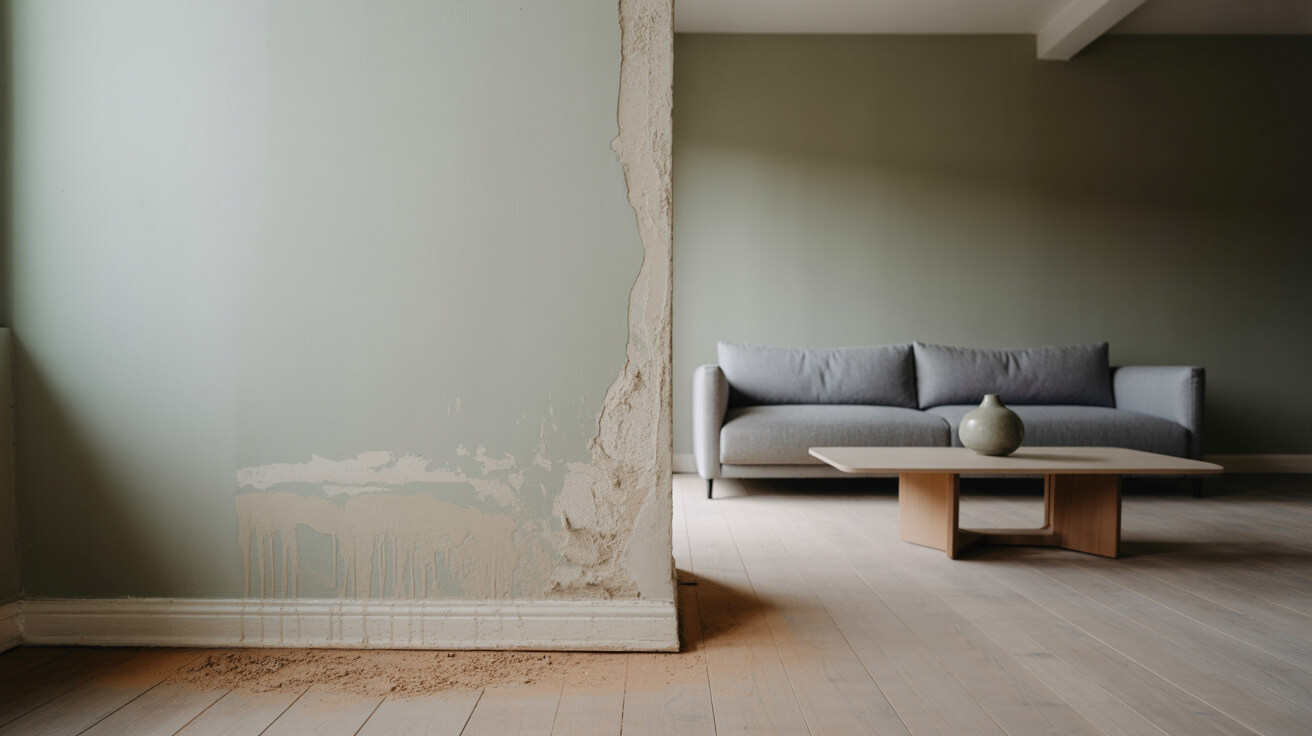
Recurring wall damp points to incomplete or misdirected action. Many solutions fail not from lack of effort, but because they address symptoms without solving the source.
The Common Failure Pathway
- DIY ‘fixes’ that tackle only the surface
- Painting or wallpapering over, trapping moisture
- Sealants or tanking on the wrong substrate, increasing hidden water build-up
- Inexperienced contractors skipping proper substrate prep or neglecting salt contamination
Compliance and Obligations—Never Afterthoughts
Landlords and agents face heightened risk. Failing a HHSRS inspection or dispute is now a real financial threat—repeated short-term repairs don’t just cost money, they increase legal exposure.
Table: Outcome Comparison—Remedial Action vs. Full Diagnostic
| Approach | Short-Term Effect | Long-Term Effect | Risks |
|---|---|---|---|
| Paint-over repair | Temporarily improved | Damp returns, hidden rot | Health, compliance fail |
| Full diagnostic | Correct cause fixed | Lasting solution, warranty | Initial survey cost only |
Getting it right once is always cheaper than doing it over three times.
Frame your next fix around evidence, not hope—your future self, tenants, or clients will notice.
Where Should You Inspect for Highest Damp Risk?
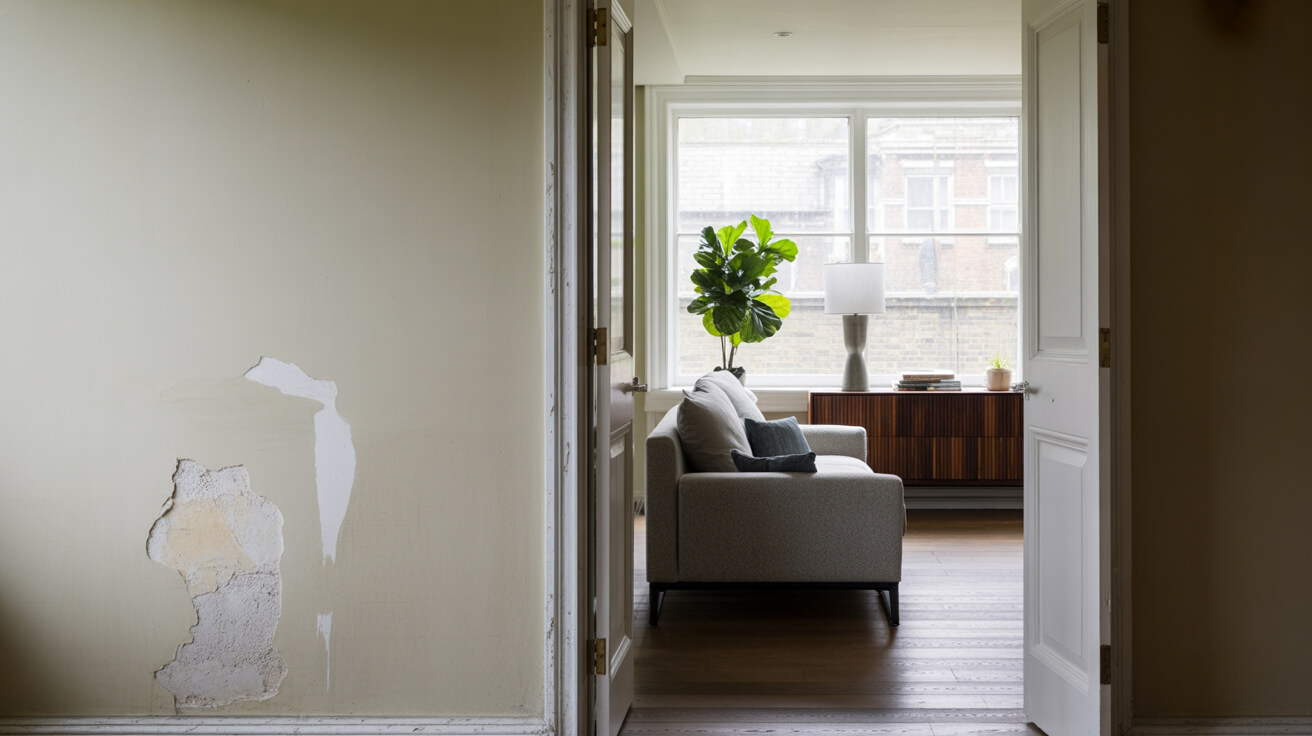
Damp targets specific wall zones determined by drama, structure, and weather patterns. Understanding your property’s unique threat landscape transforms ongoing risk into manageable routine.
High-Risk Zones You Must Not Ignore
- Basements, crawl spaces
- Skirting board areas on ground floors
- Window and door frames, especially on north/east exposures
- Roof and parapet junctions; gutter line intersections
- Party walls and bath/kitchen zones (for leaks and condensation)
Proactive Inspection: Habit, Not Chore
For portfolios, regulated housing, or managed assets, systematise annual or seasonal checks. Use a combination of visual logs and moisture readings, and schedule reviews after major weather events.
Table: Inspection Schedule for Asset Classes
| Property Type | Inspection Frequency | Key Focus |
|---|---|---|
| Residential home | Annual | Peripheral rooms, basements |
| Portfolio / managed | Biannual | Shared walls, basements |
| Heritage/listed | After severe weather | Exterior, interior ground |
Routine is underrated. Predictability in damp inspections is what keeps repair bills and liability low.
You don’t need to inspect every week—just consistently enough to prevent surprises.
How Can You Choose the Right Fix?
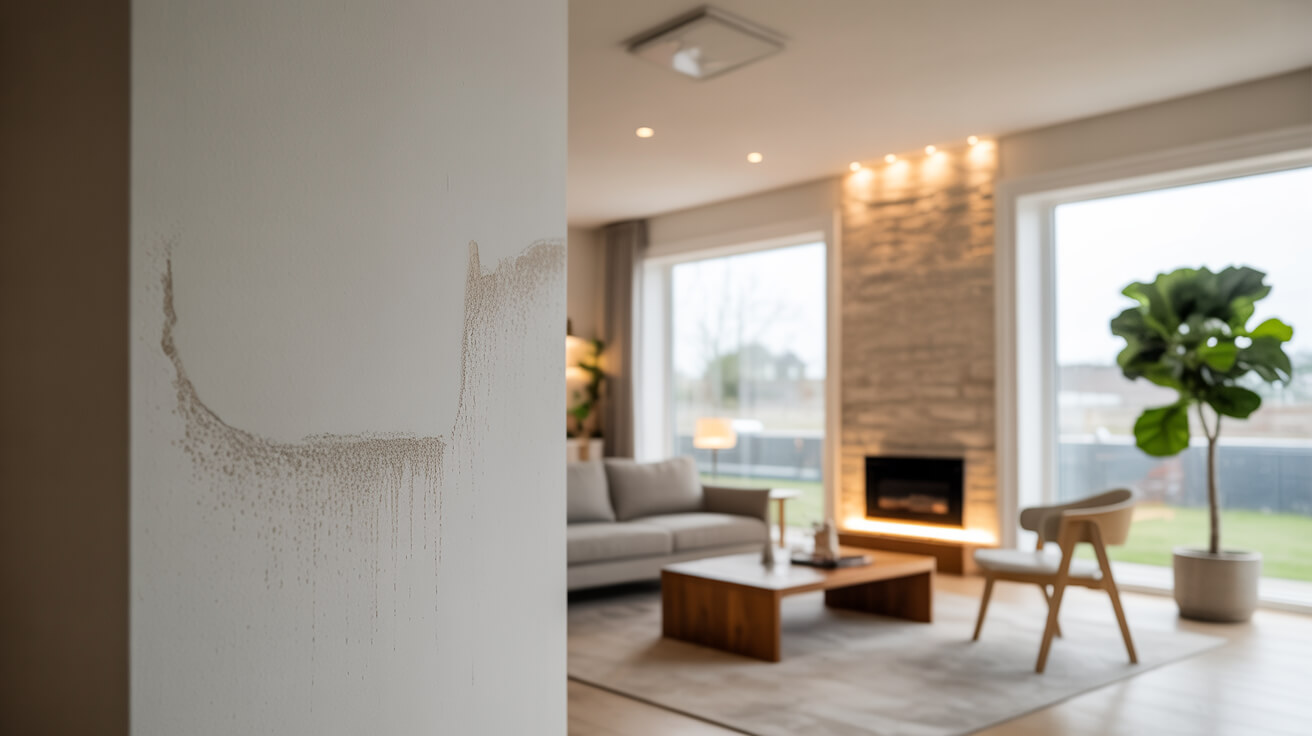
The biggest costs mostly stem not from the solution you pick, but the solution you skipped—or applied out of sequence. Knowing when to draw the DIY/pro line drives everything from family safety to commercial value.
DIY—Low Stakes, Specific Wins
DIY is right for minor, recent condensation or simple airflow upgrades. Tackle with:
- Use of dehumidifiers
- Thermal curtain usage
- Short, visible patches near windows
But:
- If symptoms persist, or stains migrate, escalate to a specialist.
- Never attempt heritage repairs, let, or multi-unit work on your own.
Professional Solutions—The Insurance Policy That Pays Off
- Diagnostic-grade moisture and salt mapping
- Warranty-backed chemical or physical DPC instals
- Guarantee with documentation accepted by insurers and mortgage providers
- Post-repair monitoring and reporting
Table: When to Trust DIY, When to Bring in an Expert
| Symptom/Scenario | DIY | Pro | Notes |
|---|---|---|---|
| Minor, local condensation | Yes | – | Improve airflow |
| Recurring, spreading stains | – | Yes | Needs full survey |
| Heritage/listed structure | – | Yes | Compliance risk |
| Multi-occupancy/portfolio | – | Yes | Documented solution |
A reliable fix lays groundwork for trust, not just dryness.
Tie your asset’s future compliance to an expert repair plan. Compliance, negotiation power, and long-term value all flow from demonstrable, specialist-led works.
Can You Prevent Damp Recurrence for Good?
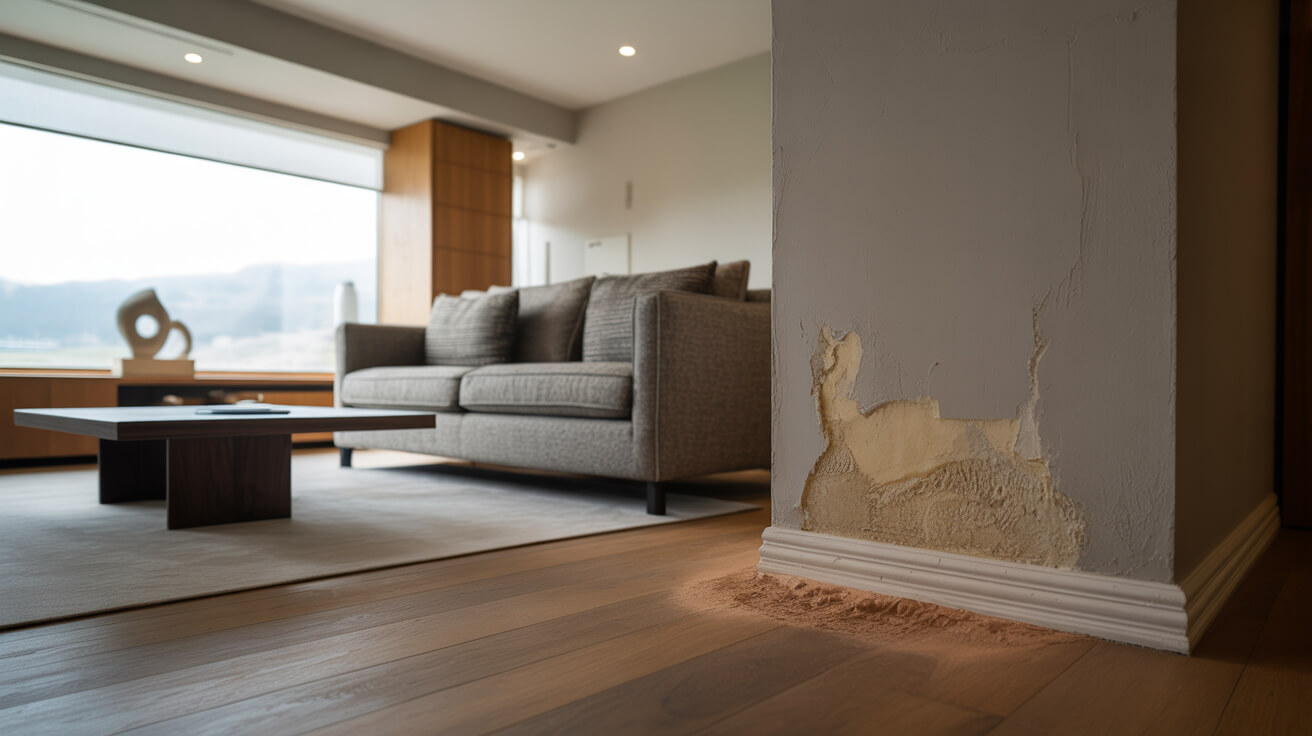
Permanent stability in moisture control isn’t about a single intervention. It’s a processes— good habits, monitoring, and willingness to spot threats as soon as they arise.
Ongoing Vigilance: Peace of Mind in Practice
- Maintain drains, gutters and exterior pointing.
- Ensure all vents, extractors, and air bricks remain functional.
- For portfolios, digital monitoring pays for itself within a single avoided claim.
Your maintenance plan should include regular professional reviews—a diagnostic survey every 1–2 years uncovers dormant threats before they reset the compliance clock.
Table: Core Prevention Activities by Scope
| Control Activity | Single Home | Block / Portfolio | Heritage |
|---|---|---|---|
| Gutters/roof check | Quarterly | Quarterly | Storm-based |
| Moisture/salt measurement | Yearly | Biannual | Every survey |
| Digital/humidity logging | Optional | Recommended | Essential |
| Pro survey | Every 1–2 yr | Annual/before let | Before/after works |
Prevention is the quiet hero of wall damp. Set and stick to your calendar—let it guard your value.
Vigilance, not expense, builds lasting outcomes.
Book Your Free Damp Assessment Now
Every responsible owner and manager eventually faces the same inflexion point: will you lead or react? The difference is clarity. When you commission a compliant, expert survey, you position yourself as an asset guardian—ahead of both the market and the next legal or operational hurdle.
Your next move is decisive: a diagnostic report, warranty, and action plan from a local, accredited professional who understands the nuance of your property and your obligations—not just a national call centre promising everything.
- Elevate property resilience.
- Safeguard reputation with evidence, not excuses.
- Optimise long-term value—and open options for refinance, resale, or regulation.
Take control: secure your compliance, your building’s health, your peace of mind today.
Frequently Asked Questions
What makes wall damp a decisive threat to property value and health?
Damp is an opportunist, capitalising on the smallest oversight. The real danger rarely lies in visible stains—it’s the hidden deterioration, the silent rise in humidity, and the cumulative stress imposed on structural elements, insulation, and air quality. With every day left unchecked, persistent wall damp jeopardises the comfort of your property, but also its very foundation, its insulation, and those living or working inside.
Wall damp inflicts:
- Accelerated decay of plaster, flooring, and wood elements.
- Escalating energy bills due to heat loss through dampened materials.
- Chronic respiratory challenges, especially when damp persists and mould flourishes.
- Severe legal exposure for landlords—failing HHSRS or Fit for Human Habitation Act checks raises the spectre of tenant compensation or council prosecution.
- Survey red flags for homeowners—slashing resale value and scaring off buyers.
Behind every musty odour or flaking skirting is a process of invisible decay—solved only with total-system thinking.
Protecting your investment means outpacing the rot, not chasing its symptoms.
Solution Ownership
A proactive moisture risk audit aligns your response with the lifecycle of your building. Sussex Damp Experts combine forensic diagnostics, compliance mapping, and actionable reporting, restoring certainty to asset managers and homeowners alike.
What typically causes damp to invade and persist in your walls?
Damp is not a single enemy; it’s a family of complex, converging faults—each requiring specific countermeasures. Condensation creeps in through overlooked daily routines, moisture-laden air settling where ventilation falters. Penetrating damp invades when exterior defences give ground: a hairline crack, a loose flashing, a clogged gutter—all prime avenues for intrusion. Rising damp, meanwhile, rides the capillary action of groundwater when a DPC fails, is bridged, or never existed.
Recognise these distinct mechanisms:
- Condensation: Repeated steamy showers, clothes drying, poor extraction—leads to black mould on cool external walls.
- Penetrating damp: Weather-driven ingress exploits pointing defects, cracked render, roof or gutter failures.
- Rising damp: Tidemarks, ‘salting’, and blistered skirtings show capillary action from missing/faulty DPC or bridging by paths/planters.
- Special cases: Hygroscopic salts, plumbing leaks, thermal bridging—all multiply the risks in heritage or complex builds.
The table below demystifies key patterns:
| Damp Type | Clues & Patterns | Diagnostic Focus | Best Intervention |
|---|---|---|---|
| Condensation | Surface mould, winter, cold corners | Humidity, air change | Ventilation, moisture control |
| Penetrating | Localised stains, weather-driven | External inspection | Pointing, flashings, guttering |
| Rising Damp | Base ‘tide lines’, salts, blown plaster | DPC, sub-floor checks | DPC renewal, re-plaster |
Brand Authority
For complete certainty, trace the full pathway from source to substrate. Our team’s diagnostic mapping reveals what the eye cannot.
How can you identify early signs before damp becomes a crisis?
Detection is a discipline, not a guess. Early clues are subtle: wallpaper corners curling, faint spots of mildew in cooler rooms, or the smell that persists after windows are opened.
Early indicators to monitor:
- Variations in paint—bubbling, softening, discoloration, or creeping stains.
- Plaster showing signs of swelling, crumbling, or salt crystal residue (efflorescence).
- A musty odour, often sharper after rain or in the morning.
- Windows or mirrors steaming up outside of kitchen or bathroom use—a key sign of excess ambient moisture.
- Cool-to-the-touch lower walls or floors, even when heating is on.
- Localised patching that shifts with seasons, but never truly dries.
Investing £20–£60 in a hand-held moisture metre gives you early warning before a crisis is visible. For property managers or landlords, routine audits after every heavy weather event or tenant change are essential compliance tools.
Checklist: Spot trouble before it settles
- [ ] Occasional musty smell or visual patch
- [ ] Walls or skirting boards cold/damp to the touch
- [ ] Mould or blackening behind furniture
- [ ] Flaking paintwork at corners or lower walls
- [ ] Recurrent condensation, even in ventilated rooms
Ownership/Solution
The real win comes from tracking changes and escalating quickly. Our forensic damp surveys give you clear line-of-sight—days or weeks before issues spiral into expensive works or legal challenges.
Damp is time’s quiet partner: act early, and preservation is easy. Wait, and loss is compounded.
Why do previous repairs, sealants, or DIY fixes so often fail to stop wall damp?
The biggest costs rarely stem from a single oversight, but from a pattern of superficial fixes that miss the root cause. Modern paint over historic lime plaster; cement repair on a period wall; silicone sealants trapping moisture behind the surface—each can turn a localised challenge into system-wide risk. Even sophisticated repairs collapse if installation is rushed, sites are not fully prepped, or moisture pathways are not diagnosed with care.
Failure modes:
- Sealing up rather than venting out—leading to trapped, migrating damp.
- Painting over, filling, or wiping away only masks the underlying ingress, compounding the long-term impact.
- Installing a new DPC or ‘tanking compound’ but leaving external bridging or leaks unresolved.
- Plastering before full dry-down (or skipping salt neutralisation altogether), priming for a costly future repeat.
- Using modern membranes or silicones in place of traditional lime or breathable systems in heritage or solid wall environments.
This cycle is why repeat repairs are flagged in so many landlord disputes, failed house sales, or escalating insurance claim denials.
Proof Case
Experienced property managers have learned: the repair you skip or cheap out on will reappear with interest. Our approach integrates package tracking, surveyor-grade documentation and compliance-ready guarantees—ending the cycle for good.
Where are the highest-risk zones for wall damp, and how can you focus your inspections?
All walls face damp risks, but certain locations serve as magnets—either due to poor design, historic quirks, or external exposures. Basements and ground-floor perimeters are perennial trouble spots; exposed parapets, bay windows, and north faces are vulnerable to wind-driven rain. Inside, moisture is often drawn to corners, external wall junctions, and rooms with fluctuating temperatures.
| Risk Zone | Key Symptoms | Inspection Priority | Preventative Action |
|---|---|---|---|
| Basements | Stains, peeling paint, condensation | Always post-rain or flooding | Drainage, waterproofing |
| Ground Floor | Rising/diffuse patches, cold floors | Seasonally, after upgrades | DPC check, insulation review |
| Rooflines | Drips, local stains, mossy patches | After storms, wind/rain events | Roof/gutter/flashing inspection |
| Bay windows | Condensation, mould, swelling sills | Pre and post-winter | Re-pointing, seal replacement |
| Party Walls | Localised damp, dryline decay | Every tenancy or major refit | Shared drain/fault investigation |
Frequent visual checks timed to the season, tenant changeover, or external repairs stack the odds in your favour. Property logs (with photos or metre readings) create compliance records for landlords or agents.
Leadership Signal
Schedule an annual or post-storm inspection with Sussex Damp Experts, and solidify your asset’s resilience—not just today, but for every future valuation or lease event.
How can you decide between managing wall damp yourself and bringing in qualified professionals?
DIY is not always the enemy. If you spot isolated condensation or surface mould, simple lifestyle shifts or airflow fixes may be enough. However, denial or inaction in the face of repeated, spreading, or severe damp almost always costs more in the long run. Persistent, internal, or rising damp signals deeper failures—bridged DPC, faulty external drainage, unseen leaks. These require systematic diagnosis, moisture mapping, and technical repair strategies that only specialist teams can supply.
Common triggers for professional intervention:
- Persistent or expanding stains after you believe you’ve fixed the obvious source.
- Rising damp patterns: salts, tide lines, or ‘damp return’ after DPC injection or internal fixes.
- Spread of symptoms across wall types (solid, cavity, historic) or between floors.
- Property compliance for let, commercial, or heritage listings.
Professional-grade repairs earn you compliance paperwork, warranty coverage, and protection from buyer/surveyor or tenant challenges. Submitting a Sussex Damp Experts compliance report can close the issue for insurance, planning, and asset value—whereas DIY often leaves the door open for dispute.
Identity CTA
Taking ownership means moving from patching up to future-proofing. Decide, document, and protect your asset status. Sussex Damp Experts have your evidence and compliance—ready for whatever challenge is next.

