
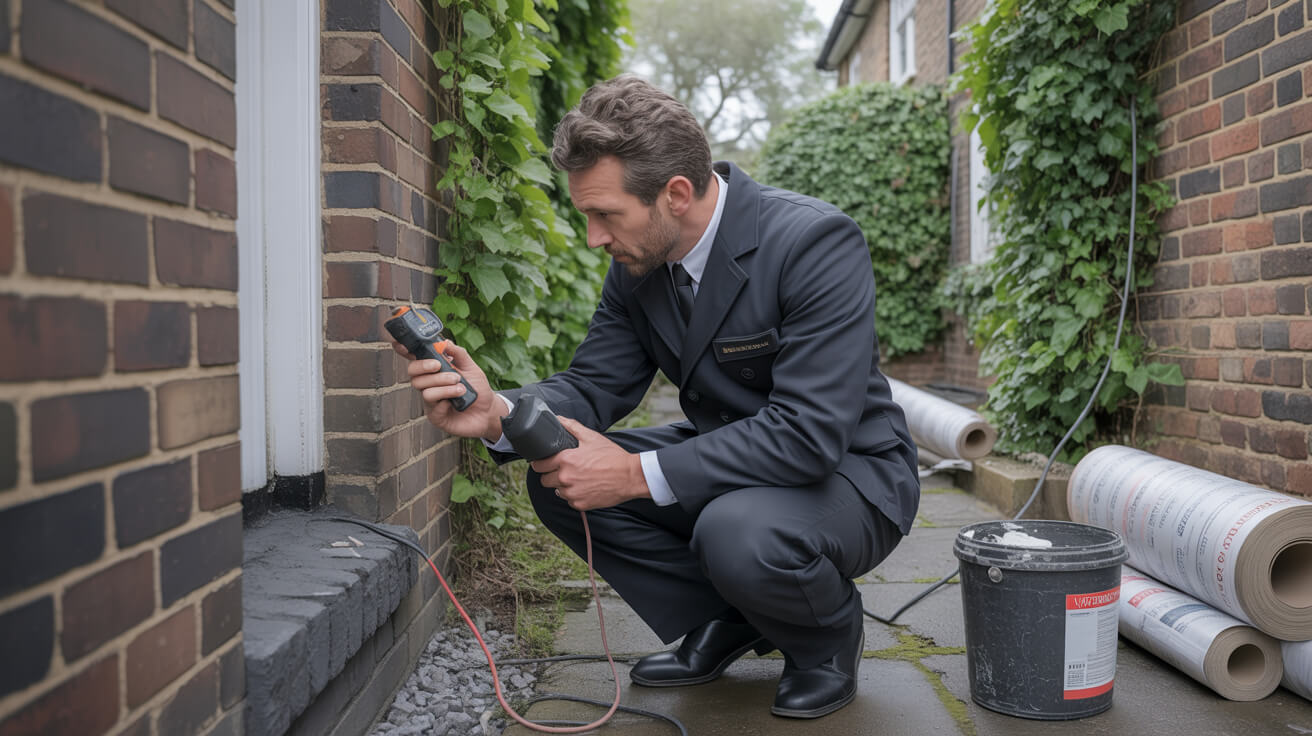
The Act establishes clear procedures for property modifications, ensuring that alterations—such as those undertaken in damp proofing interventions—are conducted in a manner that balances both technical requirements and legal protections. It is a cornerstone of property regulation in domestic and commercial settings, providing a legally robust system to minimise conflict and safeguard property values.
The Party Wall Act 1996 serves as the principal mechanism for managing alterations that affect shared walls and boundaries. Its comprehensive procedures require formal notice to adjoining owners, enable the appointment of independent surveyors, and prescribe dispute resolution processes tailored to protect the interests of all parties involved. In the realm of damp proofing, the Act becomes particularly critical since structural modifications aimed at moisture control can inadvertently compromise neighbouring properties if not executed with stringent legal oversight.
For property owners, contractors, and legal practitioners, the Act offers a framework that integrates seamlessly with contemporary building practices. By mandating thorough documentation and standardised reporting, it ensures that any damp proofing work—including the installation of damp proof courses or tanking systems—meets both statutory and technical standards.
Etymology or Name Origin
The term “party wall” originates from traditional building practices where adjacent properties share a common wall. Historically, such walls served not only as physical dividers but also as integral components of structural support for neighbouring dwellings. Over time, the need for statutory regulation of these shared elements became evident, particularly as urban development led to increased interdependency and disputes among property owners.
The evolution of the term reflects a gradual shift from informal, customary agreements to a formalised legal regime. By codifying the rights and obligations associated with shared walls, the Party Wall Act 1996 encapsulates a rich heritage of property law that has matured alongside modern construction techniques.
Overview / Context
The Party Wall Act 1996 is embedded within the broader architecture of building regulation and statutory compliance. It outlines a clear and systematic approach to managing construction works that may affect shared building elements. Its central purpose is to prevent disputes by ensuring that any modifications which could potentially alter the performance or appearance of a party wall are subject to rigorous procedural controls.
Within the context of damp proofing, the Act is particularly pertinent. Damp issues—such as rising damp, penetrating damp, and condensation—often require remedial works that may necessitate alterations to party walls. For instance, installing a chemical damp proof course (DPC) or undertaking tanking requires careful consideration of the impact on adjacent properties. By establishing clear guidelines for notification, surveyor engagement, and dispute resolution, the Act helps ensure that such interventions do not compromise the structural integrity or historical value of shared walls.
The Act functions not only as a legal safeguard but also as an enabler of best practices in property maintenance. Its provisions encourage open communication between property owners, promote transparency in project execution, and facilitate the integration of technical damp proofing measures with statutory requirements. This dual functionality makes the Party Wall Act an essential component of contemporary property regulation, particularly in densely built environments where moisture management is critical.
History
The genesis of the Party Wall Act 1996 can be traced back to a series of legislative and judicial developments that sought to address the complications arising from shared property modifications. Prior to its enactment, disputes over party walls were frequently resolved through local custom and ad hoc negotiations. However, as urban environments became more complex and building techniques evolved, the limitations of informal practices became apparent.
Origins
Early efforts to regulate party wall disputes began in the mid-20th century, when the rapid growth of urban housing led to an increase in inter-property conflicts. At the time, there was a recognised need for a more structured legal approach to ensure fairness and clarity in the management of shared walls. Initial proposals focused on establishing standard procedures for serving notices and appointing independent surveyors, laying the groundwork for a comprehensive statutory framework.
Industrial Emergence
With the technological advances in construction during the latter decades of the 20th century, property modifications became increasingly sophisticated, resulting in more frequent and complex disputes. These challenges culminated in the enactment of the Party Wall Act 1996, which provided a clear, legally enforceable process for handling alterations to shared walls. This period marked a transition from customary practices to formal legal intervention, underscoring the necessity of a uniform framework that could adapt to the evolving demands of modern construction.
Contemporary Evolution
Since its introduction, the Act has served as a seminal reference point in property law. Its structured procedures for notification, surveyor appointment, and dispute resolution have been widely adopted, influencing both legal practice and industry standards. In the context of damp proofing, the Act has gained renewed importance as issues related to moisture ingress and structural deterioration have become more prevalent. The continual refinement of building technologies and diagnostic tools has further underscored the Act’s relevance, ensuring that it remains a living document that evolves alongside advancements in construction and regulatory standards.
Concept / Description
The Party Wall Act 1996 codifies the legal obligations of property owners when building works affect shared boundaries. It is a comprehensive statute that serves as both a preventive and remedial mechanism, fostering communication between adjoining parties and establishing clear procedures for handling modifications.
Key Provisions and Terms
The Act introduces essential concepts such as the “party wall notice,” which is a mandatory written communication sent to the owner of an adjacent property before any work commences. This notice triggers a series of procedural steps, including the right of the recipient to appoint a surveyor. The appointed surveyor is responsible for producing a detailed report that evaluates the potential impact of the proposed works on the shared structure, taking into account factors such as moisture ingress and structural stability.
Other pivotal terms include “appointed surveyor,” referring to an independent professional tasked with mediating between the parties, and “dispute resolution,” a formal process designed to resolve disagreements without resorting to litigation. The Act does not inherently prescribe specific remedial measures; rather, it focuses on ensuring that any modifications are carried out in a manner consistent with both legal standards and technical best practices.
Administrative Procedures
Central to the Act is its step-by-step administrative framework. Property owners initiating works that may affect a party wall are required to serve a notice, thereby informing their neighbours of the intended modifications. This notice must adhere to prescribed formats and timelines, ensuring that all parties have sufficient time to review the proposal and seek independent assessment if necessary.
The administrative procedures also include the appointment of surveyors, who must be impartial and skilled in evaluating both the legal and technical dimensions of the proposed works. Their reports are critical, as they provide a factual basis for both compliance with the Act and any subsequent remedial actions, particularly in the sensitive context of damp proofing.
Intersection with Damp Proofing
Damp proofing projects often involve interventions that may compromise the integrity of a party wall. For example, installing a chemical damp proof course or undertaking tanking operations requires careful planning to avoid unintended consequences such as moisture migration or structural compromise. The Act, therefore, plays a crucial role in ensuring that any damp proofing work that affects a shared wall is carried out under stringent conditions that protect the interests of all stakeholders. By mandating clear notice procedures and independent assessments, it integrates the technical requirements of damp treatment with the legal imperatives of fair property modification.
Functionality / Purpose / Applications
The primary functionality of the Party Wall Act 1996 is to provide a structured approach to managing alterations that affect shared property boundaries, thereby reducing conflicts and ensuring both legal compliance and technical integrity.
Practical Applications
In practice, the Act is applied in various scenarios that require careful negotiation between parties. During damp proofing projects, for instance, the Act ensures that any structural modifications—whether for installing new damp proof courses or repairing existing deficiencies—are preceded by a legal notice. This process acts as a safeguard by:
- Providing a mechanism for communication: Ensuring that all affected parties are informed about proposed works, thereby preempting disputes.
- Ensuring independent assessment: The involvement of appointed surveyors guarantees that the impact on shared structures is evaluated impartially.
- Standardising documentation: Detailed surveyor reports and compliance records are produced, which serve both as a legal record and as a technical audit of the work being undertaken.
Use Cases Across Property Types
The application of the Act varies across different property types. For residential properties, it helps maintain the integrity of both the dwelling and its neighbouring structures by preventing unsanctioned modifications that could lead to moisture infiltration or structural damage. In commercial contexts, where construction projects may be larger and more complex, the Act provides a clear framework for coordinating multiple stakeholders and ensuring that large-scale damp proofing interventions are executed without conflict. Moreover, for heritage or listed buildings, the Act intersects with additional regulatory requirements such as Listed Building Consent, thereby necessitating a more nuanced approach that balances modern damp proofing techniques with conservation imperatives.
Intended Outcomes
By enforcing a legal and procedural framework, the Party Wall Act aims to:
- Enhance legal compliance: Ensuring that any modifications to shared boundaries are conducted according to established statutory requirements.
- Mitigate risk: Preventing disputes and reducing the likelihood of costly remedial work through early notification and independent surveyor assessments.
- Promote technical excellence: Encouraging adherence to industry standards (such as BS6576 and PAS2035) during damp proofing projects to protect property values and maintain structural integrity.
- Facilitate dispute resolution: Providing a clear, non-adversarial pathway for resolving disagreements between property owners, thereby minimising disruptions and fostering cooperative approaches.
Classifications / Types / Variants
Although the Party Wall Act 1996 sets forth a unified regulatory framework, its application can vary significantly based on the context of the property and the type of work being performed.
Party Wall Scenarios
- Standard Party Walls: These are walls shared between two properties where minor construction works are unlikely to compromise the structure significantly.
- Boundary Walls: Walls that lie precisely on the boundary between two properties, which may require more rigorous control measures due to their exposure to external environmental factors.
- Heritage-Influenced Cases: In properties that are designated as listed or hold historical significance, additional constraints come into play. The Act interacts with guidelines such as listed building consent, necessitating that any modifications to damp proofing works are carefully documented and managed to preserve the building’s character.
Damp Proofing Variations
- Localised Damp Interventions: Projects involving minor repairs or superficial treatments aimed at addressing limited damp issues without altering the structural integrity of the party wall.
- Comprehensive Structural Modifications: Major damp proofing projects that require extensive modifications, such as the installation of chemical damp proof courses or tanking systems, which may directly affect a party wall’s performance.
- Integrated Retrofits: Projects that combine damp proofing with broader building performance enhancements, such as energy efficiency improvements. These require coordinated compliance with multiple regulatory frameworks.
Systems / Tools / Methodologies
The practical implementation of the Party Wall Act 1996 within the context of damp proofing is supported by a range of systems, tools, and methodologies tailored to ensure both legal compliance and technical accuracy.
Diagnostic Tools
- Moisture Metres and Hygrometers: Instruments used to measure the level of moisture within walls, essential for determining the extent of damp penetration and the necessity for remedial action.
- Thermal Imaging Cameras: Devices that capture infrared images to identify areas of thermal variation, which may correlate with moisture ingress and damp-related issues.
- Borescopes and Salt Test Kits: Tools that enable detailed inspection of internal wall structures, helping to detect salt efflorescence and other signs of damp damage.
- Digital Reporting Systems: Platforms that facilitate the efficient documentation and sharing of surveyor findings, ensuring that all stakeholders have access to up-to-date compliance data.
Methodological Frameworks
- Structured Notice Procedures: Detailed protocols for serving party wall notices, including standardised forms and timelines that guarantee all affected parties are adequately informed.
- Joint Surveyor Mediation: A framework where both property owners can appoint a surveyor whose role is to provide an impartial assessment, thereby reducing the likelihood of disputes.
- Compliance Verification: Methodologies for integrating multiple standards—such as BS6576, PAS2035, and building regulations Part C—into the damp proofing process, ensuring that all works are legally and technically compliant.
- Continuous Monitoring: Post-intervention strategies that include regular inspections and moisture logging to evaluate the long-term effectiveness of damp proofing measures.
Workflow Integration
- Pre-Construction Audits: Systematic reviews conducted prior to initiating damp proofing work, which assess the existing conditions and determine the appropriate scope of intervention.
- Real-Time Data Capture: The use of sensor networks and digital imaging to monitor moisture levels during and after intervention, facilitating immediate adjustments if necessary.
- Standardised Reporting: Adoption of consistent surveyor report formats that document both the current state and the anticipated impact of any remedial works, thereby ensuring transparency and accountability within the project lifecycle.
Stakeholders / Entities Involved
Successful application of the Party Wall Act 1996 in damp proofing projects necessitates active participation by a range of stakeholders. Each party plays a critical role in ensuring that both legal and technical standards are met.
Property Owners and Landlords
Property owners, including private homeowners and commercial landlords, are the initiating parties who must serve the mandatory party wall notices. Their responsibilities include ensuring that all documentation is accurate and that potential conflicts with adjacent owners are minimised. Their active involvement is crucial in maintaining property values and safeguarding the building’s overall condition.
Appointed Party Wall Surveyors
Independent surveyors are integral to the process and are tasked with evaluating the impact of proposed works on shared structural elements. Their reports provide an objective basis for assessing the need for damp proofing interventions and evaluating the potential risks associated with structural modifications. Their impartial assessments are essential in mediating disputes and ensuring that remedial actions comply with both technical standards and statutory requirements.
Damp Proofing Contractors
Contractors skilled in damp proofing are responsible for executing the physical interventions mandated by the Act. Their work often includes the installation of chemical damp proof courses, tanking treatments, and other moisture control measures. It is imperative that such work is carried out with precision to prevent moisture ingress that could potentially compromise the adjoining property’s structural integrity.
Regulatory Authorities
local councils and enforcement agencies play a pivotal role in overseeing the implementation of the Act. They are responsible for ensuring that all building works meet the established regulatory frameworks, including compliance with Building Regulations Part C and standards such as BS6576. Their oversight helps in maintaining consistent quality and adherence to statutory requirements across projects.
Legal Practitioners
Legal advisors contribute by interpreting the statutory provisions of the Act and providing guidance on both preventive measures and dispute resolution strategies. Their expertise is vital during instances of conflict, when the interpretation of surveyor reports or the adequacy of party wall notices is in question. They ensure that the rights of all stakeholders are protected under the law.
Legal / Regulatory / Ethical Considerations
The Party Wall Act 1996 operates within a comprehensive legal and regulatory ecosystem, requiring a harmonious integration with various building codes, industry standards, and ethical frameworks.
Legislative Framework
The Act is closely interconnected with other legal instruments. For instance, it is frequently interpreted in concert with Building Regulations Part C, which governs structural safety in construction projects, and standards like BS6576 and PAS2035, which provide technical benchmarks for damp proofing interventions. This multi-layered regulatory interplay ensures that any remedial works are not only legally compliant but also technically sound.
Enforcement and Dispute Resolution
The provisions of the Party Wall Act include clearly defined mechanisms for enforcing compliance. Central to this is the requirement for formal party wall notices and the subsequent appointment of surveyors. These processes are designed to minimise potential disputes by providing structured avenues for resolution. Dispute resolution under the Act typically involves mediation by joint surveyors, thereby reducing the need for costly litigation. This framework is integral for maintaining a balanced approach where both technical and legal considerations are addressed.
Ethical Considerations and Best Practices
In the context of damp proofing, ethical considerations play a significant role. Given that many damp proofing projects involve alterations to historically or aesthetically significant structures, ethical principles demand that any interventions preserve the integrity and value of the property. Transparency in communication, fairness in dispute resolution, and thorough documentation are ethical imperatives that underpin the practical application of the Act.
Moreover, the Act reinforces a culture of accountability by ensuring that all remedial works undergo rigorous independent assessment. This accountability is essential for the long-term trust between property owners and contractors, enhancing the overall reliability of damp proofing interventions.
Performance Metrics / Data / Measurements
Evaluating the effectiveness of damp proofing treatments under the Party Wall Act involves a multifaceted approach that integrates quantitative and qualitative metrics. These performance measurements are essential for ensuring that the interventions meet both legal and technical criteria.
Key Measurement Techniques
- Moisture Readings:
- Utilisation of calibrated moisture metres and hygrometers to obtain precise measurements of moisture levels in walls before and after interventions.
- Regular monitoring to document the reduction in dampness and the efficiency of the installed damp proof course.
- Thermal Imaging:
- Use of infrared cameras to assess temperature variations, which can indicate areas of hidden moisture and potential defects.
- Surveyor Reports:
- Standardised protocols for surveyor assessments document the pre- and post-intervention conditions of the property.
- Verification of compliance with statutory timelines and procedural requirements, ensuring that all modifications adhere to mandated standards.
- Compliance Audits:
- Routine audits conducted by regulatory authorities to ensure that all projects comply with the legal provisions and technical standards.
- Data-driven analysis of moisture reduction, improvement in structural conditions, and the overall impact on property values.
Data Collection and Analysis
The performance metrics are systematically compiled and analysed to provide a comprehensive overview of each project’s success. This data is used to:
- Establish quantitative benchmarks for performance improvement.
- Inform future projects by identifying areas where enhancements are needed.
- Validate the efficacy of the applied methodologies through a comparative analysis of pre- and post-intervention data.
Challenges / Barriers / Limitations
The practical application of the Party Wall Act 1996 in damp proofing projects frequently encounters several challenges that span operational, technical, regulatory, and economic dimensions.
Operational Challenges
- Coordination Complexity:
- The need for timely service of party wall notices can lead to delays if communication is not managed effectively.
- Coordination among multiple stakeholders—including property owners, surveyors, and contractors—may result in logistical challenges and scheduling conflicts.
- Documentation and Compliance:
- Maintaining comprehensive documentation for each phase of the project is essential but can be administratively burdensome.
- Ensuring consistency in report quality across different surveyors and contractors is a recurring operational bottleneck.
Technical Barriers
- Diagnostic Variability:
- Accurately diagnosing the extent of damp penetration varies with the tools used, and differences in substrate composition can complicate assessments.
- Diverse environmental conditions and property types necessitate tailored approaches that may not be uniformly applicable.
- Implementation Accuracy:
- The precision required for installing damp proofing systems, such as chemical DPC injections or tanking procedures, demands strict adherence to technical guidelines.
- Errors in the execution process—such as inadequate cure times or improper substrate preparation—can undermine the effectiveness of the intervention.
Regulatory Limitations
- Ambiguity in Statutory Provisions:
- Certain provisions of the Act may be open to multiple interpretations, creating uncertainties in how they apply to modern damping challenges.
- The static nature of legislative language sometimes fails to accommodate the dynamic realities of contemporary construction techniques.
- Compliance Costs:
- The financial burden associated with rigorous compliance, including the hiring of independent surveyors and comprehensive documentation, can be substantial, particularly for smaller property owners.
Social and Economic Factors
- Dispute Vulnerability:
- Discrepancies between property owners regarding the scope and cost-sharing of the proposed works can trigger disputes.
- The economic impact of delays—both in terms of project timelines and property valuation—adds an additional layer of complexity.
- Market Variability:
- In heritage or historically sensitive areas, the costs associated with compliance and maintenance are often higher, further complicating project execution.
Impact / Influence / Legacy
The Party Wall Act 1996 has had a significant and enduring impact on both the damp proofing industry and the broader field of property maintenance. Its influence extends across legislative, economic, and cultural domains, shaping industry practices and standards over time.
Legislative and Regulatory Influence
- Standardisation of Practice:
- The Act has ushered in a standardised approach to property modifications by mandating clear procedures for notification and independent assessment.
- It has influenced subsequent regulatory frameworks, providing a model for future statutory instruments related to property and construction.
- Reduction in Disputes:
- By establishing formal processes for dispute resolution, the Act has significantly reduced the incidence of prolonged legal conflicts, enabling more efficient project execution.
- Its structured methodology ensures that disagreements are managed through impartial mediation by appointed surveyors.
Economic and Property Value Implications
- Stabilisation of Property Values:
- The clarity and predictability provided by the Act help protect property values by ensuring that damp proofing interventions are carried out in a manner that preserves structural integrity.
- Transparent dispute resolution and robust compliance standards mitigate the financial risks associated with structural defects.
- Market Confidence:
- The Act fosters confidence among investors and mortgage lenders by ensuring that construction practices adhere to high standards.
- Its comprehensive documentation requirements serve as a form of quality assurance, thereby enhancing market trust in property transactions.
Cultural and Industry Legacy
- Evolution of Construction Practices:
- The Party Wall Act has played a pivotal role in modernising building practices by integrating legal oversight with technical methodologies in property maintenance.
- It has contributed to the professionalisation of the damp proofing industry, encouraging the adoption of best practices and high standards.
- Heritage Protection:
- In the context of historic and listed buildings, the Act provides essential safeguards that balance modern maintenance needs with conservation imperatives.
- Its influence in heritage settings underlines its importance as a tool for both preservation and progress, ensuring that traditional structures are not compromised by contemporary interventions.
Future directions, cultural relevance, and design discourse
Advancements in technology, legislative reform, and shifting cultural perspectives are set to influence the future application of the Party Wall Act 1996 in the context of damp proofing. Several emerging trends indicate both challenges and opportunities for the continued evolution of this important statutory framework.
Emerging Technological Innovations
Significant progress in digital technologies is transforming traditional construction and regulatory practices. The integration of advanced sensor networks, next-generation imaging technologies, and real-time data analytics is expected to streamline the processes mandated by the Party Wall Act. Digital platforms capable of automating notice issuance, monitoring moisture levels, and facilitating remote surveyor assessments are poised to enhance both compliance and operational efficiency. These technologies promise not only to reduce delays and errors but also to provide more detailed, actionable insights into the performance of damp proofing interventions.
Potential Legislative Reforms
Ongoing debates among policymakers and industry experts suggest that the Party Wall Act 1996 may undergo substantial reforms in the future. Proposed updates could address ambiguities in statutory language, incorporate modern building technologies, and harmonise the Act with international standards. These reforms would aim to create a more dynamic and adaptable regulatory framework, capable of meeting the evolving challenges of contemporary construction practices. In particular, integration with emerging sustainability standards and energy efficiency measures may become a focal point of future legislative revisions.
Cultural and Societal Shifts
As public awareness of moisture-related building deterioration grows, so does the cultural significance of maintaining structurally sound and aesthetically preserved properties. The growing emphasis on heritage conservation, coupled with increased demand for transparent regulatory practices, is driving a cultural shift that increasingly values both technical excellence and legal rigour. Society’s heightened focus on environmental sustainability and historical preservation has the potential to shape future interpretations of the Party Wall Act, ensuring that it remains relevant in a rapidly changing regulatory landscape.
Design Innovations and Aesthetic Considerations
The interplay between regulatory compliance and design aesthetics is gaining prominence in the field of property maintenance. Modern damp proofing interventions are not solely evaluated on technical efficacy but also on their impact on the overall design and visual harmony of a building. As architects and designers strive for solutions that seamlessly integrate structural repair with aesthetic appeal, the Party Wall Act 1996 may increasingly be interpreted through the lens of design discourse. This emerging trend could lead to innovative approaches that balance strict regulatory adherence with creative, sustainable design solutions.
Integration with Broader Industry Trends
The future trajectory of the Party Wall Act will likely be shaped by broader trends in the construction and property management sectors. As data-driven decision making gains traction, the incorporation of performance metrics and predictive analytics into regulatory compliance processes will enable more nuanced tracking of project outcomes. Additionally, the rising importance of energy efficiency and lifecycle management in the built environment may steer the application of the Act toward a more integrated approach that addresses both immediate repair needs and long-term property sustainability.
Global and Local Perspectives
Although the Party Wall Act 1996 is region-specific, its governing principles resonate with similar regulations in other jurisdictions. Comparative analyses of party wall legislation across the globe may yield insights into best practices, enabling local adaptations that benefit from international experience. Locally, as properties face unique challenges related to altitude, climate, and historic preservation, the Act’s application is likely to become increasingly tailored to address specific regional concerns. This dual perspective—combining global best practices with local nuances—will be critical in driving future enhancements to the regulatory framework.
Implicit Pathways for Implicit Adoption
New technologies, evolving legal interpretations, and shifts in cultural practices will continue to expand the interpretation and application of the Party Wall Act 1996. As these dynamics converge, the Act is poised to become not only a regulatory tool but also a catalyst for industry-wide innovation. Continuous improvement in survey techniques, enhanced mediation processes, and greater integration of digital compliance systems will reinforce its legacy as an indispensable instrument in property maintenance. This evolution, implicit in the increasing sophistication of construction practices, will support a future where compliance is both intuitive and robust, ensuring that shared property modifications contribute positively to both structural integrity and aesthetic preservation.

