
 By
By  August 26, 2025

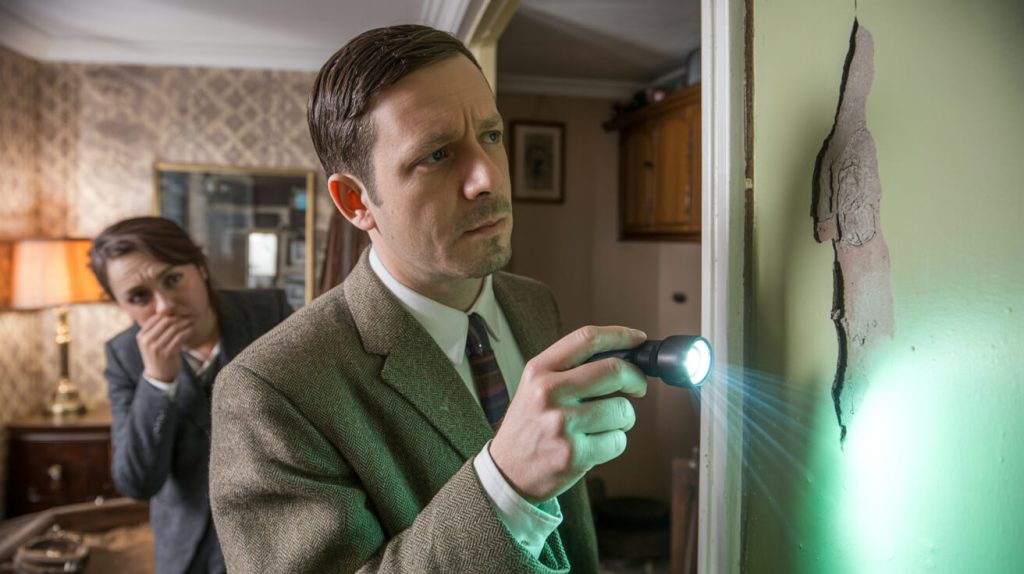
How Does Damp Undermine Fire Safety in UK Buildings?
Damp is more than a maintenance hassle—it’s a direct threat to your building’s fire protection. If you own, manage, or let property, hidden moisture steadily weakens the very fire safety layers that the law counts on to keep people safe. The Regulatory Reform (Fire Safety) Order 2005 makes no allowance for “background” damp problems; if fire or smoke controls fail because of moisture, it’s your legal and financial head on the block. Non-compliance here can block sales, kill insurance, and put lives at serious risk.
Moisture eats away at silent barriers, leaving you exposed before a fire ever starts.
When damp slips into structures—behind walls, under floors, or around services—it softens, warps, or corrodes every component meant to contain fire and smoke. Frame timbers rot. Gypsum and plasterboard lose stability. Intumescent seals, core to fire doors and risers, may swell too soon or not at all. Even a slight door swell—just a couple millimetres—is enough for toxic smoke to flood safe zones.
The law—and insurers—assume your fire protections work as specified in the lab: dry, undamaged, uncompromised. But real-world conditions can be very different.
Why Does Moisture Strip Away Fire Resistance From Modern Buildings?

Building codes and fire systems rely on dry, solid barriers. Let them soak up moisture, and their fire ratings evaporate. Sodden plasterboard can collapse in the first minutes of a fire, instead of holding for 30 or 60 minutes as certified. Intumescent strips and seals—meant to swell and block smoke in a fire—may have been degraded by years of undetected condensation, causing them to fail when actually needed.
Fire doors can fail in real emergencies from just a few percent increase in moisture content.
Damp doesn’t look dramatic. It works quietly, behind the walls, at the base of doors, inside service risers. A certified contractor’s sticker means little if unseen leaks have turned safe structures spongy. During a real fire or council audit, you may find you have much less escape time than you expect.
Even building materials that “look fine” on a walkaround can hide trouble. Plasterboard and MDF absorb water at the edges or fixings, reducing their ignition resistance. Brickwork and blockwork can trap water that migrates to cavities or electrical chases—weakening fire stopping and encouraging corrosion of crucial alarm wiring.
Who Is Liable When Damp Weakens Fire Barriers and Containment?

The Fire Safety Order 2005 pulls no punches: building owners, directors, management agents, and landlords are all legally responsible for keeping fire safety measures working as specified. If damp damages doors, partitions, alarm cabling, or even the finish on a riser, it’s not only a maintenance fail—it’s a legal liability.
You’re now expected to:
- Keep thorough inspection records, with dated damp checks, photos, and reports in case of dispute.
- Have specialist sign-off for every remediation: no more ‘quick fix’, cosmetic repairs.
- Prove—if challenged—that you’ve checked, maintained and repaired any areas at risk, with a chain of evidence.
You’re judged by what’s documented, not what you believe is ‘OK’ behind the skirting.
Neglect or ignorance can trigger:
- Enforcement orders (clean-up, upgrade, or legal action)
- Insurance claim denials—including full loss of rent, legal fees and repair costs
- Refused sales or new leases, with surveys raising fire risk alerts
- Housing Health and Safety Rating System issues, with tenants empowered to demand repairs and compensation
Tenants, leaseholders and local authorities all have clear legal routes for complaint and escalation.
Where Does Damp Attack the Fire Safety Chain First—and Hardest?

Damp’s damage focuses on the most vital safety features:
- Fire Doors: Even light swelling at the base or frame is enough to break certification and allow fire or smoke to pass. Rotten frames or degraded seals mean the door simply won’t hold when it matters.
- Compartment Walls and Floors: Moisture in timber studs, noggins, or soft insulation inside walls or below floors quickly breaks down fire-stopping, letting flames and smoke spread between rooms or flats.
- Cavity Walls: Soaked insulation, hidden black mould or saturated fire barriers all sabotage compartmentation, especially in conversions and newer timber-frame designs.
- Emergency Systems: Damp in alarm cables, emergency lighting, or detectors creates a silent electrical fail—sometimes only exposing itself during a real fire or at the next disruptive inspection.
Industry data shows over a third of fire enforcement proceedings in the past year tracked initial failure to—often undetected—damp and mould intrusion (based on case data from IFSM, 2023).
Damp and mould issues are the common starting point for cascading fire protection failures.
How Do You Prove You’re Compliant—and Not Just Lucky?
You can’t talk your way out of a missing or dated record. These days, compliance is based on digital, time-stamped proof of inspection and professional repair. Tick-box logs won’t keep you out of court.
A legally defensible standard now requires:
- Annual dual inspections from a fire safety and a damp specialist, logged with storeable digital metre and photo evidence
- Signed-off remedial work reports, linked to specific zone/cavity/floor records
- Evidence that all repair and inspection actions align with Fire Safety Order 2005 requirements, not just ‘maintenance best effort’
- Re-test and document all fire/escape systems after a leak, spill, or change of use—even a new tenant or major redecoration
If surveyed or challenged, only properly logged, specialist-certified digital records count as defence. “Good intentions” or “doing your best” are not enough to satisfy regulators or insurers.
No evidence, no compliance. Retrospective repair logs rarely pass legal muster.
What’s at Stake When Damp Destroys Your Fire Safety Margin?

One missed damp patch can cost you dearly:
- Multiple Fire Door Failures: Testing shows similar doors exposed to the same leak or humidity will share the same faults; councils may require block-wide replacement.
- Compartmentation Breakdown: Where a leak or failed waterproofing wets a void or partition, getting sign-off often means major strip-out and rebuild.
- Insurance Voids: If it emerges that “unmanaged” damp led to accelerated fire spread, you may lose cover even after the fact. No payout for repairs, legal claims, or lost rental income.
- Regulatory and Surveyor Delays: Sales, occupancy, or approvals will be blocked until conclusive, evidenced remediation is completed.
- Resident/Leaseholder Claims: New housing rules and the HHSRS empower occupants to demand repairs, claim compensation, and escalate to council inspection.
| Problem | Upfront Cost | Hidden/Indirect Costs |
|---|---|---|
| Fire Door Fails | £300–£550 | Full block upgrade, rent loss |
| Failed Partition | £600–£1,400 | Strip-out, rewire, surveyors |
| Insurance Denial | All new work | Litigation, rent/asset loss |
| Occupancy Delay | Minor works | Weeks lost, legal fees |
Reactive fixes—like repainting or filling with foam—don’t work or satisfy inspection. Only full, record-backed, compliant remediation protects your position, and ensures your next survey, renewal, or claim will stand.
Are You Ready for the Next Level of Fire Safety Enforcement?

Across the UK, and especially in the South East, authorities are taking a new line: digital, evidence-based, “joint safety” logs. It’s not enough to fix fire doors while ignoring slow leaks or let risers dry out on their own timetable.
Pro-active management means:
- Secure, regularly updated digital maintenance logs—including photos, moisture sensor readings, and surveyor sign-offs
- Documented re-testing after any water event, repair, or change of tenancy
- Clear, joined-up evidence showing cooperation between fire and damp professionals
Failing to keep accurate records or document your actions risks much more than a slap on the wrist. Many blocks have seen months of occupancy lost or sales derailed over missing or out-of-date logs. If a leak, weather event or tenant flag raises an alarm, the first question is: what’s documented?
Sussex Damp Experts: Combining Real-World Damp Mastery With Fire Safety Compliance

Sussex Damp Experts go further than old-school damp proofers. Our teams blend accredited fire and moisture survey skills, advanced digital reporting, and true remediation—giving you a traceable chain of evidence for every cavity, door, and floor.
With our combined service:
- Every inspection covers both damp risk and fire containment status—eliminating dangerous ‘blind spots’ missed in single-specialism checks
- You receive photo-driven, surveyor-signed records detailing both immediate threats and areas to monitor
- Our remediation work is always mapped to legal requirements—nothing passed over, no forgotten floors or risers
- Compliance packs keep you audit-ready for surveys, insurance, or council site visits
- Ongoing care: we offer annual reviews, post-incident checks, and fast-response troubleshooting as standard
We back every job with PCA, TrustMark, and BS 6576/BS 8102 credentials—meaning you’re protected by both technical and legal best practice. When the next lender, surveyor, or council officer comes checking, you’ll have every log—and real solution—ready to go.
Smart records, airtight fixes—your building stands up to the toughest test.
Book a Fire & Damp Compliance Survey With Sussex Damp Experts
Hidden damp is no longer a “maintenance issue”—it’s a fire safety threat that exposes you to legal and financial shocks. Our joint fire and damp surveys, compliance-driven remediation, and digital audit packs are trusted by property managers, housing associations, landlords, and councils in Sussex and beyond.
Zero jargon, no ‘quick wins’—just true risk control, compliance, and peace of mind you can prove at any inspection or claim.
Before the next tenancy change, audit, or insurance renewal, get ahead of risk—book Sussex Damp Experts and lock in real protection, verified by the only evidence that counts.
Frequently Asked Questions
What triggers legal liability when damp or mould threatens fire safety in UK properties?
Legal duties are triggered the moment damp, water ingress, or mould compromise fire safety defences in any part of a UK property. The Regulatory Reform (Fire Safety) Order 2005 places this duty squarely on the “responsible person”—typically landlords, managers, or agents charged with ensuring escape routes, alarms, and containment features work as designed. Even a small patch of rising damp or hidden condensation can rot doors, weaken fire-rated plasterboard, or corrode wiring, quietly undermining protections you’re obliged to maintain. Authorities require more than surface repairs: they expect a documented paper trail—damp metre readings, date-stamped survey photos, and maintenance logs signed by accredited professionals. When these records are missing, enforcement action lands quickly: councils can issue repair orders, insurers may withdraw cover, lenders may freeze transactions, and tribunals can force rent or asset loss. For property managers and landlords, liability is generally pinned to the last entity responsible for fire safety, even during or after agent transitions. A single missed inspection or weak excuse won’t limit exposure—only diligent documentation and expert support will keep liabilities watertight.
Which parties shoulder most of the legal risk?
- Landlords and freeholders: retain overarching responsibility for fire and damp safety in all rented or communal buildings
- Letting agents or block managers: liable under management contracts or rent collection arrangements
- Tenants: only if their direct misuse damages fire or damp protections
- Successive agents: legal focus defaults to whoever last “controlled” fire safety obligations
For any doubts, councils, lenders, and insurers lean on the strictest line—whoever last managed the property’s fire precautions is held accountable. If records or clarity are missing, engaging a specialist such as Sussex Damp Experts to document and rectify issues is the surest way to anchor your legal defence.
The law isn’t interested in blame—only in proof you protected what matters, when it mattered most.
Why do certain building materials accelerate damp–fire breakdowns?
Materials that seem durable in a dry survey can turn traitor once moisture is added to the mix. Plasterboard instantly loses fire integrity when saturated, often disintegrating behind a neat surface. Damp timber warps, softens and, under fire, collapses long before its rated timeframe. Fire-rated caulks and intumescent strips—tasked with expanding or bridging gaps in fire—can delaminate or shrink with repeated wetting and drying. Even modern mineral fibre and rigid foam cavity insulations become moisture traps, holding water out of sight until a small spark or fault creates a breach. Visual clues often show late: a sagging wall, musty joinery, or spongy insulation isn’t “cosmetic”—it’s a failure of the entire fire strategy.
Which materials can mask the most risk?
- Plasterboard: Bulges, soft patches, or sagging at walls and ceilings, especially near kitchens or basements
- Softwood joinery: Structural weakening and early collapse under fire when damp persists
- Fire door seals and intumescent strips: Loss of flexibility, gaps in door lines, or flaking patches after leaks
- Insulation: Soggy or low-density spots inside cavities and between floors
- Heritage lime or gypsum plasters: Salt blooms or powderiness, indicating deep moisture ingress
It’s not enough to replace what’s visible. Sussex Damp Experts deploy forensic surveys—thermal imaging, probe metres, targeted core sampling—to map deep risk zones, then repair and document with compliant materials fit for both fire and moisture resistance. One hidden error now is an expensive enforcement or insurance headache later.
How does hidden damp quietly disable fire alarms and detection systems?
Moisture rarely announces itself: by the time alarm failures surface, the damage may already be done. Even a trickle of condensation inside cable trunking, packed risers, or the back of alarm heads can corrode copper, trigger false alarms, or—more dangerously—silence a detection zone entirely. The law demands more than an annual beep test. Under the Fire Safety Order, alarms must remain operational at all times, not just on paper. Trunking behind kitchens, risers linked to basements, or joinery close to outside walls are hotspots for hidden damp build-up, especially after storms, leaks, or unchecked mould. If systems pass a surface check while vulnerable wiring rots unseen, councils and insurers treat this as a negligence gap—not an accident.
Where do subtle faults sink compliance?
- Trunking and cable runs above bathrooms, kitchens, or damp basement walls
- Junction boxes behind skirtings or under raised floors—often missed after plumbing work
- Detector bases on ceilings subject to temperature differentials or high humidity
- Shared riser cupboards with insufficient ventilation
Annual inspections using moisture metres and digital probes—plus photographic logs—are the only way to reliably uncover and resolve these silent threats. Sussex Damp Experts’ full compliance pack covers every critical surface and concealed route, supporting not just insurance and lending requirements, but lasting safety for occupants.
A working alarm without a dry circuit is a false comfort. Real safety is built on what you can’t see as well as what you can.
How do insurers and mortgage lenders react if damp undermines fire safety?
Surveyors and underwriters increasingly zero in on evidence of damp-driven fire risk. The days when “cosmetic” damage could be waved away are over. A single adverse survey noting compromised fire barriers—rotted doors, saturated plasterboard, or rusted alarm cables—can halt a property sale, void insurance, or force emergency works before lending proceeds. In more than 20% of recent property deals flagged by fire-damp issues in postcodes with frequent claims, values dropped by up to 12–15%. Insurance companies scrutinise guarantee quality and aftercare reports; mortgage lenders demand formal, date-stamped survey reports and digital logs showing both cause and resolution of all defects. Lenders and insurers now expect digital portfolios of every fire-damp repair and annual aftercare appointments locked in from day one. One missing document is enough for a denied claim, lost sale, or expensive bridging finance.
What evidence turns a “fail” into a “pass”?
- Signed, third-party reports tracing every damp risk along fire escape lines or walls
- Photo-led, timestamped repair logs—not just contractor invoices
- Annual aftercare and dry-down inspection notes confirming every repair holds up
- Guarantees referenced in policy paperwork and cross-referenced to fire standards
Sussex Damp Experts are calibrated to these requirements, producing compliance packs that preempt insurer and lender objections, keep deals moving, and shore up your property’s value.
What penalties and setbacks strike when damp-fire risks go ignored?
Neglecting the overlap between damp, mould, and fire safety is an expensive mistake. Local authorities can issue improvement notices—often with tight deadlines—and escalate straight to unlimited fines or prosecution if a fix is slow or incomplete. Insurance payouts are increasingly denied under “pre-existing defect” rules if you can’t prove risks were actively managed, not just discovered post-incident. Landlords might lose rent, be forced into delayed sales, or forfeit the right to operate an HMO if a single “category 1” hazard is confirmed, regardless of intent. On the commercial side, business rates or occupancy rights can be suspended if fire safety is declared compromised by moisture ingress. Every unresolved hazard is logged in the property’s compliance record—a strike against future sales or lease renewal.
Which property types face harsher scrutiny?
- Social lets, HMOs, and conversions with a history of tenant complaints
- Older or heritage homes with visible repairs but missing compliance chains
- Commercial spaces dependent on unbroken safety certifications
- Properties flagged for unresolved hazards twice within 12 months
With Sussex Damp Experts, each repair comes with full documentation—aftercare visits, guarantee records, and ready-to-share portfolios for council, insurer, or lender queries. A transparent compliance chain is your first and last line of defence.
How do Sussex Damp Experts make fire-damp compliance futureproof for all property types?
The Sussex Damp Experts approach fuses forensic-level diagnosis, context-appropriate repairs, and ironclad documentation—each stage designed to satisfy council, insurer, lender, and resident scrutiny. Beginning with tailored surveys targeting all likely “moisture-to-fire” failure points—cellars, risers, escape doors, heritage finishes—each finding is tracked with photo and metre logs. Remedial work pairs modern barrier systems with heritage-sensitive materials, sustaining vital breathability and fire barriers. After-you-purchase and emergency callout reviews are locked in as part of the care cycle, keeping compliance continuously up to date. All evidence—digital or paper—feeds into a property’s compliance pack: geo-tagged, time-stamped, and prepped for hassle-free audit or re-sale. Embedded guarantees, running up to 15 years, link the damp/repair intervention to fire safety in a single document.
What secures long-term compliance and peace of mind?
- Evidence chain: photographic and data logs, signed by accredited professionals
- Blended materials: modern compliance, heritage respect—no trade-off required
- Ongoing care: annual reviews and emergency intervention included as standard
- Guarantees: insurance-backed and tailor-referenced to the history and type of every property
This thoroughness places Sussex Damp Experts as the contractor of choice for homeowners, agents, councils, and commercial clients who want all bases covered—no loose ends, no sudden last-minute risks, just solid, durable compliance.
What are the most effective ways to protect property value and reputation from fire–damp threats?
A systems-based approach shields both asset value and personal reputation. Schedule twice-yearly, cross-discipline site assessments covering all junctions where moisture and fire risks overlap, not just in “problem” areas. Each repair or intervention must be digitally recorded, with accessible logs distributed to tenants, buyers, or asset managers. Letting agreements and contracts should embed aftercare and compliance clauses, formalising a culture of diligence before an authority compels it. Partner with experts trained not just in technical repair, but in documentation and forensic tracing—otherwise, the first missed hazard becomes your problem at audit, not theirs.
Checklist for robust, enduring protection:
- Commission biannual combined damp/fire barrier surveys with digital, shareable evidence
- Insist on exhaustive before/after photographic documentation, with traceable logs and specialist signoff
- Integrate aftercare—annual checks, remote damp monitoring, and rapid-response guarantees—into your compliance planning
- Ensure all guarantees are insurance-backed and explicitly reference both moisture and fire remedial work
Sussex Damp Experts equip owners, managers, and agents with a bulletproof compliance archive—removing the guesswork, surfacing silent risks, and turning regulatory threats into lasting leadership among peers and stakeholders.
True resilience means your property’s safety records work as hard as you do—visible proof, not invisible risk.

