
 By
By  August 26, 2025


Why Damp Has Become the Silent Compliance Risk in High-Rise and Multi-Occupancy Buildings
Nobody walks into a high-rise or multi-occupancy block expecting damp to be the dealbreaker. Yet for owners, agents, and managers across the modern property spectrum, a single patch of hidden mould isn’t just a maintenance headache—it’s the silent fault line regulators and insurers watch for. The Building Safety Act 2022 (BSA) and the Regulatory Reform (Fire Safety) Order 2005 (RRO) have fundamentally shifted the playing field: lingering moisture isn’t about bad aesthetics; it’s now a direct marker of risk, non-compliance, and operational exposure.
Damp in a high-risk building is no longer a maintenance nuisance—it’s a red-flag for regulators and insurers.
Picture a high-rise with a bit of bubbling paint, a lingering musty smell in the stairwell, or a soggy patch by the lift shaft. In the old world, you mopped up, painted over, and carried on. Now, these are telltale signals—a breadcrumb trail for enforcement, insurance refusals, or legal action against everyone with ‘accountable person’ status. Survey reports that might have sat quietly in the facilities file are now ammunition: for prosecution, for fines, for block-wide disruption if required.
Unchecked damp is now a system-wide compliance concern. Moisture migration undermines your fire barriers and compartment walls, decays structural integrity, and can trigger multi-million-pound claims where asset value, safety, and reputation intersect. For the first time, moisture risk isn’t just local—it’s fully networked across the regulatory landscape, with each ignored sign multiplying downstream trouble for every stakeholder.
Which Buildings and Roles Must Now Meet BSA and Fire Safety Law?
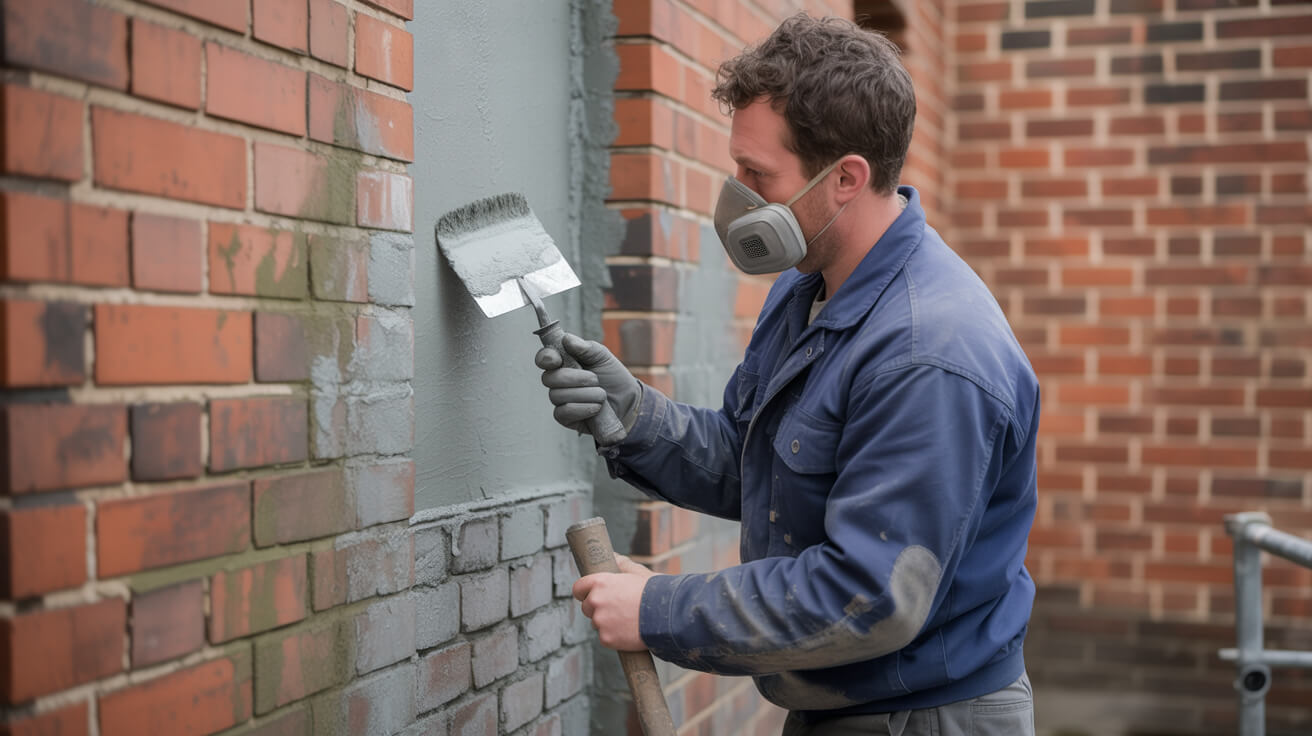
The BSA and RRO weren’t written in a bubble. They draw a hard line at buildings standing 18 metres or taller—effectively all high-rise flats, conversions, complex care homes, student accommodation, and healthcare facilities. But who actually wears the compliance risk?
One overlooked kitchen leak or missing log can put your entire high-rise or housing block into Regulator crosshairs.
If you’re an owner, a managing agent, a Right to Manage (RTM) company, or you hold statutory ‘Accountable Person’ duties, you’re on the hook. That includes landlords, major letting and managing agents, resident management companies, and anyone delegated for safety, maintenance, or compliance sign-off. Tenants won’t escape scrutiny if they block access, but the primary legal chain runs straight through the people tasked with proving that moisture and fire risks are found and fixed.
Hotels and military buildings are technically out of scope, but nearly every block of flats, HMO, and most conversions now land in the firing line. Fire safety law has moved beyond just escape corridors and egress checks—after Grenfell, inspectors view every water-damaged wall, soaked fire door, or damp-compromised compartment as a direct threat to legal compliance (Fire Risk Assessment Guide, gov.uk). If a neglected flat allows moisture to breach a fire barrier, the entire building’s compliance standing plummets, with possible criminal as well as financial consequences for every professional linked to the chain of response.
What Demonstrable Compliance Now Looks Like: Beyond the Paper Trail

Tick-box compliance is gone. “We’ve always done it this way” or “let’s just patch it up for now” won’t cut it when the Regulator—or your insurer—comes calling. Today, defensible compliance means active, ongoing, start-to-finish documentation of every moisture hunt and repair—proof that you didn’t leave risk to chance.
You must prove, with evidence, that every damp threat is charted, remediated, and monitored by the book.
What do you need in practice?
- Audit-level diagnosis every time: — Not just a glance and a guess: precise tools, clear measurements, and defensible records every survey
- Root cause focus: — No generic ‘moisture present’ lines. You’re expected to separate and document rising damp, condensation, and lateral penetration for every finding
- Save every record: — Test logs, photographic evidence, risk level coding, insurance certs, resident notifications, and aftercare plans
- Standard-based action: — Repairs mapped strictly to standards: BS 6576 for rising damp, BS 8102 for basement or waterproofing, PAS 2035 for retrofit or upgrades
- Continuous monitoring: — Schedules for periodic sensor checks or manual inspection, logged and ready to show with resident or Regulator queries
A missing evidence chain isn’t just a technicality; it’s a non-compliance in its own right, opening the door to fines, loss of insurability, and (in the event of loss) criminal liabilities for duty holders.
Why Damp Threatens Structure, Fire Integrity, Asset Value, and Insurance Access

Moisture never sleeps. Beneath the surface, it sabotages your structure and fire defences in slow motion.
Timber decay, steel corrosion, and subsiding masonry start out of sight—but as water migrates around joints, cracks, and poorly finished repairs, your block’s shell quietly deteriorates. Worse, water courses can create new, invisible routes for smoke and fire, bypassing fire stops, breaking compartmentation, and destroying the layers that legal frameworks put in place to save lives and assets.
Unseen damp breaches fire compartmentation and decays value, putting building and business at legal risk together.
The direct, measurable effects include:
- Compromised structure: — Damp rots timber, rusts steel, and weakens bricks and mortar, shifting risk from hypothetical to urgent
- Fire safety failure: — Wet fire barriers, smoke seals, or wall voids can no longer contain a blaze, voiding compliance and breaking the law
- Asset value decay: — Surveyors don’t miss moisture. HHSRS scores climb, mortgage lenders see risk, and insurers may exclude coverage—or raise premiums—while property values quietly drop
- Legal exposure: — Incomplete records, no matter the quality of the fix, are an open trapdoor. Anyone in the chain (from facilities to owner) is liable for breakages—especially under the Regulator’s new expectations (*RICS Guidance, Fire Risk Assessment Guide, gov.uk*)
Every ignored damp patch, no matter how small, is now a compliance weakness that insurers, the Regulator, or a court will seize on.
Sussex Damp Experts’ Audit-Grade Protocol: Forensic Diagnosis, Clear Evidence, True Compliance

Good enough doesn’t pass muster any more. High-rise and multi-occupancy properties demand a system, not “a guy with a metre.” Our approach at Sussex Damp Experts aligns diagnostics, repairs, and compliance proof into an integrated protocol designed for the new Regulator reality.
Precision Diagnosis
Our process, built for audit scrutiny:
- Moisture metres deployed systematically, scanning floor, wall, and ceiling—no shortcuts, no guesswork
- Thermal imaging reveals thermal bridges, hidden damp spots, and void-level condensation
- Borescopes tackle inaccessible risers, behind panelling, and complex service routes
- Salt and hygroscopic tests separate rising, penetrating, and condensation-driven damp at the source
Destructive surveys are not shied away from when necessary—when fire safety or structural risk is even suspected, our surveyors collect actual evidence, not just surface readings. Everything, down to the last reading and photograph, is logged and referenced to British Standard and Building Safety Act frameworks for maximum defensibility.
Risk Coding, Standards Linking, and Clear Documentation
- Every issue coded for both structural and fire-risk impact
- All evidence and repairs cross-referenced to core standards: BS 6576, BS 8102, PAS 2035, BSA itself
- Surveys and repairs logged for audit, renewal, or legal verification—nothing left to speculation or “reputation”
Remediation Matched to Context, Never Lagging
Each fix is context-driven and standards-aligned:
- Chemical DPC for solid masonry; tanking systems for basements; heritage plasters for listed settings—chosen to match substrate and use-case
- Products are only used where they can be fully supported: TrustMark, SSIP, DOP (Declaration of Performance) chain, manufacturer partner approvals
- Handover packs including warranties, logbooks, and future monitoring schedules—no “job done” invoices that leave owners vulnerable
Aftercare Is Ongoing Compliance
The compliance chain isn’t closed with the last coat of plaster:
- Data-logging moisture sensors (where effective) provide a real, time-stamped proof of dry-down and ongoing system health
- Scheduled annual inspections—results photo-tagged and aligned with the compliance plan, ready for Regulator or resident inspection on demand
- Every repair, check, and communication is mapped to the asset’s chain of compliance, supporting claims, renewals, and ongoing operation
Which Certifications and Logs Actually Shield You?
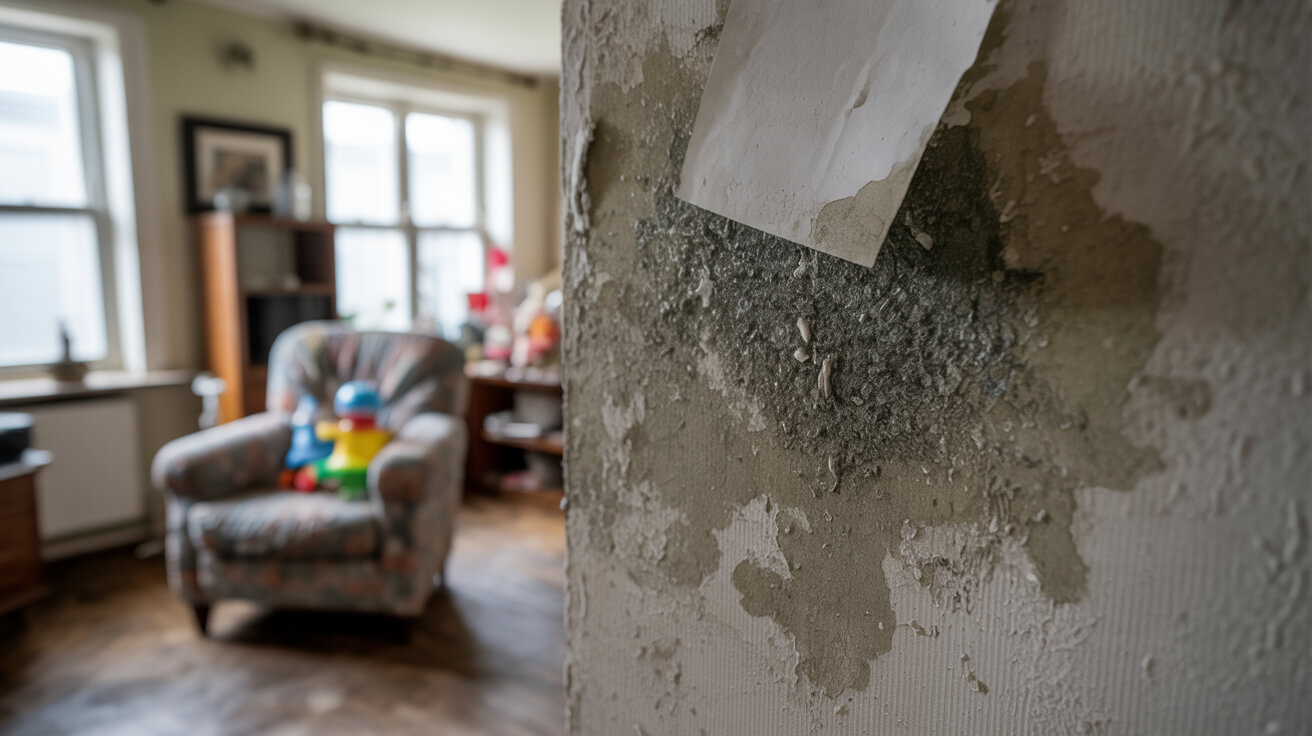
Nice invoices and anecdotal maintenance reports are dead on arrival. Under the BSA, RRO, and modern insurance requirements, buildings now demand a living, credible, standards-linked chain of proof—stretching from diagnosis through remediation and ongoing monitoring.
Four certifications or logs form the backbone:
- BS 6576: — Mandatory for diagnosis and rectification of rising damp
- BS 8102: — Applied for structure and below-ground waterproofing
- PAS 2035: — Risk and solution framework for energy retrofit and upgrades
- TrustMark / SSIP Registration: — Third-party checks accepted by mortgage lenders, insurers, and the Building Safety Regulator
In a Regulator or claims scenario, a registered warranty and full log of photos, test results, and treatment certificates is your lifeline.
Our documentation chain for each job at Sussex Damp Experts:
- Signed surveys and diagnosis reports, referencing every material finding, reading, and remediation
- Key evidence: moisture and salt readings presented visually, with full photo chains
- Product, material, and execution certificates—nothing left undocumented or unsupported
- Post-repair: monitoring and maintenance logs delivered as part of routine handover and compliance assurance
All of these elements combine to create a bulwark against future claims—not just regulatory inspection, but asset value, finance, and legal scrutiny.
Monitoring, Reporting and Regulator Dialogue: Creating Live Compliance

Annual surveys and quick-react repairs for leaks set the minimum standard. Today, the aim is a “live” compliance dossier—always ready for residents, owners, insurers, auditors, or Regulator queries. The best-defended buildings are open about damp risk management.
- Logs and data must be accessible, current, and directly queryable—no buried records
- Every step, from the first enquiry to aftercare, must be trackable in the compliance chain
- Openness with Regulators, residents, and insurers is more than good practice; it’s an operational shield in the event of audit or claims escalation
Openness closes compliance gaps—proactive disclosure is the trend with both Regulators and insurers.
In practice, that means real-time tracking—complaints, new leaks, or condensation are addressed with clear, documented responses. Management teams who treat records like proprietary secrets face enforcement, not praise. We recommend—and build for—accessibility: scheduled reviews, resident queries, and rapid response logs are a baseline, not a bonus.
The Cost of Delay: What Inaction or Incomplete Compliance Exposes

Delay is expensive. Every day a damp patch or leak is left to linger, asset value erodes, enforcement risk compounds, and insurance viability wanes.
Consider the risks:
- Live asset devaluation: — Moisture issues drive down valuation during sales, remortgage, or audits
- Insurance exclusions: — Once evidence of persistent damp is logged (by a surveyor, resident, or Regulator), insurers may exclude coverage until full evidence of remediation is supplied
- Regulator fines and orders: — The BSA and RRO empower local authorities and fire services to escalate, fine, or mandate works—sometimes at non-negotiable timelines
All of these start quietly, then escalate ferociously. Most compliance failures don’t start with malice, but with a missed leak, a lost record, or an incomplete monitoring log. Without a standards-based, forensic approach, owners and managers will struggle to demonstrate compliance under modern regimes.
Every missed damp risk is a ticking clock on asset value and a live hazard for the Regulator.
For owners and managing agents looking to position their properties for resilience, sale, or refinancing, a full compliance chain is not a paperwork exercise but an essential protect-and-defend shield.
Sussex Damp Experts: Your Compliance Shield for High-Risk and Multi-Occupancy Buildings
Moisture risk is visible now, right at the heart of legal, financial, and operational exposure for every person with exposure on the record. Our commitment at Sussex Damp Experts is to deliver not just repair, but a compliance and documentation system keyed to the new reality facing owners, agents, and managers.
How we secure your property and reputation:
- Audit-ready survey chains tailored for complex, high-rise, and multi-tenure blocks
- Documentation mapped to each law and standard—evidence no Regulator or insurer can ignore
- Handover packs giving owners, agents, and residents proven, insurance-compatible warranties and logbooks
- Ongoing aftercare and monitoring—so issues are found, solved, and always documented for the next audit cycle
Don’t wait for the Regulator, the insurer, or the silent decay to strike first. Book an audit-grade, compliance-first damp survey and mitigation plan with Sussex Damp Experts. Secure your property—for peace of mind, for legal standing, and for a future unshadowed by silent moisture risk.
Build resilience, defend your asset, and keep everyone—from residents to Regulator—on the right side of safety, value, and proof.
Frequently Asked Questions
What triggers a “higher-risk” building classification, and how does this redefine your damp-proofing obligations?
A building qualifies as “higher-risk” if it reaches at least 18 metres in height or possesses seven or more stories with a minimum of two residential units—not including hotels, hostels, or defence accommodation. This status isn’t just a label; it loads every owner or building manager with formal duties under the Building Safety Act 2022. Once your block crosses these metrics, you graduate from basic repair jobs into the realm of “Accountable Person” responsibilities, where damp is never just a cosmetic mark—it’s a fire, structural, and compliance liability rolled into one.
Not only must you track and tackle every source of unwanted moisture, but you’re expected to play gatekeeper for compartmentalisation, asset protection, and legal traceability. Fudging the paperwork, taking shortcuts, or failing to log a single inspection could invite the Regulator’s gaze—especially as public reporting and resident scrutiny ramp up.
A neglected patch becomes more than a stain—it’s an audit trigger, not just for you but your whole team.
Key qualifying factors and their impact
- Minimum requirements: 18m+ height, 7+ stories, two or more residential dwellings.
- “Accountable Person” status: You’re personally answerable; there’s no dodging responsibility.
- Damp becomes a regulated hazard: Compartment breaches from moisture or rot now fall under both fire and health safety review.
- Audit trail expectations: Repair and investigation records must be structured, referenced, and available to any relevant party within days.
- Market shift: Insurers, mortgage lenders, and leaseholders increasingly treat high-rise damp as more than an inconvenience—a flagged risk impacts everything from funding to saleability.
Why this transforms your approach
Attempting to rely on ad-hoc interventions or lightweight “inspection” records puts your organisation’s financial standing, insurance, and even day-to-day occupancy at risk. The golden thread principle means every action must be evidenced, referenced, and justifiable under both British Standards and new regulatory frameworks. The days of “do it and forget it” are long gone.
Where does damp pose the greatest risk to fire safety, and what failures carry the sharpest legal teeth?
Unmanaged damp sets off a chain of failures that reach the very core of fire and life safety. Moisture seeps into compartment lines, rots timber, corrodes steel, and destroys intumescent seals, opening up the pathway for fire and smoke to travel unchecked between flats and floors. Each faulty or “patched” area becomes, in effect, a potential fire spread amplifier.
The result: a stairwell, riser, or service void that was once a barrier now behaves like a chimney, with consequences not contained to the original damp zone. Fire-fighting access and escape routes may lose their integrity—with owners and managers held directly liable for those lapses.
Every unnoticed patch of damp behind a partition can become tomorrow’s fire boundary breach.
Pinpoint risk zones
- Wild cards: Voids, risers, service penetrations, and load-bearing frames are especially vulnerable to hidden rot or corrosion.
- Compromised boundaries: Water-damaged plaster, warped seals, and corroded supports let fire jump lines that should never be crossed.
- Detection and alarms: Moisture can create false alarms or, worse, disable smoke and heat detection—leaving occupants without warning.
- Compliance failings: Documentation gaps expose you to notices, fines, and prosecution—if compartmentation or escape viability is reduced, expect legal escalation.
Owner and manager consequences
The Building Safety Act and Regulatory Reform (Fire Safety) Order create personal and organisational liability if any part of the fire compartment fails due to known or unresolved damp. Your means of defence is a rigorous, documented trail of inspection, remediation, and aftercare—validated by evidence and traceable to standards.
Behavioural trigger
Ignoring or delaying deep-dive investigation into even superficial damp can result in loss of insurance, forced work orders, or criminal liability—risks that compound for every unit or escape route compromised by moisture ingress.
How do you structure a standards-backed damp survey and remediation in high-risk or multi-unit buildings?
A compliant approach works like an engineer’s checklist: anticipate, isolate, diagnose, plan, execute, and record in sequence, never skipping a beat. This isn’t a box-ticking routine; it’s a forensic system built on referenceable standards, cross-verified roles, and transparent logs. Anything less is an open door for audit, penalty, and challenge.
Stepwise compliance roadmap
- Nominate your Accountable Person: Assign clear responsibility—no ambiguity.
- Full-spectrum survey: Deploy moisture metres, borescopes, and thermal cameras; scan not just for visible symptoms but underlying substrate and hidden void threats.
- Diagnosis reporting: Flag and map every route and cause of damp, classify severity, and assess fire and structural risk impact.
- Remedial protocol design: Build from BS 6576, BS 8102, or PAS 2035—documented, referenced, and context-justified.
- Record execution in full: Capture evidence with time-stamped photos, method statements, and product verification sheets.
- Ongoing monitoring: Instal sensors or schedule recurrent manual checks; aftercare must be embedded, not an afterthought.
- Stakeholder notification: Proactively update tenants, residents, managers, and regulators—formal notice, not hearsay.
- Golden thread update: Feed every action and outcome into the Safety Case or digital register, ready for inspection anytime.
Essential compliance evidence table
The table below spells out the mainframe of a defensible compliance pack, with document types and required proof.
| Operation | Reference Standard | Proof to Retain |
|---|---|---|
| Survey & Mapping | Accredited tools/report | Images, readings, digital logs |
| Protocol Specification | BS 6576/8102/PAS 2035 | Full method statements, specs |
| Execution & Completion | Signed-off by accredited personnel | Product data, time logs |
| Aftercare Monitoring | Maintenance schedule | Sensor data, site logs |
| Notification/Updates | Stakeholder comms | Emails, letters, digital handover |
Skipping a single stage is grounds for non-compliance—every link counts when regulators or insurers demand clarity.
Table notes
Every document must tie back directly to a legal or standards-based anchor, forming your “defensible perimeter” against challenge or audit.
What are the most severe enforcement and financial risks for non-compliance in higher-risk buildings?
Failing to meet compliance in high-risk blocks now runs on a zero-tolerance system—regulators, insurers, and lenders are primed to act swiftly and expensively. Gone are the days of endless warnings or leniency.
Enforcement and consequences at a glance
- Improvement/prohibition notices: Immediate restriction on usage—whole blocks or particular flats may be closed.
- Compulsory works orders: The local authority is empowered to commission works and recoup all costs from the owner or accountable body, without prior approval.
- Unlimited fines: Fines are calculated on actual risk and breach, and there is no statutory upper cap—exposure is theoretically unlimited.
- Insurance/mortgage withdrawal: Non-compliance or missing documentation is cited as grounds for policy voidance or refusal of loans—insurers and lenders are increasingly data-driven here.
- Prosecution: Persistent or extensive failure opens the path to criminal charges for directors or managers, especially where fire or health risks result in harm.
- Civil litigation: Leaseholders and tenants are progressively more aware and likely to pursue damages for lost value or health impacts—claims for hundreds of thousands are now routine.
Live market indicator
According to the latest data (MHCLG 2024), over 400 enforcement actions were issued in England to buildings with unresolved damp/fire compartment issues—an increase of 35% over the previous year.
Failing to evidence compliance doesn’t just sting; it can threaten occupancy, reputation, and cashflow overnight.
Which specific records satisfy regulators, insurers, and resident scrutiny for damp compliance?
A robust compliance pack is no longer a badge for display; it’s your lifeline in the audit room, a shield in insurance renewal, and a comfort to buyers and tenants alike. Expect detailed requests from multiple parties, often at short notice.
Must-have documentation matrix
- Surveyor’s diagnosis: Must show source mapping, risk coding, and traceable surveyor credentials.
- Remediation logs: All works, materials, and sign-offs—the full story from specification to finish.
- Warranty and guarantee records: Insurance-backed where possible, with reference to TrustMark, BS 6576/8102 certification, or accredited bodies.
- Aftercare and monitoring logs: Real-time sensor or periodic checklists should be downloadable on demand.
- Stakeholder communications file: All formal notices, updates, or regulator correspondences; lack of engagement risks suspicion.
- Safety Case file: For higher-risk blocks, every relevant document must be centralised and accessible through your digital asset or compliance register.
| Document | Compliance Target | Who Needs Access |
|---|---|---|
| Surveyor Report | Source/risk/standard | Regulator, insurer, buyer |
| Remediation Record | Full intervention details | Owner, managing agent |
| Warranty File | Guarantees/insurance backing | Buyer, resident, agent |
| Monitoring Log | On-going state | Regulator, insurer, tenant |
| Stakeholder File | Engagement and aftercare | All, esp. audit and resale |
Evidence isn’t for show—it’s what buys time, trust, and retention when you’re challenged on the spot.
Table commentary
If documentation can’t trace each stage from diagnosis to aftercare—along national, not “proprietary,” standards—insurers and regulators may shut down or penalise occupancy.
How do permanent, standards-mapped damp repairs underpin asset protection, fire safety, and insurance eligibility?
When every step of investigation, remediation, and monitoring references national standards—and is documented by accredited personnel—three silent forces work in your favour. Your property’s value is protected, finance and insurance become more accessible, and you demonstrate responsible risk management to every regulator or occupier who tests your compliance.
Benefits delivered by standards-mapped repairs
- Restored fire compartmentation: Repairs that directly address damp’s impact on structure and separation aren’t just patches—they restore your building’s defences.
- Insurability and finance: Lenders and insurers increasingly demand proof that repairs are both permanent and standards-backed, with documentation ready for audit.
- Defensive value: Full records raise the desirability, saleability, and retention value of your property—especially in high-scrutiny blocks.
- Smooth future transactions: With comprehensive compliance packs, you strip uncertainty from sales, remortgages, or tenancy negotiations.
- Stakeholder confidence: Residents, agents, and boards sleep soundly knowing risks are blocked, not just hidden.
Emerging compliance trend
As of 2024, insurance and mortgage markets now routinely require granular damp-proofing documentation and compliance checks before issuing quotes for blocks in scope of the Building Safety Act.
A compliant repair isn’t a sunk cost. It’s an asset shield that works quietly every day, long after the scaffolding comes down.
Your leadership cue
Solidify your block’s safety, protect your residents’ peace of mind, and futureproof your investment. Sussex Damp Experts will work with you—start to finish—to deliver transparent, standards-based repairs with full evidence and aftercare. When the Regulator knocks or insurers call, you’ll have more than a file; you’ll have complete peace of mind. Reach out for your compliance audit today.

