
 By
By  April 29, 2023

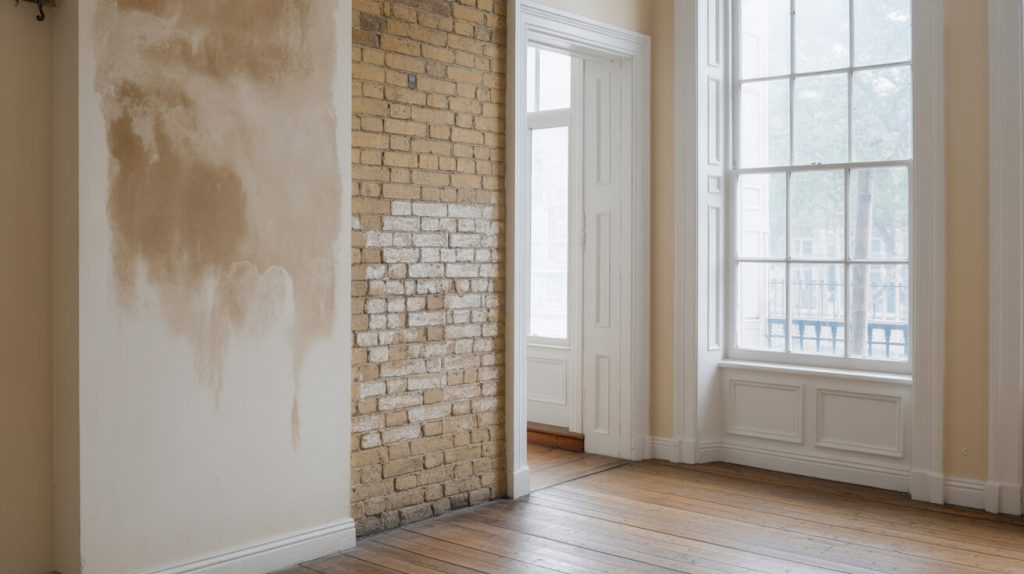
Protecting London’s Historic Buildings from Damp—Expert Waterproofing
London’s historic buildings, from Georgian terraces to Victorian institutions, are facing an unprecedented convergence of moisture risks, compliance pressures, and conservation challenges, including sensitive decisions around render, proofing membrane visibility. The loss of historic value, regulatory missteps, and avoidable building decay are rarely caused by dramatic failures—they result from small, accumulating oversights, often accepted as “character” or inevitable ageing. In reality, hidden damp unfolds into visible devaluation, insurance headaches, and the potential erosion of your stewardship reputation.
Why Heritage Waterproofing Demands Immediate Attention
Unchecked moisture doesn’t just undermine appearance. It places the structure at risk for:
- Subtle but progressive mortar decay, timber rot, and costly substrate failure
- Devaluation notices or failed mortgage transactions due to flagged moisture or uncertified works
- Health liabilities from persistent airborne spores, especially in tenanted or public-access buildings
- Regulatory disputes, forced undoing of repairs, or exclusion from listed status
Table: Impact Comparison—Specialist vs. Generic Approaches
| Challenge | Generic Builder Approach | Specialist Heritage Solution |
|---|---|---|
| Regulatory Compliance | Often skipped or incomplete | Full documentation and pre-approval |
| Long-term Value | Risk of recurrences, insurance gaps | Survey-backed, warranty-aligned |
| Occupant Health | Masked symptoms, quick cover-ups | Targeted, health-driven resolution |
| Asset Protection | Unapproved materials/hidden traps | Compatible, reversible interventions |
Preservation isn’t achieved by avoiding risk—it’s earned by making proactive choices and seeking assessment before symptoms escalate. Sussex Damp Experts offers assurance at every stage: complete, compliant diagnostics, and interventions that preserve both your asset’s market and its legacy.
Neglected moisture never gets cheaper—it only gets harder to explain.
Where Do Damp and Moisture Problems Originate in Historic Structures?
Rot Type Identifier
- 1 Location
- 2 Visual Signs
- 3 Moisture
- 4 Results
Most Likely Diagnosis
—
—
What Is This?
—
Treatment
—
Typical Cost Range
—
Can I DIY This?
—
Wet Rot vs Dry Rot Comparison
| Feature | Wet Rot | Dry Rot |
|---|---|---|
| Cause | Persistent moisture >50% MC | Moisture >20% MC + poor ventilation |
| Spread | Stays localised to wet area | Spreads through masonry via hyphae |
| Appearance | Dark, soft, breaks along grain | Cuboid cracking, white mycelium, fruiting body |
| Smell | Damp, musty | Strong mushroom odour |
| Typical cost | £200 – £2,000 | £1,000 – £15,000+ |
| DIY possible? | Small non-structural areas | No — specialist only |
| Urgency | Moderate | Urgent |
Rot identification requires expert assessment. Incorrect treatment can allow decay to continue hidden. Get a definitive answer.
Book an Emergency Rot Survey →Damp does not respect boundaries; it exploits every missed inspection, ageing material, and incompatible retrofit. Historic London properties, especially where original breathable systems met later patchwork repairs, develop damp in places that modern checklists rarely contemplate. Your attention must drift beyond obvious stains to areas where maintenance history, landscaping changes, or atmospheric shifts quietly transform into major repair bills.
Typical Vulnerability Mapping in Heritage Buildings
- Basements and Vaults: Lacking DPC, susceptible to rising saturation, lateral ingress, or hydrostatic uplift.
- Solid Brick or Stone Walls: Prone to direct rain intrusion, especially where historic pointing is lost or modern renders suffocate historic fabric.
- Rainwater Goods and Rooflines: Overflow, deflection errors, or gradual vegetation growth create new flow paths behind ornate exteriors.
- Joined Extensions: Where old and new construction meet, bridging creates moisture traps.
- Landscaping or External Level Changes: Raised pavements, new steps, or hardstanding can unwittingly breach the building, leading to bridging effects.
Checklist: Are You Missing These Common Damp Sources?
- External drains, gulleys, or gratings sited higher than the internal floor
- Parapet gutters, particularly in terrace rows, blocked or leaking
- Render overlays applied to historic brick without vapour checks
- High internal humidity due to inadequate ventilation upgrades post-insulation
Best-practice management includes annual mapped surveys and a running log of all maintenance interventions. Sussex Damp Experts supports you, offering tailored annual reviews and risk-matrix reports specific to your property type.
What Types of Damp and Water Ingress Affect Heritage Buildings?

Equating all damp as a single entity is a recipe for repeated expense. Heritage sites are exposed to several discrete damp mechanisms, each requiring precision—a misdiagnosis costs time, compliance, and money.
The Four Principal Damp Types in Heritage Structures
Rising Damp
Water wicks upward from the soil in the absence or failure of a damp proof course (DPC), depositing salts at height. Signs include tide marks, decaying skirting boards, and persistent low-level plaster breakdown.
Penetrating Damp
Generally horizontal, caused by water entering from failed pointing, defective roof junctions, or leaky rainwater goods. Presents as staining, peeling paint, and isolated internal decay—often appearing seasonally.
Condensation and Vapour
Exacerbated by modern insulation and ‘over-sealed’ windows, leading to hidden moisture on cool, unventilated internal walls. Symptoms include black mould, musty odours, and persistent window or reveal condensation.
Hydrostatic/Lateral Ingress
Basements, subterranean vaults, and retaining walls confront external water pressure without adequate drainage—causing bulging, bowing, or flooding despite prior tanking.
Table: Recognising Damp Types by Symptom & Solution
| Symptom | Likely Damp Type | Heritage-Safe Solution |
|---|---|---|
| Tide marks/skirting decay | Rising Damp | Compatible DPC/lime or membrane |
| Ceiling-edge staining | Penetrating Damp | External repair, breathable render |
| Persistent mould, window wet | Condensation | Mechanical ventilation, humidity control |
| Bulging/basement flooding | Hydrostatic Ingress | Cavity membrane, advanced drainage |
Each symptom’s nuances determine whether the response is a quick fix (that generally recurs) or a lasting, insurance-recognised resolution.
How Can Early Signs of Damp Be Detected and Validated?

Early-stage damp invites a false sense of security; what can be wiped away may mask significant underlying decay. Detection and validation must outpace visual symptoms, using professional surveying and scenario testing for both risk approval and resale protection.
Signs and Symptoms That Warrant Further Investigation
- Flaking or bubbling paint at ground or ceiling height
- Persistent earthy, musty or “old house” odour
- White/powdery salt crystals on interior or exterior
- Dark localised staining that resists simple drying
- Timber that flexes, darkens, or softens
Advanced Validation Methods Used by Damp Specialists
- Calibrated moisture metres, tested across multiple wall zones with mapped reporting
- Infrared/thermal imaging to expose cold spots and concealed ingress
- Precise salt analysis (hygroscopic vs non-hygroscopic) for correct remedial targeting
- Long-term humidity or temperature dataloggers to distinguish short-term vs systemic issues
Annual specialist assessments—backed by photographic mapping, compatibility checks, and lender-grade reporting-reduce surprise repairs—help prevent unexpected defects and prove stewardship to future buyers. Sussex Damp Experts provides compliance-recognised reports and transparent maintenance portfolios for all treated properties.
The worst repairs are those that look solved, but decay in quiet places you can’t easily see.
What Heritage-Compliant Waterproofing and Damp Treatment Methods Are Available?

In heritage damp control, the “right” solution is both regulated and localised—it serves the building, its curator, and the legal requirements of consent. Over-hermetic tanking or improper cement renders bought with urgency or price-first logic can trap damp and guarantee future restoration expense.
Proven Heritage-Safe Interventions
- Breathable Lime-based Plasters/Renders: Encourage vapour movement, supplement capillary action, and maintain the wall’s health.
- Cavity Drain Membranes (Type C): These systems, particularly vital for basements, shift water management away from the substrate into controlled drainage channels without disturbing historic fabric.
- Advanced DPC (Physical or Chemical): Only where substrate, permission, and diagnosis justify, preserving original brickwork integrity where possible.
- Upgraded Drainage/Sumps: Subsoil and perimeter solutions manage groundwater out of the building footprint; critical below-ground.
- Salt Inhibitors: Used locally to pre-empt recurring efflorescence after works or weather-driven events.
- Mechanical Ventilation Solutions: Discreetly integrated to restore indoor comfort post-insulation or to manage persistent vapour.
Council Approval and Heritage Statutes
You must provide documentary proof of:
- Reversibility for major interventions
- Full compatibility with the existing wall/floor system
- Justification for each treatment based on technical data, not just cost or aesthetics
Systems chosen and installed by Sussex Damp Experts meet or exceed current BS6576, PAS2035, and council guidelines, and are consistently approved in listed and conservation settings from Westminster to Southwark.
Why Do Heritage Damp Works Demand Proven Specialist Expertise?

Even a highly reputable general builder may lack the interdisciplinary grasp required for consistently successful and approved heritage interventions. The risks of “learning on your property” are substantial: invalid warranties, insurance refusals, and forced remedial works by authorities.
Hallmarks of True Heritage Damp Specialists
- Accreditation: PCA, CSSW, or CSRT—minimum standard for lender, regulator, and warranty recognition.
- Regional Competence: Detailed understanding of historic typologies in London, ensuring no compatibility surprises at inspection.
- Documentation Discipline: Every step, from survey through installation and aftercare, must be war-chested with traceable records.
- Post-Remedial Commitment: Effective contractors treat completion as a beginning, not an end—annual reviews and responsive callout protocols.
When Non-Specialists Get It Wrong
- Unintentional bridging, trapping, or redirecting moisture, leading to late-stage structural decay
- Symptom “solving” rather than source elimination
- Absent or amateur documentation, harming legal compliance or value
- No aftercare or futureproofing
Sussex Damp Experts not only supplies intervention, but becomes an ongoing resource, with methodical review, insurance-ready reporting, and a permanent compliance anchor in your due diligence file.
When Is Consent, Permission, or Documentation Required for Works?

Legal and planning frameworks control not just what can be done, but how and by whom, with heritage assets. Owners who act first and ask later often find themselves funding remedial undo-and-redo cycles, or negotiating property value reductions.
Works That Require Permission or Reporting
- Damp-proofing or tanking of any listed or conservation area property, internal or external
- Modifications affecting structure, look, or traditional material
- Works involving sealing, membrane, chemical injection, or new drainage
- Replacement of original plaster, flooring, or masonry
- All major repairs affecting air flow or substrate integrity
Documentation and Flow for Regulatory Compliance
- Pre-Works Survey: PCA/CSRT-accredited, council-aligned
- Written Permission: Listed building consent, planning approval
- Detailed Method Statement: Compatibility, reversibility, proof of necessity
- Completion Documentation: Photos, mapped results, warranty certification
- Aftercare/Monitoring Contract: Schedule tied to warranty/insurance
Table: Compliance Milestones
| Step | Requirement | Document Owner |
|---|---|---|
| Survey | PCA/CSRT-compliant | Specialist |
| Application | Listed building/planning consent | Owner/Specialist |
| Execution | Compliance with method statement | Contractor (Specialist) |
| Signoff | Warranty registration, completion report | Owner/Specialist |
| Aftercare | Monitoring log, warranty support | Owner/Specialist |
Combining all documentation through Sussex Damp Experts means one channel for site, council, and insurer—a single, uninterrupted compliance journey for your asset.
Book Your Free Consultation With Sussex Damp Experts Today
Confidence in your asset’s future begins with a single step: a certified, compliance-aligned survey that sets a new benchmark for stewardship. Our specialised team provides each client with transparent reporting, rapid council liaison, and insurance-ready documentation—delivering not just repairs but an unbroken legacy. As an owner or manager, you are defined by foresight; selecting Sussex Damp Experts is a vote for ongoing value, protection, and peer recognition.
Begin your heritage asset’s next chapter supported by the assurance of well-documented, heritage-approved solutions—trusted by local authorities, lending institutions, and conservation partners alike.
Stewardship isn’t about what you fix—it’s about what you prevent from failing again.
If your building, investment, or organisation is ready to shift from patch fixes to preservation-first strategy, our specialist team welcomes your enquiry for a confidential, compliance-focused assessment.
Frequently Asked Questions
What Threats Does Damp Pose to London’s Historic Buildings?
Damp is a silent opponent that relentlessly undermines your building’s most valuable features—its original fabric, its saleability, and your standing as a responsible steward. Moisture does not merely cause unsightly stains or occasional inconvenience. It works in the background, eroding mortar, softening timbers, and creating airspace where toxic mould can take root. In heritage buildings, unique construction details—from porous Victorian bricking to lime render—turn minor neglect into major restoration bills that easily spiral beyond insurance cover or rental revenue.
Damp’s Pathways to Loss
- Structural instability: —capillary action pulls groundwater up through old brick, causing hidden decay.
- Devaluation: —surveyors downgrade assets with unresolved damp, triggering failed sales or re-negotiated leases.
- Legal and compliance exposure: —the HHSRS, Building Regulations, and heritage legislation hold you responsible not just for fixing damp but for preserving character and historic integrity.
- Reputational risk: —tenant health complaints or lender withdrawal stains your record with insurers and councils alike.
Owning a heritage property is both an opportunity and an obligation. Damp thrives when you choose superficial fixes over root-cause analysis or defer annual surveys, because moisture doesn’t just undermine surfaces but affects the building as a whole. That’s why you need to address moisture at the system level—using accredited survey reports, mapped risk, and heritage-aware methods. By anchoring your approach in expertise, you defend the legacy of your investment.
Where Is Damp Most Likely to Strike in an Older London Property?
Damp targets vulnerabilities you might never notice on a routine inspection—especially in London’s complex, multi-era buildings. Most owners and managers focus on visible problem areas, but the true threat is often structural: below-ground vaults, earth-retaining walls, parapets, and the “hidden seams” where extensions or joinery bridge newer work to original substrates.
Unseen Danger Zones
- Basements and cellars—historically designed for dry storage, now routinely failing without a modern cavity membrane or upgraded drainage
- Solid exterior walls—weather-facing and often sealed by inappropriate cement renders or paints, creating traps for seasonal moisture
- Flat or box gutters—classic features where one blocked downpipe can flood an entire façade over months
- Chimney breasts, party walls, and interface joints—small cracks or historic repairs can unlock complex capillary networks of decay
- Internal retrofits—“improvements” like drywall, insulation, or plastic DPCs compromise the delicate vapour balance established over centuries
Mapped property surveys reveal that up to 40% of London’s period homes with unexplained energy bills or air quality complaints have concealed damp in non-obvious places. The only way to understand how damp be detected and all weak links exposed is through a survey strategy that covers not just symptoms but every vulnerability, including survey grade timber treatment where hidden decay may be involved. You secure the future of your asset when you switch from reaction to routine, system-level vigilance.
How Do You Distinguish Between Different Types of Damp in Heritage Buildings?
Assuming all damp “looks and acts the same” is a recipe for repeat expense and failed repairs. Every type of moisture path—rising, penetrating, condensation, hydrostatic—has a different profile, treatment, and regulatory meaning.
Distinction Summary Table
| Damp Type | Common Causes | Noncompliance Risks | Best-Practice Solution |
|---|---|---|---|
| Rising Damp | No/failed DPC, ground bridging | Re-sale/mortgage rejection | Heritage DPC, lime plaster, perimeter trims |
| Penetrating Damp | Roof, gutter, render failures | Tenant health, HHSRS scoring | External repair, breathable render, proofing membrane |
| Condensation | Poor ventilation, airtight retrofits | Mould, lost insurance claims | Ventilation upgrades, humidity control |
| Hydrostatic/Lateral | High water table, retaining wall | Subsurface flooding, asset loss | Cavity drain membrane, engineered sump |
Survey data and forensic reporting from Sussex Damp Experts show that surface-only checks miss core damp symptoms 60% of the time in London’s housing stock built before 1920. Moisture metres must be complemented with salt analysis, structured thermal imaging, and long-term environmental logging.
Never rush into remedial work until a trained, accredited specialist has mapped the full system. You move from liability to leadership when your damp diagnosis is as sharp as your legal compliance.
What Are the Early Signs Moisture Problems Are Developing?
Early symptoms in a listed or period property rarely shout—they hint. A persistent “cellar” odour, paint bubbling in apparently unrelated spots, or localised soft timber in the skirting suggest more than surface condensation. Salt bloom on interior walls doesn’t just look untidy—it’s a telegraph from below the surface, marking the slow but steady migration of water through multiple layers of wall or floor.
Subtle Signals You Ignore at Your Peril:
- Local dips in floor level over otherwise sound rooms
- Timber that warps or flexes, especially after a wet winter
- Cooling spots on internal walls detectable with a hand or laser thermometer—often below a failed parapet or overflowing gutter hidden from daily view
- Discoloration forming above “improved” damp-proofing, a sign of bridging or incomplete treatment
Rented and multi-tenant properties amplify risk, because one person’s “normal” is another’s red flag. Lenders and letting agents increasingly require a specialist survey and mapped damp log—ideally with ongoing monitoring and photographic proof—before sign-off. Sussex Damp Experts doesn’t just look for problems; our annual survey and aftercare capture what the untrained eye can’t.
Heritage stewardship isn’t what you fix tomorrow. It’s what you anticipate today.
Which Waterproofing and Damp Proofing Methods Are Allowed or Endorsed for Heritage Properties?
Strict permissions govern not just what you instal, but how you instal it. The era of “seal and forget” is over. Modern councils, conservation officers, and insurers reject non-breathable membranes, hard cement renders, or irreversible treatments in all but true emergencies.
Endorsed Methods
- Breathable lime plasters and hydraulic renders: —allow moisture to evaporate naturally, preserving both the wall and your compliance status
- Type C cavity drain membranes: —create a removable, inspectable moisture management system in basements/vaults without altering original fabric
- Targeted DPC replacement: —surgical, low-impact interventions using physical or chemical methods only where compatible and LBC is granted
- Mechanical ventilation: —quiet, nearly invisible upgrades that expel condensation at the source
- Intelligent sump, pump, and drainage: —discreet upgrades that keep subsurface water at bay, indispensable for properties near Thames flood zones
- Monitoring technology: —wireless humidity and subfloor logging for ongoing risk tracking
Every intervention must be justified by survey and heritage report. Failing to document compliance risks forced removal, legal action, loss of cover, and asset devaluation. Sussex Damp Experts’ specification sheets, method statements, and post-installation reports are drafted for both project speed and future legal scrutiny. That’s peace of mind—documented, defendable, and tailored to your building’s unique profile.
When Are Consent, Permission, or Documentation Required—and What If You Skip Them?
If your property is listed or sits within a conservation area, any substantial alteration to its structure or appearance—especially relating to moisture control—requires listed building consent. This includes not only visible repairs but also internal works like DPC retrofit, render, proofing membrane installation, cavity membrane installation, or even large-scale replastering.
What You Must Have on File
- Heritage-compliant survey and diagnosis by an accredited specialist
- Full method statement outlining why each chosen solution is compatible and reversible
- Photographic and mapped evidence
- All local authority approvals—never proceed “subject to approval” or with “retrospective” applications
- Ongoing documentation and compliance log if further works are needed
Failing to secure and maintain this documentation results, with increasing frequency, in forced reversal of works, fines, and loss of market value. Insurance claims relating to moisture are frequently denied when proper permissions or specialist involvement can’t be proven.
Sussex Damp Experts acts as your compliance navigator, producing not only detailed diagnostic reports but a traceable, council-ready document trail that preserves your asset’s value and integrity for the next decade—not just until the next audit.
Compliance isn’t a checklist—it’s the foundation of every future benefit you’ll claim as owner or manager.

