
 By
By  December 1, 2023

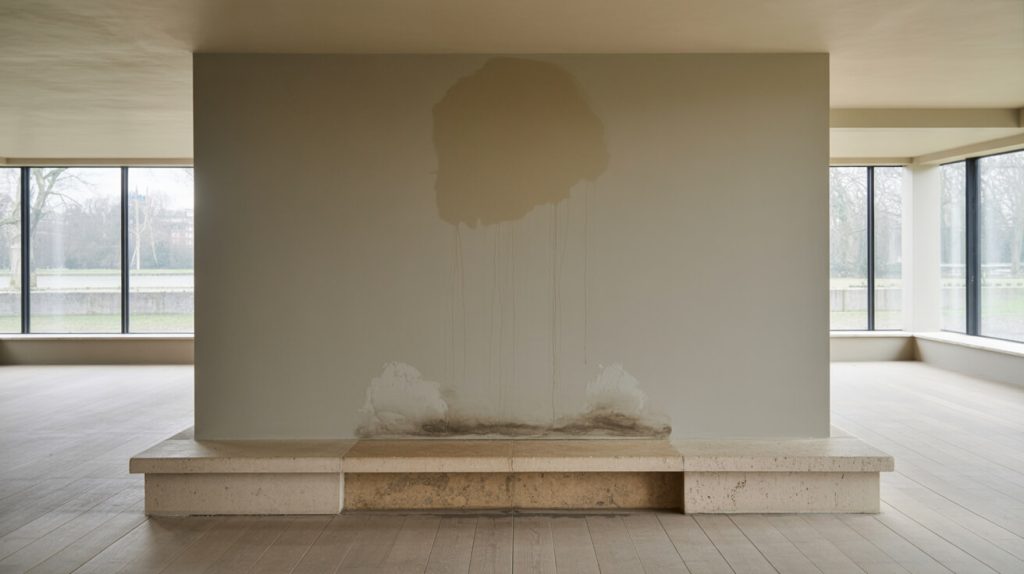
What Is Penetrating Damp and Why Is Immediate Action Critical?
Penetrating damp is water entering your property from outside, exploiting even minor weaknesses in external walls, roofs, or joinery. It begins as an external problem—a worn joint, blocked gutter, damaged render—that soon becomes an interior headache. The consequences range from persistent cold patches and spoiled decoration to structural and health risks that erode your property’s value and comfort.
How Does Penetrating Damp Begin?
Rainwater, wind-driven moisture, or standing water finds vulnerable points in your building’s shell. These entryways might be small—a crack, loose pointing, a blocked downpipe—but they invite every downpour straight into your substrate and finish layers.
Immediate Answer
Penetrating damp is the result of external water entering your building fabric, typically after rainfall finds its way through defects. It should not be confused with condensation or rising damp—its entry point is always from outside, not below or within.
The Hidden Cost of Hesitation
What feels minor today often conceals hidden rot, warped timbers, and compounding repair costs. Many wait for “evidence” before acting, yet water’s earliest warning signs—peeling paint, faint odours, or cold plaster—are already clear signals of escalation. Sussex Damp Experts encourages you to recognise these warnings as an opportunity for smart intervention, not as a reason to postpone.
Your wall never shows its true damage until it becomes your biggest cost.
Why Does Action Matter?
Delaying action gives water time to breed mould, cause timber decay, and invalidate your insurance. Issues identified at survey or by tenants risk more than reputation—they interrupt lettings, stall sales, and generate legal liabilities. Acting at first signs secures your asset, health, and compliance.
What Key Defects and Building Features Cause Damp Penetration?

Hard facts underpin almost every case of penetrating damp: building vulnerabilities plus exposure equal risk. These vulnerabilities span property age, materials, and maintenance cycles.
Where Are External Weaknesses Most Likely?
- Brickwork and mortar erosion, especially in older or unpointed walls.
- Render cracks—fine spidering or larger blown sections.
- Broken or undersized gutters and downpipes, allowing water to sheet down walls.
- Poorly flashed or tiled roofs, especially at valleys or parapet intersections.
- Absence of, or bridging over, a damp-proof course.
- Ill-fitted or poorly maintained windows and doors—especially timber or metal frames.
Table: Common Vulnerabilities by Property Type
| Property Type | Typical Defect | Seasonal Impact | Risk if Ignored |
|---|---|---|---|
| Edwardian/Victorian | Lime mortar erosion | Autumn/winter rain | Internal, slow rot |
| Modern cavity | Render shrinkage | High wind/rain | Fast, visible pooling |
| Flats/Blocks | Parapet/roof defect | Year-round storms | Neighbouring leaks spread |
| Commercial | Curtain walling issues | Downpour surges | Tenant disruption |
Can Building Design or Upgrades Make It Worse?
Yes—trendy cavity fill, new insulation, raised external ground, or poor extension tie-ins often exacerbate water ingress. With heritage properties, modern “quick fixes” can do lasting harm by trapping moisture rather than releasing it. Properties need adaptive diagnostics, not generic remedies.
Preventative Insights
Annual maintenance, gutter clearance, and focused repairs avert the most serious defects. Large-scale rehabilitation is rarely required for vigilant owners or managers; it’s delayed action or shortcut “repairs” that multiply risk.
How to Identify Penetrating Damp—Top Signs and Symptom Progression

It often starts with a single patch, deceptively modest. The mark grows with each rainfall, seems to shift between rooms, or reappears after surface repainting. Recognising the subtle difference between harmless blemishes and the signal of progressing damp is your best leverage.
Recognising Early Versus Advanced Signs
- Localised staining on internal walls, especially near rain-exposed elevations.
- Peeling paint, blistered wallpaper, or soft, spongy plaster.
- Appearance of white salty residues or powder (efflorescence).
- Persistent musty, earthy scents unresponsive to cleaning or heating.
- Movement or migration of stains after rainfall, across floors or adjacent surfaces.
The Escalation Ladder
- Intermittent patch post-storm.
- Peeling finishes from continuing ingress.
- Visible mould or black spots forming at cold bridges.
- Crisp, crumbling timber or joinery—especially around sills or skirtings.
- Large-scale plaster, render, or wallboard instability.
Diagnostic Checklist
- Is your issue worse in wet weather?
- Are salt or powdery stains appearing?
- Have previous surface treatments failed?
- Do nearby external features (gutters, render, brickwork) match the internal damage site?
Even a single affirmative indicates a strong case for professional diagnostics.
That faint mark near your outlet probably started at your gutter. Look beyond the surface for the story your building is telling.
Why Timely Damp Intervention Protects Value, Health, and Compliance

Penetrating damp doesn’t plateau; it escalates. When warning signs are dismissed, costs multiply faster than inflation. The earlier you react, the more you save—and the fewer hidden losses accumulate within walls, insulation, and structural timbers.
The Calculus Behind Delay
- Repairing after one missed season: estimates rise by 10–25%.
- After two: losses edge into full remedial territory, including new joinery, replastering, and secondary mould removal.
- By year’s end: health risks surface, affecting tenants or residents, and insurance or legal exposure emerges.
| Delay Length | Added Cost | Additional Risks |
|---|---|---|
| Weeks | +10% | Surface repair only |
| Three Months | +35% | Plaster replacement, minor joinery |
| One Year | +300% | Timber decay, structural, legal action |
Insurance only pays for timely repairs—not for ignoring the leak your survey flagged last September.
High-Value Proof Layer
- HHSRS and Fitness for Human Habitation Act penalty averages continue to rise—meaning dodged compliance fixes can cost owners and managers £5–25k per case.
- Sussex Damp Experts document every phase, producing audit-grade evidence for insurance, lender, or council review, keeping your status (and asset value) intact.
How Accredited Diagnosis Pinpoints Root Causes and Confirms Repairs

Surface-level assessment is not enough. Our process actively traces water’s journey using calibrated metres, thermal imaging, and material analysis.
What Defines a Professional Diagnostic Sequence?
- Moisture mapping: Locates depth, spread, and entry vector. No wall is presumed dry.
- Salt analysis: Determines if the issue is truly penetrating damp, groundwater, or historic salts.
- Thermal (IR) checks: Flags damp hidden beneath paint, paper, or behind wallboards.
- Borescope sampling: Minimises intrusive checks, confirming substrate decay.
- Full survey report: Tied to insurance, legal, and mortgage acceptance standards, not a one-size-fits-all form.
Process Table: Accredited Diagnosis Workflow
| Step | Tool/Method | Key Outcome |
|---|---|---|
| Visual Inspection | Internal/External survey | Pinpoints defect location |
| Moisture Profiling | Calibrated metres | Quantifies or maps ingress |
| Salt/Lab Analysis | Chemical field kit | Confirms cause |
| Thermal Imaging | Fluke camera/IR | Locates non-obvious spread |
| Survey Reporting | PCA-standard template | Validates options/completes |
Why Accreditation Alters Repair Pathways
Insurers and lenders require recognised survey documentation prior to authorising repairs, payouts, or sales. Sussex Damp Experts operate to PCA and BS6576 benchmarks, so your assets never get stalled in paperwork loops.
Where to Start—Proven Solutions for Lasting Damp Protection

No two properties demand exactly the same solution. Effective repair sequences begin by prioritising external sources, then restoring internal finishes, and finally installing prevention layers designed for your building’s future.
Strategically Layered Repair
- Rectify external points: brick repair, gutter overhaul, render, and joint stabilisation.
- Remove defective plaster, dry-out using ventilation or forced air.
- Re-plaster using vapour-permeable, heritage-compatible materials when appropriate.
- Monitor with moisture sensors or scheduled checks—especially for previously affected assets.
Table: Solution Comparison
| Action | Standard Approach | Sussex Damp Experts Protocol |
|---|---|---|
| Source Rectification | Basic repair only | Defect mapping, forecasted maintenance |
| Internal Restoration | Off-the-shelf plaster | Breathable, certified materials |
| Prevention | Skip or generalise | Moisture sensors, tailored schedules |
| Documentation | Minimal | Insurance/council/tenant ready |
Sustained Asset Value
Continuous assessment and yearly audits keep your investment secure. Especially for complex assets—multi-unit, listed, or commercial—our aftercare locks in prevention, not just repair, scheduling performance reviews that let you anticipate and act before weather, wear, or time can threaten your status.
Can Legal, Insurance, and Regulatory Factors Impact Repairs?

Structural fixes without documented surveys or warranty-grade reporting can backfire—stalling lending, legal transfer, tenancy contracts, or insurance claims. Regulations exist to protect both assets and people and are actively enforced.
What Documentation Protects Your Status?
- PCA- or TrustMark-accredited surveys: unlock most insurance, financing, and council doors.
- Compliance-validated remedial reports: crucial if you’re a landlord, commercial owner, or if managing multiple tenants.
- Year-on-year maintenance logs: Provide evidence during disputes, future sales, or refresh lending.
Summarised Regulatory Context
- Insurance: Coverage denied if poor maintenance is evident or no survey carried out.
- Banking/Mortgage: Mortgage flagged or delayed if internal/external damp is cited by surveyors.
- Tenancy Law: HHSRS and Fitness for Human Habitation Act place increasing onus on managers to prove suitable living conditions.
- Heritage/Listed Property: All works must meet council, conservation authority, and listed building consent specs.
Regulatory Checklist
- Is the work documented? (Yes/No)
- Are before/after photos attached? (Yes/No)
- Was an independent PCA/BS6576 survey completed? (Yes/No)
- Is there a maintenance log for future claims? (Yes/No)
For every asset—muniment, home, or block—your documentation is your status, not paperwork. Make it your advantage.
Book Your Free Penetrating Damp Consultation With Sussex Damp Experts
If water’s path to your building isn’t mapped, it’s waiting to dictate your risk, cost, and compliance headaches. Sussex Damp Experts delivers rapid, evidence-backed diagnosis and reporting you need to move decisively. For every scenario—homeowner peace of mind, council or landlord compliance, complex commercial asset continuity—we translate concerns into insurance-grade results and verified prevention. Reach us for a free assessment, and become the owner, manager, or agent known for diligence, foresight, and resilient buildings.
Frequently Asked Questions
What is penetrating damp, and why does it always escalate if left unchecked?
Penetrating damp is persistent, unwanted water entering your building’s structure from the outside—an infiltration not caused by internal condensation, but driven by failed or weathered external defences. Every property, from classic brickwork to new builds, is vulnerable. Once rainwater exploits a weakness, damage advances quietly: patchy paint gives way to rotten timbers, then to legal disputes and plummeting property value.
Why urgency overrides optimism
Water rarely announces its full agenda. A faint patch on a wall is rarely the extent of the problem. Penetrating damp exposes you to a spectrum of risks:
- Structural decay, as moisture destabilises mortar and eats through woodwork
- Mould growth, which returns after surface cleaning and endangers respiratory health
- Persistent cold and must, undermining comfort and market value
- Mortgage delays, failed surveys, and claims rejected for “maintenance neglect”
Pushing these symptoms aside only increases repair complexity and cost. For landlords and property managers, delays often lead directly to tenancy disputes or HHSRS enforcement.
Action built on expertise
Alignment with Sussex Damp Experts is a strategic move. Their forensic approach—combining BS6576 methodology, moisture sensor arrays, and compliance-calibrated reporting—turns what could be an open-ended liability into a navigable, fixed-cost plan. Immediate action with the right ally reasserts control, cements your property’s inheritance, and pre-empts future legal and financial drain.
What key building defects and features invite penetrating damp?
Every structure has unique vulnerabilities—age is just the start. Think of penetrating damp as the result of a property’s silent invitation to the elements, often through overlooked or mismanaged features.
Typical entry points and triggers
- Worn brickwork or open mortar joints.: Even a few centimetres of missing or retreating lime can offer a perfect channel for wind-driven water.
- Blown or cracked render.: Modern cement-based repairs on historic walls easily trap water, accelerating internal saturation.
- Faulty guttering, valleys, or downpipes.: Overflow directs litres of water over a wall, burdening even recently repaired areas.
- Ill-fitted windows or sealed sills.: Once paint is cracked, water migrates around joinery and into supporting timber.
- Raised ground or external render that bridges your DPC.: You lose the designed moisture barrier—soil and mulch invite rising tides.
| Component | Vulnerability | Diagnostic Cue |
|---|---|---|
| Brickwork | Lime loss, spalling | Local staining below |
| Gutter/downpipe | Blockage, misalignment | Splash marks, pooling |
| Windows/doors | Aged caulk or frame rot | Mould, soft timber |
| External ground | Soil above DPC, moss mat | DPC “buried”, musty smell |
Modern features, new risks
Retrofits often amplify the risk—wall insulation trapping dew, extensions with mismatched damp proofing, or new renders incompatible with heritage walls. Maintaining effective moisture control requires regular inspection and intervention tailored for both old and new systems.
The price of control is ongoing attention. Structural decay occurs quietly; its consequences do not.
Sussex Damp Experts map these context-specific vulnerabilities, providing you (and your stakeholders) a granular, photo-documented risk profile that outpaces generic surveys or quick-fix contractors.
How do you spot the first—and most important—signs of penetrating damp before costs spiral?
You rarely catch damp at its origin. Instead, it signals with scattered symptoms. Early intervention depends on recognising which warnings outrank benign cosmetic faults.
Your practical recognition checklist
- Wall patches or discolouration: that reappear after rain, particularly around chimney breasts and external corners.
- Paint bubbling, flaking or “salting,”: especially on north-facing walls or below windows.
- Skirting boards or joinery: that feel spongy, soft, or emit an earthy odour—hidden moisture is already deep within.
- Mould colonies: growing in cold zones hours after rain, no matter how frequently you clean.
- Musty air: in sealed rooms, worsening after autumn storms or wind-driven downpours.
The escalation chain
- Damp migrates with gravity and pressure: ceiling stains move to upper skirting, then subfloor voids.
- Internal air quality dives as spores proliferate, leading to chronic health complaints.
- Surface repair efforts (paint, sealant) appear to solve the issue—until the cycle repeats, often in less visible locations.
| Symptom | Likely Cause | Severity | Immediate Priority |
|---|---|---|---|
| Recurring wall stain | Blocked gutter, open mortar | Moderate–High | External + internal check |
| Musty skirting | Bridged DPC or failed joinery | High | Joinery and airflow |
| Rapid paint bubbling | Render failure, water tracking | Very High | Full envelope survey |
From vigilance to mastery
Your ability to spot causal patterns, not just symptoms, is the foundation for safe, compliant property stewardship. Sussex Damp Experts deliver precision mapping and validation for each concern—wherever you are on the spectrum from anxious homeowner to risk-owning manager.
Why is rapid damp intervention—and not “patch-and-wait”—the lever for protecting value, health, and compliance?
Procrastination transforms manageable penetration into an unmanaged crisis. The economics are brutal: cost grows not linearly, but exponentially, with delayed repair.
The cascade of loss
- Financial: Each month of inaction multiplies repair scope and invades substructure, shifting you from minor patch to full-floor lift, timber replacement, and extensive plasterwork.
- Health: Mould and unseen bacteria flourish in damp environments, escalating from minor discomfort to hospital-grade risks.
- Legal/Compliance: For every documented day of known damp, landlords face increasing liability under the Housing Act and HHSRS regime.
- Asset Devaluation: Buyers, tenants, and lenders all hesitate—undocumented repairs and ongoing issues collapse the perceived value of your property.
| Delay Duration | Added Project Cost | Market/Legal Consequence |
|---|---|---|
| 1 month | +15% | None |
| 3 months | +40% | Mortgage retest, delay |
| 6 months | +200% | Inhabitability, legal risk |
Proof in action
A Sussex landlord deferred investigation for a year—annual gutter cleaning was skipped, and rainwater gained a silent channel behind a mid-century extension. The result: not only a £7,000 repair, but a lost tenant deposit dispute, and four months’ void lost income. Sussex Damp Experts were called in to coordinate the rehabilitation and document every step for full insurance and letting compliance.
Every unsolved repair today is a doubled cost, a missed signature, or a failed inspection tomorrow.
How does an accredited diagnosis neutralise doubt and prevent endless repeat repairs?
When penetrating damp seeps into your operations, what you need isn’t generic advice—it’s actionable proof.
The stepwise forensic approach
- Moisture sensor grid: Precision metres form a map, distinguishing condensation, rising, and penetrating damp with confidence.
- Salt analysis: Confirms the moisture origin (rainwater, groundwater, plumbing).
- Thermal imaging and borescope: Reveals temperature gradients, cold-bridges, and hidden decay inside finishes or below carpet.
- Full compliance reporting: Every finding, diagnosis, and recommendation logged in a format respected by insurance, lenders, and regulatory authorities.
| Diagnostic Step | Tool/Method | Objective |
|---|---|---|
| Moisture mapping | Advanced metres | Confirm source |
| Salt/chemical testing | Onsite mineral test | Assign origin |
| Imaging/inspection | IR, borescope | Depth + impact |
| Audit-ready report | Standard protocol | Insurance/legal |
Empowerment through precision
Documentation grants you true control—repair scope and cost are contained, blame games between trades, insurers, and owners end. Sussex Damp Experts bridge the gap: their PCA- and BS6576-calibrated team ensures your asset’s condition and your decisions are always traceable and defendable.
Data isn’t just numbers—it’s proof, protection, and future-ready value.
Where should you start for robust, lasting restoration—and what shortcuts fall apart first?
Every repair pathway should account for cause, not just consequence.
Five non-negotiable steps to permanent repair
- External repairs first: Fix brick, render, guttering, or failed DPC.
- Remove and restore: Strip out saturated or mould-laden plaster/joists—use vapour-permeable finishes for older buildings.
- Monitor new instals: Integrate moisture sensors in risk-prone zones.
- Tailored maintenance: Instruct contractors and property managers to add gutter/substrate checks to annual logs.
- Warranty and reporting: Retain full documentation—both for resale and compliance.
Common mistakes that seed recurrence
- Superficial “damp-proof” paints: that seal moisture instead of allowing evaporation.
- Incompatible modern renders: on heritage properties, trapping water and multiplying future costs.
- Skipping DPC or drain re-inspection: after repair, failing to break the repeat cycle.
- Hiring uncertified contractors.: No shortcut offsets the lack of specialist oversight.
Heritage and complex property focus
If your property is listed, heritage, or “unusual,” generic repair templates can seriously damage both fabric and value. Sussex Damp Experts marry heritage-compliant processes to pragmatic solutions, preserving long-term performance—and regulatory certainty.
| Feature | Best Practice | Shortcut Mistake |
|---|---|---|
| Brick/mortar | Lime, matched repoint | Cement smears |
| Heritage wall | Breathable plaster only | Damp-seal paint |
| Modern extensions | Drainage check at join | Ignore joinery movement |
Can legal, insurance, and regulatory frameworks shape your repair outcome—and how do you get ahead?
Unseen, the “showstopper” isn’t usually a wall or a window: it’s the missing document, unauthorised fix, or non-compliance that halts a sale, voids insurance pay-out, or triggers a council belt-tightening notice.
What control do you really have?
If you’re a landlord or commercial owner, liability hinges on the paper trail. Forlettings, a council can order repairs days after complaint; insurance companies require proof of ongoing, expert-managed maintenance; buyers demand warranty transfers and issue-free surveys; conservation authorities will instantly block unauthorised “modern” repairs to listed assets.
Your legal and operational checklist
- Insurance: Provide before/after reports, approved by PCA or equivalent.
- Mortgages: Satisfy surveyor with audit-ready paperwork, not phone photos.
- Lettings: Comply with HHSRS and habitability law, especially in high-risk postcodes.
- Heritage: Pre-clear every intervention with planning/conservation offices to avoid fines or reversal.
| Document | Needed For | Unseen Cost |
|---|---|---|
| PCA damp survey | Insurance, mortgage, sales | Claim denied, calls lost |
| Heritage consent | Listed, historic repairs | Forced rework, fines |
| Tenancy check | Lettings, council audits | Deposit loss, enforcement order |
The identity signal for future-focused owners
Endemic property moisture doesn’t reward “wait and see.” Sussex Damp Experts guarantees not just restoration—but a complete documentation and reporting regime that protects you long after the last repair is complete.
Control means anticipating problems before they trigger legal, financial, and reputational escalation.

