
 By
By  August 26, 2025


Why Did Awaab’s Law Set a New Standard for Damp Compliance in Social Housing?
Damp, mould and moisture in social housing are no longer classified as nagging repair jobs—they’re now viewed as urgent health threats carrying legal, financial, and reputational risks for every social landlord in Britain, and mould can now trigger scrutiny at the highest levels of governance. The gravity of this shift starts with tragedy: the death of Awaab Ishak. His case didn’t just spark media outrage—it triggered government and public resolve to forcibly rewire how social housing deals with every patch of mould, musty odour, and slow structural leak (bbc.co.uk/news; insidehousing.co.uk; wrighthassall.co.uk).
One neglected patch of mould can now drag a boardroom into the spotlight and destroy years of sector trust.
The result is Awaab’s Law—a zero-tolerance framework that strips away plausible deniability, bureaucratic delays and off-the-record fixes. Every complaint—whether minor black spots in the bathroom or bubbling paint in a child’s bedroom—now lands with the force of statutory deadlines and audit trails. Social landlords, from the chief executive to the field maintenance engineer, are no longer judged by intention or effort but by real-world proof of safety, health, and timely response.
Why Social Housing Compliance Changed Overnight
Not long ago, moisture complaints in social dwellings often met a slow routine—a logged call, weeks of waiting, a patch-up, maybe some blame shifted to ‘tenant lifestyle’. Now, Awaab’s Law asserts that every report is potentially life-threatening and only digital evidence—time-stamped photos, log entries, repair certificates—proves action was taken. Reputation alone offers no shield. Every inspection, follow-up, and fix is counted with the expectation that a regulator, judge or family will demand total transparency.
Complacency is no longer overlooked; it’s actively punished.
For social landlords, meeting the minimum is no longer an option. Safety documentation, airtight process and competitive urgency are the new compliance standard.
What New Requirements Must Social Landlords Meet Under Awaab’s Law?

Social landlords are now required to evidence, step-by-step, every phase of their response to damp and mould complaints—from the first alert to repair, aftercare and monitoring, in line with social housing best practice. Rules are explicit: there are no ad hoc clean-ups or generic letters home. When a report comes in, the clock is ticking—a 24-hour response window for initial acknowledgement, rapid on-site inspection, full diagnosis, documented repairs, and all records copied to the tenant (gov.uk; housing.org.uk).
The whole process is measured in days, not weeks. Miss a window, and fines, ombudsman review and public notices follow fast.
Every task must be testable. Systems, processes and staff are measured by how cleanly actions and outcomes can be proven—not by the quality of intent. CEO, managers, operatives—all require training in compliance, digital documentation and legal recordkeeping. A communication misstep or overlooked follow-up can now expose your organisation to sanctions and far-reaching sector scrutiny.
Why Shortcuts Are Gone—and Documentation Reigns
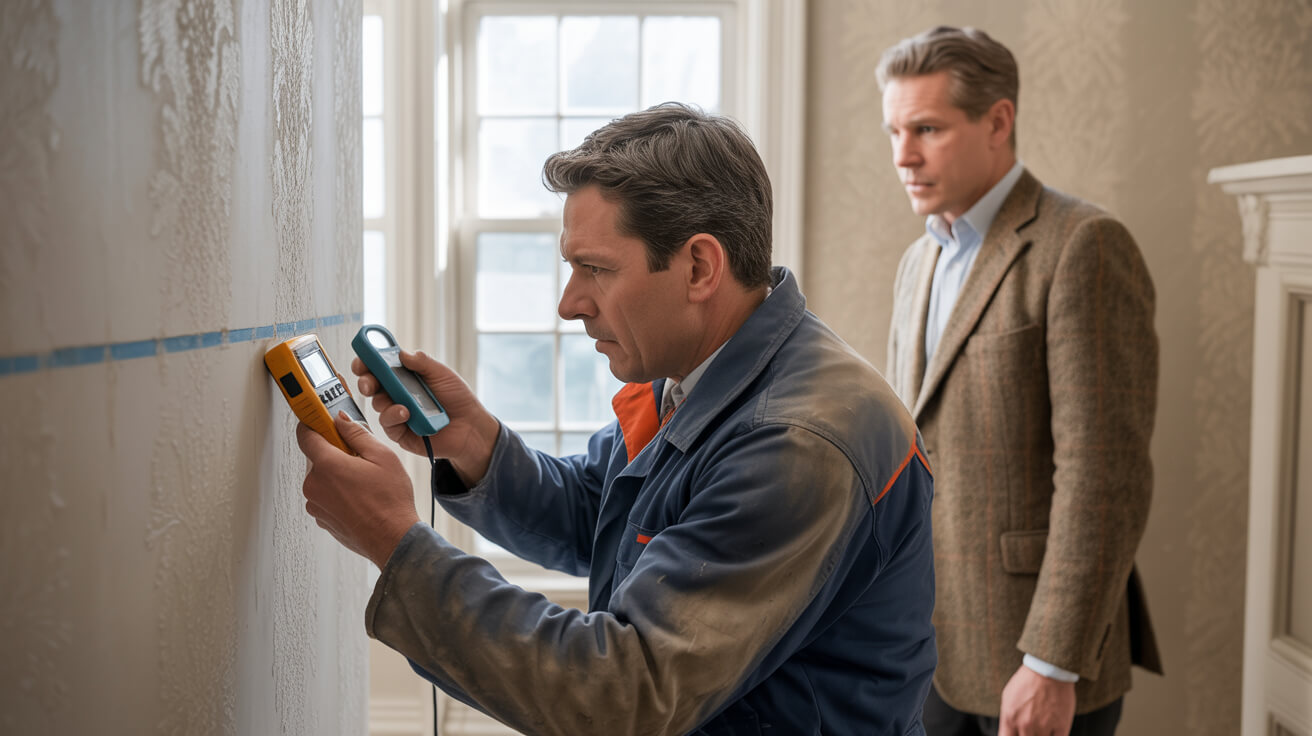
The era of “good enough” is over. Records must speak for themselves: what did the tenant report? When was it seen, tested, and fixed? Contractors are held to evidence—photos, moisture metre logs, and written repair sign-off. Ambiguity is legal vulnerability; only proof closes the case.
Excuses no longer pass legal or public inspection—the only answers allowed are proof-backed solutions.
The result is a compliance system driven by forensics, not narrative. Success is measured in logged facts and clear timelines.
How Have Deadlines, Fines, and Penalties Changed for Social Landlords?

Awaab’s Law imposes enforceable, non-negotiable timeframes for responses and repairs—delays trigger substantial, even unlimited, fines, investigation, and visible sector penalties (rtcgroup.co.uk; localgov.co.uk).
A single late response—hours over the line—can open the door to investigation, fines, and reputational fallout.
Paper-thin excuses have no protection. Recordkeeping forms the backbone: every action—call, report, image, job completion—must be timestamped and accessible on demand. Gaps in the record are considered failings to protect tenants and may trigger regulatory action.
The Enforcement Net Is Tighter Than Ever
There’s no more “quiet word” or backroom extension. Blown deadlines at any stage—acknowledgement, inspection, action plan or repair—invoke not only regulator fines but also compensation payments to tenants and even forced transfer of works to outside contractors. This is true regardless of whether the property is a renovated Victorian terrace, a 1970s block, or a new-build.
One missing or fuzzy record can cost a year’s goodwill and compliance standing.
Landlords are now judged not by averages but by outliers—one lapse is enough to create a legal liability, trigger ombudsman censure, and erase years of reputation building.
What Is the Legal Chain for Damp and Mould: From Complaint to Repair?

Awaab’s Law prescribes a formal, document-driven chain—from the initial tenant report to full resolution and follow-up (gov.uk; hse.gov.uk):
- Written Record: Each complaint is logged, acknowledged by formal letter or digital message within 24 hours—proof of this must exist.
- Qualified Inspection: Within three days, a trained team member inspects on site, collecting forensic evidence (photos, metre readings).
- Diagnosis Report: By day three, the tenant receives in writing a plain-English diagnosis and action plan for repair.
- Action Plan: Includes a schedule for follow-up, contingency for delays, and contact numbers for tenant reference.
- Repairs Initiation: Within five days of diagnosis, physical works must begin, or the delay must be justified and documented.
Surface wipe-downs and vague advice no longer cut it. Each stage must be evidence-rich, defensible to court, ombudsman or regulator.
If you can’t produce hard evidence, your version of events never existed.
Forensics and Evidence: The New Compliance Currency
Compliance now means collecting evidence to a surveyor’s standard—moisture logs, photographic proof, detailed diagnostics, and expert commentary are all necessary. Only airtight files, prepared as if they may be dissected in court or the media, will satisfy today’s requirements.
Your case file should be so thorough that it feels ready for both the ombudsman and the press.
How Does Awaab’s Law Empower Tenants—And What Powers Do Regulators Gain?

Awaab’s Law moves tenant rights from theory to reality—direct legal recourse if a landlord misses a compliance deadline, provides unclear records, or leaves a hazard unremedied. Tenants can escalate rapidly to the Housing Ombudsman, trigger immediate forced repairs, and claim compensation, bypassing lengthy complaint chains (housing.org.uk; insidehousing.co.uk).
- Direct Legal Recourse: Tenants need not wait. Miss a protocol or time limit, and landlords are exposed instantly to ombudsman censure and court enforcement.
- Regulator Power-Up: Every delay, missing inspection, incomplete record, or unfinished repair broadcasts a signal to sector investigators and can lead to fines, public listing as non-compliant, or worse.
Landlords have one shield: documentation. Failing to store, timestamp, and produce records is itself an offence, not just evidence of incompetence.
A missed record can unravel years of sector trust in days.
The Survival Strategy—Forensics, Not Feelings
Your field team’s mentality must mirror that of an HSE investigator or ombudsman: every action is tracked, every repair verified, every tenant communication documented—proof first, perspective second.
What Does Real Compliance Look Like? The Shift to Proactive Management

Modern compliance isn’t about chasing complaints; it’s about overtaking them. The law now expects annual inspections, actionable reporting, and even aftercare to be thought out up front and ready to defend.
- Ongoing Training: Competence isn’t assumed—each role from office to operative is regularly trained, tested, and retrained, not only on compliance but on evidential process (gov.uk).
- Trusted Contractors: Only accredited professionals—those with PCA, TrustMark, or equivalent—may carry out the work. This is no longer an upmarket bonus but a legal necessity.
- Advanced Diagnostics: Inspection means more than a quick look; it’s moisture mapping, substrate forensics, site-specific salt checks, and ventilation audits.
- Recursive Aftercare: Regular follow-ups, record-keeping, and proactive monitoring form the backbone of compliance. No step is too small for review, no repair is out of audit reach.
You’re not just managing risk; you’re disrupting it—proving control before complaints ever surface.
Monitoring Is Everything
Annual reviews, automated reminders for tenants, and permanent, easy-to-access logs are now the difference between a clean audit and a public scandal. Monitoring is not just a regulatory hoop—it’s a strategic asset for protecting tenant welfare and organisational credibility.
How Does Awaab’s Law Benefit Landlords Who Go Beyond Minimum Compliance?
Treating compliance as an investment delivers returns that far exceed the minimum:
- Healthier Tenancies: Well-maintained, dry homes lower emergency callout rates, reduce health and absenteeism complaints, and help families thrive (hse.gov.uk).
- Sector Reputation: The fastest and most thorough repairs win the trust of tenants, local councils, and, critically, lenders and insurers.
- Financing Advantage: Those with auditable, evidence-backed repairs are favoured in mortgage, insurance, and partnership decisions—expect better rates and more opportunities (localgov.co.uk).
True compliance isn’t about avoiding the latest fine; it’s about locking in resident trust and asset value long term.
Landlords ready to treat Awaab’s Law as an opportunity, rather than a fate to be dodged, will find themselves outperforming peers—filling lets faster, retaining happier tenants, and blunting regulatory risk before it arises.
Why Sussex Damp Experts Are the Strategic Partner for Awaab’s Law Compliance

With compliance now a live test, only forensic expertise, airtight process, and a fully accredited provider will future-proof your estate. Sussex Damp Experts anchors this value chain across East Sussex, supporting landlords, housing authorities, and private estates who need compliance that’s not just platitude, but provable in court and audit.
- Full Accreditation: PCA and TrustMark-certified professionals, strict alignment to sector codes—BS 6576, BS 8102, PAS 2035—every survey, treatment, and guarantee holds up to official scrutiny.
- Integrated Chain of Evidence: Sussex Damp Experts handles the entire scope—rapid triage, advanced diagnostics, professional repair, record-rich reporting, and aftercare so robust that audits are never a fire drill.
- Heritage and Complex Projects: Whether it’s a Regency terrace or a post-war estate, complex listed buildings or new builds, no property context escapes the attention to compliance and detail.
- Sector-Approved Trust: Housing associations, local authorities, and top landlord portfolios choose Sussex Damp Experts for independent auditing, ongoing monitoring, and communication clarity—risk is shrunken, trust is built in.
Your compliance is only as strong as the evidence linking complaint to repair. Sussex Damp Experts makes that evidence unbreakable.
Integrated Compliance Systems
This isn’t about ticking boxes, it’s a system: inspection, reporting, repair, aftercare—every link tested, every step ready for challenge. Sussex Damp Experts build compliance as a structure, not a string of isolated interventions.
Protect Your Residents and Assets: Engage Sussex Damp Experts Today
Awaab’s Law now overlays itself on every social housing property, process, and person—no organisation, team, or executive is outside its lines. Old tactics—hoping for leniency, patching silently, or waiting out the storm—risk everything: public exposure, irrecoverable fines, lost assets.
Protecting your estate requires expert surveys, accredited repairs, and a compliance file that’s not only up to date but ready to be parsed by inspectors, ombudsmen, or media at a moment’s notice.
Don’t wait to become a cautionary tale. Invest in lasting protection, energising repairs, and bulletproof evidence—your residents deserve better, your stakeholders demand it, and your future survival depends on it.
Sussex Damp Experts: Forensic compliance. Enduring peace of mind. Asset value secured for the years ahead.
Frequently Asked Questions
Why is every detail of Awaab’s Law now mission-critical for social landlords?
Awaab’s Law resets the rulebook for moisture, mould and damp in social housing: if you manage or own social homes in England—local authority, housing association, ALMO or mixed stock—you are squarely on the line. Every tenant report of damp or mould now triggers a statutory sequence, not a “best efforts” guess, reflecting a wider shift toward social housing best practice. Your liability doesn’t depend on building age, context, or contractor—compliance is mandatory, inspection and repairs are clocked, and every step must be documented. Miss a requirement and your first explanation won’t be to the tenant, but the regulator—with a real chance of audit, penalty, or public exposure.
For the first time, landlords must evidence exactly what was done, when, and by whom: digital photos, moisture readings, tenancy logs, and full written records are the standard. Contractors aren’t a shield: if compliance slips on site or in paperwork, ultimate responsibility is yours. From heritage-listed homes to high-rise towers, landlords are bound by these new operating standards.
Who must meet these rules?
- Every registered social landlord, by law: housing associations, councils, ALMOs, managing agents
- All homes—no exclusions: Victorian, pre-war, new builds, conversions, heritage, HMO or single-lets
- Any staff or external contractor: working for a landlord: surveyors, repairs teams, materials suppliers
- Full audit chain: actions, equipment use, and tenant updates must all trace back to a named officer
A delay or missing record isn’t private anymore—every compliance slip can now go straight to the ombudsman.
What are the exact response times and triggers for damp and mould under Awaab’s Law?
Awaab’s Law strips away vague “as soon as possible” language. Instead, every symptom or tenant complaint sets a real-world timer—each missed hour raising both legal and practical risks. Severe or urgent reports (e.g., confirmed black mould, dripping walls, health impact) mean inspection in 24 hours, tenant summary in three days, and remedial works launched within five working days of diagnosis. Even less urgent cases require inspection within ten days, confirmed in writing, and repair works started within five days of that diagnosis.
All timeframes tick from the moment a complaint hits your system—voice, email, or portal. Later discovery, heavy workload, or weather isn’t a defence. Tenants have direct escalation rights to the Housing Ombudsman or Regulator if you fall behind the statutory clock, regardless of intent.
| Urgency/Issue | Inspection Due | Tenant Summary | Repairs Underway | Escalation Trigger |
|---|---|---|---|---|
| Emergency (health, leak) | 24 hours | 3 days | 5 days post-diagnosis | Tenant can escalate for delay |
| Significant, not urgent | 10 days | 3 days post-inspect | 5 days after summary | Regulator review |
What starts the timer?
- Any tenant report—by call, email, text, or online portal.
- Reports logged by contractors, neighbour, or surveyor during a standard visit.
- Identified problem by third-party (e.g., surveyor flag in mortgage process)—landlords’ clock begins.
Detection is no longer a debate: any report, old or new, means your clock is running.
How can you retool inspections and repairs for guaranteed legal compliance?
The only defence against Awaab’s Law breaches is a bulletproof, evidence-backed workflow. From intake, all reports are logged in a system designed for audit—think digital dashboard, not spreadsheet. Within 24 hours, you must send tenants a written acknowledgement (SMS, email, portal), booking your investigation. Inspections need proof: PCA-standard moisture metres, thermal imaging, and, for hidden issues, an endoscope—handwritten notes alone will not cut it. Written summaries to tenants must use layman’s English and document root cause (e.g., salt tracks, DPC failure, condensation), plus a stated plan and timeline.
All interventions—patch, plaster, tanking, chemical DPC or ventilation upgrade—are documented with “before and after” photos, kit receipts, and digital finish sign-off. Heritage or listed buildings may adjust the repair method (e.g., lime plaster not cement render), but never the documentation or promptness.
Must-do steps for every case
- Full digital log: Instant, secure, retrievable entry for every complaint
- Tool-based inspection: Moisture map, thermal camera, salt test as needed
- Tenant-facing report: Clear, concise, written summary with timescale and method
- Scheduled remedial work: Booked and tracked with photographic proof
- Aftercare and warranty record: Documented moisture checks and tenant sign-off, post repair
Added layer for complex/heritage properties
- Materials and method file archived, with conservation officer deviation signed off
- Proof that timeframes match the minimum statutory standard, not the “slowest trade” or heritage approval
Your digital log becomes your legal shield—a wall of timestamped proof for every action and outcome.
What new legal and financial risks do landlords take on if they’re slow or incomplete?
Awaab’s Law puts sharp legal teeth into every missed timer or lost document—gone are the days of informal fixes and “best efforts.” Now, tenants or their advocates can trigger ombudsman or regulator action at any point, with no requirement for prior internal escalation. Immediate consequences for delay or gaps: ombudsman demand for a full record (including inspection tools used and photos), escalation to the Regulator with threat of public non-compliance lists, unlimited fines, forced repairs at landlord expense, and, with repeat breaches, risk of losing regulated provider status altogether.
Third-party mistakes (contractors who don’t document, or management companies who miss the email) are counted as the landlord’s failure. Multiple breaches within a portfolio may also jeopardise funding, insurance, or major planned works if public status falls.
Triggers to penalty and outside enforcement
- Missed statutory deadline—whether for first letter, remedial launch, or tenant update
- Failed or absent digital documentation—verbal or informal records are ignored
- Repair attempts without evidence of cause (misdiagnosed condensation, cosmetic cover-up)
- Incomplete aftercare file—no proof of post-fix dry-down, moisture test, or tenant confirmation
Stepwise escalation
- Tenant complaint → instant statutory timer
- Missed deadline or missing proof → tenant/advocate escalation
- Ombudsman or Regulator → demand for audit file
- If non-compliance is found: publish warning, fine, repairs at landlord’s cost, risk to future contracts
A single missed file can cost you years of trust—and a single unresolved case can close access to new bids or funding.
Which monitoring and documentation systems actually lock in compliance under Awaab’s Law?
Industrial-grade, digital-first recordkeeping is the legal minimum, not a bonus. Every step is documented in a cloud system that logs photo evidence, metre readings, moisture maps, material orders, and tenant updates. Proactive sensors—wall-embedded data loggers, humidity trackers—catch problems before tenants do. Scheduled reminders for aftercare and routine re-inspections show you’re keeping damp out for good, which counts as key proof during external audits or funding checks.
For heritage or high-risk sites, material sources and method deviation must be logged and signed. Internal audits, matching the intensity and frequency of external reviews, now indicate good governance, not just box-ticking.
Four key pillars of a compliant tech stack:
- Digital complaint and inspection logs: , with scheduled prompts for every statutory window
- Time-stamped photo and documentation uploads: , auto-linked to address and tenant record
- Job management dashboards: with overdue alarm and aftercare workflow
- Moisture and temperature sensors: for continuous monitoring, sending alerts to staff before escalation
For listed/complex assets:
- Material and method ledger, signed off by relevant officers and conservation contacts
- Live sync with regulatory portals, so evidence is always ready
Real compliance isn’t what you remember—it’s what your system proves, at 2am, during a random audit or after an ombudsman call.
How can you turn forced compliance into a genuine leadership advantage?
Committing to Awaab’s Law isn’t about surviving audits—it’s about leading the sector. Tenants trust landlords who provide proof before there’s ever a question. So do regulators, funding bodies, and commercial partners. Those who bake in compliance—PCA-accredited surveyors, cloud-based recordkeeping, timed aftercare, and forensic reporting—become first-choice for tenants, preferred partners for funding, and safe bets for maintenance contracts and letting agents.
Annual internal audits and “secret shopper” reviews test not just system robustness but staff mindset. Leading clients even run tenant Q&As about their experience, then showcase top satisfaction scores in procurement rounds. For complex portfolios, working with sector-certified partners like Sussex Damp Experts lets you exceed compliance minimums—proving stewardship, not just risk management.
In the post-Awaab era, leadership is proven by transparency and audit-readiness, not apologies or mitigation after the fact.
Your blueprint for sector standout
- System-wide staff and contractor upskilling: on timeframes, proof tools, and reporting
- Zero undocumented step tolerance: —every event, photo, and receipt ready for upload in minutes, not days
- Live internal dashboards: reviewed at board level, not just ops meetings
- Client, tenant and compliance partner feedback: actively logged and acted upon
- Case studies and audit outcomes: shared in bids, showing you solve problems first time
If you want to set the pace in asset security, tenant loyalty, and regulatory trust, align with PCA-accredited providers like Sussex Damp Experts. Book a review now and discover how transparent, audit-grade systems do more than pass— they lead.

