
 By
By  August 26, 2025

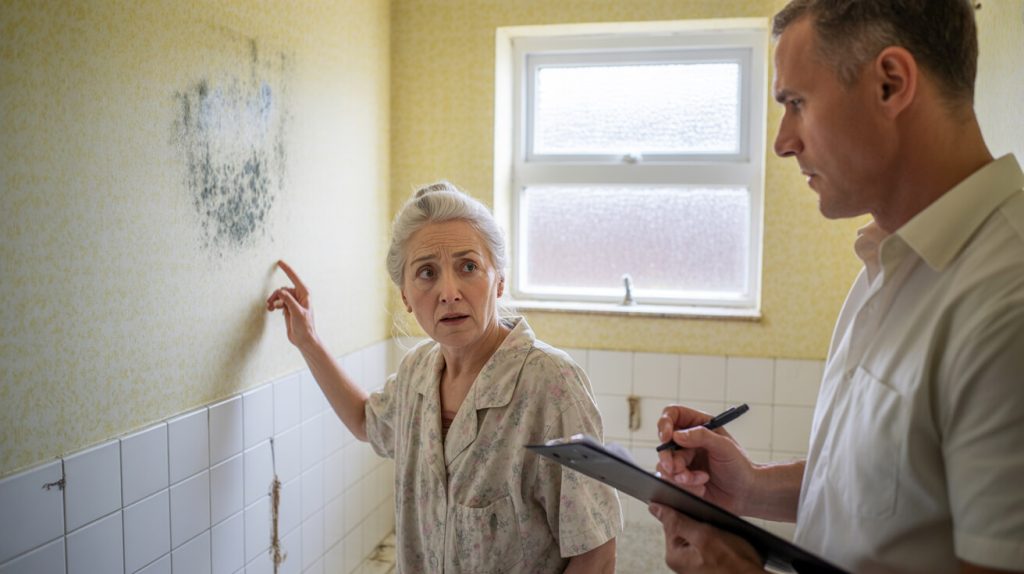
Are Boards Ready for Damp and Mould Risk? The Health Crisis That Changed Social Housing Forever
The landscape of British social housing has shifted beneath your feet. Damp and mould aren’t back-page defects—they’ve become headline health threats and a direct test of a board’s fitness to govern. The tragic, preventable death of Awaab Ishak didn’t just spark press outrage; it shattered the idea that building maintenance is a slow-moving technical backroom job. Today, every instance of damp or mould in your housing stock is more than a maintenance issue—it’s a risk to human health, a regulator’s crosshair, and a boardroom-level crisis.
Damage to human health doesn’t wait for board sign-off—it’s already in the walls.
Ombudsman rulings, coroner’s reports, and emergency repair scripts don’t knock politely on the door at quarter-end—they crash straight into the heart of your governance structure. The Social Housing (Regulation) Act 2023 and Awaab’s Law don’t just advise—they demand action, in real time. Delegating responsibility, trusting in legacy routines, or treating damp as “technical” no longer works. Regulators and residents now expect proactive, live compliance—visible, provable, and traceable to the top.
Damp and mould are now the acid test of your organisation’s leadership. Boards ready to act decisively will protect their reputation, their residents, and their legal standing. Boards that delay or under-invest expose themselves to regulatory intervention, public criticism, and increasingly—direct personal accountability. This isn’t a pressure test you can postpone. The evidence bar has been raised, and those not evolving with it will find governance crises can now arrive with a single missed patch of mould.
What Are Boards Legally and Personally Accountable For Under the Social Housing (Regulation) Act and Awaab’s Law?

The law isn’t buried in small print anymore—your board’s duty around damp and mould is explicit, measurable, and tied to each director by name. Under the Social Housing (Regulation) Act 2023, and with Awaab’s Law making those duties sharper still, the deadlines and obligations now run like clockwork:
- 14 days: to assess a reported damp or mould hazard
- 48 hours: to formally communicate your investigation and actions to residents
- 7 days: to remedy most issues — or just 24 hours for severe or emergency health risks
(Source: blauberg.co.uk)
There are no ‘good faith’ extensions; statutory time clocks now drive every inspection and repair.
These aren’t guidelines or best intentions—they’re enforceable statutory clocks, and failing to meet them triggers formal investigation, penalty, and personal scrutiny. If a maintenance supervisor or contractor drops the ball, the chain of liability doesn’t stop—it snakes straight to the boardroom, attaching itself to the named Health & Safety lead or responsible director. The Regulator of Social Housing (RSH) now expects every organisation not just to have policies on file, but living, auditable evidence that systems and training prevent harm the moment a hazard appears.
This means personal as well as organisational consequences:
- Directors can now be removed, fined, and banned from future posts for failures tied to compliance neglect or systemic underperformance.
- Executive and non-executive leaders are no longer shielded by “delegated authority”; personal liability flows up the chain when processes fail (Social Housing (Regulation) Act 2023, s.94, s.95).
Every “policy” in your cabinet is now judged by its pulse: does it lead to a live, time-bound, fully documented audit trail categorically proving you acted? Anything less is a governance breach that’s traceable and actionable.
How Do Boards Move from Box-Ticking Compliance to Live, Defensible Assurance?

You can’t afford to treat damp and mould risk like an annual audit topic or a compliance tick-box. The Regulator, tenants, and media want to see living proof—real systems in motion that surface risk and close it down before health is harmed.
A policy isn’t proof—the Regulator will demand a real-time walkthrough of how you manage risk.
Box-ticking is dead; real assurance is alive and always-on. The Regulator now looks for:
- Continuously updated risk registers: Every report, every visit, every fix must feed into an active, live record—never a “survey shelf” gathering dust.
- Transparent escalation logic: If a risk climbs the scale, your record should show how, why, who saw it, and how it triggered a specific action.
- Timestamped evidence at each step: From complaint logged, to contractor dispatched, to resident informed, to fix verified by someone with the right credentials.
- Board-level challenge and debate: Meeting minutes should prove that directors weren’t asleep, but actively querying the data, the bottlenecks, and the outcomes.
- Full traceability: Can you show every step, every decision, and every communication for a given property—without data gaps or ambiguous handovers?
If your systems are still paper-based or dependent on slow, infrequent “stock condition surveys,” you’re not compliant—you’re exposed. Today’s expectation is absolute clarity and systematised response for each individual property, not just for lump-sum “portfolio health” stats.
Board assurance is no longer a one-off event. It’s a rolling, dynamic process backed by digital record-keeping and operational vigilance. A missed or delayed action is not just a maintenance hiccup—it’s a governance fault-line that potential regulators, auditors, and claimants can follow straight to your front desk.
What Data and Tools Do Boards Need to Prove Real Oversight?

If your dashboards only show monthly averages or “green for go” indicators, you’re missing the entire point (and the regulatory expectation). Genuine oversight is granular, property by property, with relentless real-time visibility and evidence at every handover.
If a block is festering with risk beneath a sea of ‘all clear’ on the dashboard, the board is responsible for the blind spot.
Boards that try to bluff with generic metrics or lagging “compliance certificates” will find themselves outpaced not just by auditors, but by tenants themselves—armed with smartphones and direct access to ombudsman reporting avenues.
Digital transformation is now a governance requirement, not an IT project. Boards must require of their teams (and partners):
- Quarterly or better, unit-level reporting: Down to each block and even each residence, not just “estate averages.”
- End-to-end digital audit trails: Covering every complaint, inspection, fix, and communication—captured, time-stamped, and reviewable by the Regulator on demand.
- Automated escalation and reminders: Statutory deadlines (48 hours, 7 days, 14 days) are built into staff and contractor workflows—not left to human memory or manual tracking.
- Integrated documentation: Asset registers, risk dashboards, resident letters, and photos linked together in compliance-checked systems.
(see westwardhousing.org.uk; gov.uk)
Relying on manual handovers, “who had the folder last?” confusion, or fragmented data is not only risky—it’s now non-compliant. If you can’t show, for any individual property, what the risk was, who responded, how fast, and when the resident was notified, you’re at risk of failing your next audit, facing enforcement, and losing the trust of residents and partners.
What Does a Defensible Evidence Chain Look Like for Damp and Mould Governance?

If your board can’t trace a straight line from hazard alert to fixed and certified, you’re vulnerable—both as an organisation and as named directors. A defensible evidence chain is exactly that: proof that no complaint or risk is left to linger, and that due process is followed at every touchpoint.
Core components include:
- Complaint-to-resolution logs: Each complaint ties to a documented investigation, action, fix, and resident communication—*all time-stamped, unbroken, and independently reviewable*.
- Contractor and staff credentials: Every record must also show who did what, with certifications and accreditations traceably attached.
- Cross-linked asset and risk records: Maintenance logs, survey results, and incident tracking are not siloed—they’re connected across platforms.
- Board-level access: Directors must be able to call up any property’s story—complaint to fix—on demand, with assurance that each handover is document-backed.
- Audit-readiness: Assume each evidence chain will be pulled by the Regulator, a legal team, or the media at short notice.
Could the Regulator, tenant lawyer, or journalist follow the trail from hazard report to signed-off fix in your system tonight?
Your evidence chain is not just an operational tool—it’s a legal, reputational, and regulatory bulwark. Any weakness—a missing document, unrecorded visit, or ambiguous “fix” report—opens the door for enforcement. Digital, structured, and defensible audit trails mark the difference between boards that get ahead and those that discover breaches too late to avoid headlines.
What Are the Real Penalties and Hidden Costs When Boards Falter?
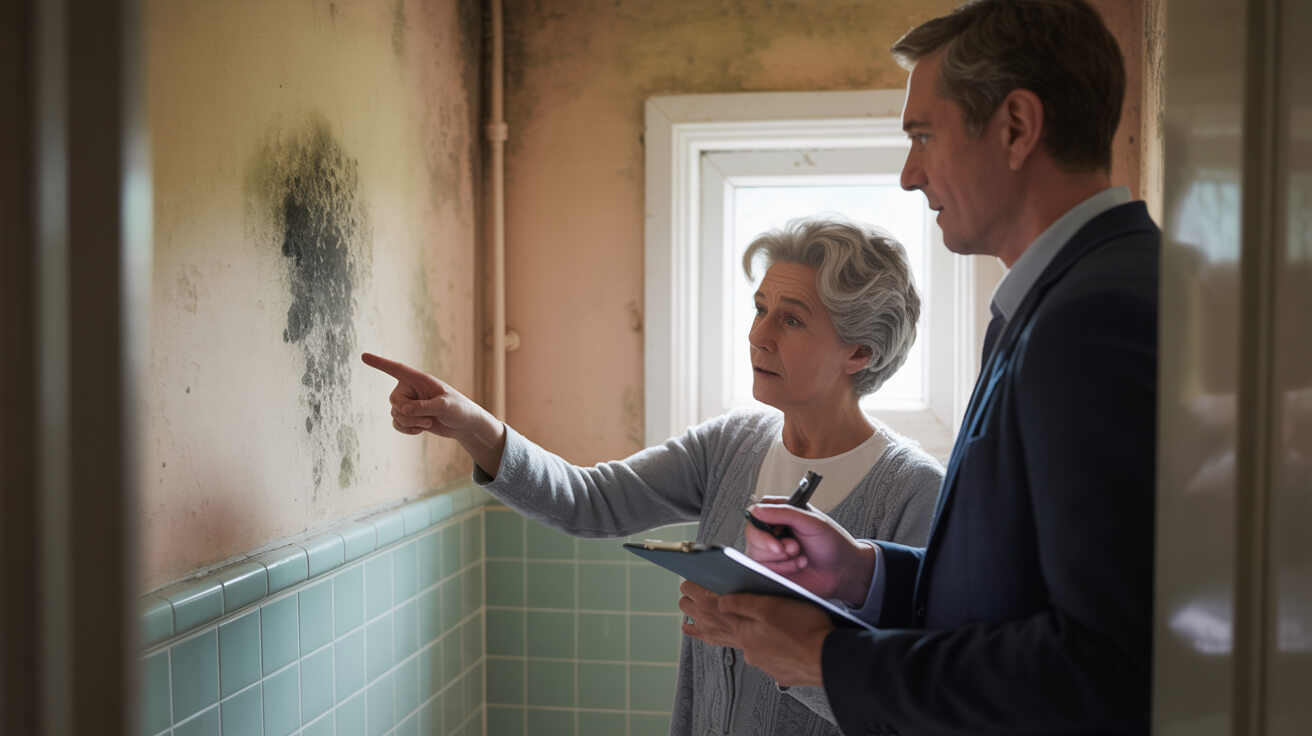
Fines catch the headlines, but the true cost erupts in collapsed trust, public embarrassment, asset devaluation, and executive jeopardy. Under the new regime:
- Unlimited fines: Breaking time limits or missing proof allows the Regulator to set penalties uncapped by prior rules.
- Public “naming and shaming”: The RSH now publishes board and executive failures, with names attached—a disaster for brand, partnerships, and investor confidence.
- Asset and contract risks: Insurers, funders, and partners are already flagging *evidence gaps* in damp risk management as threats to asset values and bond ratings.
- Personal removal: Named board members and senior managers now face public removal, not just background “early retirement,” if systems or leadership fail to protect residents from serious hazards.
Your next audit may decide both your asset value and your right to govern—nothing about damp is background noise.
Indirect costs are just as relentless: insurance premiums climb, lending terms harden, and staff turnover rises if your organisation is repeatedly flagged. The shadow of a regulatory report or high-profile enforcement can halt or reverse years of progress—whether in new development, commercial partnerships, or service quality. Ultimately, the cost of “waiting and hoping” is now calculable in real financial and reputational terms—risk management is no longer an operational subtopic, but an executive survival skill.
How Can Boards Future-Proof Their Skills, Systems, and Evidence Before the Next Crisis?

Sitting pat until “the next law” arrives is a losing game. The Regulator and the Housing Health and Safety Rating System (HHSRS) have made clear that risks won’t contract—they’ll expand. Boards must act before crisis, not after. This means:
- Training every director and senior leader: Not just on the technical language, but on the real health, financial, and legal impacts of damp and mould.
- Credentialled training and upskilling: Including certifications under BS6576, BS8102, and PAS2035 for management, surveyors, and maintenance crews; ensuring everyone knows both the law and best practice.
- Holistic, predictive risk systems: Invest in systems that flag potential risks—moisture trends, call patterns, “problem addresses”—before they escalate.
- Skills gap analysis and closure: Profile your board and operational teams; close gaps with strategic hiring, partnerships, or upskilling before an audit surfaces a weakness.
- Integrated, board-level workflows: Link governance, compliance, technical fixes, and resident communications in a single digital system; “disconnected teams” is now a red flag to audits.
Prepared boards don’t wait for headlines or drill-down audits—they build connective tissue across compliance, technical fixes, and leadership action.
The right investments build not just resilience, but trust—from tenants, front-line staff, auditors, and the Regulator. Proactive boards stand taller when scrutiny arrives, while laggards find their systems and persona vaporise just when trust is most needed.
Engage Sussex Damp Experts Today

Your board faces an exam with no retakes. Damp and mould governance is the frontline of resident health, compliance, and reputational stamina. Sussex Damp Experts stands ready to future-proof your organisation with a unique blend of forensic investigation, legal-grade documentation, and executive-savvy board reporting.
With Sussex Damp Experts, you secure:
- Board-level governance reviews: We audit not just your policies, but your systems—ahead of the Regulator.
- Legal and practical training: For directors, senior teams, maintenance managers, and contractors—rooted in BS6576/BS8102/PAS2035 and explicit legislative deadlines.
- Rapid, compliant damp surveys and remediation: Plug reference gaps, repair at speed, and produce the documentation that turns compliance from a risk to a reputational asset.
- End-to-end digital evidence chains: Offer instant proof to regulators, auditors, funders, and tenants that your governance is real, robust, and ready.
A damp patch isn’t just a maintenance note—it’s a governance test. We find, fix, and evidence actual compliance.
Don’t hesitate until the next agenda or media call. Secure your compliance, reputation, and assets—before the Regulator asks for evidence you don’t have. Sussex Damp Experts delivers not just inspection, but governance—building risk resilience your board, tenants, and partners can see and trust.
Contact Sussex Damp Experts today. Show you lead from the front—not just on paper, but in every decision, every report, and every fix.
Frequently Asked Questions
How can board members and health & safety leads prove personal compliance—and avoid Regulator penalties—under the Social Housing (Regulation) Act 2023?
Personal accountability sits on every director, not just the “health & safety lead”—the Regulator now demands proof of timely, property-specific action for every hazard.
The law names and shames: deadlines for investigation (14 days), tenant notification (48 hours), works start (7 days, or 24 hours for emergencies) are tracked to individuals, not faceless teams. Delays or omissions land on board minutes, and the Regulator can fine, remove, or publicly censure not just those who delegated but anyone who failed to challenge missing action. Delegating to a “badge holder” is now a mirage; the Regulator sees through proxy responsibility.
No one at the table is invisible—liability follows the name on the log, not the title on the badge.
What protects you from legal risk?
- Meeting records and challenge notes showing you raised and chased statutory triggers
- Evidence that your health & safety lead holds genuine power, resources, and board access
- Proof that actions weren’t just assigned but monitored and driven to completion, with visible escalation for delays
Directors ready for scrutiny keep live audit trails, minute regulatory cut-offs, and ensure no red flag gets “lost in handover.” Sussex Damp Experts supplies system templates and field-tested action triggers that lock liability management into routine board practice.
Checklist for directors and leads
- Is your board minutes log tracking investigation and remediation deadlines for every unit or scheme?
- Do you receive direct alerts—not just reports of “general compliance”—for each statutory milestone?
- When challenged, can you supply property-by-property evidence of both action and escalation?
Boards with airtight compliance chains are not just protected—they’re positioned as sector leaders.
What makes a compliance system “alive” enough for today’s Regulator—and how do you upgrade static policies?
A living compliance chain connects tenant reporting, site actions, and board oversight in real time—not buried in annual survey spreadsheets or static risk registers.
Regulator audits expect dynamic, time-stamped property logs, not summary dashboards or backward-looking policies on the intranet. Every hazard or complaint triggers a visible event: site photos, work tickets, and communication receipts are digitally logged, cross-referenced, and available to governance or audit at speed. Static or siloed information—for cases, contractors, or dwellings—now signals risk.
Real compliance breathes in the open—a living chain flags risk before it seeps back through the wall.
What does the Regulator look for?
- Timestamps on each tenant issue, with journey-to-fix mapped in the system
- Automated reminders and deadline alerts for every legal trigger
- Embedded compliance steps in contractor, agent, and site supervisor contracts—no more “I thought it was being handled”
Upgrading to audit-ready:
- Enforce log-ins and uploads from every operative at each survey and fix stage
- Embed escalation rules in your system—nothing moves forward until photographic or signed proof is attached
- Sync compliance moves directly to board agendas, so risks surface in governance, not just operations
Partnering with Sussex Damp Experts ensures your properties benefit from field-integrated compliance processes—making dormant policies truly dynamic and audit-secure.
What digital audit trails and concrete evidence must be instantly available if the Regulator comes knocking?
Instant compliance proof now means fluid, cross-referenced records: every complaint, site inspection, communication, and aftercare is traceable “from damp stain to resolution.”
Gone are the days of paper trails or summary “logbooks”—auditors demand the full story, with timestamps, signatures, resident acknowledgments, and “before and after” photos neatly linked per property, not in summary. Natural gaps (such as delayed notification, or works marked complete without resident sign-off) stand out like missing bricks.
A healthy audit trail leaves no damp patch in the story—show the digital thread or risk the penalty.
Core Regulator requests:
- Tenant complaint logs, time- and date-stamped
- Notification proof (digital or documented delivery within 48 hours)
- Work records traceable to named individuals, with operative credentials
- Photographic and resident sign-offs for each remediation step
- Live risk register entries showing status and escalation
Proving compliance on demand:
- Dovetail aftercare (such as seasonal checks) with digital logs—every remedial action needs a closing review
- Sync your asset-wide survey cycles with property logs, so nothing escapes through “spreadsheet cracks”
- Keep all evidence instantly accessible—not scattered or in personal inboxes
Engage Sussex Damp Experts for independent field audits and seamless, Regulator-grade documentation chains that make every asset defensible.
How do you detect—and close—the hidden failures and data leaks that turn compliance into crisis?
Hidden reporting gaps start small but end large: a tenant complaint marked “closed” but recurring, a contractor’s sign-off without board review, or insurance denials racking up unreported.
Board-level dashboards, if not grounded in granular field inspection and tenant input, can mask ongoing risk. True compliance emerges from matching minute-level field readings—moisture, salt, void rate—to complaint cycles, plus forensic site spot-checks. Patterns of insurance spikes, recurring voids, and seasonal repair surges signal invisible gaps.
Surface-level checks miss what the skirting hides—field vigilance stops the headlines before they’re written.
Spotting where your system is leaking:
- Units with repeat repairs or complaints, especially flagged “closed” in the system
- Buildings or schemes with insurance costs rising faster than peer assets
- Lack of linked aftercare or missing records tying fixes back to original complaints
- Gaps where escalation or board sign-off never occurs for “low risk” cases
Fixes that future-proof compliance:
- Institute randomised, board-ordered spot audits—field, not just desktop
- Run comparative reviews of asset insurance and void data against complaints
- Ensure every “fixed” record is actually closed by multi-party sign-off (contractor, resident, board delegate)
- Cross-link historic data for patterns—echoes of past damp are the best predictor of future risk
Sussex Damp Experts offers forensic reporting and pattern analysis, exposing latent risks before they become headline failures.
How do financial threats—regulatory fines, asset value loss, and insurance hurdles—now tie to compliance for boards and property leaders?
Regulatory non-compliance now links directly to uncapped fines, public naming, asset write-downs, and lender or insurer refusal—all triggered by real, not theoretical, property risk.
One Regulator downgrade ripples outwards: asset managers flag portfolio risk, insurance premiums jump, and mortgage or capital release can be locked until the compliance chain is restored. Repeat file failures or lost evidence chains convert into insurance denials—void periods lengthen, claim limits appear, refinances are delayed, and cost of capital surges.
Compliance echoes in the balance sheet—asset drift follows every unattended risk entry.
Early red flags for economic impact:
- Insurance underwriters flagging exclusion or premium spikes for properties with unresolved damp
- Loan officers adding conditions after Regulator censure or audit shortcoming
- Multiple failed site audits or recurring repairs to “previously cleared” assets
- Tenants or surveyors lodging repeat complaints on a property asset
Mitigation and board defence:
- Connect void rate and insurance data directly to damp and risk logs—don’t let red flags go unlinked
- Commission compliance gap audits before rating events or refinancing cycles
- Ensure every board and finance meeting surfaces and reviews compliance chain data
- Mandate pre-audit “stress tests” by independent partners before public reviews
Sussex Damp Experts teams deliver audit-ready risk chains and lender-verified technical reporting, keeping portfolios resilient and future-ready.
What skillsets and system reforms empower boards to stand up to today’s compliance and social housing scrutiny?
Board resilience is built on governance-grade skill refreshers—not just a policy template or annual vendor tick box.
Modern compliance requires directors who grasp BS 6576/8102, PAS 2035, local damp/void characteristics, and fast-shifting legal expectations. Auditable, field-driven systems link the front line to the boardroom. Regular board briefings on evolving insurance, lender, and compliance demands protect both the asset and the leadership from reputation and legal fallout.
Boards that own the skill curve and audit trail lead the sector—those that don’t simply react to the next crisis.
Boardroom levers for enduring compliance:
- Map board knowledge to emerging standards, commissioning annual skills surveys on real asset types and risk features
- Schedule short, outcome-focused briefings—insurance changes, audit risk, legal pre-action triggers
- Contract external “mystery auditors” to probe for weak spots before the Regulator or media does
- Link every system (from contractor management to tenant notifications) to audible evidence and governance metrics
Building your position of trust:
- Make Sussex Damp Experts your compliance and technical partner—delivering ongoing field feedback and external verification
- Encrypt surveyor and contract reports into governance language—decisions shaped by site reality, not administrative filters
- Tie visible system improvements (resident portals, digital asset logs, joint sign-offs) to board visibility and assurance
Boards who operate at this level aren’t just compliant—they’re recognised as a beacon of trust for residents, partners, and regulators alike.

