
 By
By  August 26, 2025

Is Awaab’s Law Only for Social Housing—Or Will Damp Protections Expand Beyond?
Awaab’s Law did more than rattle a few council cubicles. It ended the era when a musty smell could be hand-waved as “character” or peeling paint branded as part of a “fixer-upper’s charm.” The tragedy that named the law forced politicians to act, and its ripple now reaches beyond housing associations into areas shaped by Future Damp Innovations, including Bathroom And Kitchen concerns. You’d be hard-pressed now to find a mortgage lender, insurer, or surveyor who’s not eyeing every wall for hidden damp and demanding proper proof—not just a flaking patch brushed over with emulsion.
Damp doesn’t care if your portfolio is public, private, or just home. Unchecked, it destroys value and trust alike.
Landlords, property managers, homeowners—none can dodge the rising tide. Surveyors and local authorities are tightening their regimes, with lenders and insurers queuing up behind. Documentation, audit trails, professional remediation, aftercare—you’ll need the lot. Awaab’s Law was written to close the loopholes in social housing, but what it really did was announce the next baseline for the entire housing sector. Ignoring this is to mark yourself out, and not in a good way.
What’s Changed?
Damp and mould can no longer be treated as a “tenant issue” or delayed until the next maintenance round. No-one’s portfolio—social, private, commercial—is immune. In practice, you must expect audits, requests for survey data, remediation logs, warranty records and documented aftercare—all to avoid finance refusals, lost deals and growing regulatory headaches.
What Sparked Awaab’s Law, and What Does It Mean for Every Landlord?

Awaab’s Law is a reaction, not an abstraction. The death of toddler Awaab Ishak from chronic mould in social housing caused not just headlines, but a full-blown legal and regulatory pivot (BBC 2023). Parliament moved at speed—setting clear, enforceable standards with strict timelines. For every landlord, this isn’t a distant crisis; it’s already shaping the expectations of insurers, mortgage lenders, surveyors, and local authorities.
Core Shifts All Owners Must Grasp:
- Health Is Now Central: The correlation between long-term damp, mould, and chronic illness is no longer up for debate. Landmark NHS reports and inquests now anchor cases with hard evidence ([gov.uk](https://www.gov.uk/government/news/awaabs-law-to-force-landlords-to-fix-dangerous-homes?utm_source=openai)).
- Mandatory Action Windows: Social landlords face three-day written response deadlines, ten-day full investigation mandates, and must either fix or safely relocate tenants within 24 hours in extreme cases. It’s not a “guideline” but legal fact.
- Evidence Over Intention: Properties flagged for damp must have full logs, digital photo evidence, surveyor-standard reports, and proof of professional remediation—or risk being blacklisted by insurance and lenders.
Beneath the surface, these standards aren’t just for the social sector. Once a minimum is set by law—especially when health is the core risk—it’s only a matter of time before the whole sector moves. Private owners and commercial landlords are already seeing the edges of this reform in property sales, finance decisions, and local authority communications.
What Has Changed for Social Landlords, and Is Your Property Next?

The new regime places timelines at the heart of legal compliance, with robust evidence as your property’s only armour. Every inspection, fix, or tenant report is now part of a growing paper trail that defines whether you pass or fail not just audits, but finance applications, insurance renewals, and reputation with tenants.
New Regime, New Risks
- Every Complaint Gets Priority: You can’t cherry-pick maintenance requests. Any damp or mould report must be investigated to British Standard, not wallpapered over.
- 24-Hour Health Safety Rule: If the issue endangers health, emergency action is a must—fast, recorded, and signed-off.
- Robust Survey Logs: British Standards (BS 6576 for rising damp, BS 8102 for below ground) are now the reference in every serious case. Rubber-stamped surveyor reports, photographic evidence, and logged aftercare are the hallmarks of properties that won’t land in the compliance crosshairs ([gov.uk](https://www.gov.uk/government/publications/awaabs-law-draught-guidance-for-social-landlords/awaabs-law-draught-guidance-for-social-landlords?utm_source=openai)).
Documentation isn’t bureaucracy—it’s your only defence when lawyers and insurers come calling.
A refusal to document thoroughly, or a reliance on “DIY” fixes, now screams risk to everyone who matters—mortgage advisors, insurers, or prospective buyers. If your documentation can’t withstand a legal challenge, your asset value and reputation are circling the drain.
Will Phase 2 Expand Damp Standards to the Private and Commercial Sectors?

Anyone banking on private or commercial property being immune is betting against history. White papers and the draught Renters’ Reform Bill unambiguously signpost the changes ahead: expect some form of “Awaab’s Law” to be applied across sector lines in the near future (gov.uk).
The Emerging Reality
- Cross-Sector Risk Profiles: Damp and mould are being tiered as “Category 1” hazards in more local authorities—which means enforced action no matter the building type.
- Transparency Mandates: Local councils are listing poor performers by name online; lenders and insurers already mine these lists for risk screening.
- Proof on Demand: Remediation records, aftercare files, time-stamped photographs and official logs are quickly becoming demands in private and commercial property transactions.
Protecting tenant health is no longer unique to the social sector. Mortgage valuations and insurance clauses are catching up fast.
If you’re waiting for Parliament, you’re already trailing behind the curve. Banks and insurance companies have already shifted their standards—waiting for case law is only setting yourself up for expensive surprises and last-minute overhauls.
What Practical Steps Should Property Owners Take to Ensure Audit-Proof Compliance?

Professionalism has moved from being a competitive edge to a baseline expectation. You can either document now and lead, or scramble later with a diminishing set of options and rising costs.
Immediate Moves to Future-Proof Your Assets
- Create an Evidence File: Swap out informal maintenance notes for formal, time-stamped surveys, photographic logs, and certificates of completion—preferably written to British Standards.
- Stop Using DIY Fixes: Only engage professionals who understand and document damp remediation to BS 6576 or BS 8102 level. Insurers and lenders can and do reject claims based on evidence gaps.
- Live Documentation: Maintain a ready-to-go audit pack for each property that tracks complaints, inspection logs, contractor qualifications and aftercare schedules.
Audit-proofing isn’t paranoia—it’s the only way to defend asset value when lenders and insurance inspectors start digging.
When your file is always up to date, surprise audits, emergency repairs or sale-critical questions become routine, not drama. Preparation here is pure risk management—your wallet and reputation thank you in advance.
Why Is Surveyor-Grade Damp Diagnosis Now Non-Negotiable?
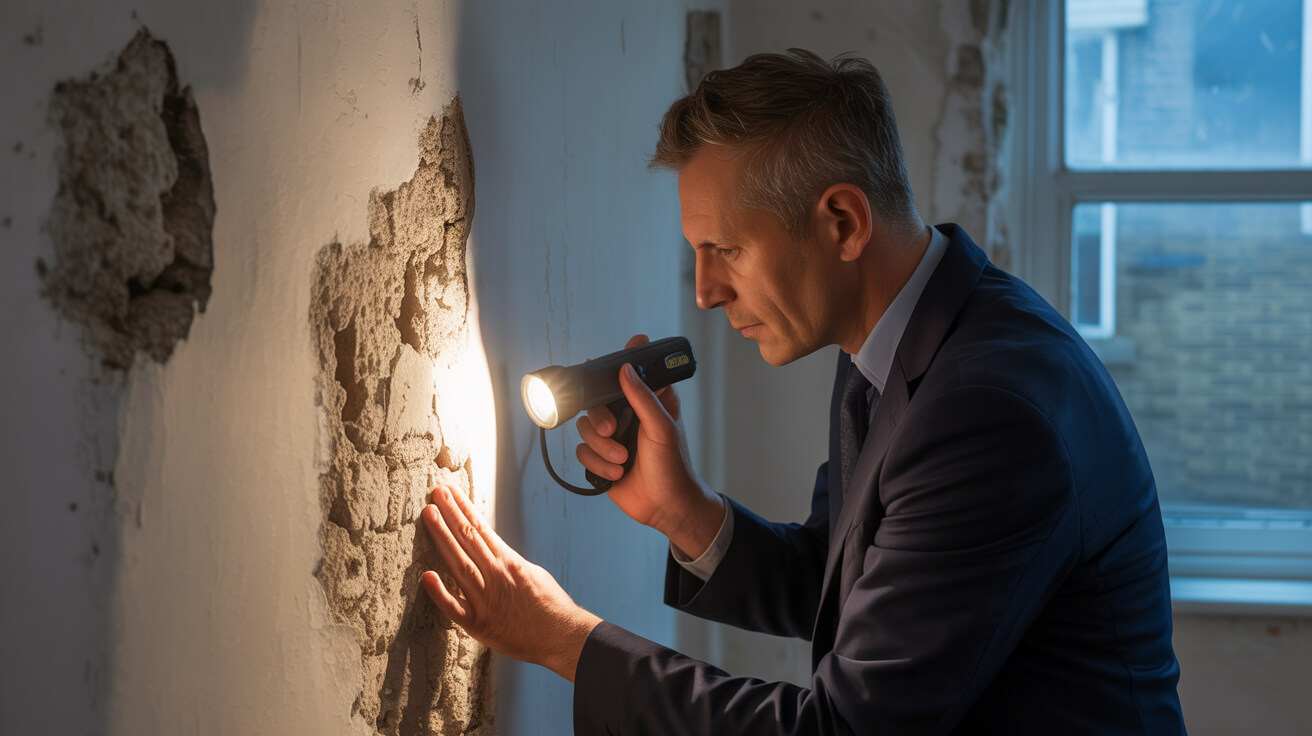
Guesswork is dead. “It looks dry” or “tenant’s exaggerating” are now instant credibility bombs. Survey-grade methods and full compliance logs are the only language that regulators, banks and insurers are prepared to hear.
What Sets Surveyor-Grade Work Apart?
- Standards, Not Shortcuts: Diagnostics to BS 6576 and BS 8102 can be used as legal and financial evidence. These standards are no longer “for best practice only”—they’re the line in the sand for repair, lending and insurance ([gov.uk](https://www.gov.uk/government/publications/awaabs-law-draught-guidance-for-social-landlords/awaabs-law-draught-guidance-for-social-landlords?utm_source=openai)).
- Connected Aftercare: Paper trails extend past the fix—ongoing monitoring, scheduled maintenance and ventilation logs are now the sign of a property that stays compliant.
- Defensible Proof Chains: With digital timelines, sensor logs, photographic evidence and signed paperwork, any challenge—be it legal, insurable, or lender-related—hits a wall of hard data.
Show your work. When in doubt, over-document—because when the questions come, only proof counts.
With professional inspection standards applied universally, the risks of shortcuts or “old habits” compound—slashing resale, delaying finance and threatening insurance cover the moment a file is called for review.
What Financial and Legal Penalties Await Landlords for Non-Compliance?

Believing that “no news is good news” is a relic. The penalty for non-compliance isn’t theoretical; it’s happening already, and the trend is tighter, not looser. Damp is now a bottom-line issue.
The Real-World Fallout
- Insurance Exclusions: Claims don’t just languish—they’re outright rejected when you can’t prove professional-standard diagnosis or repair ([gov.uk](https://www.gov.uk/government/news/awaabs-law-to-force-landlords-to-fix-dangerous-homes?utm_source=openai)).
- Asset Value Write-Downs: Red-flagged survey reports can strip more than 10% from a property valuation.
- Regulatory Backlash: Names published online, fines increasing year-on-year, and loan refusals—all unavoidable if you’re not audit-ready.
Non-compliance isn’t just a legal footnote anymore; it eats into asset value, financing options, and resale prospects.
If your record-keeping, survey logs, or contractor documentation don’t pass muster, you’re not just risking a fine—you’re burning money and trust with every overlooked detail.
What Does an Audit-Proof Damp Compliance System Actually Look Like?

You want insurance that pays, lenders that say yes, buyers who don’t back away? That means building a compliance system that can be shown, checked and believed on demand.
How Sussex Damp Experts Build Defensible Compliance
- Surveyor-Level Diagnostics: Every job—from the initial survey to the final check—is logged, cross-referenced, and issued to British Standards, with reports that can be handed to any authority or lender.
- Digital-First Evidence: All proof—survey photos, fix records, moisture sensor logs, aftercare schedules, warranty documents—is digital, sharable, and redundantly backed up.
- Proven Trust Signals: We layer proof: testimonials, before-and-after visuals, a clean claims track record, and rapid response to emergent requirements. This is not just compliance—it’s a reputational advantage.
When the world wants to see your compliance, easy-access proof is your safest insurance.
Don’t wait until you’re queried or challenged. When the need arises—and it will—you want your house in order.
Protect Your Asset, Your Reputation, and Your Tenants—Contact Sussex Damp Experts Today
Choose to be ahead. There’s a fork between sticking with “good enough” (and hoping for the best), or moving decisively to shore up your property’s compliance and value—for good.
With Sussex Damp Experts, you receive:
- Survey-Grade Assessment: Every report and solution stands the test of regulation, mortgage scrutiny, and legal review—BS 6576 and BS 8102 as standard.
- Total Compliance Readiness: Digital audit packs, aftercare schedules, warranty certification—ready to satisfy even the most sceptical lender or insurer.
- Future-Proofed Value: Whether you’re selling, restructuring finance, or simply safeguarding tenants, you can prove your portfolio holds the line—and stays a step ahead.
Smart property owners stay ahead of the next law, not behind yesterday’s standards.
If you want certainty, clarity, and compliance that won’t let you down, reach out to Sussex Damp Experts. Secure your assets, your tenants’ health, and your reputation—while the rest are still catching up.
Frequently Asked Questions
Which properties are most at risk from early Awaab’s Law enforcement—even before full rollout?
You’ll now find Awaab’s Law shaping expectations for far more than social housing—its reach is quietly transforming every building touched by council scrutiny or institutional lenders. Private rentals, leasehold flats, shared-ownership, and even outright owner-occupied homes are feeling the squeeze as enforcement logic spreads ahead of official expansion into the private sector. If your property stands in a mixed-tenure block, uses professional management, or has public funding links, current practice already puts you under the microscope.
When enforcement moves faster than law, waiting your turn only darts you into the headlights.
Which scenarios are already forcing the issue?
- Mixed blocks and leaseholds: Landlord agents often impose the strictest audit trail on all units, regardless of tenure, to avoid piecemeal risk.
- Financed or remortgaged properties: Mortgage providers now lean on Awaab’s standards when assessing risk, often as a lending precondition.
- Refurb or managed portfolios: If even one social or PRS flat is present, audits apply block-wide—expect your records and repairs to be tested.
- Portfolio landlords and agents: Even without official rollout, councils are issuing “shadow compliance” notices, tying asset value to audit readiness.
If your asset, investment, or property management remit touches anything but pure, detached owner-occupancy, you’re already in Awaab’s Law territory. The old division between “regulated” and “private” is vanishing—scrutiny is contagious, and the laggards are being flagged early.
Why is today’s damp documentation system failing professional landlords and agents?
Traditional “job done” logic—site note, brief invoice, minimal follow-up—collides headlong with the evidence requirements now demanded by councils, lenders, and insurers. Damp repair documentation has shifted from a “tick box” to a full step-by-step chain: time-stamped readings, photographic proof, surveyor/named expert sign-off, and warranty-linked aftercare—all cross-checked for compliance with British Standards (BS 6576/BS 8102).
If your repair trail is patchwork, missing photos, or lacks standards-based reference, the process leaves you wide open to legal challenge or insurance standoff. What once passed for “keeping records” is now a red flag.
If a third party can’t instantly see what was fixed, why, how, and when—with proper backing—your compliance stands on sand.
What passes muster now?
- Digital moisture, salt, and temperature logs: —captured before and after, mapped to the address
- Sequential photos: —from diagnosis through works to completion, date-stamped and unique to each property
- Documented sign-off: —qualified surveyor or named professional, referencing relevant standards
- Warranty and aftercare logs: —traceable, with service schedules and inspection dates included
- Formal notice trails: —tenant contact, issue notification, and statutorily required updates
Missing any of these? Lenders, councils, and even buyers increasingly demand full evidence packages before authorising funds or settling claims. It’s not enough to “get the work done”—you now need to certify every move.
How do you shield your property’s value and avoid claims as compliance tides rise?
Protecting value now depends on system-level proof, not just “intent to repair.” The test is not whether you carried out work, but whether your evidence tells a clear, timed story that stands up to audit or dispute. Portfolio owners and agents building audit-first workflows—digital logs, annual surveyor reports, scheduled aftercare, and real-time communication records—are finding insurance and lending relationships far easier, with less exposure to tenant or regulatory dispute.
In an era of audit trails, peace of mind belongs to those who don’t just repair, but can prove it in five clicks.
Proven routes to bulletproofing value
- Routine surveyor inspections: Annual, digital, and standards-cited, not just after complaints.
- One-stop audit logs: Every work order, complaint, and fix date- and asset-matched, ready for council or lender review.
- Aftercare built in: Booking follow-ups, warranty checks, and remedial visits into the original log—no more “out of sight, out of mind.”
- Contractor upgrade: Move from generic fixes to trade-accredited, British Standard-trained partners willing to own the documentation.
Standing behind a digital, audit-first property record is often what keeps a portfolio insurable, financeable, and desirable—as well as protecting management reputation. Don’t wait for law to enforce it; treat systemised evidence as your competitive edge.
What are the new damp and mould response clocks—and why does missing one cost far more than a fine?
Each tenant report now triggers a measurable “compliance clock” backed by regulation—not just an expectation of good faith. Landlords and agents must not only act fast but document each minute of the process, complete with photos, logs, and signed interventions. Failing to hit these deadlines, or to show exact evidence for hazard response, risks legal challenge, funding freeze, and portfolio devaluation.
In the age of digital audit, time isn’t just money—it’s compliance currency.
Key timelines you cannot afford to miss
| Hazard Type | Maximum Response Time | Required Proof Elements |
|---|---|---|
| Immediate health threat | 24 hours | Tenant log, photos, team notes |
| Severe or structural damp | 10 days to inspect, then 5 days to fix | Moisture logs, surveyor sign-off, repair confirmation |
| Localised/minor damp | 4 weeks | Progressive updates, aftercare logs, tenant comms |
Every grace period is shrinking. Failing to document either prompt response or stepwise escalation invites council inspection, insurance delays, and raises the alarm with mortgage lenders.
Document everything, every time—even if the outcome is “no work needed”—and your reputation, cashflow, and operational control will remain solid through regulatory churn.
How do British Standard-accredited contractors turn compliance risk into asset protection?
Choosing a contractor who “knows the regs” is now non-negotiable. Major losses repeatedly stem from work done by well-meaning but non-standard trades, with repairs later flagged by insurers, councils, or finance teams for lacking evidential clarity. The only reliable partners are those who provide traceable surveyor-driven reports, British Standard-cited diagnostics, stepwise photo evidence, and genuine, service-linked warranties. Anything less risks invalid cover, rejected lending, or headline-making penalties.
The safe choice is the slowest to advertise but the first to be called in by lenders, councils, and insurers.
What distinguishes a compliance-grade contractor?
- Accredited surveyor diagnosis: With root cause, method, and solution referenced to BS 6576/BS 8102
- Full photo sequence: Documented, date-stamped, tied to property and repair record
- Warranty plus aftercare: Clearly linked paperwork, with reminders for follow-up and annual checks
- Digital reporting: Reports optimised for audit, insurance, and finance case files
- Transparent credentials: Visible PCA, TrustMark, or equivalent status as basic entry points
Audit-ready documentation is now the litmus test for professionalism—your contractor’s standards are your property’s shield. Choose the right partner, and compliance becomes an asset, not a liability.
What happens to non-compliant landlords and agents as audit failings go public?
The era of “local exception” or “we’ve always done it this way” is over. News stories naming non-compliant landlords and managers are rising, while tenant forums and property platforms distribute evidence of audit failures—permanently affecting lettings, sale value, and trust with lenders or authorities.
Insurers and mortgage providers are now running digital audit sweeps, flagging even old compliance gaps for tougher terms, refusals, or public censure. Every missing photo, unsigned report, or delayed response piles up reputational cost long after any one fine is paid.
When transparency is forced on you, the only way out is to lead it first.
Risks you face when compliance is ignored
- Escalating council fines: triggered by incomplete or non-existent logs
- Valuation drops: as flagged assets are excluded from premium lending
- Irrecoverable brand damage: —audit failures live online, shadowing future deals
The simplest shield? Commission a full damp audit through Sussex Damp Experts. British Standard-cited, warranty-backed, and respected by lenders and authorities—we help position your properties as models of compliance, not headlines for failure.

