
 By
By  August 26, 2025


For too long, damp and mould in rented homes have quietly gutted health, ruined finances, and forced families into a cycle of complaint and neglect. What was once a slow burn—paint peeling, musty odours, black blooms behind the wardrobe—has become a national outrage. Renters across England watched as their warnings vanished into the bureaucratic fog, only to learn of tragic outcomes like Awaab Ishak’s death. Now, with Awaab’s Law, renters finally have legal firepower and a clock that backs every demand with consequences.
Mould can quietly wreck your lungs and your landlord’s reputation in a single winter—Awaab’s Law turns silent suffering into mandatory action.
Damp and mould are not just building defects—they are a public health risk and a reputational grenade for councils, letting agents, and landlords. With the Social Housing (Regulation) Act 2023, the risk moved out of the shadows: ignoring a complaint can now torpedo your property value or professional standing within weeks. Tenants, social housing officers, and property managers are suddenly navigating a world where evidence, deadlines, and escalation aren’t options—they’re obligations.
This isn’t mere legal noise. In 2020, the system let Awaab Ishak die in a Rochdale flat filled with black mould, despite desperate pleas from his family. Parliament’s answer? A law with deadlines, fines, and the threat of direct intervention for every ignored or slow-walked repair. Where your health was once bartered for corporate convenience, now time is on the tenant’s side.
How Does Awaab’s Law Force Social Landlords to Fix Damp and Mould?
Awaab’s Law re-engineers the balance of power in English social housing, reinforcing awaabs law tennants rights through legal timeframes rather than vague promises or “best efforts.” The moment you spot black mould, brittle plaster, or any sign of damp, you gain fixed-response rights. Social landlords must investigate complaints, communicate plans, and deliver repairs—often with a transparent audit trail you can follow or escalate.
The clock doesn’t start when your landlord feels like acting—it starts the instant you hit ‘send’ on your complaint.
Here’s how the law now unfolds for you:
Mandated Response Chain
- Written Acknowledgement: Landlords must confirm receipt of your complaint within 5 working days. No more voicemails lost in the ether.
- Inspection Arranged: Physical or virtual inspection happens within 14 days, with evidence logged.
- Written Action Plan: Clear remedial actions, deadlines for each step, and contact details for responsible officers, delivered within 14 days of inspection.
- Repair Deadline: Depending on the hazard, repairs range from “as soon as possible” for high-risk issues to 28 days for most cases. With leaks near electrics or severe mould, turnaround is immediate.
- Escalation Route: If any stage lags, you’re now empowered to escalate to the local council or the Housing Ombudsman, which have new teeth to fine or take over negligent landlords.
What You Gain as a Tenant
- Legal Leverage: If a landlord dithers or hides, every missed deadline is a legal error, not just a clerical one. This stacks up evidence for ombudsman action, fines, or even forced change of property management.
- Documented Proof: Every exchange—from the first email to the last repair invoice—now builds a case. The process rewards meticulous documentation, not just hope.
Your voice is no longer a polite suggestion. When landlords hesitate, you’re legally primed to call in the regulatory cavalry—your right to a healthy home isn’t just principle, it’s statute.
Why Did It Take Awaab’s Law to Change the Damp and Mould Game?

Before this law, the entire complaints system was designed for attrition. Landlords juggled tenant notes, fobbed off repairs, and let problems fester. With no hard timelines, urgent repairs waited until “resources allowed,” which too often meant not at all. Black mould spread while tenants filed new complaints, and bureaucracies closed ranks.
The old system turned serious health complaints into a hope-and-wait lottery—Awaab’s Law ended that game.
The Pre-Law Reality
- Invisible Problems: Mould-related coughs, asthma, and hidden rot were dismissed as “lifestyle issues.”
- No Schedule, No Accountability: Complaints joined an endless queue without documented timelines.
- Patchwork Escalation: Councils, ombudsmen, and landlords operated with no unified enforcement; most complaints faded out.
The Turning Point
It took government inquests, a public outcry, and hard campaigning from housing charities to inject enforceable urgency into housing repair. The Social Housing (Regulation) Act 2023, with Awaab’s Law as its lynchpin, finally baked hard consequences and visibility into the repair process.
For social landlords, procrastination is now an expensive, irreversibly public mistake.
How Do You Use Awaab’s Law to Demand Action—Step by Step?

Awaab’s Law arms you with a step-by-step strategy that transforms each sign of damp or mould into a documented legal process. Every action you take gains legal standing—so the more precise your records, the stronger your position.
The process emphasises proof: documentation, photos, dates, and escalating your claim when delays hit.
Activate Your Rights in Five Steps
-
Gather Evidence
Photograph the damp or mould, document musty smells, log dates of first notice, and collect all communications with your landlord. -
Trigger the Law with a Formal Complaint
Write or email using this template:
I am invoking Awaab’s Law regarding damp/mould at [address]. Please confirm receipt, commit to an inspection, and state your planned repair timeline within 5 working days.
Attach evidence and explicitly request a written response with an inspection date.
-
Keep a Repairs Log
Track every call, meeting, and repair date. Note symptoms or health concerns—especially for children, elderly, or vulnerable residents. Missed appointments or deadlines? Make a note. -
Escalate When Deadlines Slip
If timelines are ignored or repairs stall, escalate to your local council’s Environmental Health Officer. For social tenants, the Housing Ombudsman is legally equipped to intervene—and every documented delay strengthens your case. -
Seek Support & Compensation
Use tenant advocacy services (e.g., Shelter, Citizens Advice) for assistance with unresolved complaints or compensation claims. Medical evidence, photos, and receipts can convert inconvenience into legal leverage.
Every missed deadline is now an opportunity—inaction moves your problem higher up the enforcement food chain.
What Are the Penalties and Risks for Landlords or Agents Who Ignore Damp Complaints?
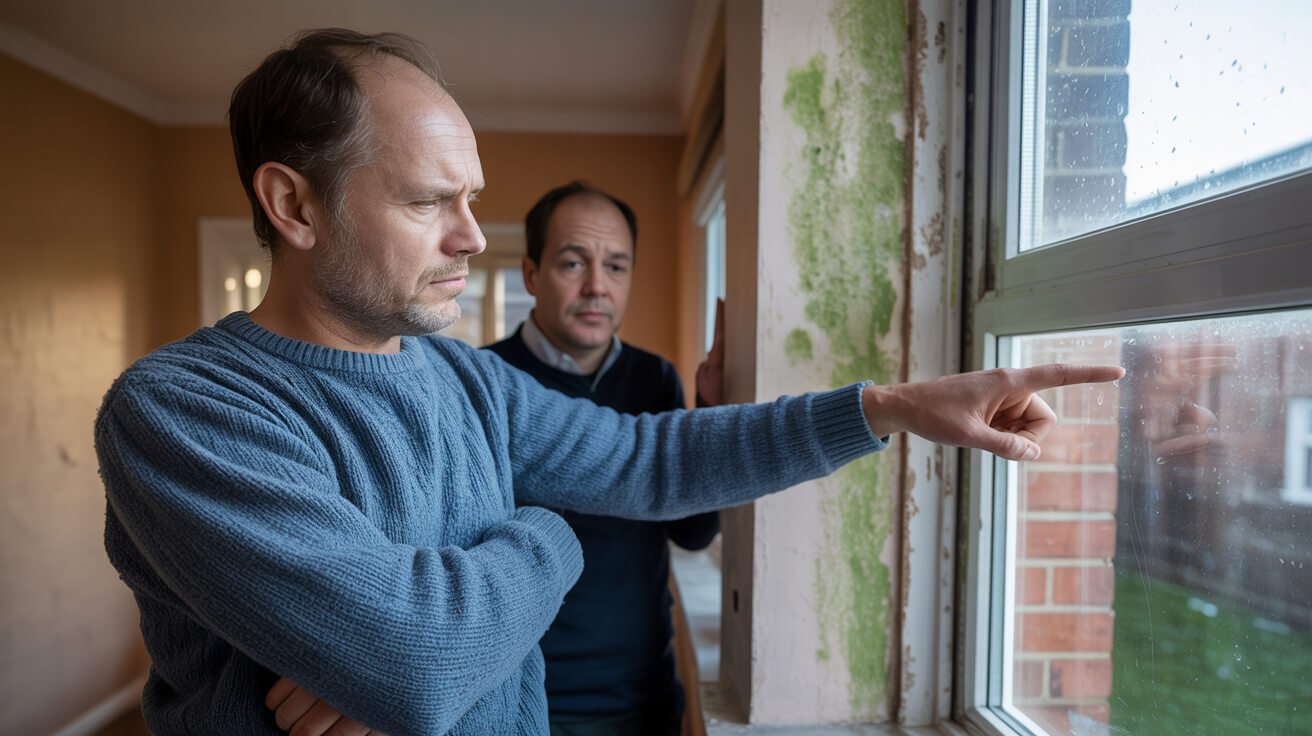
Landlords, property managers, and agents now risk more than “reputational bashing.” Written inaction has a legal cost. Fines, public naming, loss of management rights, and even regulatory takeover all become possible when Awaab’s Law is ignored.
Today’s shrugged-off mould patch can turn tomorrow’s sale into a legal showdown—or stop a mortgage dead.
Three Tiers of Danger
- For Social Landlords:
Massive fines, public reports, and takeover risk make non-compliance a direct threat to business as usual.
- For Private Landlords/Agents:
Although Awaab’s Law applies to social landlords, councils are rapidly adopting its standards for all rented properties and issuing fines or enforcement notices under HHSRS.
- For Professionals (Surveyors, Contractors):
Failing to document, photograph, or report repairs now risks invalid survey certifications, insurance refusals, and complaint escalation.
New Compliance Traps
- Missed Inspection or Repair Dates:
Each missed date is logged and enforceable.
- Insufficient Documentation:
Verbal “fixes” or handshake agreements don’t meet the new standard; detailed written records are mandatory.
- Failure to Notify or Educate Tenants:
Property managers and agents must make repair and complaint procedures clear, accessible, and up-to-date—inaction leaves them exposed.
Landlords’ new enemy isn’t just black mould—it’s the paper trail tenants are now incentivised to grow.
What Role Do Surveyors and Professional Damp Reports Play Under Awaab’s Law?

Professional damp surveys have shifted from optional upgrades to legal cornerstones. A robust survey from a trusted source such as Sussex Damp Experts can mean the difference between a stalled repair and an enforced resolution.
In a game run by documentation and deadlines, a professional’s word is a legal lever.
Why Use a Professional Damp Survey?
- Root Cause Diagnosis:
Surveyors don’t just spot symptoms—they track moisture’s origin and recommend lasting repairs, blocking limp “paint-over” fixes.
- Legal Proof:
Reports serve as admissible evidence for councils, ombudsmen, or courts. If a dispute escalates, credible identification from a surveyor bridges the gap between tenant complaint and action.
- Mortgage and Insurance Needs:
Lenders and insurers increasingly refuse homes flagged for unresolved damp. Surveyor proof accelerates transactions and unlocks stalled loans.
For home sellers and buyers, a survey can either prevent disaster (pre-sale remediation) or cement negotiating power. For landlords, annual surveys can now mean the difference between fine-free assets and council investigations.
How Should You Prepare for Repairs and Documentation to Meet Awaab’s Law Standards?

Awaab’s Law rewards those who systematise, not those who gamble. If you want dry, healthy property—and legal protection—future-proof your approach before issues explode.
In the new regime, proof is your property’s passport—never let a repair vanish into silence.
Landlord and Professional Duties
- Create and Follow Written Procedures:
Document every policy, from complaints to repairs, and share them clearly with tenants. Every claim should have a paper trail.
- Use Digital Tools:
Rely on property management software or shared logs to record complaints and repairs. This minimises missed deadlines.
- Audit Your Assets:
Proactively inspect buildings, prioritising high-risk properties (basements, poorly ventilated or previously flagged homes).
- Educate Staff and Contractors:
Make Awaab’s Law part of every induction, toolbox talk, and compliance check.
Action Plan for Homeowners and Managers
- Schedule regular damp surveys, especially before winter or property sales.
- Archive repair invoices, before/after photos, and communication chains.
- Keep warranty documents and proof of past treatments on file—insurers and mortgage lenders increasingly demand it.
Taken step by step, compliance is less a headache and more a guarantee that your property’s value and reputation are never left to chance.
What Silent Pitfalls and “Next Moves” Should You Watch Out For?

Some ignore Awaab’s Law, betting on knowledge gaps or tenant fatigue. But the law is designed to reward the persistent, the documented, and the prepared.
Never rely on good will or past silence—every new report resets the law’s clock.
Avoid the Most Common Traps
- Failure to Communicate Quickly:
Delay is visible and actionable.
- Relying on Half-Fixes:
Cosmetic repairs won’t wash; root-cause management is king.
- Misunderstanding Legal Coverage:
Private sector? While not all technical provisions apply, ignoring modern repair standards means facing council and insurance headaches anyway.
- Losing Records in the Shuffle:
Anything not documented might as well not have happened. Property chains are now evidence-driven above all.
How to Stay Ahead
- Build relationships with professional contractors and surveyors who provide warranty-backed repairs and hold up under regulatory inspection.
- Review internal escalation processes every quarter.
- Train staff to recognise new types of damp-prone properties arising from climate and regulatory shifts.
The routes to legal pain are multiplying—but so are the options for proactive, expert-run compliance.
Why Speak to Sussex Damp Experts About Damp and Mould Compliance?
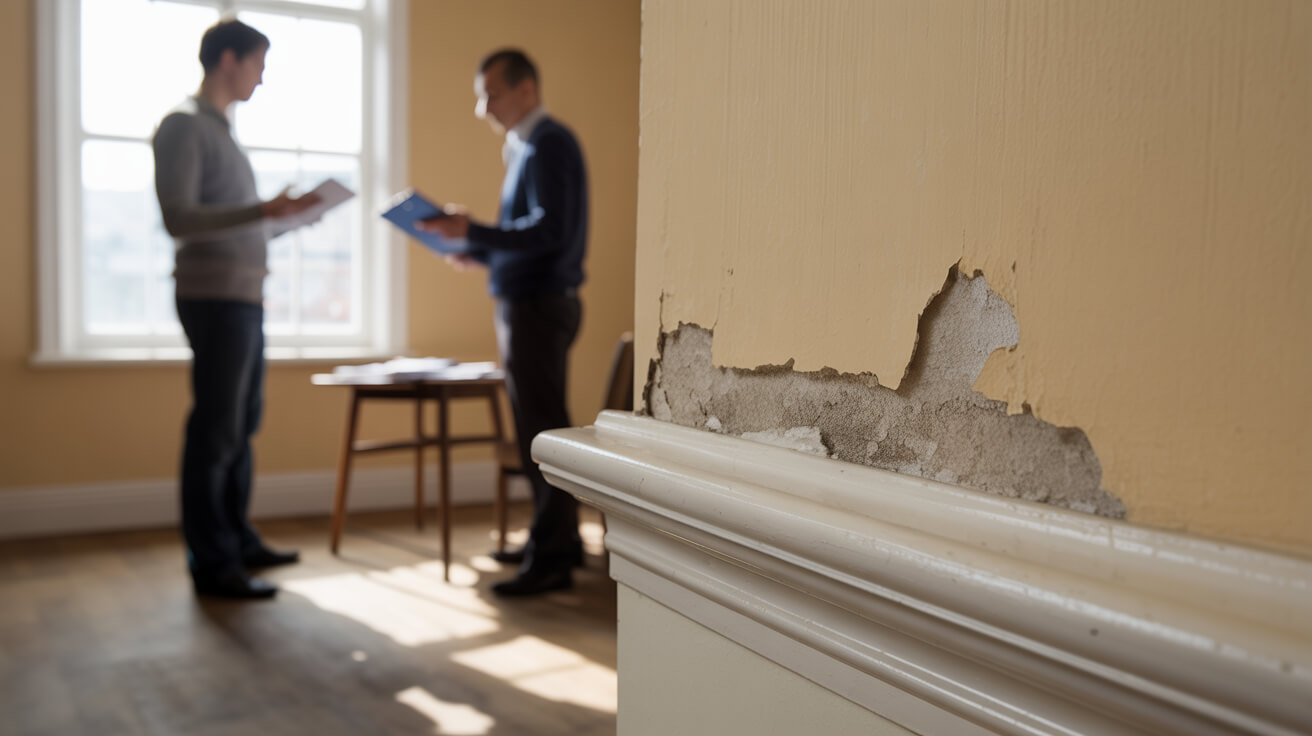
Property risk doesn’t wait and neither should you. Damp doesn’t disappear—it quietly worsens. Each ignored patch is not just a threat to your building but to your legal and financial standing under Awaab’s Law. Sussex Damp Experts stands ready with forensic inspection, detailed reporting, and proven repair strategies that not only fix today’s visible rot but also deliver a bulletproof paper trail for tomorrow’s lenders, insurers, and auditors.
Delay means doubly paying: once for the cure, then again for the missed deadline.
For homebuyers, sellers, landlords, agents, and managers: protect your asset and your reputation—don’t hesitate. Reach out to Sussex Damp Experts for an assessment that makes problems solvable, not ignorable. Secure peace of mind and proof of compliance, from the first call to the final warranty.
Frequently Asked Questions
How does Awaab’s Law affect landlord responsibilities and tenant power when dealing with damp or mould?
Awaab’s Law puts a legal clock on every social landlord in England, forcing prompt, documented action on damp or mould issues—transforming tenant concerns into enforceable deadlines and raising the bar for professional response. Once you send a written, date-stamped complaint, your council or housing association landlord has five working days to acknowledge, fourteen to provide a survey and repair plan, and just twenty-eight to wrap up remedial work in most cases.
That timeline isn’t just box-ticking—it’s a measured, legal expectation, with local councils, the Housing Ombudsman, and regulators holding power to penalise, intervene, or assume control of properties if landlords miss these marks. Even a brief delay carries weight: each missed deadline is a statutory breach, not a customer-service slip. What does this mean for you? Tenants now have tools and triggers: from structured logging of complaints and survey evidence to direct channels for escalation. Sussex Damp Experts provide the type of forensic assessment that backs your position—whether you’re a tenant seeking repairs or a landlord wanting to establish clear compliance with the new rules.
Every written complaint now carries the same weight as a legal contract—and each day it’s ignored amplifies your leverage.
Who and what does Awaab’s Law impact?
- All social housing tenants—council and housing associations.
- Private renters: while not directly named, many councils are starting to enforce similar timelines via HHSRS protocols.
- Landlords: proactive action and robust documentation are now critical operational shields, not just good ethics.
What step-by-step process ensures tenants get urgent damp repairs under Awaab’s Law?
Tenants secure action on damp by using a clear sequence: record symptoms, write and submit a dated complaint, and build a documented timeline for every response or lack thereof. After your dated report lands, the law requires landlords to acknowledge within five days, inspect and issue a written plan in fourteen, and complete repairs within twenty-eight—unless it’s an urgent health risk, where timescales may shorten further.
Your secret weapon is the repair diary: log every interaction, snap photos with dates, and reference official guidance at each stage. If the landlord drags their feet or dismisses the issue, escalate to Environmental Health at your council—then on to the Housing Ombudsman or independent surveyors as needed. Professional reports from Sussex Damp Experts are gold-standard evidence, often triggering acceleration from councils, lenders, or insurers.
- Record and report: Photos, logs, and symptom notes, always dated.
- Written, referenced complaint: State “Awaab’s Law” and the urgency in writing, preferably by email.
- Track and escalate: Log each landlord action; call in councils, Ombudsman, or Sussex Damp Experts if deadlines slip.
A detailed repair diary can turn a stubborn landlord into a compliant one—and fast.
Actions to speed successful resolution
- Use a template complaint letter referencing Awaab’s Law to anchor the process legally.
- Always keep duplicate documentation: it becomes your evidence base for local authorities and regulators.
- Commission a professional surveyor report if your case isn’t progressing—insurers and councils prioritise clear, third-party evidence.
What happens when landlords miss repair or survey deadlines set by Awaab’s Law?
Missed deadlines under Awaab’s Law are logged as breaches—every day’s delay builds a record of non-compliance that exposure regulators, councils, and even mortgage lenders scrutinise. Unlike the past, excuses or vague plans carry minimal weight; each milestone, from the first written response to completed remediation, is tracked against statutory dates.
Professional surveys act as a timestamped reference point in these situations, especially those from Sussex Damp Experts—removing ambiguity and making escalation easier and faster for both tenants and landlords. Councils and the Ombudsman aren’t just waiting for complaints: automated repair logs, audit trails, and the wider reality that Property care is no longer something handled informally are now standard, tightening the net around chronic non-compliance. For property owners, this means no hiding behind lost emails or waiting for reminders; every step is on the clock, documented, and potentially public.
A missed deadline today becomes tomorrow’s regulatory probe—delay is no longer invisible.
Practical outcomes of a missed statutory deadline
- Tenants win new rights to escalate at each breach point.
- Councils and Housing Ombudsman use missed deadlines to trigger deeper audits or fines.
- Mortgage lenders may put finance or remortgage requests on hold if compliance is flagged as poor.
What concrete penalties do landlords face for failing Awaab’s Law deadlines?
Failure to hit Awaab’s Law milestones is now met with prompt, visible penalties. Fines are only part of the picture: public listings expose repeat offenders, and regulatory authorities can forcibly take over management of properties or entire portfolios. For landlords and agents, the reputational risk climbs with each overlooked step. Mortgages, insurance renewals, and even sale values are threatened by unresolved damp notices or ongoing enforcement actions.
Remember, evidence from Sussex Damp Experts can move a case forward—or protect landlords from unjustified claims, by showing precise compliance. Regulatory databases are increasingly open; a single unresolved breach may feature in local publications, mortgage references, or even Rightmove listings. Councils use independent survey data—especially where deadlines are missed—to build a rapid, legally durable record.
How are non-compliant landlords exposed in 2024?
- Fines entered into central and council-managed compliance registers.
- Public compliance failures referenced by lenders, insurers, and agents.
- Comprehensive audits and property takeovers for repeat, documented breaches—no matter the reason or the property’s value.
When does a professional damp report tip the legal or financial balance for tenants and landlords?
A professionally-structured damp report does what a tenant complaint or visual check can’t: it lays out unbiased, timestamped, and regulation-referenced evidence that meets both legal and insurance standards. For tenants, the impact is enormous—a detailed survey from Sussex Damp Experts accelerates council intervention, proves urgency to lenders, and locks landlords into measurable actions. For landlords, it offers a defensive line: early engagement means fewer disputes, insurance simplicity, and proof of compliance if challenged.
Crucially, these reports don’t just “prove” the existence of problems—they track resolution, detail root causes, clarify legal requirements, and become your primary record for mortgage or sale negotiations. Surveyor evidence is the language councils, courts, and insurance assessors trust. Reports also detail aftercare and risk minimisation, ensuring repairs are permanent, not just surface-level.
Surveyor reports transform a messy conflict into a managed process—cutting through doubt and delay on both sides.
Use-cases for maximum impact
- Landlords: pre-sale or refinance on a property with past damp flags.
- Tenants: unresponsive landlord situations, or where health is at risk.
- Agents: resolved survey disputes become marketing assets, not liabilities.
Why does proactive damp management matter more than ever for legal compliance, tenant safety, and asset value?
The shift is simple: inaction now means regulatory risk, reputational harm, and material loss. Landlords operating “fix as and when” are being swept aside by those using scheduled, evidence-driven prevention—regular surveys, warranty-driven repairs, and full audit trails. Every stakeholder, from tenants to developers and agents to councils, is judged by speed, documentation, and professional oversight.
Employing Sussex Damp Experts before trouble strikes helps ensure every stage is legally sound, evidence-backed, and future-proofed—whether you’re a property owner guarding your asset, an agent arranging sales, or a tenant demanding safety. Market data from 2024 already shows a rise in mortgage denials and council escalations linked to delayed or undocumented repairs. Property care is no longer theoretical; it’s a practical, defensive, and economic essential.
Property care is no longer just about fixing problems—it’s about proving, preventing, and protecting in every decision you make.
Secure your legal rights, financial security, and day-to-day wellbeing with a professional damp survey and management plan from Sussex Damp Experts—trusted by homeowners, landlords, and professionals for rapid, regulation-ready support.

