
 By
By  August 26, 2025


What Is Awaab’s Law—and How Does It Change Your Rights as a Tenant?
Awaab’s Law isn’t politics. It’s a legal sledgehammer for tenants living under the shadow of damp, black mould, and rotting walls. For years, landlords could dodge responsibility—blaming “condensation,” telling you to open a window, or stalling repairs for months on end. That cycle ends now. With Awaab’s Law, if you’re a tenant in England or Wales, the standards are blunt: your home must be healthy, safe, and free from structural damp or mould—full stop.
Time spent sparring with damp steals from your health, your wallet, and your peace of mind.
Starting fully from October 2025, this law puts strict deadlines and new accountability on social landlords. Notify them of a problem and they are legally forced to move—inspections within days, written plans not scribbled excuses, and genuine repairs that tackle root causes, not just paint over symptoms. What’s more, for the first time, your email trail, photos, and health complaints legally ignite this process—you’re finally in control.
This isn’t a theoretical promise. If a child’s health is at risk or the walls are blackened, repairs must begin within 24 hours. For major—but not immediately life-threatening—hazards, work must start inside five working days. Dragging feet now means serious consequences for landlords, from regulatory fines to forced repairs and public shaming.
Your rights are no longer a nicely worded wishlist. They’re enforceable, time-bound, and—backed by experts like Sussex Damp Experts—practically bulletproof.
How Must Landlords Respond Under Awaab’s Law?

Before Awaab’s Law, reporting damp felt like shouting into the void. Now, the rules for social landlords are scripted in law, not in slogans. They’re judged not by reassurance—but by action, documentation, and pace.
What Are the New Legal Duties Landlords Must Follow?
Awaab’s Law sets these non-negotiables:
- 10 working days to investigate.: Landlords can no longer stall behind phone trees. After you report visible mould, a musty odour, or structural damp, they have a maximum of ten working days to conduct an in-person inspection or arrange a virtual assessment ([UK Government Guidance, 2024](https://www.gov.uk/government/publications/awaabs-law-draught-guidance-for-social-landlords/awaabs-law-draught-guidance-for-social-landlords)).
- 3 working days to issue findings and a repair plan.: Within three days post-inspection, you must be sent a clear, written report detailing what was found and what happens next. Not a generic “we will consider your report,” but a mapped timeline with responsible parties.
- 24 hours to start emergency repairs.: Any risk to health—think young child with asthma breathing in spores, or leaking pipe bubbling through plaster—requires repair work to *begin* within a day. Not “booked,” not “considered”—actioned.
- 5 working days to fix major risks.: Non-emergency but serious damp or mould must see works started in under a week. “Waiting for parts” or “let’s monitor it” can’t be used as slow-motion sabotage.
- Full written documentation at every step.: Emails, reports, photos, health complaints—every piece builds statutory leverage. If it’s not in writing, it may as well not exist. Store everything.
If any part of this chain is missed or fumbled, it’s not a minor slip. It becomes a breach—giving you the right to escalate, enforce, and even claim compensation.
Awaab’s Law is the wall between excuses and effective repairs. The clock is now on your side.
When Does Damp or Mould Cross from Nuisance to a Legal Breach?
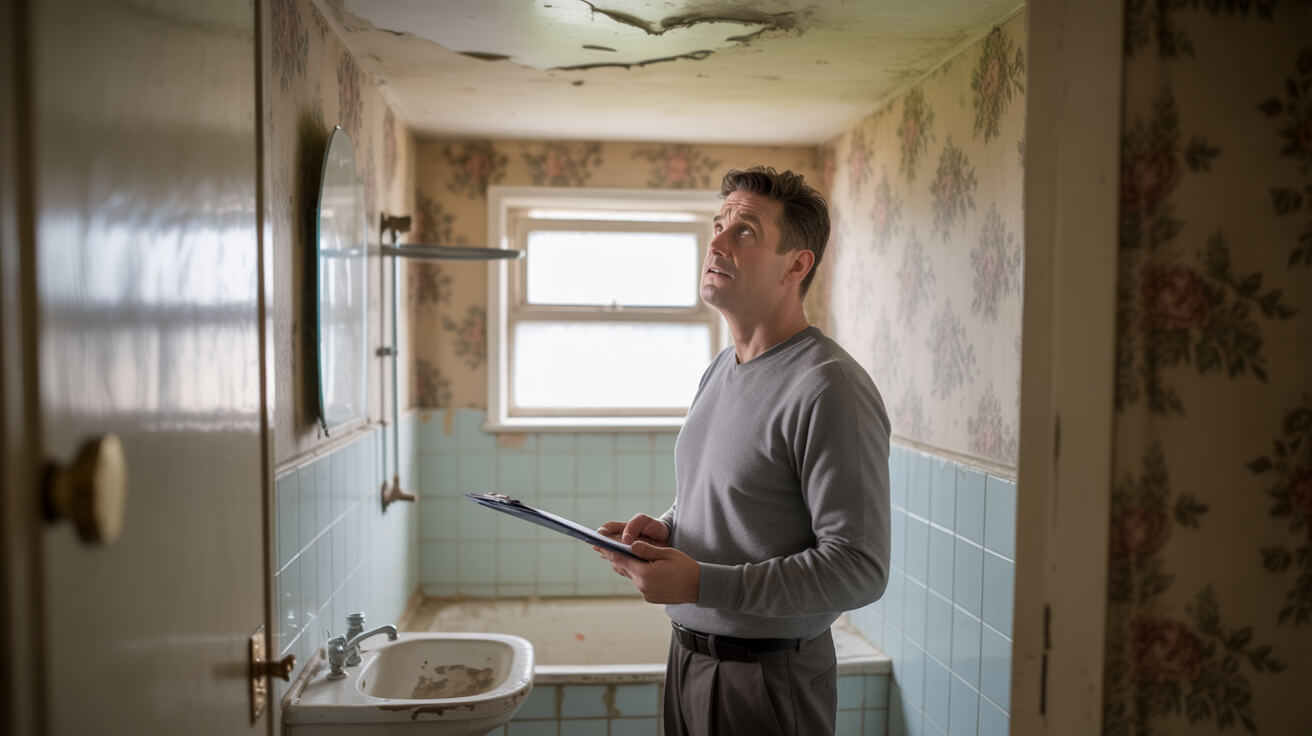
Landlords once called black mould “just mildew,” fobbing you off with lifestyle advice. Awaab’s Law changes the script: damp is a health and structural hazard, and the legal crossing point is now crystal clear.
What Triggers Landlord Legal Duty on Damp and Mould?
- Physical evidence rules the day: Black or greenish stains, crumbling plaster, paint that peels like sunburn, musty odours, or persistent wet walls—all are counted in the law’s favour. Documentation (photos, logs, emails) is your evidence chain.
- Health comes first: If anyone in your property has breathing issues, skin rashes, asthma, or is otherwise at high risk, repairs escalate to emergency status. The NHS flatly states that “children living with damp and mould are three times more likely to develop respiratory disease” ([NHS UK](https://www.nhs.uk/live-well/healthy-body/is-my-home-damp/#:~:text=Children%20in%20damp%20homes%203x%20more%20likely%20to%20get%20asthma)).
- No more “lifestyle” dodge: Landlords blaming tenants for “not ventilating properly” won’t fly. The law expects landlords to find and fix root causes—a failed damp-proof course, leaky plumbing, or poor insulation are their remit, not yours.
- Root cause fixes only: It’s not enough to cover over mould with cheap paint. The underlying cause—blocked drainage, failed window seals, hidden roof leaks—must be remedied.
If you’ve spotted symptoms and logged them, you’ve pressed the legal “go” button. From there, every missed email or deadline is leverage for council action, ombudsman intervention, or direct compensation.
Your proof isn’t just ammunition. It’s the lever that moves the system.
What Steps Should Tenants Take—From First Spot to Final Fix?

Knowing your rights is only half the battle; wielding them methodically seals the win. Work like an investigator gathering evidence for court—every document, every timestamp strengthens your case.
How to Build a Damp & Mould Repair Timeline
- Always report in writing: — skip phone-only complaints; email, portal or (if essential) a signed letter, attaching photos where possible. Example: “Noticed black mould in main bedroom near window—see attached photo, reported on 17/04/2024.”
- Attach proof every time: No photo, no power. Medical letters, appointment notes, and receipts for mildew-affected belongings all fortify your claim.
- Reference Awaab’s Law: Stating the deadlines upfront shows authority (“As per Awaab’s Law, a property investigation is required within 10 days. Please confirm.”)
- For emergencies, label them: If anyone is at particular health risk, use language like, “This is an emergency per Awaab’s Law. Repairs must begin within 24 hours.”
- Push back on “habits” talk: If told to “just ventilate more” or blamed for drying laundry inside, reply in writing that building conditions—not habits—are at issue.
A precise log is your strongest hammer. With every email, photo, and symptom note, you force the timeline forward.
Compile your written complaints, skipped appointments, photographs and correspondence. If deadlines slip, any one of these records can trigger an escalation—to council, ombudsman, or the courts—accelerating real repairs.
What if Your Landlord Dodges or Refuses to Act?

Landlords stalling—ignoring emails, gaslighting with “it’s your fault,” or just staying silent—once meant hopeless frustration. Under Awaab’s Law, it’s the start of the end for that behaviour.
How to Force Repairs When the Landlord Stalls
- Escalate with a written complaint: Clearly list the event timeline, the deadlines missed, and attach your documentation ([BBC, 2024](https://www.bbc.com/news/uk-68806028?utm_source=openai)).
- Involve the Housing Ombudsman: This independent body carries legal weight. If a landlord doesn’t comply, escalating here can force repairs, levy fines, and trigger published reprimands ([Housing Ombudsman](https://www.housing-ombudsman.org.uk/residents/make-a-complaint/)).
- Contact your local council: Councils now have extended power to demand repairs, issue fines, or take direct action—particularly when vulnerable people or children are at risk ([Local Government Association](https://www.local.gov.uk/publications/new-legal-duties-landlords-under-awaabs-law)).
- Document the missed timeline: Missed inspection appointments, vague responses, or shifting blame all help; a watertight paper trail sways officials quickly.
A landlord can ignore a phone call. But they can’t sidestep the law or paperwork any longer.
Delays now cost landlords real money, damage their public reputation, and may actually terminate their social housing licence in grave cases. Tenant evidence, once undervalued, is now a crowbar.
What Does Delay Actually Cost—For Tenants and Landlords Alike?

Every excuse-laden day a damp problem lingers racks up more than inconvenience—it costs families their health, landlords their finances, and both sides their peace of mind.
- Chronic damp is widespread: One in five rented properties in England fail the Decent Homes Standard—damp is the most common culprit, putting millions at risk ([The Guardian, 2023](https://www.theguardian.com/society/2023/nov/30/one-in-five-rented-homes-in-england-fail-standard?utm_source=openai)).
- Repair costs multiply with delay: Damp attacks decor, then the bones—joists, walls, insulation. Mould infiltrates brick and timber, and what could be fixed for a few hundred pounds can snowball past £10,000 if left unchecked.
- Poorly maintained properties attract fines: Regulatory eyes are sharper than ever—councils and ombudsman now act swiftly on missed repairs, and insurance firms can decline claims for properties flagged with recurrent issues or poor maintenance records.
- Family health is in danger: From asthma attacks to severe allergic responses, tenants—not landlords—carry real, lasting health impacts from ignored repairs ([BBC News, 2023](https://www.bbc.co.uk/news/articles/c70k7kr5rjjo?utm_source=openai)).
- Property value plummets: Persistent damp leads to valuation drops and makes it far harder to secure mortgages or refinancing, a risk for property owners as much as current tenants.
- Reputation takes a hit: Persistent complaints now appear in public records, council hearings, and ombudsman case logs. For landlords or letting agents, those reputational dents chase off good tenants fast.
There’s no clever way to “soak up” the issue. Action today saves costs, pain, and conflict across the board.
How Do Tenants Build an Unbeatable Case? Proof Wins, Not Promises

The professional tenant—the one with a paper trail, day-by-day logs, and a knack for quoting the law—is almost never left waiting.
Essential Steps for a Winning Case File
- Document every step: Every written complaint sent, every reply, every phone record—if it isn’t documented, it’s just a story.
- Attach photos and medical logs: Even basic phone photos with a date, or a screen-grab of a prescription, are gold in disputes.
- Track repair appointments and delays: Missed or rescheduled dates, no-shows by contractors, or excuse-laden emails all go in the file.
- Link up with support: Citizens Advice, tenant unions, and specialist legal charities know the timelines and forms. They’ll check your file and speed things up ([Citizens Advice](https://www.citizensadvice.org.uk/housing/repairs-and-housing/repairs-and-housing-conditions/whos-responsible-for-repairs/repairs-damp/)).
- Secure a professional damp survey: When there’s a real dispute, reports from independent, PCA-qualified surveyors (like Sussex Damp Experts) turn the odds hugely in your favour—landlords and councils rarely argue with a technical diagnosis.
Damp can’t outrun the paperwork. Keep the receipts, keep the power.
With these habits, you’re not a complainer—you’re a process-driven advocate for better living. Every paper trail is now a stick the system uses for you, not the landlord.
Why Sussex Damp Experts Are the Smart Move for Damp or Mould Trouble

It’s no use having strong rights if your documentation is weak—or your survey is riddled with errors. Sussex Damp Experts blend legal backbone, regulatory precision, and hands-on craft—delivering more than box-ticked compliance.
- No “quick fix” vanish jobs: Our investigations map causes, involve technical and legal evidence, and don’t stop at the surface.
- Our reports meet council and ombudsman standards: You’ll have written proof that passes every test, not just internal checklists.
- Expert accreditation and local trust: PCA trained, with every survey and fix matching BS6576, BS8102 and all relevant UK moisture/damp standards.
- Urgency built in: Recognising the new legal deadlines, our team delivers rapid inspections, airtight documentation, and up-to-date repair plans designed for immediate use in any legal dispute, council enforcement, or insurance claim.
- Real people, local service: You’ll always deal with a specialist who understands Sussex homes, not a call centre. Every home is unique; every fix is personal.
Hundreds of Sussex tenants and property managers have already experienced the speed and clarity that expert-backed, regulation-aligned inspections deliver. Our proof gets rapid results—so you get your property back, not just legal lectures.
Take Command of Your Tenant Rights—Enforce Awaab’s Law Now
Awaab’s Law isn’t an abstract shield. It’s your time-tested hammer against delay, gaslighting, and shifting blame. You’re not waiting for a miracle—you’re activating power, guaranteed by law.
If damp starts creeping up your wall, if the black spots multiply, or if coughs and wheezes won’t go away: fight back. Document, demand, and escalate. And if you want to leap ahead—calling in Sussex Damp Experts means swapping cycles of stress for swift, certified resolution.
You’re not waiting anymore. You’re setting the deadline. Damp doesn’t get a vote—action wins.
Checklist: Tenant Action from First Sign to Final Resolution
- Always complain in writing: Email with photos, not just a phone call.
- Attach a dated photo or medical note to each report.:
- Log every reply, missed appointment, and excuse.:
- Add GP letters or prescription photos if health deteriorates.:
- If legal deadlines pass, escalate—council or ombudsman with your dossier in hand.:
- If disputes grind on, commission a professional survey.:
- Share best practices and your own case outcomes with local tenants—together, pressure multiplies.:
Fast Reference: Common Tenant Questions
- What if my landlord ignores my report?:
Escalate. Send evidence to the ombudsman and council; the law now moves for you.
- How quickly must repairs start?:
Emergencies = 24 hours. Major risks = 5 days. All inspected within 10 days.
- Can I get alternative accommodation if the property’s unsafe?:
Yes, if health is at risk and demands for repair fail.
- What builds the most convincing case?:
Time-stamped complaints, photos, and health logs win every time.
- Who enforces the law if landlords keep dodging?:
Housing ombudsman and local council—armed with your documented evidence.
Sussex Damp Experts: Serving tenants, families, landlords, agents, and local authorities across Sussex. When law and expert proof work together, repairs are sorted quickly. Claim your rights—restore your home.
Frequently Asked Questions
Why does untreated damp and mould expose landlords to fines, lost income, and legal investigation?
Fresh housing laws mean every ignored wet patch or black corner carries a price—fines, court costs, frozen rent, even a mandatory management handover. For social landlords and housing professionals, damp and mould are now fast-track legal liabilities. A damp-prone flat isn’t just a repair job; it’s a regulatory trigger, a reputational landmine, and a direct threat to tenancy income. What bought time in old council cycles—“monitoring,” “lifestyle advice,” “blocked vents”—now invites enforcement action and public scrutiny.
One overlooked damp patch today can empty a property tomorrow—while compliance gaps widen with every hour’s delay.
How does the law convert moisture into risk?
- New legislation penalises slow or incomplete repairs with direct fines—some local authorities levy over £30,000 per breach.
- The Housing Ombudsman and courts can force urgent works, appoint emergency managers, or award compensation.
- Insurers increasingly exclude properties with known damp risks from cover, leaving landlords footing full repair bills.
- Ongoing damp or mould resets ‘fitness for habitation’—voiding rent or council grant eligibility.
- Local press and tenant networks now routinely highlight breaches; reputation damage can deter future renters or portfolio buyers.
Brushing aside patchy ceilings or peeling plaster now invites not just repair costs but deep-rooted legal and financial fallout. Choosing timely, compliant action—through documented inspection and expert diagnosis—protects every layer of your asset, from valuation to future letting.
What specific laws create this risk?
- Housing Act 2004 (HHSRS – health hazards, including damp/mould)
- Fitness for Human Habitation Act 2018
- Awaab’s Law amendments to the Social Housing (Regulation) Act 2023
- Building Regulations Part C (Moisture and Penetration)
- Environmental Protection Act 1990 (Category 1 hazard enforcement)
Expert surveyors well versed in these frameworks bridge the technical and legal gap, ensuring nothing slips through the cracks.
How do rapid-response deadlines under Awaab’s Law actually unfold—from complaint to repair?
The new playbook starts the second a tenant (or caretaker) raises a moisture hazard. There’s no more admin crawl or discretionary queue. Instead, clear statutory clocks dictate every stage from notification to resolution:
The countdown begins the instant you log a hazard—every hour shapes how council, tenant, and insurer judge your next move.
Timeline – What really happens when a tenant reports damp or mould?
| Action required | Maximum legal timeframe | Key risk if missed |
|---|---|---|
| Tenant reports damp/mould | Day 1 | Duty of care triggered |
| Landlord completes inspection | Within 10 working days | Escalation to enforcement |
| Written findings given to tenant | Within 3 working days post-inspect | Documentation deficit |
| Emergency repair (serious hazard) | Within 24 hours | Fine, mandated safe housing |
| Standard repair (no imminent risk) | Within 5 working days | Loss of trust, Ombudsman action |
Delays at any stage create a paper trail of non-compliance. Tenants are now schooled in building a record: dated emails, texts, photo logs, even council chat transcripts. For every deadline missed, leverage shifts fast—councils intervene, Ombudsman reports mount up, and specialist firms like Sussex Damp Experts can validate or contest every link in the chain.
What matters most under the clock?
- Inspection dates and prompt written summaries—no “verbal updates”
- Emergency hazards acted on in under a day, not “when next available”
- Transparent communication throughout—tenants expect and exploit gaps
Meeting or beating these deadlines is not optional—it’s the new definition of best practice and legal protection in the sector.
Which types of evidence turn a mould complaint into a guaranteed repair order?
Landlords used to lean on doubt; tenants, on anecdotes. Now, unbiased evidence rules the contest—photos, metre readings, health logs, and surveyor-grade reports collapse argument and accelerate results.
A timestamped photo plus a clear surveyor’s note can move what months of argument never will—objectivity is now your strongest defence and lever.
What counts as compelling proof in 2024?
- Time-stamped, labelled photos: show the same wall, corner, or window over time
- Moisture readings: hand-held metre logs, surveyor reports, or logged annual checks
- Symptom logs: cough frequency, prescription slips, absence notes linked to address
- Full communication chains: every email, call log, or repair ticket with date/time stamped
- External validation: surveyor certificates (PCA, BS6576, BS8102), health visitors, or Ombudsman refs
Stack layers if you can—redundancy trumps omission. Each proof strengthens the repair or rehousing claim, while gaps give leverage back to the opposition.
Can landlord advice about lifestyle or “ventilation” block a valid claim?
No. Recent regulation demands inspection for leaks, insulation failures, and defective DPCs before blaming a tenant’s drying rack or windows. Opinion must be ruled out by fact—robust, jargon-free evidence is now the gold standard.
When do social landlords have to pay for hotel stays or alternate homes due to damp or mould?
If repairs can’t be completed safely in time, or damp makes key spaces uninhabitable—bedrooms, living spaces, child or vulnerable resident areas—the landlord must fund safe, temporary living. The clock is what matters, not debate about “how serious” the problem is.
Doctors’ letters, council support worker statements, and the surveyor’s report confirming health risk are the triple threat: each can tip the scales for forced rehousing.
Trigger points for enforced alternative accommodation
- Emergency action exceeds the 24-hour legal window
- Ongoing works render the property unsafe to occupy
- Health evidence demands environmental relocation
- Utility failures—no safe water, heat, or electricity—connected to moisture
If basic safety is out of reach and repair deadlines fall short, safe alternative housing is no longer a nicety—it’s a statutory duty.
Landlords who delay risk recovery of costs by council, plus fines and the threat of temporary management takeover. Temporary rehousing is as much about regulatory risk as resident relief.
How can methodical escalation force action from slow or resistant social landlords?
A persistent, record-heavy escalation always trumps threats, frustration, or round-robin phone calls. Each time a landlord fails to hit a statutory repair deadline, the tenant’s power grows—and so do the costs for the one dragging their heels.
Compile and sequence every written notice, photo, missed communication, and health or external harm note. The process is designed to stack pressure, not rely on loudness.
Precision and persistence—hand in hand—transform ignored signs into a legal sledgehammer, levelling the power gap between resident and landlord.
Escalation sequence for unstoppable results
- Second written warning, citing missed legal deadline (day and hour)
- Copied to Environmental Health, with full attachment chain
- Ombudsman case opened—each delay fuels resolution and compensation
- Template advocacy letters—Shelter or Citizens Advice raise credibility and pressure
- Commission surveyor’s expert report; turn technical findings into legal steps
- Instruct a solicitor aligned with housing disputes for injunction or damages
Landlords underestimate the step-by-step approach at their own risk. Each rung increases the odds of council intervention, public censure, or formal loss of control over the property.
Which properties and tenancies now have full legal backing under new damp and mould enforcement?
Awaab’s Law strictly covers council, housing association, and registered social landlord homes in England. Private rentals and student or owner-occupied dwellings remain under other housing health, safety, and repair laws—yet the compliance bar across the sector is rising fast.
If your tenancy sits at the border—short let, mixed-use, part-ownership, or atypical lease—review the contract, ask your surveyor to reference cross-cutting laws, and know that persistent damp or mould is now a health priority in any situation, not just a cosmetic fix.
Table: Which tenancies and buildings must comply, and how others enforce
| Building or Tenancy | Legally bound under Awaab’s Law? | Alternate routes and support |
|---|---|---|
| Council or housing association | Yes (full scope) | Direct to council/Ombudsman, full rights |
| Private rental, HMO | No (but rising parity) | Fitness for Habitation, council action |
| Student/short let/licence | Not directly | LA enforcement, university rules, Shelter |
| Commercial/owner-occupied | No/varies | Building regs, Environmental Health team |
Independent expertise, like Sussex Damp Experts, helps clarify where ambiguities or disputes arise, providing surveyor-grade, court-ready reports and practical support to ensure repairs move fast and negotiation isn’t derailed by complexity or loopholes.
For any building, every delay is now both a strategic and statutory risk. Prioritise your action and documentation—ownership over the process is the fastest route to reclaiming safe, dry, and valued space.

