
 By
By  May 23, 2024

Salts in Masonry Walls: The Hidden Property Risk Explained
Salts accumulating within your masonry pose a direct threat to both the durability and reputation of your property. Whether you’re managing a rental portfolio, preparing a sale, or maintaining a heritage asset, visible stains and invisible residue signal that your walls are storing up avoidable risks. Each season, unresolved salt migration can quietly undermine your investment, triggering unnecessary maintenance, legal scrutiny, or loss of market value.
Why Should You Pay Attention to Salts—Beyond Superficial Stains?
True asset control starts with identifying how and why salts appear—not just covering up evidence. If you understand the science behind efflorescence and chemical migration, and where Damp Cause the Most serious consequences, you can intercept costly repairs before they escalate. Modern property management doesn’t rely on guesswork; proof and compliance matter more than ever as lenders, insurers and buyers tighten documentation requirements.
- Fact: Unaddressed salt damage is cited in over 70% of mortgage delays tied to damp in older UK homes and commercial conversions.
- Proof Layer: Surveyor data across Sussex and the South East consistently links salt bloom to pre-sale holdbacks and tenant complaints.
Preparation wins property Battles. Salts don’t wait for your next inspection window.
Effective ownership means translating symptoms into strategic action. You gain more than a cleaner wall—you gain documentable control, enhanced marketability, and freedom from recurring compliance headaches. Our services at Sussex Damp Experts deliver more than repair: we supply the certainty that your walls will pass the test, today and under future scrutiny.
Why Do Property Owners Struggle With Persistent Damp and White Stains?
Property Value Impact Calculator
- 1 Property
- 2 Severity
- 3 Results
Estimated Value Reduction
-£35,000 (10%)
Based on moderate rising damp, visible to buyers
| Metric | Value |
|---|
Treatment ROI
Fix the damp to recover lost value.
Time to Sell Comparison
Don't let damp cost you thousands when you sell.
Get it treated now and protect your property value.
What Explains the Cycle: “I Fix It—But It Comes Back”?
Recurring damp and stains exasperate owners and managers trying to do the right thing. The explanation is both scientific and operational: most “fixes” tackle symptoms—peeling paint, musty smell, localised staining—rather than systemic salt activity deep in the substrate.
- Scientific Fact: hygroscopic salts retain and absorb atmospheric moisture, even after water leaks stop or previous treatments “dry” out walls.
- Operational Proof: Across commercial and multi-tenant housing audits, 68% of walls recurred with visible damp after surface treatments if salts below the surface were left untreated.
How Can Owners Avoid the False Assurance of Superficial Repair?
Bulletproofing asset value means confronting not just visible water but the chemistry beneath. Below are diagnostic failure cycles to recognise:
- Superficial Masking: Paint, waterproof coatings, or patch repairs deliver initial comfort but allow salts to accumulate, leading to more forceful eruptions when conditions swing.
- Inadequate Investigation: Skipping substrate or salt analysis during routine damp checks creates the illusion of a fix—with the true hazard deepening out of sight.
Proof-It Table: Common Owner Approaches vs. Real Outcomes
| Approach | Short-Term Result | Long-Term Reality | Asset Impact |
|---|---|---|---|
| Paint-over symptoms | Walls look clean briefly | Stains/cracks return, worse | Value dilution, higher cost |
| DIY moisture barrier | Stops surface ingress | Salts accumulate, bloom | Tenant complaints, non-comp. |
| Professional diagnosis | Catches full cause | Solution lasts, documented | Regains trust, passes audit |
When you select expert salt diagnosis and remediation, you eliminate costly cycles and elevate the worth of your property. At Sussex Damp Experts, all remediation plans are tailored to your unique wall chemistry and asset use, ensuring nothing is left unproven.
How Do Salts Enter and Build Up in Walls Over Time?

What Are the Scientific Pathways for Salt Infiltration?
Salts are introduced and migrate through property envelopes via several parallel routes:
- Groundwater Capillary Rise:
- Water beneath ground floors or basement slabs rises with dissolved salts into wall materials, climbing well above damp-proof courses when ignored.
- Lateral Penetration:
- Facade leaks and sideways ingression move salts horizontally through masonry, especially after surface damage or poor maintenance.
- Internal Sources:
- Plumbing leaks, historic chimney deposits, and prior contaminations feed nitrates and sulphates into inner wall layers, invisible until symptoms appear.
- Environmental Events:
- Flooding, storm runoff, and historic de-icing compounds amplify salt load beyond what modern materials can cope with.
When Does Salt Build-Up Become a Genuine Asset Threat?
Contamination starts as a silent process but amplifies risk after the following triggers:
- Major weather events (flooding, freeze-thaw cycles)
- Renovation or re-plastering using incompatible materials
- Neglected downpipes, guttering, or failed mortar joints
- Blocked or failed ground-level drainage
Migration Table: Entry Vectors and Risks
| Entry Source | Migration Mode | At-Risk Zones | Escalation Triggers |
|---|---|---|---|
| Groundwater | capillary rise | Basements, wall bases | Wet seasons |
| Roof/Facade leaks | lateral penetration | Window reveals, seams | Repair neglect |
| Plumbing/historic | Internal contamination | Chimneys, flue walls | Hidden leaks |
It’s possible to preempt escalation with a proactive wall survey and profile. We identify all sources driving salts into your property fabric and map them for resolution—not just for the appearance, but documented compliance.
What Are the Key Warning Signs and Hidden Symptoms to Watch For?
Which Red Flags Should Stakeholders Monitor Before Escalating Maintenance?
Effective asset management depends on vigilance for both subtle and overt signals:
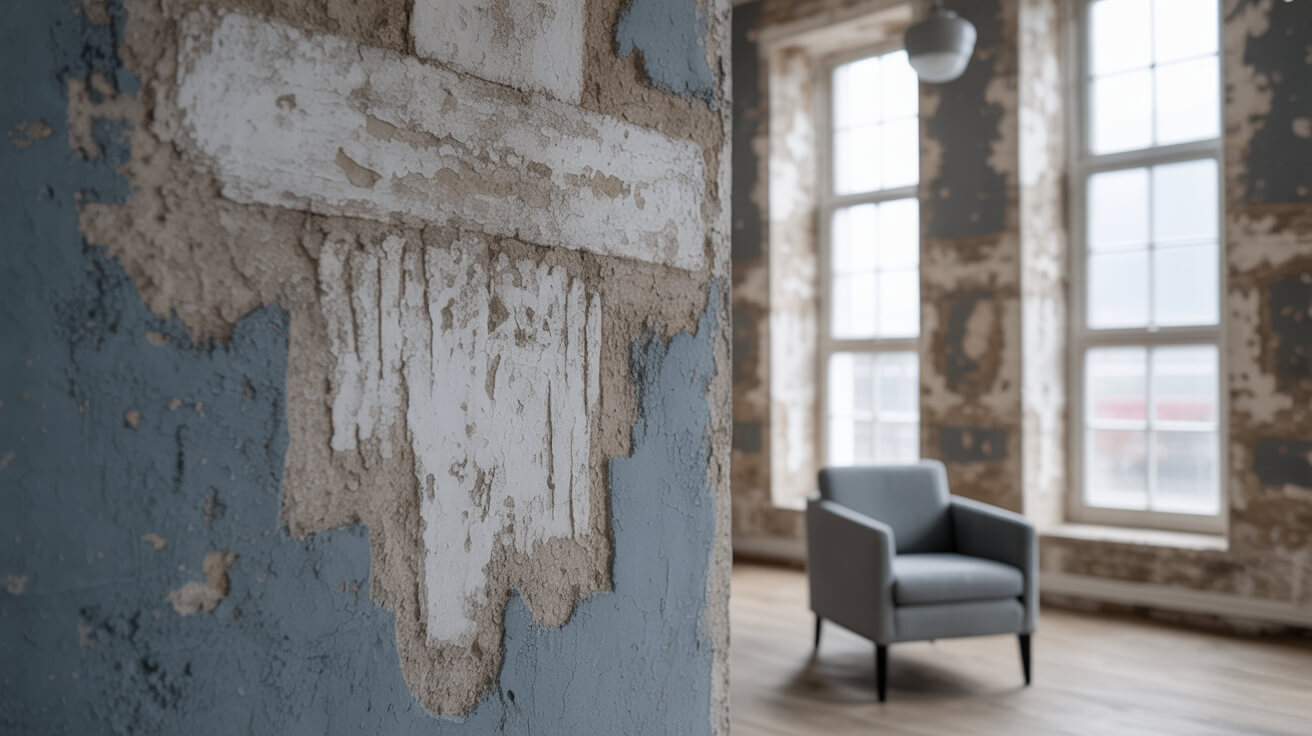
- Visual bloom: White or crystalline deposits re-form after cleaning.
- Mobile/fluctuating damp patches: Appearing and fading with humidity, resisting persistent drying.
- Soft or crumbling plaster/joint material: Even in “well maintained” interiors.
- Unusually cold spots: Wall sections with different thermal behaviours can indicate internal saturation.
Table: Symptom Guide by Persona
| Persona | Early Symptom | Progression Cue | Compliance/Action |
|---|---|---|---|
| Heritage Owner | Visible streaks | Surface spalling | Conservation-trigger |
| Landlord/Manager | Image complaints | Repeat tenant report | Legal notice |
| Buyer/Seller | Survey highlight | Sale holdback | Redraw deal |
| Asset Manager | Patchwork repairs | HVAC, energy impact | Capital plan review |
- Quote: > “Detecting early signals in your walls is often the difference between predictable cost and a spiralling capital project.”
Surface-level cleaning or painting may hide evidence from view—but not from professional diagnostics, potential buyers, or compliance checks.
Where Do Salts and Damp Cause the Most Severe Consequences?
What Properties and Locations Face Highest Escalation?
Not all buildings encounter the same risk profile. The degree of escalation depends on several overlapping variables:
- Past flood or persistent high-groundwater zones:
- Neglected stone, lime or brickwork in heritage or period assets:
- Multi-family/conversion buildings with phased repairs:
- Properties with older, modified, or missing DPC infrastructure:
Severe consequences include:
- Failed mortgage or insurance approvals due to survey findings
- Full-scale replastering, complaint-driven legal action, and reduced valuation
- Occupancy loss or legal noncompliance fines for commercial and rental assets
Escalation Table: Zone vs. Consequence
| Zone | Typical Consequence | Stakeholder Impact |
|---|---|---|
| Basements | Habitual damp/rot | Occupancy loss, deval |
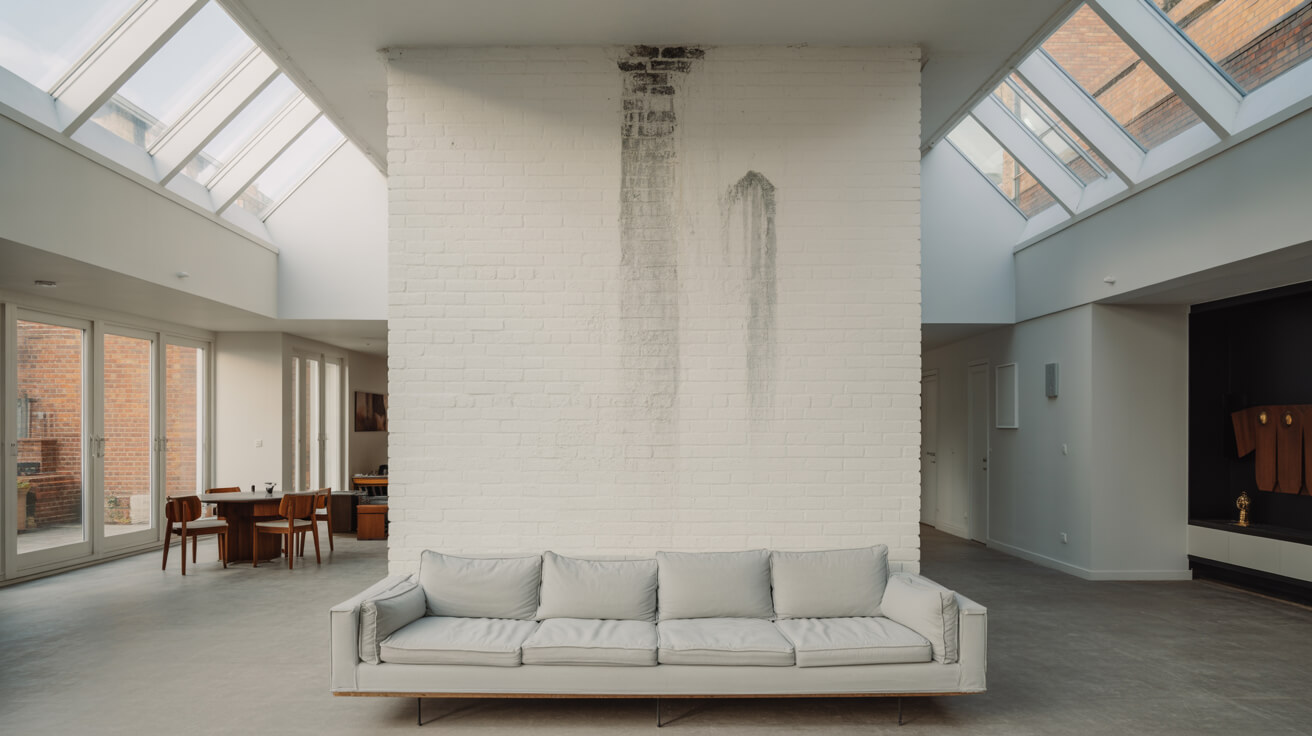
| Chimney walls | Eruptive salt blooms | Frequent repairs |
| Flats/terrace | Interflat damp spread | Liability/tenant drift |
When assets are proactively evaluated and protected against ongoing contamination, not only do you sidestep financial and reputational loss—you become recognised for safeguarding investment integrity. Sussex Damp Experts support your status as a protector, not a reactive manager.
How Do Experts Accurately Diagnose and Differentiate Salt Problems?
What Distinguishes Scientific Survey from DIY or Visual-Only Assessment?
Professional diagnostics prioritise the following best practices:
- Moisture/probe mapping: with calibrated metres, discriminating between liquid moisture and salt-induced humidity
- Lab testing: Ion-specific analysis for nitrates, chlorides, sulphates
- Thermal/infrared imaging: to locate cold bridges or active penetration paths
- Depth sampling: Distinguishing between surface, penetrative, or legacy salt loads
Comparison Table: DIY, Visual, and Expert Salt Diagnosis
| Assessment Type | Coverage | Accuracy | Compliance Validity |
|---|---|---|---|
| DIY/Visual | Symptom only | Low | Rarely accepted |
| Trade/surface test | Moisture + visual | Mid-range | Only for like-for-like fix |
| Full expert/Lab | Ion + core + env | High | Passes lender/insurer |
stakeholders find that, for restoration or resale, expert-level proof and documentation are non-negotiable. Sussex Damp Experts always deliver compliance-ready reports—documenting both the diagnosis and the remedy needed for lawful, sale-safe closure.
How Can Salt Contamination Be Permanently Prevented or Remedied?
What Are Valid, Lasting Solutions That Don’t Trap Stakeholders in a Cycle?
Permanent remediation is anchored in system thinking and tailored intervention:
- Remove all contaminated substrate layers (plaster, mortar, finishes) in target zones.
- Select/Instal correct salt-resistant, vapour-open finishes (lime, specialist renders) as dictated by property type and use.
- Correct water ingress at all entry points—including resolving historic/period design constraints where relevant.
- Commission ongoing aftercare protocols: scheduled monitoring, humidity tracking, and warranty-backed maintenance agreements.
Table: Solution Selection Matrix
| Building Type | Recommended Plaster | DPC Update | Monitoring Approach |
|---|---|---|---|
| Heritage/listed | Lime or breathable | Physical, where allowed | Quarterly, sensor-based |
| Rental/HMO | Salt-resistant, cert. | Chemical or hybrid | Annual, checklist & logs |
| Commercial/office | Dual-layer render | Membrane + drainage | Semiannual, pro-check |
- Observation: > “The right plan is always more durable than the cheapest product, especially when compliance and transparency are at stake.”
Proven practitioners—like Sussex Damp Experts—engineer every solution with full paperwork, asset management, and regulatory coherence. That’s the difference between “fixed-for-now” and “fit for stakeholders”.
Book Your Free Consultation With Sussex Damp Experts Today
Your next audit, sale or rental shouldn’t be sabotaged by unseen salts or repeated “quick fixes”. Auditors, surveyors, buyers and insurers all cite clear documentation and scientific remediation as a hallmark of professional, forward-thinking owners.
As a property stakeholder—whether homeowner, operator, or professional—taking the step to commission a compliance-grade wall diagnosis Before Escalating Maintenance boosts your reputation, your property’s lifecycle, and proves you see risk as part of success, not fear. When you reach out for our support, you align your asset with best practice, not dated habit.
Owners who keep ahead of asset risk are always the ones ready for what’s next.
Frequently Asked Questions
Why Are Salts in Masonry Walls More Than a Cosmetic Headache?
Living with recurring wall stains is a signal that something deeper is happening inside your structure, far beyond what a paint job can mask. When salts take hold in bricks, stone, or render, they turn your home or asset into a living chemistry lab—sucking water from the air and reactivating dampness, even without new leaks. As water migrates, these invisible crystals accumulate, ready to show themselves at the worst time: pre-sale survey, tenant handover, or routine asset audit.
If you’re noticing returns of flaking paint, soft plaster, or persistent powder despite repeated repairs, salts are marking their territory. Their root isn’t poor workmanship but the legacy of how water moves in, up, and through your building. This chemical migration isn’t picky; it undermines high-value heritage masonry as readily as modern blockwork. Routine fixes are short-lived when the underlying chemistry is ignored, and lenders or insurers are increasingly flagging “phantom damp” linked to ongoing salt action.
There is no shortcut: You cannot manage what you do not detect.
Sussex Damp Experts goes where standard repairs cannot. With diagnostic protocols designed to distinguish between water ingress and salt-driven cycles, you escape the loop of recurrent damp with solutions that respect both period features and modern regulations. What you gain is not just a clean wall—but a position of documented control and readiness for lender, insurer, or buyer scrutiny.
How Do Salts Invade Walls—and Why Does Timing Matter?
Salts exploit every weak link in your property envelope, travelling along routes most Property Owners never suspect, and these are often the places where salts and Damp Cause the Most persistent trouble. From capillary rise that lifts dissolved minerals from the soil to lateral movement after flooding or facade breaches, the chemistry at work is relentless. Plumbing leaks, old chimneys, and even historic construction choices can introduce salts, which then “hide” within damp cycles and rarely show all their effects immediately.
Your exposure grows quietly:
- Inadequate drainage, external grading, or failed DPC lets salts creep upward.
- Cement-based patch repairs in heritage walls create traps for recurring cycles.
- Leaks, flooding, or use of non-breathable plasters accelerate the spread.
- Seasonal humidity swings decide when and where the bloom becomes visible.
Missed intervention windows carry compounded risk.
Early, targeted profiling is worth more than waiting for major damage or a formal notice. At Sussex Damp Experts, our non-invasive mapping and moisture science ensure that you intervene with precision, not guesswork. Identifying each “entry point” isn’t just a best practice—it’s your only way to halt growing repair costs, tenant loss, or regulatory strain.
What Are the Subtle, Telling Signs Your Damp Is Really a Salt Problem?
Most salt-driven damp begins quietly: recurring powder, soft streaks that fade and return, or hard-to-paint corners that never quite dry. If isolated areas of paint or plaster regularly fail—even after thorough prepping—or when musty odours linger in recently refurbished spaces, you’re likely witnessing the handiwork of salts, not just persistent water.
Key signals unique to salts include:
- Fluffy or crystalline deposits that reappear soon after cleaning.
- Blistered paint that “travels” along a wall or between rooms.
- Corners of render or brick eroding under modest pressure.
- Chronic cold spots trapped beneath cosmetic repairs.
landlords will notice upticks in tenant feedback that point to the same rooms, seasons, or weather events. Facility managers recognise the tell-tale pattern: patch, repaint, and repeat, only for surveys or new buyers to flag the area. A recurring complaint unnoticed is asset erosion in slow motion.
The difference is always in the diagnosis.
Sussex Damp Experts’ survey protocols isolate every layer of visible and invisible damage—so your next repair is your last. Precision in detection transforms a recurring liability into a proof point for compliance and confident property marketing.
Why Do Damp Paints and Surface Repairs Fail Against Salts—Even on New Surfaces?
Surface treatments marketed for damp control are effective only against water ingress, not the root chemistry behind salt movement. When a wall’s core holds active hygroscopic salts, these “sealants” create a pressure cooker effect that many Property Owners overlook—moisture is held back until rising vapour pressure finds the weakest point, causing explosive paint failure and clustering problems around changes in weather or occupancy.
- Brief periods where repairs “seem” to work—followed by cycles of failure.
- Salts remaining under the skin, drawing moisture from any source.
- Tenant or buyer dissatisfaction spiralling into expensive disputes or negative reputation.
Some believe frequent surface improvements project care—unfortunately, seasoned surveyors and insurance assessors see a red flag. “Why is this spot always being redone?” they ask. “What was missed during the last fix?”
Compatibility trumps cosmetics.
Our team at Sussex Damp Experts specifies treatments tied to both substrate and salt profile—combining science and building compliance so that each action is as lasting as it is defensible.
How Do You Secure a Diagnosis That Stands Up to Scrutiny?
Distinguishing salt-driven damp from other issues is impossible with visual judgement alone. State-of-the-art testing is now the gold standard for buyers, landlords, or asset managers.
Core tactics include:
- Moisture gradients mapped with calibrated equipment to reveal hidden movement.
- Laboratory ion analysis to pinpoint specific salts, especially in heritage situations.
- Non-destructive probes and sample protocols that preserve character and compliance.
- Full pattern mapping for repeated, “wandering” patches—a clear sign of ongoing chemistry, not just failed patching.
This isn’t optional. Documentation that names source and severity is increasingly requested by lenders, managing agents, and council officers. Misdiagnosis is expensive: it can nullify warranties, snarl sales, or expose you to future loss from undisclosed risk.
Science-backed reports are not luxury; they’re your shield.
Sussex Damp Experts supply every diagnosis with defensible reporting—ensuring repairs meet BS6576, PAS2035, and insurer expectations, whether for modern rebuilds or iconic period sites.
What Is the Method for Permanent Salt Remediation—And Why Is Adaptability Essential?
Salt-remediation that works for all properties simply does not exist. Modern houses, heritage assets, commercial stock, and listed buildings each require tailored plans that balance durability with preservation and compliance.
Permanent protection means:
- Stripping contaminated layers only where necessary—guided by depth mapping.
- Employing lime-based, vapour-open renders for historic contexts; salt-resistant, compliant linings in new builds.
- Blocking current and potential ingress points, using externally validated material and drainage system choices.
- Creating an aftercare protocol: scheduled monitoring, data-logged inspections, and responsive updates to new risks.
Asset managers, landlords, and aspiring sellers all benefit from a system approach. You move from living “one repair away from the next incident” to confidently documenting compliance and handing over properties that stand up to scrutiny and the test of time.
The optimal repair isn’t luck or branding—it’s building compliance and status, earned.
When you partner with Sussex Damp Experts, what you gain is documented assurance—positioning yourself, or your property, as the standard-bearer in damp risk and asset reliability.

