
 By
By  November 6, 2022


How Does Damp Jeopardise Your Home’s Integrity?
For property owners, buyers, and asset managers, the stakes with damp are neither abstract nor rare—they are measured in future repair bills, health notices, and diminished property value. Damp does not announce itself with disaster, and damp proof paint limits are only part of the picture. It progresses by stealth, and the ways damp can affect your property’s condition are often first seen in silent corners and forgotten substrates, steadily eroding what owners value most: the reliability of their asset, the well-being it shelters, and the reputation it projects.
Recognising What’s at Stake
Certain warning signs—patches of odd discoloration, stubborn musty odours, or unexplained peeling—often escape notice until buyers, tenants, or insurers surface inconvenient questions. More than half of post-sale property disputes in the last three years have named unresolved damp as a leading culprit.
Dormant problems never stay polite—every season of neglect converts silence into invoices.
Choosing to ignore or “paint over” faint signals of damp doesn’t push risk into the future—it puts it on an accelerating treadmill. The difference between a property that commands respect and one that causes regret is measured by how seriously you recognise when damp affect your property’s condition and investigate early.
Why Does Damp Occur in Buildings?

Damp always has a source. Removing guesswork starts with understanding the mechanics.
Primary Pathways for Moisture
- Condensation: Trapped interior humidity settles on colder surfaces. Poor ventilation and inadequate insulation set the stage. You notice this most on windows, north-facing walls, or behind furniture.
- Penetrating Damp: Rain exploits exterior faults—damaged brickwork, failed pointing, sagging gutters, or leaking downpipes. Moisture migrates laterally, often surfacing far from the site of ingress.
- Rising Damp: Older walls encourage upward migration of water if the damp proof course (DPC) is bridged, missing, or compromised by modern refurbishment choices.
- Plumbing Weaknesses: Even subtle drips or poorly jointed pipework can drive hidden escalation, especially under timber flooring or behind tiled surfaces.
Why Moisture Sources Compound Risk
Modern living—drying laundry indoors, ever-tighter window seals, over-insulating heritage walls—amplifies condensation and embeds moisture in building fabric. Regulatory changes (BS6576, PAS2035) penalise inattention, making “wait and see” a bet against both value and compliance.
What Observable Indicators Reveal Hidden Damp?

Identifying damp relies on both active observation and pattern recognition. Relying solely on dramatic “damp” symptoms means missing your chance at low-cost, swift intervention.
Physical Signs That Matter
- Mould Growth: Look for patchy, sometimes speckled marks ranging from green to black. Location is revealing; corners, behind wardrobes, or high on bathroom walls are classic sites.
- Surface Deformation: Peeling paint, bubbling wallpaper, distorted flooring—each signals where excess moisture is testing surface adhesion.
- Tide Lines and Salt Deposits: Vertical stains or crystalline marks (efflorescence) along skirting or masonry reveal moisture’s advancing front.
- Consistent Window Condensation: When you wipe the same spot every morning, you’re seeing the consequence of poor airflow—not weather.
Sensory and Secondary Cues
Don’t disregard persistent musty odours, even absent visible clues. Subfloor voids, wall cavities, and less-used rooms often hide the problem’s advance. Pay attention to rooms where recent repainting or “freshener” smells linger longer than the supposed mask should persist.
Small signs, consistently ignored, are the scaffolding for next year’s compliance notice or repair negotiation.
How Does Damp Undermine Property Value and Safety?
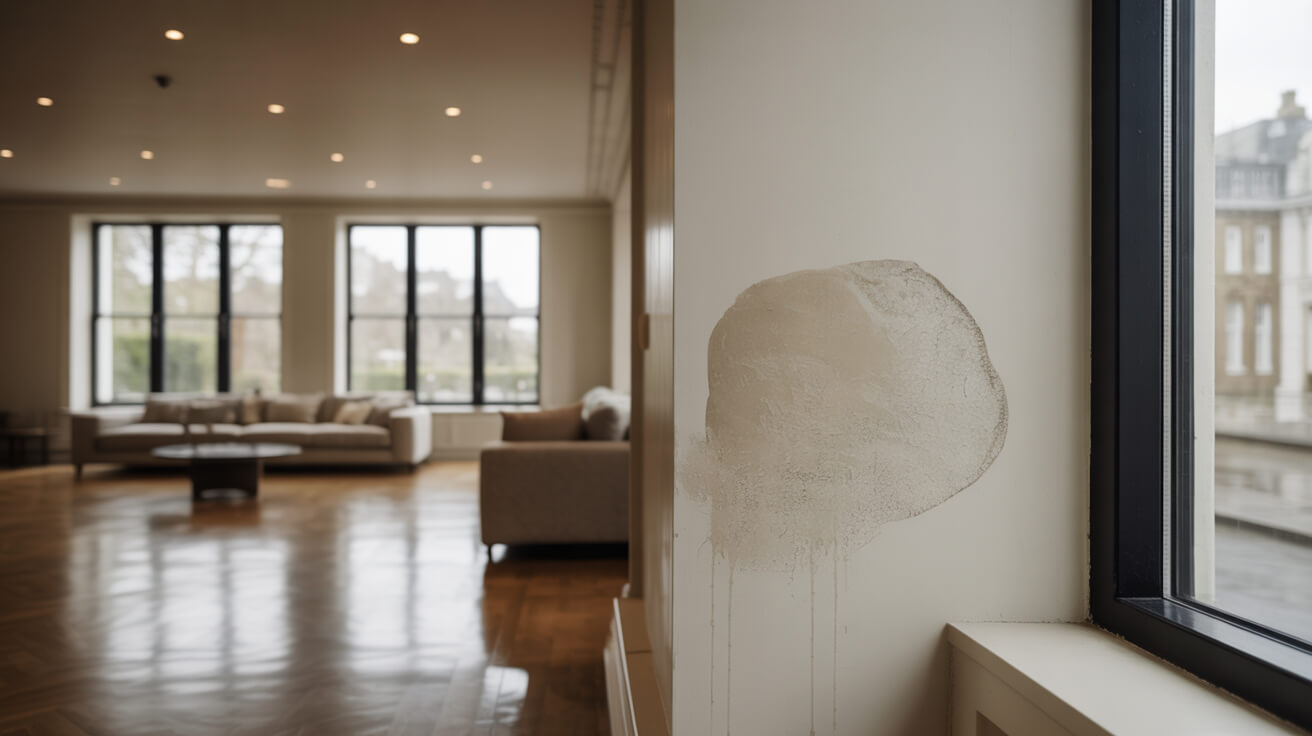
Neglecting damp isn’t just a gamble on future maintenance—it’s a shortcut to diminished status and unplanned expenses.
What Happens If You Wait?
- Structural Breakdown: Timbers rot, plaster decays, and integrity is compromised. This isn’t theoretical—surveys show average repair costs more than triple when minor damp issues go unresolved for 18 months.
- Regulatory Consequence: Housing Health and Safety Rating System (HHSRS) breaches are risk triggers for local authority inspection, fines, and legal action. Ignoring tenant complaints is now a compliance risk, not just a PR concern.
- Devaluation and Market Perception: Ask any surveyor—damp entries in reports cause buyers to either renegotiate hard or walk away. Data from regional property chains demonstrates up to a 12% devaluation in properties with active or remediated damp flags.
| Risk Category | Unaddressed Consequence | Industry Response | Financial Impact |
|---|---|---|---|
| Structural Decay | Timber & substrate breakdown | Full strip-out | £5–25k+ |
| Health Compliance | Tenant injury/health risk | HHSRS escalation | £2–8k+ fines |
| Insurance Validity | Non-compliant repairs | Policy exclusions | 0% payout |
| Asset Value | Sale price reduction | Sale freezes/renegotiation | 8–12% drop |
The only thing more costly than addressing damp late is documenting it at all the wrong times.
How Can You Accurately Assess Dampness at Home?

You don’t need to wait for visible decay before taking action. Structured self-assessment gives you strategic advantage.
Steps for a Confident DIY Damp Diagnostic
- Visual Scan: Check skirting boards, bay windows, and behind appliances. Discoloration, soft spots, or “new” smells are all suspect.
- Touch Audit: Press gently on suspect plaster. Softness or coldness—especially in comparison to adjacent areas—signals internal challenge.
- Surface Tools: A consumer-grade moisture metre costs little but yields much—measure at floor, waist, and shoulder height for a baseline.
- Condensation Tracking: Create a log for recurring fogging on windows or surfaces; time and pattern strengthen your case for deeper attention.
- Odour Calendar: Mustiness that intensifies after weekends or periods of vacancy often indicates latent damp.
When to Move from DIY to Professional Engagement
If you track persistent readings above 18–22% on surface metres, discover spreading stains over repeated weeks, or the “fix” (e.g., a dehumidifier) doesn’t erase the problem, it’s time to upgrade from observation to action. Trying to outwait a structural problem hands control to the elements.
Download our step-by-step diagnostic checklist to reinforce your findings and present a complete picture when requesting a survey—a move that accelerates professional resolution.
How Can Early Action Prevent Costly Damp Damage?
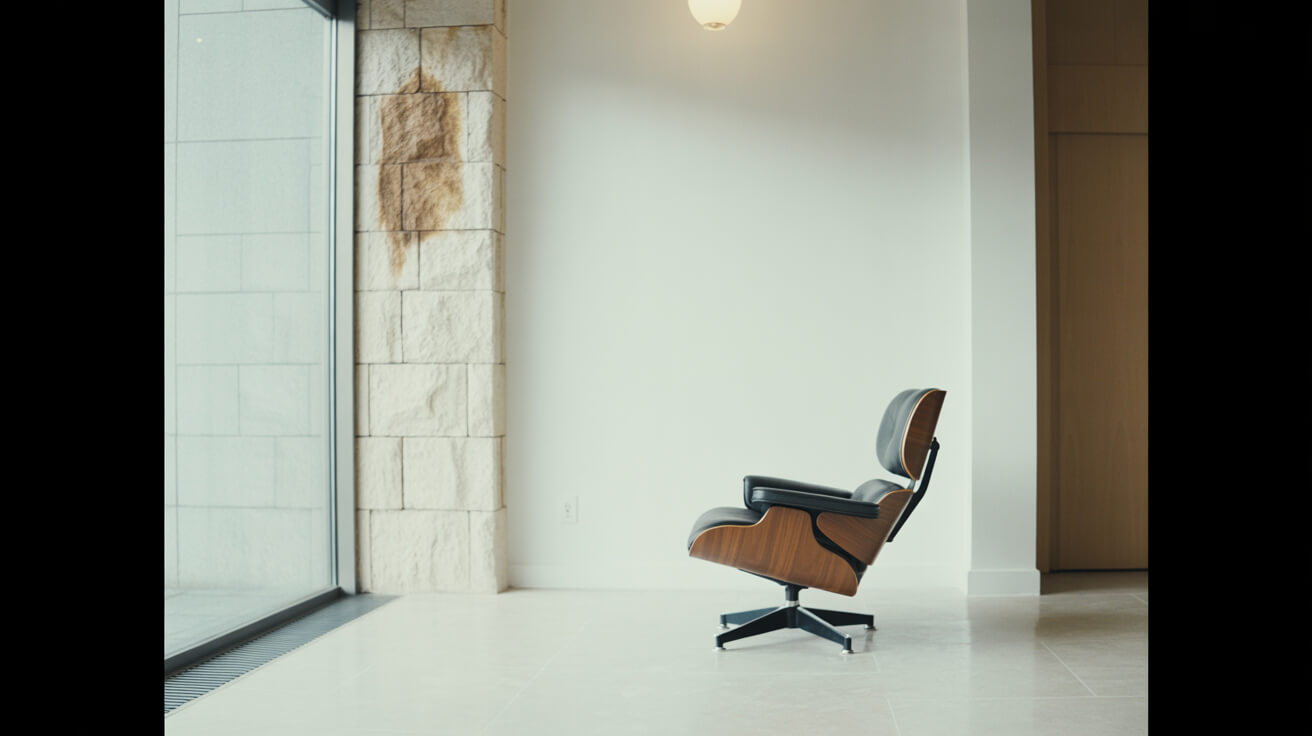
Reputation isn’t just about pristine fixtures—it’s about showing uninterrupted stewardship.
Proactive Strategies for Lasting Damp Prevention
- Scheduled Gutter and Drainage Maintenance: Unchecked overflows and blocked downspouts remain the chief entry for external water.
- Ventilation Upgrades: Prioritise mechanical extraction in kitchens, baths, and utility rooms. Retrofitting heritage properties with discrete systems maintains both value and compliance.
- Annual DPC Inspection: For older homes or period properties, checking for bridged, missing, or failed courses should be noted in annual maintenance logs.
- Thermal Imaging Inspections: Supplement standard checks with professional scans pre- and post-renovation, or as part of compliance audits—these rapidly highlight hidden issues.
Proven Cost Savings from Preventive Intervention
Proactive maintenance isn’t a sunk cost; regional data demonstrates a 27% reduction in five-year repair expenditures for owners who implement biannual inspection and scheduled maintenance. Effective prevention, including attention to Condensation: The classic culprit, is at the centre of every competitive asset strategy—it preserves both the physical property and your standing as a diligent owner or manager.
How Can Professional Surveys Provide a Definitive Solution?

Relying on “DIY plus best effort” as a compliance defence, insurance guarantee, or buyer assurance no longer has standing in the post-BS6576/PAS2035 era.
The Sussex Damp Experts Survey Difference
Our surveys use calibrated moisture mapping, borescope cavity inspection, and lab-grade salt analysis. Each assessment is tailored—homeowner with health concern, commercial landlord facing compliance scrutiny, or heritage property with conservation constraints.
- Professional Dossier: You receive not just a surface report, but an evidence folder ready for insurance, legal, or buyer review.
- Clear Rectification Roadmap: Each entry includes precise tasks, not generic recommendations. Clients consistently report improved negotiation leverage when presenting our documentation.
- Regulatory Pre-Emption: Our reports are aligned for seamless handoff—be it council, insurer, or buyer’s agent, all evidence is audit-optimised.
Why Choose Professional Over Basic Checks
Landlords, property managers, and heritage stewards need audit-grade evidence and preventive foresight; homeowners benefit from peace of mind engineered for future valuation, not for today’s dismissal.
Can You Afford to Ignore Damp Any Longer?
Damp is the slowest disaster with the fastest consequences. Where you act now, you enjoy control and reputation; where you default to “later,” you pay higher costs—financial, personal, and reputational.
Every section of this guide is designed to move you beyond hesitation. Take command of your asset the moment suspicion arises; that’s the stance that shelters both value and legacy.
To shift from reactive repair to directed stewardship, connect with Sussex Damp Experts for an expert assessment—designed for compliance, trust, and peace of mind. Protect your asset, legacy, and confidence with a single decisive step.
A vigilant owner leaves no room for silent decay—only space for enduring value.
Frequently Asked Questions
How can you tell if your property is affected by damp?
You spot the story of damp before you see the disaster. Suspicion creeps in with the faint, earthlike tang rising from the hallway, or a low, shadowed stain quietly mapping its ascent at the edge of your skirting. Early-stage damp, by design, avoids drama. Instead, it slips into your day-to-day: the paint that blisters and peels by degrees, the condensation clouding a sash window each frost-laced morning, or the baseboard that gives slightly beneath your thumb. You may be tempted to explain the symptoms away—yet every one signals a relationship in deficit with moisture management, not a single unlucky incident.
Subtle Signals Worth Noticing
- Musty odours: in areas of low airflow—a precursor to mould growth.
- Persistent condensation: on windows long after the kettle or shower’s steam ought to have cleared.
- Salt blooms or tide marks: circling walls at floor level, often white or grey and sometimes powdery.
- Timber or floor coverings: beginning to warp, split, or lift along seams.
- Peeling wallpaper: and flaking paint—especially emerging at external wall junctions.
Real-world studies confirm that properties left unchecked see annual repair costs spike dramatically, particularly once damp transitions from surface nuisance to structural adversary. The pattern is clear: proactive identification outperforms reactive repair in both cost and complexity. That’s why every property owner who values quiet certainty makes the habit of asking “what is my building silently trying to tell me?”
If you consistently notice these signs, moving early to commission a professional damp survey isn’t just practical—it’s an insurance policy for your investment and peace-of-mind. Your home deserves more than guesswork; Sussex Damp Experts ensures you get answers and a plan that holds up to scrutiny from buyers, tenants, and surveyors alike.
Why do damp problems develop in buildings, even those that are well maintained?
Damp takes root not just in old or neglected buildings—it thrives on hidden complexity and everyday oversight. Your commitment to maintenance is not the issue; modern living and refurb decisions often conspire against even the most attentive owner or managing agent. Consider how airtight renovations, insulation upgrades, or energy cost-saving moves sometimes squeeze out natural ventilation, raising indoor humidity beyond the building’s capacity to buffer.
Core Damp Pathways and Root Causes
-
Condensation: The classic culprit where heated, moisture-laden air cools rapidly on a cold wall or window, causing water to form seemingly out of thin air. Everyday routines—boiling, bathing, even breathing—feed this mechanism if windows stay shut and extractor fans underperform.
-
Penetrating Damp:
Rain seeks opportunity, exploiting cracked rendering, displaced tiles, compromised flashing, or failing gutters and downpipes. The ingress route may be subtle—a misplaced overflow pipe, a hairline wall crack—but the results are insistent. -
Rising Damp:
A flaw or breach in your damp proof course, common to period properties, lets groundwater creep upward via capillary action, dragging soluble salts that betray its path as patchy white stains or crumbly plaster. -
Plumbing Defects:
Hidden leaks—whether a slow drip behind the washing machine, underfloor pipes, or a poorly sealed shower tray—drive stealthy saturation. By the time floors or walls reveal a problem, moisture has often migrated well off its original source.
Table: Damp Source Matrix
| Type | Common Triggers | Who / Where Most at Risk |
|---|---|---|
| Condensation | Poor ventilation, insulation | Flats, post-insulation retrofits |
| Penetrating Damp | Faulty external fabric | Every property, esp. post-storm |
| Rising Damp | Compromised DPC | Brick/stone walls, older properties |
| Plumbing Defect | Hidden leaks/faulty seals | Bathrooms, utility rooms, basements |
*Your repairs only address symptoms if you haven’t mapped the root cause. Without certainty, each ‘fix’ sets up the next callout.*
The only way to resolve damp sustainably is to test hypotheses’ with calibrated tools, not intuition. Our surveys combine BS6576-aligned methodology, forensic inspection, and regional moisture mapping—ensuring your next maintenance report isn’t a rerun of the last.
What are the most reliable signs—and silent warnings—of hidden damp?
Damp betrays itself long before the obvious black mould or crumpled plaster. Your high ground is vigilance, not reaction. The most reliable cues are rarely dramatic, often mundane:
Visual and Sensory Cues
- Tide lines or persistent stains: at or just above the skirting.
- Salt efflorescence,: often crystalline, that returns no matter how often you brush it away.
- Curling, discoloured, or spongy floor coverings.:
- Peeling paint,: particularly where timber meets masonry.
- Consistent mustiness: , sometimes masked by air fresheners in problem rooms.
Behavioural Markers
- Condensation clusters: —always in the same spot, often where ventilation is weakest.
- Increasing cleaning frequency: in areas where mould or mildew stubbornly recurs.
Longitudinal Patterns
- Symptoms that reappear with bad weather or during winter.:
- Stains that migrate across surfaces,: not just down as with leaks.
The longer these warning signs persist, the more likely they signal a multifaceted moisture management challenge, not a surface slip. Tracking the recurrence and progression of symptoms provides invaluable data for professionals—transforming your observations into actionable evidence, not anecdote.
Properties that earn reputational trust don’t avoid problems—they demonstrate control, acting before others demand explanation.
If you’re unsure whether your symptoms are isolated or evidence of systemic damp, consider our free Damp Detection Checklist, designed to sharpen your logbook and save crucial time when consulting with experts.
How does ignoring damp affect your property’s value, health, and regulatory standing?
Unchecked damp is the silent thief of property value, structural safety, and personal health. The cumulative cost of deferred action spirals quickly, transforming a small maintenance bill into major refurbishment and often undermining insurance or resale value along the way.
Proven Consequences
- Structural Damage:
Ongoing damp erodes mortar, rots joists, and rusts metal fixings, quietly hollowing out the robust bones your building relies on.
- Health Risks:
Chronic damp supports dust mite proliferation and fungal spores like Aspergillus—both flagged by the NHS and local authorities as significant asthma and allergy triggers. HHSRS violations are rarely idle threats.
- Market and Legal Impact:
Damp-flagged survey reports can trigger mortgage refusals, buyer abandonment, or expensive renegotiations. For landlords, non-compliant repairs or ignored issues are fast-tracked to enforcement—and, in some cases, rent repayment orders.
Table: Cost of Damp Escalation
| Impact Zone | Deferred Repair | Market Penalty |
|---|---|---|
| Structural | 3x material cost | -8–20% value |
| Regulatory | Fines, repair orders | Listing freezes |
| Health | Ongoing risk | Complaint backlog |
| Insurance | Exclusions | Zero payout |
Our assessments quantify and contextualise these risks. Sussex Damp Experts’ reports not only protect you with quantifiable evidence, they ensure you can document proactive management—a core differentiator in both insurance and buyer negotiations.
*Neglect is the only decision that cannot be defended—not to a buyer, a tenant, or the silent judge of future cost.*
How can you confidently assess damp yourself—and when must you escalate to a professional?
You hold more power than you think to uncover or at least flag the majority of lurking damp build-ups. The process is straightforward if systematic:
DIY Damp Assessment Method
- Visual Sweep: Walls, window sills, behind heavy furniture, and at each floor edge.
- Touch Test: Cool, clammy surfaces out of sync with the ambient air.
- Olfactory Clue: Hunt for persistent odours after cleaning; mustiness shouldn’t outlast a spring clean.
- Moisture Metres: Handheld devices (around £20–50) yield instant readings—surface moisture above 18% suggests hidden invasion.
- Pattern Tracking: Log issues after rainfall or noticeable humidity changes—hidden penetration doesn’t announce itself on dry days.
Escalation Markers
If you spot:
- Repeated stains or symptom migration across multiple surfaces:
- Condensation or mustiness present regardless of season:
- Efflorescence that persists after multiple cleanings:
…it’s time to shift from self-assessment to professional diagnosis. The true differentiator? Your ability to hand over detailed records puts you a critical step ahead—expediting accurate diagnosis and reducing remedial overspend.
Sussex Damp Experts’ surveyors bring calibrated moisture mapping, substrate analysis, and full regulatory alignment—so no underlying issue is left to propagate, no pattern is left unexplained.
Why does professional diagnosis and repair create reliable, long-term resilience?
A certified survey is not expense, it is leverage. Sussex Damp Experts deliver more than a visual review: our calibrated evaluations involve advanced diagnostics—thermal imaging for hidden voids, salt and substrate assays for rising and hygroscopic damp, cavity borescope inspection, and post-intervention monitoring. This is the realm where method trumps guesswork and every claim is mapped to compliance standards (PAS2035, BS6576).
Professional Process Overview
- Survey Scheduling: At your preferred time, with clear documentation on methodology and benchmarks.
- Holistic Assessment: Each finding is mapped to both symptom and source—condensation, penetration, rising damp, or plumbing-based.
- Regulatory Reporting: Survey findings formatted for lenders, estate agents, or local authority needs, facilitating mortgage, sale, or case resolution.
- Tailored Remediation Plan: Material and repair choice is engineered for your property’s age, substrate profile, and historical quirks—not just a generic spec.
Comparative Analysis
| DIY Attempt | Sussex Damp Experts |
|---|---|
| Symptom-based, local observation | Root-cause, mapped evidence |
| General remediation suggestions | Forensic, warranty-eligible plan |
| High risk of misdiagnosis | Compliance-driven proof |
| No assurance to lenders | Recognised by insurers and authorities |
When your reputation, asset value, or tenant relationships ride on the outcome, partial diagnosis is an invitation for future trouble. Choosing expert-led diagnosis and repair isn’t hedging—it’s stakeholder governance.
*When repairs become a process, not a gamble, you set the standard others will chase.*
Can your leadership change how damp shapes your property’s story?
The defining characteristic of respected property owners and managers isn’t avoiding the challenge of damp—it’s confronting it with speed, confidence, and a plan anchored in evidence, not improvisation. Properties remembered for the right reasons bear the signature of those who chronicle every symptom, escalate decision-making early, and partner with compliance-calibrated professionals.
Each section of this guide was designed for your vantage point: someone who balances property value, human health, and stakeholder trust every time a stain appears or a surveyor visits. The way you handle the next sign of moisture isn’t just about expense; it demonstrates your standard, your leadership.
If you’re ready to make the move from uncertainty to assurance, Sussex Damp Experts are the ally that stakeholders, tenants, and buyers remember—quietly, professionally, decisively.

