
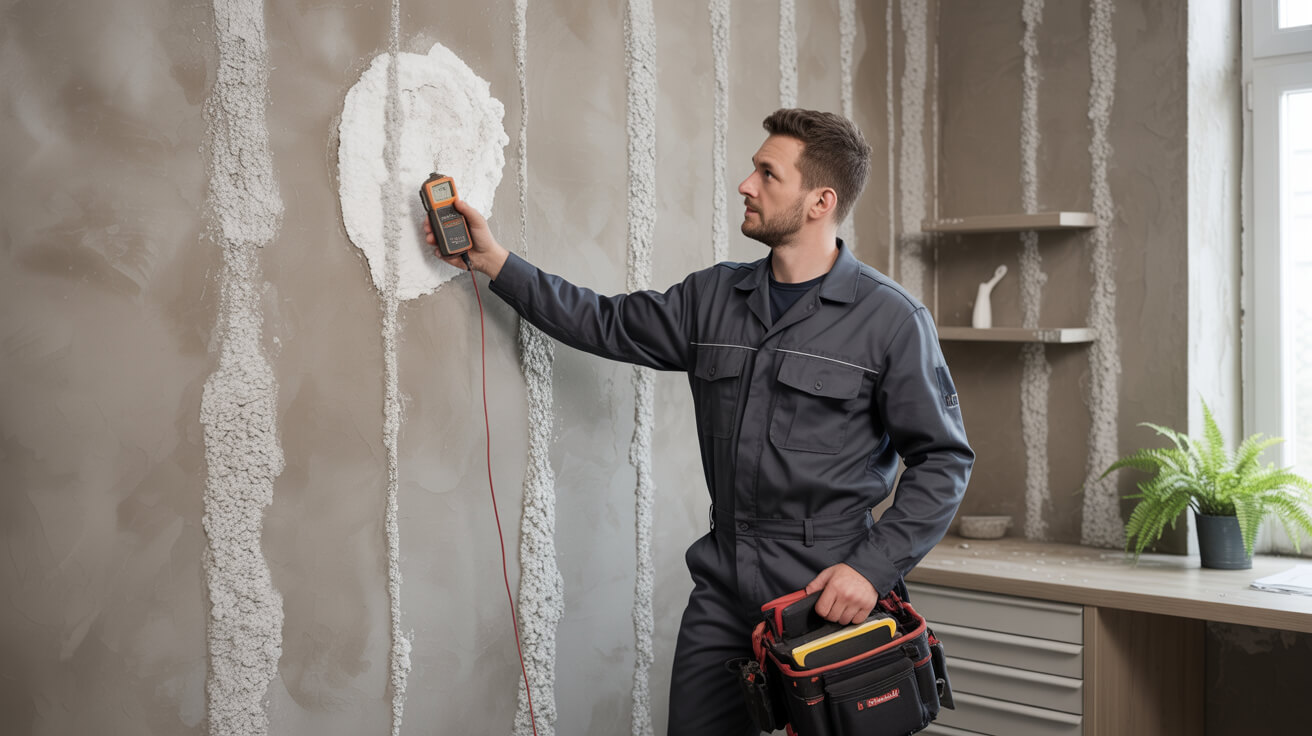
Occurring in environments where moisture migrates through porous materials, salt rebound represents a persistent challenge for practitioners managing water ingress. Its formation is linked intrinsically to chemical interactions and physical processes that facilitate the upward movement of dissolved salts, eventually depositing them as visible efflorescence. The issue is especially relevant in older structures and historical buildings, where remnants of previous repair materials and contaminants can persist within the masonry.
Salt rebound presents a specific challenge in the context of damp proofing, where the re-deposition of soluble salts following treatment indicates that underlying contaminants remain active within the substrate. The presence of these salts is often a marker of incomplete remediation, and they contribute to both visual degradation and potential structural compromise. Understanding salt rebound is essential for effective moisture management strategies, ensuring that damp proofing applications achieve their long-term purpose. The phenomenon highlights the importance of thorough surface preparation, meticulous treatment applications, and continuous monitoring to prevent recurring issues.
The implications for property maintenance are significant. Property owners and managers must invest in more rigorous diagnostic techniques and apply advanced remediation methods to mitigate the risks associated with untreated contamination. By addressing salt rebound effectively, stakeholders help secure the longevity of building materials and sustain overall property value.
Overview and Context
Salt rebound is a recurrent issue in damp proofing, arising from the migration and crystallisation of soluble salts due to untreated contamination. In a typical damp proofing scenario, moisture infiltrates building materials, dissolving residual salts that reside in the substrate. As the moisture moves upward through porous media via capillary action, it eventually evaporates—leaving behind crystallised salt deposits that are visibly apparent on wall surfaces.
This phenomenon is not isolated; rather, it exists as part of a broader spectrum of challenges associated with moisture management in buildings. The context involves:
- Moisture Dynamics: Moisture input through ground contact, condensation, or penetrating water drives the solubilization of salts.
- Chemical Composition: The specific mix of salts—often inclusive of sodium, potassium, and calcium compounds—determines the visual and structural impacts.
- Substrate Characteristics: The porosity, grain size, and absorption capacity of building materials influence the rate and pattern of salt migration.
- Environmental Factors: Ambient humidity, temperature fluctuations, and rainfall patterns all interact with material properties to either exacerbate or mitigate salt rebound.
Overall, salt rebound must be considered alongside other damp-related phenomena such as rising damp and condensation, as its presence may indicate underlying failures in the damp proof course (DPC) application or in the remediation of historical contaminants.
History
The awareness of salt rebound as a factor in damp proofing has evolved considerably over time. Early construction practices did not fully account for the long-term movement of salts, and the phenomenon was often misinterpreted as natural wear or residual dirt. Historical documentation reveals that older buildings sometimes displayed recurrent staining and surface degradation, which were later attributed to salt migration from untreated substrates.
Origins and Early Observations
In the early days of masonry construction and repair, salt deposits were observed primarily as incidental markings on wall surfaces. Initial interpretations did not link these deposits to untreated contamination. However, as diagnostic methods gradually evolved, especially with the introduction of moisture metres and infrared thermography, researchers began to systematically document the relationship between residual contaminants and later salt deposits. Early case studies from heritage properties underscored the need for more effective pre-treatment cleaning protocols to mitigate such effects.
Industrial Emergence of Damp Proofing Techniques
The post-World War II construction surge brought with it a documented need for systematic damp proofing solutions. During this period, damp proofing technologies evolved rapidly, incorporating chemical DPC injections and physical barriers aimed at reducing moisture ingress. However, despite these advances, instances of salt rebound remained prevalent, leading experts to reconsider the thoroughness of substrate preparation. Standards such as BS6576 and BS8102 were subsequently developed to provide rigorous guidelines for treatment applications, explicitly addressing the risks associated with untreated contamination.
Contemporary Evolution
Modern damp proofing practices integrate precision diagnostics, advanced materials, and digital monitoring to curb the recurrence of salt rebound. Innovation in sensor technologies now allows practitioners to continuously track moisture levels and salt accumulation, thereby enabling real-time adjustments and early intervention. Recent revisions in industry standards reflect this advancement, as contemporary protocols now emphasise comprehensive substrate assessment and preparatory stages that aim to eliminate contamination from the onset. This evolution underscores a broader industry trend towards preventive maintenance and data-driven treatment strategies.
Concept and Description
Salt rebound is the reappearance of soluble salts on treated surfaces, occurring after a damp proofing intervention fails to neutralise or remove underlying contaminants. This phenomenon manifests through a cycle of dissolution, migration, and crystallisation, and it implicates both the chemical composition of the salts and the physical properties of the building materials.
Fundamental Mechanisms
At a chemical level, salt rebound begins when contaminants within the substrate contain soluble salts—compounds that are readily dissolved by water. As moisture infiltrates the material, driven by capillary forces or external water exposure, these salts dissolve into the water matrix. The dissolved salts then migrate towards drier areas, following established moisture gradients. As the water eventually evaporates, the salts crystallise on or near the surface, forming visible deposits that weaken the substrate integrity.
Role of Untreated Contamination
The critical factor that distinguishes salt rebound from normal efflorescence is the presence of untreated contamination. Contaminants may include remnants of previous repair materials, degraded plasters, or organic deposits that harbour inorganic salts. When such materials are not effectively removed during the initial treatment, they serve as a reservoir for salt accumulation. The persistence of these contaminants triggers a continuous cycle where subsequent moisture events reactivate and mobilise stored salts, leading to recurrent salt deposition.
Chemical Interactions and Physical Processes
The salts implicated in salt rebound typically comprise a complex mix of ions, including sodium, potassium, and calcium. These compounds exhibit hygroscopic properties, meaning they absorb moisture from the surrounding air. In addition, the crystallisation process can alter the microstructure of the masonry, causing further physical deterioration. Physical processes such as thermal bridging, where heat loss creates localised condensation, accelerate the movement of salt-laden moisture. The net effect is a cycle of damage that undermines the durability of the damp proofing system.
Functionality, Purpose, and Applications
Salt rebound poses significant operational challenges in damp proofing by indicating that moisture control measures have been compromised. Its detection serves as an important diagnostic tool that reveals deficiencies in treatment execution and substrate preparation.
Impact on Treatment Efficacy
Should salt rebound occur, it signifies that the damp proofing measures applied did not fully eradicate the underlying sources of contamination. Such occurrences directly undermine the efficacy of the treatment, as residual salts can catalyse further moisture ingress. The outcome is an ongoing cycle of remediation that not only affects the stability of the structural elements but also results in increased maintenance costs over time.
Diagnostic Applications
In practice, accurate detection of salt rebound is achieved through a combination of tools:
- Moisture Metres: These devices measure the moisture content within building materials, providing quantitative indicators of salt migration.
- Thermal Imaging Cameras: By capturing temperature anomalies, these instruments help identify areas of moisture movement that may correlate with salt rebound.
- Salt Test Kits: Chemical assays determine the composition and concentration of surface salt deposits, enabling a precise assessment of the contamination severity.
- Borescopic Investigations: Non-invasive methods allow specialists to inspect internal moisture paths and detect concealed salt accumulations.
These methodologies guide professionals in determining whether remedial action is warranted, ultimately serving as a cornerstone of effective damp proofing strategies.
Practical Use Cases
Salt rebound is a concern across various building types, particularly in historic structures where traditional materials and techniques may conflict with modern treatment methods. For instance, in heritage properties, maintaining the integrity of lime plasters while addressing salt accumulation necessitates specialised approaches. Conversely, in modern builds, advanced sensor technologies and optimised chemical treatments provide more reliable outcomes. Regardless of the setting, a thorough understanding of salt rebound and its implications ensures that diagnostic and remedial measures are both precise and sustainable.
Classifications and Variants
Although salt rebound is a specific incident, it connects to a broader classification of damp-related issues in buildings. Understanding its place within the spectrum of moisture problems helps in tailoring both diagnosis and treatment.
Comparative Overview of Damp Phenomena
damp issues commonly manifest in several forms:
- Rising Damp: Involves the upward movement of moisture from the ground through capillary action.
- Penetrating Damp: Occurs when water infiltrates the external envelope of a building.
- Condensation Damp: Results from air moisture condensing on cold surfaces.
- Hygroscopic Damp: Involves salts that absorb and desorb moisture in response to humidity changes.
Salt rebound is most closely related to rising damp and condensation, where untreated substrate contaminants provide a source of soluble salts. The distinguishing feature of salt rebound is its dependency on pre-existing contamination that is not addressed during the damp proofing process.
Variations in Manifestation
The specific appearance and severity of salt rebound vary with several factors:
- Contaminant Concentration: High levels of contaminants lead to more pronounced salt deposits.
- Moisture Movement Rates: Rapid capillary action can result in faster migration and more extensive crystallisation.
- Substrate Type: The porosity and chemical composition of the building material affect salt deposition patterns.
- Environmental Influences: Ambient humidity, temperature fluctuations, and exposure to rainfall dynamically influence the salt rebound process.
These variations necessitate customised treatment approaches for different types of buildings and moisture conditions.
Systems, Tools, and Methodologies
A robust approach to diagnosing and treating salt rebound leverages advanced systems, refined tools, and methodical processes that ensure long-term effectiveness.
Diagnostic Instruments and Techniques
Effective detection and evaluation of salt rebound rely on an array of precise instruments:
- Moisture Metres: Employed to record the water content within substrates, these devices help delineate areas at risk for salt migration.
- Thermal Imaging: Offering a visual representation of moisture distribution, thermal cameras can pinpoint areas exhibiting abnormal temperature gradients.
- Salt Test Kits: Chemical tests provide detailed information regarding the types and concentrations of salts present on surfaces.
- Borescopic Devices: These tools facilitate internal inspections that reveal concealed salt deposits and moisture paths.
- Hygrometers: Used to measure the ambient humidity, providing additional context for moisture dynamics within a building.
Remediation Techniques
Addressing salt rebound involves both preventive and corrective strategies:
- Chemical Damp Proof Courses (DPCs): These treatments involve the injection of chemical barriers intended to inhibit moisture ingress. When coupled with thorough substrate cleaning, they can substantially reduce salt rebound.
- Tanking and Membrane Applications: In cases where external moisture control is essential, tanking methods provide physical barriers that restrict water penetration.
- Breathable Plaster Systems: Particularly relevant in heritage properties, these systems permit moisture diffusion while protecting against salt deposition.
- Incorporation of Salt Neutralisers: The application of specific chemical agents designed to neutralise salts is a key aspect of successful treatments, preventing reactivation of contaminants.
- Integrated Monitoring Systems: The use of moisture sensor networks and real-time data logging supports ongoing performance evaluation, enabling prompt intervention if salt rebound is detected.
Methodological Best Practices
For optimal outcomes, the treatment of salt rebound should be integrated into a larger framework of preventive maintenance:
- Pre-Treatment Assessment: Comprehensive diagnostic evaluations determine the extent of untreated contamination and set the baseline for subsequent interventions.
- Surface Preparation: Thorough cleaning and removal of residual contaminants are critical to ensuring that the applied treatments function as intended.
- Post-Treatment Monitoring: Continuous evaluation via advanced sensors and periodic physical inspections help verify the success of the treatment and inform potential adjustments.
- Quality Control Measures: Adherence to industry standards, such as BS6576 and BS8102, ensures that treatment protocols are reliably implemented and maintained.
Stakeholders and Involved Entities
A range of professionals and entities contribute to the effective management of salt rebound, bringing diverse expertise to the field of damp proofing.
Industry Professionals
Key practitioners in the realm of damp proofing include:
- Surveyors: They provide expert assessments using a suite of diagnostic tools to map moisture and salt distribution within structures.
- Contractors and Damp Proofing Specialists: Responsible for executing treatment protocols, these experts apply advanced methodologies to remediate salt rebound while ensuring compliance with relevant standards.
- Building Conservation Experts: In the context of heritage properties, specialists focus on preserving the original building fabric while integrating modern damp proofing measures.
- Quality Assurance Personnel: They oversee the adherence to standards and ensure that remedial measures meet both regulatory and performance benchmarks.
Regulatory Authorities
Various regulatory bodies and compliance organisations play a crucial role:
- Standards Organisations: Institutions responsible for BS6576, BS8102, and PAS2035 contribute to defining acceptable treatment methodologies.
- Building Regulation Bodies: Government or local authority bodies enforce building standards that guide damp proofing practices.
- Safety and Health Agencies: Agencies focusing on property safety ensure that damp proofing interventions meet criteria for occupant health and structural integrity.
Property Owners and Managers
Property stakeholders bear the direct economic and operational impact of salt rebound:
- Homeowners and Landlords: These groups are primarily concerned with maintaining property value and ensuring the longevity of repairs.
- Facility Managers: In commercial and institutional settings, proper damp proofing is critical for the sustained functionality and safety of the building.
- Investment Entities: Lenders and insurance companies often include damp proofing performance as part of property valuation and risk assessment processes.
Legal, Regulatory, and Ethical Considerations
The management of salt rebound is subject to a complex framework of legal, regulatory, and ethical standards that ensure effective damp proofing practices while safeguarding property owners’ investments.
Applicable Standards and Regulations
Key regulatory documents provide guidelines that shape damp proofing applications:
- BS6576: This standard outlines the criteria for the effective application of chemical damp proof courses, including surface preparation and diagnostic methods.
- BS8102: Governing the waterproofing of below-ground structures, BS8102 addresses issues related to moisture ingress and resistance.
- PAS2035: Specifically tailored for retrofit schemes, PAS2035 includes provisions for identifying and mitigating untreated contamination that might lead to salt rebound.
- Building Regulations Part C: Encompassing broader considerations for moisture management, these regulations form a legal basis for enforcing adequate damp proofing measures.
Compliance Challenges
Implementing these standards is not without obstacles:
- Material Compatibility: Older constructions may incorporate materials that do not conform easily to modern treatments, necessitating bespoke solutions.
- Incomplete Remediation: The persistence of historical contaminants poses significant challenges, often requiring repeated treatments.
- Economic Pressures: The cost implications associated with thorough substrate preparation and ongoing monitoring can be considerable, impacting the overall feasibility of remediation efforts.
Ethical and Transparency Considerations
Professionals in the field are expected to adhere to high ethical standards:
- Accurate Reporting: Diagnostic findings must be communicated transparently to property owners, enabling informed decision-making.
- Cost Estimation and Accountability: Ethical practices require honest assessments of both treatment effectiveness and associated costs, ensuring that stakeholders are not misled by overly optimistic projections.
- Commitment to Long-Term Solutions: Ethical damp proofing practices emphasise sustainability and long-term stability, rather than short-term fixes that may compromise future structural integrity.
Performance Metrics, Data, and Measurements
The quantification of treatment outcomes for salt rebound is essential for benchmarking success and guiding iterative improvements.
Diagnostic Data Measurement
A variety of tools provide data that is critical to the evaluation process:
- Moisture Metres: These devices yield immediate quantitative data on the moisture content within substrates, offering real-time insight into prevailing conditions.
- Thermal Cameras: By capturing temperature variations, these cameras help visualise the movement of moisture through building materials.
- Salt Test Kits: Chemical assays determine the quantity and composition of salt deposits, providing a basis for assessing treatment effectiveness.
Quantitative Performance Indicators
performance metrics are defined by several key parameters:
- Rate of Salt Migration: Quantitative assessment of how quickly salts are moving through the material.
- Reduction in Baseline Moisture Levels: Comparative moisture readings before and after treatment provide an indicator of the treatment’s impact.
- Frequency of Salt Recurrence: Tracking the periodic re-emergence of salt deposits serves as a measure of treatment durability.
- Compliance Benchmarks: Performance is measured against established standards such as BS6576 and BS8102 to ensure that outcomes meet industry criteria.
Data Analysis and Reporting
The integration of data from various sources allows for comprehensive performance reporting:
- Tabulated Results:
| Diagnostic Tool | Parameter Measured | Industry Benchmark |
|---|---|---|
| Moisture Metre | Moisture Content (%) | < 15% post-treatment |
| thermal imaging | Temperature Differential | Uniform thermal profile |
| Salt Test Kit | Salt Concentration (g/m²) | < 5 g/m² for acceptable levels |
- Graphical Representation: Trend charts and moisture mapping visuals can be used to illustrate treatment progress over time, aiding in predictive maintenance and early detection of being issues.
Challenges, Barriers, and Limitations
Mitigating salt rebound remains a complex endeavour due to intertwined technical, environmental, and economic constraints.
Technical and Methodological Barriers
Key technical challenges include:
- Incomplete Substrate Preparation: Failure to entirely remove or neutralise existing contaminants often results in persistent salt sources, which continue to fuel rebound.
- Material Variability: Differences in material composition, porosity, and absorption capacity make standardising treatment strategies difficult.
- Diagnostic Limitations: While modern tools offer enhanced precision, interpreting diagnostic data requires expertise, and slight variations in readings may lead to misinterpretations.
Environmental and Material Limitations
Environmental factors further complicate treatment outcomes:
- Ambient Humidity and Temperature: High humidity and rapid temperature fluctuations increase the likelihood of moisture migration, accelerating the salt rebound process.
- Rainfall and Weather Patterns: Weather events can exacerbate moisture ingress and re-induce salt mobilisation, particularly in exposed structures.
- Legacy Building Materials: Older infrastructures often contain a mix of materials that respond unpredictably to modern treatment regimes, necessitating customised approaches.
Economic and Practical Constraints
The economic ramifications of salt rebound also contribute to its persistence:
- Cost of Repeated Treatments: Inadequate initial treatments frequently require subsequent remediation, which drives up maintenance costs.
- Resource Allocation: Deploying advanced diagnostic and treatment technologies involves significant investments that may not be readily accessible for all property owners.
- Operational Complexity: Coordinating multi-phase treatments, including pre-treatment assessments, active interventions, and continuous monitoring, creates logistical challenges that compound economic pressures.
Impact, Influence, and Legacy
The implications of salt rebound extend well beyond immediate treatment challenges, influencing long-term property performance and the evolution of industry practices.
Structural and Aesthetic Consequences
Salt rebound often leads to both visible and hidden damage:
- Surface Deterioration: The crystallisation of salts on wall surfaces results in visible efflorescence, which detracts from the overall appearance of a building. Such visible salt deposits are often accompanied by discoloration and fading of surface finishes.
- Structural Degradation: Repeated cycles of salt deposition and moisture evaporation can weaken mortar joints, reduce the bond strength of plasters, and ultimately compromise the integrity of masonry structures. Over time, this deterioration may necessitate expensive structural repairs.
Economic and Market Effects
The economic impact of salt rebound is multifaceted:
- Property Value Reduction: Visible decay and compromised structural integrity can lead to a decline in property value. Mortgage surveyors may flag salt-related damage as a risk factor, affecting financing options.
- Increased Maintenance Costs: The need for ongoing remedial actions and periodic re-treatment elevates long-term maintenance expenditures.
- Legal and Insurance Considerations: Non-compliance with established damp proofing standards may lead to disputes between property owners, contractors, and insurers, further affecting the bottom line.
Legacy and Industry Evolution
Historically, salt rebound has driven significant changes within the damp proofing sector:
- Advancements in Treatment Methodologies: Persistent challenges related to salt rebound have spurred innovations in both chemical and physical treatment techniques, leading to the development of more comprehensive protocols.
- Enhanced Diagnostic Technologies: The recurring nature of salt rebound has encouraged the adoption of advanced diagnostic tools, including thermal imaging and continuous monitoring systems, to better predict and mitigate its occurrence.
- Regulatory Revisions: Ongoing field experiences with salt rebound have informed revisions in industry standards and building regulations, ensuring that preventive measures better address the risks posed by untreated contamination.
- Cultural Shifts in Property Maintenance: The legacy of salt rebound has encouraged property owners and industry stakeholders to adopt a more proactive approach to damp proofing, emphasising preventive maintenance and regular monitoring to safeguard building health.
Future Directions, Cultural Relevance, and Design Discourse
Emerging innovations, evolving regulatory frameworks, and shifts in cultural attitudes towards building maintenance suggest that the approach to salt rebound will continue to develop in the coming years.
Technological Advancements and Innovations
Advances in sensor technology and data analytics are set to redefine the way salt rebound is monitored and managed:
- Wireless Monitoring Systems: The integration of wireless moisture sensors and digital data loggers enables continuous, real-time monitoring of building substrates, enhancing the early detection of salt migration. These systems can automate alert processes when moisture levels exceed predefined thresholds.
- Machine Learning and Predictive Analytics: The application of predictive algorithms allows for the modelling of moisture dynamics and salt behaviour under varying environmental conditions. Such systems may eventually predict the occurrence of salt rebound before it becomes visually apparent.
- Advanced Chemical Treatments: Research into novel chemical formulations, including eco-friendly salt neutralisers, promises to further enhance treatment effectiveness by targeting the specific ionic composition of problematic salts.
Evolving Regulatory Standards and Ethical Paradigms
Continued refinement of industry standards is anticipated as research and field data accumulate:
- Standard Revision and Harmonisation: Current standards such as BS6576, BS8102, and PAS2035 are continually being evaluated and updated to incorporate new findings. Future revisions are likely to focus on both preventive measures and enhanced post-treatment monitoring.
- Ethical Considerations in Treatment Practices: As the industry moves towards more technologically driven solutions, ethical practices in diagnosis and treatment reporting remain paramount. Transparent reporting of treatment efficacy and adherence to regulatory requirements will remain central to fostering trust among property owners and professionals alike.
Cultural Impact and Design Innovation
The cultural and aesthetic dimensions of damp proofing are evolving in tandem with technological and regulatory advancements:
- Heritage Conservation Practices: In heritage properties, balancing modern treatment methods with the preservation of traditional materials is of great significance. Future approaches will likely emphasise the use of breathable materials and minimally invasive diagnostic methods that respect historical integrity.
- Sustainable and Eco-Friendly Approaches: As environmental considerations become increasingly central to building maintenance, future treatments are expected to incorporate sustainable practices. The development of biodegradable salt neutralisers and energy-efficient monitoring systems is poised to reduce the ecological footprint of damp proofing interventions.
- Integration with Smart Building Systems: The convergence of damp proofing technologies with the broader realm of smart building management offers promising opportunities. Integrated systems that combine real-time monitoring, automated climate control, and predictive maintenance strategies not only improve treatment outcomes but also enhance overall building performance.
Design Discourse and Future Research Trajectories
The discourse around salt rebound and damp proofing is set to expand as interdisciplinary research provides new insights:
- Innovative Material Science: Advancements in material science may yield new types of treatment formulations and barrier systems that are more resistant to the effects of salt rebound. The potential for nanotechnology and advanced composite materials to improve treatment durability is an area of significant interest.
- Research Collaborations: Collaborative efforts among academic institutions, industry leaders, and regulatory bodies are likely to drive further innovation. Extended research networks will facilitate the development of standardised testing protocols and comparative studies that provide a deeper understanding of treatment performance under varied conditions.
- Cultural Trends in Building Care: As societal attitudes shift towards more sustainable and long-term maintenance practices, the narrative surrounding damp proofing is expected to evolve. Emphasis on preventive care, regular monitoring, and holistic approaches to building maintenance will likely become standard practice, reflecting broader cultural priorities in environmental stewardship and heritage conservation.
By addressing these emerging trends and integrating multidisciplinary insights, the field of damp proofing is poised for significant transformation. Future strategies will increasingly rely on precise, technology-driven interventions that not only mitigate salt rebound but also anticipate it, ensuring that treatment methods remain robust in the face of changing environmental conditions.
The ongoing evolution of damp proofing methodologies, informed by advanced diagnostic tools and deeper scientific understanding, is creating a foundation for more resilient building practices. As the industry continues to adopt these innovations, both property integrity and aesthetic preservation will be enhanced, supporting long-term durability and a sustainable approach to building maintenance.

