
 By
By  May 10, 2024


How Does Rising Damp Threaten Homes, Health, and Compliance?
Living with rising damp is a silent threat that jeopardises your investment, undermines energy performance, and exposes both individual and organisational liability. If you’re managing a property, seeking to sell, or overseeing tenancies, the first and most important step is to understand rising damp vs condensation/penetrating, because rising damp is a cause, not just a symptom.
What Real-World Consequences Can You Expect From Rising Damp?
- Structural deterioration: Continuous ground moisture degrades masonry, renders, and embedded timbers, producing invisible rot, spongy surfaces, and, ultimately, systemic failure of floors and walls.
- Aesthetic and comfort loss: The “tide mark” and flaking surface aren’t just ugly; they hint at deep, recurring decay. Each round of superficial repair increases long-term costs.
- Air quality and health: Moisture-laden surfaces become reservoirs for dust mites, bacteria, and mould, raising the risk of chronic respiratory symptoms for your family or tenants.
- Energy waste: Moisture-logged walls sap heat, eroding your home’s efficiency and inflating bills throughout the year—cost you’ll never win back without professional treatment.
- Compliance pressures: As legal frameworks tighten, local councils and mortgage lenders increasingly require not only diagnosis but proof of certified remediation and aftercare for damp issues.
Buildings left to deteriorate lose their future before anyone notices.
Who Should Prioritise Immediate Action?
If you own, manage, or are responsible for any UK property built prior to 1980—especially solid wall or heritage types—you are at heightened risk. Landlords facing tenant complaints or managing licenced HMOs, buyers needing mortgage approval, and family occupants sensitive to mould exposure cannot afford delay.
What Makes Rising Damp More Than Cosmetic?
The presence of moisture on a wall is evidence of capillary action drawing up groundwater. No amount of painting will address the cause. Left unresolved, you face compounded risk:
- Regulatory enforcement under HHSRS (hazard scoring),
- Survey refusals blocking sales,
- Tenant claims for disrepair,
- Irreversible damage to original features in listed and heritage properties.
Immediate Summary
Rising damp is always progressive, and always demands intervention. The difference between a quickly managed repair and a costly renovation is a matter of months—not years.
To protect your asset’s value and the people who rely on you, begin with a compliance-grade survey from Sussex Damp Experts.
What Are the Certified Causes of Rising Damp in UK Buildings?

Identifying and eradicating rising damp hinges on tracing the exact origin. In UK property, all certified causes relate to how water bypasses, bridges, or defeats the damp proof course (DPC)—either by construction, age, ground level, or maintenance lapses.
Which Construction or Environmental Issues Trigger Real Rising Damp?
1. Absent or Expired DPC:
Older buildings (pre-1920) often lack a functional DPC. Over time, even modern materials can degrade, especially if ground movement or damp cycles go unchecked.
2. DPC Bridging—Man-Made or Environmental:
- Raised external ground (patio, flowerbeds),
- Insulating render or floor screeds linking ground to interior walls,
- Internal debris from previous construction trapping moisture within wall cavities.
3. Blocked Cavities and Voids:
Mortar droppings and debris invite water to find new pathways upward. Severe cases, especially in mixed construction, demand borescope investigation to trace the hidden channels.
4. External Moisture Amplification:
Gutter failures, overflowing drains, and waterlogging exacerbate capillary rise, particularly in properties on heavy clay soils or near old watercourses.
How Often Are Diagnosis Errors Behind Costly “Repairs”?
- Misreading condensation as rising damp triggers unnecessary, invasive works.
- Overlooking bridging—especially where groundworks or landscaping have altered levels in the last decade—is common in new extensions or retrofits.
- Heritage and listed properties can mask failures beneath layers of old lime, render, or non-original finishes.
| Key Cause | Typical Risk Context | Diagnostic Standard |
|---|---|---|
| No/Failed DPC | Pre-WWI, ground movement | BS6576 moisture profile + salts |
| DPC Bridging | Landscaping, refurbishing | Cavity borescope, salt test |
| Blocked Cavity | Extensions, party walls | Physical probe, substrate check |
| Excess External Moisture | Gutter, pipes, slopes | Drain check, rainwater analysis |
Standard Reference
All professional survey and remediation must comply with BS6576 and PAS 2035 (for any significant retrofit or protected site). Non-compliant works are easily flagged by lenders, local authority inspectors, and insurance auditors.
Where Should Owners and Professionals Look to Diagnose Rising Damp?

Surface stains tell only a fraction of the damp narrative. The right diagnosis balances investigative diligence, advanced instruments, and unbiased expertise, especially before replastering damp walls in properties where value or compliance are on the line.
Which Areas Require Priority When Assessing Damp?
Comprehensive diagnosis involves:
- Wall base and up to 1m: Seek “tide marks” and visible salt deposits, almost always apparent at or just above skirting.
- Floor junctions and hidden corners: Probe behind cupboards/furniture, at the base of external walls, where poor airflow lets moisture linger.
- External ground interfaces: Compare ground height at all sides; any point where soil, paving, or decking is above internal floor is a target.
- Wall cavities: Use inspection hatches or borescope—a favourite moisture pathway.
- Historic or hybrid walls: Check any surface where new plaster, render, or insulation meets older brick or stone—lime vs. gypsum leads to “hidden” bridging.
What Steps Guarantee an Insurance- and Warranty-Backed Damp Diagnosis?
- Vertical moisture metre readings at 100mm intervals from floor to 1m.
- Salt analysis (nitrate and chloride) from at least two affected areas.
- Visual and photographic evidence logged against a floorplan.
- For heritage or complex assets, secure separate survey documentation for each partition/treatment zone.
Action Checklist Table
| Diagnostic Step | Why It’s Essential |
|---|---|
| Metre Profiling | Traces capillary gradient |
| Salt Composition | Distinguishes rising damp vs condensation/penetrating |
| Boiling Point Test | Assesses substrate risk pre-treatment |
| Photographic Record | Satisfies compliance, proof of action |
Why Is Professional Oversight Needed?
A certified survey by Sussex Damp Experts brings not just tools, but legal defensibility, recognised by mortgage providers, insurers, and local authorities. For tenanted, listed, or high-value properties, it is your guarantee of never paying twice.
Assumptions invite repeat repairs; evidence secures real resolution.
Why Is a Professional Diagnosis Crucial Before Any Treatment?
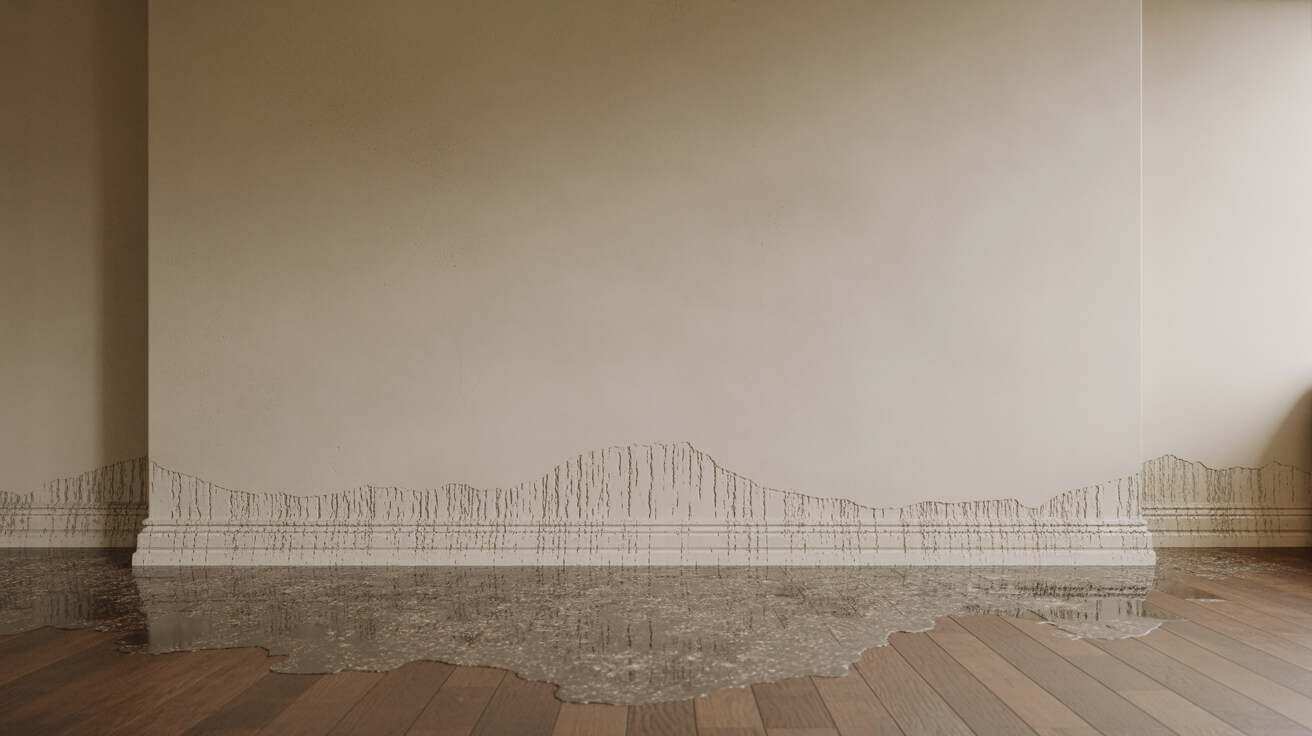
Acting before accurately tracing the source of rising damp is a recipe for increasing costs and future disputes. There’s a misconception that if a wall is wet, any DPC or tanking will do; often it’s not the correct solution, and the results are soon undone.
How Does Expert Diagnosis Shield You from Regulatory, Financial, and Insurance Failure?
- Compliance assurance: Surveyor-accredited reports anchor decisions in BS6576/PAS 2035, recognised by local authorities for all compliance checks.
- Warranty, insurance, and resale: Certified diagnosis and documentation transfer with your asset for sales and mortgage processes, and back all insurance claims.
- Cost efficiency: Correct diagnosis removes trial-and-error and reduces the risk of collateral damage to finishes and heritage features.
- Peace of mind: Instead of “remediated—fingers crossed,” professional intervention assures your next survey passes the first time.
What Makes DIY Diagnosis a False Economy?
- Moisture metres misread damp above damp-proof lines (esp. with modern paints and wallboards).
- Without salt testing or cavity inspection, multiple causes overlap—injecting DPC into a wrongly-bridged wall won’t last.
- DIY repair slips are rarely accepted by mortgage lenders, insurers, or compliance officers.
Sussex Damp Experts: What You Get
- A BS6576/PAS 2035 standard survey, ready for compliance and insurance.
- Action roadmap with photo log, lab-verified salt samples, and clear remedial priorities.
- For heritage/listed properties: specialist, non-invasive assessment to avoid accidental breach.
How Is Rising Damp Treated Step By Step According to UK Standards?

Rising damp isn’t just stopped—it is deconstructed and then rebuilt, section by section, from cause to cure with full compliance.
What Is the Modern UK Damp Treatment Sequence?
- Diagnosis and Bridging Removal
No DPC, bridging, or environmental defect should survive the initial phase. Remove excess external ground, bridge plaster, or debris first. - DPC Installation
- *Chemical injection*: Horizontal holes drilled at base, injected with silicone-based cream—fast, low disturbance, most retrofits.
- *Physical barriers*: Fitted as part of major restoration or heritage and listed building compliance.
- *Passive/lime-compatible membranes*: For conservation regs or where reversibility is required.
- Substrate Drying and Salt Extraction
Fast track using targeted ventilation/mechanical aids; recurrent checks for moisture as walls dry out. - Specialist Replastering
Remove at least 1m of old plaster, replacing with salt-resistant, breathable lime-based or specialist mortars. - Recommissioning and Aftercare
Monitor moisture with periodic sensors or professional check-up. Document all stages with dates, specs, and sign-offs.
Every stage you rush is a risk you’ll repeat.
| Treatment Phase | Action Item (Standard) |
|---|---|
| Initial Survey | Metre, salt, visual, cavity checks |
| DPC Delivery | Cream, physical, or eco-specific |
| Wall Drydown | Mechanical, timed, sample-logged |
| Replaster | Salt-resistant, breathable finish |
| Aftercare | Checklist, warranty, annual check |
Do Heritage/Listed Properties Require Special Measures?
Yes. Only conservation-accredited specialists (Sussex Damp Experts) can specify, instal, and document compliant solutions, ensuring you stay within planning and conservation requirements.
When Must a Damp Specialist, Surveyor, or Heritage Consultant Be Involved?

Damp that recurs, appears in a listed or complex property, or triggers legal/tenant action is always reason for referral. But escalation isn’t just for emergencies—it’s for guaranteed first-time results.
What Escalation Triggers Require Professional Involvement?
Non-negotiable triggers
- Heritage/listed/conservation status
- Repeat or widespread symptoms after previous work
- Tenant complaints with legal deadline or health implications
- Mortgage/surveyor or local authority demand for compliance-grade reporting
Advisory triggers
- Uncertainty over substrate/repair compatibility
- Moisture levels change after major site works
- Pending sale or tenancy transfer
Escalation Decision Table
| Scenario / Stakeholder | Who Must Act | Tool for Action |
|---|---|---|
| Heritage/listed property | Owner, Conservation Officer | Conservation survey |
| HMO or tenanted home | Landlord, managing agent | BS6576/PAS 2035 report |
| Commercial/portfolio | Facilities/asset manager | Portfolio audit, annual review |
| Rapid, recurring damp | Owner/Survevor | Damp mapping, salt log |
Compliance isn’t box-ticking—it’s your future resale, funding, and reputation.
Sussex Damp Experts: When You Need Us
When local authority, mortgage, or tenant deadlines intersect with uncertainty, only a compliance-validated specialist can shield you from lost value, fines, or future disputes.
Where Can Owners Find Actionable Prevention and Compliance Guidance?

Staying damp-free is powered by vigilance and routine, not a single intervention. Maintenance and monitoring are as vital as the original fix.
What Does Long-Term Damp Prevention Require?
Routine, scheduled checks:
- Walk the perimeter and inspect for bridging every spring and autumn.
- Clean gutters and external drainage twice yearly.
- Check all ventilation grills, airbricks and adjacent rooflines for integrity.
- Maintain a dated service and check log.
Preventative Maintenance Table
| Action | Interval | Record Required? |
|---|---|---|
| External walkaround | 2x/yr (Mar/Sep) | Yes |
| Gutter clear | Spring/Fall | Yes |
| Vent block check | 1x/yr | If changed |
| Heritage plan review | Annual | Yes |
Key resources:
- [Property Care Association (PCA)](https://www.property-care.org/)
- [TrustMark](https://www.trustmark.org.uk/)
- [Historic England](https://historicengland.org.uk/)
- Local council damp pages (site-specific advice, contacts)
Sussex Damp Experts’ Prevention Support
- Downloadable branded logbooks, smart monitoring system setup, and landlord/tenant onboarding guides for compliance and asset warranty protection.
- Schedule reminders and document toolkits sent directly to you for audit and asset management.
Book Your Free Consultation With Sussex Damp Experts Today
Every home, portfolio, or listed building owner has a damp target on their back—left alone, it keeps growing, even when signs around a Skirting Board are mistaken for something minor. When you want a fix that lasts, not just a surface reset, you need a partner whose credibility is baked into every survey, report, and aftercare plan. From diagnosis to compliance sign-off, Sussex Damp Experts provide the peace of mind, legal robustness, and asset resilience you require.
Contact us now to get a compliance-grade, risk-proof action plan designed for your property and status. Join managers, owners, and custodians across Sussex who chose certainty over guesswork—and haven’t looked back.
Frequently Asked Questions
How does rising damp endanger your home, your investments, and your legal footing?
Rising damp seeps through bricks and mortar, threatening not just the fabric of your property but the financial and reputational position you hold as an owner, landlord, or professional. It creeps from unseen moisture at ground level, dissolving old plaster, sapping strength from timber, and threading salt stains through once-pristine finishes.
The Real Cost Behind the Stain
- Silent decay begins long before you see it: —by the time a tide mark appears on your interior wall, you’re seeing months of rising groundwater breaking down lime and cement from within.
- Property value erodes quietly: buyers’ surveyors, insurance assessors, and mortgage lenders are trained to spot signs of neglected damp; sales tumble, premiums rise, and remortgages stall when your report reads “active moisture ingress.”
- Landlords face legal exposure: The HHSRS framework used by councils can force repairs, hit your deposit with deductions, or flag you for repeat risk if a tenant claim escalates to statutory nuisance status.
- Health impacts ripple beyond aesthetics: Musty air and hidden mould escalate respiratory complaints, exacerbating asthma, allergies, and persistent coughs—especially in old, poorly ventilated properties.
- Heritage custodians have more at risk: Damp moves differently in historic fabric, and the wrong treatment wrecks both bricks and your standing with Conservation Planning officers.
Why react now—before your wall tells the story?
Letting damp persist invites every one of these costs. Acting early with a science-driven diagnosis and tailored solution matters, because what looks like a simple damp patch is not just a surface issue: it helps protect your finishes, your position as a responsible owner, and your credibility with every authority figure in the transaction chain. For property professionals, making a strategic first move means the asset is better placed to withstand stakeholder scrutiny, planning objections, and regulatory hurdles every time.
What creates rising damp in UK buildings, and how do routine upgrades turn houses into moisture traps?
Damp rarely arrives by accident; it’s the unintended consequence of construction choices, neglect, or well-meaning but misguided upgrades. Understanding what drives it is the difference between chasing symptoms for years and solving the problem once.
Primary Triggers and Hidden Pitfalls
- Failed or absent DPC: Buildings pre-1920s often never had a functional damp proof course (DPC). Where it exists, age, settlement, or rodents may compromise its integrity.
- “Bridged” DPCs: Modern additions—plaster, screeds, patios, flowerbeds, external insulation—easily link the ground to your wall above the DPC, bypassing its protective role entirely.
- Blocked cavities or hybrid wall blunders: Debris, failed insulation, or carelessly filled wall voids channel water into places it had no business going. Hybrid walls (timber and brick) or old lime mortar can turn a minor bridge into a major wick.
- Guttering, drainage faults and landscaping: Overflowing downpipes, high ground, or garden builds channel a season’s water to your base plate, laying the foundation for rising damp.
Legal and Planning Triggers
- Landlords face immediate risk if ground alterations breach compliance; quick fixes rarely satisfy HHSRS compliance inspectors.
- Heritage property owners often create more risk by specifying cementitious repairs or waterproof “slurries”—non-breathable materials can multiply damp, causing salt blow-out and structural harm.
Practical Insight: The Building Regulations Connection
| Condition Trigger | Diagnosis Check | Regulatory Anchor |
|---|---|---|
| No/Failed DPC (pre-1920) | Moisture metre, wall base sampling | BS6576, Building Regs Part C |
| Bridged DPC | Visual at skirting; inspect garden edge | PAS 2035, HHSRS |
| Hybrid/Blocked Cavity | Borescope or thermal imaging | BS8102, TrustMark |
| External Overspill | Check gully/drain capacity | Building Regs Part H |
Decision Fork: Not all signs point to rising damp
It’s easy to confuse internal leaks, blocked airbricks, or condensation on windows with authentic rising damp. Only a root-cause analysis—checking vertically with moisture metres and horizontally for salt/nitrate—rules out red herrings. Property managers and buy-to-let owners tuned to this process never waste money on “just in case” DPCs.
Where should you start a rising damp diagnosis—and what evidence do buyers, insurers, and councils actually trust?
A damp patch is a warning, not a verdict. Diagnosis should span the visible and hidden, operating like a forensic audit on your walls and building fabric.
Stepwise Detection: From Skirting Board to Substrate
- Visual sweep: Start at the skirting, not the ceiling—90% of true rising damp first appears within 30–100mm of the floor, often as bubbling or discoloured paint, flaky wallpaper, or soft plaster.
- Salt sweeps: Use a nitrate/salt test on suspect areas. Groundwater-fed damp imports salt—its signature is often more damning than moisture readings alone.
- Moisture profiling: Vertical metre readings (every 100mm up from the floor) diagnose capillary action—damp readings should drop off with height if capillarity is to blame.
- External review: Inspect ground levels outside. Soil, driveways, or insulation that stray above DPC height telegraph “man-made” risk.
- Cavity and void checks: Open up where possible—borescope cameras or thermal imaging can catch cavity bridging, debris, or unexpected “cold spots.”
Checklist for Large and Heritage Assets
- For multi-unit and listed properties, pay special attention to wall transitions, material interfaces, and recent interventions. Non-original plasters and polymer renders can trap water—making symptoms look worse than the real cause.
What buyers, local authorities, and warranty assessors expect
Always photograph findings and compare them to building plans. For any formal or legal purpose, a written report (BS6576-compliant) is your guarantee of process rigour. If you’re presenting evidence for a deposit dispute, insurance claim, or compliance event, this documentation holds the only real value.
Tacit Identity Signal
Homeowners who master this process show themselves as vigilant and pro-active. Landlords pre-empt disputes by keeping survey evidence ready for every tenancy cycle.
Why does skipping expert diagnosis sabotage repair outcomes, regulatory alignment, and long-term assurance?
DIY intuition and YouTube tutorials can’t predict the cascading effects of a missed damp trigger, nor do they satisfy the compliance and proof structures that modern property ownership demands.
What Makes Expert Diagnosis Non-Negotiable
- Compliance or warranty risk: Insurers and financiers expect independent, regulator-aligned findings, not “gut feel.” Missing bridging, material incompatibilities, or construction faults in your diagnosis voids future claims—sometimes even after thousands spent on failed DPCs.
- Legal and transaction friction: Letting agent claims, mortgage stalls, or council escalations are resolved by documentation, not stories. Reports formatted for BS6576, PAS2035 (retrofit/heritage), or HHSRS can be the survival difference in litigation.
- Cost escalation: Repairing failure once? Costly but common. Repairing twice, after misdiagnosis? That’s when you pay in both cash and reputation.
Expert vs. DIY: Fast Table
| Metric | DIY/Visual Only | Expert Diagnostic Survey |
|---|---|---|
| Compliance ranking | Low | High (meets regulatory) |
| Cost risk | Higher long-term | Lower (root-cause) |
| Asset protection | Unproven | Audit-ready, defensible |
| Insurance recognition | Rarely accepted | Standardised |
| Written evidence | None | Detailed, transferable |
Brand Positioning: Sussex Damp Experts
If you’re leading a property career or managing substantial assets, your reputation relies on process, not promises. Sussex Damp Experts’ protocols are recognised across insurance, mortgage, and compliance bodies—making every move you take afterwards secure.
How do you carry out a treatment for rising damp that stands up to every standard—without risking future damage or compliance grief?
Treating rising damp is an engineered process—never improvise. It blends removal of risk, regulator-aligned DPC choice, substrate-savvy replastering, and measurable aftercare.
Actionable Step Sequence for Lasting Results
- Site prep: Cut external soil and slabs below DPC line. Remove internal bridging plaster, render, or insulation in physical contact with the floor or ground.
- Empirical confirmation: Anchor diagnosis with both vertical moisture mapping and nitrate/salt testing. If DPC is absent or failed, this stage shapes your next move.
- DPC delivery: Choose a compliant chemical or physical damp proof course—respecting substrate (lime, stone, brick), local authority conditions, and property type.
- Heritage? Use ventilated capillary splits and breathable membranes only.
- Modern block? A standard chemical DPC will likely suffice.
- Plastering protocol: Strip at least 1m of wall above the skirting. Use salt-resistant, lime-rich, or heritage plaster in the base period—never standard gypsum on historic substrates.
- Ventilation and drying: No finish is ready until moisture levels stabilise; boost airflows, dehumidify, and build in inspection/monitoring periods as part of aftercare.
- Final finish: Decorations and internal fit-out come only after objective tests. Premature closure is the quickest path to recurrence.
Decision Support Table
| Step | Heritage Mode | Modern Mode | Landlord/Letting |
|---|---|---|---|
| Site Prep | Manual/Hand | Power tools | Hire checklists |
| DPC Type | Breathable Membrane | Chem/Physical | Chem DPC |
| Plaster | Lime-rich | Salt-Resistant | Fast dry, compliant |
| Docs | Planning consent | Insurer sample | Tenant log |
Professional treatment adheres to timelines and material standards embedded in both insurance and local authority requirements. Each stage builds cumulative resilience—skipping any invites return of the problem and resets all warranties.
When must you escalate to a damp specialist, surveyor, or heritage consultant—and what happens if you don’t?
Escalation isn’t failure; it’s control. You call in an expert when the property’s complexity, liability, or asset value demand a traceable audit trail, not an opinion.
Typical Triggers for Expert Intervention
- Heritage or listed status, with threat of irreversible damage or regulatory penalties.
- Multisite or portfolio risk, where one failure signals process risk for dozens of properties.
- Legal disputes—deposit fights, HHSRS infractions, council notices.
- Mortgage or insurance blockade: surveyor flags or lender compliance checks.
- Pattern of unresolved cycles despite previous “treatments.”
Decision Chart
| Trigger | Escalate? Who | Stakeholder Self-Test |
|---|---|---|
| Listed prop | Always — Consultant | Are you planning repairs? |
| Tenant claim | Usually — Surveyor | Any compliance trigger? |
| Multi-asset | Yes — Damp Expert | Risk to other units? |
| Recurring | Yes — Pro Audit Path | Ever fixed, failed before? |
Persona Callout Blockquote
Documentation, not dialogue, is the language of asset protection.
With Sussex Damp Experts, portfolio and heritage landlords receive regulator-formatted, process-anchored surveys and remediation. These are not just “extra” but essential for smooth sales, tenant onboarding, and seamless insurance or planning sign-off.
Where do responsible owners, landlords, and managers find the structured prevention routines and compliance guidance that stand up to modern scrutiny?
Prevention is asset defence on repeat. Effective routines are more than afterthought—they are your audit trail, your warranty maintenance, and your compliance backbone.
Core Prevention and Compliance Calendar
- Review ground levels: (every 6 months): Keep soil, beds, and paving at least 150mm below DPC line.
- Check guttering and drainage: (spring & fall): Address overflow immediately—quickest win for damp risk reduction.
- Inspect ventilation openings: (annual): Blocked airbricks or grilles make condensation a certainty in old walls.
- Log and document every check: Each action is an audit-ready “fact,” not a memory. Use standardised checklists for multi-unit or heritage properties.
Resource Table
| Task | Frequency | Notes/Reference |
|---|---|---|
| Gutter clean | Biannual | TrustMark, PCA log templates |
| Ground level check | Biannual | PCA/BS6576, photo record |
| Ventilation review | Annual | HHSRS, air quality metric |
| Full survey | Every 2–3 years | Insurance, pre-sale, let renewal |
Internal Links and Further Reference
- [Property Care Association’s (PCA) home damp resources](https://www.property-care.org/)
- [TrustMark guide for qualified professionals](https://www.trustmark.org.uk/)
- [Historic England technical advice for listed property](https://historicengland.org.uk/)
Strategic owners and managers keep record logs, not just “fix receipts.” Monitoring and annual reporting isn’t bureaucracy—it’s your “get out of trouble free” card with authorities, buyers, and insurers down the line.
Book your next move—become the person who stops damp shattering value before it starts.
You have the diagnostic logic, operational framework, and compliance mindset to master rising damp before it ever puts your property or reputation at risk.
What happens next is your decision—but those who choose structured prevention and regulator-aligned action always come out ahead. Connect with Sussex Damp Experts for a compliant, asset-shielding solution that reflects the standards you expect—not the shortcuts your rivals risk.

