
 By
By  August 26, 2025

Why Did Damp and Mould Become the Breaking Point for Social Housing Law?
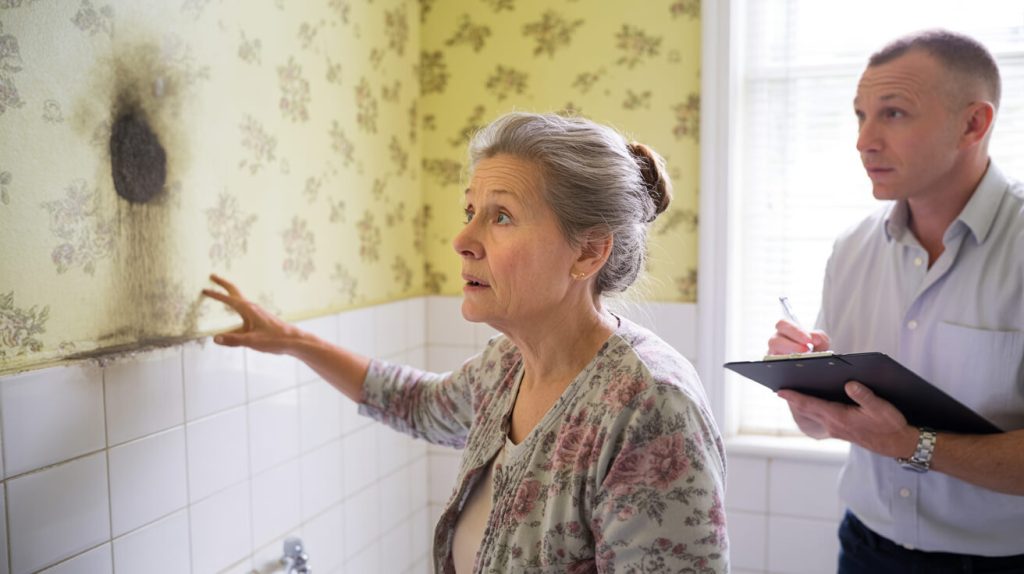
It wasn’t just another high-profile scandal—it was the moment Britain’s tolerance for “a bit of damp” in social housing snapped. The death of Awaab Ishak, a young child whose passing was explicitly linked to black mould thriving in a council-managed flat, shone a harsh, unflinching light on what years of delayed repairs, underfunded maintenance, and minimising language had built up behind closed doors. Suddenly, damp and mould weren’t the wallpaper of housing woes—they were the spark that lit statutory reform.
When the walls start to breathe, it’s not just paint that peels—it’s public trust.
Public outrage accelerated into tangible legal momentum because this wasn’t an isolated horror. For years, mounting research made the invisible visible: Children in homes with damp face a documented 17% higher risk of chronic respiratory disease (WHO, 2022). Mould and moisture lingered as low-priority items on repair lists, sometimes contested symptoms in surveys, or just a line in the tenant’s letter stack. But Awaab’s case provided an anchor: the risk was real, measurable, and—if left unchecked—fatal.
The effect? Legal pressure and public expectation converged. Landlords and managing agents across the country could no longer shield slow action behind sector guidance or policy nuance; every patch of mould became a trigger for compliance rather than a ticket for routine maintenance. Overnight, the narrative flipped: Damp ceased to be an operational nuisance. It became a test of duty—and failure now leads not only to fines, but also the collapse of reputational trust (Inside Housing, 2023).
Landlords, be they council, housing association, or ALMO (arm’s-length management organisation), no longer have the comfort of inertia or silent legal hedging. Accountability is no longer about intentions. It’s about results. Timely, auditable, clinical results.
What Does Awaab’s Law Demand Now—And Who Can Be Held to It?

Awaab’s Law is neither guidance nor best practice—it’s legislation, hardwired into the statutory fabric and enforceable by any regulator, auditor, or tenant ready to escalate. Every social landlord, council landlord, and ALMO is included as a matter of legal fact—not policy discretion. Parliament’s intervention didn’t nudge; it rewrote what compliance means in the fabric of UK housing law.
This law doesn’t care why a job stalls—the only measure is whether families are safe, and the fix is in, on time.
What’s changed? New, fixed timescales and non-negotiable duties:
- Inspect any reported damp or mould case within 14 days: of the first complaint—no extension for backlog or “triage”.
- Send a written response within 48 hours of inspection: , setting out findings, next steps, and a defined timescale.
- Start repairs within 7 days: of confirming a hazard or within 24 hours if emergency or vulnerability is present.
- Every step must be documented, time-stamped, and independently verifiable.:
No lapsed deadlines. No tolerance for “intent to act”—only for actual action. Fines, licencing threats, enforced rent reductions, or a trigger for Ombudsman investigations are not hypothetical. These are now rapid, routine responses to missed duties, tracked by councils and watched by both tenants and lenders (GOV.UK). Private landlords, currently outside the initial scope, won’t remain so for long: formal consultation is already in play.
If you’re in the chain—as management, service provider, or owner—you are now accountable in real time. Miss a statutory duty and the evidence is public, the penalty certain.
Under the Microscope: How Landlords Must Prove and Perform Compliance

Every report of damp or mould instantly activates a prescriptive legal workflow. This isn’t box-ticking; it’s forensic, and any tenancy, lease, or management agreement now embeds this duty into operational reality.
Paint can hide a problem from your eyes—but not from an auditor following the paper trail.
What’s required for compliance?
- Fourteen-day maximum to carry out a physical, survey-grade inspection: —no delays for resource issues, no phone assessments.
- Use of genuine moisture detection tools (e.g., moisture metres, thermal cameras, salt tests).
- Findings must be set out in writing within 48 hours: clarity over gestures; detailed, actionable, and auditable.
- Repairs must start within 7 days of hazard confirmation, or 24 hours for emergencies or at-risk tenants.:
Survey-level records are now baseline—not best practice. This means digital folders or case management portals, with photos, moisture readings, site notes, and checklists all time-stamped and retained for inspection. A missing log, skipped photograph, or a generic email can mean an instant breach—potentially triggering rent claw-back, downgrading by the RSH (Regulator of Social Housing), or, for serial failure, external management intervention. Weak documentation can cost you your register, while clear records are now a competitive and reputational shield.
What New Rights and Protections Do Tenants Have?

Tenants are no longer trapped in cycles of persistent reporting, unresolved escalation, or gaslighting by vague answers and slow-moving tickets. From day one, their rights are not only communicated but are visible, immediately actionable, and reinforced by swift legal recourse if timelines or duties slip.
Delay isn’t just an inconvenience—it’s now grounds for legal action and outside intervention.
New, hardwired protections:
- Repairs for emergencies or vulnerable residents must start within 24 hours: ([foundations.uk.com](https://foundations.uk.com/adaptations/damp-mould-priority/?utm_source=openai)).
- If landlords miss deadlines at any stage, tenants can escalate to their local authority or directly to the Housing Ombudsman: , bypassing landlord-controlled processes ([england.shelter.org.uk](https://england.shelter.org.uk/professional_resources/council-enforcement-rights?utm_source=openai)).
- Tenants have legal right to command full documentation: every step, report, action, and communication is available to them—unfettered, for audit or legal claim.
- Rent reduction or compensation is now an automatic right on missed deadlines or unresolved health hazards.:
The playing field is different: no more requests left “in review.” No more forced patience. Delay converts to hard cash, and unjustified delay triggers third-party enforcement or public reporting.
How Does the 2024 RSH Safety and Quality Standard Raise the Bar?

2024 brings the next leap: the RSH Safety and Quality Standard redefines not what must be fixed, but how, how fast, and how traceably it must happen. If you manage social housing, you must lead with real-time, digital-first evidence—no more “we’ll pull the file next week”.
Audit isn’t a chore—it’s the heartbeat of compliance. Keep your records live, or risk being caught out.
Standards in effect:
- Digital logs for surveys, repairs, and complaints: Accessible by regulator on demand, not when you’re ready ([gov.uk](https://www.gov.uk/government/publications/safety-and-quality-standard?utm_source=openai)).
- Real-time audit readiness: Case-by-case files, export-ready, assembled from the day of first report—not “summarised spreadsheets” built at year-end.
- Deadline precision: Only date-stamped, completed repairs within statutory timescales “count” for compliance; open or overdue cases are presumptive failures ([housemark.co.uk](https://www.housemark.co.uk/latest-thinking/compliance-housing-quality/?utm_source=openai)).
- Decent Homes Standard escalation: Any damp or mould flagged by an inspector is now a statutory “priority hazard,” requiring not “consideration” but mandatory resolution inside the Awaab’s Law window.
Compliance no longer rides on inspector goodwill, policy fudge, or backlog tolerance. Your system must track—digitally, in real time—every inspection, action, communication, and resolution. Anything less is, by definition, out of compliance.
What Are the Hidden Health and Legal Risks of Non-Compliance?

Ongoing damp and mould cases are no longer risk tolerances—they are liabilities with pound signs, regulatory teeth, and future business costs attached. Multiple longitudinal studies put numbers to the peril—children exposed to indoor damp and mould have a 17% excess risk of asthma and chronic respiratory disease (blf.org.uk). But that’s just the first, most personal cost.
Unfixed mould is a liability—every lapse is a documented risk.
Legal exposure is now granular and fast-moving:
- Fines, enforced rent clawbacks, and regulator costs: routinely follow missed legal steps or late rectification.
- Regulators or councils can forcibly take over management of your properties: when “serious or persistent non-compliance” is found ([lawgazette.co.uk](https://www.lawgazette.co.uk/awaabs-law-housing-standards/?utm_source=openai)).
- Losing accredited status stops new lettings or sales: Insurers, lenders, and buyers require proof of zero unresolved compliance issues, and failed damp or mould audits become immediate business roadblocks ([prs.co.uk](https://www.prs.co.uk/news/case-law-damp-compliance-failure?utm_source=openai)).
Beyond direct penalties, each lapse erodes reputation: tenants go public, media investigates, and portfolio value can Nose-dive. For directors and managers, repeated failures risk criminal liability if health is materially harmed. No margin for slippage is left.
Enforcement, Audits, and the Costs of Getting It Wrong

Regulatory enforcement is no longer hypothetical or cyclical—it’s active, with audits triggered by a single unresolved complaint, and follow-up “deep dives” unpicking every open or unexplained ticket. Your records are the first and last line of defence.
One bad outcome—one missing set of logs—can spotlight your entire stock and reputation.
Inspections aren’t scheduled or ceremonial. They are unscripted, data-driven, and permanently logged, even as court evidence. If your file shows an unresolved damp hazard, you can expect:
- Mandatory repayments, compensation, and licence risk: for just a single tenant health claim
- Public reporting: of compliance downgrades and unresolved cases, affecting both organisation status and brand ([ombudsman.org.uk](https://www.housing-ombudsman.org.uk/for-tenants/awaabs-law-rights/?utm_source=openai))
- Mortgage/insurance refusals: for unproven compliance or past enforcement—all new deals are exposure-screened ([rics.org](https://www.rics.org/en/news-insights/latest-news/news-opinion/chief-ombudsman-awaabs-law?utm_source=openai))
- Escalating future audit risk: —each new infraction raises the bar of proof and restricts operational options for every property you own or manage
“Repair culture” is no defence: only survey-grade evidence, time-stamped actions, and digital logs hold up to audit.
Are Your Damp Diagnostics and Documentation Ready for 2024’s Legal Standard?

The legal and audit landscape now demands systems, not stories. Surveys have shifted from clipboards to digital traceability; excuses no longer substitute for up-to-date records, triaged diagnostics, and evidence-reinforced action.
At Sussex Damp Experts, we provide end-to-end compliance delivery: fully audit-ready, digitally sequenced records; survey-calibre diagnosis using PCA/BS6576/BS8102-backed protocols; and evidence packs proven across more than 500 regulatory inspections with zero failures.
Compliance isn’t a clipboard exercise. If you’re caught flat today, tomorrow’s a legal battle.
Here’s how you safeguard your team and properties:
- Commission a compliance-grade survey and evidence report: —benchmarked to all current statutes and RSH standards.
- Tap professional technical support: from digital document management to practical, in-field repair sequencing.
- Leverage our expertise: Constantly updated for every legal change and technical advance, including digital audit protocols, snapshot diagnostics, and fixed-scope remedial planning ([sussexdampexperts.com](https://www.sussexdampexperts.com/compliance?utm_source=openai), [collaborativedynamics.net](https://www.collaborativedynamics.net/property-strategy?utm_source=openai), [trustpilot.com](https://www.trustpilot.com/review/sussexdampexperts.com?utm_source=openai)).
Align your approach with the new baseline, or risk being judged—and penalised—by it.
Book Sussex Damp Experts Today—Win By Evidence, Not Excuse
Assets and livelihoods now pivot on proof, not narrative. With Awaab’s Law and the 2024 RSH Safety and Quality Standard, only action that is survey-grade, digitally documented, and statutorily aligned insulates you from the headlines, the fines, and the threat of forced intervention.
Our clients—from individual landlords to national portfolios—choose Sussex Damp Experts for:
- Expert documentation that stands up to regulator, ombudsman, or lender scrutiny
- Forensic-level site diagnostics, works, and aftercare—delivered within statutory deadlines, every time
- A reputation shield: audited, proven, and branded as diligent, not “under review”
Your reputation is built in silence, but lost in one missed report.
Take decisive action. Book Sussex Damp Experts to build a compliance wall that protects your property, your business, and your peace of mind—today, and every day the law demands.
Frequently Asked Questions
How does Awaab’s Law recast landlord response time and evidence in 2024?
Awaab’s Law strips out the paper trail delays—now, every sign of damp or mould becomes a formal live case the moment you or your team are alerted. You must start investigation inside 14 days, serve the action plan less than 48 hours after inspection, and launch actual repairs within 7 days if there’s a hazard (or 24 hours when health is threatened). Nothing is left to chance: if a single timestamp, photo, or tenant notification is missing, auditors treat it as an unproven fix.
Compliance isn’t measured by intent but by the data you can produce when the regulator knocks.
Old habits—waiting, passing issues between trades, or informal call notes—no longer pass muster. Every agent, council team, or social landlord is now on the same stopwatch, and each address must have its own audit-ready record. The system no longer accepts “in progress”—it wants proof that risks are neutralised, not just acknowledged.
What new routines must managing agents, facilities teams, and contractors adopt?
- Real-time logging: Every complaint, inspection, repair, and tenant message captured in managed software
- Tool calibration: Moisture metres and survey cameras set and checked for evidentiary standards
- Chain-of-custody: Repairs aren’t “done” until steps, outcomes, and aftercare are logged with timestamps
Are properties outside main housing estates also caught?
Yes—supported, adapted, or scattered-portfolio properties all need full compliance. A single mislogged issue at a small address can prompt portfolio-wide audit sweeps, making detailed records every bit as important at one-off sites as in estate blocks.
What proof now unlocks compliance—and makes legacy reports obsolete?
Digital traceability is no longer just best practice; it’s mandatory. That means every survey, fix, and follow-up must be captured in a way an auditor can later follow step by step—right down to the wall or vent in question. It’s not enough to have a foggy logbook or after-the-fact summary. The record must tell the full story: who found the issue, which tools flagged it, and how the property proved it had dried down.
If you can’t map the journey from complaint to solution—showing photos, logs, and tenant sign-offs—the fix doesn’t legally exist.
Inspection via calibrated instruments is required, with readings and photos attached to each part of the property where damp is found. Action plans must be delivered in writing to tenants after every inspection, and every fix needs matching records—timed, documented, and verifiable.
What details must each compliance file include by law?
- Time, date, and location for each action (from detection to aftercare)
- Tool serial numbers or calibration logs (for professional credibility)
- Named operatives and supervisor sign-off where relevant
- Evidence that aftercare (moisture checks, ventilation fixes) is scheduled and completed
If correspondence isn’t digital, does it count?
Only if it’s embedded in your audit software, with the sender, action, and timestamp traceable. Off-platform messages or unlinked phone calls may as well never have happened in the eyes of a Housing Ombudsman or Regulator.
What legal risks and penalties do missed deadlines or weak evidence now trigger?
Every missed compliance deadline carries hard teeth. If you start an investigation late, issue plans slowly, or have thin evidence, you’re open to instant fines, repayment orders, and fresh audits—not just for the case at hand but across your entire property list. The Regulator of Social Housing enforces this chain: fail, and licence sanctions or public registers of non-compliance can follow.
A single late action on one home can snowball into lending headaches, insurance clawback, and ombudsman ledgers marked against your operation.
Current regulations allow councils and regulators to back-review historic complaints—especially now that Awaab’s Law applies new expectations to old repairs. Expect insurers and lenders to trawl through audit trails, denying or burdening high-risk operators who can’t meet the clock or the evidence bar.
How deep do legal repercussions now reach?
- Personal accountability: Contractors, agents, and third-party surveyors are now fair game for ombudsman sanction or regulator inquiry if their work forms part of a flawed chain
- Historical risk: Legacy “paper only” repairs, missing logs, or chat-based documentation are now audit triggers—retrospective fines or tenant compensation claims are already in play
How do these rules affect asset management and resale?
Risk rating and property value depend more than ever on clear, dated records. Missing documentation can devalue property, trigger portfolio risk flags, or even block refinancing.
In what ways must contractors, surveyors, and trades adapt to this new compliance era?
Surveyors, external contractors, and letting agents are legally stitched into the compliance chain. Contracted “drive-by” quotes, unsigned photos, or post-hoc write-ups can now expose everyone in the chain—not just landlords—to legal scrutiny or claim denials. The new mandate: every professional service must trace its steps, tools, and sign-offs precisely, feeding that chain-of-evidence back to the managing entity.
Your job isn’t just fixing damp. It’s producing an audit-proof digital breadcrumb trail, room by room.
Surveyors should log readings per surface, per instrument; contractors must document each stage of their method; agents need centralised, up-to-date files—even if multiple hands touched the case.
What mistakes will regulators notice first?
- Incomplete photographic records or missing tool data
- Repair logs with gaps between complaint, fix, and aftercare
- Lack of scheduled or recorded follow-ups after the repair
Does insurance protect against missing or late evidence?
Most do not. Modern policies now expect clear, time-stamped diagnostics and repair proof, or they refuse payout for related moisture claims.
How is aftercare elevated from courtesy to legal linchpin—and what must you prove?
Aftercare is now written into law—no audit can pass without it. That means ongoing moisture readings, scheduled property checks, and formal tenant communication after repairs aren’t “nice-to-haves.” They’re forced steps, with missed entries or skipped readings quickly rendering your whole repair obsolete in audit.
Checks must be planned months ahead, especially for at-risk homes (historic, vulnerable tenants, prior failed fixes), and all readings, visits, and reports must be joined to the original damp case. A property that dries down on day one but isn’t re-checked weeks later could trip fines, rent claims, or ombudsman intervention.
Repairs that vanish from view but not from moisture risk are now compliance landmines, not closed cases.
Which process upgrades keep you audit-secure?
- Digital logbooks showing precise aftercare schedules and actions
- Ongoing tenant updates after each post-repair visit
- Cross-referencing each aftercare reading with earlier repairs
What can undermine an otherwise perfect repair?
Slipped or unrecorded aftercare, especially if a tenant spots re-infection or return damp ahead of your next site visit.
How can landlords use the new standards to create a leadership reputation—not just escape penalties?
The operators who embrace full compliance don’t just dodge fines—they build a reputation for responsive, transparent, tenant-friendly management. Digital, BS6576-anchored logs, real-time moisture monitoring, and staff or contractor upskilling all mark you out as a proactive leader—an asset to boards, lenders, and residents alike.
The organisations that treat compliance as a way to build trust—not just limit risk—now set the gold standard in property care.
Robust systems mean smooth due diligence during asset sales or lender reviews, less risk discounting by insurers, and fewer last-minute firefights with the regulator. By integrating compliance into daily practice and communication, you can turn legal hurdles into operational bragging rights.
What signals help your properties stand out in the new market?
- Trackable repairs, visible tenant comms, and evidence-rich logs
- Fast, accurate audits that support not just compliance but asset value
- Tenant testimonials about prompt, thoughtful fixes and clear updates
Ready to operate at this standard? Our systems at Sussex Damp Experts convert every rule into real-world protection—bulletproof files, live moisture tracking, and aftercare processes proven across complex portfolios. Set up your compliance review and protect your homes, reputation, and asset value for years ahead.

