
 By
By  August 26, 2025


Are Landlords on the Hook for Damp and Mould Under the Fire Safety Order 2005—Or Is It Just Tenants’ Problem?
Landlords in England and Wales are responsible for more than just signing tenancy agreements and collecting rent. The law, through the Regulatory Reform (Fire Safety) Order 2005 (FSO), places you, as the landlord or responsible person, squarely in charge of protecting everyone in your building from fire hazards. That might sound clear—but what about creeping, persistent damp and mould? Are they actually fire risks, or can you ignore them under the FSO?
One overlooked risk—like latent moisture—can turn comfortable compliance into a legal and financial crisis you never saw coming.
Here’s the straight answer: Even though the FSO doesn’t spell out “damp” and “mould” in so many words, it demands that your fire risk assessment (FRA) covers all conditions that could endanger occupants—not just open flames or tangled extension leads. “Suitable and sufficient” isn’t box-ticking; it means your assessment must be thorough enough to survive a challenge from insurers, local authorities, or—worst of all—a coroner.
The Housing Act 2004 and Housing Health and Safety Rating System (HHSRS) go a step further, declaring damp and mould as “Category 1 hazards.” When a hazard in one regulatory bucket (like moisture) can undermine safety features demanded by another (like fire doors, alarms, or barriers), you are expected to connect the dots. Council enforcement teams and case law both lean hard on this overlap (GOV.UK: Damp and Mould: A Guide for Tenants and Landlords).
So, when a local authority surveyor flags persistent damp in your property, don’t be surprised if the next question relates to fire safety—because moisture often drives failures behind the scenes.
Why Damp and Mould Become Hidden Catalysts for Fire Risk in Any Landlord’s Assessment

Most landlords picture a fire risk assessment as a hunt for frayed wires, faulty appliances, or blocked exits. That’s a start, but the field is wider. Damp and mould, far from being cosmetic “nuisances,” often act as accelerants for system failures that can magnify fire risk or sabotage escape plans.
It’s not the danger you see—it’s the rot behind the wall that will leave you exposed.
Moisture works quietly. It creeps into walls, floors, insulation, and service gaps—softening timber, corroding metal fixings, and breaking down the fire-stopping qualities of construction materials. Plaster begins to powder and drop, while salts surfacing from capillary action distort the very surfaces you rely on to hold back flames or give safe passage out.
But that’s only half the story. Cables and detection systems, especially older ones buried inside damp-prone compartments or running above musty basements, become unpredictable at best and lethal at worst. As insulation breaks down or conductors rust, alarms can fail silently just when you need them (ElectricalSafetyFirst.org.uk). Wet insulation, believed to provide fire separation, may become a conductor for both heat and electricity.
Landlords can fall into the trap of “visual only” assessments—maybe peering under a sink or behind a door, but not digging into persistent, hidden areas of risk. That’s exactly where the overlap between moisture and fire grows most dangerous: what you can’t see is what will unravel your legal protection if disaster ever strikes.
How Exactly Does Damp Undermine the Fire Protection That Keeps Occupants Safe?
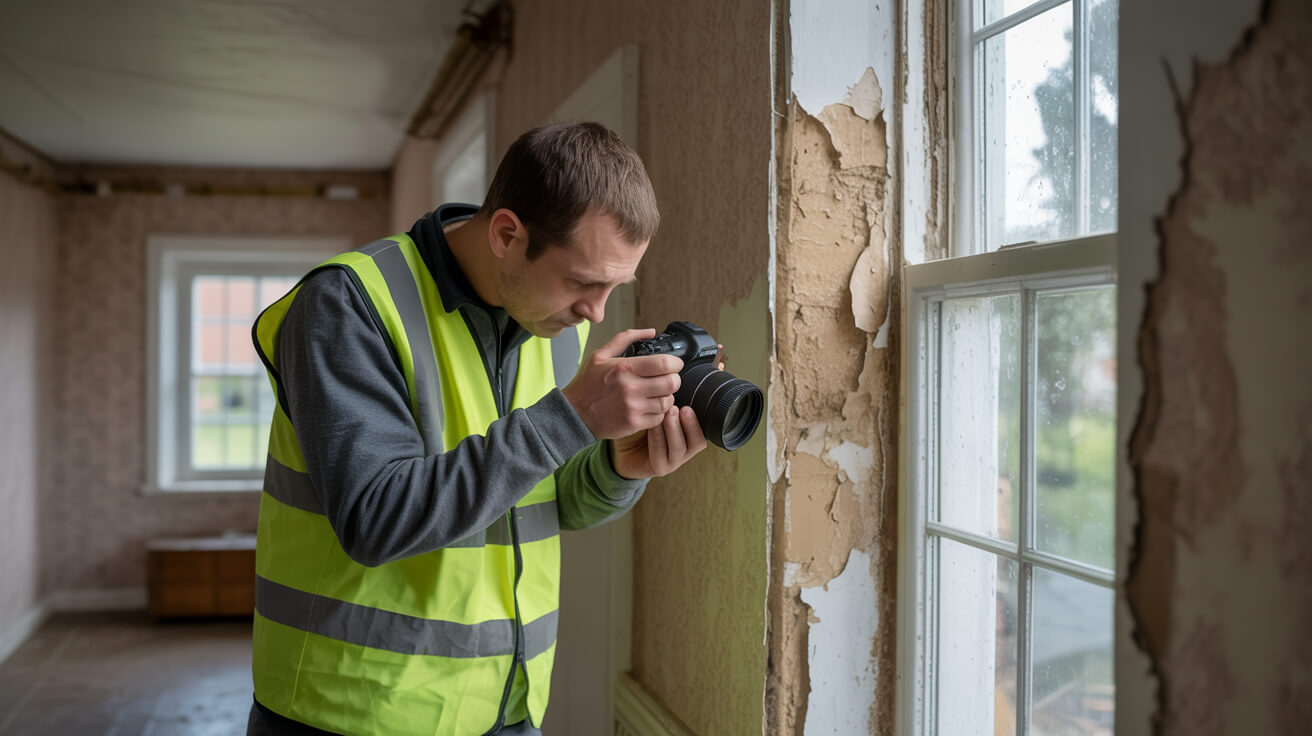
Let’s get specific. When landlords deal with multi-flat buildings, HMOs, or anything larger than a single let, the walls, doors, floors, and service shafts are meant to be fire-resistant compartments. These stops—doors, plasterboard, insulation, mastic seals—are only as reliable as their weakest, wettest point.
The fire door that looks solid today could yield in half its rated time once mildew and internal rot set in.
Timber absorbs water; so do composite door cores. Tiny leaks, poor ventilation, or unnoticed condensation all combine forces to eat away at fire checks and frames. Forget aesthetics—mould and rot actually destroy the chemistry within firestopping compounds and degrade the binding agents in doors. The door’s label may promise 30 or even 60 minutes, but hidden moisture can halve that before any sound or visible warning.
Plasterboard lining and intumescent strips—materials so vital to holding fire at bay—rapidly break down when soaked or even exposed to periodic dampness. Structural fixings weaken. Even the elegant paint barriers you once paid handsomely for begin to peel, letting more water in week after week.
And don’t overlook electrics. The protected alarm cables or power circuits threaded through these “compromised” zones lose their insulation, sometimes going undetected for months. It’s not theory—multiple fire investigation reports from UK local authorities and the National Fire Chiefs Council point to moisture as a silent saboteur (Kent Fire and Rescue: Faulty Electrics and Fire).
If your fire risk assessment signs off a building without combining a moisture survey, you might never know that your supposedly robust system is held together with little more than paint and hope.
What’s the Real Financial and Legal Pain Landlords Face if Damp Fire Risks Are Missed?
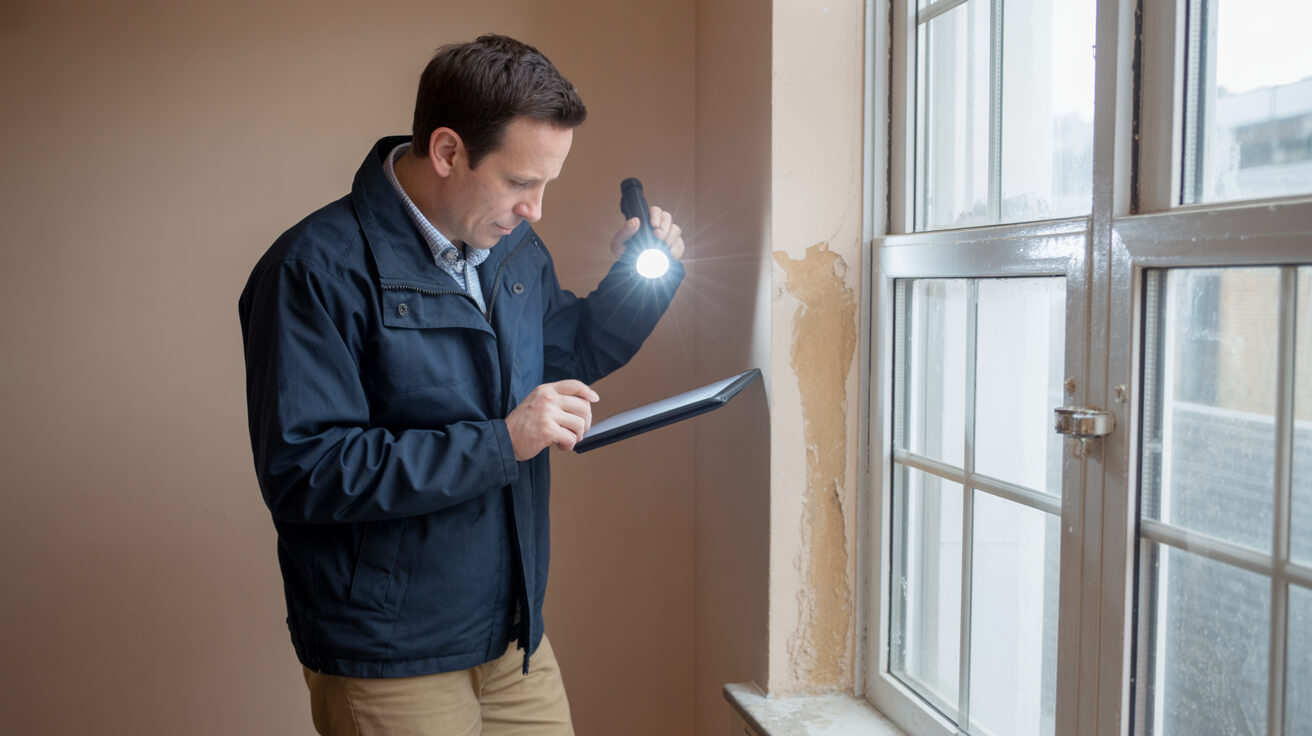
Ignoring damp in your fire risk workflow doesn’t just risk a council slap on the wrist. Modern enforcement leans on both health and fire standards—so a single patch of neglected damp can set off a domino collapse of protections, fines, and insurance denials.
Each missed spot of damp can be the loose brick that undermines your mortgage, your cover, and your standing as a responsible landlord.
Local environmental health teams now enforce the HHSRS sternly; any “Category 1” notice (i.e., dangerous damp/mould) can lead directly to improvement orders, compulsory repairs, or in many boroughs, fines from £5,000 to £30,000 per infringement (NRLA: HHSRS Fines). These aren’t idle threats—councils report a 300% rise in enforcement actions related to damp and mould over the last five years.
It gets costlier still. Most insurers and mortgage lenders now write explicit exclusions into policies: if a known but unremediated moisture issue is later found to have contributed to a fire, the claim will often be denied. You could lose not just repair costs, but compensation for lost rent or asset value as well (Confused.com: Damp Home Insurance).
Recent years have seen court actions—often brought by tenants, sometimes by local authorities or neighbours—ending in loss of a landlord’s HMO licence or in forced sales at below-market prices. In every scenario, the common thread is a missing or inadequate audit trail showing the landlord both understood and managed the way damp touches fire safety.
How Should Landlords Integrate Damp and Mould Surveillance Into Their Fire Risk Process?

Tick-boxes won’t cut it. To truly defend against both regulatory and financial backlash, your fire risk assessment must cross-reference and fully integrate all available data on damp and mould.
Here’s how to plug the gaps:
- Deploy moisture metres at all vulnerable internals—bottom of walls, behind plumbing, basements, and next to fire barriers.
- Capture digital photos of every flagged area, logging date, location, and any visible damage.
- Add thermal imaging on suspect surfaces, especially where condensation or cold bridging is likely to allow hidden moisture in.
- Anchor every damp or defect reading to a clear property map or blueprint for traceability.
A strong paper trail for both fire and moisture threats is your best audit shield—more credible than any single repair receipt.
If your FRA includes only superficial notes—“no visible damp”—you’re leaving your compliance to luck. Instead, store every reading and image in a digital vault. If there’s a claim, dispute, or council visit, the completeness of your survey history will set you apart from landlords still relying on guesswork.
For older buildings or recent conversions, ramp up your vigilance: revisit each space quarterly or at every change of tenant. If you lease to vulnerable tenants, or run a HMO, double down on frequency—these settings attract close regulatory review.
Who Should Handle Damp and Fire Remediation—And How Do You Build Bulletproof Compliance Records?
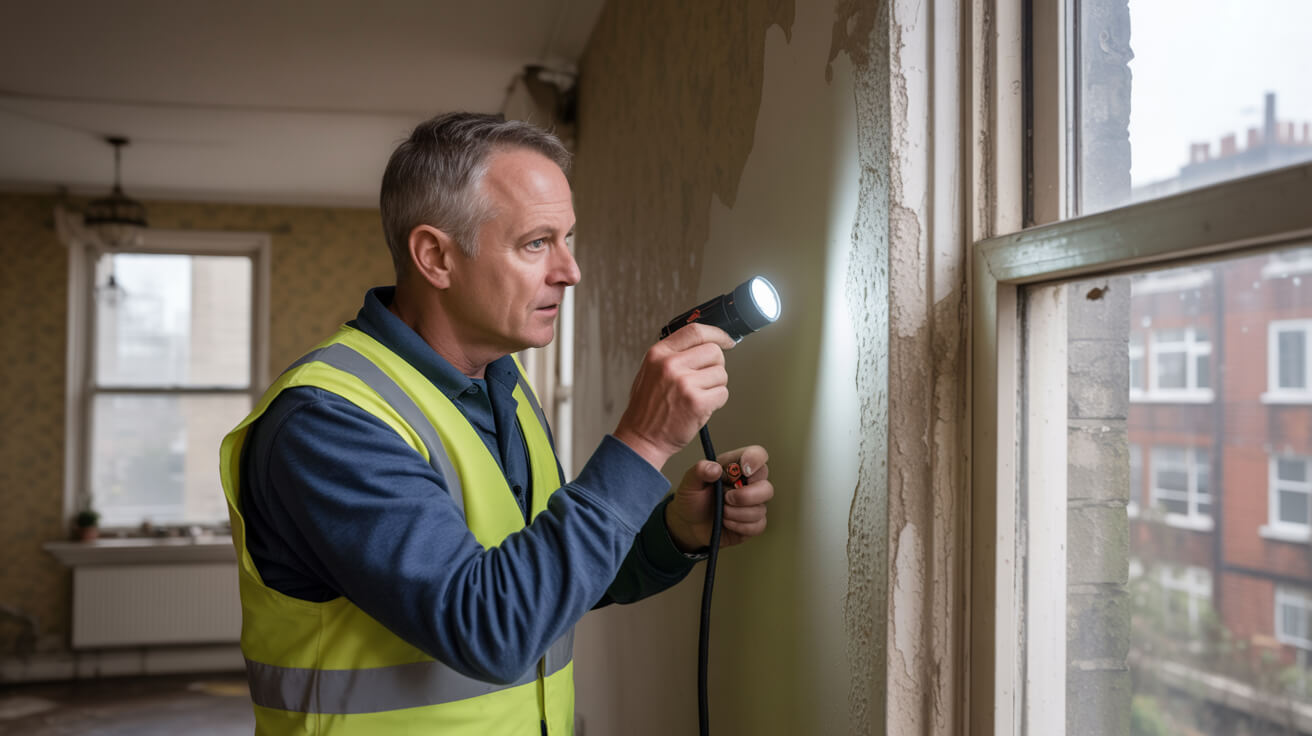
Do not cut corners by letting a generalist “builder” handle persistent damp—fire risk connections must be treated as compliance priorities, not afterthoughts. Only accredited specialists—ideally with TrustMark, PCA, or relevant RICS recognition—can give you the kind of survey and repair record that stands up to scrutiny.
A gold-standard remediation file will show:
- A surveyor’s credentials, accompanied by a clearly worded diagnosis and photographic proof.
- A breakdown of every stage of remediation—what was fixed, how, and with reference to BS 6576 (rising damp) or BS 8102 (below-ground works).
- Meticulous before-and-after photography to create proof of change.
- Official, insurance-backed guarantees for works completed—registered and shareable, not just filed away.
True compliance isn’t just ticking a box—it’s an auditable chain that can be verified by lenders, councils, or dispute mediators at any moment.
Keep digital and printed copies, sharing summaries with property managers, letting agents, or residents’ associations as needed. If you ever argue a point, a complete, standards-aligned audit trail is your strongest defence.
How Can Landlords Build Long-Term, Resilient Defences Against Moisture and Fire Risk?

Owning or managing residential property is a marathon, not a sprint. Damp and fire hazards don’t stand still—they evolve with tenant changes, evolving local climate conditions, and the slow march of property age. To future-proof your compliance and avoid the ever-growing spectre of fines or litigation, think in terms of systems, not just fixes.
Make these habits routine:
- Schedule annual or semi-annual full-spectrum surveys—integrating fire and damp checks side by side, with every result stored in one system.
- When tenants report problems, timestamp the log and document your inspection or next steps within hours, not days.
- Fold every major finding into both your fire log and asset maintenance records—never keep fire and moisture files separate.
- Keep your insurer and mortgage provider looped in on all material findings and fixes—proactive reporting earns trust and preserves cover.
A seamless, digital audit trail is your strongest lever in any future standoff with regulators—or to command the best commercial terms from lenders.
Want a shortcut? Involve tenants by offering them simple digital forms to flag damp or unsafe conditions. When regulators, buyers, or lenders see a landlord actively managing risk, your reputation and property value rise in tandem.
Why Sussex Damp Experts Are the Only Local Survey and Remediation Team Who Add Value to Your Fire Safety Compliance

There’s no shortage of one-size-fits-all surveyors or handymen offering to “sort out” damp. But for legal, financial, and operational compliance that covers both sides of the risk coin—fire and moisture—you need specialists who think systemically.
Sussex Damp Experts bring:
- Current, continuous accreditation (BS 6576/BS 8102/TrustMark/PCA)—no expired or “grandfathered” credentials.
- Smart reporting—unified digital (and hard copy) files, with photos, digital moisture logs, and clear, timestamped surveys.
- A history of flawless compliance in East Sussex—references from landlords, buyers, and lenders show our records survive scrutiny time after time.
- Deep partnerships with local agents, solicitors, and councils, ensuring any damp risk flagged in one part of your risk network is resolved before it becomes a legal bombshell for fire or fit-for-habitation.
Local knowledge counts for little without airtight compliance skills—Sussex Damp Experts combine both, turning audit anxiety into asset security.
When pressure comes—lender, insurer, tenant, or HSE officer—our lined-up, standards-mapped reports slice through delays and uncertainty. That’s why East Sussex’s leading landlords, HMO operators, and managing agents make us their first call.
Ready to Elevate Your Fire and Damp Risk Management? Sussex Damp Experts Deliver Certified, Litigation-Proof Results
For every property owner who values long-term safety, smooth tenancies, and regulatory security, Sussex Damp Experts provide more than technical fixes. We deliver holistic protection—regulation-anchored diagnoses, digital record-keeping, and insurance-backed guarantees that survive every inspection, dispute, or market shift.
Here’s what your portfolio gains:
- Comprehensive, evidence-rich surveys—moisture and fire risk, checked and merged in one process.
- Repairs and upgrades to BS 6576 or BS 8102 standards—not generic “builder” work.
- Digital surveillance and record-keeping for peace of mind with lenders, insurers, and tenants alike.
- Guarantees trusted by local authorities and respected by the most demanding mortgage lenders.
- Personalised, practical guidance at every stage—inspect, fix, monitor, and future-proof.
Damp and mould, left unchecked, don’t just eat walls—they inflame legal, insurance, and reputational risk. Take action that pays dividends: call Sussex Damp Experts for proof-driven, regulation-tight peace of mind.
Don’t risk being tomorrow’s case study in failed compliance. Stay two steps ahead—one action today with Sussex Damp Experts means years of robust protection and asset confidence.
Frequently Asked Questions
How does damp or mould become a fire safety liability in UK rental properties—even if the law doesn’t mention it by name?
Moisture and mould are now treated as stealth hazards for fire safety because they weaken exactly the features that stop fire and smoke from spreading—compartment walls, fire doors, timber frames, and even alarm wiring. Regulatory language may not spell out “damp” in the letter of the Fire Safety Order 2005, but enforcement bodies and insurers now expect landlords to show clear evidence that these risks have been considered and handled. A corroded hinge or swollen fire door won’t slow a blaze; a patch of undiagnosed mould can signal hidden timber rot, which silently erases minutes from your fire resistance. Every missed damp finding becomes a liability—especially when compliance officers, carrying digital metres and infrared cameras, flag up weak spots during inspection.
Where does damp undermine fire barriers most rapidly?
- Fire doors delaminating or warping at the base from overlooked internal moisture
- Escape route walls peppered with efflorescence—salt stains tell of rising damp and hollow plaster
- Alarm panels, switches, or sockets showing dark tide-marks or brown spotting
- Voids behind skirting and architraves where unseen rot has set in
If your property shows more than one of these signatures, you’re at risk of regulatory pushback and insurance resistance—the very gaps that burn through paperwork first.
Fire never asks for permission—it finds weak timber and runs with it. Damp is the silent invitation.
Why do insurers and councils now class damp as a key fire risk, not just an aesthetic defect?
The real risk isn’t a single patch of visible mould; it’s the gradual, silent breakdown in fire separation and detection that goes unmonitored. Past cases “lost at paperwork” have made insurers insistent: most modern fire claims are scrutinised for evidence of missed or ignored moisture. Landlords unable to show active damp management often find their coverage restricted or claims denied on the basis of aggravated risk. Council officers, following HHSRS and Housing Act guidelines, now fine properties for “Category 1 hazards” tied directly to persistent structural damp—sometimes years after the first signs emerged.
What failures trigger insurance and compliance fallout?
- Alarms with corroded contacts due to unnoticed humidity in backboxes, causing non-activation when needed
- Fire doors or stops that fail drop tests due to inner rot or delamination
- Damp or decay erasing the 30- or 60-minute fire resistance compartment walls need to keep escape routes safe
- Routine lack of photographic and timestamped evidence—making each inspection suspect in retrospect
A missed diagnosis or incomplete record can snowball: one unresolved leak or patch of soft plaster is all it takes for a legitimate claim to be challenged in court or cut from a settlement.
When insurers reject fire claims, it’s rarely about the flames—it’s about the paper, the rot, or the record not matching reality.
What routine damp checks and documentation do risk assessors now expect for fire compliance?
Simple box-ticking has gone the way of the paper check-list. Inspectors want a digital trail showing exactly where, when, and how each finding was recorded and repaired. This means using calibrated moisture metres, logging readings with asset tags or floorplans, imaging every visual and hidden anomaly, and recording remedial actions—anyone auditing your file should be able to “see” the property’s condition remotely.
What’s the minimum expected for a fire-compliant damp/moisture record?
- A digital or cloud-based moisture survey for each risk zone: basements, stairwells, bathroom reveals, service risers
- Timestamped photographs and readings mapped to location and asset (door, wall, void), showing all readings above threshold
- Repair and maintenance log attached to every intervention, with date and warranty
- Routine review triggers—reminders, not excuses—so that known risks are followed up proactively
- Unified fire and moisture records, retrievable on demand by surveyors, agents, or tenants
Sussex Damp Experts streamline this entire chain with live-update compliance packs and ready-to-file digital reports—no missed step, no weak link.
Who qualifies as “competent” to sign off on damp and fire findings for legal protection?
Competency isn’t just about holding a surveyor badge—it means understanding and evidencing both the science of damp and the intricacies of fire compartmentation. In straightforward lets or single homes, a diligent landlord can meet expectations if they use the right tools and templates. But as risk rises (HMOs, listed buildings, multi-unit portfolios), expect to need PCA-accredited professionals, TrustMark-registered teams, or RICS surveyors with cross-training in fire and moisture diagnostics. The gold standard is a dual-discipline specialist whose records stand up to council, lender, and insurer alike.
Qualities that set a recognised assessor apart:
- Confident use of digital metres, thermal cameras, and visual mapping to document every risk area
- Familiarity with both BS 6576 (damp treatment) and BS 8102 (waterproofing) standards, plus fire audit processes
- Photographic, digital, and warranty-backed audit trails for each issue found and remedied
- Local adaptation—in Sussex, this means anticipating stricter council or housing association protocols
For properties that cross into legal “grey zones” or high governance (block management, heritage, social housing), pre-qualify your assessor. Sussex Damp Experts’ surveys are constructed precisely for document survival—stand-alone evidence when an insurance investigator, council officer, or legal team asks hard questions.
What are the practical outcomes when damp is missed or under-addressed in a fire risk setting?
The damages run in three directions—legal, financial, and operational—and each one can escalate into the next if the record is poor.
- Legal: Local authorities may serve improvement notices or force works-in-default, fines can top £30,000 each incident, and serial non-compliance risks criminal prosecution.
- Financial: Unplanned emergency works and deep repairs, lost income during enforcement, higher premiums, blocked claims, and mortgage or refinancing delays
- Operational: Failures logged in national compliance databases, impacting future asset sales or letting, and triggering repeat scrutiny.
Council and insurance data are now joined-up: a Category 1 HHSRS breach from missed damp can flag your property in multiple legal and financial risk registers.
What does a joined-up evidence trail prevent?
- Fire risk assessment and damp records tracked together, closing gaps that adjusters or audit teams exploit
- Defensible inspection logs: location-specific, timestamped, and image-backed
- Readily available compliance history seen as reassurance by lenders, agents, and buyers—not just rule-following
Neglecting these steps once meant minor aggravation; today, it can mean asset downgrade, public enforcement, and financial shock. Landlords using Sussex Damp Experts can expect integrated reporting that stands up to the sharpest review.
The strongest fire barrier is often built from your paperwork, not just your brickwork.
How do best-in-class landlords run ongoing routines to reduce both damp and fire hazard?
The most resilient management teams now treat compliance as an on-going cycle, not an annual hurdle. Monthly digital checks, prompt response to tenant or agent reports, and proactive, warranty-backed repairs create a continuous safety net. Centralising fire, damp, and maintenance records into a single digital log means every update is accessible—key for audits, insurance, or sale.
Essential habits for ongoing risk minimisation:
- Annual integrated surveys refreshing both fire and damp data in one go
- Immediate review and action upon every tenant or staff notification of issues
- Cloud-based records—every photograph, reading, repair, or warranty linked to asset and date
- Staff and agent training, so critical risks aren’t overlooked or ignored
- Warranty and guarantee packaging that outlives turnover of tenancies or management teams
Whether you manage two buy-to-lets or a block of heritage flats, the difference between coping and leading in the eyes of regulators and insurers is often routine, not reaction. Sussex Damp Experts deliver tailored compliance systems and training, honed for East Sussex demands and ready for tomorrow’s stricter standards.
Proactive landlords don’t just chase compliance—they set the pace for safety, value, and watertight audit results.

