
 By
By  September 3, 2025


How Much Does a Chemical Damp Proof Course Cost in the UK? Exposing Hidden Traps, True Value, and What Your Quote Really Buys
Water doesn’t simply show up—it infiltrates, travels, and stays hidden until it shreds décor, structure, and your property’s value. In Sussex and across the UK, installing a chemical damp proof course isn’t a casual line item on a renovation checklist. For home owners, landlords, agents, and anyone with a stake in a property, the cost question isn’t just: “How much does a DPC quote?” Instead, it’s “Does this quote mean I sleep at night, pass a survey, and not end up in a blame spiral with my buyer, tenant, or insurance?”
The team at Sussex Damp Experts will say it straight: most price tags you see online only tell half the story. The true cost reflects the ongoing value—robust diagnosis, compliance-proof paperwork, materials that actually work, and a warranty that doesn’t vanish in a wind-down notice.
Rushing for the cheapest fix exposes you to the costliest traps—especially when every mortgage survey sees through shortcuts.
You’re here to skip the uncertainty. Let’s get fiercely clear on what chemical damp proofing really costs in the UK, why “hidden” charges are standard for the unwary, and how a quote can either protect your investment or sabotage your future plans.
Is a Chemical Damp Proof Course Always the Smart Solution? When to Invest—and When Not to
Damp Treatment Cost Calculator
- 1 Property
- 2 Damp Type
- 3 Details
- 4 Estimate
Estimated Total Cost
£2,400 – £3,800
Based on 2 rooms with moderate rising damp in a semi-detached property
| Item | Estimate |
|---|
How This Compares
This is a guide estimate based on typical Sussex projects.
Get an accurate, no-obligation quote from our surveyors.
At first glance, a chemical damp proof course (DPC) sounds like a universal damp cure: inject the wall, wait for magic, and frame the builder’s invoice. But the truth lands harder—real-world buildings aren’t all ideal for chemical DPCs, and misdiagnosis is rampant.
A chemical DPC is precision work: a specialist injects a water-repellent barrier—often a siloxane or silicone-based cream—at the base of a wall to stop rising damp, the vertical migration of moisture from the ground. For this to be the solution, the cause must match. Many properties flagged for “rising damp” on surveys actually suffer from:
- Blocked or cracked gutters seeping water through brick skin
- Condensation from low airflow pooling behind wardrobes or in bay windows
- Penetrating damp via brick bonds, leaks, or bridging cavity walls
- Plumbing failures that mimic ingress
Precision diagnosis, not guesswork, separates a wasted fix from a lifelong solution. BS6576 and PAS2035 require that a rising damp claim be evidenced by:
- Characteristic “tide mark” salt lines on plaster (often from nitrate or chloride salts)
- Moisture readings mapped and cross-checked, not one-off single readings
- Elimination of other causes like cold spots, leaks, and ventilation gaps
Treating for rising damp without evidence is like changing a tyre when the engine’s gone—noise, cost, and you’re not moving forward.
Rapid Check: Do You Really Need a Chemical DPC?
- Are you seeing low-level staining or “tide marks” with white or brown salt?
- Has a trained surveyor mapped the moisture using calibrated metres and salt analysis?
- Were plumbing, gutters, and subfloor air flow ruled out?
If “no” fits any of these, pause the works. Chemical DPC cures real rising damp, not every bit of moisture on a wall. Money spent on a misdiagnosis is money lost—and often more is wasted tearing out perfectly good walls, buying the same “cure” twice, and stalling property deals when surveys find evidence of a missing diagnosis.
Clarity first, solutions second. This is how confident owners, agents, and landlords protect budgets—and reputations.
What Does a Chemical Damp Proof Course Actually Cost in 2024? A Sussex and UK Breakdown

Market numbers are everywhere—£500 for a quick fix, £1,200 headline “full house” jobs, £3,000 for a builder’s “guaranteed” solution—but none of these reflect the real, all-in figure paid by property owners who want compliant, warranty-backed, survey-ready work.
Suspect the Cheapest—This Isn’t Just Labour and Cream
The true cost of chemical damp proofing rises and falls with variables that lazy quotes ignore. Here’s what our Sussex experience—and national data—really shows:
| Scope or Step | Typical Sussex Price | What’s Actually Included |
|---|---|---|
| Injection only (per affected wall/zone) | £80–£150 per linear metre | Drill, inject, material (no aftercare) |
| Standard 3-bed semi (all ground floor walls) | £1,000–£3,000 | Basic DPC, no plasterwork or guarantees |
| Full pre-purchase/mortgage-grade package | £2,000–£4,500+ | Survey, DPC, certified plaster, guarantee |
Note that:
- Surveyor-quality diagnosis and moisture mapping (BS6576 standard): £150–£350 (saves money in avoided mistaken work).
- Salt-contaminated plaster removal and replastering: £350–£700 per wall for a proper cut-back and breathable new render.
- Guarantees (insurance-backed): 10–15% on top but *required by lenders, agents, and future buyers*.
- Premiums for heritage systems, specialist materials, or council scrutiny: expect surcharges, not discounts.
Prices at the low end rarely cover all three: diagnosis, rectification, and aftercare. They often sidestep the actual source, meaning you’ll pay with interest when the next sale, mortgage application, or survey brings up weathered old salts hiding behind “Surface Fix #1”.
You’re not just buying a slot in a tradesperson’s diary. You’re buying:
- Diagnostic skill (to avoid the wrong job)
- Proper substrate prep (without which moisture wins)
- Accredited products
- Professional installation (to the right depth, at the right spacing)
- Salt-resistant replastering
- Aftercare and a survivor warranty that holds up with lenders and surveyors
When the numbers feel too good to be true, they probably are.
Why Do Some Damp Proofing Quotes Balloon Unexpectedly? Decoding the Drivers

It’s never just “chemical into a wall.” Every property, from Victorian terraces to new builds, hides quirks that multiply costs or demand extra patience. If your quote skips these, a bill shock or re-negotiation will certainly follow.
Key factors cranking up cost:
- Wall length (and the “hidden” bits):
Alcoves, nibs, and party walls get missed in seat-of-the-pants quotes.
- Wall thickness and type:
Stone takes more labour and material; cavity walls complicate things.
- Obstructions:
Built-in joinery, appliances, and radiator runs pile up extra days or multi-trade coordination.
- Salt-affected areas needing full cut-back and compliant replaster:
Skipping the hard graft here, or using the wrong finish, means expensive come-backs.
- Compliance paperwork and insurance:
PCA, TrustMark, and lender-backed guarantees are an investment—not a formality.
- Heritage/listed property rules:
Breathy plasters, conservation reviews, and extra technical oversight mean time and fees, not shortcuts.
| Cost Driver | Typical Impact | What to Watch For |
|---|---|---|
| Linear metre count | Determines base price | Count every affected segment, not just what’s visible |
| Wall substrate/thickness | Adds complexity/labour | Get this stated in the surveyor’s report |
| Built-ins, pipe runs, radiators | Tricky, adds time/trades | Ask if these are included in the quote |
| Plaster strip/cut-back | Major budget kicker | Demand clear description on “how high, how wide” |
| Third-party guarantee | Uplifts but secures loan | Only trust insurance-backed or PCA/TrustMark schemes |
Foxed by a one-line “wall damp proofed for £700”? It usually means the prep, guarantee, and anything deep or difficult are left for the next invoice—a trap that snakes back at resale or tenancy renewal.
Breaking down your quote like an engineer, not a hopeful renovator, is how you avoid being the next case study in blown budgets.
Are Hidden Costs Lurking in Damp Proofing Quotes? Plaster, Aftercare, and Real Costs of a “Proper” Repair

If you expect the quote to cover everything required by lenders or agents, reality bites. The dominant cost—after injection—comes from the physical and regulatory need for salt-resistant replastering. Sand/cement or gypsum plasters just won’t do: they suck up residual moisture and salts, damaging new décor and making surveyors circle the same walls twice.
Typical hidden costs in ordinary DPC quotes:
- Salt-contaminated plaster strip, cut-back to ≥1 metre above visible damp: Essential for compliance, but rarely included unless specified.
- Approved membrane, render, and drying regime: A “quick dry” isn’t enough for mortgage-grade repairs where what’s left behind gets flagged.
- Waste removal: Old plaster, contaminated debris—ignored in basic jobs.
- Repairs to hidden pipes, electrics, or joinery revealed in strip-out: If not listed as “excluded,” they’re heading for an extra line on your invoice.
- Aftercare and moisture testing for lender or resale sign-off: A critical step, often missed unless built into the package.
| Work Item | Typical Sussex Cost | Must-Have for Compliance? |
|---|---|---|
| Replaster (cut-back per wall) | £350–£700/wall | Yes—otherwise, risk guarantee void |
| Membrane/salt-resistant render | £600–£1,200/property | Yes—otherwise, rapid damage and survey failure |
| Aftercare/dry-down monitoring | £100–£300 | Yes, for re-entry, insurance, and proof |
A DPC is not a done job until the walls are replastered with a material and technique specified by BS6576 or PAS2035, and moisture/dryness is tested before decorating. Any quote lacking line items or timing for this is passing cost—and risk—onto your shoulders.
Don’t get left holding a half-baked repair just because the first bill was small. A failed sale, insurance refusal, or re-inspection costs exponentially more than doing the full repair at the outset.
Why Do “Bargain” Damp Proofing Quotes Backfire? Mistakes that Cost Twice (or More) Down the Road
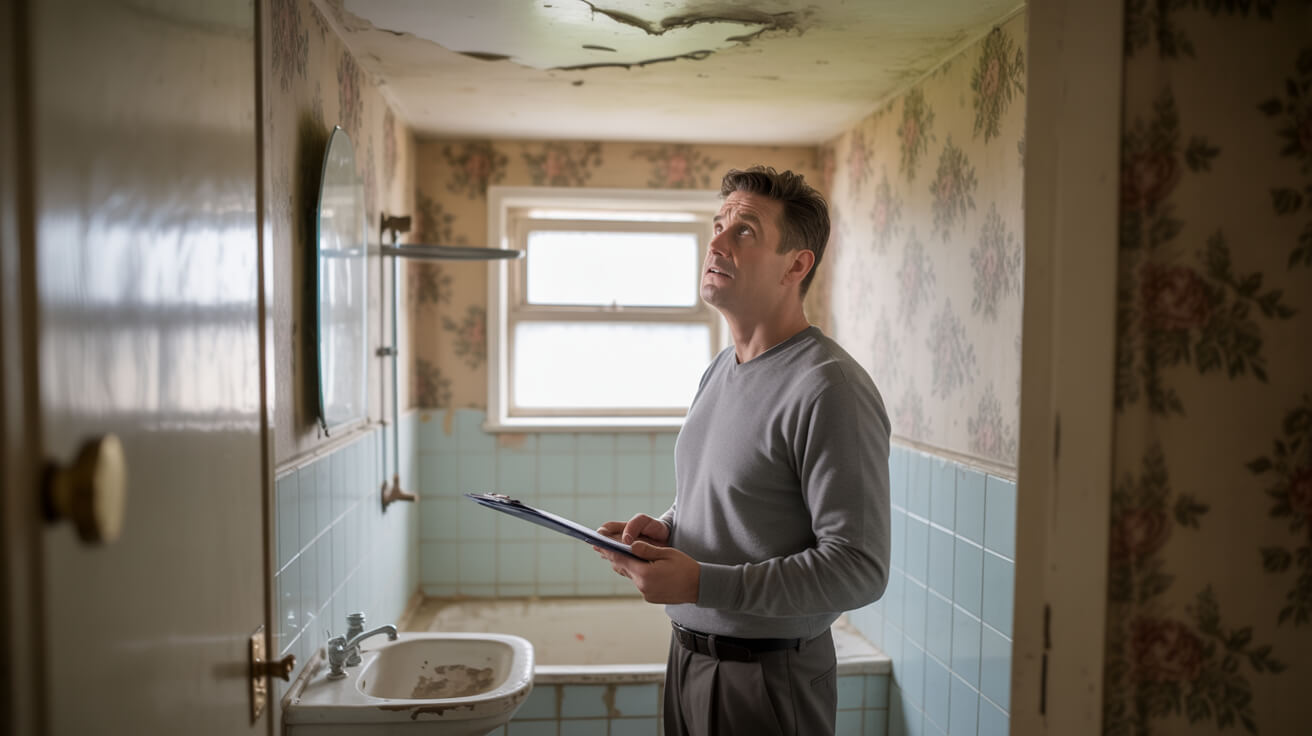
If you’ve been drawn in by a low-ball quote, here’s the invisible math that brings back the same team—only this time at double the rate, with the mortgage lender or managing agent breathing down your neck.
Common tripwires:
- No robust diagnosis.: Anyone skipping full moisture mapping, salt testing, or substrate analysis is selling hope, not surety.
- Ignoring substrate and salts.: Leaving behind contaminated material = rapid return of stains and moisture, burning credibility with surveyors.
- Uninsured or time-limited guarantees.: A promise only as strong as a company’s willingness—or financial strength—to survive long enough for you to claim.
- DIY/cash jobs.: “Special rates” with no documentation or warranty are dead ends when agents or surveyors demand paperwork.
- Aftercare guessing game.: If you’re fobbed off to “wait and see” on dry-down, who’s liable when stains return or damage unfolds in tenancy?
These traps are more than anecdote—they’re the reason lenders, estate agents, and diligent surveyors ask pointed questions and examine damp paperwork under a microscope.
Cheap is almost always a loan from your future self—plus interest and the awkwardness of explaining why your ‘damp fix’ is failing at resale.
Guard yourself and your client by demanding:
- Robust, plotted diagnosis of damp causes
- Breakout of substrate prep, injection, and proper material specs
- Named, insurance-backed warranties
- Standards references (BS6576/PAS2035, PCA, TrustMark)
- Clarity on timeline, aftercare, and sign-off steps
What you specify (and check) now is what keeps your property valuable, your sale healthy, and your tenant, buyer, or lender confident.
What’s Mandatory in a Survey-Grade, Lender-Approved Damp Proofing Quote? No-Fails for Homeowners, Buyers, and Property Professionals

No matter how sharp you are on site, the paperwork behind any damp repair determines whether a mortgage or resale proceeds, or stalls. The right quote not only wins you a job—it protects value on day one and shields you from future drama.
Every survey-ready or mortgageable damp proofing quote needs to show:
- Room-by-room diagnosis with evidence: – mapped readings, photos of substrate and salt bands, not just “suspected damp”
- Line-by-line work breakdown: This is not a “for everything” invoice—call out every metre, every cut-back, every finish
- Reference to regulatory standards and accreditations: If BS6576, PAS2035, or TrustMark aren’t cited in print, expect a fight with lenders or managing agents
- Timeline and sequencing: Survey date, instal start, cure period, dry-down, re-entry and decorating windows
- Clear guarantee and handover schedule: Not “our guarantee”, but a third-party, insurance-backed, mortgage-acceptable plan
- Surveyor-suitable paperwork: Your file should be designed for scrutiny by third parties—not just as a receipt
| Quote Requirement | Why It Matters | Direct Outcome |
|---|---|---|
| Evidence-based diagnosis | Passes surveyor/mortgage checks | No comeback, rescinded deals, or retests |
| Itemised, transparent pricing | Prevents budget creep | No “add-on” surprises mid-job |
| Timeline/aftercare breakdown | Preps for other trades/occupancy | Restores property quickly, safely |
| Standards and credentials | Satisfies agents/lenders | Smooth mortgage, insurance process |
| Insurance-backed guarantee | Survives company closure and resale | Adds tangible value to property |
No shortcuts here: insist on this structure in every quote you consider or accept. Missing details at this stage create headaches, lost value, and sometimes legal disputes long after the “fix” is forgotten.
Does Regulatory Compliance, Warranty, or Accreditation Matter? The Short and the Long Answer

Short answer: Yes. Every penny you save skipping compliance or guarantees will cost pounds, stress, and credibility the next time your property changes hands (or fails a health inspection).
Long answer:
- BS6576 and PAS2035 compliance is not paperwork for paperwork’s sake; it’s the evidence trail that a mortgage lender, insurer, or managing agent will demand.
- Warranties are only worth having if insurance-backed—and ideally, transferrable—to the next buyer. A certificate that dies with a contractor is not a warranty, it’s a risk.
- Accreditation to TrustMark, PCA, or equivalent is how you know you’re not just paying for a logo on a van but actual standards held to account.
Properties in Sussex and across the UK that come with full compliance, warranty, and aftercare always fetch stronger resale prices, let out faster, and avoid “health hazard” designations from surveyors and local authorities. This is not an upsell—it’s the line between a home that retains trust and one that attracts claims, DLCs, and insurance refusals.
A guarantee’s real test is not the day it’s printed, but the day the next surveyor asks for proof at resale.
Don’t treat these as “optional extras.” Make them your baseline now. Your future self—and your next buyer or tenant—will thank you.
Sussex Damp Experts: Evidence-First, Warranty-Backed, Compliance-Driven Damp Proofing Built to Survive Scrutiny
What makes Sussex Damp Experts the partner of choice for home owners, buyers, landlords, and professionals across East Sussex isn’t just technical skill—it’s transparency, paperwork, and the kind of evidence trail that smooths every future deal.
Here’s what owners, buyers, and professionals get:
- Surveyor-grade diagnosis: Not a hurried scan, but full moisture-mapping, salt analysis, and photo-logged evidence, tied to your property’s quirks and needs.
- Transparency in every line: Quotes are itemised, substrate-specific, and admissions of uncertainty are documented—not papered over.
- Compliance as default: BS6576, PAS2035, PCA, TrustMark—this is not a “logo parade,” but your best defence with surveyors, managers, insurers, and even tenants.
- Aftercare and survivor warranty: You get insurance-backed, transferrable peace of mind, and clear timelines on reoccupancy and future-proofed value.
- No sales games—just long-term integrity: The “job” is to earn you a lasting fix with no surprises, no dodgy corners skipped, and no ghosting after the invoice is paid.
When you want to future-proof your assets—not just today’s leak—the professionals your future self thanks are those who document, evidence, and warranty every step that matters.
If you prefer clarity to confusion, evidence over hope, and trust that actually holds up when portfolios, agents, or mortgage lenders come checking, Sussex Damp Experts will make your property—and your repair decision—a source of relief, not regret.
Ready for a Guaranteed, Mortgage-Grade, Value-Secured Damp Proofing Quote? Start with Sussex Damp Experts
Protect your property, plans, and long-term value now. Request a survey-grade, insurance-backed, standards-aligned quote from Sussex Damp Experts. Expect:
- Pinpoint diagnosis and cause-mapping—no guesswork
- Clear, itemised, wall-by-wall pricing
- Materials and methods built for compliance, resale, and long-term health
- A survivor warranty that stands up when you need it—at resale, remortgage, or with tenants
- Support, aftercare, and the confidence that your property is *ready for anything*
No confusion. No hazy promises. No “extras” once the contract is signed. Just safety, transparency, and trust— engineered and documented for Sussex homes and portfolios.
You’re not buying fluids or drilling. You’re buying future-proof value—documented, guaranteed, and mapped to every regulator, buyer, and agent you’ll face.
Reach out to Sussex Damp Experts and get the answer your future self—and future buyers—will thank you for.
Frequently Asked Questions
What impacts the true cost of chemical damp proofing—beyond the headline price you first see?
The real price of chemical damp proofing is shaped by factors site surveys rarely explain up front: property age, wall complexity, access headaches, and bespoke finish requirements all operate behind the curtain. In Sussex, one home’s treatment can cost five times what a neighbour pays, driven by variables most “average cost guides” never mention.
Why do similar houses generate wildly different quotes?
When the walls open up, no property repeats itself. Victorian brick absorbs treatment differently than block or stone; one site hides past DIY repairs, another sits next to a high water table. If you own an older or extended home, extra brickwork, awkward basements, lath-and-plaster or decorative skirting may call for moisture mapping, additional membrane work, or re-plastering with breathable materials. These steps push specialist labour—and the bill—beyond the “metre rate” calculators.
What role do finish and reinstatement play?
Smart damp proofers (the kind surveyors actually trust) never reinstall old plaster or joinery without evaluating hidden salt loads or past failures. If hygienic finish or historic detail matters to you or buyers, restoration eats up both time and specialist cost.
Homeowners and landlords wanting genuine protection—rather than a spreadsheet estimate—should request a breakdown showing wall type, substrate, hidden access, and post-treatment finish line by line. Sussex Damp Experts itemises your costs transparently, so you avoid the industry’s “underquote then surprise” routine.
“Damp doesn’t care about averages—it finds every flaw, shortcut, or skipped detail. Your property’s story steers the true price.”
How can you tell if a damp proofing quote hides silent risks or passes every lender and insurance test?
Not all guarantees hold up—especially when lenders, surveyors, or insurers drill into the details. The fine print (or lack of it) can mean the difference between easy mortgage approval and a deal dead in its tracks when the buyer’s inspector reads “injection-only warranty” without compliance or aftercare.
What essentials prove your protection will last?
A meaningful guarantee must be insurance-backed and legally written to outlive the installer. Real peace of mind means warranties registered with TrustMark or PCA, referenced against BS 6576, and transferable to future buyers or tenants. A report should list all moisture diagnosis methods (including salt and substrate analysis), document process photos, and spell out aftercare—the timeline for drying checks and any ongoing support.
If your installer sidesteps these standards, your risk sits with you. The best providers up-front the fine print: Sussex Damp Experts’ assurance covers every legal and surveyor standard, so value and protection never feel like an act of faith.
Why is aftercare underestimated—and what could it cost?
Most postcodes in Sussex see at least one failed resale or insurance battle each year due to missing documentation or ambiguous aftercare promises. Overlooking this step is a hidden hazard that costs home owners up to 15% on resale, according to recent PCA case audits.
What separates a temporary damp patch-up from a lasting expert solution?
Lasting damp proofing isn’t just about injecting chemicals—it’s about attacking every hidden cause and ensuring the work stands up to scrutiny, year after year. Anyone can quote a damp-affected wall, but few will diagnose salt, ventilation, and historic fabric or guarantee a finish the next surveyor will praise.
What gives away a quick-fix or cosmetic job?
- They skip prepping walls or analysing salt migration before application.
- Materials get “one-size-fits-none” treatment, with no adjustment for heritage walls, thermal loads, or breathability needs.
- Timelines are too short to include proper drying cycles or post-job inspection.
- The guarantee quietly excludes reinstatement or advanced failures.
“A fast instal might dry the surface but still leave the roots wet. True damp solutions chase the problem all the way down—and keep your sale or insurance on track.”
What evidence points to a robust fix?
Look for staged progress documentation, targeted plaster specs, evidence of ventilation improvement, and a home-tailored drying plan. Sussex Damp Experts delivers a photographic paper trail, client-site walkthrough, and aftercare—up to and beyond handover—which creates confidence for the decade, not just the survey.
Where does chemical DPC fail or cause more harm—and what controls correct diagnosis?
Not all moisture can be tamed by chemical injection. Many persistent damp problems start with the wrong solution; in fact, over 25% of remedial jobs Sussex Damp Experts takes on require undoing a prior “universal” DPC instal that never addressed condensation, bridging, or wrong substrate.
When is chemical DPC the wrong approach?
- If condensation—not capillary action—is the driver, chemical treatments solve nothing. Check for cold walls, under-ventilated spaces, or indoor humidity first.
- Walls with external bridging (render, patios, planters above DPC level) bypass even the best chemical course. Physical fixes to ground levels or plaster are priority one.
- Basements and earth-retaining walls need integrated tanking (BS 8102 standard), not just injections.
- Heritage, lime render, and period properties demand breathability, not barriers; the wrong method can lock in moisture, rot timbers, and fail insurance or conservation checks.
How do you ensure the right fix is chosen?
Demand root-cause reporting, moisture mapping, and tailored treatment plans that adapt to property age, substrate, and environmental realities. Sussex Damp Experts follows a strict diagnostics-first method, so no client lands with the wrong remedy.
Which surveys and paperwork transform damp proofing into a bona fide asset for property value?
Documentation—clear, specific, and standards-referenced—is now a property’s silent selling point. In competitive markets, a completed damp report (with photos, method statement, and insurance-backed warranty) can push sale price up by 5-12% and smooth re-mortgaging or letting progress for years.
Which outputs should you expect from a reputable installer?
- Pre- and post-treatment survey records, mapped against each wall and repair method.
- Written guarantees backed by insurance for at least 10 years, transferable between owners or tenants.
- Aftercare schedule—showing follow-up readings, drying progress, and the option for site revisits.
- Explicit reference to BS 6576, PAS 2035, or relevant heritage/compliance standards—these remove doubt at every survey or underwriting round.
“Buying a fix is easy—selling or letting a property without the right paperwork is where shortcuts rear their head.” Sussex Damp Experts embeds these safeguards in every job, arming you against claims, disputes, or unpredictable lending policies.
What forces are reshaping UK damp proofing—regulatory, technical, and green standards for tomorrow?
UK damp proofing is moving into a new era: standards like PAS 2035, BS 8102, and BS 6576 now drive how lenders, grants, and even local councils define “habitable” and “safe.” Combined with environmental and compliance pressures—from breathable materials to air quality law—modern jobs demand expertise that runs deeper than application alone.
Which trendlines matter right now?
- PAS 2035 compliance is now a requirement for retrofit grants, council licencing, and eco-funded works in most regions.
- Next-generation resins and tanking products use ultra-low VOCs, safeguard health, and pass evolving building regs.
- Remote moisture monitoring and digital aftercare logs are rising—offering real-time insurance and buyer reassurance impossible just five years ago.
- Heritage fixes must now be reversible, tracable, and zero-damage—conservation authorities push for full photo and method traceability.
- Integrated moisture management (partnering DPC with proper ventilation, drainage, and insulation) is rapidly the new normal for lasting results.
Any provider still selling “quick fix” or generic injections risks leaving you outside lender programmes, resale options, and, crucially, lasting peace of mind. Sussex Damp Experts puts every new compliance and environmental learning into action, so tomorrow’s standards are always delivered with today’s job.
“The mark of a future-proof property isn’t just a dry wall—it’s a full, documented lineage from survey through aftercare, built to meet rising standards and fierce market demands.”

