
 By
By  August 26, 2025


How Will Awaab’s Law Reshape Damp and Mould Litigation for Property Professionals?
The introduction of Awaab’s Law Damp turned a slow-burning health issue into a legal flashpoint for the entire property industry. What used to simmer as an awkward conversation with tenants or buyers—“it’s just a bit of damp”—is now a matter of non-negotiable deadlines and binding documentation. If you own, manage, let, or advise on property in England, the game has changed. A damp patch is no longer a minor headache, but a legal clock ticking toward exposure, cost, and possibly public embarrassment.
“A single overlooked report can now mean heavy fines and a name that won’t wash out in court records.”
Whether you’re reading as a homeowner, landlord, letting agent, surveyor, contractor, or property manager, Awaab’s Law is the new north star of accountability. You now face immediate legal duties from the second a damp or mould risk is flagged, especially where issues around Children And Damp may intensify the scrutiny. Excuses, delays, and paperwork that “goes missing” will be shredded by the court’s demand: prove what you did, when, with evidence that would hold up under a forensic audit. Every time you respond to a damp complaint—or fail to—you’re not just answering a client or a tenant, you’re giving evidence to a potentially hostile judge.
Instead of fearing over-regulation, see this as a lever. Smart compliance is now a competitive asset: courts, mortgage lenders, insurers, and future buyers all now ask the same question, “Can you prove this building protects the people inside?” Sussex Damp Experts have built the answer.
What Are the Statutory Deadlines and Penalties Imposed by Awaab’s Law on Damp and Mould?

Awaab’s Law cuts through years of woolly guidance with clear, hard dates—and real teeth for slippage. Ignore or skate over these deadlines and you’re likely to trigger not just fines, but a fast pass to court, and regulatory scrutiny that can make a bad month linger for years.
Key ground rules under the new law:
- 14 Days to Inspect: From the moment a tenant, surveyor, or even a buyer flags a damp or mould risk, you have a strict *14-day window* to send a competent inspector and produce a proper assessment (UK Gov 2023). Missing this means exposure to statutory penalties and local authority intervention.
- 48 Hours to Inform: Inspection done? You must communicate the results—in clear, non-technical language—to the resident or reporting party within *48 hours*. No more buried jargon or “it’ll be in the post.”
- 7 Days to Start Repairs: For hazards considered a risk to health, there’s a *7-day cap* to begin repairs, not just schedule them. Courts won’t accept “waiting on a part” or “tenant was hard to reach”—action must be logged, and delays must be exceptional and evidenced meticulously.
- Non-Negotiable Digital Proof: The relentless demand for timestamped, digital records is not optional. Any gap, fudge or late upload can and will be used against you.
Miss a deadline? Local councils now have expanded powers for swift enforcement—fixed penalty notices, accelerated court routes, and the ability to bypass delays with direct works-in-default (where they do the job and bill you, plus legal fees). What landlords once dismissed as “admin slip-ups” now become public record and recurring risks at every mortgage renewal.
“Delay is now a bill with compound interest—each missed step multiplies your legal exposure.”
What does this mean for your operation? The slow paperwork days are over. Your feet—and your recordkeeping—must move as fast as the risks, with zero room for waffle.
How Do Courts Judge Evidence and Accountability Under Awaab’s Law?

Courts used to cut property professionals a fair amount of slack—if everyone seemed reasonable and someone had a file of emails or phone logs, most cases fizzled out. In 2025 and beyond, that forgiving approach has vanished.
What you need to prove, and how:
- Digital, Time-Sequenced Evidence: All records must be auditable, continuous, and digital—inspection reports, repair logs, photos, and tenant communications. Jumbled notes scribbled on a van dashboard, or emails sent weeks late, don’t make the cut.
- Independent Diagnostics: Courts, insurers and lenders now privilege expert evidence from PCA, RICS, TrustMark, or equivalent survey professionals. A signed third-party PDF beats five “DIY” logs every time.
- Forensic Chain-of-Custody: Every step must be supported by time-stamped data from reliable devices—moisture metres, thermal imaging, photo logs. Any sign of “backfilling,” omitted steps, altered documents, or “oops, we forgot to upload it” could see your entire defence thrown out.
- Swift Trigger-Response: If urgent health or safety risks are detected, records *must* show prompt action—time of discovery, immediate notification, repair orders, and follow-up, all confirmed by an accountable, trained person.
By 2025, judges and regulators will expect professional, unbroken digital evidence as the baseline. Excuses about “missing files” or “patient negotiations” with tenants will be seen as attempts to evade, not to reason. If you don’t—and can’t—produce this digital chain-of-evidence, expect the verdict (and penalty) to land hard.
“When the evidence is weak, the legal hammer hits harder and costs multiply—fast.”
Ultimately, no amount of goodwill, charm, or last-minute “tidy up” can outweigh a broken audit trail. The old adage is real: proof beats promises every time.
Why Are “Tenant Lifestyle” and Verbal Disputes Obsolete in Court Now?

For years, many landlords, letting agents, and property managers leaned on the convenient defence that tenant behaviour—cooking, showering, drying clothes on radiators—caused most damp or mould. Those days are over.
Here’s why that defence rarely holds now:
- Presumption Shift: Courts, councils and lenders now presume the building is to blame unless you can provide a rock-solid sequence of independent, technical evidence showing the issue is purely lifestyle-related, *and* exhaustive professional steps have been taken to rule out structural faults. In practice, this bar is nearly unreachable.
- Burden Fully on the Owner/Manager: You must show clear, repeated attempts at root cause analysis, professional interventions, and clear communication—even, and especially, when a tenant’s lifestyle *could* plausibly be a contributing factor.
- Shared Third-Party Evidence: Reports that only come from your team are now almost worthless in disputed cases. Courts and surveyors expect RICS/PCA-aligned joint investigations, with both sides present, and evidence uploaded to a secure, read-only portal.
- Elimination of Anecdote: “He said / she said” arguments, phone logs, and subjective impressions will simply be dismissed. The chain-of-evidence is everything.
This shift is not just legal. Buyers, tenants, and especially first-time buyers are now coached by mortgage advisers to request those records at the start. Surveyors and insurers increasingly flag lifestyle-only cases as unresolved risks, especially if other documentation is scrambled or incomplete.
“If you can’t prove why the mould’s there, you get the blame—it’s that simple.”
If in doubt, default to the full protocol: digital logs, professional joint evidence, swift root-cause repair, and proactive aftercare.
What Digital Processes and Reporting Are Now Demanded by Law, Lenders, and Surveyors?

Awaab’s Law doesn’t just ask you to solve problems; it demands you prove, with digital certainty, every step you took and why. Technology is now as vital as the right sealant.
The new digital compliance playbook:
- Timestamped Photos: from every inspection, with geolocation and staff ID.
- Device-Captured Readings: Humidity, surface temperature and moisture—logged by calibrated tools, uploaded to a secure dashboard, never “transcribed” later.
- Plain-Language Reports: No more builder-jargon—courts and lenders want facts in understandable English, mapped to industry standards.
- Seamless Document Chain: Every tenant communication, repair order, and aftercare visit is linked—no gap should go undetected; every digital log is protected against tampering.
Surveyors and mortgage advisers now treat these records as mandatory. Lenders may refuse a mortgage, or demand a price reduction, if records are missing, incomplete, or “reconstructed after the fact.” For landlords or sellers, the advantage is immediate: bulletproof paperwork keeps deals moving, removes negotiation friction, and soothes buyer nerves.
“Digital proof is now the backbone of your property’s value, not a clerical side-show.”
Miss this digital leap and your property’s market value, insurance, and borrowing options may wither—not because of hidden mould, but because of invisible records.
How Does This Law Affect Asset Value, Insurance Claims, and Saleability?
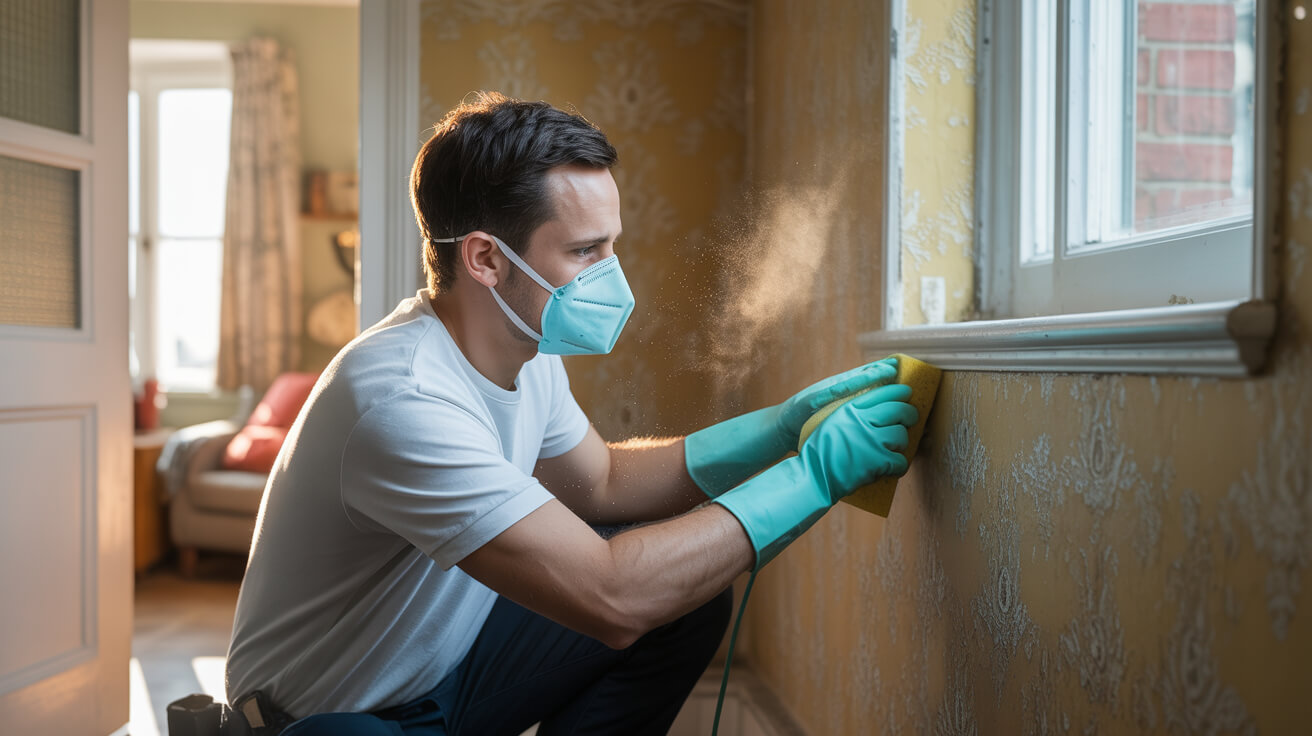
The legal changes don’t just bring penalties; they redraw the entire property risk landscape. If you’re careless, your property could lose significant value—or become unsaleable overnight. But well-managed compliance can deliver measurable financial uplift.
Expect these ripple effects:
- Lenders Demand Proof: Mortgage providers—especially for first-time buyers and buy-to-let investors—need full digital logs or risk refusing funds or triggering hefty repairs as loan conditions.
- Surveyors Control the Sale: Any whiff of undocumented damp or failed repair wipes out sale prospects, or can trigger five-figure discounts (RICS 2023 Guidance).
- Insurance Gets Tough: Payouts are increasingly dependent on unbroken, datestamped digital chains. Miss a log or fudge a timeline, and insurers can step back, delay, or refuse coverage entirely.
- Premiums and Policies On the Line: Poor documentation or previous claims, now documented and transparent, can drive insurance premiums higher, or see entire risks excluded.
“Your paperwork is your property’s shield: lose it, and the repair bill is just the beginning.”
Flip it around: bulletproof evidence not only fends off disputes, it can boost sale prices, speed transactions, and—above all—signal to buyers and lenders that you’re serious about site health and asset value.
What Litigation Approaches Remain Effective—And Which Backfire Completely?

Winning a damp or mould case today isn’t about smart talk or clever arguments. Victory now belongs to the best-prepared, best-documented, most proactive operator.
Dead strategies:
- Blame Transfer: No more blaming tenants or circumstances; courts want evidence, not excuses.
- Verbal Defences and Paper Logs: These are swiftly overruled by digital evidence requirements.
- “Clean-Up” After the Complaint: Any attempt to “fix” records post-incident is a red flag; judges and regulators see it as a sign of cover-up or incompetence.
Success strategies:
- Bundled, Unbroken Digital Chain: From tenant complaint to aftercare, every step is captured, timestamped and reviewed. The gold standard: you can click “export” and upload your entire defence in five seconds flat.
- Standard-Aligned Expert Reports: All major repairs and diagnostics carried out to BS 6576, BS 8102, and PCA best practice—supported by independent surveyor documentation.
- Proactive Aftercare: Regular follow-ups, digital logs updated in real time, tenants and agents notified proactively, not reactively. Every visit logged, every action accountable.
These practices aren’t just for damage control—they’re a competitive edge. Landlords, property managers, builders, and agents able to show this level of care close deals faster and hold pricing power.
“In court, fortune favours the prepared—your file is your sword and shield.”
Anyone still playing by the old rules is fighting uphill—at their own expense.
Why Sussex Damp Experts Sets the Gold Standard Under Awaab’s Law

Not every damp treatment provider or property advisor is ready for this compliance-driven, evidence-first legal shift. But Sussex Damp Experts have made these protocols the foundation of every project.
What does this look like in practice for you?
- BS 6576 / BS 8102-Standard Logging: Every treatment, inspection, and repair logged in a secure, exportable digital system—ready to send to lenders, surveyors, or courts at a click.
- Survey-Ready Reports: Structured so property transactions aren’t delayed. Our reports anticipate what RICS, mortgage lenders, or insurers will ask for—prepared, formatted and flagged by accredited engineers and site specialists each time.
- Court-Ready Evidence: Fully-traceable audit trail from first complaint to aftercare. No gaps, no edits, no lost forms. When a case emerges, your file is ready and defensible.
- Lifetime Site Health: Our work goes beyond “job done.” Ongoing aftercare, system integration, and regular checks are part of the deal—protecting your asset, health, and compliance with every season.
“With Sussex Damp Experts, your paperwork wins as reliably as the repairs do.”
By adopting these standards now, property professionals and owners not only avoid sleepless nights; they turn compliance into a mark of trust and asset strength.
Act Now to Secure Property Value, Legal Confidence, and Peace of Mind
Damp and mould are no longer just a nuisance—they’re a scoreboard for legal risk, compliance, and asset value. With Awaab’s Law, a phone call, email, or WhatsApp from a worried tenant or surveyor starts the timer: act within 14 days, report clearly within 48 hours, and start repairs within 7 days—every step logged, every slip a risk multiplier.
With Sussex Damp Experts, you don’t just fix damp—you fix your legal position, your paperwork, and your property’s future. Our team provides the digital audit trail, the expert diagnostics, and the post-repair health checks that underpin modern sales, valuations, tenancies, and peace of mind.
Don’t wait for fines, disputes, or failed deals to wake you up to the new reality. Give your stakeholders, tenants, and future buyers the reassurance of a system built to satisfy judges, lenders, and the person living inside those four walls. Reach out to Sussex Damp Experts; let’s shore up your evidence and secure your future—before the next complaint even lands.
Frequently Asked Questions
Who is now legally responsible for damp and mould hazards under Awaab’s Law—and what properties actually qualify?
From 2025, any organisation or individual who manages or controls rented residential property in England—councils, housing associations, or private landlords flagged by local authorities—will carry strict, documented accountability for damp and mould. This responsibility covers all “homes let under a tenancy agreement,” which means houses, maisonettes, flats, conversions, and houses in multiple occupation (HMOs) under lease or sublet, whether managed directly or via a property agent. Social landlords are bound automatically; the Renters’ Reform Bill will soon close gaps for almost all private rentals, especially where tenants lack autonomy over repairs.
Ignore a damp hazard at your peril—housing law now treats it as a priority threat, subject to enforced remedies and digital scrutiny.
Where are the boundaries?
- Owner-occupied homes: stay outside the law’s formal reach, but mortgage lenders and insurers increasingly make compliance checks a condition of funding or payout.
- Short-term lets and holiday rentals: only trigger coverage when occupied as someone’s main home (usually over 90 days).
- Commercial buildings: don’t fall under Awaab’s Law unless converted or sublet for residential living.
Audit pressure, formal timescales, and digital record expectations are now the baseline, with legal lines blurring quickly as best practice becomes sector standard—even where statute temporarily lags.
What new deadlines and legal triggers does Awaab’s Law create for inspecting and fixing damp or mould?
Awaab’s Law enforces three non-negotiable timeframes:
- Within 14 days: A professional inspection of any reported damp or mould must be completed, with site visit details logged and shared.
- Within another 48 hours: You must issue a clear, written diagnosis and action plan—delivered to the tenant and entered into a digital record.
- Within 7 days (for health or severe hazards): Actual repair work must start, not just be scheduled; ongoing monitoring and record-keeping are required for critical cases.
Miss one of these steps and you face rapid escalation—immediate fines, council intervention, or summary housing court orders. Repeated breaches can lead to “fit and proper” landlord reviews, loss of letting licences, and sizable penalties that echo through future property investments.
When do the timers start running?
- As soon as a tenant reports a hazard: (even informally), the 14-day and 48-hour counters begin.
- Health risk flagging: by NHS, council, or a qualified surveyor means the 7-day repair rule has to be met—not just planned.
Strict audit trails now mean you must prove each step, with digital logs as your only defence if challenged—paper notes or “trusted word” won’t suffice any longer.
What counts as acceptable digital evidence for damp and mould compliance—and how is this different from the old system?
Legal proof in damp and mould matters now hinges on a complete and unbroken digital record:
- Time-stamped site inspections: —ideally GPS-verified and showing device provenance.
- Diagnostics and survey results: —produced by PCA/RICS/TrustMark certified surveyors to British Standard 6576 or 8102.
- Device-generated readings: —moisture, temperature, humidity, and salt recorded directly, not transcribed later.
- Process photographs: —pre, during, and post-repair, each photo tied to a specific date and project file.
- Communication history: —every message or notice between tenant, landlord, and council, time-sequenced and exportable.
- Repair, guarantee, and aftercare documentation: —digital invoices, scheduled works, and any follow-up tracked for years.
If it isn’t in the digital record, it didn’t happen—auditors and courts now check for gaps, not claims.
Gaps or edits in your compliance chain can destroy your defence—whether you’re an agent, portfolio landlord, or small housing provider.
What fails under scrutiny?
- Handwritten logs or loose record keeping
- Unaccredited surveyor reports
- Missing or retroactively edited timelines
- Informal repair evidence without device or certification details
Solid digital evidence doesn’t just “protect”—it unlocks better insurance, lending, and resale prospects by showing your homes are safe and well-managed.
Why is blaming “tenant lifestyle” for damp now legally doomed—what does proof look like under Awaab’s Law?
Under the new regime, the presumption in disputes is that damp, mould, and condensation are the landlord’s fault unless you can supply ironclad counter-evidence. Explaining hazards away as “tenant lifestyle”—windows shut, drying clothes, or overcrowding—won’t hold water unless:
- You can demonstrate, with digital evidence, that the property is structurally sound and ventilation works perfectly (BS 6576/BS 8102).
- The tenant has received and acknowledged clear, written care instructions, with these communications tracked and time-stamped.
- A third-party expert fully attributes the cause to the tenant’s actions, despite all building safeguards being proven functional.
Modern courts demand scientific defence, not anecdotal blame—if your audit trail isn’t watertight, you’ll lose by default.
Even temporary interventions—like dehumidifier handouts or spot painting—may now be held against you, interpreted as failing to address the root cause. Only full, transparent, device-backed survey logs and management chains can shift the burden in your favour.
How do digital compliance records now affect mortgage access, insurance claims, and the asset’s market value?
A digital compliance log has become as necessary as a land title when dealing with banks, insurers, and buyers. Any unresolved or insufficiently documented damp or mould issue means:
- Mortgage lenders: routinely block or withdraw funding for homes with unclear or incomplete remedy logs—even if decorative repairs are recent.
- Insurance firms: increasingly require device-logged, standards-verified proof for new or renewal claims, with policy exclusions now widespread for unlogged damp *(Association of British Insurers, ABI 2024)*.
- Buyers and agents: demand exportable compliance packs before progressing with sales; gaps can halt transactions or cut values by thousands.
- Council or housing association records: may list your home publicly as “non-compliant,” affecting tenancy reputation and future letting prospects.
Stakeholder gains from robust digital logs:
| Stakeholder | Compliance Needed | Value Unlocked |
|---|---|---|
| Lender | Full electronic audit trail | De-risked, smoother lending |
| Insurer | Device-verified diagnostics | Better cover, valid claims |
| Buyer/Agent | Exportable compliance proof | Fast sale, price protected |
Rather than a legal hoop to jump through, comprehensive compliance records safeguard your asset, ease refinancing, and give you leverage in both negotiation and insurance claims.
What sets Sussex Damp Experts apart in delivering Awaab’s Law-grade audit and compliance assurance?
Sussex Damp Experts are built for this new era—each step of diagnosis and repair engineered to exceed the legal threshold for audit, court, and asset value. The advantages:
- Certified, digital-first inspection—reports from PCA, RICS, or TrustMark-accredited surveyors, referencing British Standards and always time-stamped, with supporting device logs attached.
- Event-by-event action traces—every finding, remedy, and aftercare outcome digitally exportable for instant audit or lender submission.
- Council, insurance, and sales-ready compliance packs—zero missing links, no “best effort” gaps, always defensible in rapid response audits.
- Proactive notification of tenant, agent, and local authority, logged with delivery confirmation, removing weak points at legal trigger stages.
- Optional humidity, salt, and air-quality monitoring—proving proactive aftercare and ongoing compliance without manual chase.
A compliant property doesn’t just tick boxes—it defends itself at every step, from survey to court challenge. Choose remediation and record-keeping that stands up, not just stands out.
Protect your investments by booking a team whose tools and protocols anticipate the compliance curve—unlock smoother transactions, lower insurance excess, happier tenants, and an asset with a proven, audit-ready story.

