
 By
By  August 26, 2025


How Does Awaab’s Law Truly Change the Decent Homes Battle Against Damp and Mould?
Safe housing in the UK now has a new definition, driven not by interpretation or hope, but by enforceable law. Awaab’s Law means “decent” isn’t a flexible promise—it’s a firm baseline, anchored in measurable results for tenant health and building integrity. Following the heartbreaking loss of Awaab Ishak, the landscape for landlords, agents, property owners, and managers across Sussex and the UK has been redrawn. Good intentions and ambiguous records have been replaced with urgent, time-stamped evidence. The new rules are exact: you’re not measured by effort or what you mean to do, but by proven, rapid action—especially on the twin threats of damp and mould.
Safety isn’t paperwork—it’s clean air, dry walls, and peace of mind.
If you manage property in Sussex or beyond, Awaab’s Law now demands more than routine maintenance. It demands verified, accountable intervention any time damp or mould rears its head. The stakes are immediate: legal scrutiny, tenant advocacy, and public trust all depend on your ability to diagnose, remediate, and prove action—fast. The era where “reasonable effort” or waiting out a complaint could pass inspection is over. Every unresolved damp patch, musty smell, or missed follow-up can now escalate straight from a tenant’s mobile phone to an auditor’s desk.
The shift is total—beyond policy and into the bones of how homes are run. Compliance is now judged in hours and evidence, not seasons or sentiment.
Why Did Awaab’s Law Land So Hard—and What Does It Now Demand?

Awaab’s Law isn’t the product of bureaucratic tinkering. It’s Parliament’s hard response to an unforgivable tragedy: a child dying in a home flagged for damp and mould, after months of ignored warnings. The result is sharp-edged legislation to guarantee every tenant the safety and certainty homeowners take for granted: immediate action, continuous documentation, and transparent follow-up every single time a complaint is raised.
You’re now on the hook for a clear, measurable response to any damp or mould report—here’s what’s changed:
- Timeframes are non-negotiable: actions counted in days, not weeks or months.
- All steps must be documented: repairs, inspections, and communication must be logged in writing and available on demand to auditors, investigators, or tenants themselves.
- Repairs target causes, not surface fixes: painting over stains or recommendations to “keep windows open” no longer suffice—permanent, technical solutions are required.
Landlords, letting agents, and housing associations who once defended “best effort” or leaned on good rapport now find the system weighted by cold action and hard evidence. Every missed call, delayed survey, or half-finished job is a regulatory risk. “Silent waiting” is now classed as neglect, with severe consequences for your portfolio, personal reputation, and right to operate.
The system’s faith in promises is gone—tenants get evidence, or the council steps in.
Delay isn’t just failure to serve a tenant; under Awaab’s Law, it’s a breach of duty. This marks a cultural shift: failure isn’t a process problem, it’s an actionable legal and reputational wound.
What Are the Statutory Duties and Deadlines Under Awaab’s Law?

A damp or mould complaint now starts a legally binding clock—a clock no landlord, property manager, or agent can afford to ignore. The new statutory sequence is rigid, and evidence-driven:
- Inspection required within 10 working days: (Category 2 hazard), regardless of scheduling pressures or operational workload.
- Written findings shared within 3 days: of inspection, delivered to the tenant and retained for audit.
- Repairs must commence within 5 days for non-life-threatening hazards, or within 24 hours where Category 1, serious health risks are confirmed.:
- Alternative accommodation provided immediately: if the property is deemed unfit for human habitation due to unresolved damp and mould.
Every action—inspection, finding, repair, communication—must be captured in writing, with supporting evidence (emails, reports, photos). Fall short or fail to log a step, and the tenant is empowered to escalate: directly to the local authority, housing ombudsman, press, or social media alliances.
Penalties are now swift and unsparing:
- Fines up to £30,000 per incident.:
- Licence removals, possibly across entire portfolios.:
- Escalation to criminal proceedings in severe or repeated cases.:
After one missed deadline, the system now tilts instantly to the tenant’s side.
If you don’t have logged, dated evidence of every step, your defence vanishes. In today’s climate, “If it’s not documented, it never happened.”
How Has the Decent Homes Standard Changed Under This Law?
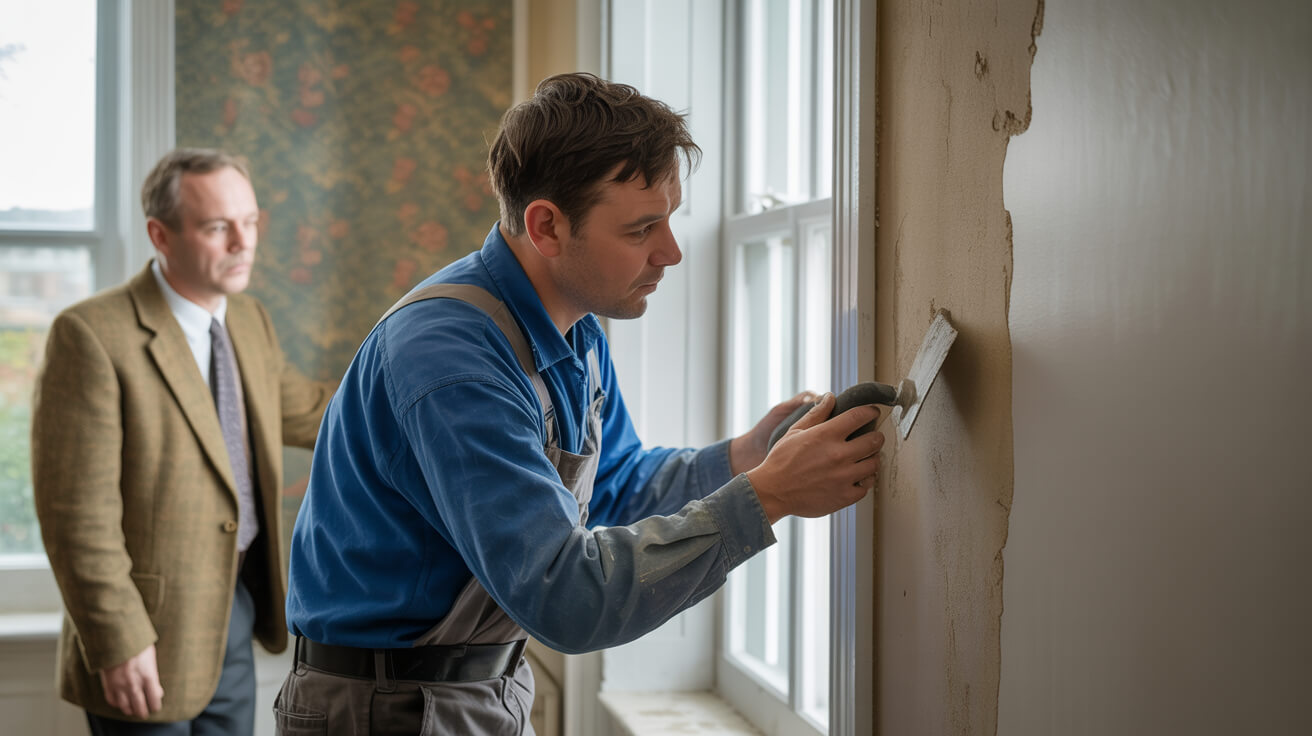
Awaab’s Law upgrades the Decent Homes Standard from policy to practice. Where once the standard left room for discretion, local custom, or “reasonable” landlord conduct, the amendments hard-wire compliance to industry best practice—backed by legal force.
What does this mean day-to-day?
- Every home requires a documented, annual inspection: , with full reports retained and shared on request.
- Repairs must be benchmarked against BS 6576 and BS 8102: —no more “quick fix” loopholes. Stains, high humidity, or repeat callouts demand technical correction, not surface-only repair.
- Routine transparency: every report, diagnosis, and invoice becomes part of your compliance record, accessible to both tenants and regulators.
- Tenant education is now routine: you’re expected to arm residents with guidance on reporting hazards, what to expect, and how your system works.
The Decent Homes Standard now assumes that, left alone, damp and mould will reappear. Only continuous, systematic management—proven by paperwork, photos, and technical evidence—counts as “decent.”
For owners and managers, “decent” has shifted from an ambition to an auditable process: anticipate, document, and fix—over and over.
What Exact Compliance Steps Must Landlords Take Now?

Red tape won’t save you—only action and precision. Under Awaab’s Law, legal compliance means building a robust, checkable system that works no matter the season, property type, or tenant.
Here’s your realistic minimum compliance path:
- Log all complaints on arrival, with photos, time, and communication trail.:
- Commission an accredited survey (BS 6576/BS 8102) by a qualified expert—DIY assumptions, builder guesses, or generic reports won’t hold up on inspection.:
- Repair root causes—not just symptoms.: That means resolving failed DPC, blocked drains, bridged cavities, or ventilation shortfalls, not covering stains with emulsion.
- Maintain a unified compliance logbook: —containing every step, email, survey, invoice, and photo in order.
- Calendar proactive inspections and maintenance: , using your logbook to prove recurring, risk-based attention.
For repeat offenders or laggards, this regime spells an end to “do what you can”; ongoing, auditable diligence is the new baseline.
Neglect is always obvious in the records. Evidence wins disputes.
Complying is no longer just about warding off claims—it shields your investment, attracts good tenants and puts you in a position of reputational strength with lenders, insurers, and grant bodies.
What Enforcement Powers Now Make Non-Compliance So Risky?

Enforcement of Awaab’s Law is no formality. Councils and ombudsmen now have a toolkit powered by urgency and transparency:
- Surprise, on-the-spot council inspections: that freeze operations and trigger deep paperwork checks.
- Stackable fines that rapidly cost more than full property upgrades: ; £30,000 per breach is typical when negligence or repeated failings are found.
- Rental licence revocation: , freezing your rental stream and, in some cases, triggering a forced sale.
- Rogue landlord registers: ; these are now public, meaning your compliance record affects every business partner and future tenant.
- Escalation to criminal prosecution: for gross or repeated avoidance, especially if injuries or health events occur.
The narrative is clear: “not knowing” or “waiting for a quiet moment” isn’t a defence. Each missed email, slow report, or incomplete repair is a tangible asset risk—and the reputational blow now escalates online as fast as it does in court.
How Should Landlords and Agents Now Manage Tenant Relations and Communication?

Tenants are newly empowered. Modern, successful landlords and agents now operate as transparent professionals, not as gatekeepers or gate-dodgers.
- Share all reports, surveyor findings, and repair status updates in writing—promptly and permanently.:
- Document every conversation and exchange, as if it might be reviewed in a tribunal, because it may well be.:
- Engage respectfully and proactively: let tenants know the timeline, next steps, and what proof you’ll supply. Silence or “we’re looking into it” is how complaints automatically escalate under law.
- Provide alternative accommodation immediately: if damp or mould threatens health or renders the property unfit—even if the solution costs more in the short term.
Digital tenant communities, ombudsman support lines, and legal aid charities mean complaints now live longer and hit harder. Transparency, apology, and visible action prevent more hearings and reduce the reputational risk of non-compliance.
When disputes arise, the written record now protects both sides. A clear, caring communication trail is your best investment in tenant happiness and regulator goodwill.
What Is the Fastest, Most Reliable Path to Damp and Mould Compliance in Sussex?

Today, compliance isn’t about luck—it’s about process, evidence, and speed. Any delay in meeting standards is instantly visible, and shortcuts cost more than prevention.
Here’s what the leaders in Sussex do:
- Book professional, standards-based surveys that align with BS 6576, BS 8102, and updated Decent Homes rules.:
- Insist on independent, audit-traceable reports: —the kind lenders, insurers, and enforcement officers accept on first review.
- Demand root-cause solutions: whether that’s repairing failing DPC, fixing guttering, upgrading ventilation, or full membrane tanking in basements.
- Maintain a central compliance file: —every document, photo, and cost together for instant response to queries or claims.
- Schedule continuing check-ups and aftercare: , moving the focus from single fixes to ongoing control.
Damp risk ignored now becomes a fine—or worse—when the paperwork catches up.
Sussex Damp Experts are trusted by local authorities and leading buy-to-let lenders for a reason: our surveyors diagnose, document, and futureproof your property with airtight evidence. Investing now prevents penalties, distress, and “fire drill” repairs when the law comes knocking.
Contact Sussex Damp Experts Today
If the risk of regulatory fines, lost rent, property damage or ruined credibility troubles you, acting now is best—not just to escape penalty, but to lead in the new era where safe, dry homes are expected, not exceptional. Sussex Damp Experts provides rapid, standards-driven compliance checks, technical remediation, and the documentation needed to pass any audit, answer any council, and satisfy even the most demanding lender or tenant.
Protect your residents, your investment, and your brand before delays open the door to disputes, headlines, or spiralling costs. Book your expert survey, compliance overhaul, or process review with Sussex Damp Experts now—and stay safely ahead of legislation as the Decent Homes Standard settles into hard law.
Frequently Asked Questions
What new repair requirements does Awaab’s Law create for UK landlords—beyond old rules?
Awaab’s Law holds every UK landlord to fixed, auditable repair timelines—no excuses, and no patchwork. You must now investigate damp and mould complaints within 10 working days, report findings in writing within three days, and launch urgent repairs inside five days (or within 24 hours for emergencies). Gone are the days of slow responses or blame games: only timestamped evidence, not verbal promises, stands up if the council, lender, or buyer asks for proof.
Every hour’s delay is not just a tenant’s frustration—it’s now an entry in your compliance record for lenders and regulators.
How do landlords document repairs to meet legal tests?
- Log each stage: tenant report, site visit, survey, repair date, aftercare.
- Keep photographic evidence, surveyor credentials, and signed-off reports for every remedial action.
- Use a structured, digital record—missing paperwork can see you penalised or licences suspended.
What’s changed at audit, sale, or mortgage renewal?
- Buyers and lenders demand chain-of-custody records for prior repairs.
- Agents, auditors, and ombudsmen expect survey-grade evidence at every property handover.
- Verbal assurances mean nothing: if your repair history doesn’t pass scrutiny the first time, value and insurability are at risk.
How do Sussex Damp Experts simplify this burden?
- Site diagnostics and BS 6576/8102-standard reporting, all ready for upload at audit or sale.
- Transparent, step-by-step repair logs and guarantee files to keep your property “above suspicion” with councils, buyers, and lenders.
When must damp and mould repairs be treated as emergencies under Awaab’s Law—and how are they verified?
A damp or mould “emergency” now means any risk to health or building stability—think black mould in bedrooms, sudden odours in children’s rooms, or water streaks racing across plaster—demands instant action. The clock starts ticking the moment an issue is raised, not when you see it. “Emergency” is now a legal definition, not your personal threshold, and the proof will come from daily logs, instrument readings, and surveyor sign-off.
You get one chance to prove urgency—site logs and surveyor notes will decide whether you acted or gambled.
What counts as “emergency repair” under regulation?
- Black mould or fungus by sleeping areas, significant leaks, rapid spread, or health complaints all qualify.
- For young or vulnerable occupants, any possible threat is reason enough for 24-hour response.
- “Suspect” cases must still be checked—doing nothing isn’t an option.
How is urgency demonstrated if challenged?
- Photo logs, dated readings, and written handover within 24 hours of the alert.
- Records must directly tie the complaint to your action—automatic audit trails win disputes.
- Council and ombudsman have authority to check timeliness; gaps or delays mean fines.
What’s Sussex Damp Experts’ emergency protocol?
- On-the-spot triage for urgent calls with photographic and digital proof at every step.
- Coordinated response for council or ombudsman review, ensuring every deadline and standard is backed by logged evidence.
What are the new technical and record-keeping duties for diagnosing and repairing damp?
Awaab’s Law elevates technical standards: every damp complaint is a forensic exercise. Calibrated metres, lab-verified readings, and surveyor credentials are now the starting line, not extras. Repairs that don’t resolve the root cause, or lack evidence for surveyors and councils, open you up to retroactive fines and enforceable “re-do” notices.
If your fix isn’t logged by a surveyor and resolved to code, you risk both fines today and repair recall tomorrow.
What technical steps are now mandatory?
- Inspect with damp metres, borescopes, and thermal imaging—every survey must be site-based, not done by phone.
- Diagnose not just the surface problem, but seepage, failed DPC, or internal bridging.
- Specify and record materials used, from DPCCreams to tanking membranes—all traceable.
Why do quick-fix repairs fail the compliance test?
- Painting over or surface-only treatments can be flagged during audits or repeat complaints.
- Non-BS standard repairs are now reportable offences, not “DIY” flexibility.
- Each treatment must show root-cause evidence and aftercare plans—otherwise, the work can be voided or penalties triggered.
How do Sussex Damp Experts eliminate compliance risk?
- We issue PCA-accredited, BS-compliant reports with material traceability for each property.
- Each job includes digital logs and a compliance pack—no more weak evidence or hidden liability.
How do missed or late repairs impact your legal and financial standing as a landlord?
Each missed deadline is no longer a small slip—it rapidly escalates into fines, licencing crises, mortgage refusals, and public naming. Fines are now stackable per calendar lapse, tenant, or property, and the full record passes between local authorities, national ombudsmen, lenders, insurers, and prospective buyers—reshaping not just your wallet, but your reputation for years.
Regulators remember what paper trails reveal—each missed day shades your property’s market value, insurability, and legal standing.
How do current penalties hit in the real world?
- £30,000 fines for each missed emergency clock, with no ceiling on multiple or repeat cases.
- Loss of rental licence, criminal risk for persistent breaches, and entry onto public “rogue landlord” lists.
- Non-compliance visible in credit checks, house sales, and insurance renewals.
What’s the fallout for valuation, remortgage, and sale?
- Opaque repair records are treated as red flags, slashing valuations or freezing sales while lenders seek expert sign-off.
- Surveyors flag unresolved damp/mould as “material defects,” which drag property price down.
- Insurers decline coverage or claims for pre-existing damp that lacks a compliant paper trail.
Sussex Damp Experts’ compliance and assurance protocol
- Audit-proof documentation package with timestamped evidence and compliance narratives for every property.
- Proactive aftercare, ready-made for court, lender, or buyer—every repair stands up under scrutiny.
Which practical steps guarantee agents and portfolio landlords remain fully compliant—day after day?
Modern compliance demands laser-focused, end-to-end record chains. Every tenant complaint triggers a logged journey: timestamped intake, specialist inspection, stepwise updates, and digital handover back to the tenant and stakeholders. Failure to maintain a seamless evidence chain is now operational risk—turning minor disputes into council-level battles.
Successful landlords let evidence do the talking—unbroken records settle negotiations before regulators even get involved.
How can operating procedures eliminate risk?
- Assign accountability for each report—the “not my job” routine is now a liability.
- Use cloud platforms to log, tag, and retrieve each repair ticket, survey, photo, and compliance check.
- Schedule routine evidence-sharing: digital proof sent to tenants at each repair stage.
How do top performers involve tenants as compliance allies?
- Property packs include checklists—tenants know exactly what to log and how issues escalate.
- Each visit’s findings and recommendations are shared, keeping every party in the loop.
- Annual and post-repair checks become standard, not “extras,” linking long-term aftercare to compliance.
Sussex Damp Experts’ operational support for scale
- All project files formatted for digital audit, refinancing, or sensitive sales.
- Checklists, education modules, and council-ready records are baked into every contract—not tacked on after.
How is property value, sale, and finance in Sussex shaped by new damp standards and scrutiny?
Today, a single unresolved damp entry freezes property value, remortgage, and soaks up buyer trust. Surveyors and lenders no longer settle for “issue treated”—they want signatures, historic logs, and proof the fix was done to modern code. Smart owners are digitising years of repairs, preparing pre-sale audits, and anticipating each lender or buyer question before it arises.
Where evidence ends, property value decays—proof and compliance are your only leverage with regulators and underwriters.
What challenges hit first-time sellers and portfolio owners?
- Absence or gaps in repair documentation force buyers and lenders to apply worst-case deductions.
- Handover packs—complete with signed logs, annual monitoring, and surveyor specs—are now deal-makers.
- Presale audits, synchronised logs, and compliance mapped by property stand between a “sold” sign and a market freeze.
How does Sussex Damp Experts protect and enhance value?
- Surveyor-level diagnosis, compliance packs, and handover modules ready for underwriters, councils, and even court.
- Our records are designed for high-stakes sales or mortgage applications, but are now essential for every owner—ensuring value is built on evidence, not “trust me” promises.
Every successful sale or mortgage approval in Sussex now draws power from a documented, compliance-driven repair history—without it, you’re negotiating from weakness, not strength.

