
 By
By  August 26, 2025


How Does Damp or Mould Create Real Fire Safety Liability Under the Fire Safety Order 2005?
Damp and mould aren’t just ugly or uncomfortable—their presence can turn your building into a compliance minefield under the Regulatory Reform (Fire Safety) Order 2005 (FSO). For every property manager, responsible person, or landlord, ignoring moisture doesn’t just mean risking health complaints; it means risking criminal liability if that water or mould undermines a fire system, damages a fire door, or blocks an emergency route.
What seeps in beneath the skirting board today could be the reason a fire exit won’t budge when it matters most.
The days of treating a sagging ceiling or musty corridor as “just a maintenance headache” are over. Enforcement officers, whether from your local council or fire brigade, want to see proactive, documented management of every moisture risk that could reduce your property’s fire resilience. Failure isn’t just a fine—it could mean building closure, legal action, or loss of your rental income entirely. And partial paperwork? That’s as good as an open invitation for formal action.
Why Documentation is No Longer Optional
If your risk assessments skip over “minor” leaks, condensation stains, or complaints about swollen fire doors, your paperwork is already out of regulatory tolerance. With the FSO and recent national guidance, landlords and managers must demonstrate not just intent, but timestamped, third-party-validated evidence of both monitoring and mitigation.
Inspectors do not accept “best efforts”—they require clear proof that every reported or visible sign of damp or mould is tracked, treated, and signed off. Gaps, unsigned logs, or verbal assurances are the quickest path from improvement notice to building closure.
A repair done and a repair proved are two very different things in the eyes of the law.
No matter how well you know your building, if you’re missing documentary proof, enforcement officers see it as a risk—one that lands squarely at your feet.
Why is Damp or Mould a Direct Fire Safety Risk?

The link between moisture and fire risk runs deeper than most property professionals realise. Damp isn’t just about unhealthy air or peeling plaster—it’s a silent saboteur for the very systems that save lives during an emergency.
• Wiring and Electronics: Water acts as a silent killer for alarm wires, control panels, emergency lighting, and essential detectors. Seepage or condensation can corrode contacts and promote short circuits, leaving your detection system unreliable when seconds count.
• Fire Doors and Escape Routes: Swollen frames, saturated plasterboard, or persistent black mould can leave a door stuck—or worse, can destroy its fire-stopping integrity.
• Passive Protection Breakdown: Moisture degrades not just wiring, but also the physical structure of risers, corridor linings, and insulation, turning “protected” routes into hazards.
Real-world data backs this up: in 2023, over half of all fire systems found non-compliant during London Fire Brigade investigations were suffering from undiagnosed water ingress or untreated damp and mould within detection, escape, or structural elements (London Fire Brigade). That means every drip matters, every visible patch is a liability.
Immediate Warning Signs That Put Your Property at Risk
• Peeling paint or blistering walls along escape routes
• Swollen, warped, or jam-prone fire doors—especially after wet spells
• Black mould crawling up skirting, fire door surrounds, or communal corridors
• Persistent musty odours—even if you can’t see a leak
A tiny unnoticed leak can lock off an escape. And inspectors treat every ‘sticky’ door or failed alarm as a preventable failure, not bad luck.
The moment any of these are spotted, you’re no longer in “maintenance” territory—a fire officer will treat it as active risk, and paperwork won’t hide the defect.
How Quickly Can Regulatory Enforcement Strike Over Moisture Hazards?

Regulatory action for damp and mould under the FSO can be as swift as it is unforgiving. Formal notices are often issued before an actual fire ever occurs—sometimes on the first credible complaint about a mould patch, persistent odour, or noticeable damage to a fire escape.
- Most triggers are tenant- or resident-driven: —complaints about health, access, or air quality are now auto-forwarded to fire and environmental health teams. Council officers can show up after a heavy rain, not just after major incidents.
- Inspectors look for visible red flags: —from leaks on stairwells to a single blackened or stuck fire door, or even faint signs of corrosion on control panels.
One soggy riser or jammed door can see your whole block shut down within days if officials think fire safety is compromised.
With the Health and Safety Rating System (HHSRS), damp and mould officially rank among the most urgent hazards. That means advice, improvement notices, fines, or even enforced vacancy can follow from even minor oversight—years of “just keeping up” won’t protect you if your logs or repairs fall behind (HHSRS guidance).
What Does Actual Enforcement Look Like on the Ground?

Enforcement action isn’t theoretical. Here’s how it unfolds in practice:
• Improvement Notices—Issued when any defect threatens safe evacuation, detection, or ongoing operation. Usually, building owners must fix and document the issue, often in two to four weeks.
• Prohibition Orders—If an exit is blocked, an alarm fails, or damp/mould makes the place unsafe, a prohibition can close down all or part of the property until an independent specialist signs it off as safe (FSO regulations).
• Escalation—Failure to meet deadlines or show proper paperwork doesn’t just mean another reminder. You leap straight to fines, enforced emptying, or even prosecution. “I didn’t know” is no shield—repeated warnings or missing logs alone are enough for legal action.
A missed repair here isn’t just a technicality. It’s criminal risk—landlords and managers have gone to court over precisely these lapses.
What’s changed is that every inspection now cross-checks moisture issues with fire safety compliance as a single package. You can’t fix one and “wait on the other” any longer.
Why Are Damp and Fire Inspectors Now Working Together—And What Does That Mean For You?
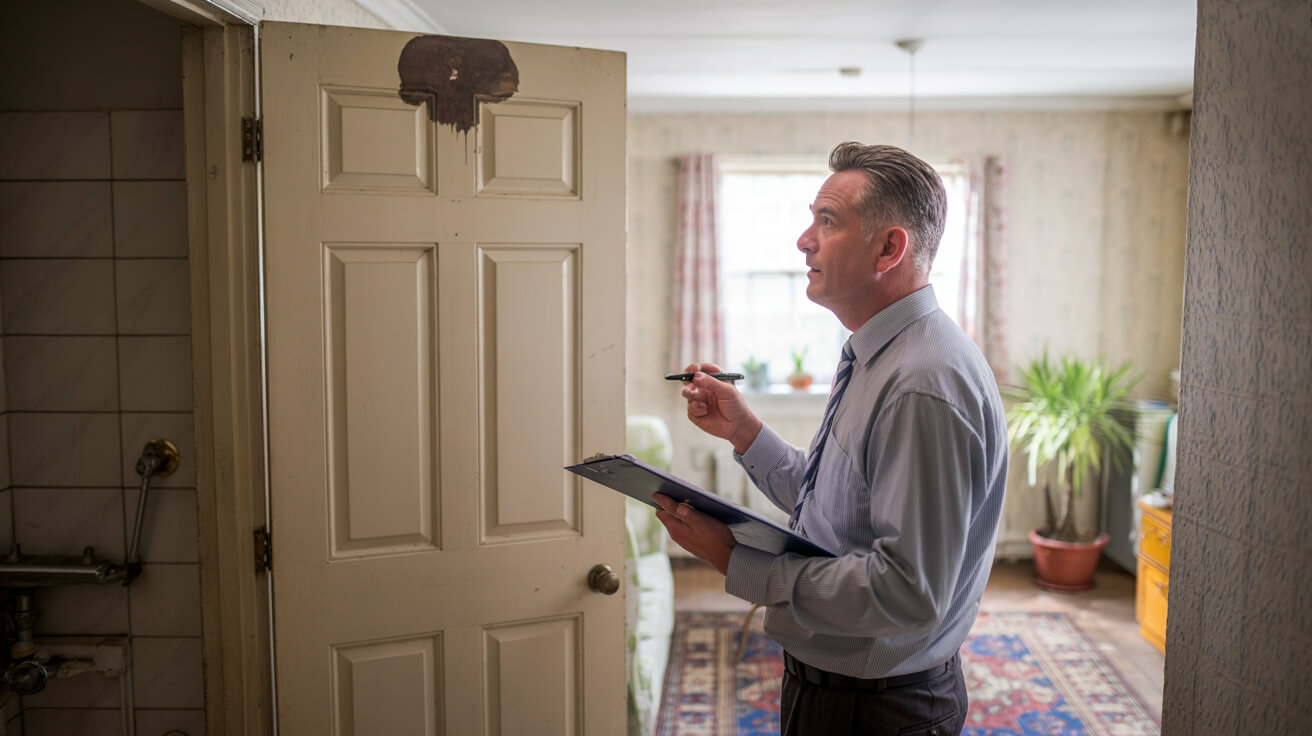
Since the Grenfell disaster, property oversight isn’t split between teams anymore. Environmental health, fire officers, and housing enforcement now operate as joined units—if mould is found, fire safety gets examined, and vice versa.
- Joint investigations have soared.: Three times as many buildings in the southeast are subject to coordinated checks as of 2024. If your building is flagged for “musty odours” or “swollen doors,” you face not one, but two streams of enforcement at once.
- Paperwork gaps equal instant suspicion.: Separate logs for fire and damp? Missing repair dates, or unsynced aftercare? Regulators now treat it as systemic neglect—and the process is much, much harder to unwind.
Stacked risks mean stacked enforcement. You can’t paper over a split documentation chain—it only flags bigger trouble to both the fire brigade and council.
Owners and agents who invest in independent, certified documentation—especially surveyor and contractor-signed chains—see fewer repeat notices and more support from insurers. Self-managed, informal entries are being rejected at audit or claim time more often than ever before.
What Specific Records and Documentation Will Actually Defend You?

Home-made logs and promises don’t pass muster any longer. Only fully documented, third-party-validated chains will insulate you from the worst penalties.
- Remediation chains: —A digital or physical chain capturing every action, from first report to treatment and annual aftercare, with names, dates, and signatures.
- Cross-referenced surveyor, contractor, and insurance records: —These must match, close every loop, and be ready for inspection without delay.
- Transparent notifications: —All major actions must be communicated to both building users (tenants, service users) and the relevant authorities—not just kept in an office drawer.
With airtight records, you’re less likely to face repeated enforcement. You repair once; you prove it forever.
Properties with routine, PCA- and BS 6576-certified aftercare and survey validation had less than a tenth the repeat penalties faced by “DIY-record” landlords in southeast enforcement rounds (lease-advice.org).
Why Aftercare and Ongoing Monitoring Are Essential—Not Extras
Any gap in your monitoring or annual checks doesn’t just risk fines. It can void your remediation guarantees and make insurance a nightmare. Regulators and insurers expect routine, logged aftercare—ventilation checks, moisture metres, and specialist reports as standard, not “best practice.”
Building a Bulletproof Compliance System—Your Five Immediate Steps

To protect your assets and keep your business running, treat every sign or report of damp as both a technical and legal emergency. These actions make the difference:
- Schedule comprehensive damp/fire surveys—Arrange specialist inspections for all communal, below-ground, or older properties.
- Integrate aftercare in your process—This means follow-ups, moisture logging, and formal, surveyor-signed dry-down records for every repair.
- Centralise your documentation—All records, before/after images, work logs, and sign-offs should live in a single, instantly accessible system.
- Notify all stakeholders automatically—Both your tenants and the authorities should see every major update on risk/remediation, without lag.
- Keep a rolling risk log—Update it after every significant action, not just at annual review.
You can’t just fix leaks and hope. If you can’t prove what you did, you might as well not have done it at all.
Property managers in Sussex who work with independent, continuous documentation—often coordinated by Sussex Damp Experts—report far fewer repeat interventions and faster claims settlement after an incident.
How Sussex Damp Experts Keep Local Buildings Open and Out of Trouble

Smart landlords and asset managers are moving away from reactive patch-jobs and towards specialist partnerships that put paperwork, compliance, and technical remediation on a single, bulletproof chain.
Here’s how working with Sussex Damp Experts changes your risk profile:
- PCA-accredited, BS 6576-compliant surveys: —Your fire safety and moisture surveys carry real regulatory weight.
- Diagnosis-to-aftercare evidence chain: —Every action is photo-documented, scheduled, and cross-signed, ready for inspection or court.
- Integrated services: —You get not just a treatment, but a system: ongoing monitoring, notification, ventilation verification, and warranty validation, all in a single chain.
- Defence against repeat enforcement: —Our clients see immediate support from insurers and local authorities thanks to complete, third-party-verified logs, not risky self-reporting.
Landlords with airtight evidence chains don’t just sleep easier—they also command higher property values and shorter downtime when things go wrong.
Sussex Damp Experts has set the standard for multi-residential compliance, routinely fending off repeat penalties and accelerating insurance payouts for our clients across East and West Sussex.
The Risks of Delay—Why Every Missed Repair or Unlogged Issue Now Carries Real Cost
Waiting to act on a reported damp issue is no longer an option. Every missed or deferred repair multiplies exposure, erodes your negotiating power with insurers, and weakens your claim to responsible management.
Speed matters:
- Regulatory teams are working closer together, exchanging data and logs in real time.
- Delays in fixing or documenting moisture risks are logged systemically—making it much harder to defend yourself after an incident.
- Every missed action weakens both your legal defence and your reputation with stakeholders.
Authority and partnership matter:
- Insurers now prefer asset holders who use certified surveyors, not DIY fixes.
- Local authorities recognise and support owners with clearly logged remedial chains and specialist aftercare.
The faster you move, the faster your risk moves off the enforcement radar. Every logged action is a step back toward stability and value.
Step In Front of Enforcement—Defend Your Building, Your Business, and Your Name
A persistent musty smell, a worrying “sticky” door, or a complaint left unanswered is now more than just a maintenance issue—it’s your next liability event. The difference between a minor hassle and a building shutdown is proactive, independent, documented action.
Sussex Damp Experts deliver:
- Accredited, compliance-driven moisture and fire risk surveys tied directly to regulatory frameworks.
- Evidence-backed remediation and aftercare chains that answer to both local authorities and insurance providers.
- Annual monitoring, live updates for all stakeholders, and seamless integration with fire safety systems.
- The kind of proactive proof that gets you back on the rental or owner-occupier market quickly after an incident.
Facing a compliance review? Inherit a lingering damp problem with your last purchase? Don’t wait for the inspector’s letter: contact Sussex Damp Experts—where detailed documentation and proven fixes keep your building, your business, and your name in the clear.
Frequently Asked Questions
What prompts immediate fire safety enforcement when damp or mould compromise building compliance?
Fire enforcement isn’t a distant threat—it moves in as soon as damp, swollen doors, or moisture-logged alarms undermine safe escape or detection.
The minute a damp-ravaged fire door won’t close, an exit frame swells, or smoke detection is impaired by moisture or salt stains, fire officers start a chain reaction. At first, you’ll get a deficiency notice with a short, defined fix window. Stall, or face acute risk—like a door jammed shut—and you’re met with an Enforcement Notice (Article 30, Fire Safety Order), giving just 14–28 days for legal compliance. If escape is endangered, a Prohibition Notice under Article 31 arrives with speed: whole parts of a building can be barred from use without appeal. Neglect stretches further: prosecutions mount with unlimited fines, revoked letting licences, or even criminal sentences when a pattern develops.
A sodden door isn’t a maintenance quirk—it’s a live safety fault, and enforcement lands before the week is out.
Coordination between Fire and Rescue Service and local council is now constant, especially for buildings with multiple tenants or vulnerable residents. Those who show accredited repair logs, up-to-date aftercare records, and credible communication with authorities clear re-inspection hurdles rather than endlessly looping through warnings.
Enforcement moves fast when:
- Risk assessments flag damp-impacted exits or compromised alarm points.
- Notices go ignored, works aren’t finished, or tenants repeatedly report hazards.
- Multiple hazards or occupant complaints result in joint fire and housing intervention.
Staying ahead of compliance:
- Always maintain signed, date-stamped logs for every repair—no exceptions.
- Let only PCA or BS6576-accredited pros carry out fire and damp works.
- Keep open, file-ready correspondence with authorities from first problem to resolution.
Get on the front foot and commission a single, integrated damp/fire safety survey and documentation pack—your compliance shield—delivered by Sussex Damp Experts to secure your records and reputation.
Where does landlord liability extend when damp or mould create fire risks?
Ignore fire risks tied to damp and you don’t just tangle with fines—you risk business closure, criminal liability, and sinking property value.
Legal duties land on whoever holds “responsible person” status; in most cases, both owner and managing agent stand in the firing line. Enforcement gets granular: every missed repair, unsigned log, or ambiguous contractor trail is a chargeable breach. Insurers will push back or drop claims outright; local councils can suspend or pull letting licences. Repeat lapses draw severe court penalties—think capped income, forced repairs, even prison for the worst neglect.
Non-compliance doesn’t just cost pounds and pence—it erodes trust, strips out cover, and can bring projects to a standstill overnight.
Trying to deflect blame rarely helps; authorities now probe chains of command and demand clear “ownership” on both survey and action. DIY repairs, anonymous job sheets, or excuse-based delays rarely stand up to agency or insurer scrutiny.
Most common liability alarms:
- Absence of up-to-date, signed assessments for fire and moisture risk.
- Recurrent complaints, delayed responses, or disputes over who does what.
- Relying on unsanctioned repairs or incomplete paperwork.
De-risking your management:
- Action every notice on deadline, and evidence each repair with accredited documentation.
- Use named, standards-backed contractors to close every compliance loop.
- Share every stage of communication—repairs, inspections, responses—with partners, tenants, and officials.
A ready file of compliance-grade records and certificates from Sussex Damp Experts turns audits from a firefight into a formality—protecting your asset and your name.
Which authorities police damp-related fire hazards, and how do inspection routes overlap?
It’s not one agency—modern enforcement is a tag team between Fire and Rescue (Fire Safety Order) and the environmental health arm of your local council (Housing Act, HHSRS).
Since Grenfell, joint tasking is now normal: a single hazard, like a mould-affected door, can trigger coordinated audits by both fire officers and housing inspectors. Often, a flagged concern in one system prompts a near-instant check in the other, doubling the speed—and weight—of formal intervention. Both teams issue their own notices, inspect independently, and can escalate enforcement in parallel, so a missed repair or poor document trail leaves you fighting fires on two fronts.
Today’s compliance isn’t a one-way street—two agencies, two audits, two potential penalties, all starting from a single missed repair.
Larger risks—HMOs, blocks with history, or sites serving vulnerable people—are prime for joint site visits and shared deadlines. Both fire and environmental inspectors expect cross-compatible evidence, so a split file or misaligned records can double risk exposure.
What dual-agency enforcement looks for:
- Any evidence of damp or fire risk triggers a rolling window of cross-notification and follow-up checks.
- Councils and fire teams expect repair logs and certificates to be synchronised and live.
- Poor record-keeping, ambiguous communications, or partial fixes lead to more frequent, unannounced returns.
How to keep joint oversight streamlined:
- Use an integrated, single-audit trail of every repair, certificate, and communication.
- Contract firms like Sussex Damp Experts who meet dual-agency compliance on both diagnostic and repair work.
With the right paperwork and a unified process, joint inspections become straightforward and shield you from protracted, expensive repeat visits.
What are the real-world consequences when repair deadlines slip or documentation falls short?
Failures on deadlines—or light-touch paper trails—move immediate penalties and even partial shutdowns onto centre stage, often at the worst possible moment for asset value or cash flow.
Start with a deficiency notice and a short “voluntary” window: miss it, and formal enforcement demands follow, with clear terms and deadlines. A single overdue fix means a Prohibition Notice can restrict part or all of your premises from legal use, even with renters or active businesses in situ. Housing officers may make parallel moves: improvement notices, hazard orders, or rent repayment demands cascade quickly. Missed repair windows or poor evidence often mean revoked insurance, frozen rents, cancelled licences, and long periods of lost revenue—even after final repairs.
One unsigned photo or late form can unravel a month’s income and freeze letting licences across an entire portfolio.
DIY or unsanctioned logs provide no protection if tested; only date-stamped, accredited evidence and transparent, pro-level documentation survive under inspection or litigation.
Preventing knock-on effects:
- Only let regulated, accredited contractors handle assessment, treatment, and aftercare.
- Build your compliance record in real time—photos, signatures, logs, every single time.
- Commission inspections ahead of deadlines to shore up your audit trail.
- Schedule annual aftercare checks and keep every stakeholder looped in.
Sussex Damp Experts can deliver a full compliance-safety net that closes enforcement files and resets inspection risk—before timing failures turn into regulatory headaches.
When can minor reports or small visible mould patches trigger formal action under fire or housing law?
Small signs—like faint patches of mould or a single damp mark on a fire route—are now enough to justify enforcement.
Inspectors treat anything beyond isolated, non-recurring cosmetic issues as a flagged hazard. Under the HHSRS, mild damp triggers a Category 1 risk on housing surveys—a mandatory fix—while the Fire Safety Order lets officers call out any feature that blocks or weakens escape. With cross-agency auditing, a tenant’s single photo sent to either council or fire brigade can start a compliance process requiring full documentation, repair proof, and aftercare history.
Inspections don’t wait for a disaster—today’s specialists leap into action on even low-volume, persistent defects.
When records are patchy, or agencies find multiple “resolved” issues with missing evidence, a lone complaint can escalate—and even a previously minor issue may trigger multi-agency visits.
Escalation points that matter:
- Ongoing small reports in high-risk zones (exits, alarms, escape routes) raise inspector attention quickly.
- Lags in fixing or poorly logged solutions are now “red flags,” not minor oversights.
- Swift, evidence-backed repairs halt escalation at source.
A rapid, accredited response—survey, repair, and aftercare from Sussex Damp Experts—shows both agencies that you manage risk before it morphs into enforcement, not after.
Which documentation and audit chains genuinely protect against repeated enforcement, denied claims, or asset risk?
The gold standard is a complete, accredited chain: surveys, signed photos, third-party validation, aftercare logs, and open stakeholder notifications—delivered on time, every time.
Regulators and insurers expect a digital-plus-paper loop showing intake, real repairs, follow-up, and periodic compliance checks. “Homemade” or ad hoc logs, unsigned fixes, and gaps between “completed” repairs and surveyor certificates only invite deeper dives, blocked insurance payouts, and repeat audits. By contrast, properties with a full, pro-signed compliance trail often skate through joint inspections—even when revisited multiple times a year.
A single full-scope certificate can shut down weeks of doubt—while one shaky log can start months of back-and-forth.
Automated systems that batch intake reports, evidence, and maintenance logs for all stakeholders are now best practice—keeping tenants, managers, agents, and officials in sync and confident.
Foundation stones for compliance security:
- Every repair, inspection, aftercare check, and photo is time-stamped, signed, and stored, with direct documentary link to regulatory standards.
- Periodic updates keep everyone in the loop—no “dead ends” or faded contact trails.
- Transparent, audit-ready communication sits at the centre, not as an afterthought.
With Sussex Damp Experts, you get a compliance guarantee—evidence, certificates, and aftercare plans that pre-answer every council, fire, insurer, and audit question, unlocking approvals and keeping your asset in the clear.

