
 By
By  August 26, 2025


Why Are 24-Hour Emergency Damp Responses Now Law—And What’s Really at Stake?
A damp emergency isn’t “bad luck” any more. Since the Social Housing (Regulation) Act 2023 and the echo of Awaab Ishak’s tragedy, your duty is carved in law: when a tenant or resident reports dangerous damp or mould, a 24-hour clock starts—non-negotiable. If you’re a landlord, letting agent, freeholder, council, housing association, or property professional, delay isn’t just frowned on, it’s documented negligence with direct legal, financial, and reputational consequences.
The difference between safeguarding lives and risking everything can be a single missed call or late visit.
What changed? The days of blaming the weather or “waiting on contractors” are gone. Now, public health data spells out the price of inaction: hundreds of hospital admissions and aggravated asthma, especially among children and the medically vulnerable (NHS 2023). Your legal and social credibility hinges on the proof you respond—fast, expertly, and audibly.
Awaab’s Law sets this on the level of a gas leak or exposed live wire. You can’t hide behind process or blame the queue. Authorities want traceable action—calls, photographs, metre readings, witness sign-off. Fail and you don’t just risk fines; you risk national headlines, lost licences, and the sort of reputational wound that property professionals fear most.
So, what does a 24-hour emergency response mean in reality?
What Triggers a True “Damp Emergency” and Starts That 24-Hour Clock?
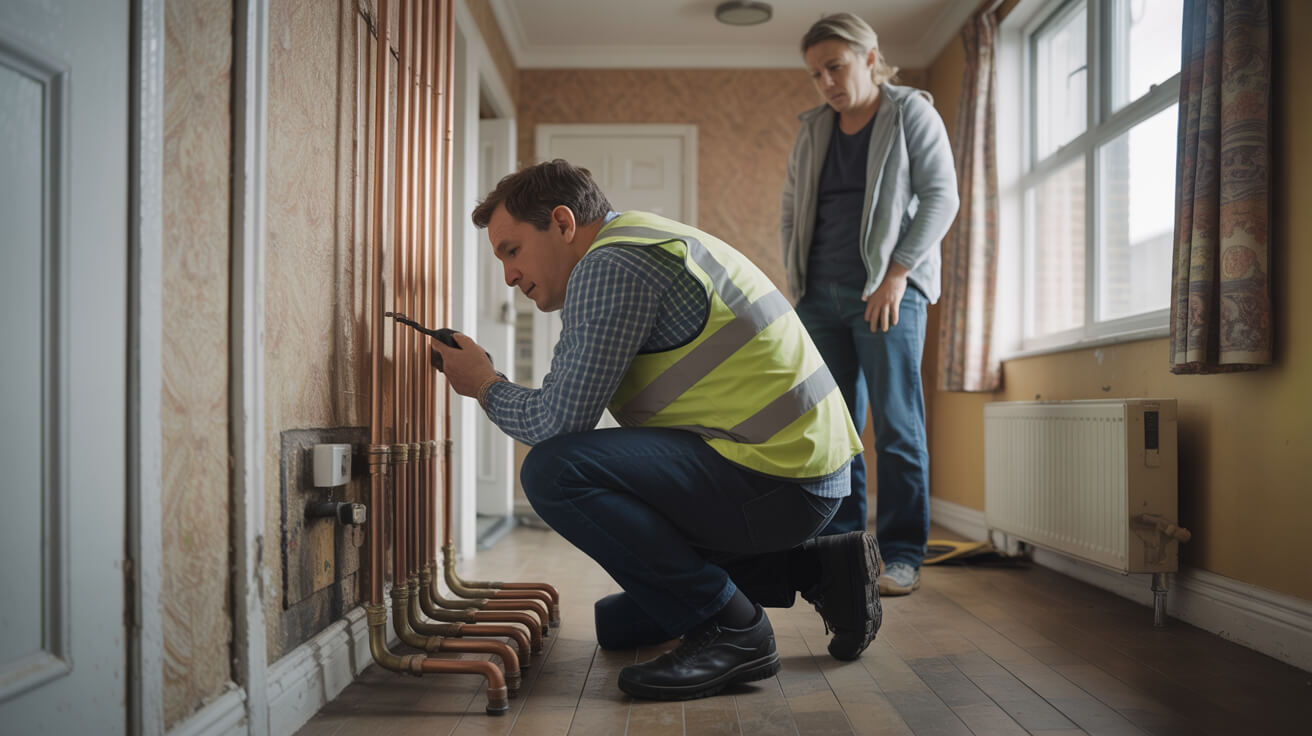
It’s not just gushing pipes or waterfalls down stairwells. The law—and serious insurers—now recognise that invisible and creeping damp can be just as hazardous as obvious disasters. Ignore or downplay and, within 24 hours, you’re no longer just “behind schedule”—you’re out of compliance.
The New Emergency Triggers Landlords and Agents Must Recognise
- Black mould in any sleeping area, nursery, or communal zone: —especially around beds and cots.
- Ceilings that drip, walls that glisten or shed paint: , and any water intrusion near switches or sockets.
- Medical evidence: Any resident reporting worsened chest, skin, or asthma symptoms that could plausibly be linked to the home’s damp.
- Photos, videos, or sensor data: showing spreading stains, visible water ingress, peaking humidity, or condensation run-off.
- The presence of high-risk residents: under-fives, elderly, immunocompromised, or flagged as vulnerable in your CRM records.
If the health or safety of anyone in the home is in doubt, delaying action is no longer just bad service—it’s regulatory breach.
Anyone—contractor, neighbour, or visiting social worker—can ‘press the button’ that starts your 24-hour clock. The system now expects every staffer, at every touchpoint, to log and escalate these warnings urgently. Miss a flag and risk exposure. Overtreat every minor case and risk burnout. The best operators learn smart triage—seeing what’s hiding in plain sight.
What Does Taking “Action” Within 24 Hours Actually Mean Today?
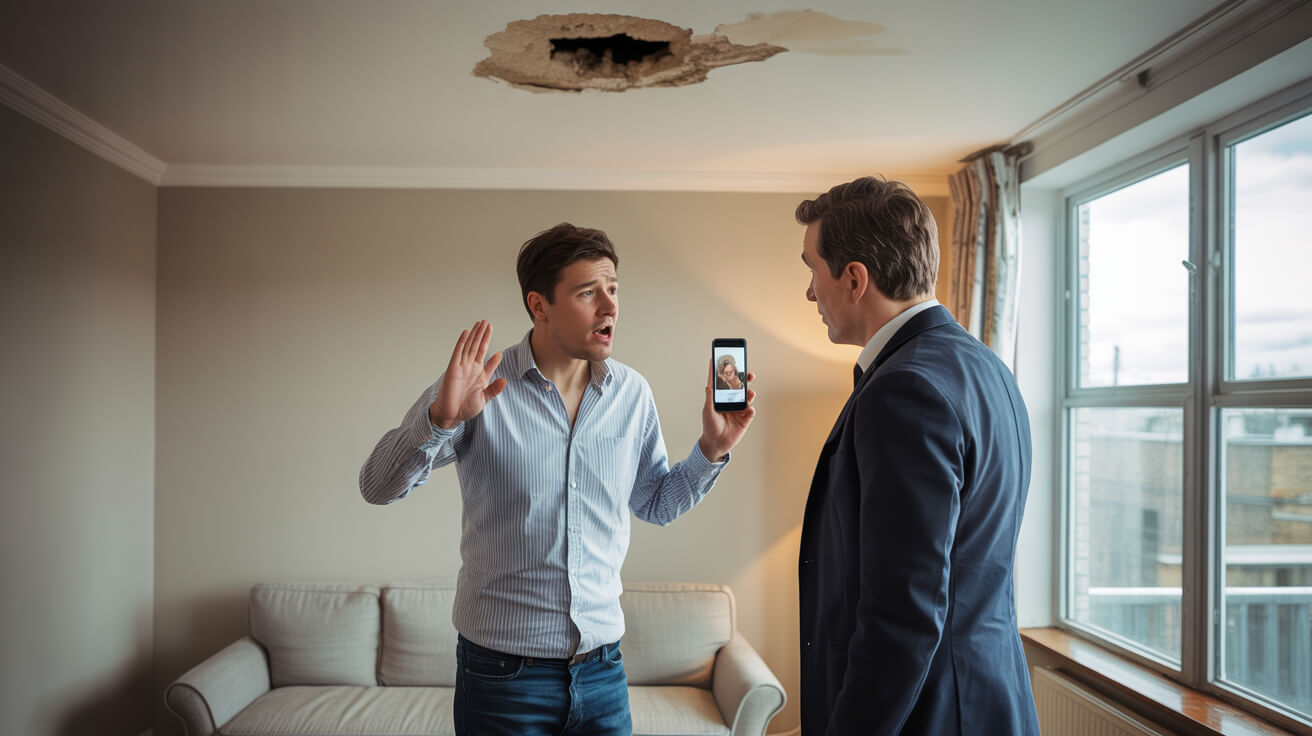
“Logged and noted” used to pass for progress. Those days have vanished. Under new regulation, the only acceptable proof is physical intervention—by someone properly qualified—within a single day of notification, unless an accredited remote assessment is justifiable and fully documented.
Defining Real, Law-Ready Emergency Response
- Dispatch a PCA-accredited damp expert: (or equivalent) within 24 hours, ideally same-day.
- Log evidence: Timestamped photos, digital humidity/temperature readings, atmospheric logs—no guesswork.
- Initiate immediate risk containment: Drying, safe cleaning, signage—anything to halt harm until a full repair is possible.
- Communicate with the resident: , summarising findings and next steps—no one left in the dark.
- Maintain a full, step-by-step record: —site visit time, staff attendance, interventions, follow-up, from first report to final fix.
Your legal shield isn’t a promise—it’s a pile of digital, time-stamped proof. Anything less is evidence of neglect.
Phone advice or vague “we’re scheduling you” emails mean nothing to prosecutors or insurers. Only real events—logged, photographed, and completed by skilled hands—now stand up in court or audit (Housemark 2023).
How Do You Prove Compliance? Building an Audit Trail That Can’t Be Broken

Good intentions don’t keep you safe—provable actions in black-and-white do. The Awaab Law is unapologetic: unless you can show an unbroken digital chain from first report through inspection, remediation, and resident sign-off, you may as well have done nothing.
The Non-Negotiable Audit Trail Components
- Exact timestamps for every entry: —from initial alert to “job closed.”
- Geotagged before/during/after photos and videos: Each with clear room context and device metadata.
- Electronic sign-off: By site staff, resident, operative, or property manager.
- All metre readings: Moisture, humidity, temperature, annotated to each intervention.
- Named staff, named contractors, escalation notes: for any delays or handovers.
- Email, SMS, and phone call logs: Attached to the relevant property and incident.
One missing digital record can cost more than the repair itself—especially when liability, insurance, and future audits come knocking.
Manual logs are now relics. Only secure, cloud-based systems protect both your business and your residents (Housemark, 2023). Make every step visible at a click, or prepare to defend a silence in front of a judge.
What Infrastructure Turns Legal Readiness Into Everyday Reality?

Ticking boxes isn’t enough. To comply—under scrutiny—you must guarantee a real, round-the-clock response, backed by systems that never sleep and teams built for sudden surges.
Building Unbreakable 24/7 Damp Response Teams
- Qualified, on-call specialists: —at least one PCA-accredited or equivalent expert, available outside office hours.
- Multiple reporting channels: mapped and tested: Online forms, direct SMS, emergency phonelines, and image/video uploads.
- Real-time dashboards and alerts: Every emergency visible to all decision-makers and backup teams.
- AUTOMATED escalation: System pings management if response is not dispatched or signed-off in time.
- Weekly and quarterly audits: System stress-tested with simulated emergencies, including after-hours and public holidays.
A good sleep doesn’t protect you from a Sunday night leak—a good system does.
Breakdowns—missed voicemails, system outages, staff sickness—are no longer valid excuses. Your operation must be able to weather storms, both literal and procedural (Housing Ombudsman). Your compliance depends on the team’s weakest hour, not its proudest.
What Are the Real-Life Consequences When the 24-Hour Rule Is Missed?
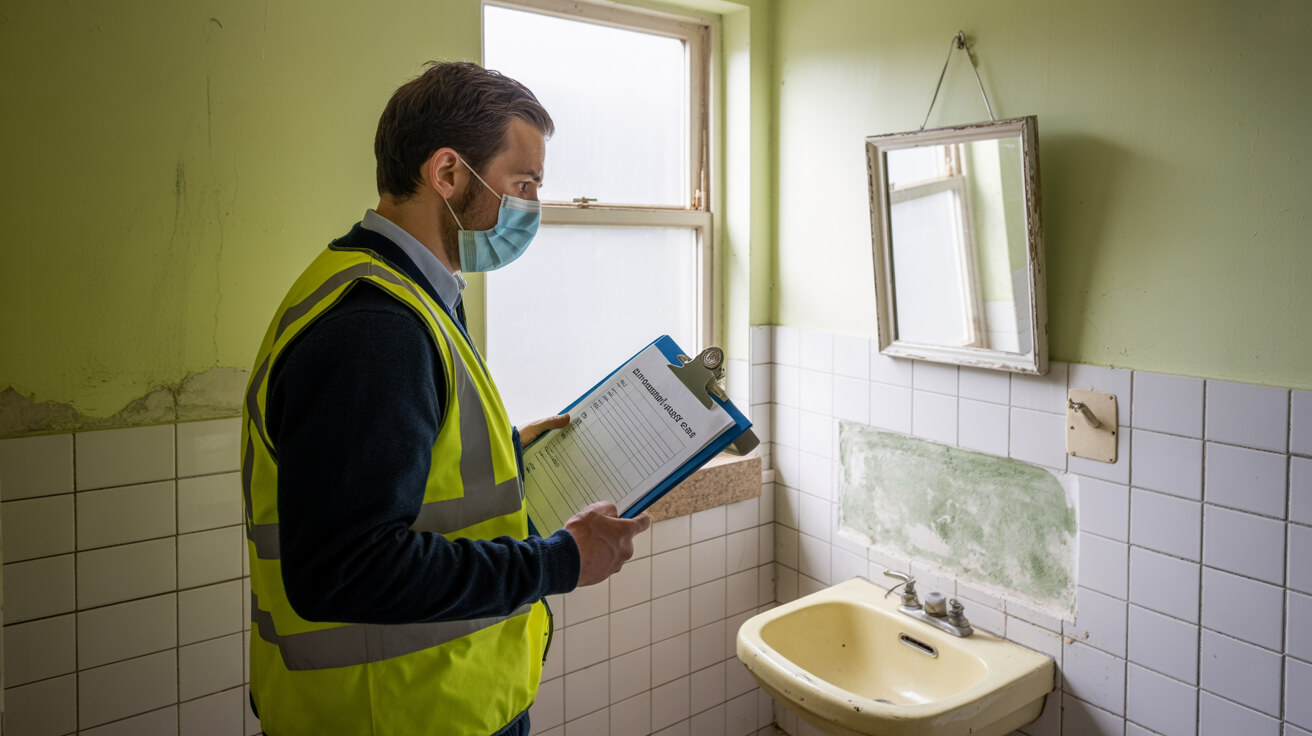
The penalties for missing the law’s deadline are hard-coded and now public. A single lapse can trigger enforcement, emergency work charges billed to you, and a permanent black mark against your portfolio.
The True Cost of a Missed Damp Response
- Emergency works commissioned by council: then billed direct—no appeal window.
- Legal and enforcement costs: spiral, especially for repeat or “systemic” offenders.
- Insurance claims denied: Missed or manipulated logs mean you pay repairs out of pocket.
- Public blacklists and headlines: Damaged brand, trust with potential tenants, and reputation with local authorities.
- Tenants win compensation or escalate easily: with your failed record as their main evidence.
A damp emergency no longer ends with a plaster patch—it can open the door to a compo claim or cost you your letting licence.
The risks now run through every layer of the property ecosystem, from landlords and property agents to social housing providers and facilities managers (Shelter, LocalGov). Only documented, discipline-proof compliance keeps the door open for future business.
How Does Sussex Damp Experts Deliver True 24-Hour Compliance—Not Just Promises?
Anyone can offer a “hotline.” Few commit to the trained, documented, and locally expert chain required by both law and best practice—especially when the pressure mounts.
The Sussex Damp Experts 24-Hour Emergency System
- Rapid-despatch, locally trusted specialists: Not faceless call-centres or unvetted subcontractors—experienced, accredited professionals in Sussex, with local property fluency.
- Forensic diagnostics as default: Not just “looking,” but mapping, salt-testing, thermal and atmospheric measurement—everything photographed and logged.
- Digital audit trail: Every stage from complaint to fix and aftercare, time-stamped, geolocated, and cross-checked by multiple parties.
- Resident sign-off and “closure only after clearance”: Work isn’t done until post-treatment checks and final sign-off happen—no papering over cracks.
- Escalation protocols: Backups ensure emergencies are never missed, even when the unexpected strikes (outages, surges, illness).
- Documentation built for audit: Designed to make future compliance checks, insurance, court evidence, and warranty claims seamless.
Real 24-hour compliance means you sleep easy—because the evidence is ready before the question is ever asked.
Sussex Damp Experts turns legal necessity into a living system—protecting your tenants, your business, and your reputation, every day and every night.
How Can You Guarantee the Right 24-Hour Response With Zero Compromise?

For professionals managing homes, flats, portfolios, or managed estates: The law is no longer a box to tick—it’s a system to live by. Training, readiness, tech, and team discipline are your shield; every missing link or skipped record puts your business at direct risk.
The question isn’t how to “avoid being caught.” It’s about locking in best practice, so compliance is automatic—proof before panic, confidence before crisis. The only winners now are those who understand that protecting people and livelihoods starts the moment the phone rings.
A true emergency response is proof in action—not a note in a diary, but a guarantee you deliver every time.
Protect everything you’ve built: understand the Emergency triggers that demand your next 24-hour response, so assets, families, and futures stay safe.
Frequently Asked Questions
Which landlords must meet Awaab’s Law 24-hour response—and does it affect all rented homes?
Every social housing landlord in England—councils, housing associations, and registered providers—must now respond to emergency damp and mould complaints within 24 hours under Awaab’s Law. Under the Awaab’S Law Requirement, private landlords aren’t currently directly bound by this standard. But if you let property, the direction of the law—and enforcement under the Homes (Fitness for Human Habitation) Act 2018 and HHSRS—means you’re judged by the same yardstick when health or safety is at stake. In practice, Emergency triggers that demand action can arise in any home showing a damp-related risk, so it’s now best to act as if Awaab’s emergency clock is ticking.
How do obligations differ between social and private tenures?
| Requirement | Social Landlords | Private Landlords |
|---|---|---|
| 24-hour legal mandate | Yes (Awaab’s Law, 2025+) | Not yet, but HHSRS applies |
| Evidence expectations | Digital, audit-grade needed | Increasingly council-driven |
| Scope | All social-housed tenants | All tenanted property |
The environment is shifting: council inspectors expect every letting to be documented and risk-triggered, even for private stock. The lesson for property owners is clear—late or sketchy action is now the fastest way to lose your licence, insurance, and reputation.
What counts as a genuine “24-hour emergency” for damp or mould under new law?
Awaab’s Law defines an emergency as any damp, leak, or mould that poses an “imminent and significant threat” to occupants. This goes far beyond obvious black mould; it captures anything likely to impact lungs, skin, or safety quickly—bedroom mould, musty rooms aggravating asthma, water near electrics, or health complaints from vulnerable residents. If a tenant flags risk, your response window is measured in hours, not convenience.
Emergency triggers that demand same-day attention:
- Mould in bedrooms, especially where children or vulnerable people sleep
- Reports of worsening asthma, chronic cough, or skin irritation among occupants
- Fresh leaks, squelchy floors, visible wet stains near electrics
- A persistent musty smell after rain, heating, or in closed-up rooms
- Any tenant complaint referencing a health change tied to damp exposure
You might not spot the mould at first glance, but health signals and damp smells are just as significant. When in doubt, move immediately—a tenant report starts the clock.
Vulnerable residents—babies, frail adults, or anyone with an underlying condition—magnify the urgency. Insurance underwriters and council audits now scrutinise these scenarios closely, expecting clear, timestamped response logs.
What does a compliant 24-hour response really look like, and what’s missing from most routines?
Meeting the 24-hour rule means more than promising a callback. You need to log the complaint, commission a qualified (ideally PCA-accredited) specialist, inspect conditions and log readings, inform residents in writing, and apply a first-line remedy—even if it’s temporary. Skipping steps can land you in breach, even if you think good faith is enough.
Steps that prove a sufficient emergency response:
- Record the first complaint (with photo or message timestamp)
- Book a recognised damp expert, not just a local “handyman”
- Obtain and store digital site readings—moisture metres, thermal imaging, visual documentation
- Issue tenants a written update fixing responsibility and timing
- Apply immediate safety or containment measures if risk is high
- Log each intervention in a way that’s retrievable for audits or disputes
The first 24 hours is your only window for legal defence—after that, it’s too late to repair the paper trail.
Documentation and visible effort matter: letting rumours of delay grow can turn council or media attention on your portfolio in days—not weeks.
Which records actually protect you during council audits, ombudsman appeals, or tenant queries?
In today’s compliance world, evidence isn’t just a bolt-on—it’s your only shield. Every site visit, intervention, and tenant exchange must be digitally logged, timestamped, and (ideally) linked to geolocation and property details. Paper files are now a legal weak point: incomplete or “lost” records can lose you a whole dispute or insurance claim—even if work was done.
Essentials for a legally defensible audit trail:
- Digital photos (before/during/after), each time- and geo-tagged
- Moisture, humidity, and thermal readings saved to your formal report—not just scribbled in a notebook
- All tenant communications, including updates, stored in the cloud
- Specialist credentials, logged and ready for review by the council
- Dates and times attached to every intervention, complaint, and inspection
- Centralised, secure archiving—council requests routinely test the speed of your response
We’ll get the paperwork sorted later is now a direct line to fines. Reliable digital logs speak for themselves if you’re challenged.
Sussex Damp Experts embed this standard at every step, from emergency call through aftercare and annual surveys. When audit or council review arrives, your protection is already in place.
What penalties follow a missed or poorly evidenced 24-hour damp response today?
Miss the response window—or fail to evidence your actions—and the repercussions land fast: unlimited fines, council-commissioned repairs charged at above-market rates, denied insurance, “fit and proper person” suspension, or even criminal prosecution for endangering health. These risks multiply in properties housing children, elderly, or anyone flagged as vulnerable.
Concrete consequences of missing the legal deadline:
- Council can enter, fix, and invoice you at emergency rates (often double normal cost)
- Unlimited fines and compensation orders for tenants
- Removal from government or PRS “fit and proper” registers, affecting future letting ability
- Insurance refusal for damp-linked claims if documentation is inadequate
- Local and national media exposure via “rogue landlord” lists or ombudsman findings
Every hour you delay, both risk and enforcement become more expensive. Digital evidence and swift action are now non-negotiable.
Choosing an expert-led provider who ties every action to a traceable record is worth every pound—one missed response can cost more than a year of preventative care.
How do you pick a provider who genuinely meets legal standards for 24-hour damp emergencies?
You need more than a responsive call-handler or a basic repair visit—your chosen operator must show full forensic training, 24/7 availability, audit-ready digital records, and a track record with council inspections and disputes. A damp specialist who can’t prove the paper trail behind each fix is a liability, not a partner.
How to spot a legally robust damp surveyor or contractor:
- Accreditation: PCA, CSRT, or equivalent specialist badge
- Full digital workflow: moisture mapping, time-stamped media logged at every stage
- Written updates to tenants and property managers—instantly, not after a week of silence
- Integrated aftercare: scheduled follow-ups, accessible warranty and service record
- Field-ready for local authority and insurance demands: plenty of prior experience dealing with housing ombudsman or environmental health
The cheapest option crumbles under audit—even if the fix was fine. True value is a complete compliance chain now, not a scramble after problems break.
Sussex Damp Experts are built on these expectations—site-tested, legally fluent, and transparent from callout to council return. When a law evolves, your portfolio is already future-proofed.
Why are proactive audits and annual aftercare more vital than ever for landlords and property managers?
Waiting for a complaint, council demand, or new regulation is a costly gamble—especially as audit and litigation risks rise. Annual damp reviews, digital record checks, and prompt aftercare interventions keep you ahead of both legal change and market reputation. In the eyes of insurers, ombudsman, and tenants, you’re judged by consistency, not just “fixes.”
Key gains from an annual compliance and aftercare schedule:
- Prevent “small leak” escalation into health or audit crisis
- Flag hidden risks before they become legal liabilities
- Satisfy emerging lender, insurer, and tenant verification criteria
- Demonstrate proactive stewardship to council, buyers, and rating agencies
- Strengthen your position in disputes with well-managed, time-stamped media
Proof in advance is your best defence. One data-driven review outpaces twenty hasty repairs.
Sussex Damp Experts’ aftercare and warranty approach is designed for these new thresholds: scheduled reviews, digital evidence for every step, and seamless tenant communications. If a council, insurer, or ombudsman comes calling, you’re proof-ready—no scramble, no sleepless nights.

