
 By
By  August 26, 2025


Why Did Parliament Create Awaab’s Law—And How Does It Change Emergency Damp and Mould Action?
Awaab’s Law didn’t come from abstract policy meetings or minor technical complaints—it was born in response to a young child’s entirely preventable death, directly caused by unchecked mould and damp in social housing. In 2020, the tragic loss of two-year-old Awaab Ishak revealed a brutal reality, with Awaab’S Law Investigating whether there is a significant or emergency hazard becoming central to the response: damp and mould aren’t “minor annoyances,” but life-threatening dangers when ignored. The enforcement of awaabs law marks a break from the slow, often discretionary approaches property managers and landlords had long relied on when handling moisture complaints—a set-up that left families exposed and unprotected. Now, the law makes it official: every reported hazard triggers a clock, and failing to meet the deadline is no longer just bad practice, but a breach carrying legal, financial, and public reputation consequences.
A single missed complaint is no longer a shrug—it’s a test of your competence, and your values.
Parliament acted not simply to update procedures, but to reset the entire urgency around indoor damp. Unchecked moisture, mould, and poor housing conditions became matters of public health, legislative action, and—when things are missed—headline risk. Property professionals are expected to document, escalate, and resolve: not “at one’s convenience,” but as emergency work, comparable to a gas leak response.
What Sparked a Nationwide Change in Damp Law?
Nothing forces reform like tragedy. Awaab Ishak’s death was a wake-up call for the entire UK property sector and Parliament alike (BBC 2023). The inquest was plain: repeated reports of damp, visible mould, GP notes recommending urgent action—all fell on deaf ears, and the consequences were fatal. Public outrage grew as media and coroner’s comments made clear that these were not isolated or rare events in social housing.
A stained ceiling forced government hands—damp hazards made the leap from ‘nagging repair’ to public emergency overnight.
This event destroyed the long-standing assumption that damp is merely aesthetic, or “normal for old homes.” The result: Parliament introduced time-limited requirements, forced escalation, and independent review mechanisms that set a new, uncompromising gold standard.
From Slow Repairs to Fixed Deadlines
The biggest shift under Awaab’s Law isn’t a tweak to paperwork—it’s a total reset on timescales and accountability. Repair queues, polite nudges, and discretionary timelines are out. Immediate inspection and action are now non-negotiable:
- Inside 10 days: of a tenant’s complaint, an in-person inspection is required—no delays, no side-stepping.
- Within 3 days: of that, findings must be shared directly with residents.
- Within 5 days: of risk confirmation, significant works must have started.
- Within 24 hours: for emergencies—severe mould, collapsing features, or signs of acute health risk—either the hazard is resolved or vulnerable tenants must be rehoused.
Government guidance is explicit: intention is irrelevant, only results and documentation matter (gov.uk). Miss a step, and you risk financial penalties, council enforcement, damage to brand, and public scrutiny.
The timer starts as soon as a complaint lands—documented action is your only shield if disaster hits.
What Makes Damp and Mould in Housing a Health and Legal Emergency?
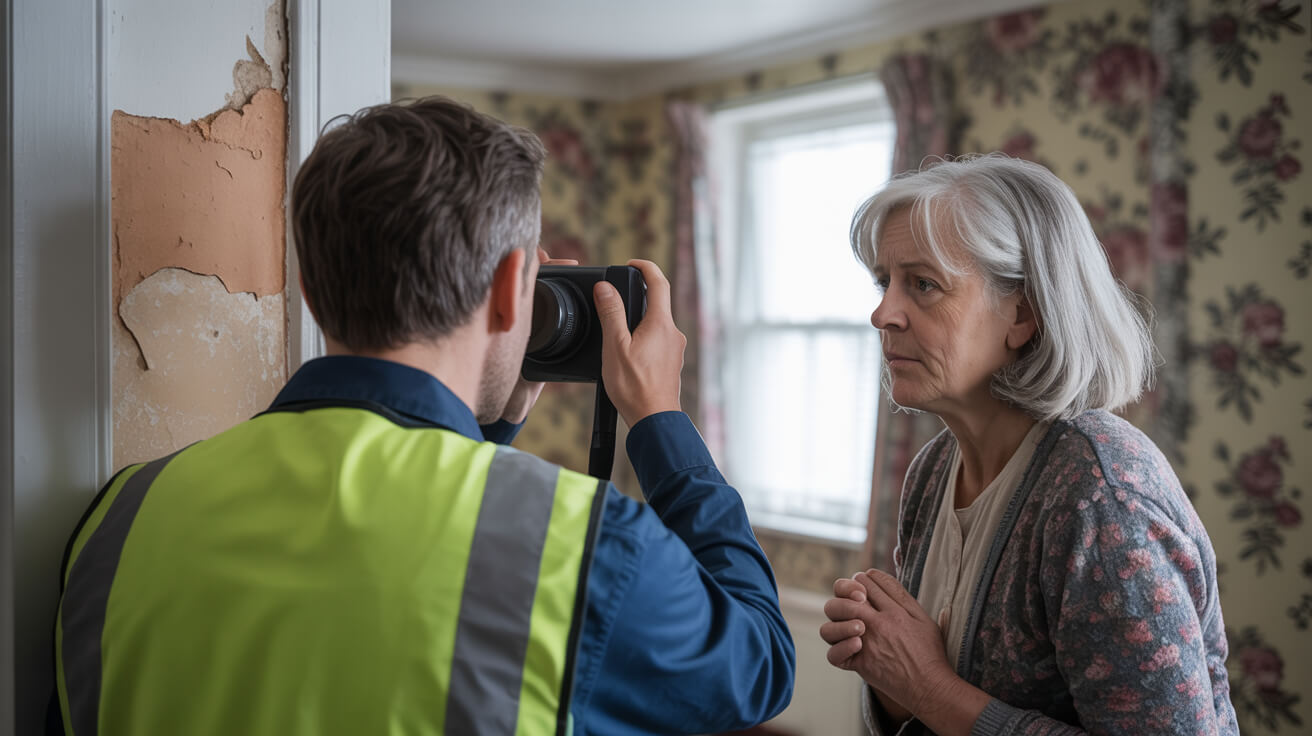
Damp and mould have gone from “background risks” to Category 1 health hazards in the eyes of UK law and the NHS (nhs.uk). This means they’re considered immediate, direct threats to wellbeing and even life. The science isn’t subtle—exposure can result in everything from persistent coughs and asthma to deadly lung infections, with the effects hitting young children, the elderly, and vulnerable adults hardest.
You can’t see every risk—respiratory collapse often starts quietly and grows fast.
From a legal and business standpoint, the elevation of damp/mould to Category 1 means that ignoring, delaying, or downplaying complaints puts your entire operation at risk—homes aren’t just harder to sell or rent, but may instantly trigger failed surveys, mortgage holds, or insurers limiting coverage (Shelter).
Tangible Health Consequences—and Business Fallout
Consider the medical reality: unchecked mould exposure is directly tied to increased hospital admissions for asthma, bronchitis, and lower respiratory tract infections, particularly in children and the vulnerable (nhs.uk). It’s not just physical discomfort—there are well-documented cases of chronic lung scarring, skin conditions, and severe allergic responses.
On the financial and professional side, the fallout is just as severe:
- Mortgage roadblocks: Surveyors routinely mark properties with evidence of untreated damp as “not fit for loan,” derailing purchases or refinancing.
- Insurance complications: Most policies now treat unresolved damp and mould as exclusions or grounds for claim denial, especially if flagged in previous reports.
- Compliance exposure: A late or incomplete response, especially one lacking forensic documentation, is increasingly likely to escalate through council, ombudsman, or even criminal prosecution channels ([propertymark.co.uk](https://www.propertymark.co.uk/resource/awaabs-law-new-law-to-require-landlords-to-act-on-damp-and-mould.html?utm_source=openai)).
If you’re managing property or providing advice, the real financial and legal risk begins the moment damp or mould is noticed—or, even worse, if it is reported but not acted upon.
New Stakes Mean New Standards of Proof
Inaction or generic “intentions” won’t cut it. Professionals must prove—not merely claim—that thorough inspection, health risk assessment, and remediation have occurred. That means timestamped photos, surveyor reports, matched correspondence records, and evidence that the resident was kept informed at every stage.
Authorities, banks, and insurers now operate on a unified audit principle: “If you can’t prove it, you didn’t do it.” Relying on memory, casual notes, or handshake agreements leaves your business, licence, and assets exposed. For modern property practice, robust record-keeping and technical evidence (like moisture gradient mapping by certified experts) aren’t just best practice—they’re essential survival tools.
What Specific Obligations Does Awaab’s Law Impose on Anyone Responsible for Repairs?

Awaab’s Law is not a suggestion—it’s a playbook of fixed, inflexible deadlines that every property owner, letting agent, council, or manager must follow, on pain of real sanctions.
- Inspection (within 10 days): All reported cases of damp, mould, or related hazards *must* trigger a documented site inspection within 10 days. This means boots on the ground, not a call or an email.
- Written report (within 3 days): Findings must be shared in writing directly with the complainant or household, leaving a clear audit trail.
- Confirmed hazard (5 days): Where a hazard is established, repairs must start within five days—whether that means patching leaks, removing damaged plaster, or initiating a full remediation sequence.
- Emergency (24 hours): Urgent threats—such as extensive visible mould, structural deterioration, or acute respiratory symptoms—demand same-day response. If you can’t physically halt the risk in that time, you must arrange for safe, alternative accommodation ([gov.uk](https://www.gov.uk/government/publications/awaabs-law-draught-guidance-for-social-landlords/awaabs-law-draught-guidance-for-social-landlords?utm_source=openai), [Housing Ombudsman](https://www.housing-ombudsman.org.uk/news/awaabs-law-sets-tough-new-deadlines-for-repairs/?utm_source=openai)).
Only real, documented action proves compliance—‘planning to’ won’t protect against penalty or loss.
The Emergency Trigger: When Does the 24-Hour Clock Start?
As soon as any report includes credible evidence that an occupant may suffer serious harm before the next working day—whether that’s severe visible mould, active water ingress, or collapse risk—the 24-hour deadline starts ticking.
Specific triggers include:
- Black or green mould spreading rapidly, or visible moisture patches that affect structural elements.
- Physical collapse (wall, ceiling) or persistent, strong musty odours.
- Affected residents showing significant respiratory symptoms—wheezing, chest pain, confusion, blue lips ([nhs.uk](https://www.nhs.uk/conditions/damp-and-mould/#:~:text=Seek%20immediate%20medical%20help)).
Once triggered, all relevant actions, from photo logs to communication to works orders or relocation, must be tracked in detail. Should the case land in court or with regulators, the burden is on the owner or manager to show a full chain of documented steps—hearsay, informal notes, or missed messages are no longer accepted.
Who Is Bound by Awaab’s Law Now—and Who Will Be Next?
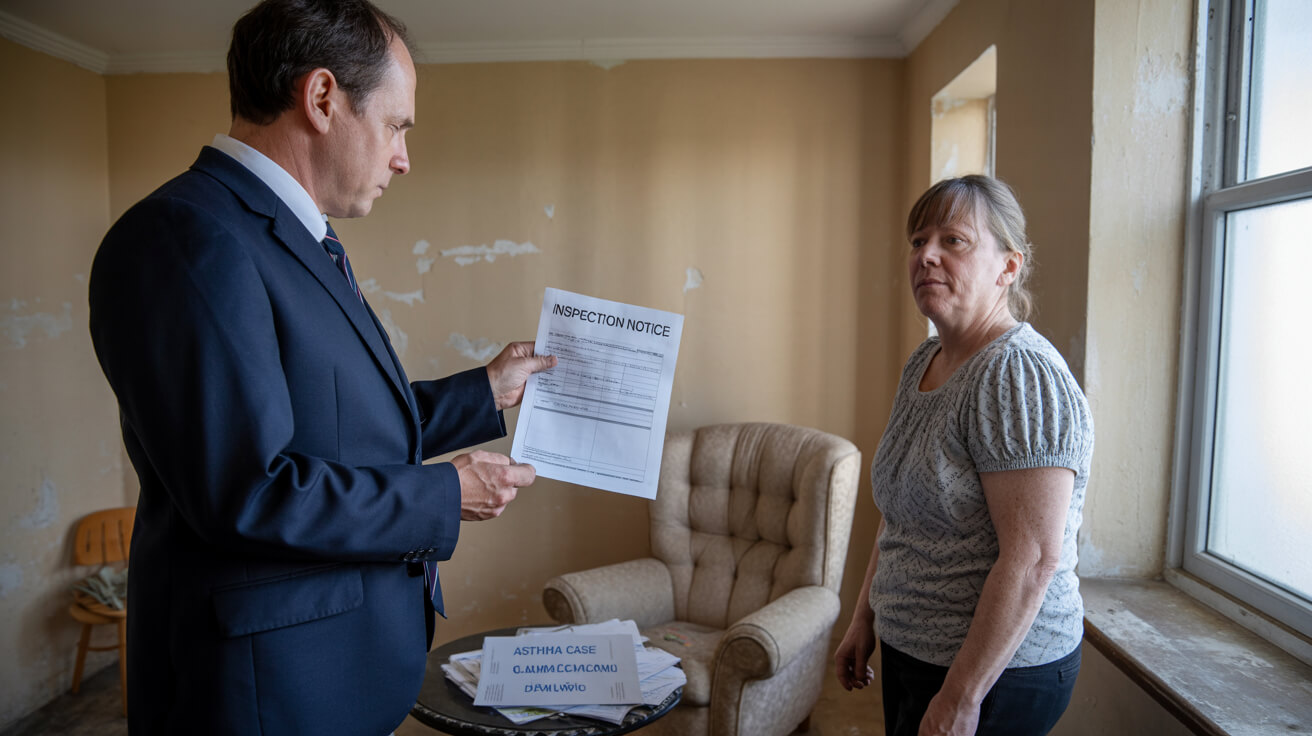
Right now, all social landlords—public housing bodies, councils, and registered providers—are bound to comply fully with Awaab’s Law. But property market behaviour signals a fast-rising tide for the private sector, as mortgage lenders, insurers, and surveyors now reference Awaab’s Law as the minimum professional benchmark, regardless of formal sector.
- Public housing: Enforcement began immediately, with councils and authorities already running spot checks, audit trails, and public reporting.
- Private landlords and agents: Major lenders, insurers, and even letting portals are embedding Awaab’s Law into their risk procedures, proactively requiring documentary evidence before loans or policies are progressed ([bbc.co.uk](https://www.bbc.co.uk/news/articles/c70k7kr5rjjo?utm_source=openai)). Delays or missing proof are already causing real obstacles for buy-to-let owners, developers, and agents.
The eyes on your property now include lenders, insurers, councils—and future buyers. The cost of lagging isn’t just fines, but lost value.
The practical implication: anyone with a hand in property management—especially in high-risk or multi-tenancy environments—needs to operate at the new legal and professional minimum, not “wait and see.” Standing still is now a business risk.
What Hazards and Events Trigger Immediate Legal Action—and How Do You Prove Compliance?

A range of symptoms and incidents now trigger not just ethical, but legal imperatives:
- Severe visible mould: Black or green spores on surfaces, particularly in living areas, bedrooms, or kitchens.
- Structural decay: Collapsing, crumbling, or spalling plaster, active leaks intruding into electrics or walkways.
- Acute symptoms: Reports of breathing difficulties, dizziness, persistent cough, or blue lips.
- Complaints from or concerning vulnerable individuals: Young children, the elderly, immunocompromised, or anyone with pre-existing respiratory issues.
Upon a report meeting these criteria, the law requires not just action—but proof of action. Fines, remediation orders, and even criminal referrals may result if deadlines are missed or the risk is downplayed.
Proof: The Legal Defence Chain You Can’t Skip
Your best—and often only—defence is robust, time-stamped, and technical documentation. These are the minimum requirements for a legally defensible response:
- Digital complaint records (email, portal logs, ticketing systems).
- Photographic documentation showing the issue prior to intervention.
- Surveyor-grade moisture logs, salt or condensation mapping, and root cause analysis.
- Communication records showing tenants and relevant authorities updated within official timeframes.
- Final confirmation of works completed (before/after images) and, where necessary, medical or environmental health reports.
Each record should be stored securely and linked to the relevant property, tenant file, and remediation action.
How Should Tenants, Landlords, and Agents Report and Escalate Damp Emergencies—And Secure a Legally Defensible Outcome?

With Awaab’s Law now in effect, the process for reporting and escalation is no longer ad-hoc. Follow this chain to reduce risk and ensure compliance:
1. Gather and Document Evidence
As soon as an issue is spotted:
- Take clear, time-stamped photos or videos.
- Store all written correspondence (emails, official forms, text messages).
- Collect any medical or council evidence relating to the impact of the problem.
2. Make a Formal, Traceable Complaint
Use the specific reporting channel named in the tenancy agreement, official portal, or via certified letter—never rely only on phone calls or verbal reports. Reference Awaab’s Law in the complaint to trigger the regulated deadlines.
Every minute without a documented report is wasted time under the law’s clock.
3. Escalate Quickly if Deadlines Are Missed
If:
- No inspection has occurred within 10 days,
- Written findings are not received within 3 days of the visit, or
- Remediation works have not started by the 5-day deadline after risk confirmation,
then escalate to Environmental Health, the Housing Ombudsman, or Citizens Advice immediately (Citizens Advice).
4. Secure a Forensic, Surveyor-Level Report
Disputes don’t resolve on promises. For sale, insurance, or council action, only a detailed, surveyor-led report—including moisture mapping, salt testing, and root cause analysis—stands up to full scrutiny (Property Care Association). The more technical and objective your evidence, the safer your legal and financial position.
Sussex Damp Experts—Your Technical Partner for Damp Surveys, Legal Compliance, and Asset Protection

For anyone responsible for property—be it a single home, a managed portfolio, or a block of flats—there’s only one way to play under Awaab’s Law: act early, document everything, and use trusted professionals to close the loop.
Sussex Damp Experts delivers on that need with:
- Forensically compliant surveys: All on-site inspections performed to BS6576 standard, supported with photographic and sensor logs.
- Rapid reporting: In emergencies or tight transactions, we deliver next-working-day surveyor letters accepted by councils, insurers, and mortgage lenders.
- Expert remediation planning: Clear, practical steps for repairing causes, preventing recurrence, and managing disruption are included in every report.
The real value isn’t just survey evidence—it’s knowing a professional team stands behind every line you file with a bank, council, or insurer.
Clients from housing associations to private landlords and owner-occupiers now treat expertise as their insurance policy—cutting the risk of legal headaches, sale collapse, or public exposure. The smart move is to close gaps before they open.
How Owners, Agents, and Landlords Can Lead the Way Under Awaab’s Law

In the current climate, owners and agents no longer get credit just for being “responsive.” The new reputation benchmark is set by those who:
- Commission regular, surveyor-standard damp and mould inspections at tenancy changes or property sales.
- Implement evidence-driven records—photos, logs, and written reports—for every complaint, matching or beating Awaab’s Law deadlines.
- Digitise and automate documentation, scheduling, and communication to ensure not a single step falls through the cracks.
Agents and landlords who treat these standards as an opportunity—not a minimum—become the sector leaders, earning the trust of tenants, buyers, and lenders. Reluctance or delay gives leverage to competitors, raises compliance headaches, and risks irreversible harm to brand and asset value.
There are no medals for the slowest responder—but plenty of room for the agent or owner who leads with proof and care.
Contact Sussex Damp Experts—Act Before the Clock Starts
Every delay is a risk. Sussex Damp Experts stands ready to provide urgent, surveyor-grade support—whether you manage a single house, a full street, or sensitive multi-tenant buildings. Our name is trusted by councils, lenders, and property professionals for fast, compliant damp surveys that keep your assets safe and your legal exposure to a minimum.
Book a priority inspection, and let our experienced team help you avoid the stress of last-minute scrambles, client disputes, or lost deals. Move first, move right, and safeguard everyone who relies on your property.
Moisture only moves one way—quietly forward. Choosing the expert who stays a step ahead makes all the difference.
Frequently Asked Questions
What specific events make damp or mould a legal emergency—and how can landlords or agents spot them early?
A emergency under Awaab’s Law is triggered the instant damp or mould threatens health or property safety—far beyond the days of waiting on slow-moving rot or low-level stains. The telltale signs aren’t just cosmetic; it’s the combination of rapid advance or obvious health symptoms that flips routine management into a legal race against time. Fast-forming black or green mould on bedroom walls, leaks pooling near electrical sockets, sudden coughing attacks in children, or any medical evidence linking the building to respiratory trouble all elevate the issue. Even a worried tenant mentioning a sleeping baby, an elderly resident, or a person with immune problems turns a patch of damp into a compliance crisis.
A 24-hour delay with the wrong client—child, elder, or sick person—turns maintenance into court action.
For housing teams, being “first on site” is now more than a promise of service—each call, email, or message is a potential legal trigger. Every time a tenant reports a physical symptom or signs of extensive moisture, you must treat it as a test case. General maintenance hands without forensic expertise are a liability—legal standards expect a BS6576/PCA-accredited surveyor to decide if the risk is real. If risk is present and vulnerable residents are involved, the legal burden lands squarely on the landlord or designated agent. The signal for action is not the size of a spot—it’s the impact on air quality, health, or structure.
Key risk accelerators to monitor:
- Mould-growing in bedrooms or living zones within a single week.
- Active water ingress, especially near electrics.
- Breathlessness, black spots, chest pain, or blue lips reported inside the property.
- At-risk groups flagged—babies, elderly, chronically ill, immunosuppressed.
- Complaints from tenant or advocate (doctor, support worker).
Landlords and managing agents must respond faster—any hope of delay “to see if it clears” is now a regulatory risk, not cautious practice.
How do the new Awaab Law response deadlines actually work—and what evidence will compliance demand?
Awaab’s Law resets the landlord’s timeline: not in “weeks,” but measured in hours and days with no wiggle room. If a serious risk is flagged, there’s a strict protocol:
- 24 hours: “Make safe” immediately—either repair the hazard or provide alternative emergency accommodation.
- 10 days: Complete an in-person inspection by a qualified, accredited surveyor. No exceptions for weekends or holidays.
- 3 days post-inspection: Deliver a written, signed report—digital or hard copy—to all tenants involved.
- 5 days from diagnosis: Begin repairs with clear documentation; simply booking a contractor isn’t enough.
Missing any timeline isn’t just an administrative slip. Every step now requires timestamped evidence: complaint logs, dated photo/video, signed surveyor’s reports, and written notifications. Housing ombudsmen, local councils, and insurance providers routinely ask for this trail. Failure on documentation is seen as failure on safety—defaulting responsibility to the landlord.
| Step | Deadline | Compliance Proof |
|---|---|---|
| Make safe | 24 hours | Photo/video + log or hotel receipt |
| Full inspection | 10 days | Surveyor’s report (BS6576/PCA) |
| Notify tenants | 3 days post-survey | Written/emailed digital or physical notification |
| Begin repairs | 5 days after hazard | On-site work evidence, contractor logs |
A missing written update is now a regulatory red card—tenants and councils will hold you to every timer.
Landlord, agent, and contractor alike must build the evidence trail before regulators come asking. The new Awaab Law protocol isn’t optional—it’s the standard all serious property teams must meet to stay protected.
What financial and legal penalties could landlords or agents face for slow or incomplete responses?
The risk landscape has changed: delays and incomplete records now cost landlords far more than any repair bill. Each failure to “make safe” within 24 hours, or to meet the 10/3/5-day deadlines, exposes owners to severe fines of up to £30,000 per breach—per property, per incident. For proven cases of injury, neglect, or repeated delay, criminal prosecution and unlimited fines are possible. Councils can order forced rehousing at the landlord’s expense, and a single incident traced to compliance failure can get a provider barred from future social housing contracts.
Failure to document actions is now a legal weakness—every council and ombudsman audits for timestamped responses. Mortgage providers and insurers flag noncompliant properties as uninsurable and unmortgageable, limiting the asset’s financial future. Even a single Awaab Law breach disrupts the risk profile for years, leaving reputational scars and ongoing cost.
| Missed Step | Consequence |
|---|---|
| No 24hr response | £30,000+ fine, forced rehousing |
| Late inspection/repairs | Additional fines, ombudsman action |
| Neglect/repeat breaches | Unlimited fines, regulatory bans |
| Health/property harm | Damages, claim/insurance loss |
One missed deadline can unravel years of careful portfolio building—no sheet of paperwork can fix a record of neglect.
The cost of prompt, accredited inspection is a small investment compared to the penalties for a single missed legal window. Proactive property management is now the most financially prudent strategy on the market.
How does evidence collection protect owners, agents, and tenants if there’s a dispute or investigation?
Thorough documentation—not just repair bills—has become your legal best friend. Every notification, investigation, or repair must generate a data chain: timestamped complaint (email, message, log), photographic and video proof before/after works, BS6576/PCA surveyor’s reports, and written evidence sent to affected tenants within three days. Rent receipts or hotel bills show compliance if emergency accommodation is provided. For any escalation (to council or NHS), correspondence and outcome records must be on file.
A five-year archive of these chains is the new baseline, especially vital for landlords considering property sales, re-mortgaging, or with multi-tenant risk. For tenants, keeping their own written log is vital. If there’s ever disagreement, only the quality and traceability of your audit trail counts—regulators and insurers expect nothing less.
Paint dries, memories fade—digital records and expert reports are what defend your business if challenged.
A dedicated folder for every incident—photos, logs, repair schedules, proof of all written communications—keeps you in control. Forgetting a single notification or sending a late inspection summary leaves a loophole for disputes.
Evidence collection essentials:
- Timestamped complaint logs (email, call, message)
- Photographic/video evidence at each intervention
- Surveyor report with findings and cure plan
- Signed or digital notification to each tenant
- Contractor work orders, dispatch logs, and receipts
- Proof of alternate accommodation/hotel if needed
- Copies of all communications with authorities/NHS
Agents and landlords who can evidence every minute of their process become the benchmark for local compliance and trust.
What practical steps guarantee compliant, timely action for every stakeholder—landlords, agents, and tenants?
True compliance means having a procedure, not praying for luck. As a tenant or resident, always log problems in writing—photos, dates, rooms affected, who’s at risk (child, elder, medical issue), and push for a formal complaint ticket or email trail. Seek a doctor’s note or a reference to NHS 111 if health is involved.
Landlords and agents should immediately log all incoming risk alerts, then schedule a BS6576/PCA-accredited survey. Next, provide every involved tenant a written, clear summary—digital or paper—within the three‑day timeline, followed by rapid, visible repairs. If any step is delayed, communicate the delay with evidence and offer alternative accommodation for emergencies.
Red-alert protocols must apply to high-risk groups, repeat offenders, or in buildings with historical complaints. For escalation, both tenants and landlords need to keep all communication open with Environmental Health, Housing Ombudsman, or legal advisers. Contractors must adhere strictly to the professional surveyor’s recommendations.
| Role | Must-do Action Before Deadline |
|---|---|
| Tenant/resident | Written, photo-documented complaint |
| Landlord/agent | Log issue, book accredited survey fast |
| Surveyor/contractor | Submit formal report/findings, commence timely repair |
| Everyone | Keep all logs, digital and physical |
The side with the tightest, clearest logbook always wins the compliance contest.
Stakeholders who get ahead of the process—proactively documenting and anticipating questions—become those local authorities, lenders, and insurers want to work with.
How is Awaab’s Law shifting property management standards—and what ripple effects should buyers, landlords, and pros prepare for?
Awaab’s Law governs all council and housing association (social housing) stock in England from October 2025, creating a “new normal” that’s already spreading. Private rentals, leaseholds, and even homes up for sale now face severe scrutiny: mortgage reviewers and insurers expect Awaab-level evidence even before legal deadlines officially land. Surveyors and agents increasingly measure property desirability by the ability to prove accredited response and transparent record-keeping.
It’s not just landlords who must prepare. Letting agents, renovation professionals, and property managers all face rising bar set by social sector standards. A single compliance breach can affect insurance renewal, sales processes, or funding options. For buyers, “Awaab compliance history” is fast becoming a selling point as important as EPC ratings. For contractors and surveyors, being accredited and documentation-savvy is more bankable than ever.
| Property/Role | Awaab Law Applies | New Industry Pressure |
|---|---|---|
| Social housing/council/HA | October 2025 | Full legal protocol required |
| Tenants (social sector) | October 2025 | 24hr/10d/3d/5d response mandate |
| Agents, managers, officers | October 2025 | Compliance, no bypass allowed |
| Private landlords, sellers | Indirect, live now | Mortgage, insurance scrutiny |
| Buyers, lenders, surveyors | Indirect, live now | Demand for compliance records |
Failing the Awaab test now means not just fines, but lost deals, uninsured risk, and shrinking asset value.
Property professionals and owners who move early, assembling evidence, partners, and accredited documentation before the law lands, will command the best risk ratings and market trust. The compliance arms race has begun—lead it, and your buildings and business become the gold standard.
Don’t risk being caught on the wrong side of Awaab’s Law. Sussex Damp Experts delivers urgent, accredited inspections and bulletproof compliance records, keeping homes safe, portfolios protected, and every stakeholder a step ahead. Book an expert damp survey or compliance check and see why leading owners and professionals trust Sussex Damp Experts for peace of mind.

