
 By
By  August 26, 2025

Could Hidden Damp and Mould Leave Your High-Rise Building Vulnerable Under the Fire Safety Order?
The quiet presence of damp and mould in high-rise buildings is not just about unsightly blemishes or a ticking maintenance job. It’s a silent agent that slices through your fire protection, eroding the layers meant to stop disaster in its tracks. If you allow moisture to creep behind your paintwork or linger beneath plaster, you’re not just risking a bit of peeling—it’s undermining the very systems designed to save lives and keep you on the right side of the Fire Safety Order 2005.
Damp spots aren’t just surface scars—they mark holes in your building’s defences.
For property owners, building managers, and compliance leads, that spells latent risk with teeth. Moisture doesn’t care about your fire doors or compartment lines; it slips in, softens the core, and lets fire travel routes that should have stopped dead. Evidence from Shelter shows almost one in five UK homes battle persistent damp and mould (Shelter), so this isn’t a marginal threat. It’s a risk hiding in plain sight, capable of multiplying your legal and financial exposure while quietly undermining the very barriers that insurers and fire marshals rely on.
Let’s cut to the core: if water can seep in behind the scenes, you’re banking on luck the day a fire starts. Your building’s future—and the safety of every resident—hangs on the integrity of systems you may not even know are failing, right now.
How Does Damp Undermine Fire Safety Construction—and Why Don’t Visual Inspections Catch It?
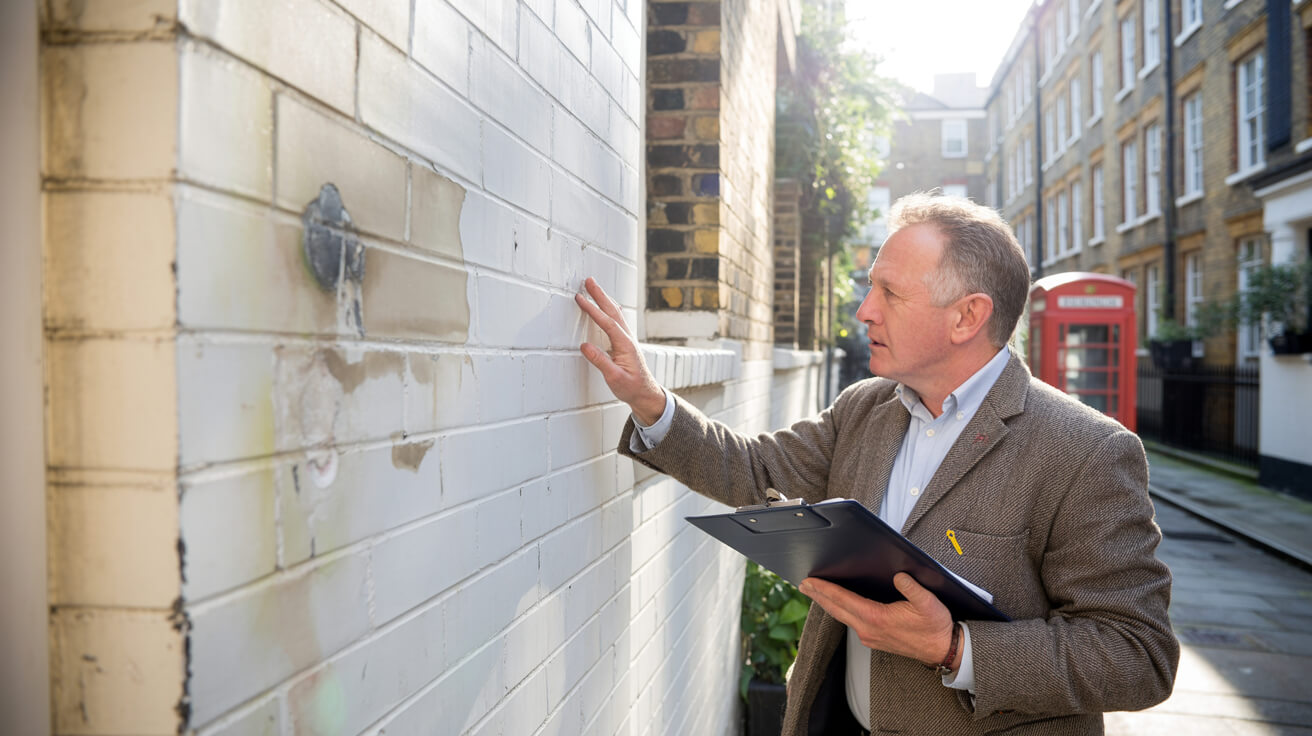
Damp’s most dangerous trick is its ability to operate where the eye can’t see. The standard walk-around inspection, clipboard in hand, will miss the threat every time. That’s because water isn’t a show-off. It slips unnoticed through fine cracks, moves laterally through insulation, and softens supposedly “fireproof” doors from the inside out. When these barriers take on moisture, their rated resistance to fire isn’t just dented—it can collapse, dropping by as much as 75% (London Fire Brigade).
Fire resistance drops quietly—by the time you spot mould, time’s already slipped away.
And it gets worse. Plasterboard that silently absorbs moisture becomes a sponge that flames tear through. Intumescent strips—the clever little seals that swell to block smoke—fall off if damp gets behind the mastic. Timber frames swell and twist, making fire doors stick or gap just enough for smoke to pass. The visible cracks and surface stains are only ever the start. When researchers looked behind these patched exteriors, more than 23% of high-rise fire door failures came down not to a bad hinge, but to hidden water damage that left the door structurally soft (FBU).
Thermal imaging, borescope probes, and map-based moisture logging are now essential. Relying on a once-over with a torch is not a plan. It’s a shortcut to trouble, because dry walls don’t promise safety—only walls that test dry, all the way through, count.
Where Does Compliance Slip? Spotting the Hidden Weak Links Shaped by Damp in High-Rise Towers
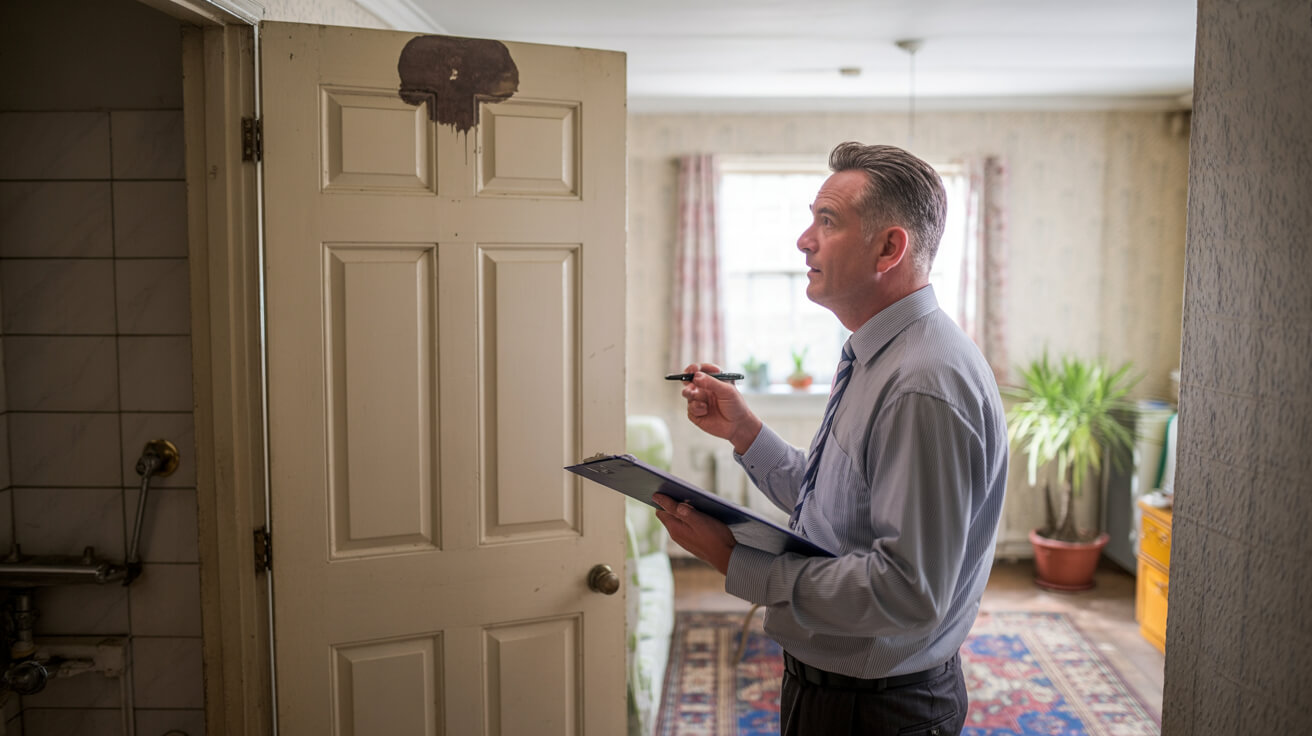
Think about the weakest point in your building. It isn’t where you expect. Compartmentation—the idea that fire can be boxed in and kept from spreading—is only as effective as its hidden gaps. Most real-world breakdowns don’t start with a roaring blaze. They begin with months or years of unchecked damp chipping away at a mastic joint, a riser void, or the back of a fire door.
Every rushed patch or overlooked sweat stain is a marker for a future compliance failure.
Common slip zones? Behind the plasterboard that’s just been touched up, inside riser cavities no one’s opened in years, underneath shiny “new” paintwork slapped over old salt stains, and especially around fire doors in humid corridors. A 2022 UK review flagged over 22% of high-rise blocks as failing compartmentation—almost always because water and salt had quietly eaten the barriers away (BBC News).
And when the fire marshal or the council auditor comes knocking, those same areas will fail under scrutiny. You might not see the voids, but heat and smoke will. Compliance that isn’t forensic—moisture-mapped, substrate-checked, and root-cause resolved—isn’t compliance at all.
Damp undoes what construction builds. Don’t judge risk by what you can see; judge it by what’s gathered, unseen, in the gaps between.
What Are the Structural and Legal Fallout If Damp Goes Untreated?

Treating damp as cosmetic is more than a missed opportunity—it’s a breach of both your duty of care and the law. When building fabric soaks up moisture, structural load can shift, fire escape paths warp, and insulation loses its barrier effect. The Housing Health and Safety Rating System (HHSRS) now lists “category 1” damp and mould as official hazards, and local authorities are mandated to order repairs or enforcement (Gov.uk).
Cut corners and you don’t just pay fines—you risk lives and your own reputation.
Legal and structural consequences stack fast:
- Mandatory improvement notices: Council-issued, forcing urgent remediation.
- Substantial fines and legal proceedings: Five-figure penalties for delay or cosmetic-only fixes.
- Personal liability: Directors and owners can be held responsible, especially if evidence shows neglect.
- Insurance complications: Policies may void if claims links to unrectified damp.
“Just painting over” or sending a handyman to fit a new strip doesn’t wash. Audit-proof repair is now the standard: root cause identified and eliminated, documentation filed, aftercare and digital monitoring in place.
Any property owner or manager who waits for “visible” evidence of major rot or relies on once-a-year checks is betting against the system—and opening the door to legal, financial, and personal fallout.
Which Laws Now Overlap—and What’s Your Unavoidable Compliance Duty?

Today’s regulatory maze means you can’t play favourites. High-rise owners must thread compliance through several linked statutes, all of which now treat hidden damp and mould as fire and health hazards.
- The Fire Safety Order 2005: Puts the full onus on the “Responsible Person” for all fire barriers—whether the threat is open or silent.
- Landlord & Tenant Act 1985: Damp and mould are named hazards; failure to address can spark both council and tenant claims.
- Fitness for Human Habitation Act 2018: Mandates prompt repair—damp is cause for legal action if not fixed swiftly.
- Social Housing (Regulation) Act 2023 & Awaab’s Law: Councils can now act at the first sign, forcing repairs or imposing penalties ([Parliament](https://bills.parliament.uk/bills/3127?utm_source=openai)).
- The HHSRS: Treats hidden rot on the same level as electrical or gas faults, demanding formal correction.
A ripple in one law will set off penalties under the rest—overread by council, insurer, and ultimately the court.
Documentation requirements are sharp—and unforgiving. Every meaningful activity—survey, fix, aftercare—must be logged with both fire and damp compliance shown. If you cut corners on paperwork or rely on DIY reporting, you’ve left a door open to enforcement, insurance rejection, and claims from tenants.
You’re not just ticking a box. You’re holding a legal shield—only as strong as your worst-maintained patch.
How Do You Prove Compliance to Auditors, Insurers, and Lenders?
The “good faith” era is over. Now, everything rides on evidence you can summon at a click. Compliance means digital files stuffed with photo documentation, moisture logs, third-party certifications, and written guarantees—all traceable back to PCA or RICS credentials.
Proving compliance isn’t a trust exercise. It’s a paper and pixel shield against risk.
If you show up in audit or court without records—or with fuzzy “before-and-after” shots from a rushed job—expect harsh grades. Insurers now reject claims if there’s no file; regulators will treat undocumented fixes as if the hazard was never addressed. Your minimum standard is now:
- Accredited inspection reports: PCA- or RICS-qualified, not “in-house” notes
- Photographic and time-stamped proof: Start-to-finish, stored and retrievable for years
- Warranty documentation: Insurance-backed, with ongoing validity
- Digital aftercare: Evidence of annual checks, maintenance, and moisture monitoring
Anything less is a red flag—and easily used against you by lenders, auditors, or, worst, by a family affected by fire.
Why Sussex Damp Experts? Damp, Fire Safety, and Proof—All Under One Roof
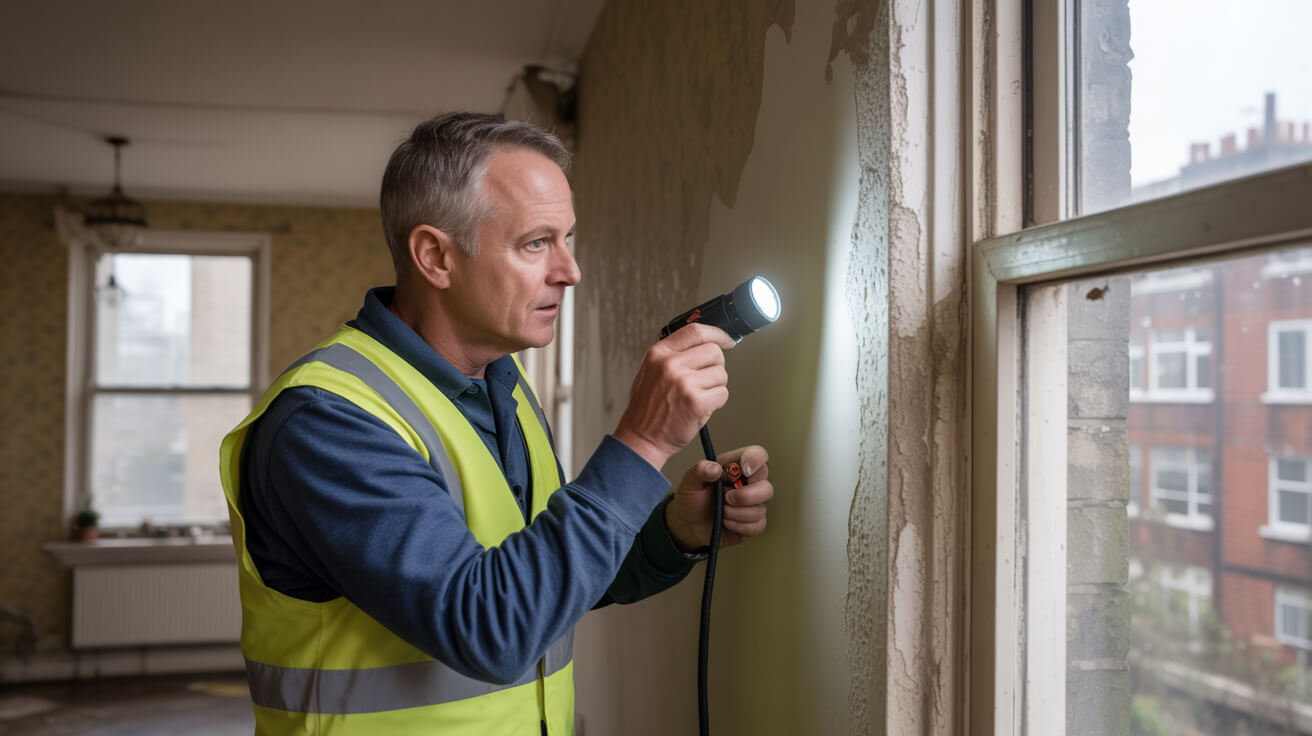
Local names are valuable, but a compliance pass today demands technical muscle. Sussex Damp Experts don’t just treat symptoms. Our toolkit covers every box a regulator, auditor, or insurer can demand.
No patchwork jobs. No just enough. Only the kind of evidence you’d want in your court file.
How do we do it differently?
- BS 6576, BS 8102, and PAS 2035 proficiency: Our fixes match British standards, not fly-by-night best guesses.
- Full-spectrum diagnostics: Thermal imaging, borescope intrusion, and independent salt mapping reveal what others cover up.
- Digital documentation: Every fix logged, photographed, and stored—audits, insurance claims, and regulatory checks delivered in seconds.
- End-to-end aftercare: Ongoing moisture tracking, annual reviews, and proactive alerts—not just “call us if it returns.”
We close the full loop: survey to root-cause identification, through to lasting repair and bulletproof evidence. Properties we work on don’t just look clean. They are audit-grade safe, and their fire and health compliance files are ready for any emergency or check.
The Risk of Delay: What Does Waiting Really Cost Your High-Rise?

Don’t mistake the slow progress of moisture for a problem that will wait, quietly, to be solved on your schedule. Every quarter you “monitor” a patch or defer a full survey, the risk compounds—hidden decay can accelerate the spread of fire, invalidate your insurance, and expose you to fines that roll on for years.
Delaying action is not prudence—it’s gambling with lives, investments, and your professional standing.
Modern compliance isn’t about short-term savings—it’s about protecting assets that headline figures can’t always measure: tenant safety, reputation, and your sleep at night. For high-rise managers, cost comes in two forms: the price of doing it properly, and the compound interest on every corner cut. Work with forensic standards now, or watch risk claim its due in public, in courtrooms, and down the chain of your asset value.
The fastest path to assurance is through a compliance-grade survey, full moisture mapping, and evidence-based repair. Anything less simply won’t shield you.
Secure Your Building, Your Reputation, and Your Peace of Mind—Contact Sussex Damp Experts Today
The cost of ignoring a defect, or leaving a check for “when budgets allow,” is written into the law and into tomorrow’s headline. Sussex Damp Experts are your route to shut the door on compliance risk, loss of value, and sleepless nights.
Assurance is only as strong as the evidence behind it—lock yours in today.
We offer:
- Comprehensive compliance audits: Root-cause diagnosis, not just surface checks
- Full documentation: So you can produce proof at a moment’s notice for insurers, tenants, auditors, or lenders
- Certified repairs and bulletproof aftercare: End-to-end protection, monitored year-round
Don’t pass risk onto your future self, your tenants, or your board. Book a full compliance and damp safety survey with Sussex Damp Experts. Remove uncertainty from your to-do list, back your decisions with real evidence, and keep your high-rise secure from ground floor to roofline.
Safeguard your legacy, your livelihood, and the people who rely on your building—start with Sussex Damp Experts, the partner that regulators, insurers, and fire officers respect, because every fix is survey-grade and every file is ready to stand up in court.
Frequently Asked Questions
How does hidden damp sabotage the fire resistance of high-rise buildings before visible warning signs appear?
Hidden damp doesn’t wait for surface stains—it quietly dissolves the vital fire barriers inside your building, long before mould or flaking paint signals a deeper problem. The moment unseen water penetrates walls or floors, fire-rated plasterboard, insulation, and timber doors start to lose their heat resistance. Capillary moisture easily migrates behind skirting and up partition linings, softening intumescent seals and distorting door frames. This silent decay strips away the compartmentalisation your building relies on to slow the spread of flames and smoke. Crucially, even a single poorly-drained riser or saturated doorway can turn a compartment boundary from a solid wall into a crumbling gap, putting every resident and asset at higher risk when seconds matter.
What building elements fail first when moisture is left unchecked?
- Timber fire doors and frames swell, jam, or rot, breaking smoke seals.
- Plasterboard loses structural integrity, collapsing rapidly under heat.
- Intumescent seals and mastics degrade, shrinking away from surfaces.
- Skirting, window reveals, and shaft linings corrode at their seams, unseen.
Damp never asks for permission—it steals away your line of defence long before inspection day.
How soon can compromised materials fail under fire?
Fire exposure testing shows saturated plasterboard and timber may fail in 5–15 minutes, compared to their rated protection time. In a major London case (2022), audit logs revealed hidden damp contributed directly to rapid fire spread, forcing industry updates to both BS 476 fire testing and insurance underwriting guidance.
Who holds the legal baton when damp drives fire risk—and what happens if you drop it?
Accountability lands squarely on the designated “responsible person”—typically freeholders, property companies, or managing agents. If you control the building’s safety or lease structures, you’re charged under the Fire Safety Order 2005, HHSRS (Housing Act 2004), and now Awaab’s Law, which mandates urgent action against damp hazards with potential to undermine compartmentation. Certificates or contractor sign-offs alone won’t protect you; only evidence that both visible and concealed threats are tackled at source will suffice. Local authorities are pushing enforcement further, with new powers for joint penalties if your documentation, repairs, or accountability logs don’t form an unbroken chain.
What are the real-world stakes of shared duty or muddled records?
If maintenance, repairs, or compliance logs are split between different agents, missing paperwork or grey zones get treated as “shared neglect.” In a 2023 Brighton prosecution, both managing agents and leaseholders received substantial fines after fire officers found rotted riser doors and vague maintenance logs. Regulators expect signed responsibility maps and a digital trail of action for every element that could break a fire barrier.
Responsibility isn’t something you can delegate with an email—it’s proven with signed, timestamped actions.
How should divergent teams coordinate to avoid joint risk?
- Map and agree who maintains, monitors, and signs off every safety-critical area.
- Store inspection logs and warranty files in a live, cloud-based system.
- Prepare for unannounced audits—authorities are cross-referencing records with insurance and lender files.
Which specific UK regulations demand you treat damp and fire risk as twin priorities, and how do those rules stack?
Multiple regulations are now explicitly linked to prevent the legal “blind spots” that once existed:
- Regulatory Reform (Fire Safety) Order 2005: Requires ongoing integrity of every passive fire defence, including those at risk from damp or hidden rot.
- Homes (Fitness for Human Habitation) Act 2018: Treats the presence of persistent damp as a breach, whether or not it’s visible or fire-rated.
- HHSRS (Housing Act 2004): Lists “damp and mould” as a top-tier (Category 1) hazard, triggering compulsory local authority action.
- Social Housing (Regulation) Act 2023 / Awaab’s Law: Introduces strict timelines for identifying and remedying both damp and related fire safety issues.
- Landlord & Tenant Act 1985: Duties stretch to repairing any fault letting in water and impacting compartment lines.
- PAS 2035:2019: (for refurbishments): Mandates risk mapping of moisture alongside insulation and compartment upgrades.
When one law is breached, enforcement routinely “cross-triggers” penalties across the stack. For instance, a failed fire door survey due to hidden rot can initiate both housing enforcement and insurance review, risking coverage loss and a formal notice of works.
Why is even a single damaged fire barrier a site-wide issue?
Enforcement, from council or fire authority, rarely stops at the immediate problem. If a compartment door, riser, or wall is failed by rot or unseen water ingress, it’s treated as a sign of systemic neglect. Lenders may freeze refinancing or sales, insurers can void building cover, and the property might even lose its licence to operate as a rental or block.
What high-precision actions guarantee your damp remediation meets modern fire audit standards?
Start with dual-inspection: Forensic moisture mapping is paired (within days) with a full check of fire compartment boundaries. Demand PCA, RICS, or IFE-accredited surveyors—those trained in both moisture physics and fire-standard integration. Focus local tests on “behind the scenes” spaces (risers, service shafts, window reveals, lift lobbies) as well as visible rooms. Every action—from dpc or barrier instal to re-plastering—needs logged photographs, serial/batch numbers, and readings mapped to the original defect. Aftercare shouldn’t just be a handover: schedule monitoring with annual moisture readings and fire barrier checks, uploaded to a secure cloud record.
Which routine oversights most often sink otherwise solid compliance?
- Over-reliance on surface inspections: Hidden saturation regularly slips through paper-based checks.
- Failing to tie repairs to updated site maps or original risk surveys.
- Incomplete or unsigned digital logs, especially for aftercare.
- Omission of guarantees linked to licenced, insurance-backed damp/fire remediation.
Treat your building’s paperwork like another fire barrier—make it seamless, robust, and ready to defend you in daylight.
How do insurers, lenders, and external surveyors scrutinise damp/fire compliance in practice?
Standard certificates are obsolete. Modern risk managers demand a digital, end-to-end evidence chain from first diagnosis to aftercare. Expect insurance, mortgage, and major lender representatives to require:
- Timestamped “before, during, and after” images cross-linked to a floor plan
- Metered moisture recordings at each affected junction or barrier
- Copies of batch, spec, and guarantee files for every fire-rated/membrane component
- Confirmed repair and inspection logs, validated by a PCA/RICS-accredited specialist
- An ongoing inspection and warranty maintenance schedule, documented per annum
Decisions now hinge on documented reality—not legacy reports. In 2023, leading UK insurers declined claims on more than fifty high-rises due to “evidence gaps” despite completed remediation.
What counts as genuinely enforcement-ready proof?
Only an unbroken, cloud-accessible record—survey to signoff, including insurance-backed guarantees—delivers the assurance that modern compliance and legal frameworks demand. For Sussex Damp Experts, that means any regulator or buyer can view the chain in minutes, not days.
What specific evidence and documentation should you gather after remediation to eliminate audit failures?
Build a digital record pack straight after works finish. At minimum, include:
- Geotagged and timestamped “before, during, after” photos for every zone
- Moisture metre logs and mapped readings for each repaired or high-risk area
- Material and system batch sheets matching every installed or replaced element
- Insurance-backed guarantee files, attached directly to site and asset logs (never just “on request”)
- Signed-off digital log of every inspection or repair, with clear annual review and responsibility mapping
Failing to gather any of these risks compliance loss—even if the remedial work itself is flawless. With fines, policy withdrawal, and sales blocks now routine for missing evidence, the only “smart” file is the one that’s audit-ready by default. Sussex Damp Experts deliver this as a matter of course, providing every stakeholder—managing agent, owner, or buyer—instant access for regulators or underwriters.
When your evidence chain is as robust as your construction, the toughest auditor can only nod.
Buildings that pass every audit, protect every occupant, and retain market value don’t appear by chance. For leaders who won’t tolerate guesswork on fire and damp risk, Sussex Damp Experts embed resilience and ready-anytime proof into your property’s DNA. Book your compliance survey now—one decision, lasting protection.

