
 By
By  February 3, 2022


Why Condensation Becomes a Hidden Threat in Modern Homes
Condensation is not just a seasonal nuisance—it’s a property resilience concern that often develops behind the scenes. When elevated humidity from daily routines meets cold surfaces within your building envelope, water droplets form and soak into finishes, insulation, and sometimes even joist timbers beneath floorboards. The early indicators are subtle: beads on windows, small discoloured patches near skirting boards, or a faint mustiness that defies quick explanation. These warning signs escape notice until they become persistent, and by then, damage is quietly mounting.
Most people underestimate how quickly normal behaviour—like showers, cooking, and drying clothes inside—adds to airborne moisture. If your space lacks balance between moisture output and its removal, you set the stage for latent failures: weakened plaster, flaking paint, or hidden rot. At these early stages, you have an opportunity to intervene, preventing escalating repair bills and disruptive invasive works.
Small spots of moisture today turn into structural repairs tomorrow.
How Does Condensation Start in Your Living Space?
Condensation appears when your indoor air holds more moisture than cold surfaces can absorb. High humidity indoors, combined with poor ventilation or suboptimal insulation, creates ideal circumstances for condensation to settle throughout the property—even in rooms with no visible damp.
Once these pockets of unwanted moisture take hold, progression is methodical. Minor dampness encourages mould spores, increases black mould risk, breaks down adhesives, and speeds plaster decay. If left untreated, slow damage evolves into complex failures spanning cosmetic, structural, and health spheres that risk both valuation and peace of mind.
Sussex Damp Experts’ approach is built around aggressive, early detection—empowering you to act before minor warning signals balloon into major liabilities. If your home exhibits even intermittent damp, prompt assessment will safeguard its integrity.
What Core Factors Drive Condensation in Properties?

Condensation forms through the interaction of three core risk vectors: excess humidity, poor ventilation, and thermal disparities between surfaces and air. Each, on its own, is manageable. Together, they can destabilise the most well-kept property.
Key Triggers of Condensation in the Built Environment
- Excess Humidity from Lifestyle:
Cooking, bathing, indoor drying, and even general occupancy release up to 15 litres of vapour a day in a busy household. This volume, unless actively vented or balanced, guarantees moisture will settle where it’s least visible.
- Inadequate Ventilation:
Modern airtight construction, sealed windows, and neglected fans lock moisture indoors. Warm air, saturated with humidity, cools on contact with cold surfaces—window panes, sills, and exterior walls bear the brunt.
- Temperature Differential:
The more your indoor warmth differs from outside, the steeper the condensation risk. Under-heated corners, uninsulated eaves, and rooms above unheated garages or basements are classic targets.
Additional, Often-Overlooked Triggers
- Building Material Mix:
Some renovation projects unintentionally combine low-permeability modern plasters with heritage brickwork, trapping moisture at the interface.
- Obstructed Airflow:
Furniture or built-in wardrobes against exterior walls create microclimates that escape periodic airing, making them ideal for hidden condensation.
Airtight homes preserve energy, but too often at the expense of building health.
A property audit by Sussex Damp Experts leverages building science criteria to pinpoint specific, addressable risk factors unique to your dwelling or portfolio.
How Do Humidity Spikes Transform from Minor to Major Problems?

Humidity is both a barometer and accelerant of condensation danger. Elevated readings aren’t just an inconvenience—they signal imminent threats to finishes, structure, and air quality.
What Humidity Levels Should Trigger Concern?
| Risk Level | Indoor Relative Humidity (%) | Typical Consequence | Action |
|---|---|---|---|
| Safe (low risk) | 30–50% | No visible condensation | Ongoing monitoring |
| Moderate (heightened) | 51–60% | Morning window fog, mild odour | Increase ventilation, monitor closely |
| High (urgent risk) | 61–75% | Persistent damp spots, surface mould | Immediate assessment, seek expert evaluation |
| Severe (critical) | >75% | Rapid mould, plaster & timber decay | Initiate professional damp proofing measures |
Why Managing Humidity Has Long-Term Payoffs
Continuous exposure above 60% relative humidity turns surfaces into breeding grounds for condensation. The result is not only an aesthetic concern:
- Timber frames and window sills warp, expand, and decay.
- Mould spores colonise porous paint and wall cavities.
- Adhesive on wallpaper or vinyl tiles degrades rapidly.
Homeowners investing in affordable humidity sensors catch these thresholds before risk hardens into costly restoration. Sussex Damp Experts calibrates assessment and solutions to these danger bands, embedding humidity monitoring into every inspection or maintenance contract.
Why Is Poor Ventilation a Silent Condensation Enabler?
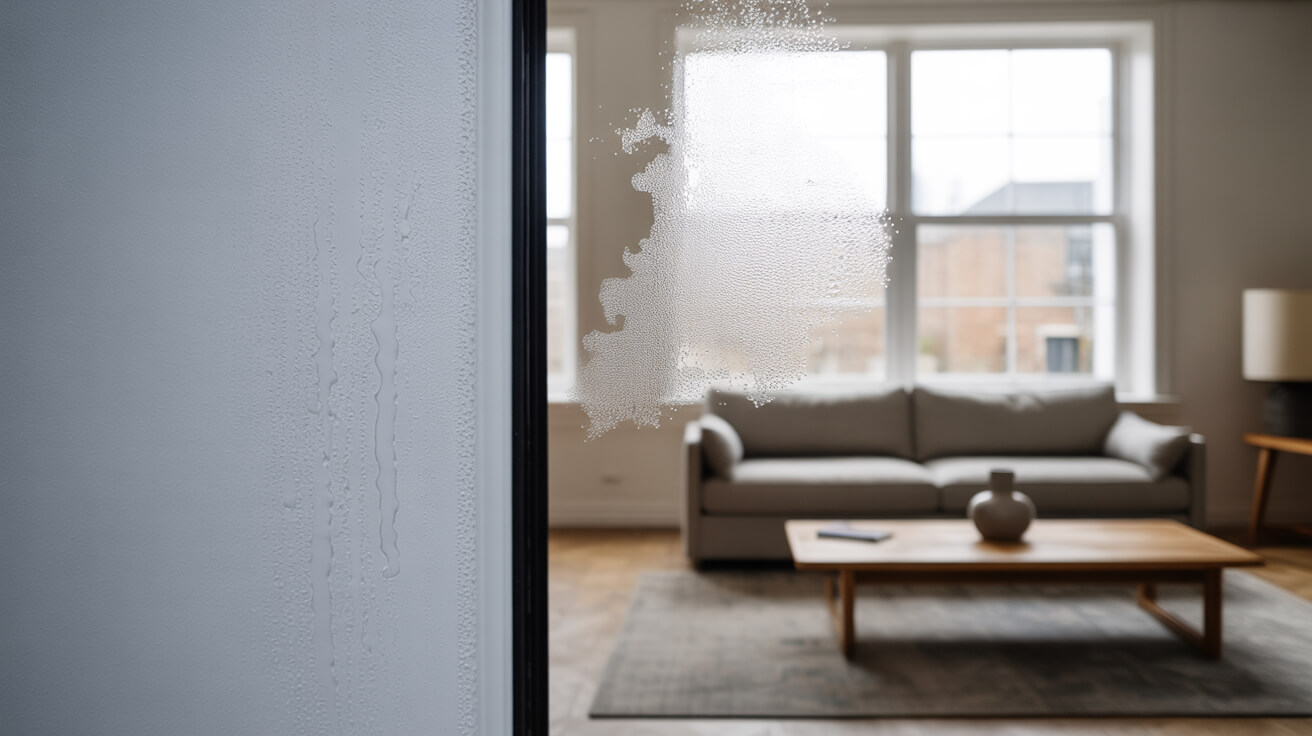
Ventilation is the silent partner in every successful property maintenance strategy. With inadequate airflow, moisture accumulates and lingers, dramatically increasing the likelihood that humidity will condense.
What Are the Operational Impacts of Neglected Air Movement?
- Deferred use or disrepair of extractor fans, especially in kitchens and bathrooms, means steam and vapour have nowhere to go but onto the nearest cold surface.
- Routine habits—like rarely opening windows for security, or relying on trickle vents that are blocked by blinds—compound the effect.
- Commercial and managed properties often see airflow restricted by retrofits that disrupt original ventilation paths.
Over time, insufficient air exchange creates a self-perpetuating problem:
- Surfaces exposed to less air movement retain moisture far longer, magnifying decay risk.
- Humidity pools at the base of exterior walls or behind large appliances.
- In multi-unit blocks, poorly vented communal areas lead to uniform, building-wide damp.
Sealed environments might be quiet, but without circulation, they trap every risk inside.
How to Enhance Ventilation and Stop Moisture at the Source
- Audit all fans and ensure correct installation and functional status.
- Ensure window trickle vents and undercut doors remain unblocked.
- Upgrade to humidity-sensing extractors for automatic control.
- In high-stakes settings (basements, heritage spaces), combine passive ventilation with mechanical assistance.
Sussex Damp Experts audits airflow patterns as part of every assessment, providing a tailored action plan to reclaim healthy air movement and balanced moisture regimes.
How Do Seasonal and Surface Temperature Variations Shape Condensation Risk?
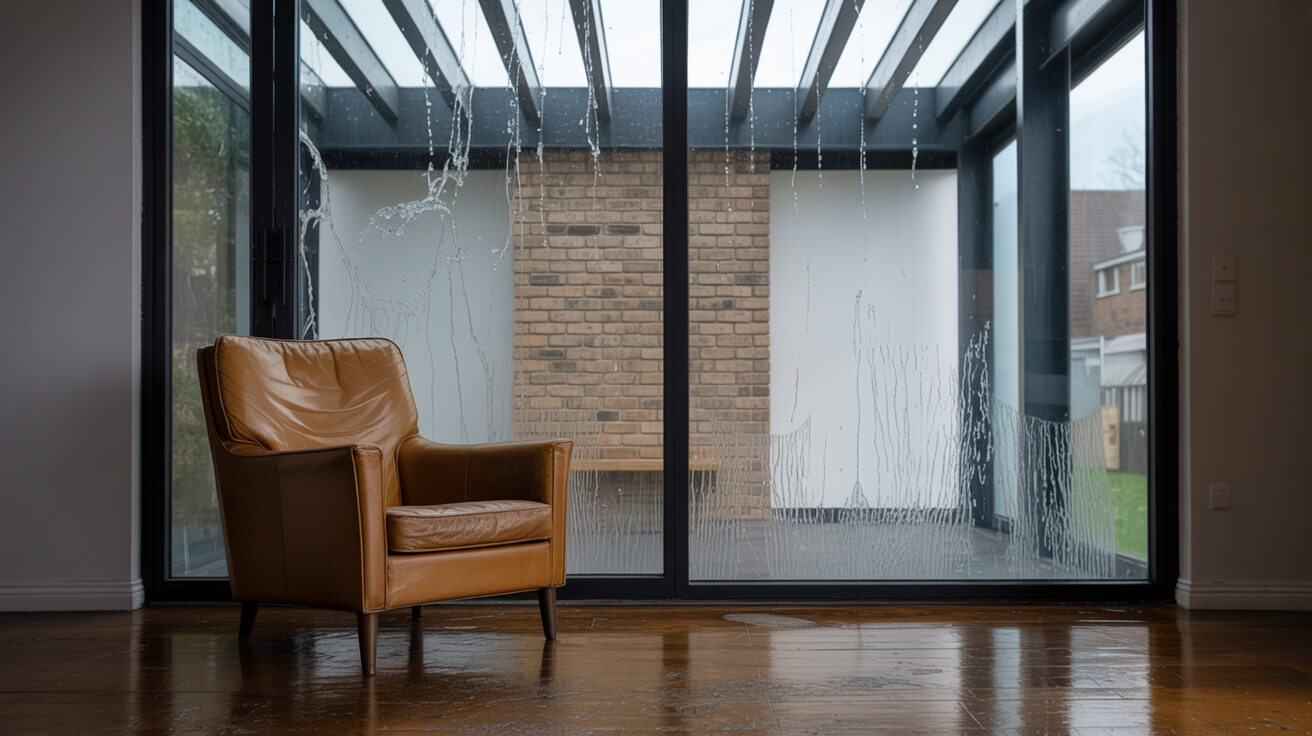
Temperature swings between your indoor and outdoor environments create ideal conditions for dangerous moisture build-up. This effect is amplified in the UK climate, where wide annual fluctuations test the robustness of every building envelope.
How Thermal Differentials Turn Warm Rooms into Risk Zones
When warm air with a higher water vapour capacity encounters a cold wall or ceiling, it reluctantly gives up excess moisture—migrating into plaster, brick, or insulation. The result: chronic dampness at thermal bridges, such as above unheated crawlspaces or around window reveals.
Areas Most at Risk:
- North-facing rooms with limited winter sunlight
- Spaces directly above unheated garages or basements
- Older loft conversions with patchy insulation coverage
- Retrofits using mixed insulation materials, creating points of condensation
| Feature | Higher Risk? | Typical Localised Issue |
|---|---|---|
| Uninsulated wall | Yes | Cold spot, clustering of damp |
| Single glazing | Yes | Nighttime surface condensation |
| Cavity insulation gaps | Yes | Damp marks at insulation “edges” |
| Consistent heating | No | Moisture evaporates before risk |
Condensation always finds the path of least resistance. Even the best-sealed properties have their weak point.
Smart property management involves regular temperature mapping and targeted insulation. For managed portfolios, Sussex Damp Experts perform thermal imaging during property surveys and provide practical, prioritised recommendations that go beyond temporary fixes.
What Cumulative Damage Results from Untreated Condensation?
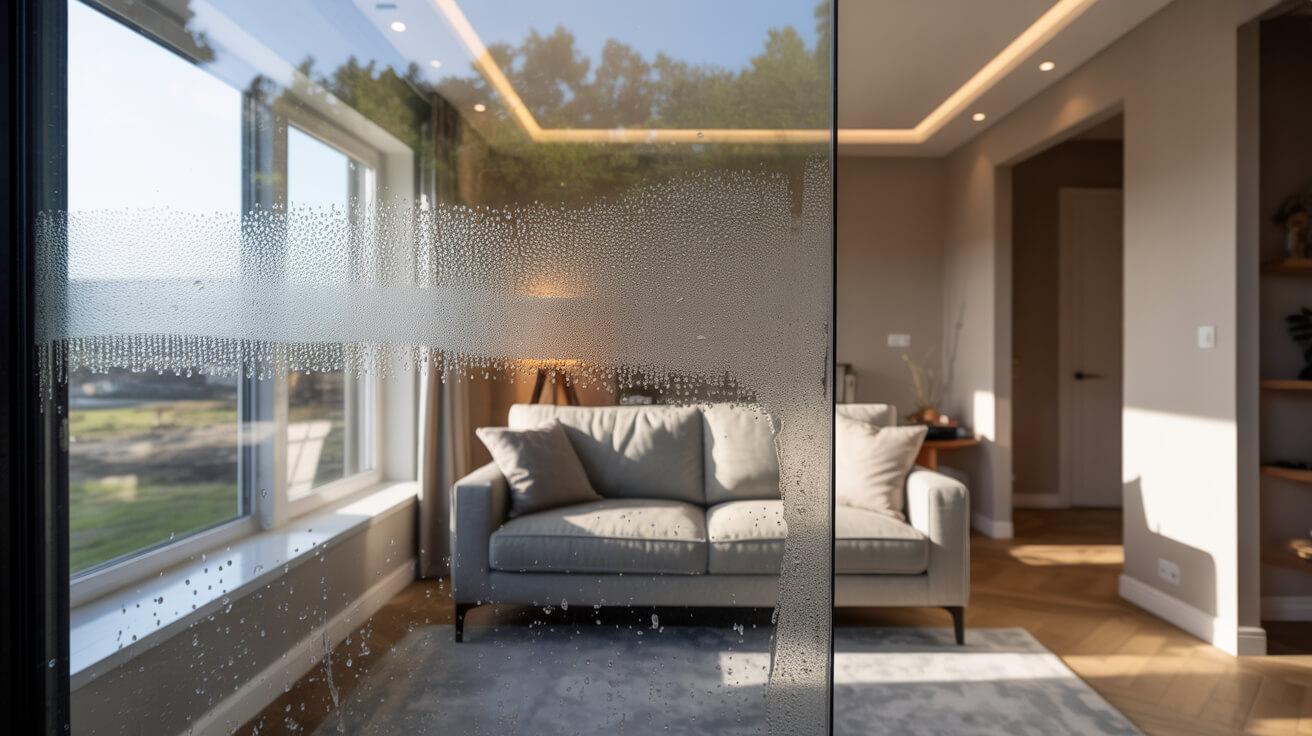
The damage process isn’t linear—it’s exponential. What appears as a minor nuisance quickly becomes a system-wide threat, undermining finishes, structure, and, eventually, habitability.
Early vs. Hidden Damage: Recognising the Full Threat
- Surface Stage: Peeling paint, minor cases of mildew, or subtle odour.
- Intermediate: Expansion of skirting boards, visible mould clusters, crumbling plaster.
- Advanced / Hidden: Structural timber rot, corrosion of fixing hardware, compromised insulation, subfloor collapse risks.
The financial overhead mounts quickly as jobs shift from minor decoration to partial rebuilds, particularly where interstitial condensation and black mould risk have been left unaddressed. Insurance claims for condensation are often denied without certification of maintenance or proactive damp proofing. Landlords now face direct legal risk for failing to address mould and damp, with regulatory fines escalating annually.
Damp in one corner today means subfloor collapse tomorrow—unless managed.
A single comprehensive assessment from Sussex Damp Experts protects against legal, operational, and repair risks—preserving property value, tenancy rates, and reputation.
Which Preventative Strategies Provide Real Peace of Mind Against Condensation?

No single product or solution replaces a robust, layered protection plan. Instead, your best defence is a system—a coordinated blend of continuous monitoring, structural upgrades, and scenario-specific maintenance, designed for your usage patterns and building type.
Building a Damp-Resistant Environment
- Fit humidity-controlled ventilation systems for “fire and forget” extraction.
- Use moisture metres in high-risk areas (bathrooms, kitchens, under stairwells) for data-driven intervention.
- Schedule annual property health checks, ideally before winter or large occupancy changes.
- For heritage or unique structures, instal passive air bricks or subfloor vents, keeping original material moisture balance intact.
- Train household members (or occupants, for managed properties) to spot and report early symptoms.
Comparing DIY to Professional Strategies
| Strategy | DIY | Professional via Sussex Damp Experts |
|---|---|---|
| Portable dehumidifiers | Lower up-front cost, less effective for severe/hidden problems | Integrated, maintained, resolves source, written certifications |
| Manual window airing | Cost-free, may conflict with security/energy efficiency | Systematic ventilation plan tailored to property risk zones |
| Patch repairs (paint, plaster) | Short-term fix only | Full substrate diagnosis, compliance-grade remediation |
The impact of professional preventative measures is not just in repair minimisation: it’s in the day-to-day air quality, regulatory protection, and resale premiums that only a fully maintained property retains. Sussex Damp Experts invites you to schedule an assessment and design the system your property needs—free from piecemeal guesswork.
Why Is Now the Time to Safeguard Your Home—and Who Will Deliver?
Delaying action is the only option guaranteed to erode property value, health comfort, and—eventually—livelihood security. The faster you transition from awareness to intervention, the more advantage you lock in, both operationally and financially.
The line between ‘solved’ and ‘problem landlord’ is one inspection, not one repair bill.
Sussex Damp Experts is built on strict compliance, technical depth, and transparent reporting—valued by property managers, lenders, and family homeowners across the region. Every damp survey includes forensic site reporting, actionable moisture control plans, and all UK compliance certification, matching BS6576, PAS2035, and local HHSRS standards.
Book your diagnostic survey or preventative assessment today. Doing so is more than maintenance—it’s a statement of competence to yourself, your tenants, and every professional who relies on the future-proofing of your property. The right time is the moment before an issue costs you control.
Frequently Asked Questions
What warning signs indicate condensation is damaging your property—and what’s behind them?
Condensation damage telegraphs its arrival through subtle changes that often seem inconsequential until the underlying cause has become a larger, more expensive threat. Look out for the early evidence:
- Water droplets or mist on windows: most mornings—even outside cold snaps—signal persistent airborne moisture.
- Damp or dark-streaked patches: sprouting at corners, skirtings, or behind heavy furniture are red flags.
- Peeling paint or blistered wall coverings: almost always have moisture at their root.
- A musty, sour smell: lingers even after cleaning—a classic precursor to mould colonies below the surface.
- Spots of black mould: on caulk, tile grout, or window sills show humidity has overwhelmed natural air exchange.
These aren’t isolated decorating issues but the property’s warning that moisture has won the daily battle with your home’s defences. Every sign signals a silent, slow escalation—one that will never reverse through simple airing or inaction.
Identity signal for action: You see these symptoms because your home is honest; let Sussex Damp Experts decode what your surfaces are trying to say.
How do daily activities and modern building features combine to create a condensation risk zone?
Condensation isn’t fussy—it forms wherever your property harbours airborne moisture with nowhere to escape. It preys on subtle blind spots you hardly consider.
- Every shower or boiling pot pumps litres of vapour: straight into circulation.
- Sealed double-glazing and retrofitted insulation: —valuable for energy bills—thwart natural ventilation, trapping moisture as your indoor air cools.
- Furniture pushed tight to exterior walls: creates shadowed zones where air can’t flow and condensation condenses unchecked.
- Unvented tumble dryers, blocked window trickle vents, or underused extractor fans: all transform latent humidity into a daily assault.
Condensation thrives at the intersection of comfort, convenience, and modern efficiency—each quiet improvement that seals draughts also narrows the margin for error. Your property doesn’t need to be old to struggle; the more thoroughly you insulate, the more discipline is needed in managing airflow.
Operational insight: The real risk emerges not from one lapse, but from the compounded effect of dozens of little oversights. Sussex Damp Experts assess every property with this systems mindset—always looking for the subtle, structural intersection where modern living meets moisture risk.
When does high humidity become a structural and health problem, not just a comfort issue?
The line between “comfortable air” and “systemic threat” is crossed when indoor humidity routinely exceeds 60%, especially without seasonal variation. At this threshold:
- Mould spores activate: Black mould, especially, transforms from speckles to swathes as surfaces stay damp.
- Wooden windows, skirtings, and floors start to swell or warp,: undermining finishes and setting the scene for decay.
- Condensation “outpaces” evaporation: —water accumulates on the coldest surfaces faster than it disappears, leaving ever-bigger wet zones.
Even modern properties lose the moisture battle above this mark, risking rot, persistent odours, and non-compliance with landlord, insurance, and lending requirements.
Table: Typical Humidity Triggers and Outcomes
| Humidity Level | Result | Typical Damage Timeline |
|---|---|---|
| 35–55% | Comfortable, healthy | Years (no issues) |
| 56–65% | Early visible condensation | Months—spot cleaning may suffice |
| 66–75% | Persistent moisture + mould | Weeks to visible rot, mustiness |
| 76%+ | Severe, compounding damage | Days to invasive repair needed |
Behaviour proof: Sussex Damp Experts’ monitoring finds homes held at 70%+ humidity for even a single winter will almost always require more than redecorating by spring. Diagnostic data—not guesswork—unlocks early intervention.
Why does poor ventilation lock moisture inside, and how do you break the cycle?
Stale air is water’s accomplice. When your ventilation can’t evacuate daily vapour, every surface becomes a reservoir. The solution isn’t just about opening a window—it’s about balancing efficiency demands with airflow discipline.
- Extractor fans in kitchens and bathrooms: are often oversized and underused. Usage must be frequent and finish-cycle based, not just “when it feels damp.”
- Trickle vents and passive air bricks: require regular clearing; even a small cobweb or repaint can block needed escape routes.
- Modern “airtight” upgrades: (plastic windows, filled cavity walls) steal traditional draughts. Without scheduled replacement airflow, no amount of insulation will keep moisture out.
When airflow slows, moisture sits—turning the warmest, most inviting rooms into microclimates primed for mould.
Expert countermeasure: Modern solutions, such as humidity-sensing extractors or whole-house mechanical ventilation (HRV/MVHR), restore equilibrium without inviting in weather or draughts. Sussex Damp Experts offers property‑specific planning and installation, ensuring every improvement liberates moisture rather than trapping it.
How does external temperature create hidden condensation hazards inside your walls?
Don’t be lulled into thinking condensation is only a “cold snap” concern. Each degree colder it is outside compared to your home’s heated interior, the more efficiently water vapour is pulled to your coldest surfaces. The most insidious damage occurs:
- On the north side of a building: (where solar warmth is weakest).
- Behind dense or “value engineered” insulation retrofits: —hidden gaps or “cold bridges” quickly become water magnets.
- In rooms or attics left unheated for long stretches: , especially where occupancy and activity fluctuate.
Thermal bridges don’t care about your room’s intended use; they care about where heat escapes and cools the fastest. That’s why even a newly insulated roof can wind up “sweating” at edge seams, loft hatches, or around chimneys.
Table: Hidden High-Risk Thermal Zones
| Location | Typical Issue | Solution Index |
|---|---|---|
| North-facing wall/room | Persistent cold, window condensation | Precision insulation, moisture sensors |
| Unvented attic/crawlspace | Dripping timbers, black streaks | Subfloor vents, air circulation |
| Downgraded insulation areas | Patchy mould behind furniture | Targeted retrofit, professional diagnosis |
Strategic safeguard: Sussex Damp Experts deploys thermal imaging and moisture mapping to find damage hot spots before plaster or paint tell the story. Strategic insulation and ventilation adjustments—never just more sealed plastic—preserve your home instead of sealing in risk.
What does untreated condensation really cost you—beyond the visible surface?
Ignore condensation long enough, and the account comes due—not just in your repair budget, but in property value, health, and legal risk.
- Financial penalty: Peeling paint and mustiness are cheap to “fix,” but ongoing rot, saturated insulation, and hidden timber decay can force full wall or roof rebuilds, easily adding five figures or more to maintenance costs.
- Legal and regulatory fallout: For landlords and sellers, non-intervention invites failed surveys, rental holdbacks, or council citations under HHSRS and related statutes.
- Invisible health drag: Mould and mildew drive up absenteeism, lower indoor comfort, and increase the likelihood of insurance claim disputes or voided warranties.
Scenario insight: A landlord ignoring winter humidity in a two-bed flat faces a common pattern:
One winter: Mould behind a wardrobe.
By year two: Rotten skirting, raised insurance premium.
Third year: Voided insurance policy, council demand for remediation.
The biggest repair bills aren’t for the visible damage—they’re for the rot you couldn’t see until it became catastrophic.
When Sussex Damp Experts prepares a survey or long-term plan, the focus is always on mapping this risk curve long before it’s reflected in your property accounts—or your peace of mind.
What should your next move be if you want to keep condensation from undermining your investment and well-being?
The most sustainable solution always begins with a tailored assessment—not a blanket promise.
- First, measure your building’s current condition: Sensor data and professional inspection trump hunches or cosmetic fixes.
- Second, balance energy efficiency with targeted, property-appropriate ventilation upgrades.:
- Third, close feedback loops: Instal humidity and temperature monitors and act on warnings, not just symptoms.
- Fourth, maintain adaptive protocols: Annual inspections and active maintenance, not reactive patchwork, ensure your interventions keep working.
Checklist for condensation-proofing your asset:
1. Routine technical surveys—go deeper than the surface every year.
2. Ventilation review and upgrades as your building system, lifestyle, or occupancy changes.
3. Sensor-based monitoring for real-time, actionable diagnostics.
4. Maintenance contracts that link compliance, warranty, and peace of mind.
Reputation anchor: Proactive engagement with Sussex Damp Experts turns “regret minimization” into “asset maximisation.” You don’t just avoid rot—you command confidence, tenant retention, and future‑proof compliance. That’s how a property maintains its story in the face of silent threats.

