
 By
By  July 11, 2025

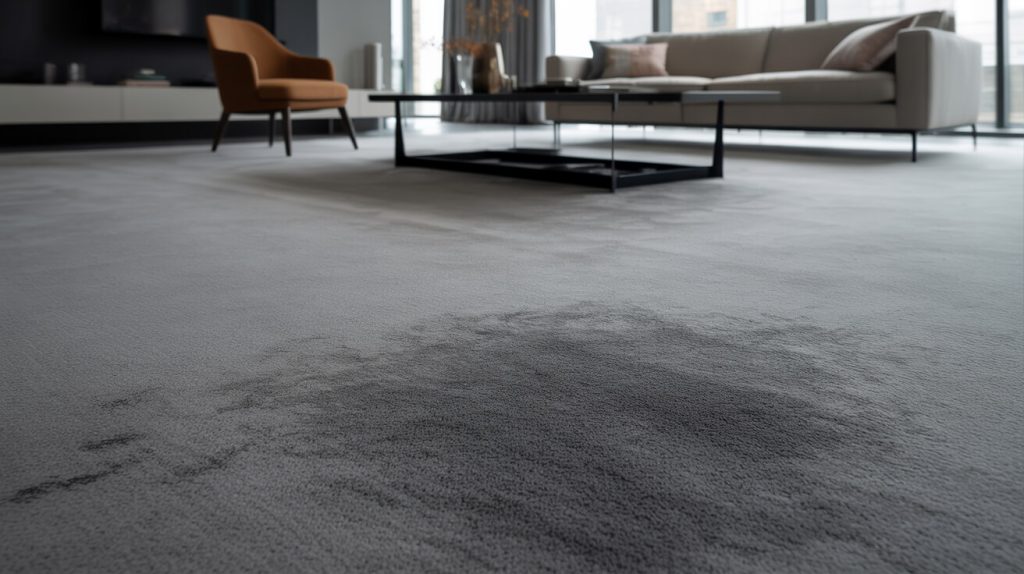
What Immediate Threats Does Black Mould in Carpet Pose?
Stumbling across black mould in your carpet is an inflexion point for property owners and managers: it’s not cosmetics or inconvenience. It’s about health, legal standing, and black mould liability, as well as your asset’s long-term resilience. NHS public health data and the Housing Health and Safety Rating System (HHSRS) classify carpet-based mould as an active risk—its invisible spores escalate breathing issues, aggravate asthma, and expose everyone in your property to allergens that can trigger chronic conditions faster than you might expect.
Behind every patch of black mould is a deeper cascade: left untreated, the affected area can seed persistent respiratory ailments, degrade indoor air quality, and inflict enduring damage to underlays and subfloor systems. The cost isn’t just in remediation or health. For landlords and agents, ignore black mould and you risk HHSRS compliance violations, tenancy disputes, and wider black mould liability. Insurers regularly void claims when mould is classed as a maintenance lapse. Buyers and surveyors, meanwhile, see untreated carpet mould as a red flag—blocking sales, reducing valuations, and elevating suspicion about unseen wider damage.
Delay becomes expensive—both in repairs and reputation—when black mould moves from a patch to a pattern.
Why Is Immediate Action So Important?
Black mould in carpeted properties thrives quickly. Every 24 hours of delayed response increases moisture penetration, spore count, and liability. Proactive remediation, backed by professional assessment, creates a clear audit trail—absolutely essential for insurance or legal protection.
What Are the Legal and Financial Risks?
Landlords face specific legal obligations under the Homes (Fitness for Human Habitation) Act. Tenants can escalate non-remediation to local authorities, potentially triggering enforcement action. Homeowners lose buyer confidence and see survey flags that can jeopardise a sale. Property value is directly at risk if issues are left unresolved.
The quickest path to restoration isn’t ignoring the issue or opting for piecemeal fixes—it’s understanding the full cascade of risks and stepping into a solution-driven approach from the outset.
Why Does Black Mould Develop in Carpeted Properties?

Black mould’s presence on your carpet is the tip of the moisture iceberg, never the source. Every established case has a hidden, persistent pattern—a source of dampness that hasn’t been interrupted. Routine culprits include leaking pipes, high relative humidity from poor ventilation, subfloor or rising damp when DPC barriers have failed or are absent, and spills or cleaning that never dried beneath heavy furnishings.
Properties with intricate histories—from Victorian terraces to postwar flats—see higher vulnerability because older construction materials retain moisture, ventilation is often inadequate, and prior repairs may have created new trapping layers with incompatible materials. For heritage or listed properties, traditional lime plasters and timber joists introduce their own oscillations of damp and breathability; mixing these with modern membranes or paints without proper assessment amplifies risk instead of reducing it.
Are Some Carpets and Properties More at Risk?
Yes. Wool or thickly padded carpets, older or timber subfloors, properties with known historical damp, and those in high-precipitation zones are inherently more vulnerable. Heritage and listed buildings, with their requirement for sensitive, breathable repairs, require even more careful oversight.
How Does Daily Life Create Conditions for Black Mould?
Everyday habits—drying clothes indoors, infrequent airing, running humidifiers, failing to notice spills—directly affect moisture equilibrium in a room. Once carpets are wet, especially if compressed under heavy furniture, deep drying is almost impossible without expert intervention.
Table: Common Root Causes Across Property Types
| Carpet Risk Factor | Older Homes | Modern Flats | Heritage/Listed |
|---|---|---|---|
| Subfloor moisture | High | Low/Medium | Very High |
| HVAC/ventilation flaw | Medium | High | Variable |
| Poor repairs/trapped | Very High | Medium | Highest |
| Heavy use rooms | Kitchen | Bathroom | Reception |
Preventing black mould’s return always begins here: with a forensic search for underlying moisture sources, not symptom suppression.
How Can You Accurately Identify Black Mould in Carpeting?
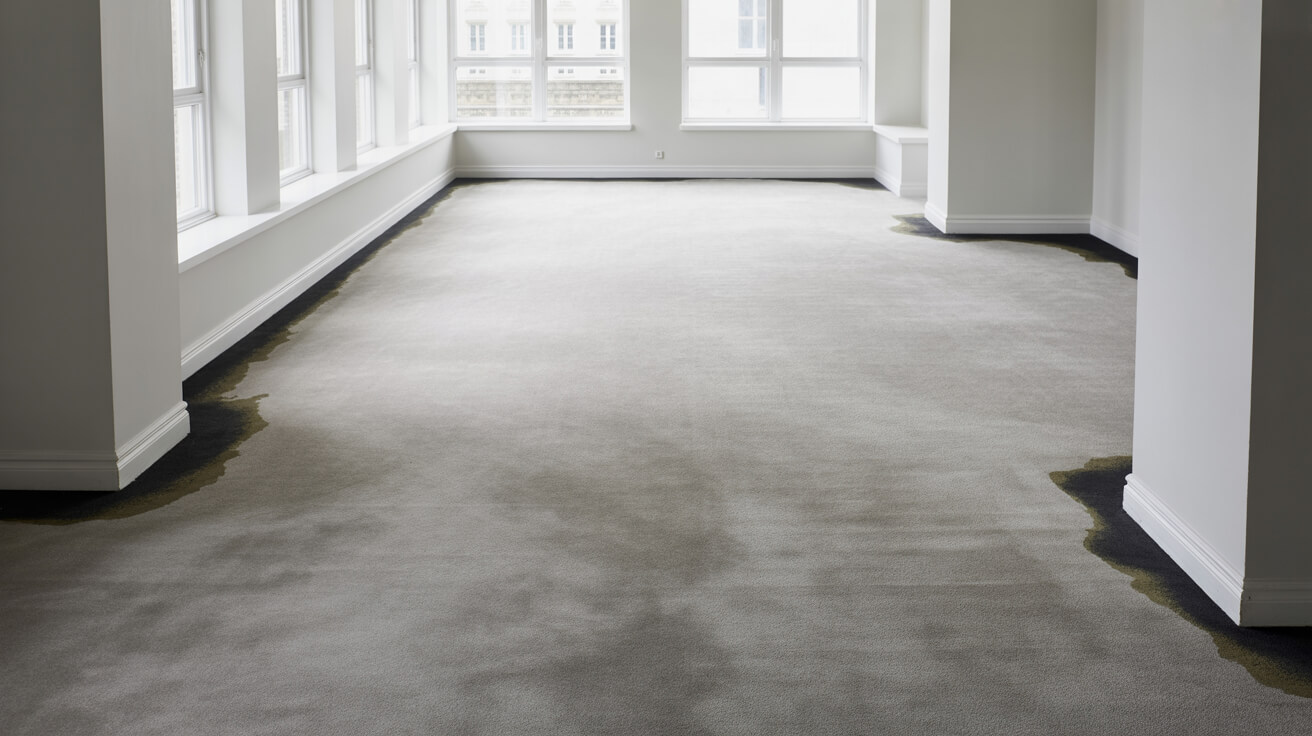
Visually, black mould might look like faint spots, mottled patches, or fuzzy black/green stains, but appearance is just a starting point. Professionals rely on a complete set of sensory and diagnostic checks:
Visual and Sensory Indicators
- Patchy dark marks, often with blurred edges, that resist routine cleaning
- A marked musty or damp odour that lingers, especially in closed-up rooms
- Soft, spongy or sticky feeling underfoot—marks the onset of moisture saturation below the surface
- Discolouration or crumbling around skirting boards, under radiators, or near corners
Deeper Diagnostic Steps
- Lift one edge of the carpet to check underlay and subfloor—look for black, green, or whitish salts, and feel for dampness
- Place a moisture detector probe in suspected zones. Readings above 18% require immediate attention
- Use of thermal imaging can expose cold, damp-prone spots masked by normal airflow
Is All Carpet Mould the Same?
No. True Stachybotrys (“toxic black mould”) is dangerous, but other fungi—Aspergillus, Cladosporium—also thrive in carpet and can pose health issues. All active mould signals a moisture management failure, requiring expert root-cause mitigation, not just cleaning.
When self-inspection leaves doubt or spot checks reveal widespread, multi-room signs, contact a damp specialist for survey. Landlords and agents: ensure tenant complaints invoke a documented inspection process in line with tenancy/legal requirements.
The first mistake most owners make is assuming what’s visible maps to what’s dangerous.
What Professional and Safe First Steps Should Be Taken After Discovery?
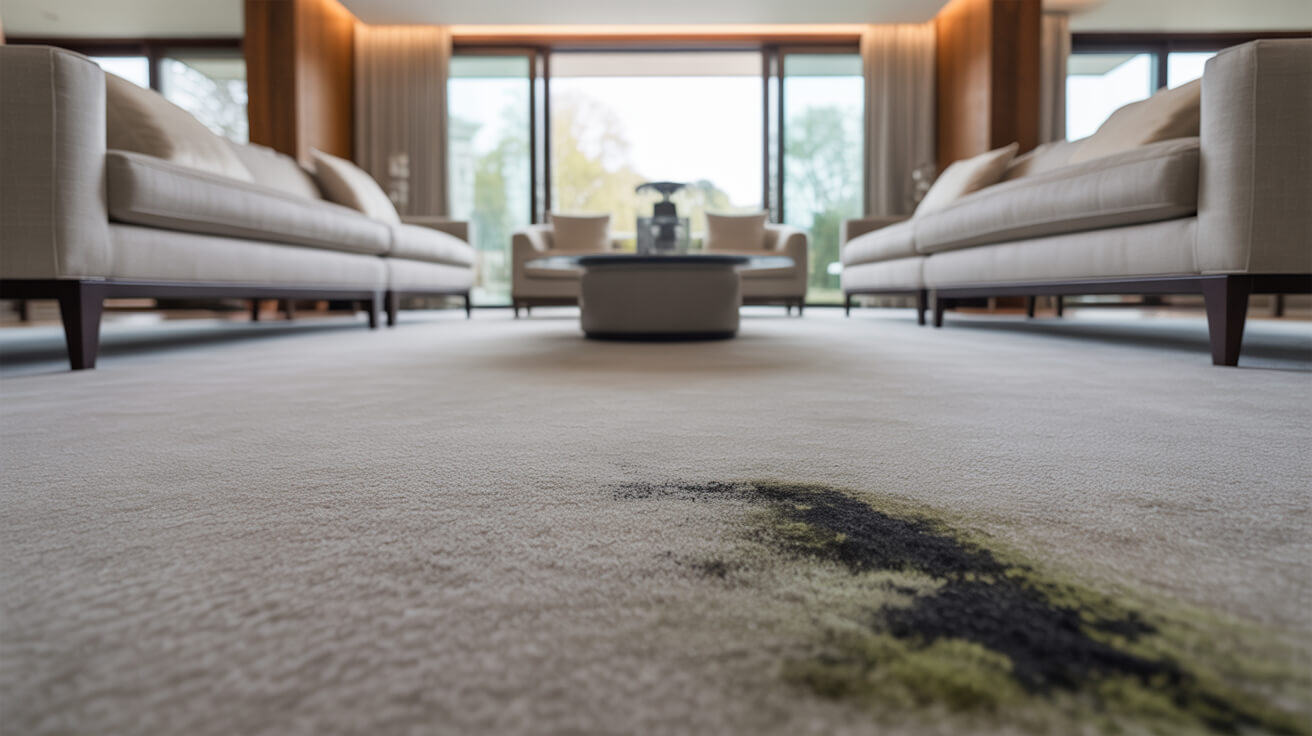
Proper response to an active mould incident demands process, not panic. Immediately:
- Isolate the room if possible—keep family, pets, or staff out.
- Increase airflow: open windows and use extractors to push spores outdoor, not through central air.
- Wear PPE: at minimum, gloves and a certified mask (FFP2/N95); for large outbreaks, full disposable coveralls.
- Photograph the affected area and any visible source (leak, spill, damp patch) with timestamps.
- Initiate a written log: first noticed, steps taken, communications with managing agent or landlord.
- Remove any wet objects, but avoid vacuuming—standard vacuums spread spores.
For Heritage or Commercial Properties
Do not attempt treatment without an accredited professional. The risk of accidental substrate or material damage—plus the compliance chain required—means DIY intervention can be costlier than waiting for expert assessment.
Notification and Documentation
Contact your landlord or agent per lease terms; for owned properties, reach out to a surveyor or trusted local damp specialist, especially if you’ve had past issues or insurance requirements for documentation exist.
Skipping proper documentation leaves you exposed—financially, legally, and even in future insurance or resale claims.
Table: Priority Response Actions by Property Type
| Property Owner | Notify | DIY Actions | Professional Needed |
|---|---|---|---|
| Owner-occupier | Insurer | Yes (limited) | If persistent |
| Tenant | Landlord | Yes (interim) | Always |
| Heritage/Commercial | Agent/Trust | No | Always |
Taking disciplined steps within hours of the discovery defines whether the situation is contained or spirals into a multi-room loss—and whether you’re protected or vulnerable if disputes arise.
How Should Carpets With Black Mould Be Cleaned, Treated or Replaced?
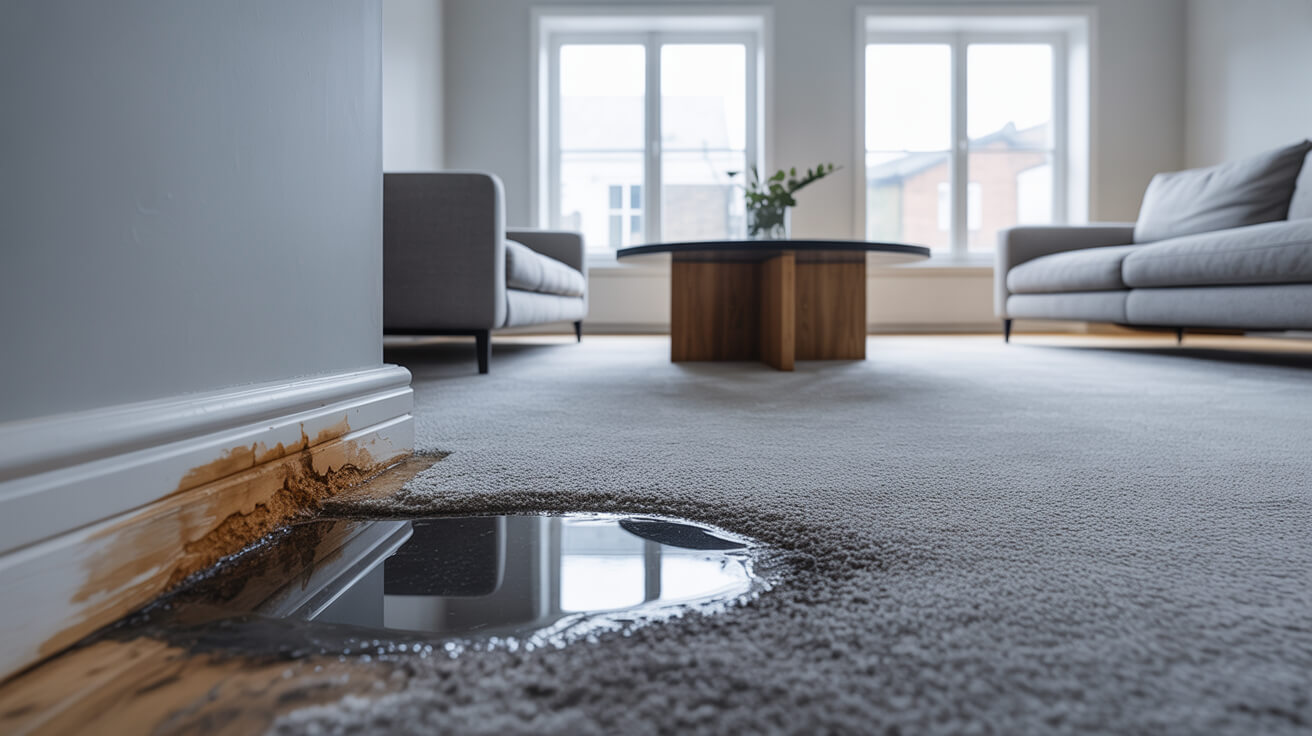
Treatment strategy pivots on severity and root-cause clarity. For isolated, small spots—and only where underlying moisture is resolved—use a certified antimicrobial spray with disposable towels/gloves. Always dry the area fully, repeating checks for odour or damp spots daily for a week.
For anything larger than a handprint, signs of repeated damp in the underlay/subfloor, or recurring outbreaks despite prior cleaning, engage professional remediation. Sussex Damp Experts deploys moisture mapping, salt analysis, and industry-approved containment/cleaning. Our process uses PAS2035 and BS6576-compliant materials and includes insurance/tenancy documentation—a must for landlords or property managers.
DIY vs Expert: Side-by-Side Comparison
| DIY | Sussex Damp Experts | |
|---|---|---|
| Scope | Tiny, isolated | Recurring, widespread, heritage |
| PPE required | Yes | Yes (certified/fit-tested) |
| Odour return | High chance | Extremely rare (when source fixed) |
| Compliance docs | No | Yes (insurance, HHSRS, PAS2035) |
| Tenant support | No | Yes |
| Aftercare plan | No | Yes |
DIY when appropriate saves money—professional remediation, done late, is always more expensive.
When Should a Carpet Be Fully Replaced?
Carpets that have been heavily contaminated, or any with recurring mould after prior cleaning, must be disposed of safely. Insurance may cover replacement when professional assessment documents the root cause, steps taken, and compliance with safety guidelines.
Where Are Ongoing Moisture and Mould Risks Most Commonly Overlooked?

Hidden risks breed repeated loss. While the visible patch on your carpet draws attention today, a damp surveyor’s toolkit uncovers tomorrow’s hotspots elsewhere:
- Subfloor timber and unventilated cavities nurturing fresh mould
- Bathrooms or kitchens separated by partition walls but sharing flooring or plumb lines
- Gutter downpipes feeding water into wall cavities along the floor perimeter
- Historic properties with insufficient lime mortar, trapping moisture beneath modern materials
Annual and Seasonal Checks:
- Moisture measurements near radiators and pipe runs
- Reinspections of previously affected rooms after heavy rain or snow melt
- Post-tenant turnover surveys for landlords
For property managers, multi-unit housing, or commercial spaces: Each failure to inspect is a potential insurance claim denied, or an enforcement letter waiting. Prevention isn’t about paranoia—it’s operational economy.
A single missed pipe or junction today can trigger months of legal wrangling tomorrow.
Checklist: Top Hidden Risk Zones
- Under heavy appliances (washers/driers)
- Below window sills with condensation history
- Along the inside face of exterior walls
- Unseen cavities formed by retrofits or renovations
Where systematic issues are detected, Sussex Damp Experts provides mapping, prioritisation, and futureproofing strategy to ensure you control property risk, not vice versa.
Can Mould Be Prevented From Returning After Treatment?

Future protection is engineered, never wished for. Routine aftercare—engineered humidity monitoring, scheduled inspections, and tailored interventions by property type—make recurrence unusual, not inevitable.
Landlords should specify aftercare checks in lease renewal. Homeowners can leverage new sensor technologies or schedule property checks after major weather events. Heritage trustees must mandate compliance with both modern building science and conservation rules for all remedial works.
Core Elements of a Prevention Plan
- Moisture sensor placement at known risk sites
- Annual damp audits before winter and after tenant changeovers
- Immediate repair of any new leak or water event, with photo and report archiving
- Document all interventions, including cleaning/removal, even if seeming minor
Prevention is never a single act—it’s a discipline that delivers security, value, and peace of mind.
The end game: Asset value protected, insurance claims supported, no surprise during audits, surveys, or sales.
Book Your Free Professional Carpet Mould Consultation Now
No one expects to manage a carpet mould incident. But leadership isn’t about what you hope won’t happen—it’s how you respond. Sussex Damp Experts stands ready to diagnose, remediate, and safeguard your property from first assessment through ongoing aftercare, with all documentation to meet compliance, insurance, and restoration needs, especially where Cladosporium-also thrive in carpet.
- Schedule a surveyor-led audit—protect your property’s value and your legal standing.
- Access insurance-ready reports and compliant fixes for sale, lease, or reoccupation.
- Secure aftercare and monitoring that make recurrence a rarity.
Step into property stewardship with confidence—lead the way in health, value, and resilience.
Frequently Asked Questions
What Immediate Threats Does Black Mould in Carpet Pose?
You’re not just looking at a stain; black mould in a carpet signals a systemic, escalating risk to your air, your asset, and your legal position. The real danger begins long before you see spots. Spores released from the fibre base fill your home’s air, aggravate asthma, spark chronic coughs, and quietly settle in your subfloor—especially in rooms with poor ventilation or after a minor leak. The NHS and HHSRS both highlight airborne mould spores in soft furnishings as a real and present cause of persistent respiratory problems, particularly for children, tenants, and anyone with lowered immune resilience.
Leaving it alone isn’t cost-neutral. Lenders and regulators treat untreated mould as a sign of deeper structural trouble; buyers and surveyors use it as a reason to flag, renegotiate, or walk away. Landlords and agents know an ignored outbreak can trigger enforcement action, fines, or even compensation claims under the Homes (Fitness for Human Habitation) Act. Insurers often use poor documentation or delayed response as justification to refuse claims or payouts—especially if the episode could have been prevented by prompt action.
Why the risk compounds:
- Hidden spores accumulate in the underlay and reach into timber or voids under the surface, making complete removal harder and more costly the longer you wait.
- Health dangers worsen for high-risk groups—meaning legal exposure for building managers and landlords jumps with every day of inaction.
- The silent devaluation: Mould-linked issues never stay secret in mortgage surveys, tenant reviews, or council audits.
- Insurance works in your favour only when you meet its test of prompt, professionally documented intervention.
“Control slips away at the first sign of neglect—regain it with evidence and action.”
Your identity as a responsible owner, buyer, or manager starts with your response to this first visible sign.
Why Does Black Mould Develop in Carpeted Properties?
Black mould in a carpet isn’t a random event—it’s a sign your property’s moisture safeguards have been breached. Carpets and their pads trap and retain damp in a way that turns them into long-term petri dishes, unlike tile or timber. The most common triggers in thousands of Sussex damp reports are:
- Undetected leaks: From plumbing under the floor, radiators, or appliances.
- Rising damp: Where the damp proof course has failed, been bridged, or was never installed on heritage properties.
- Condensation cycles: In homes with blocked vents, over-insulated extensions, or chronic indoor drying during winter months.
Modern insulation, while improving energy efficiency, can stifle airflow necessary to dissipate everyday moisture, especially below heavy carpet and underlay. In heritage, listed, and older properties, the problem is amplified: period materials like lime mortar and unsealed timber wick and redistribute moisture invisibly. Overlaying new plastic composites or impervious membranes often traps water underneath, pushing hidden growth until visible symptoms return.
Why diagnosis always comes before deep cleaning:
- Surface fixes never address the root cause. Hidden ingress may stem from an exterior flaw, faulty DPC, or invisible condensation event.
- Insurance policies, rental agreements, and resale reviews all reward properties with documented, professional diagnosis—not just spot treatment.
Risk map for moisture ingress in carpeted spaces:
| Source | Modern Homes | Listed/Heritage | Commercial/Multiunit |
|---|---|---|---|
| Plumbing leak | High | Medium | High |
| Rising damp | Low-to-Medium | Extreme | Medium |
| Condensation cycles | High (sealed) | High | Variable |
| Exterior Drain/Gutter | Medium | High | High |
A mouldy carpet is never just about cleaning—it’s your property’s way of mapping water’s hidden journey.
You’re not managing a one-time mess. You’re responsible for the ongoing health of your building—diagnosis is your signal of true ownership.
How Can You Accurately Identify Black Mould in Carpeting?
Passive observation isn’t enough. Black mould excels at hiding: under heavy furniture, beneath the surface, or along the unseen edge of the underlay. Start with the obvious—musty odour, patchwork stains, a persistently damp feel underfoot—but always dig deeper.
How to reliably spot true carpet mould:
- Visual check: Pull back corners and skirting; look for dark, filmy, or slimy areas.
- Touch test: A healthy underlay is taut, dry, and uniformly resilient. Any sponginess, stickiness, or coolness marks hidden wet zones.
- Odour: The sharper and more persistent, the deeper the outbreak—especially after rain.
- Moisture probe: Use a moisture metre for readings above 16%. Anything close should prompt action, especially if levels are climbing.
Documentation isn’t optional if you’re a landlord, seller, or property manager:
- Photograph all suspect areas (close-up and context).
- Timestamp every intervention, complaint, or prior fix—insurers and compliance officers want traceability.
- For widespread, recurring, or rental/tenancy properties, a professional damp survey becomes your firewall against future dispute.
| Spot the warning before it spreads: |
|---|
| – Dark stains or haze near outer walls and below windows |
| – Damp swelling under radiators or bathroom edges |
| – Patches that return after cleaning |
Most people clean a stain and move on—leaders find the leak, log the event, and set the standard for care.
True confidence comes from knowing your inspection process would satisfy a tenant, buyer, or audit tomorrow.
What Professional and Safe First Steps Should Be Taken After Discovery?
A calm, methodical response outperforms panic or instinct every time. The best building professionals and owners follow core principles:
1. Block access: Prevent foot traffic to limit spore spread—especially for children, pets, or staff.
2. Ventilate without recirculating: Open windows and use external discharge extractors; never rely on central HVAC until area is cleared.
3. Wear PPE: Always gloves and FFP2/N95 grade mask for any visible outbreak. Sensitive groups may require overalls for larger events or recurring outbreaks.
4. Document evidence: At least three clear photos of each affected area, timestamped, and referenced to a location plan.
5. Notify relevant stakeholders: Written notice to landlords or property managers, logged repair request to insurers, and, for commercial or heritage spaces, immediate contact with a PAS2035/BSS6576-compliant surveyor.
6. No deep cleaning or vacuuming: DIY cleaning before a root diagnosis frequently spreads spores and locks in insurance denials.
Why documentation is your greatest ally:
- Insurers and letting agents nearly always request proof of both initial discovery and timelines for action.
- For heritage/tenancy properties, omission of documentation can mean legal disputes and ongoing liability.
| First Steps Checklist | Essential For |
|---|---|
| Isolate the room/zone | All cases |
| Vent, avoid central air | All cases |
| Wear PPE | Moderate+ outbreaks |
| Photograph/Log event | Sales/insurance/tenancy |
| Alert owner/agent | Renters/agents/lease |
| Book pro survey | Large/multi-room/return |
Speed isn’t substitute for process—your building’s future depends on what you document and who you notify.
Operational trust, for your tenants or your finances, is a byproduct of calm, rigorous response.
How Should Carpets With Black Mould Be Cleaned, Treated or Replaced?
Cleaning is only the right option in highly restricted circumstances: new, isolated, fully diagnosed outbreaks with all underlying moisture eliminated. You need compliance-grade antimicrobial solution, full PPE, and a commitment to retesting damp levels on completion—any shortcut simply pushes the problem deeper, creating a latent, insurance-denying event.
When is a professional required?
- Multi-room outbreaks, recurring stains, or any instance where moisture traces persist beyond local patching.
- Rental, listed, or high-value property: For every step, you need step-by-step PAS2035/BS6576 or warranty-issued compliance.
- Heritage or sensitive sites: Only specialist vendors (such as Sussex Damp Experts) may legally or safely remediate, preserving regulatory protections and long-term value.
| Treatment Route | DIY Eligible? | Pro Required? | Documentation Need |
|---|---|---|---|
| Tiny/isolated patch | Yes (rare) | No | Optional |
| Recurrence/visible damage | No | Yes | Essential |
| Sale/Let/Rental | No | Yes | Non-negotiable |
| Heritage/Listed | No | Always | Always |
Why documentation is a competitive advantage:
- Well-kept records speed re-letting, resale, and insurance claims.
- Surveyors and lenders demand traceable evidence of not just cleaning, but permanent restoration.
Cosmetic fixes satisfy no one—be the stakeholder known for documented, compliance-forward repair.
If the pattern’s recurring or significant, don’t risk your property on wishful thinking. Choose the solution that leaves a paper trail and a warranty, not another stain.
Where Are Ongoing Moisture and Mould Risks Most Commonly Overlooked?
The biggest failures aren’t what you clean—they’re what you never look for. Black mould’s gravest threat is recurrence, originating miles from your last cleaning effort, fed through unseen pipes, gutted window seals, subfloor voids, or missed heritage material junctions.
High-frequency risk zones:
- Hidden subfloor cavities (timber, concrete)
- Along outer walls, adjacent to bathrooms, or kitchen wet zones
- Beneath oversized appliances and heavy furniture—hard to move, easy to ignore
- Old window/door points, especially in heritage builds
- Attic or basement edges, where insulation meets old substrates
Why vigilance builds resilience:
- Recurrence is always more expensive than the original fix, especially as repeat outbreaks compound insurance and compliance scepticism.
- In commercial, multi-use, or high-value residential, recurring events drive up OPEX, audit risk, and reduce tenant/buyer trust.
- Embedded aftercare—annual, post-event or regular survey—lowers operational risk, enhances audit outcome, and protects value.
| Risk Zone Checklist |
|---|
| Subfloor cavities (timber/concrete) |
| Wall skirting, especially below windows |
| Damp-adjacent kitchens/bathrooms |
| Furniture corners |
| External gutter/downpipe boundaries |
“You find control not by reacting to spots, but by predicting—and preventing—the spread.”
Build your property management reputation on anticipated, not just reactive, protection.
Can Mould Be Prevented From Returning After Treatment?
Mould recurrence is a strategic risk, not a random nuisance. Those who prevent with intent—rather than treat in cycles—save untold costs and establish leadership in compliance, asset value, and operational stability.
Prevention in practice:
- Secure all known and likely water ingress risks: Repair leaks, reset DPC, manage condensation with modern airflow.
- Instal wireless moisture/humidity sensors for ongoing monitoring—especially after repairs or tenancy changes.
- Schedule periodic expert survey as standard, not an emergency. Insurance, lenders, and regulatory bodies all benefit from scheduled aftercare.
- Insist on preservation practices in heritage, listed, or multi-unit builds—breathable materials, maintained documentation, and aftercare bookings as part of annual property plans.
- Reward tenants or staff who report early signs, incentivizing timely, successful repair before the problem reappears.
| Prevention Tactics |
|---|
| Immediate repair of water events |
| Scheduled professional aftercare |
| Ongoing moisture/humidity monitoring |
| Document interventions, repairs, and inspections |
| Aftercare embedded into lease/sale/management docs |
“In property, resilience is measured by what never goes wrong. That’s how leaders are judged—by retention, not remediation.”
Identity and reputation in your sector rest not just on reaction, but the discipline of methodical prevention.

