
 By
By  July 11, 2025

How Can You Accurately Identify Black Mould in Your Carpet?
There’s a moment—early, almost unnoticeable—when a carpet signals trouble: a subtle musty odour defies the air freshener, or a grey blotch isn’t quite dirt. Whether you own, manage, or lease property, these signals belong to you, and this is often an issue-often before damage is obvious: the warning appears before the consequences do, and ignoring it means lost value, rental dispute risk, or escalating repair bills. Your ability to spot these signs first, before they evolve into a legal, health, or financial headache, marks you out as a diligent owner or professional.
Pinpointing the Earliest Warning Signs
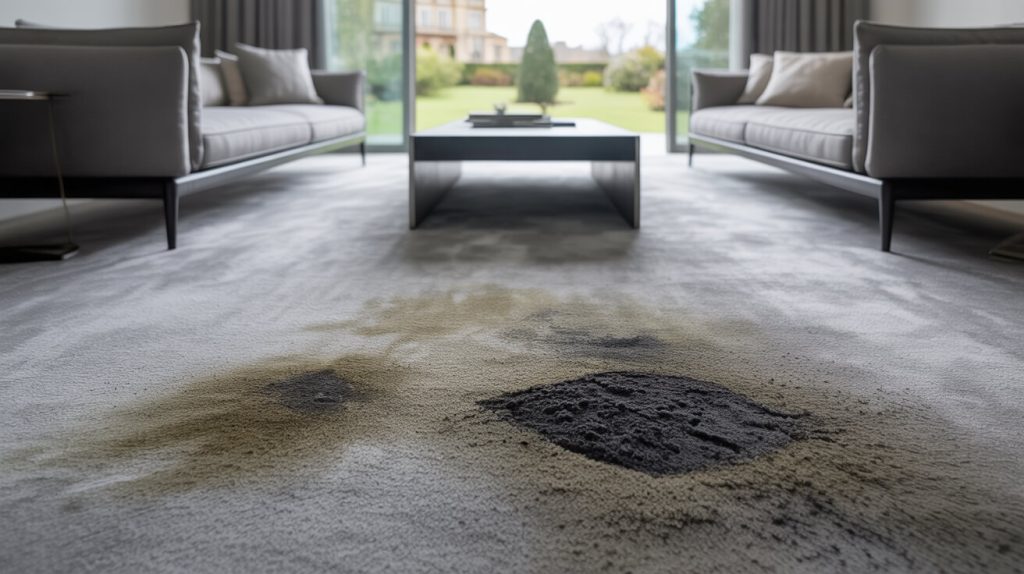
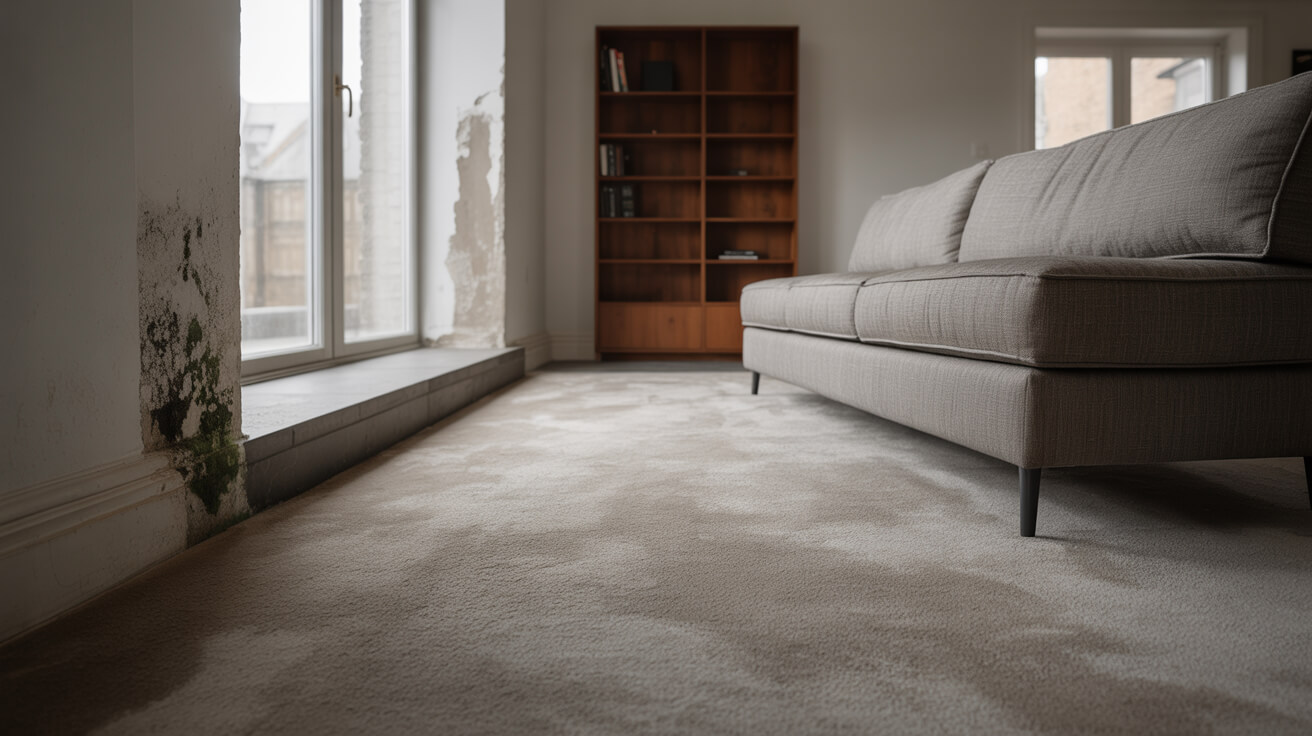
Surface inspection reveals black or green clusters along fibres, especially at skirting boards, doorways, or beneath long-placed furniture. These marks may look like ordinary dirt but rarely wipe away cleanly. If you sense an earthy odour days after a room has been aired, suspect biochemical change—spores proliferate where moisture hides.
For multi-unit managers or heritage stewards, underlay and subfloor edges often tell the real story. Lifting a corner can expose dark patches, and under finger pressure, the pad may feel sticky or surprisingly cool. Symptoms extend beyond the carpet: coughing, sneezing, or persistent headaches for family or tenants clustered to a single room generally warrant deeper inspection.
Step-by-Step Identification
- Visual Survey: Seek clusters or streaks in low-traffic zones and beneath window sills.
- Odour Profile: Musty smell after rainfall or prolonged closure is a reliable early marker.
- Tactile Assessment: Damp, cool, or soft patches along the perimeter suggest trapped moisture.
- Spot Testing: Affordable moisture metres, pressed at the base of carpet piles, quantify risk fast.
- Health or Behavioural Triggers: New respiratory complaints or persistent stains after DIY cleaning are elevated warning levels.
A musty room isn’t an inconvenience; it’s proof your building’s defences are working overtime—and may be losing.
When early clues build or advice is needed for rental compliance, our services provide not only rapid confirmation but an actionable, survey-ready report. Clarity, not guesswork, is the advantage enjoyed by professionals, landlords, and homeowners who move quickly.
Why Does Black Mould Proliferate in Carpets and Underlay?
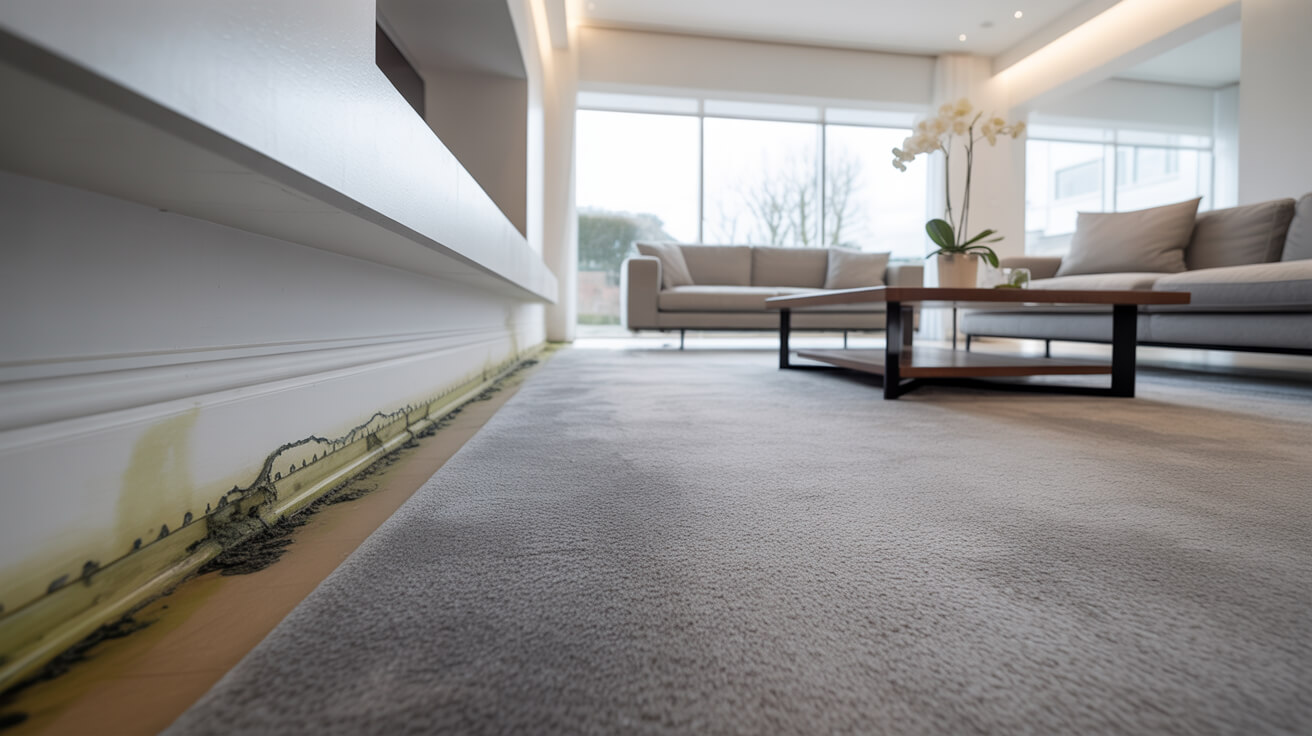
Every persistent stain, unseen spill, or old leak points to the same story, including Moisture Ingress: Past leaks: moisture lingering in darkness and feeding microbial growth that is easy to miss until it spreads. Proliferation is about conditions, not bad luck. Mapping those conditions defines your prevention strategy just as much as your response.
Factors Driving Unseen Outbreaks
- Trapped Humidity: Airing a room once a week is insufficient if ventilation doesn’t move trapped air from corners and beneath furniture.
- Absorbent Materials: Wool, jute, and many underlay pads hold on to residual damp after cleaning or flood, serving as long-term spore fuel.
- Inadequate Drying: DIY carpet shampooing, rain penetration, or plumbing leaks frequently leave underlay wet longer than you realise.
- Blocked Pathways: Heavy wardrobes or sealed perimeter trims inhibit natural drying and airflow, especially in heritage or basement rooms.
- Structural Pathways: Uninsulated subfloors, bridging from damp walls, or high water tables in older properties create upward migration of capillary moisture.
Managers overseeing several sites and heritage owners alike encounter additional risks: underfloor voids and period skirting conceal persistent sources, while modern vapour barriers can unintentionally trap moisture within the wrong layer.
Conditions That Warrant Extra Vigilance
| Environment | Trigger Example | Complicating Factor |
|---|---|---|
| Converted Basement | Previous flood, high RH | Slow escape pathways |
| Heritage/Listed | Lime mortar substrate | Capillary action |
| High Footfall Office | Nightly cleaning | Recurrent spills |
| Let Urban Flat | Tenant self-cleaning | Missed maintenance |
The more rigorously you control conditions, the less likely you’ll face chronic recurrence. Download our checklist and assess your building’s exposure zone.
What Health, Safety, and Legal Risks Does Black Mould in Carpet Pose?

Black mould in carpeting isn’t an isolated maintenance issue; it’s a dynamic, documented risk for health, asset value, and legal protection. The evidence, legal requirement, and market reality intersect at this point—precaution is no longer optional, it’s operational.
Health Implications for Occupants
From asthma cases in children to sinus infections in elderly tenants, NHS and public health agencies agree: black mould is a potent environmental hazard. Allergic reactions, persistent headaches, and worsening chronic conditions, especially when localised to a single room, demand swift remediation.
Tenants or owners in buildings with known mould history encounter more risk: not only for health, but for negotiating insurance, mortgages, or public sector audits—especially where repeated “DIY fixes” fail.
Legal and Compliance Angle
- HHSRS Enforcement: Landlords are required, under “Fitness for Habitation,” to provide spaces without persistent condensation or mould. Failure leads to council action and rent repayment orders.
- Mortgage Surveys: Sale processes halt immediately if significant mould is observed/reported or air quality metrics fail to clear.
- Insurance Exclusions: Most policies now stipulate timely, professional resolution or risk loss of payout.
Neglecting invisible risks is the quickest way to move from protection to prosecution.
Navigating compliance is simpler—and far less expensive—when expert diagnosis and certification from Sussex Damp Experts is embedded into your asset care, rental workflow, or transaction roadmap.
Where Can Black Mould Hide and How Is It Professionally Detected?

Most outbreaks hide—and often do their worst damage—where no one routinely looks. Underlay, wall joints, and floor perimeters are classic blind spots. In large-scale or heritage settings, skirting board voids or underfloor ducts house colonies undisturbed for years.
Concealed Zones That Demand Professional Attention
- Beneath heavy furniture or storage:
- Along external walls and room perimeters:
- Around skirting, in voids:
- Under underlay seams or non-breathable pads:
- In residual glue or pads from previous installations:
Detection Methods Used by Inspection Professionals
Our team employs multi-modal tools:
- Thermal Imaging: Pinpoints active moisture migration or hidden chill.
- Moisture Metres: Quantify exact water percentage; invaluable for insurance and compliance evidence.
- Borescopes/Hygrometers: Cross-check air and substrate humidity where visual inspection fails.
- Air Sampling: Assesses current spore load; key for post-remediation assurance.
A corner left unchecked is an invitation for invisible liability.
Critical compliance contexts—rentals, commercial, heritage—demand full-scoped detection that captures even subtle damp signs, offering not just solutions, but legally defensible documentation. An evidence-based inspection from Sussex Damp Experts is the standard that removes doubt from every stakeholder.
How Should Black Mould in Carpets Be Removed for Lasting Results?
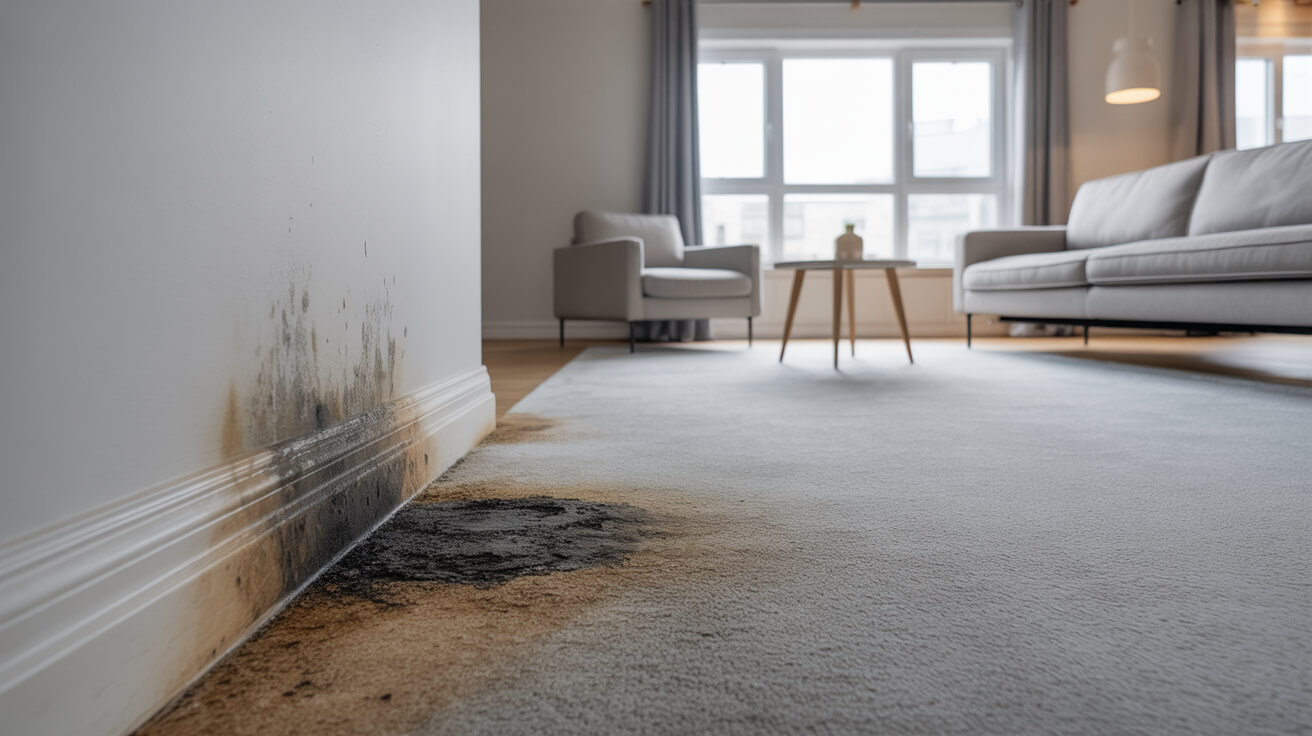
The remedy is more than cleaning—it’s a coordinated process: diagnosis, treatment, and substantiated follow-up. Over-the-counter sprays and basic suction miss root colonisation or, worse, disperse spores, setting up recurring cycles that undermine confidence and health.
DIY Cleaning Protocol
- Equip Properly: N95 mask, gloves, sealed disposal bags.
- Section Off Area: To limit airborne spread during agitation.
- Remove and Bag: Severely affected carpet/underlay must be double-bagged and disposed under council guidelines.
- Clean Surfaces: Hard floors, skirtings, nearby furniture with an approved biocidal solution.
- Accelerate Drying: Deploy dehumidifiers and air circulation for no less than 48 hours.
- Inspect and Monitor: Reassess after two weeks or—if symptoms, smell, or discolouration return—immediately reassess for deeper, hidden contamination.
When Is Professional Intervention Required?
- If affected area exceeds the size of a sheet of A4 paper.
- If underlay, floor, skirting, or walls show damage or persistently fail to dry.
- If high-risk users (children, elderly, anyone with chronic illness) frequently use the room.
- For any legal, insurance, or council reporting requirement.
Persistent recurrence isn’t cleaning failure—it’s a diagnostic oversight.
When intervention from Sussex Damp Experts is integrated, remediation is paired with monitoring—so resolution is not an event, but a guarantee, with documentation designed for audit, transfer, or tenant handover.
When Does Mould in Carpets Require Urgent or Legal-Grade Remediation?
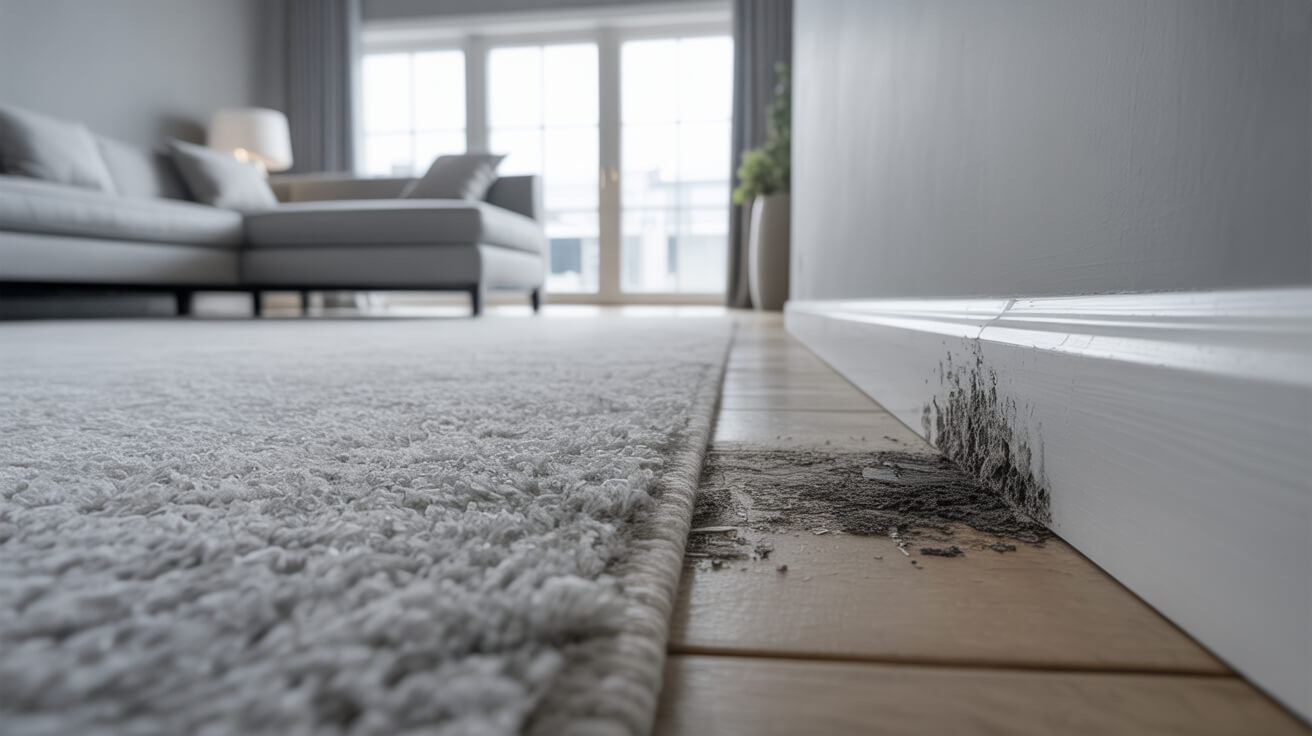
There’s a threshold. Below it, property managers or proactive owners can resolve issues with diligence and monitoring. Cross it—and asset protection becomes legal defence.
Immediate Remediation Triggers
- Evidence of contamination in interconnected rooms.
- Escalating occupant illness or formal tenant complaints to council/housing association.
- Failed survey, mortgage, or insurance inspection.
- Change in building use: change of tenant, sale, or compliance audit.
- Heritage status or public sector usage.
Remediation Timelines and Documentation
- Direct Resolution: Spanning days, not weeks, with full visibility and evidence-based workflow.
- Legal and Compliance Evidence: Photos, moisture readings, and remedial plan with before/after metrics.
- Insurance Validation: Audit-grade, FeRFA or PCA-backed reports.
| Urgent Scenario | Sussex Damp Experts Resolution Path | Outcome |
|---|---|---|
| Tenant complaint | Immediate assessment, council-legal doc | Regulatory compliance |
| Heritage listing | Non-invasive, reversible protocols, full doc | Planning approval, record |
| Sale fails on survey | Root cause proof, pre/post-metric doc | Sale resumes, premium |
Reactive remedies cost more than decisive ones—especially once a third party demands proof.
Legal, insurance, or reputational triggers favour those whose audit record begins before paperwork is requested.
What Practical Strategies Prevent Black Mould Reappearing in the Future?
Proactive asset care divides those who routinely firefight from those who quietly accrue value, stability and lower premiums. Forward-thinking steps now sidestep future emergencies.
Essential Practices
- Ventilation: Regular air exchange; mechanical where natural is limited.
- Humidity Monitoring: Keep rooms under 60% RH; invest in basic, app-enabled sensors.
- Prompt Water Management: Any leak or spill, act within 12–24 hours—document responses.
- Maintenance Routine: Scheduled inspections—especially post-incident or in tenanted or heritage spaces.
- Carpet & Underlay Choices: Upgrade to antimicrobial or moisture-resistant pads when feasible.
- Annual Specialist Survey: Especially for managers or compliant assets.
- Incident Record-Keeping: For insurance, public sector, and compliance workflow.
| Risk Level | Routine | Incident Response | Asset/Stakeholder |
|---|---|---|---|
| Owner-occupier | Monthly airing, annual check | Immediate dry/inspect | Family, asset |
| Landlord/HOA | Quarterly documented review | Fast council reporting | Tenant, reputation |
| Heritage/commercial | Specialist survey, reversible tech | Conservation-compliant fix | Value, grant eligibility |
Prevention builds certainty; certainty saves you money and time.
Our yearly plans—paired with property-specific documentation—are designed to pass inspections, smooth tenant and partner onboarding, and ensure that no small issue ever grows undetected.
Book Your Free Consultation With Sussex Damp Experts Today
Your next decision writes the future of your property—whether you’ll inherit cost, confrontation, and inconvenience, or secure stable comfort and demonstrable value. Our service model is built to give you a seamless path from concern to resolution, including issues linked to Moisture Ingress: Past leaks.
- Fast, on-site, survey-backed guidance by experts whose evidence stands up in court, sale, or regulatory context.
- Full compliance and insurance-grade reporting, so you’re never surprised by paperwork (or lack of it).
- Proactive aftercare and scheduled monitoring to keep you prepared—no matter how rules or seasons shift.
Being proactive is part of your identity as a successful owner, manager, or professional. Trust the team respected by lenders, insurers, councils, and heritage offices across Sussex.
One documented prevention is worth a year’s worth of apologies and expense.
Contact Sussex Damp Experts, and protect your air, health, and asset value—starting now.
Frequently Asked Questions
How Can You Accurately Identify Black Mould in Your Carpet?
Detecting black mould early means watching for subtle damp signs your carpet will not announce directly: a lingering musty odour, odd patches that resist ordinary cleaning, or colder, slightly damp zones beneath your feet. Such signals are not random.
Core Indicators You Should Never Ignore
- Spots: Look for black, olive, or dark green dots forming irregular clusters—especially near walls or under fixed furniture.
- Smell: Air that remains earthy or stale after airing points to concealed colonies. A change in the ambient scent—darker, heavier, or stubborn after rain—is as telling as visible mould itself.
- Touch: Dampen dark, cold spots or patches that feel sticky, or compress more than surrounding areas—underlay may be harbouring advanced growth.
- Inspection: Lift carpet edges, even in corners or beneath baseboards, to expose unseen spread.
- Physical Effects: Worsening allergies, cough, or sore throat for your household focused in one room often predate visible mould.
What Homeowners, Landlords, and Professionals Must Remember
Ignoring faint streaks or odours isn’t prudence—it’s an invitation for structural and health setbacks.
- Homeowners and tenants: A month’s delay can double your decontamination cost.
- Landlords: HHSRS and “Fitness for Habitation” require documented investigation at the first complaint or sign.
- Commercial/heritage managers: Underlay, subfloor, or void inspections catch risks invisible to standard checks.
A well-timed, expert survey by Sussex Damp Experts can document, diagnose, and quantify the issue-often before damage becomes irreversible or compliance concerns come into play.
Why Does Black Mould Proliferate in Carpets and Underlay?
Each instance of carpet mould flourishes due to three culprits acting together: excess moisture, organic material, and stagnant air. Knowing which is driving the current outbreak lets you break the cycle for good.
The Domino Effect: Trapped Water and Trapped Risk
- Moisture Ingress: Past leaks, undried cleaning, flooding, or even daily condensation feeds spores. Areas under beds, sofas, or storage rarely dry out promptly—moisture is shielded and airflow is nearly zero.
- Material Weakness: Wool, natural jute, or blended carpets hold damp longer and nourish fungal growth; thick underlays can lock this in for weeks.
- Habitat Creation: Modern insulation and double glazing seal buildings but also trap humidity.
- Structural Wicking: In heritage or solid-walled buildings, rising damp or capillary journeys from the subfloor silently nurture outbreaks.
- DIY Missteps: Shampooing without forced drying, or layering new carpet over damp underlay, guarantees recurrence.
| Risk Factor | Impact on Infestation | Mitigation Priority |
|---|---|---|
| Persistently damp rooms | Mould root system expands | Ventilated drying + sensors |
| Poor underlay choice | Extended spore life | Replace with vapour-barrier |
| Unsealed skirtings | Concealed border colonies | Inspection every season |
| Heritage construction | Upwards capillary movement | Pro diagnostics mandatory |
| Tenant inaction/delay | Rapid spread, regulatory hit | Survey + HHSRS doc trail |
A single unnoticed spill can spark a remorseless chain, but with professional mapping and prevention plans, you can intercept the next outbreak before it starts.
What Health, Safety, and Legal Risks Does Black Mould in Carpet Pose?
No property or asset is immune: hidden mould in your carpet is both a health hazard and a regulatory tripwire. Each day of exposure multiplies the probability of claims, fines, or irreparable asset loss.
Health Fallout and Regulatory Proof
- Human Impact: Spores cause respiratory illness, allergy attacks, sinus or lung infections (NHS, WHO). Risks spike for children, pregnant people, and anyone immunocompromised.
- Operational Cost: Extended exposure in commercial or public assets exposes stakeholders to enforcement (HSE, council, legal aid) and injury risk claims.
- Legal Trapdoors: For landlords, Fitness for Habitation and local authority regs demand fast, professional response—delays transform a complaint into enforcement and rent repayment.
- Portfolio & Asset Impact: Failed mortgage or insurance surveys, or surveyor-noted damp, tank property sales or compliance.
| Risk Arena | Trigger Event | Consequence |
|---|---|---|
| Health | New cough, tenant complaint | GP visit, claim, rent dispute |
| Regulation | Inspection, surveyor note | Enforcement, report order, voided coverage |
| Sale | Survey reveals mould | Discount, failed transaction |
| Reputation | Repeat issues/coverage | Tenant churn, rating hit |
Property managers—every missed detection or ignored report is a loss multiplier, not a savings.
Sussex Damp Experts provide compliance-grade rapid response, documentation, and remediation at every trigger.
Where Can Black Mould Hide and How Is It Professionally Detected?
Most infestations are first discovered where you rarely look—hidden from surface view, thriving in silence.
Concealed Mould Hotspots That Undermine Routine Inspections
- Under Furniture: Long-static items—wardrobes, beds—are “humidity shields.”
- Edges and Skirting Boards: Tiny cold bridges encourage patch growth around perimeters.
- Subfloor and Joists: Capillary action or leaks in heritage/solid floor builds push moisture beneath visible layers.
- Cavity Voids & Voided Floors: Especially in period or commercial assets, below-floor air or service gaps act as concealed ‘incubators.’
Professional Tools and Approaches
- Thermal Imaging: picks up temperature or moisture anomalies invisible to the naked eye.
- Moisture Metres: quantify hidden water without ripping up valuable carpet.
- Borescopes and Air Sampling: identify contamination in pipes & voids before symptoms escalate.
- Salt testing: exposes rising or capillary ingress, critical for heritage and basement properties.
| Diagnostic Method | Use Case | Asset Impact |
|---|---|---|
| Thermal Imaging | Fast, non-destructive | Commercial, rental |
| Borescope | Deep hidden inspection | Heritage, HMO |
| Moisture Metre | Rapid quantification | All assets |
| Salt Analysis | Source pinpointing | Old/concrete slab |
If detection tools sound excessive, measure them against remediation costs for missed outbreaks.
A Sussex Damp Experts’ pro assessment shuts down the chain at the source, not just the spot.
How Should Black Mould in Carpets Be Removed for Lasting Results?
Removing black mould from carpet—and making sure it doesn’t return—is not about masking spots but breaking the biological chain that lets it regrow.
Professional Steps for Permanent Resolution
- Zone Isolation: Seal the immediate area to block spore migration.
- Contaminated Removal: Lift and double-bag affected carpet and underlay for compliant disposal (essential for legal and insurance purposes).
- Assess & Treat: Decontaminate adjacent hard flooring, skirting, and nearby materials with pH-neutral biocidal solutions.
- Controlled Drying: Use dehumidifiers, air movement, and moisture testing to return all substrates to safe ranges; avoid visible or hidden damp lingering in underlay or voids.
- Verification: Post-removal air and moisture readings document a cleared environment.
DIY Guidelines and Red Flags
- Small, isolated patches (<10x10cm) and recent spills may be manageable with PPE and lab-verified agents.
- Bleach is a short-term illusion; overuse damages both lungs and asset.
- If the area is larger, persistent, or repeatedly returns, or if any vulnerable occupant is present, the case demands targeted professional intervention.
| Step | Purpose | When Professional Only? |
|---|---|---|
| Remove bagged carpet/underlay | Prevents recurrence, health/insurance compliance | Large, multi-room, public assets |
| Air & substrate testing | Certifies clearance, okay for re-use | Sale, transfer, asset register |
| Documentation | Legal, insurance, regulatory | All landlord, sale, HMO cases |
21st-century property management skips the “back again” cycle—Sussex Damp Experts close the loop with asset- and legal-compliant solutions.
When Does Mould in Carpets Require Urgent or Legal-Grade Remediation?
The urgency threshold is crossed not just when you see more black spots, but when multiple factors converge:
multiple affected rooms, vulnerable inhabitants, tenant complaints, pre-sale or pre-rental inspections, or legal claims.
Scenario Matrix: Immediate Action vs. Delayed Response
| Escalation Trigger | Immediate Action Path | Delay Consequence |
|---|---|---|
| Tenant health concern | Compliance survey + HHSRS report | Council complaint, reinspection |
| Pre-sale survey fails | Insurance-grade clearance + doc | Price cut, lost sale |
| Multiple asset recurrence | Moisture mapping & full remediation | Portfolio impact, liability |
| Commercial site closure | Rapid air/void testing | Business interruption costs |
Decision Timeline
- Legal frameworks (Fitness for Habitation, HHSRS) count first symptom discovery, not action, as the start of “the clock.”
- In heritage or commercial sites, documentation at first trigger often spells the difference between insured recovery and asset depreciation.
- Buyers, agents, and insurers use expert clearance certificates as transactional leverage—delays are more than procedural, they’re financial.
Waiting is never neutral; the cost to reputation, value, and compliance spirals with each day unaddressed.
For asset owners, property managers, and compliance stakeholders, Sussex Damp Experts maintain unmatched speed-to-resolution, backed by survey-ready reporting and future incident insulation.
What Practical Strategies Prevent Black Mould Reappearing in the Future?
Staying free of carpet mould isn’t about one-off cleaning—it’s about institutionally embedding prevention, documentation, and early detection into responsible ownership or management.
Maintenance Steps and Monitoring Routines
- Air Movement: Daily, deliberate cross-ventilation; mechanical extractors for windowless spaces.
- Dehumidification: Instal cost-effective, app-connected sensors in high-risk rooms.
- Reactive Maintenance: Treat any leak or flood with drying, inspection, and documentation within 12–24 hours.
- Quarterly Inspection: Review voids, underlays, and skirtings in all fixed or high-value locations.
- Underlay/Pad Upgrades: Use VOC-safe, antimicrobial, or certified vapour-barrier materials in all new or renewed instals, especially for HMO or heritage layers.
- Annual Professional Survey: Record conditions for all sensitive or portfolio assets; update compliance files, renew insurance, or ease next sale.
| Action | Frequency | Responsible Role |
|---|---|---|
| Visual inspection | Monthly/Quarterly | Homeowner, Agent |
| Humidity check | Ongoing/Automatic | Facilities Manager, Agent |
| Incident response | Ad hoc | All, instant per event |
| Annual pro survey | Yearly/transfer | Owner, Manager |
A property protected is a reputation preserved, a value certified, and a future-proofed asset—let Sussex Damp Experts embed resilience in your maintenance workflow.
Lasting reputation is won by consistency in unseen details and visible outcomes alike.

