
 By
By  August 26, 2025

Can Damp Invade Without You Knowing? The Hidden Risks Facing Today’s Homeowners
Step inside any home in Sussex, past the fresh paint or newly fitted kitchen, and you’ll find risks that care little for style or wishful thinking. Damp does its best damage by staying quiet. It creeps—hidden beneath walls, through neglected joints, drawn up from the earth, or drifting via that “part of the charm” original hearth. Most homeowners don’t see it coming. By the time faint mildew appears, or a sour tang drags at your nostrils, the real theft has already happened: your home’s value, your family’s comfort, and your prospects for a smooth sale.
Every warning sign you miss hands time and money over to damp.
Many tell themselves, “It looks fine, must be fine.” That’s how damp does its work. It doesn’t send an invitation; it finds a path—along plaster cracks, under carpet, through porous brick—each day biting further into your investment. Industry analysis shows untreated damp can cost an average UK homeowner 8–12% of property value come sale time (which.co.uk). That’s money vanishing quietly, right alongside your health and your standing with insurers or buyers.
What Early Signs of Damp Usually Slip Under the Radar?
Quick checks help, but know these clue points:
- Lingering musty smells: —the nose always knows before the eyes do.
- Peeling paint or plaster, bubbling walls: —moisture’s signature; not just bad luck.
- Condensation, soggy skirting, cold corners: —hidden vapour, poor air, or bridging letting moisture hide.
- Faint white salt deposits: —water’s secret footprints.
- Family coughs or unexplained tiredness: —your body often sniffs trouble first.
When national tragedies (think Grenfell, or most recently Awaab Ishak) put the spotlight on indoor air quality and accountability, every sign you ignore can be flagged as a risk—not only to health but to market value and legal standing. Under the new “Awaab’s Law” mindset, if you see nothing, prove nothing, or ignore early warnings, you could own far more risk than you realise.
Why Damp Deserves Urgency—It’s a Threat to Your Health, Not Just Your Decor
Damp’s sharpest trick isn’t in how it eats at bricks or stains paint—it’s how quietly it sabotages health. You can’t see, touch, or always smell what’s happening, but your respiratory system feels it first. National Health Service and World Health Organisation studies draw the line: children in persistently damp homes face up to a 40% higher risk of asthma or serious respiratory illness (who.int). The risk is just as real for adults—especially immune-compromised or elderly household members.
You may not notice the mould, but your lungs will register every spore.
The Cost of “Clean” That Isn’t So Clean
Here’s where it hurts most:
- Breathing aggravations: —persistent coughs, chest tightness, and sluggish mornings that lift once you leave home.
- Poor sleep quality: —airway irritation means lighter, broken sleep, harder starts to the day.
- Higher risk for vulnerable people: —kids, older adults, and anyone with allergies or chronic illness are on the front line.
- Mental and physical fatigue: —low-level damp exposure is increasingly linked to mood dips and brain fog.
Covering the scent with a rosemary diffuser won’t fix it. You can’t wish away that trouble. Unless you’ve had a proper damp investigation with the right tools and a surveyor’s eye, your family could be paying the price for what you can’t see.
What Has Awaab’s Law Changed? The Ripples Touch Every Homeowner—Not Just Landlords
A story has taken hold: “Awaab’s Law is just for social landlords.” But as new standards trickle down, all property owners get swept in. Landlords must fix any reported serious damp or mould within 14 days by statute—but lenders, letting agents, and insurance underwriters expect the same from every homeowner now. No more “it’s my business” defence: surveyors, local authorities and mortgage providers now use the social housing safety bar as their basic test.
If it’s risky for tenants, it’s risky for everyone. The label on your property file makes no difference when hazard rules are enforced.
What Does This Mean in Practice for Homeowners and Sellers?
- Rigorous surveyor investigations: Show receipts, not stories. Glossed-over histories or homebrew “we fixed it” repairs struggle to get past modern surveyors.
- Sceptical buyers: They want proper diagnosis, paperwork, and repair proof. Quick fixes and “mate did it” attitudes see the offer price crash.
- Council enforcement: The Housing Health and Safety Rating System (HHSRS) bites in any home with a proven hazard—owner-occupied or not *(gov.uk)*.
- Lender and insurer diligence: British Standard-compliant reports or it didn’t happen.
Without proof—diagnosis, quality repair, compliance—expect barriers to borrowing, price drops, or formal orders to repair at your cost, sometimes enforced.
Can Anyone Actually Force You to Fix Damp in Your Own Home?
It used to be simple: you buy it, you deal with it (or not). Those days are gone. The moment an official, a mortgage provider, or a buyer’s solicitor sniffs out a leak, it’s out of your hands. Mortgage offers can pause. Councils and insurers can lean on you. If the right paperwork isn’t there, you could lose tenants, be fined, or face forced repairs before a sale is allowed.
How Damp Forces Your Next Move
- Surveyors halt the sale: If damp is flagged, buyers walk or offers plummet.
- Council intervention: Any serious damp or mould is a “category 1 hazard” (per HHSRS)—you could be legally ordered to fix, fined, or even have tenants moved out until you do it right.
- Case law risk: Ongoing, hazardous mould or “statutory nuisance” means you could see court, especially if anyone becomes ill (Environmental Protection Act, Housing Act).
Hoping for luck isn’t a tactic. Every month you delay can double the cost—first in repairs, then in the value of your lost credibility as an owner.
You protect your home best when you react not to pain, but to early warnings, and follow a fact-and-compliance trail.
Is a Basic Damp Survey Enough? What Today’s Surveyors and Lenders Demand
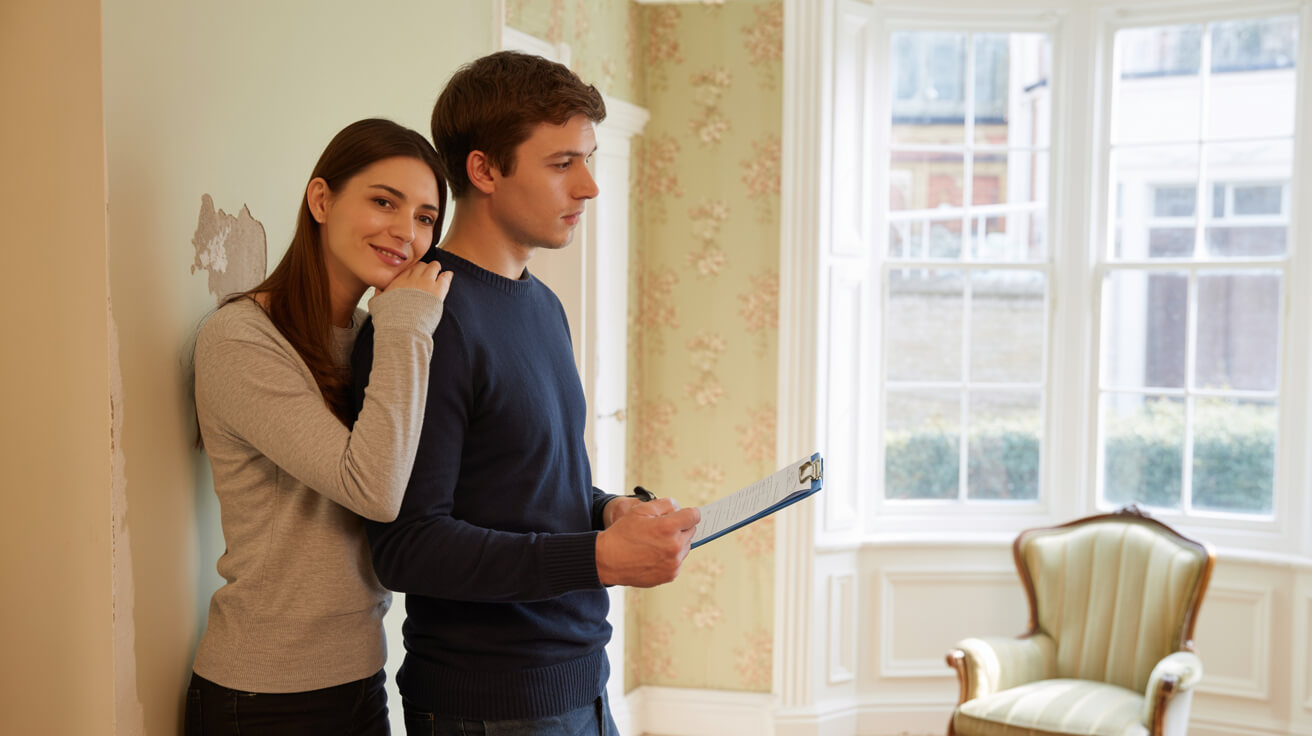
Gone are the days of a “quick check” or paper-thin report ticking some boxes. Professional lenders, insurers, and buyers now expect forensic-grade surveys—combining high-spec instruments, environmental data, and photographic evidence mapped to the correct British Standards. This is no mere tape measure job; it’s a detective’s work, with the power to decide your home’s fate.
A token surface check can’t mask the risk; the value lies in a properly documented, forensically sound report.
Where Cheap or “Lite” Reports Lead You Astray
- Over 60% of first damp diagnoses are wrong, costing UK homeowners millions in reworks and delays *(rpsa.org.uk)*.
- One-tool-and-done reports miss deep leaks, bridging from poor plaster jobs, or hidden vapour routes.
- Lenders and insurers want precise, digitally evidenced reports tied to compliance standards, not opinions.
The Modern Surveyor’s Report—What’s Now Required?
- Moisture mapping: Not just random readings but full wall gradients, salts, airflow, and substrate checks.
- Confirmed cause: Clear separation of rising damp, leaks, or condensation—no maybes or “looks like” guesses.
- Documentation: Repair and diagnosis photos, digital records—traceable, auditable, and future-proofed.
- Context: Ventilation data, substrate history, previous fix attempts—each piece must be justified.
We craft our Sussex Damp Experts reports not just for the current problem, but to withstand any scrutiny from buyer, bank, or council—future sale, mortgage, or insurance claim.
Why Quick Fixes and “Standard Jobs” Backfire—And Haunt Your Future

When the market gets tough, you see more “standard jobs” and bargain tanking. But these quick fixes fail fast, especially for brickwork born before modern plastics and treated with the wrong tools. If the repair skips a step, mismatches materials, or ducks the compliance paperwork, you—your lender, your agent, your insurer—are left exposed. The “cheap fix” lies only work once, then the problem returns, bigger and pricier.
The Expensive Reality of Bad or Botched Repairs
- Picking the wrong materials: Victorian walls, for instance, need to breathe. Synthetic barriers cause more damage, often shifting damp sideways.
- Lack of real documentation: Can’t prove the fix by photo and compliance log? The insurance won’t pay, and buyers downgrade offers.
- Heritage homes: Historic, listed, or conservation properties need more than “fit it and forget it.” Get permissions and use premium, compatible materials, or expect formal pushback and deal delays.
- Warranties that mean nothing: Only jobs with insurance-backed, registered guarantees add value or survive a re-sale or mortgage check.
A patch job isn’t a solution, it’s a time bomb. True fixes always carry a documented chain, from diagnosis to aftercare, that stands up to legal or surveyor’s review.
At Sussex Damp Experts, every solution is designed to fit the history, substrate, and compliance needs of each property—giving you not just a fix, but the reassurance of never having to fix that damp again.
Is Aftercare Optional? Why Digital Monitoring Is the New Baseline

The days of “fix and forget” are over. Damp, like health, needs monitoring—not just for the repair, but for your building’s future and your own guarantees. Annual digital service checks, real-time moisture logging, and robust documentation don’t only keep your warranty alive—they protect your home’s value, insurability, and saleability.
A warranty without real oversight is a locked door with the burglar in the attic.
Modern aftercare is built on:
- Monitored, annual post-repair checks—recorded, signed, and timestamped.
- Real-time data: moisture and ventilation logs, shareable with surveyors, buyers, and warranty underwriters.
- Owner-friendly explanations and use guidelines—reducing relapses and confusion.
- Digital record chains—any buyer, lender, or local authority can check at a glance.
With Sussex Damp Experts, every warranty is tracked and documented, stopping damp from making a comeback, and protecting your investment for the long haul.
What Sets Sussex Damp Experts Apart in Securing Your Home’s Health and Value?

Why do surveyors, agents, and local authorities trust Sussex Damp Experts as the first call, not the “bargain” alternative? Because every client is handed a system and a story, backed by rigorous process and visible proof—not “take our word for it” but “here’s the evidence.” We’re BS6576 and BS8102 accredited, living and breathing compliance, and invested in the long-term health, value, and livability of Sussex’s homes and heritage properties.
Surveyors call in Sussex Damp Experts when the proof needs to be beyond question—no one else puts this much documentation behind every fix.
Here’s what stands out:
- Industry-recognised expertise: Our teams are certified for every major UK standard (BS6576, BS8102), PCA-accredited, and TrustMark guaranteed.
- Warranties that mean business: All our solutions are backed with insurance-registered guarantees, extended with digital monitoring.
- Solutions tailored to your property’s build, age, and needs: No “copy-paste” fixes.
- A documented chain—from diagnosis to aftercare—ready for any audit, mortgage, or dispute.:
- Trust by local reputation: 10/10 Checkatrade reviews, preferred by buyers, agents, and councils in Sussex.
Sussex Damp Experts isn’t just another contractor—they’re the record that safeguards your health, value, and peace of mind for years.
Put Your Property First—Contact Sussex Damp Experts Today
The real threat isn’t what you see on the wall—it’s the cost, risk, and health impact of what goes undetected or ignored for too long. You can choose to hope; or you can futureproof your property, family, and finances by acting now, with evidence-based diagnosis and repair that secures your biggest asset.
The smart move: book your specialist inspection with Sussex Damp Experts—the only call that guarantees health, value, and security for Sussex homeowners.
Don’t leave your story in the damp. With Sussex Damp Experts, every repair is proven, every decision built to last.
Frequently Asked Questions
What new compliance burdens fall on private homeowners as laws tighten damp proofing standards?
Private homeowners now shoulder the same compliance expectations as landlords—even if the legal text is aimed elsewhere. This shift is driven by how mortgage lenders, insurers, and local authorities have adopted Awaab’s Law as a new baseline on every residential transaction. If your property shows unresolved damp or lacks rigorous documentation, expect flagged valuations, delayed completions, and steeper insurance rates—regardless of your ownership status.
Homes missing an airtight damp paper trail risk stalling in the market, with lenders treating every undocumented patch as a red flag.
How has lender and council scrutiny changed for owner-occupiers?
Councils use statutory tools, like HHSRS and the Environmental Protection Act, to enforce repairs without caring if you’re renting or not. Lenders, wary of future legal claims or regulatory fines, demand surveys citing BS 6576 or PAS 2035. Surveyors ask for digital evidence and warranty proof as standard, while insurers set premium rates by document completeness. Passing muster now means building a compliance file that mirrors a professional landlord: every diagnosis, survey, and repair is logged, signed, and standards-indexed.
What practical records must you now maintain?
- Keep accredited surveys referencing British Standards and linked remediation
- Archive all moisture reports, thermal images, and before/after photos
- Retain signed, timestamped documents for every episode—accessible at sale, remortgage, or insurance renewal
- Ensure your repair team supplies accreditation (TrustMark, PCA) and warranty proof for each fix
A well-documented track record isn’t just about tick-boxes—it’s your only path to undisputed property value and future buyer confidence in the “post-casual” compliance era.
How have private home damp survey standards and evidence changed since 2025?
Survey standards now demand forensic, standard-linked proof. Mortgage approvals, insurance cover, or smooth sales rely on written and photographic logs, moisture maps, and lab-based salt analyses that reference BS 6576 or PAS 2035. Thermal imaging, multi-zone metre mapping, and root cause analysis are not specialist upgrades—they’re routine. Gone are the days of a builder’s note; today, compliance is as much about what you can show as what you’ve fixed.
Every damp survey is now trial-by-evidence—if the documentation can’t talk, the market won’t listen.
What is the minimum documentation for a compliant survey?
- Multi-point, digitally stamped moisture readings—across each risk zone, not just trouble spots
- Salt analysis to sort fresh ingress from old, inactive scars
- Thermal camera imagery and digital logs to pinpoint hidden moisture or bridging
- Reports directly referencing PAS 2035/BS 6576 and stapled with accreditation (TrustMark/PCA)
- Chain-of-custody documentation, including before/after photographic records, filed for at least 7 years
Which survey mistakes now block progress?
- Single-point “visual only” diagnoses or uncalibrated metre readings
- No formal standards tie-back, missing standards body citation
- Gaps in the photo trail or aftercare schedule
- Documents missing TrustMark, PCA, or equivalent certification
- Archive failures—no digital copy or poor handover at sale/survey
Sussex Damp Experts ensures you never fall foul, by exceeding these evidence and archival thresholds for every engagement.
What hidden costs mount when damp goes undiagnosed or neglected by private owners?
Unchecked damp quietly eats through both building materials and household budgets. Insurers now routinely survey claims history for evidence gaps before payout, while buyers discount or withdraw if there’s any hint of hidden moisture or unproven works. Regulatory tightening means every ignored patch risks health complaints, council enforcement, and mortgage refusal—turning invisible problems into major losses.
Time is the real silent cost—letting damp linger year-on-year can treble your eventual repair bill and halve buyer interest.
Where do owners feel the sharpest financial and practical impact?
- Failed sales or mortgage delays due to insufficient or outdated survey evidence
- Council orders and possible legal action if health or nuisance thresholds are crossed
- Declining property value; industry figures indicate up to 10–12% erosion without compliance evidence *(UK Gov, 2023)*
- Insurance excess hikes or claim refusals on grounds of non-disclosure or incomplete file
- Accelerated decay of timbers, insulation, stucco and fixings, with small issues becoming full refits
What’s the real cost of delaying proper action?
| Condition | Cost after 2+ years untreated | Cost if addressed early |
|---|---|---|
| Minor wall staining | £800–£1,400 | £300–£500 |
| Local timber attack | £2,000–£4,200 | £800–£1,200 |
| Substantial rot/structural | £9,500–£18,000 | £2,200–£5,000 |
The lesson for prudent owners: proof-of-action is now the cheapest, most reliable shield against a market and legal system that no longer forgives oversight.
How do you guarantee a damp survey satisfies current lender, insurer, and buyer demands?
Accept nothing less than a standards-referenced, digitally auditable survey from a recognised expert. The hallmark of compliance now isn’t just a technical fix—it’s a survey that maps readings, traces cause, specifies remedy, and chains evidence from inspection through to warranty. Every step must align to British Standard practice; lender-ready reports show precisely how, when, and by whom issues were addressed and monitored.
A fresh survey backed by accreditation tells lenders and buyers your asset is professionally maintained—not a leap of faith.
What does a model survey report provide?
- Digital moisture mapping across all risk points and before/after documentation
- Diagnosis and remedy linked to BS 6576/PAS 2035, with causal logic clearly stated
- Materials and methods used, plus cure times and handover summary
- Chain of evidence: photo logs, receipts, warranty and aftercare documentation, held as PDFs and physical files
- Proof of PCA/TrustMark (or equivalent) specialist involvement
Why do reports fail—what are the common pitfalls?
- Vague or “optimistic” cause statements without standards reference
- Patch repairs with self-certification, no accreditation
- Incomplete records of aftercare, annual checks, or failures
- Non-compliant or non-archived documentation at point of sale or audit
At Sussex Damp Experts, every survey is architected for compliance-first clearance—removing uncertainty from banks, insurers, buyers and keeping you firmly in control.
Which legal duties and compliance frameworks now apply to private homes beyond Awaab’s Law?
Private homes must now keep every regulatory box ticked—no matter the tenure. Building Regulations Part C mandates moisture controls for all residential properties, while HHSRS gives councils authority to intervene in owner-occupied homes on health or nuisance grounds. Insurance and mortgage firms have their own overlay, mandating proof-of-repair logs aligning with PAS 2035 and BS 6576 as standard. The “it’s my house, my choice” era is over; oversight is now systemic.
Norms once reserved for buy-to-let are now routine for the owner-occupied market—legality, insurability, and saleability all controlled by proof.
Which key laws and agencies now act for compliance?
- Building Regulations Part C: moisture and damp remedy duties for all homes
- HHSRS: council enforcement, not just for tenants but owner-occupiers if hazards persist
- Environmental Protection Act: legal action for unresolved or recurring damp (statutory nuisance powers)
- Mortgage lenders/insurers: refuse funding, cover, or payout where records don’t match the latest standards
- Industry standards (BS 6576, PAS 2035): embedded as reference in lender and insurer audit processes
What steps keep you on the right side of compliance?
- Plan annual compliance checks; audit your survey, photo and warranty files against latest laws
- Keep formal records for every fix, from minor to major, including heritage or conservation consent where relevant
- File aftercare and monitoring reports—not just initial fixes—with every warranty or insurance policy
- Expect requests for proof at every milestone: sale, refinance, policy renewal, or local complaint
Hands-on compliance keeps owners out of council crosshairs and ensures the broadest possible market for property sale or lease.
How do future-ready owners protect home value, compliance, and well-being as the rules evolve?
Proactivity is now the foundation of property security—waiting for a trigger event is neither wise nor permitted. Commission yearly, accredited damp surveys and record every inspection, repair, and aftercare event digitally. Make your compliance file cloud-accessible to both you and your legal representatives. Use building-specific remediation—period homes require breathable legacy methods; new builds benefit from integrated system fixes and live monitoring. Future leaders don’t simply plug leaks—they create a chain of proof that stands tall in a world of escalating scrutiny.
Control your property’s destiny by leading with evidence, robust aftercare, and a compliance routine others aspire to.
What does a forward-thinking compliance routine look like?
- Engage independent, accredited surveyors who follow British Standard protocols
- Keep a digital, cloud-stored compliance archive—instantly accessible for audits and buyer checks
- Schedule aftercare with internal moisture monitoring and formal insurance record-keeping every year
- In heritage settings, gather and retain full planning and consent documentation
- Demand end-to-end evidence management—surveyor, remediation, warranty, and monitoring all joined in a single file
Sussex Damp Experts operate on the frontier of these requirements, equipping your property for every new compliance wave, protecting your value, your peace of mind, and your readiness to move in a market that rewards evidence and penalises negligence.

