
 By
By  August 26, 2025


Why Has Awaab’s Law Redrawn the Legal Battle Lines for Every Landlord?
Landlords across the UK are no longer judged by their intentions—they’re being measured by cold, chronological evidence, all thanks to Awaab’s Law. This legal turning point forces a move from well-meaning promises to hard proof. Regulators don’t care how sorry you sound or how quickly you scramble; they want to see a date-stamped paper trail for every step you’ve taken to tackle damp, mould and disrepair.
In the new world of Awaab’s Law, good intentions are wiped out by missing paperwork; only proven action stands between you and fines.
This shift was catalysed by tragedy—a young boy’s death after social housing managers ignored persistent mould complaints. The country’s patience ran out. Parliament didn’t just tweak an existing law; it lifted the burden of proof out of landlords’ hands and set it on the table for all to see. Now, if you can’t back up your story with documents—detailed, timestamped, and easy to follow—the regulator starts by presuming you failed.
It’s not just a question of paying for repairs; it’s about surviving legal, reputational, and even financial ruin. What’s at stake is your ability to keep your properties, serve your tenants, secure loans, or attract agencies to lease your homes. In reality, as the awaabs law introduction makes clear, the only real “defence” is a watertight system—a living archive. Landlords, agents, housing associations, and contractors must now treat every tenant repair log, inspection note and photo as if it’s evidence for the Crown.
What’s Changed About the Burden of Proof—And Why Does It Matter Now?

Relying on memory, scattered texts, or last-minute emails is a sure way to land on the wrong side of the law. Post-Awaab’s Law, landlords are forced to operate with the mindset of a seasoned investigator—every event logged, every action signed, every handover documented.
Objective Evidence, Not Explanations
Courts and ombudsmen expect a traceable record for each complaint and intervention:
- Digital timestamps: on all logs—no backdating, no guesses, no “It happened last week.”
- Continuous audit chains: , capturing every step: when did the tenant first flag the issue, which operative inspected, what action was taken, with whose sign-off?
- Verified communications: —every offer, repair schedule, update and tenant response, captured in writing or electronic message, not just passed around on phone calls.
- Centralised, tamper-proof storage: —cloud-based, permissioned systems, immune to “lost email” excuses.
- Tenant confirmation: —from inspection invites to sign-off, every key milestone needs tenant acknowledgement or a hard record of outreach attempts.
If a snapshot of this process looks patchy, the presumption of default swings against you. Landlords are discovering that missing or disputed logs can erase months of honest work in an instant.
Which Records and Evidence Matter Most Under Awaab’s Law?

To stand up to regulators, landlords must maintain five core documentation pillars. These aren’t optional—they’re your only shield when the audit bell rings.
The “Big Five” of Landlord Defence
-
Signed Tenancy Agreements
Explicitly state damp and repair obligations. Use plain English and keep every version updated and counter-signed. -
Inspection & Survey Evidence
Photos. Moisture metre logs. Inspector IDs. Dates, times, and findings, not just generic “Inspected: OK.” Pre- and post-repair images seal the chain. -
Repair Logs
Who did what, when, and with what materials? Even routine fixes—like a door reseal or vent unblock—must be written up, signed and dated. -
Communication Records
Every tenant request. Each reply. Scheduled visits, action plans, delays explained with proof (not just apologetic calls). -
Visual Proof
No description beats a before-and-after photo with date, time, and property reference. Video walkarounds only strengthen your file.
Tie all of this into a digital folder for each property—cloud synced, access controlled, and updated after every step. If you’re still cutting and pasting files between desktops, the law is already passing you by.
Landlords who skip a detail or fail to update their records are not only legally exposed—they’re seen as defaulting by new regulatory standards.
How Strict Are the Timelines—And What If You Fall Behind?

Awaab’s Law doesn’t bend for excuses; timelines for action are now rule, not guidance. Every deadline relates to risk—and every delay leaves you vulnerable.
Your Time Windows Just Got Tighter
- Within 10 working days: Respond fully in writing to a tenant’s initial damp, mould, or disrepair complaint. Logging is essential; it’s not enough to act alone.
- Within 3 working days after inspection: Deliver a written action plan with clear next steps to the tenant, confirming their receipt.
- Within 5 working days for acute hazards: Tackle Category 1 hazards such as dangerous leaks, structural water ingress, or severe mould with full repair or temporary risk removal—verified and logged.
- Penalties: A missed step can land you a fine starting from £5,000 per breach, with ombudsman action following close behind. One failed log, and public exposure isn’t a distant risk; it’s the new routine.
Every day a file sits unupdated or an action is skipped raises the odds of a formal complaint or investigation. Digital logs should update in real time; batch processing catches up with no one.
Which Landlords Are Most Exposed—And Where Are the Blind Spots?

Awaab’s Law hits social housing first—councils, housing associations, ALMOs—but the compliance wave is spreading. Private landlords are under the microscope too, especially those letting HMOs or properties flagged in local authority audits.
Specific Pressure Points
- Social landlords: Every property under the Landlord & Tenant Act 1985 is in scope—no exceptions for “one-off” incidents or busy seasons.
- Private landlords: Not formally inside the law’s perimeter, but lenders, insurers, and agents are demanding the same records. Market expectations run ahead of regulation.
- Portfolio operators: Systems that fit a ten-flat block may break down for high-frequency, high-turnover holdings. Regular audits and property-specific logs cut your risk.
- Special and supported housing: Properties with adaptations or vulnerable tenants see additional scrutiny—bespoke evidence beyond standard templates is required.
For landlords, a single missing file in a large portfolio can flip your status from trusted provider to headline risk overnight.
The solution? Walk the property-by-property line with regular audits; never delegate documentation to “checklists later” or split logs between devices.
How Do You Build a Defence System That’s Bulletproof—Not Patchwork?

The best landlords will treat compliance as system-building, not panic-response.
Digital-First, Evidence-Always Approach
1. Centralise Documentation—Don’t Scatter It
Move all records to secure, cloud-based platforms. Use file naming and property mapping rigorously, so every action is traceable at a click.
2. Rely on Standardised, Audit-Proven Templates
Adopt forms recommended by TrustMark, ISO9001, or sector bodies. Exercises in uniformity may look bureaucratic, but during review these are your rescue line.
3. Run Regular Gap Audits and Self-Correct
Check logs for missing signatures, blank timeline boxes or skipped entries. When you spot an error, log it, fix it, and add proof. This “defensive transparency” is respected by most regulators.
4. Make Aftercare a Recorded Process
Every follow-up call, revisit, or tenant check-in should be logged in the property file, not just marked as “done.” This closes risk gaps and shows genuine aftercare.
- Tip: Synchronise this schedule with insurance or warranty checks—you’ll gain audit leverage.
Done right, even a sudden regulator inspection can be handled with calm, because your records “talk for you”.
What Does Rock-Solid Evidence Look Like in a Real Damp or Mould Case?

When things go wrong, a landlord’s reputation is built—or shattered—by the file they open in the first 30 seconds of an audit. Here’s what works:
The Model Audit Chain
- Complaint intake: Tenant lodges a dated complaint, system logs the receipt.
- Inspection log: Full details on when, who, what measured, plus photos and tool readings.
- Repair file: Dates, engineer names, actions, and procedures, logged against the initial complaint.
- Ongoing comms: Every text, letter or call substantiates movement. Missed appointments? Send – and record – new invitations.
- Emergency repairs: Each appointment and action logged, progress images included, marked “with urgency”.
- Closure and sign-off: Tenant signs or acknowledges completion—or, failing that, documentation shows at least three honest contact attempts.
A broken audit chain, a missing invoice, or a one-off email can turn an open-and-shut case into a regulatory headache.
Landlords who treat digital archives as legal umbrellas rarely face more than a quick spot check—even if a tenant is dissatisfied.
How Do Courts and Ombudsmen Recognise Genuine Trust—Not Just Box-Ticking?
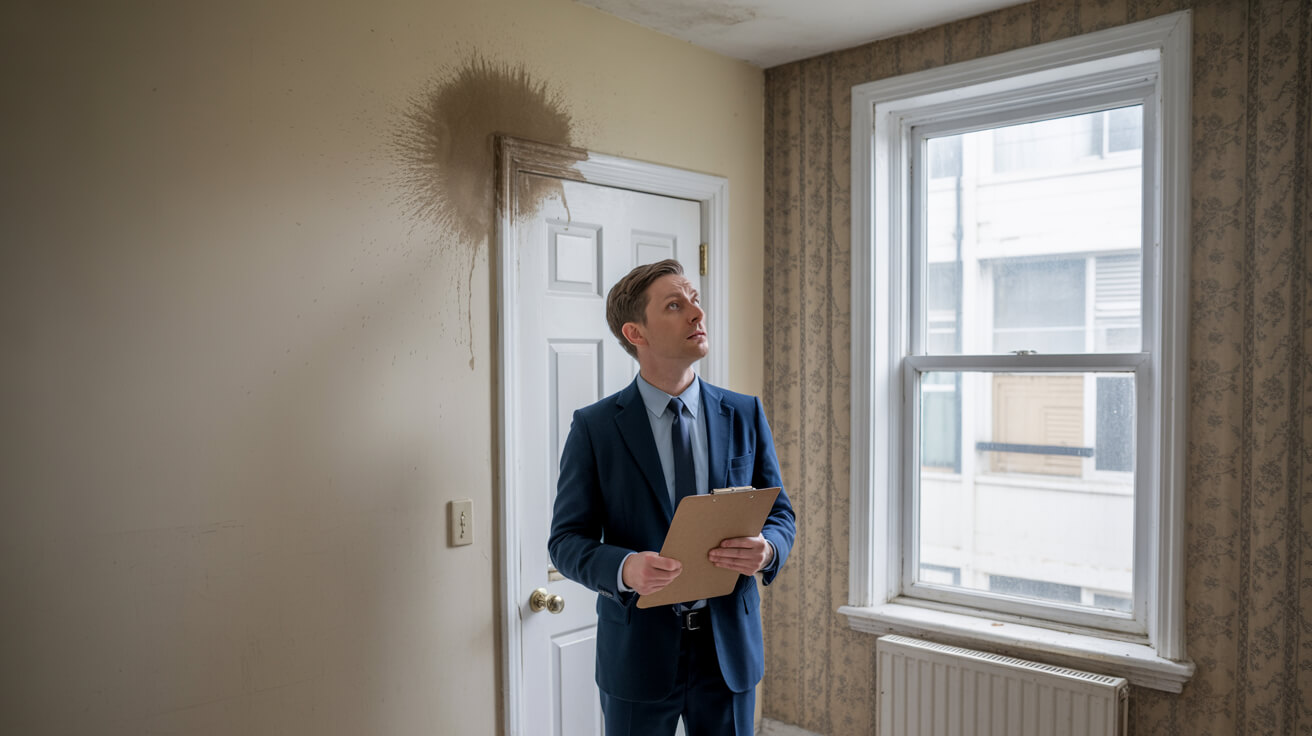
Real trust with ombudsmen, local authorities, and insurers is built on layered, visible evidence rather than hollow process.
- Display third-party certifications: —think TrustMark, ISO 9001, or independent audit reports.
- Method statements and competence: —document the actual repair method, who did it, and why it was chosen.
- Rich visuals: —snapshots, walk-through videos, high-res images before and after remedial works.
- Proactive tenant engagement: —log every post-repair check, satisfaction survey and offer of further help.
- Scheduled aftercare: —show cyclical visits that confirm problem resolution, rather than “fire-and-forget” jobs.
Landlords whose records stand up to daylight see their risk level drop—even if the underlying problem was tough to solve.
When the paper trail speaks clearly and in full colour, regulators move on to bigger fish. Box-tickers with light files? They linger in the queue.
Why Sussex Damp Experts Is the Partner Landlords Need Under Awaab’s Law
Awaab’s Law is not just a compliance issue—it’s a reputational, operational, and long-term asset protection issue. Sussex Damp Experts builds more than just dry homes: our audit-proof “Awaab’s Packs” blend blue-chip technical diagnosis, regulator-proven record-keeping, and hands-on aftercare—delivered digitally, at pace, and ready for audit at any level.
We’re not a quick fix—we’re the ally that keeps your property portfolio secure, your legal risk minimised, and your next audit plain sailing.
If it’s not nailed down in the files, you’re wide open. With the evidence in place, the headache isn’t yours—it’s the auditor’s.
Don’t let the news cycle or the next complaint bring you to your knees. Contact Sussex Damp Experts today and put your compliance on defence, not desperation.
Frequently Asked Questions
How do the new legal standards under Awaab’s Law redefine your daily obligations—and where do most asset owners misjudge scope?
Awaab’s Law rewrites the job of anyone overseeing damp, mould, or condensation repairs in English social housing. If you’re responsible for any part of a residential block—even with leaseholds or shared ownership in the mix—the law presumes you’re accountable. There’s no “grey area” for council, housing association, or registered provider units; unless your legal adviser has scrawled out a direct exemption, you’re expected to meet the timelines and standards for every relevant property under Section 11 of the Landlord & Tenant Act 1985. Private landlords may not have the same statutory duty yet, but lenders and surveyors are already pressuring for documentary proof as part of transactions, and that ripple is only intensifying.
Where many go wrong is in quietly assuming the law’s burden only bites on written tenancies or fully rented units. If you have aired communal spaces, part-commercial blocks, or schemes with mixed-use tenures, you’ll rarely have a clean opt-out. Most professionals discover their records are only as strong as the weakest sector they manage.
A law that starts with housing ends up in every back-office system—what you log each day is now headline risk.
How does this change for vulnerable or specialist schemes?
Supported, sheltered, and temporary housing bring no default carve-outs. Instead, officers and the Ombudsman now treat digital records and timestamped actions as the real yardstick, regardless of context. Unless an exemption is spelt out, any report of damp, mould, or unsanitary living must trigger the same action sequence.
Do buildings with mixed or layered ownership have any flex?
Minimal. If your obligation touches communal areas, exteriors, or essential services, presume full compliance is expected. For every instance of doubt, document why you believe an exemption exists—and get written advice.
What digital and procedural evidence stands up to audit—or gets you caught out?
Post-Awaab, success is measured not by effort, but by hard records. Producing a robust defence means mapping every step, contact, and sign-off to a digital thread:
- Co-signed digital tenancy agreements that explicitly define repair boundaries
- Each complaint fully logged: timestamp, nature, property code, and reporting method
- All inspections tied to name, time, metre/photo evidence, and context (“patch of visible mould on party wall; 28°C at base, 70% RH” beats “inspected—no action”)
- The complete repair chain: treatment type, technician name, product batch, with clear images pre- and post-fix, plus any work staged over phases
- Confirmed tenant communication—every message, update, or rebooking time-stamped and linked to the right case
- Aftercare records, logged check-backs, and tenant-verified outcomes
If any stage isn’t digital, sequential, and instantly retrievable, your defence can crumble—regardless of how much was “done.”
Where do most managers lose audit confidence?
Gaps matter more than good intentions—a logged survey without actionable notes, a repair logged but with the aftercare missing, or paper notes outside the digital register. Even the best site teams get stung by missing photo evidence or incomplete update chains.
Is your property software audit-proof?
Run a quick check: you need uneditable audit exports, photos tagged to event and date, and navigation between complaint, fix, and aftercare—all by property. For blocks or heritage assets, make sure you can map staged, multi-role interventions. If your app can’t, upgrade before you flag a risk.
How do the real-world enforcement timings and “clock errors” affect your operation—and which oversights expose you?
Awaab’s Law trades good faith for strict timestamp logic. Your exposure doesn’t start at the first meeting or inspection; it begins the second a tenant logs a complaint—in person, by email, or even verbally. Working days are dictated by the book, not by your schedule: banks holidays and weekends are counted as per your system—not by hand-waving after the event.
- Within 10 working days: Investigate and record—all the way to the metre reading and photo log.
- Within 3 working days of inspection: Written report to the tenant, delivery logged (portal, email, or signed document).
- Within 5 working days of flagging a Category 1 hazard: Action real repairs on-site and show evidence, not just a work order.
Each step is binary: either logged or not. Penalties stack up fast—£5,000 per breach is only the starting line, and repeated failures trigger regulatory escalation or public censure.
Miss the mark, miss the defence. The clock’s not your friend, and it doesn’t care about good intentions.
What are the common timing pitfalls?
Plenty. The most frequent? Believing admin traits or “opened next day” fudge the record. The clock runs from the initial tenant call, and any backdating is easily exposed in audit. Only let your digital system calculate non-working days—never by guesswork.
Should teams log aftercare or follow-up work within a set window?
Not strictly by law, but regulators and insurers now expect a logged check-back, preferably within a month, especially after urgent or structural repairs. Aftercare evidence is increasingly decisive in dispute or renewal scenarios.
Which reasons for delay actually survive scrutiny—and how do you prove your efforts were genuine?
Only properly evidenced events block enforcement. Weak excuses—like “short staff” or “system issue”—are grounds for penalty, not pardon.
- Tenant restricts access: Log every attempted contact—letters, emails, texts, and delivery confirmations—not just a missed appointment.
- Legal or third-party constraints: Keep correspondence, permits, and external approvals on file. Document every escalation and follow-up, showing there was no avoidable delay.
- Supply chain break: Show orders, acknowledgements, and every alternative attempt made, mapped to date and contact.
- Complex cases needing staged investigation: Chart findings, upload each report, and assign responsibility for every round—especially for basements, heritage work, or multi-party faults.
The key insight is granularity: the thicker the evidential thread, the stronger your position under challenge.
What proves non-cooperative tenants?
Row-by-row evidence. Delivery receipts, signed-for mail, time-stamped texts, WhatsApp logs, even photographic evidence of letter drops or missed appointments. Each notification builds credibility; missed steps or casual reporting destroys it.
What about specialist diagnosis delays?
Each diagnostic stage—survey, analysis, peer review—must be mapped and explained. Note cause, who’s involved, the chain of recommendations, and reasons for any hold. Transparency is defence; “pending” equals liability.
What practical digital workflows ensure your systems never fall short as rules and technologies evolve?
The winning workflow is both centralised and automated. Every record—complaint to closure—should live in a single chain, cross-linked by property, event, and responsible staff. Smart templates block incomplete jobs at source: force photo uploads, enforce risk ranking, require date capture on every intervention. Weekly calendars should prompt both at-a-glance reviews and granular audits for missed records or late actions. Follow-ups must be scheduled, especially where repairs are large-scale, cross-discipline, or likely to attract regulator or lender glare.
Company-wide compliance means no role or site left untrained: everyone, from admin to on-site teams, needs induction on how—and why—logging works, plus regular drills for stuck cases, ambiguous complaints, or time-pressured calls.
Audit requests and dispute scenarios don’t wait for you to get ready. If everything’s in one digital chain, you’re already ready. If you’re chasing paperwork on demand, you’ve already lost home field advantage.
A system built for transparency pays for itself—fast audits, fewer disputes, better insurance.
Are “standard” property apps up to the task?
Possibly—but check for uneditable logs, enforced uploads, role-specific permissions, and workflows that handle both plain and complex jobs. Multi-tenure or heritage work needs more than generic modules; if in doubt, ask your provider to walk you through a sample audit export.
Is clinging to old systems a valid approach as rules harden?
Not anymore. Digital chains and instant audit retrieval are the baseline. What worked last year might cost you in fines and lost reputation tomorrow—upgrade before you’re forced.
Why is building “trust equity” with tenants, officials, and buyers now as valuable as direct compliance?
Documentation isn’t just a shield; it’s social and financial proof. Proactive evidence—before/after images, digital signatures, warranty certificates—doesn’t just extinguish potential disputes; it reassures surveyors, buyers, insurers, and tenants that you operate a system of integrity and speed.
- Display regulatory credentials up-front, not only when asked.
- Link every step, from complaint to repair and aftercare, with images, timestamped logs, and digital sign-off.
- Attach warranties and guarantees as routine, not afterthought.
- Curate examples where fast, well-documented fixes led to resolved disputes, protected sales, or better lending outcomes.
- Keep two-way, real-time updates open with every party—no news means confusion, and confusion breeds escalation.
Landlords and agents who invest in digital trust aren’t just defensive—they’re attractive to every future stakeholder, reducing voids, disputes, and market friction.
Your track record isn’t built on claims. It’s every day you prove, show, and update—when it matters least, so when it matters most, you can’t be doubted.
Where do even competent teams slip and erode trust?
Complacency with “routine” jobs—unlogged aftercare, unsigned fixes, un-notified tenants—lets suspicious gaps creep in. Reputation is neither built nor lost in dramatic fixes, but in the invisible consistency of logging everyday wins.
How does disciplined transparency reshape important relationships?
It speeds up survey and lending stages, boosts valuation, and strengthens negotiation by letting others instantly confirm your standards. Stakeholders prefer properties—and partners—who broadcast proof, not just promises. That can make all the difference on the next inspection, transaction, or handover.
If you need your approach, workflow, or digital system put through its paces for audit, asset sale, or a compliance overhaul, Sussex Damp Experts are equipped to rigorously test your records, close unseen gaps, and reinforce your operational resilience. In a world where documentation is the real asset, start trading in daily proof, not hope.

