
 By
By  August 26, 2025

Why Awaab’s Law Means the Old “Patch and Ignore” Era for Damp Is Over
When Awaab’s Law landed, it didn’t just shift the dial on England’s landlord regulation — it redrew the map. What used to pass as “routine” for damp and mould has become a high-stakes timeline backed by statutory force, lender scrutiny, and immediate tenant rights, as seen in damp repair obligations landlord and tenant act 1985 vs awaabs law. The playbook of quick cosmetic fixes and missed call-backs is gone. Now, asset value, reputation, and legal standing all depend on a documented, clock-driven response to every single complaint. Whether you’re a home owner, seasoned landlord, lettings agent, managing agent, or commercial property stakeholder, the stakes for waiting — or guessing — have never been higher.
Every hour you wait after a damp complaint is logged is no longer your buffer — it’s evidence against your business.
Awaab Ishak’s tragic death was the spark, but the new law is a full reboot: proof-first, enforceable, and built for audit. The consequences for ordinary mistakes — or avoidance — run deeper than just a council fine. Miss a deadline, lose an audit, or fail to keep transparent records and you can face eviction bans, forced repairs, public blacklisting, and a loss of lender or insurer trust that lingers long after any invoice.
Why the Landscape Has Changed — And Why That Matters Now
Damp and mould once hid in the corners of compliance, but are now unmissable, and for good reason. Tenant health has become the touchstone for housing safety, with clear, evidence-based science backing every part of the new landlord obligation. You’re competing not just for good tenants or a better yield, but for your own legal standing, market credibility, and even right to let. The perception of landlords has shifted: you’re either ahead of the law—or its next cautionary example.
What Triggered the Shift? The Real Catalyst Behind Awaab’s Law

Awaab’s Law is not another incremental shift — it is the legal response to a case that stunned a nation. Awaab Ishak, just two, died from chronic exposure to untreated, officially reported mould in a Rochdale housing association flat. The coroner’s report called out not just neglect, but a systemic failure to respond, to prove action, or to prevent. Parliament — and the public — couldn’t look away.
The formal inquiry surfaced three irreversible truths:
- “Tenant voice is now legal trigger.”: Every written complaint about damp, mould, or leaks is the start of a statutory process. The landlord’s effort is no longer the key; outcomes for the tenant — measured by health risk — are the defining issue ([gov.uk](https://www.gov.uk/government/news/awaabs-law-to-force-landlords-to-fix-dangerous-homes?utm_source=openai)).
- “No landlord is below the radar.”: The law applies not only to councils and social landlords, but soon private portfolios, agents, commercial blocks, and even the smallest accidental landlord.
- “British Standards, not best guesses.”: Core elements of BS 6576/8102 (damp diagnosis, surveyor grade testing) and HHSRS risk standards are now written into compliance, not tucked away as “advice” ([cih.org](https://www.cih.org/news/awaabs-law-to-force-landlords-to-fix-dangerous-homes?utm_source=openai)).
If your system is built around “notes on a calendar,” “fix it on Friday,” or “wait and see,” you’re playing last year’s game. Stakeholders — from mortgage underwriters to ombudsmen — now expect, and are ready to enforce, evidence and response checks at every step.
Timeline Risks: Why Waiting Even a Day Is Expensive
The minute a complaint is raised, your deadlines begin. Every delay, missing phone call, and undocumented action puts your tenancy, lending, insurance, and reputation at risk. With formal routes for tenant escalation, council intervention, and even parliamentary interest, there are now zero safe corners to hide problem cases.
Does Damp Really Cause All This Trouble — Or Is It Bureaucracy Gone Wild?

It may feel harsh, but the blunt reality is: the medical, financial, and compliance data forced the change. Here’s what’s driving the new rules:
- Proven medical risk: Damp, especially with visible black mould, raises the risk of children developing respiratory illness by up to 40% ([askporter.com](https://www.askporter.com/askporter-blog/tackling-the-mould-menace?utm_source=openai)). That’s not rare — it’s frequent enough that child and vulnerable adult health is now the legal threshold for required action.
- Forensic-grade evidence only: Gone is the era of handwritten inspection notes or “good enough” walkabouts. Landlords must now show calibrated moisture metre logs, photographic timeline records, and survey data traceable to recognised standards — the bar is purely objective.
- Eviction and rent operations depend on damp status: Section 21 “no-fault” evictions can’t proceed while a damp or mould hazard exists. Councils and housing ombudsmen have new powers to block landlord actions and force repairs, costing you income and peace of mind ([martinco.com](https://www.martinco.com/guides/landlord/housing-health-safety-ratings-system-hhsrs?utm_source=openai)).
- Insurance and refinancing at risk: Momentum is shifting with lenders and insurers. If you can’t produce a recent, standards-compliant survey or proof you’ve fixed legacy damp, you are likely to lose cover or be refused a remortgage ([property-care.org](https://www.property-care.org/)).
If your damp report doesn’t make a lender nod, your next mortgage, sale, or lease renewal may grind to a halt.
This isn’t about legal “gotchas.” It’s that damp and mould are predictable risks — risks now directly tied to health, income, and the value of your property itself.
Why “Effort” Isn’t Enough
The new rules don’t judge what you tried. Everything now comes down to evidence you can show — on demand — to tenants, authorities, or finance partners. If you can’t prove it, you might as well not have done it.
Exactly What Should Landlords Do About Damp and Mould Now — and How Fast?
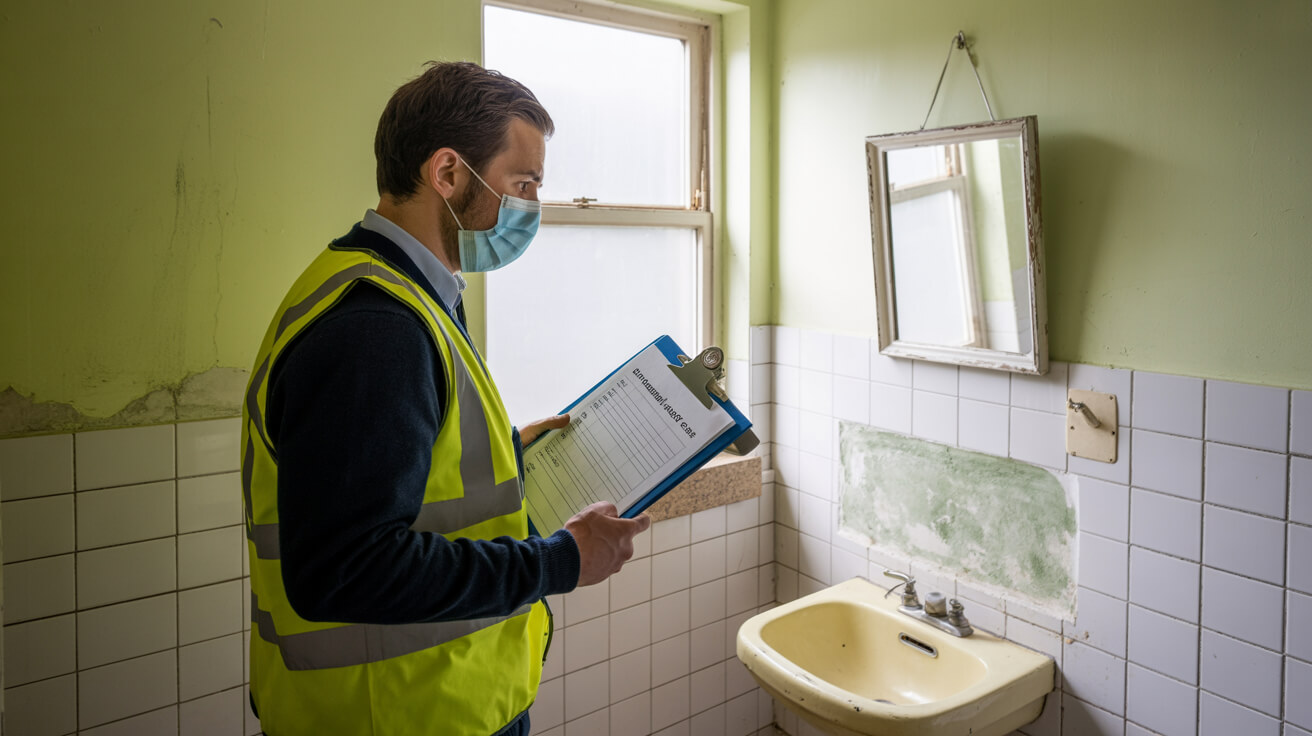
Awaab’s Law spells out statutory response times, evidence demands, and audit readiness at every step. Here’s the new compliance reality for every property you manage or own:
- Emergency complaints (mould, leaks, health risk, child present): Inspection must be made within *24 hours*. A risk to health triggers immediate escalation and often requires alternative temporary accommodation ([gov.uk](https://www.gov.uk/government/publications/awaabs-law-draught-guidance-for-social-landlords/awaabs-law-draught-guidance-for-social-landlords?utm_source=openai)).
- Routine damp or mould issues: Inspection and assessment start within *10 working days*, with written updates to the complainant delivered in the next *3 days*, and agreed works starting *within 5 days* following diagnosis ([clydeco.com](https://www.clydeco.com/en/insights/2025/02/the-introduction-of-awaabs-law-in-oct-2025?utm_source=openai)).
- No undocumented hand-offs: Every send, survey, assessment, and repair must be timestamped, logged, and accessible for audit — *not* just kept in a tradesman’s notebook.
| Type of Action | Deadline | Evidence Needed | Penalty for Missing |
|---|---|---|---|
| Urgent damp risk | 24 hours | Moisture logs, photos, note | Council intervention, fine |
| Standard complaint | 10 days | Formal survey, filed update | Asset flags, rent blockages |
| Tenant report update | 3 days | Sent communication, read rec | Ombudsman, tenant appeal |
| Works start | 5 days from survey | Works order, signed record | Forced repair, Section 21 ban |
If you can’t demo every contact, photo, metre reading, and repair, the system assumes it never happened.
Ordinary Deadlines Have Become Survival Markers
Missing even routine deadlines now risks council investigation, ombudsman cases, blocked evictions, and being named on public non-compliance lists. For homes housing vulnerable persons, the outcome can escalate to forced tenant relocation — all the costs, hassle, and legal ripples land on you.
Is Good Enough Good Enough? Not Unless It’s Documented, Compliant, and Tenant-Visible

The game is now about proof, not effort. “We checked” isn’t enough; the law expects “Here’s the external file, moisture gradient, and the date-stamped tenant letter.” Anything less, and you risk losing every appeal. This system sets out three unavoidable realities:
- Complaint triggers a regulated system: Every formal complaint is not a friendly suggestion — it’s the start of a monitored, statutory process with system alerts, triggers, and non-negotiable timeframes.
- Survey evidence must meet British Standard: Anything less than a BS 6576/8102-grade inspection, incorporating salt tests and gradient mapping, is dismissed out of hand on audit. No exceptions.
- Tenant is assumed party to all records: Your process is incomplete unless updates, works schedules, and advice are all communicated, and receipt is proven, to the reporting tenant.
- If repair can’t happen instantly: Landlords are now expected to fund alternative accommodation — including clear cost documentation — and justify every delay ([constructionmanagement.co.uk](https://constructionmanagement.co.uk/awaabs-law-to-come-into-force-in-october/?utm_source=openai)).
- British Standards compliance isn’t just a tick box: Use of recognised survey technology, moisture metres, and log-keeping is now the only acceptable proof standard. Everything else is legally void.
For every ‘I did my best’ excuse, there’s a council officer waiting to show where your paper trail fell short.
Why You Need a System — Not Just a Contractor
Most landlord failures have nothing to do with willpower, and everything to do with poor record-keeping, missed deadlines, or lack of recognised evidence. Automated reminders, system-triggered case management, and a standardised reporting workflow are now as important as the building repairs themselves.
Is It Only Social Landlords? Why Private Landlords Will Be Judged by the Same Yardstick

Awaab’s Law applies first to registered social landlords, but if you think private properties are shielded, think again. Ripple enforcement is already in play:
- Government expansion timetable: National policymakers have signalled that private landlords will be included as early as 2026. The process is already set by DLUHC ([clydeco.com](https://www.clydeco.com/en/insights/2025/02/the-introduction-of-awaabs-law-in-oct-2025?utm_source=openai)).
- Lenders and agents jump ahead: Mortgage underwriters, letting agents, and even insurance claims assessors are now cross-checking files, requiring compliant evidence for all properties — not only “regulated” ones.
- Market mechanisms enforce as quick as councils: Non-compliant homes are flagged and de-listed on letting platforms, and portfolio values deflate when evidence is missing, even if fines haven’t landed yet.
- Damp is just the beginning: Parliament and lenders have already signalled that enforceable timelines and standards will soon apply to cold, electrics, fire safety, and general building hygiene.
- Asset value and reputation become data-driven: Lenders and major letting agents increasingly price asset risk based on audit readiness — transparent, standards-based files are now collateral.
The slowest landlords don’t get a warning: their names show up on registers and their lending options shrink before the next letter arrives.
Why Letting the Market Lead Is No Safe Bet
If you’re waiting for an enforcement notice, lender or insurance request, or tenant solicitors’ letter, be warned: the compliance bar is now “first-mover” not “baseline minimum.” You’re in a race most won’t know started until it’s too late.
What Are the Real Risks? Fines, Public Naming, and the End of Business as Usual

Penalties are no longer hypothetical or a back-room problem. Awaab’s Law changes the scope and sharpens the teeth:
- Ombudsman and council fines increase: Penalties per landlord have now exceeded £9,000 per year in unresolved or unrecorded cases, with direct recovery routes for costs ([askporter.com](https://www.askporter.com/askporter-blog/tackling-the-mould-menace?utm_source=openai)).
- Evictions and portfolio control on hold: The Housing Health and Safety Rating System now blocks all Section 21 evictions in homes flagged for damp health risks until the issue is fully resolved and documented.
- Local authority public registers: Non-compliant landlords and addresses can be listed in online public registers, readily found and referenced by tenants, agents, and finance partners ([gov.uk](https://www.gov.uk/government/news/awaabs-law-to-force-landlords-to-fix-dangerous-homes?utm_source=openai)).
- Lender and insurer trust revoked: A lack of a standards-aligned audit trail lets lenders or insurers void coverage, demand immediate repayment, or refuse ongoing finance ([property-care.org](https://www.property-care.org/)).
- Costs stack fast: Between forced repairs, legal fights, rent loss, court costs, and headline risk, even “one” slip can outpace your annual maintenance budget by a long shot.
Losing documentation doesn’t just mean a slap on the wrist — it can put your business plan, asset, and future letting prospects out of reach.
Mistakes Stay On File — Why Prevention Beats Litigation
Not only are fines and forced repairs public, but every compliance failure now leaves a paper trail. The same data feeds into lender and insurance reviews, letting platforms, and local council indices. Once the red flag goes up, every future transaction gets harder.
What Does True Compliance Look Like? The Five-Point Playbook for Asset Protection

Defensive compliance isn’t a mystery; it’s now a straightforward process. To protect your asset, reputation, and legal standing under Awaab’s Law, here’s the model property playbook:
- Commission only British Standard (BS 6576 or 8102) surveys: Every flagged property requires a full, compliance-grade survey. Partial or self-assessed walkthroughs don’t cut it.
- Produce comprehensive, step-by-step outcome reports: That means full moisture gradient logs, photographic evidence with timestamps, and treatment logs at every repair stage ([property-care.org](https://www.property-care.org/)).
- Issue tenants with a clear action and communication trail: Every formal notice, update, appointment, and works order gets delivered, acknowledged, and logged.
- Build-in alternative accommodation contingency: If you can’t deliver instant repairs, the paperwork for hotel or temporary accommodation offers is ready to present in council, ombudsman, or finance reviews.
- Schedule recurring inspection, record, and aftercare windows: Keep annual or pre-sale checks in your file, ready for lenders or buyers — not just for tenants.
A single standards-grade report can save you ten times as much by shutting down escalation, lender friction, or tenant claim.
Why Cutting Corners Costs More Than Doing It Right
The short road leads to the long way around. Investing now, with systems built for Awaab’s Law and calibrated to market and lender expectations, pays off not just in compliance but in smoother lettings, sales, and financing.
How Sussex Damp Experts Protects Your Investment — and Your Reputation
Not all solutions or providers are equal; Sussex Damp Experts has modelled an integrated, future-proof answer tailored to Awaab’s Law — and what comes after.
- Accredited compliance — not just “qualified.”: PCA, TrustMark, and British Standards certifications recognised by councils, legal teams, and financial partners.
- Surveyor-level documentation, every time: Our reports include full calibration logs, chain-of-custody timeline, and granular photo evidence — ready for lender, agent, or council file-checks.
- Legal and audit protection: If a case is escalated, our audit trail is designed to withstand scrutiny, saving you weeks and thousands in compensation requests.
- Aftercare and asset lifecycle support: Annual surveys, post-treatment health checks, and tenant communication keep you ahead of emerging risk or regulation.
- Your asset’s future is our method: Compliant repair isn’t just about today’s problem — it’s about ensuring tomorrow’s yield, landlord rights, and repeat business.
The landlords who partner with Sussex Damp Experts set the new trusted standard for lenders, councils, and tenants — the industry’s next reference, not its next headline.
What It Takes to Stay on the Right Side of Progress
Market, policy, and asset value are all converging on one standard: evidence, transparency, and response. Choose partners who are built to lead, not chase — it’s the surest way to turn “regulatory risk” into a business asset.
The Next Step — Secure Your Position, Defend Your Asset, and Stay Ahead
Awaab’s Law is the real test: of documentation, of systems, of your business resilience. There is no “wait and see” buffer left. Your next survey, complaint, or routine check is the fork between asset growth and reputational harm.
No matter if you manage a single flat or a complex portfolio, Sussex Damp Experts offers the clarity, underwritten reports, and ongoing support that keep assets compliant, tenancies stable, and future lending wide open.
Book an assessment now and receive not just a report, but a compliance partnership that stands up to every council, lender, and market shift. Sussex Damp Experts keep you one step ahead — legally, financially, professionally. Your asset, your reputation — protected for the new era of housing.
Frequently Asked Questions
What deadlines and evidence cycles does Awaab’s Law actually impose on damp complaints?
Awaab’s Law lays down a legal gauntlet: every tenant’s damp or mould complaint now triggers a strict chain of actions, all tracked by the clock and measured against British Standards. Once a complaint lands, you have just 10 working days to start a proper diagnostic inspection compliant with BS 6576 or BS 8102—not a quick glancing-over, but a rigorously documented process. Your written findings must follow within three more days. If there’s any threat to health—persistent mould, leaks, structural wetness—an emergency timeline kicks in: action is required within 24 hours, with full logs of your response.
Miss a deadline or skip a vital log, and every regulator, lender, or insurer can see the cracks in your case.
For hazardous damp, you must make a property safe within five days and resolve the root issue within 12 weeks. Each move—survey, update, intervention—must be timestamped and supported by physical evidence. Written updates for tenants aren’t a courtesy; they close compliance circles and protect your legal position. Every omitted step piles risk onto your asset, from council fines to blocked mortgage renewals. For letting agents and block managers, this is about proven workflows—how well you document trumps how well you intend.
What workflow changes genuinely lock in compliance?
- Each reported case now gets its own compliance file: inspection logs, all correspondence, device-sourced evidence, photos, and certification.
- Automated reminders for every stage: from inspection launch to works completion and final report—manual memory just won’t keep pace.
- Maintain a living record: every update, every communication logged for council, insurer, or lender scrutiny.
Where does this all lead for asset owners?
Compliance is no longer an interpretive art—auditors, lenders, and tenants expect a response built on proof, not promises. The stricter you are with your evidence cycle, the better shielded your business is from both legal action and asset value erosion. Robust documentation is now your most defendable insurance.
How do documentation gaps expose landlords and agents to direct financial loss—beyond fines?
Neglecting audit-ready records no longer just risks the odd fine—it can bring most business models to a standstill. Without time-stamped proof at every regulatory step, Section 21 rights can be suspended, repairs get enforced at premium contractor rates, and councils may bypass you altogether. Insurers and mortgage underwriters increasingly require a complete evidence trail; a missing log or vague report can see a claim denied or an application refused.
One overlooked survey or incomplete tenant update is enough to freeze refinancing or spike your premiums—insurers and lenders are tightening with every quarterly review.
| Compliance Step | Must-Have Evidence | Consequence if Missing |
|---|---|---|
| BS 6576/8102 damp survey | Full device log, photos, timestamp | Council fines, mortgage rejection |
| Emergency interventions | Stepwise logs, tenant notifications | Eviction blocked, claims denied |
| Tenant communications file | Chronological, traceable record | Ombudsman penalty, court liability |
| End-to-end evidence chain | All processes, stored securely | Devaluation, refusal of insurance |
How do these risks impact day-to-day management?
Properties with spotty compliance are being flagged by surveyors, down-valued by lenders, and seen as uninsurable risks by underwriters. Routine failures—skipped communication, “best guess” site notes, DIY remedies—leave you exposed from multiple angles. Staying insurable and mortgage-able now means being relentlessly methodical with evidence at every touchpoint.
What technical slip-ups most often trigger compliance breaches under the new law?
Failing to comply is rarely about bad intent—it’s about missed technical details and lax record-keeping. Commonly, property managers lean on visual checks or skip moisture-tracing steps required by BS 6576/8102. Many overlook salt contamination analysis or lack step-by-step photo logs. Skimped or generic updates to tenants simply compound these flaws.
A £35 moisture metre, correctly used and logged, can block a £10,000 remedial bill—sloppy diagnosis is now a jackpot for auditors and claims assessors.
Where do properties most often slip out of compliance?
- Using expired or uncalibrated equipment, or skipping required diagnostic checks.
- Not issuing timely, clear updates to tenants at each progress point.
- Lacking a continuous, photo-backed diary from complaint to completed works.
- Relying on hand-over-word, non-documented updates or ‘wait and see’ judgments.
What’s the operational fix?
Treat every complaint as a potential legal trigger: invest in BS-level tools, train teams on photographic logging, and make written updates reflexive. Automation for compliance reminders isn’t a luxury—it’s survival in the modern UK housing landscape.
How are letting agents, surveyors, and insurers enforcing higher compliance standards after Awaab’s Law?
Industry standards are leaping ahead of the law itself. Letting agents are now only taking on portfolios with robust evidence cycles—they’re rewriting management contracts to demand documentation at British Standards level. Surveyors reject casual or incomplete reports, focusing on photographic logs, moisture readings, and mapped findings. Insurance assessors ask for documented damp proofing interventions at renewal; anything vague is red-flagged for premium hikes or outright refusal.
Block managers and asset owners who used to play catch-up are now specifying, in contract, what evidence must be provided for every inspection and fix.
What do these higher standards actually look like?
- Compulsory baseline: every job starts with a BS-based diagnosis (not a guess)—then full logs of process and outcome.
- Every communication—tenant complaints, site visits, repairs—gets a logged entry.
- Photos, certificates, metre readings, and quotes are all stored in an accessible, date-stamped file.
- Lender and insurer requests are pre-empted with live compliance packs—no more last-minute document hunts.
What’s the commercial upshot?
If you’re supplying a paperless, evidence-rich compliance trail, you’re a preferred partner for agents, surveyors, and underwriters. Those still relying on ad hoc updates risk slow blue-button fines, management contracts lost, and property value drops.
Why do Sussex Damp Experts deliver stronger legal and commercial protection than standard damp contractors?
Sussex Damp Experts are engineered for today’s compliance battlefield. Every survey is conducted by qualified teams using BS 6576/8102 methodologies and the best diagnostic tools—from calibrated moisture metres and salt testers to thermal imaging and photo-mapped defect tracing. Each remediation is structured to produce lender- and ombudsman-grade evidence files you can deploy immediately, whether for an insurance claim, housing audit, or mortgage renewal.
Our aftercare goes further: you’re not left with a stack of “fix it and forget it” reports, but with a living evidence chain, annual health-checks, and live monitoring options designed to head off risks before regulators, lenders, or tenants do.
Clients arrive with a damp complaint; they leave with a gold-standard compliance file—no sudden gaps, no cascading exposures.
How does this approach push actual commercial and legal advantages?
- Trigger immediate legal protection: full compliance records from complaint to closure, with evidence mapped to every standard.
- Prove ay repairs to buyers, agents, or surveyors instantly—backstop asset value and de-risk lending reviews.
- Qualify for ongoing support, audit readiness, and ready files for future tenant, insurer, or regulatory challenges.
Where does this edge land you?
Ahead of the panicked queue. Your property assets are pre-approved for policy renewal, mortgage refinancing, and sales—while less-prepared competitors absorb cost, stress, and loss of control.
What trends should landlords, asset managers, and letting agents expect after October—and how should you act now?
While Awaab’s Law trains its spotlight on social housing and council-registered buildings for now, private landlords and asset managers are next in the firing line. Lenders are advancing compliance demands much faster than Parliament; pre-sale and refinancing questionnaires increasingly call for BS 6576/8102 evidence as standard. Spot inspections by councils are widening, with live filings from letting agents or block managers expected at any time.
Sensor-based monitoring, remote audits, and digital compliance files are swiftly becoming requirements—not just “innovations.” Contractors are already being selected or dropped based on their systems’ ability to provide full legal-grade evidence at every visit.
The edge goes to those who automate, document, and adapt—the rest are left with rising risk and shrinking property value.
What action puts you in the leadership bracket?
- Commission BS-compliant damp and mould surveys now, not later—don’t wait for that official letter.
- Build your digital evidence file: device logs, photographs, tenant messages, receipts, and certificates.
- Partner with providers offering live monitoring and annual audits—give yourself a permanent compliance head start.
- Supply compliance packs to all key stakeholders, making your role irreplaceable to buyers, lenders, and insurers.
Anchor your compliance now with Sussex Damp Experts—download our Awaab’s Law Inspection Checklist or schedule a BS 6576/8102 survey to shield your assets and position yourself as a benchmark in the new legal landscape.

