
 By
By  August 26, 2025

Is Damp a Deadline Problem or Just Another Minor Repair?
Damp has quietly outgrown its old “patch job” status. In the current legal climate, it isn’t a small hiccup for your maintenance budget—it’s a trigger that marks the start of a legal countdown, visible to regulators, surveyors, and lenders alike. The moment a watermark or mould spot appears, official timers start ticking under the Landlord and Tenant Act 1985 and—with increased ferocity—under Awaab’s Law.
Ignore it, and your once-quiet corner of the property world gets lit up by council notices, court appointments, and headline risk.
Instead of being a cosmetic problem you can “deal with when there’s time,” every new damp incident is logged, timestamped, and treated as a compliance clock by local authorities—and it’s fully visible during sales, remortgages, or tenant complaints. The old tricks—redecorating over stains, playing a blame game with tenants—no longer wash. Under current policy, “Awaab’s Law sets strict timeframes—breaches trigger immediate enforcement and possible penalties.” (gov.uk).
With these frameworks live, your responsibilities are more than just reaction. From the instant a tenant or surveyor raises the word “damp,” your next moves are audited—when you responded, how you diagnosed, what you fixed, and what you left. Delay or incomplete repairs? You risk public breaches, mortgage rejection, compulsory council fix-up, insurance headaches, and steep fines. Modern landlords and property managers cannot afford leftover leaks—because every inspector, buyer, or lender can now tap into your (in)action timeline.
What New Burden Does the Landlord and Tenant Act 1985 Place on You?
Section 11 of the Landlord and Tenant Act 1985 locks landlords into a non-negotiable contract with every property’s physical health. If moisture, leaks, or damp infiltrate a wall, roof, window, or floor, forget cosmetic coverups—the obligation is on you to diagnose and permanently solve the real cause, not just tidy the symptoms.
Every missed or half-hearted repair increases your contract breach exposure—and those traces don’t fade with time.
The law is unforgiving: repairs must be real, and supporting evidence must be clear. Courts see through “fresh paint” and zero in on continuously neglected root causes—whether that’s rising damp, leaking pipes, or failed membranes. “Structure and exterior—must be kept in repair. No contractual workaround allowed.” (legislation.gov.uk). Excuses that once bought time—tenant misuse, or delays in booking a survey—no longer stand. Documented, evidence-heavy repairs are your only real protection against full-blown legal action.
Investigators, environmental officers, and lenders increasingly expect granular proof: photos, sensor readings, works logs, and formal contractor reports. Repeat spot jobs are seen as a red flag for long-term risks—they can trigger everything from fines to rent repayment orders.
How Are Awaab’s Law and Imminent Deadlines Shifting Landlord Risk in 2025?
Enforcement peaks in October 2025, when Awaab’s Law swings into effect for social tenants—and, as sector observers note, its tone is spreading to private landlords as well. Here, rigid deadlines apply: you must acknowledge a damp report within 48 hours, start a proper investigation or diagnosis in 14 days, and, for urgent health hazards, begin repairs within 7 days.
Slip up, and you’re quickly staring down the barrel of council fines, reputation loss, and property bans.
Here’s what’s new: written records are no longer a bonus, but a baseline. Landlords must log every step, from the first tenant email or WhatsApp message to the surveyor’s final sign-off. “A summary for the tenant within 48 hours and repairs must start in 7 days for urgent hazards.” (gov.uk).
Every delay is a risk: Councils have new powers for compulsory repair, public non-compliance listing, and banning repeat offenders from letting property. Even a single missed window can cost reputational capital and immediate revenue through rent repayment orders—and the more your records rely on anecdotes or vague emails, the harsher the assessment when authorities investigate. Landlords who lack this audit trail find the deck stacked: losing disputes, insurance, or lender trust at a stroke.
When Is a Property Really “Fit for Human Habitation” — And How Does Damp Endanger This?

Habitability used to be about appearance; today, it’s a matter of traceable health and safety—and damp sits firmly at the centre of the map. Under the Homes (Fitness for Human Habitation) Act 2018, landlords are legally bound to keep properties healthy for tenants. Persistent damp, mould, and moisture complaints—all count as health hazards.
Habitability audits demand more than a quick clean-up; they require proof of deep, lasting repairs and aftercare.
If you let damp slip, tenants have the right to take you, personally or as a company, straight to county court. The evidence standard is clear: judges want a documented sequence of diagnosis, moisture readings, permanent remedial action, and aftercare—just a WhatsApp chat or invoice won’t cut it. “Persistent or unsafe damp can lead to legal action and compensation.” (shelter.org.uk).
Surveyors, buyers, and environmental officers no longer care if the wall looks sound—they trace the chain of complaint-report, inspection, and aftercare. If you haven’t left a clear paper trail, you’re at risk of an “unfit for habitation” label, which brings direct court intervention and damages.
What Real Losses and Market Risks Await If You Ignore Damp?
With every week of inaction, your risks stack higher. Local authorities can fine you, force up remedial costs, or remove your letting licence outright. But there’s more: insurers void cover for properties with recurring or unproven repairs, and lenders now require full disclosure of unrectified damp or mould before releasing new mortgages.
One unchecked stain can tumble into a non-compliance listing—making it tough to sell, refinance, or keep tenants.
“Fines, revoked licences and forced repayment are the genuine costs of inaction.” (citizensadvice.org.uk). Insurance refusals and public non-compliance registers strike landlords quickly now. Even if you later fix the issue, badly-kept records or a reliance on informal comms (“We sorted it on WhatsApp”) mean exposure never goes away. Properties with damp scars lose their tenant appeal, and buyers may impose price cuts—or pull out entirely based on surveyor red flags.
What Makes a Damp Repair “Court-Proof”—And Where Do Most Fail?
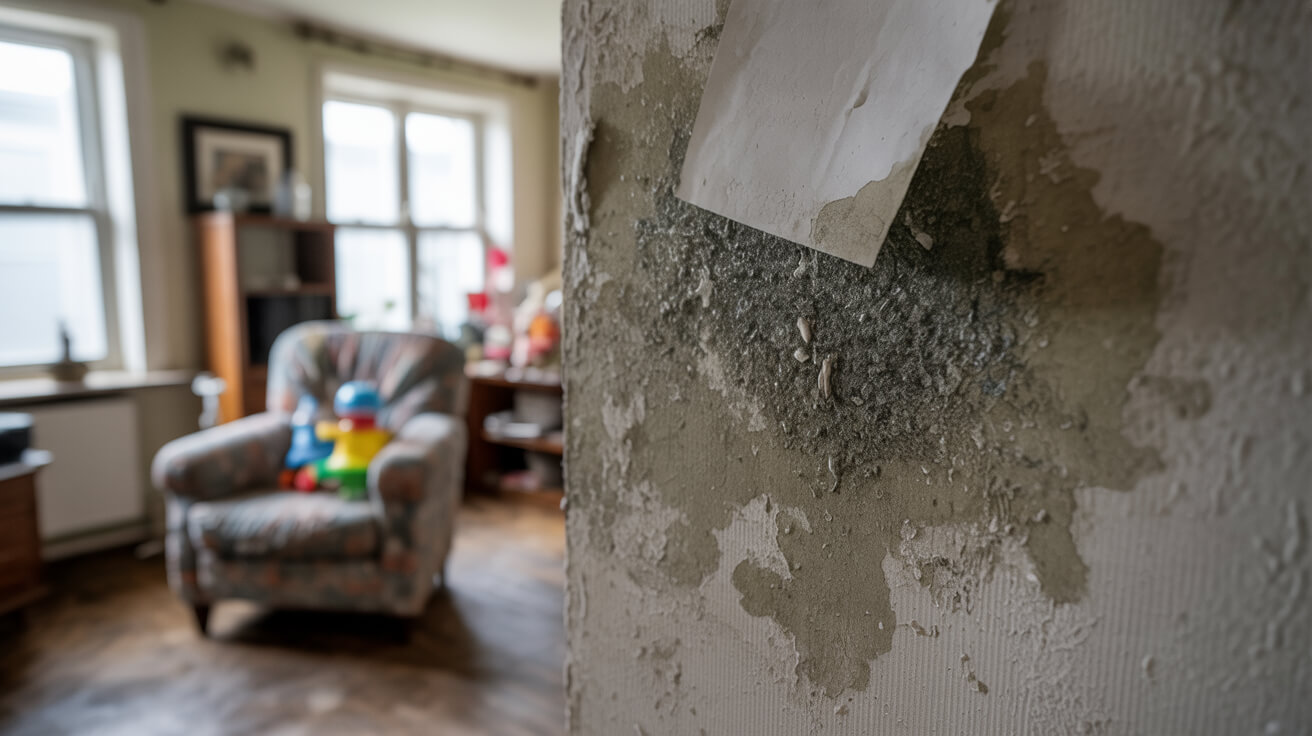
A legally defensible repair in 2025 calls for more than a basic “fix.” Every link in your repair chain—diagnosis, documentation, specification, execution—must be professional-grade. That means independent or surveyor-diagnosed moisture mapping, annotated photos, complete logs, remedial detail, and full compliance with British Standards like BS 6576, BS 8102, or PAS 2035.
Modern compliance is about moisture mapping and professional-grade evidence—not old receipts or memory.
Expert commentaries now say: “Moisture mapping and professional-grade evidence are baseline expectations.” (historicengland.org.uk). For listed property or heritage work, you need even greater evidence chains—plus proof the work met all compliance edges—otherwise, finance or insurer agreements can collapse at a later date.
If damp becomes the subject of a dispute, courts and insurers will demand to see: date/time of first report, survey logs, specification and standards for materials used, aftercare evidence, and outcome monitoring. Relying on patch jobs or informal contractor fixes leaves landlords, property managers, and agents exposed on every front.
Why Is Aftercare and Monitoring Now a Legal Minimum, Not an Extra?
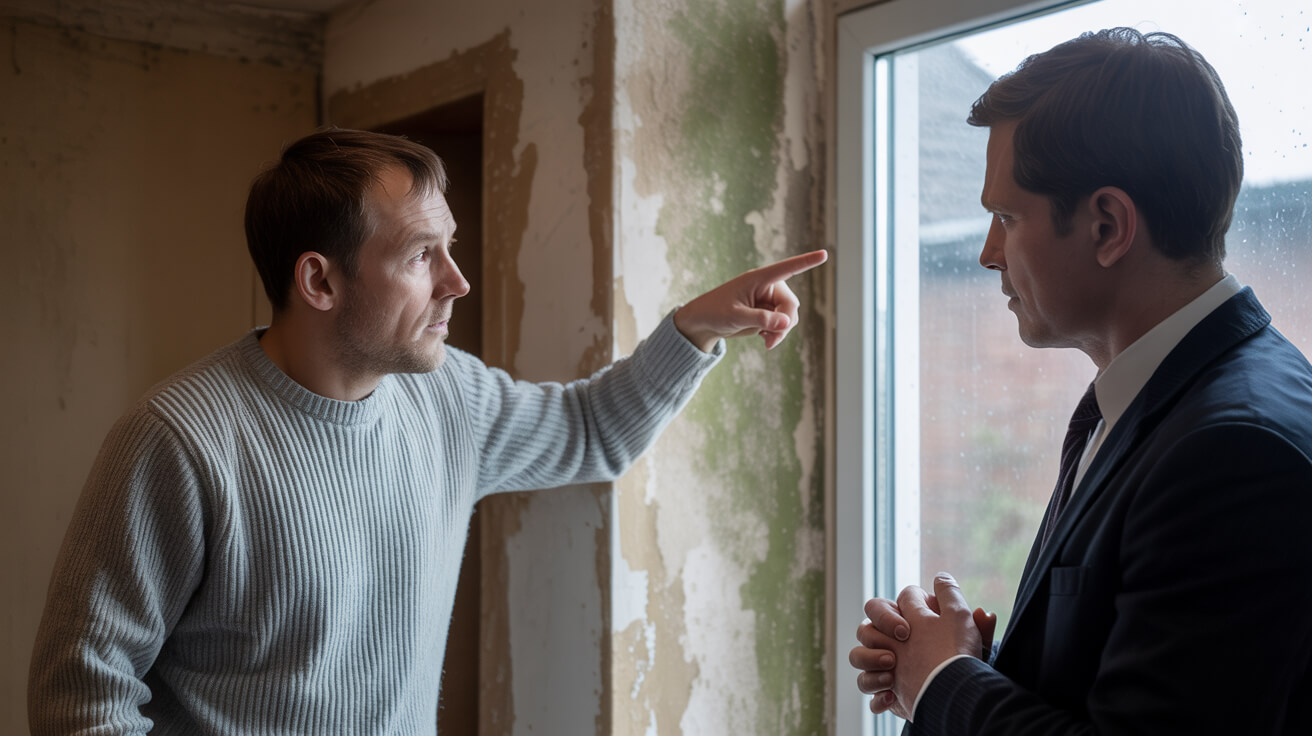
Long gone are the days where you could “fix and forget.” Modern compliance and property security require a programme—a systematic routine of scheduled aftercare, logging, monitoring, and reporting.
If you can’t prove ongoing control, you haven’t proven compliance—and your risk of fines, claims, or insurance denial climbs.
“Aftercare and traceable logs are essential for legal and financial confidence.” (blaby.gov.uk). Landlords now face ongoing scrutiny: tenants and their solicitors log recurring issues, councils re-inspect for reversion, and insurers often demand evidence of active moisture management. Without an audit trail—follow-up visits, sensor logs, tenant communications—the worst kind of recurring problems don’t get forgiven, they get exposed.
Genuine aftercare isn’t a box-tick; it’s an advantage feeding directly into tenant retention, regulatory readiness, and premium reduction.
Sussex Damp Experts: The Difference Between Proof and Hope

Sussex Damp Experts stands at the frontlines of this compliance evolution—not just “remedying,” but building legally-defensible, physically robust, and auditable property systems. Our approach for property owners and managers:
- Root-cause, surveyor-level diagnostics: —using industry-best tools, forensic methods, and clear log-trails for every job.
- Documentation fit for council, insurer, and mortgage review: —everything aligned with British Standards (BS 6576, BS 8102, PAS 2035).
- Substrate-specific repair programmes: —from Victorian basements to timber frames—backed by transparent warranties and client-level aftercare logs.
- Comprehensive aftercare: —including planned visits, digital monitoring, and real-time report chains.
Surveyor-certified work and full aftercare aren’t luxuries anymore—they’re your incoming legal defence and your strongest asset to attract tenants, lenders, and buyers ([shelter.org.uk](https://england.shelter.org.uk/housing_advice/repairs/damp_and_mould_in_rented_homes/)).
Landlords, buyers, agents, and housing managers who want true security need more than trade repairs: they need advocacy in documentation, anticipation of legal changes, and comfort in ongoing measurement—not empty hope and hurried patchwork.
Ready for Compliance—or Vulnerable to Deadline Nightmares?
In a property environment where the slightest streak of damp turns into a legal time-bomb, the only real refuge is expertise, documentation, and auditable, standards-based repair. Delays and shortcuts have moved from “risk” to “certainty of loss.” “Patch jobs” are obsolete—today’s play is for clarity, longevity, and compliance confidence.
Don’t put your building’s value and your financial future on the line. Reach out to Sussex Damp Experts now—for detailed diagnostics, proper evidence trails, permanent repairs, and ongoing aftercare that keep you ready for the laws of tomorrow.
When you need every move to count—and every fix to last—choose the UK’s proven compliance partner. Sussex Damp Experts keeps your property safe, your paperwork tight, and your future free from compliance nightmares.
Frequently Asked Questions
What timeframes and deadlines must landlords meet for damp and mould hazards now?
Landlords are now bound by specific legal timeframes: reports must be investigated within 14 days, findings shared in 48 hours, and urgent repairs underway inside 7 days—making “later” a liability, not an option.
Rapid response is the “new normal” for social housing. Under recent statute (Awaab’s Law), any reported damp or mould hazard means the landlord must act—investigating within two weeks, documenting the risk, and updating tenants in writing within 48 hours of inspection. If a significant hazard is found, prompt repairs must start inside a week. Emergencies—serious mould or medical risk—can require action in less than 24 hours. Private landlords, although not yet subject to the letter of Awaab’s Law, are already being measured by the same timeline in complaints, housing health ratings, and tribunal disputes.
Landlords with invisible issues now face a visible legal stopwatch; if a file can’t prove response, risk multiplies fast.
Which properties and tenancies does this affect?
- Social housing: Full statutory deadlines—no exceptions.
- Private rentals: Strongly advised; judged against these new standards in any formal complaint or legal case.
- Exclusions: Owner-occupiers, live-in landlords with lodgers, and shared ownership—though general repair laws apply.
Does missing a damp repair deadline really lead to serious consequences?
Missing a legal deadline for damp is now a direct fast-track to council enforcement, public “naming and shaming,” financial penalties, and, increasingly, lost income or failed insurance.
Every missed day compounds risk. If timelines slip—investigation, documentation, or repair—councils can issue improvement notices, carry out the repairs directly and invoice the landlord, or restrict funding. For tenants, compensation (via rent repayment or damages) is increasingly awarded for delayed action. Lenders and insurers are watching closely: unresolved damp or missing compliance records can see mortgages refused, insurance limited, or premiums hiked. Councils will log cases against persistent “offenders”, impacting future projects or portfolio value.
One missed step can turn a routine repair into a regulator’s file note—and the start of months of cost and hassle.
Where does the buck stop if delays occur?
- Enforcement powers: Councils step in; bills land on landlords.
- Rent repayment orders: Tenants get money back.
- Funding or lending: Withheld or cancelled if damp risk blocks compliance.
- Public exposure: Landlords can be listed for non-compliance; serious cases reported to lenders and the press.
What proof or documentation is needed now to show repairs really meet legal standards?
A bullet-proof compliance file means written records, time-stamped actions, supporting photos, and evidence of qualified methodology—verbal updates and “he said, she said” are wiped off the table.
After a repair, only what’s documented counts. For every complaint, diagnosis and fix, log digital and hard-copy records. Include before-and-after photos, signed tenant responses, invoices with BS 6576 or 8102 compliance notes, and emails or letters time-stamped to match each intervention. For jobs involving heritage, basements, or complex substrates, reference contractor qualifications or planning permissions. Aftercare logs and moisture metre readings round out the trail.
A decade-old email and a photo beat this week’s perfect memory—regulators want the proof, not the promise.
Five essentials for documentation that stands up to scrutiny
- Date-stamped digital logs of all tenant communications and repairs.
- Photographic evidence before, during, and after interventions.
- Certificates from contractors referencing correct British Standard.
- Written aftercare guidance and moisture monitoring.
- Redundant backup—cloud or physical—for all compliance records.
Which damp repair mistakes create biggest legal risks—even for careful landlords?
A single shortcut—cosmetic fixes without root cause, misused materials, undocumented repairs, or absent follow-up—can undo the whole compliance effort, especially now councils and surveyors are synchronised with new best practices.
The commonest failures:
- Just painting over stains: , without tracing active causes, leaves both health risks and unresolved liability.
- Records lost or incomplete: —no inspection evidence, unsigned or delayed tenant responses, or gaps between inspection and repair.
- Unapproved materials: —using standard plaster or the wrong membranes invalidates repairs (and often insurance).
- Aftercare neglect: —not revisiting or monitoring resolved works can mean returning damp becomes a fresh breach.
- Heritage or complex cases: —ignoring context-specific compliance (PAS 2035, special lime plasters) exposes landlords to listed building or conservation violations.
Council audit, tenant claims, and even insurance renewals are all aligning—if specifics aren’t right and logged, it’s rarely the property at risk; it’s the owner.
Which risks lie hidden if procedures aren’t watertight?
- Incorrect or missing DPC, particularly in pre-1960s homes.
- No check on mechanical ventilation (especially after energy upgrades).
- Repair work “bridging” the damp course or vapour barrier, giving water a new route inside.
How do British Standards like BS 6576, BS 8102, and PAS 2035 shape legal compliance for damp repairs?
Current British Standards translate legal obligations into blueprint steps—diagnosis, execution, materials, and all-important documentation—ensuring that repairs are defendable, insurable, and audit-proof in the modern property market.
BS 6576 (rising damp), BS 8102 (below-ground/basement), and PAS 2035 (retrofit/energy) are now cross-referenced in council, lender, and tenant disputes. A compliant inspection records sources, substrate testing, and moisture mapping; repair plans formally reference specification and aftercare. Materials are certified to standard—no generic swaps. Retrospective fixes, even years on, are logged for insurance or resale value. The documentation routinely features in property surveys, legal claims, and mortgage application files.
British Standard-aligned repairs signal not only technical integrity but shield against most insurance or mortgage issues—non-compliance usually flags a deeper shortfall.
How do you verify your repair meets these frameworks?
- Every site visit, diagnosis, and repair logs the relevant BS or PAS code.
- Materials and application methods match the exact scenario (no “one size fits all”).
- The compliance file links all evidence so surveyors, insurers, or managers can audit instantly—no digging needed.
What expertise and assurance do Sussex Damp Experts provide to keep landlords and managers ahead of these laws?
Sussex Damp Experts take legal, technical, and documentation risk off your table—fusing hands-on craftsmanship with audit-ready compliance so you clear every hurdle from council to lender, every time.
Every inspection, report, and remedy is time-stamped, photo-supported, and referenced against British Standard, with documentation poured into a client-accessible archive. Every method, from mechanical DPC to breathable lime plaster, is context-matched to property age, substrate, and history—so recurring issues or insurance denials never surface unprepared. Post-repair, owners and managers get aftercare support: moisture checks, monitoring, even guided tenant communication. Where heritage, lofts, or basements are concerned, the advice is both compliant and conservation-safe.
Complex cases needing planning permission, or disputes needing evidence, are packaged into client bundles—so landlords, agents, and property professionals can pass council checks, resolve mortgage or insurance blocks, and sustain tenant confidence.
Having every repair certified and logged to audit standard is what keeps reputations, portfolios, and income safe in today’s property sector.
Choose a partner as invested in your property’s future as you are—Sussex Damp Experts ensure your compliance record stands up in any inspection, negotiation, or sale.

