
 By
By  August 26, 2025


Is Your High-Risk Building Now a Compliance Trap? The New Retrofit Reality for UK Property Owners
Step through the door of any tall block, period flat, or converted loft in 2024, and it’s immediately clear: the game has changed for property owners. If your building rises above eighteen metres, has been carved into multiple flats, or is recognised for its heritage value, it’s now classified as “higher-risk”—making you answerable to the toughest version of UK property law ever seen. Forget box-ticking: today’s regulatory landscape demands banks’ worth of forensic evidence, continuous “golden thread” documentation, and real-world results from the ground up.
“The challenge isn’t the stone and brick—it’s staying ahead of rules that rewrite themselves every season.”
Since the Building Safety Act 2022 and its 2023 enforcement steps, the rules have sharpened. Property owners, managers and landlords are now expected to demonstrate materials transparency, maintain live audit trails, and ensure compliance that survives the harshest scrutiny (legislation.gov.uk). For anyone working within conservation or heritage-designated sites, the margin for error is even slimmer. Here, every retrofit is a potential legal minefield, entangled with planning permissions, specialist material mandates, and gold-standard documentation.
A single lost survey, missing hazard log, or “DIY” material switch can upend years of asset growth. Mistakes now cost not just money but your right to rent or sell. Ignore the paperwork, choose the wrong system, or overlook a risk and you can face fines exceeding £30,000, compulsory reworks, or forced market withdrawal. In the world of high-risk buildings, reputational, financial, and legal survival is about airtight compliance, not surface appearances.
Why Do Traditional Damp Retrofits Fail in High-Risk and Heritage Buildings?
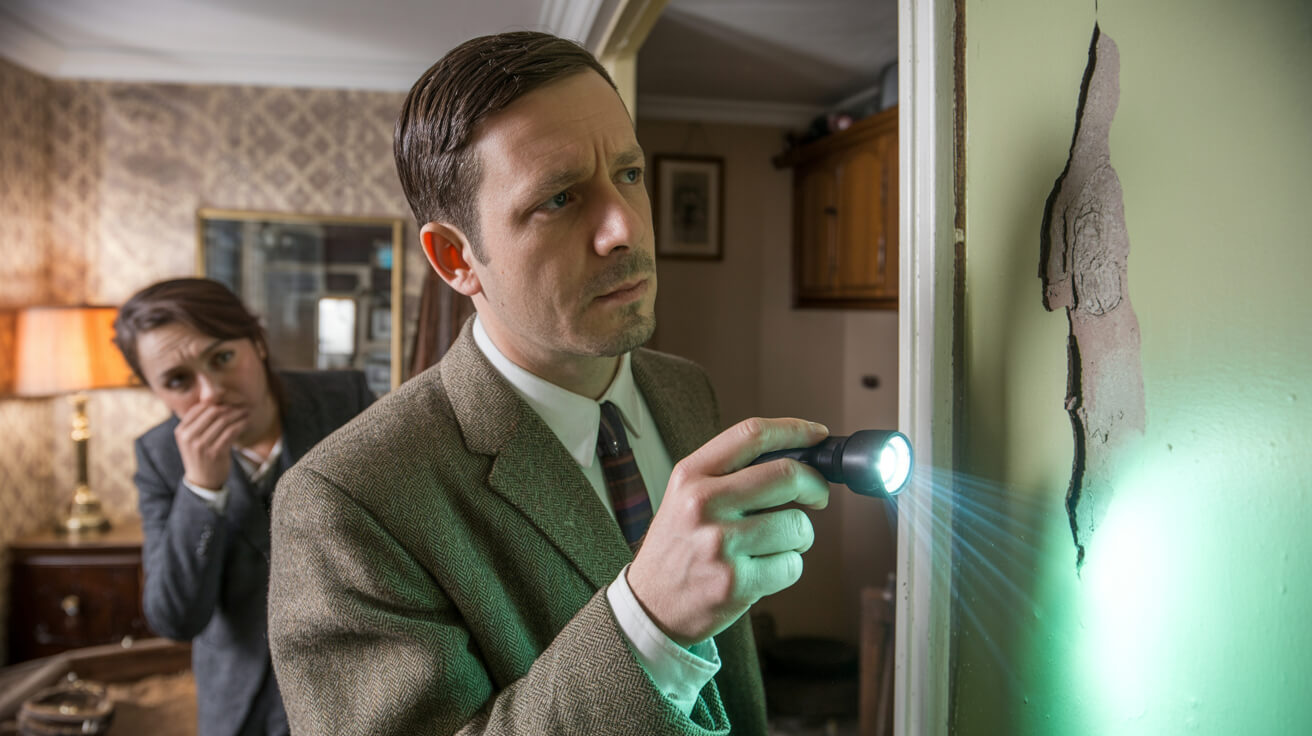
Confronted with creeping damp or erratic mould in a high-rise, listed cottage, or Victorian terrace, many owners and contractors reach for the familiar: a chemical DPC injection, a coat of waterproof paint, or blanket insulation. But in the regulatory and material context of 2024, these fixes rarely hold up under scrutiny—and often dig the hole deeper.
Heritage authorities and conservation planners routinely reject universal tanking solutions, impervious sealers, and acrylic paints on listed or traditional properties (Property Care Association), because these systems trap moisture rather than let walls breathe. Modern high-rises share similar vulnerability—blanket retrofits overlook unique design, airflow, and risk profiles embedded in tall, complex buildings.
Quick-fix tanking stores up unspeakable damage and doubles tomorrow’s repair bill.
Poorly researched solutions cause more than technical disappointment; they bring legal exposure. Conservation officers may demand full rip-outs for banned materials. Lenders and insurers can flag poorly evidenced repairs as code breaches, triggering market threats and loss of cover.
The obstacles don’t end with approval: listed and higher-risk projects require detailed documentation, rationales for every intervention, planning reviews with hands-on inspectors, and ongoing post-project monitoring. Schedules and budgets can spiral with even minor gaps in preparation, draining asset value and inviting public disputes if compliance falls short.
Site-Level Traps: How Poor Execution Triggers Surprises and Unplanned Spend

You can draught the best retrofit plan in Sussex, but execution on the ground is where most projects stumble. Oversight is relentless for high-risk and heritage retrofits, and it’s at the “micro” level where failures start to sprout. Blocked vents, unmonitored cold bridges, missed air gaps, and skipped installation records create perfect breeding grounds for invisible damp and future disputes.
“A brush of paint won’t patch a leaking wall cavity. If the source isn’t found, every fix is spendthrift guesswork.”
Building Regulations Part C mandates an evidence-first approach (Building Regs Drawings). Yet, countless projects see requirements quietly skipped: no installer proof, missed readings, patchy moisture mapping, or absent photographic logs when it matters most.
This isn’t just a paperwork slip. Today’s lenders and insurers often demand a complete “compliance pack”—photo evidence, batch lot tracking, installer credentials, and airflow testing—before offering loans or adequate cover. Lose any piece of this chain, and not only do you risk fines, you lose any solid defence if a tenant, buyer, or regulator returns with a claim. Owners and managers who leave their evidence to chance find that the protections of historic, structural, and financial value slip through their fingers.
How Do You Retrofit Damp and Mould in Heritage and High-Risk Buildings—Without Making it Worse?

Best practice in high-stakes buildings isn’t about doing more—it’s about working smarter, choosing compatible materials, and proving every action on paper and in situ. For heritage and listed properties, retrofits today build from within—using materials that “breathe” and respond to the original lime, timber, or masonry makeup. Approved products like lime plasters, wood fibre slabs, and hempcrete are designed not just for science, but for fast-tracked approval by conservation officers (Truscott Preservation).
Mechanical interventions (fans, PIV units) must be paired with mapped airflow strategies—aligned to BS5250 standards—ensuring legal compliance while avoiding condensation traps. Don’t forget insulation: for heritage contexts, natural insulation outperforms synthetics, is less risky over time, and often secures both lender and regulatory buy-in (Ecological Building Systems).
Neglect ventilation, or treat it as an afterthought, and you risk the classic trap: beautifully finished walls turning to reservoirs of moisture, fuelling unseen decay and rapid claim escalation. A successful retrofit links every system—material, mechanical, and monitoring—into an integrated, approved, and logged solution.
The Golden Thread: Achieving Audit-Ready Compliance Every Step of the Way

Compliance is no longer a static file—it’s a living digital proof chain stitched through every retrofit phase. From the first survey through to aftercare and sale, every photo, installer credential, certificate, and reading should be date-stamped, tagged, and easily referenced—not piled into a folder and forgotten.
“Your best protection is a forensic record. Every check, every fix, logged and provable—for years, not just the day of installation.”
Modern compliance means banking this digital narrative as your property’s advantage. Annual moisture checks, in-wall sensor logs, and rolling recertification can turn a potential Section 11 claim into a closed file before lawyers even get involved (NHBC Foundation).
But gaps are costly. A missing photo, skipped humidity log, or lost batch code can unravel years of careful compliance, exposing owners to claims from tenants, challenges from buyers, or penalty action by authorities who demand full transparency, not after-the-fact repairs. In this regime, precision and continuity are not options—they are the new backbone of legal protection.
What Are the Financial, Legal, and Health Consequences for Every Stakeholder?
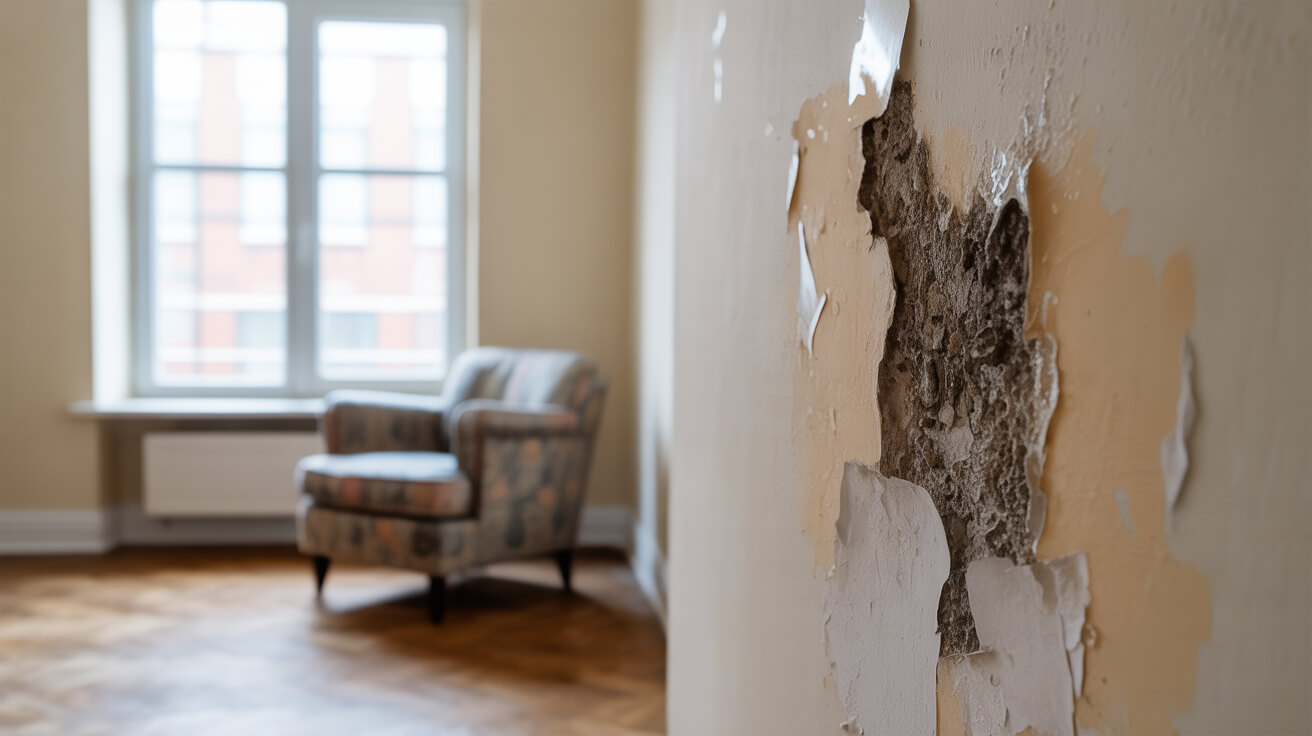
Every player in this retrofit game faces direct, escalating consequences whenever the compliance “golden thread” frays. For owners, financial risk is no phantom: estates missing compliance evidence face instant drops in mortgage eligibility or are blacklisted in property searches (Countrywide).
Landlords don’t just risk lost rent. Local authorities can issue improvement notices, impose stiff fines, or pursue prosecutions if damp is found and documentation is lacking—especially when resident health is in the crosshairs (gov.uk).
Tenants armed with medical evidence—like a rise in asthma among children—are now winning legal cases forcing urgent and expensive landlord action (NHS UK).
Surveyors, too, are at personal risk: any unsigned or missing pre- or post-work logs, skipped PCA or RICS certification, or lack of transparent evidence now opens the door to claims against the professional, lender, or installer (RICS).
One record missing, one reading unverified, and years of hard work or investment can be wiped out.
Anatomy of a Retrofit Disaster: Holm Farm Cottage
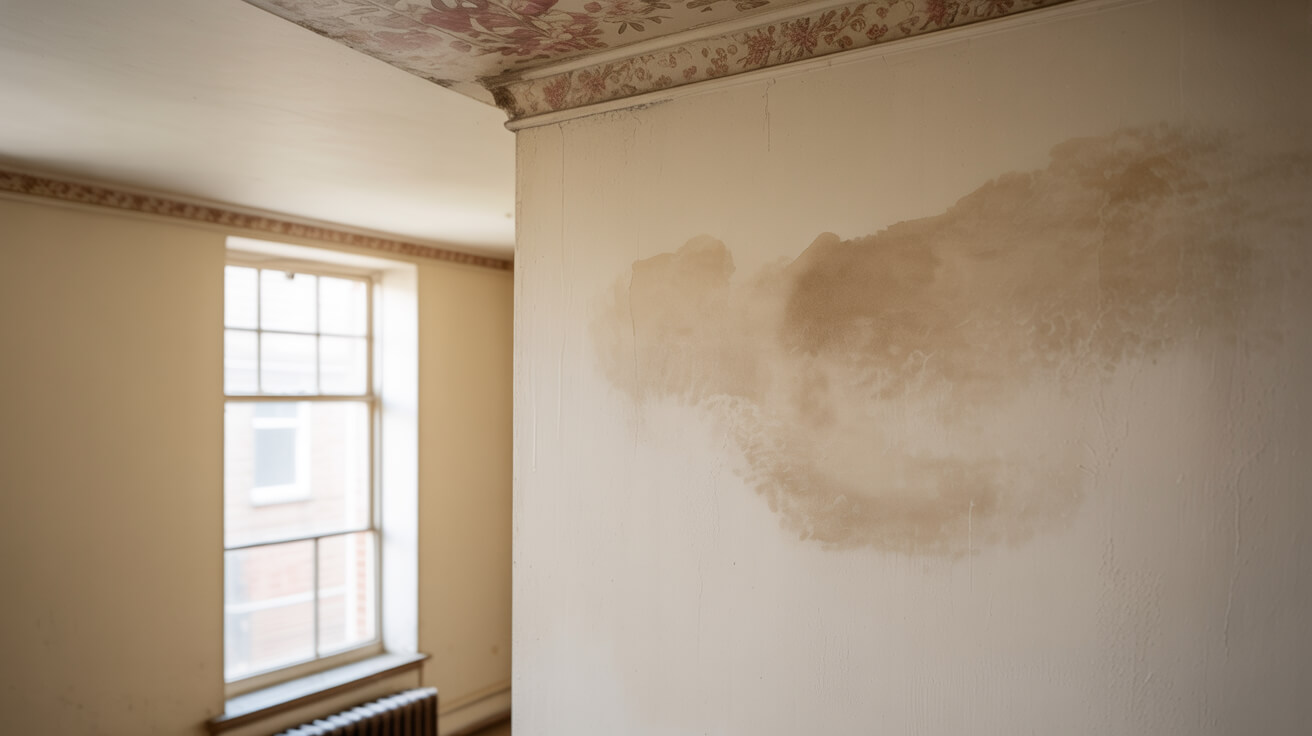
Holm Farm Cottage looked the part after insulation was done—a tidy, listed home with an expensive new envelope. But skipping the ventilation retrofit left the project with a ghost problem: condensation raced through interiors, black mould behind pristine plaster, and old rising damp soared back in. When a proper test was run, the “compliance file” was more of a wish list than a defence.
The sequence was brutal: £12,000 paid out for remedial works, property value dropped almost 40%, a forced sale capped months of wrangling with authorities (Historic England).
“Skip airflow, and you’ll fix the same problem twice—except the second time it’s out of your hands and in the regulator’s crosshairs.”
Every missed sequence—insulation before airflow, retrofit before survey, instal without logs—ramps up the risk. It’s a domino effect not just of cost, but of confidence lost among future buyers, insurers, and regulators. The true shield is a joined-up, multi-phase approach: full inspection, compatible material match, real-time logs, and annual aftercare. Anything less is rolling the dice with your property’s legacy.
Sussex Damp Experts: Forensic, Future-Proof Compliance—From Survey to Sign-Off

Today, compliance doesn’t come in tins of plaster—it’s revealed in the depth and detail of your records, and the technical rigour of the solution. Sussex Damp Experts begins every project with a laser-focused diagnostics chain, structured for modern and historic needs, not just patchwork quick fixes. Each wall, floor, and hidden void is mapped; materials are chosen for match and longevity, with local-authority recognition and full accreditation.
Once works begin, the chain-of-proof continues without gaps. Every survey, installer action, batch certificate and finish is photo-tagged, signed, and woven into a logbook that stands up under legal and financial testing. Our method means you’re ready for sales, rental compliance, insurance interrogation, or regulatory audit years before the question’s ever raised.
High stakes—heritage, landlord, insurance commission—projects benefit most. Our service model guarantees expert handover, aftercare visits, and digital logs. We keep the record alive long after the dust settles, defending you at every checkpoint—council inspection, lender review, or complaint.
We insulate not just your walls but your investment, your reputation, and your future compliance. No shortcuts, no gaps, and no surprises for the next owner.
“A shortcut when you retrofit is a scandal in waiting. Secure it right; prove it forever.”
Secure Your Retrofit and Compliance with Sussex Damp Experts Today
In this new era of compliance, one overlooked survey, a skipped moisture reading, or a “best guess” on materials can turn your asset into a liability overnight. With Sussex Damp Experts, every detail is validated: diagnosis, airflow, design, execution, and aftercare are documented and ready for any scrutiny—now and in the years ahead.
Let’s fortify your building’s legal, financial and physical position. Book a forensic survey or compliance audit with Sussex Damp Experts and discover what a gold-standard retrofit looks like from start to signed-off. Every fix built for proof; every record ready for tomorrow. No second chances—only systems that endure.
Frequently Asked Questions
What triggers a building to be classified as “higher-risk” for damp and mould in 2024—and how might that catch you off guard?
A building is swept into the “higher-risk” net the moment it reaches 18 metres, stretches over seven stories, or shapes up as a residential block under the Building Safety Act 2022 and post-Grenfell Higher-Risk Buildings Regulations (2023). Yet, it’s rarely just about big numbers: historic status, conservation area placement, internal conversions (think old presbyteries or Victorian blocks split into flats), or odd substrates like timber frames can tip the scales. Lenders, insurers, and councils have grown far more alert—flagging even two-storey period homes for deeper inspection if the paperwork or past repairs look muddy.
A draughty cottage in a conservation street can be scrutinised just as hard as a modern high-rise. In 2024, it’s the risk map—not the postcode—that bites.
How do you confirm if your building is “higher-risk” under current law?
- Measure both actual height and number of stories (skip this and you’re invisible to the regulator—until you aren’t).
- Check heritage overlays, planning consent lists, or conservation area designations.
- Review occupancy: multiple flats add risk, as do hospitals and care settings.
- Inspect the retrofit trail—recent insulation, internal lining, or cavity-fill can wake the watchdog even if the envelope is old.
Sussex Damp Experts use a surveyor’s lens plus compliance-grade checks to give you black-and-white clarity—avoiding hidden flags that can halt projects, stall loans, or land unwanted council letters.
Why do basement tanking and modern “quick fix” damp systems so often trigger lasting damage or disputes in heritage and higher-risk properties?
Speedy chemical DPCs, off-the-shelf tanking, or cement renders might look like problem-solvers, yet in old buildings they often do more harm than good. Preserving heritage fabric demands vapour-permeable solutions—lime plasters, mineral-based insulations, and traditional drainage tweaks. Skip breathability or the right preparation, and you force water to “find another way”: behind panelling, beneath floors, sometimes surfacing months later as rot, swelling, or black mould. Recent BRE Group case data flags an over 40% hike in remediation costs where “universal” damp systems clash with solid masonry or listed substrates.
Locking moisture out is only half the battle—if your walls can’t breathe, damp becomes a traveller, not a prisoner.
What are the tell-tale tripwires in these projects?
- Tanking against old brick, stone, or timber without first mapping salts and existing moisture gradients.
- Installing plastic DPCs or cementitious renders over lime or clay-based plasters.
- Forgetting mechanical ventilation, especially after new insulation or window upgrades.
- Rushing works without batch-coding, dated photos, or site logs—leaving you exposed in disputes or sales.
The Sussex Damp Experts team builds each plan from subfloor to eaves for heritage, applying methods proven—and insurable—for listed, period, or “awkward” builds. Don’t accept a solution that leaves you patching one problem while another creeps in.
How do you design a compliant, audit-proof damp strategy for complex, listed, or heritage buildings under PAS 2035?
PAS 2035 guides demand “whole house” thinking and compatibility across all elements—a patchwork job or slapdash instal doesn’t wash anymore. Each substrate (brick, stone, timber, lath) must be decoded for breathability, salt behaviour, and existing moisture loading. Solutions like capillary-active insulation, internal wall ventilators, or hybrid DPC systems lock in compliance and fabric safety for the long haul. Unpicking this with guesswork invites double-costs, failed home sales, and hard-to-win insurance claims. In 2023, English Heritage reported retrofit failures dropped by 75% in projects that started with tailored surveys and ended with matched materials—not just a “standard” product.
It’s not about product preference—it’s about forensic fit. Lime for lime, fibre for fibre, proof for every step.
What’s the right workflow to ensure both compliance and longevity?
- Kick off with a specialist damp survey—target salt mapping, moisture gradients, and substrate checks for BS 6576/8102 fit.
- Document every trade’s hand-off, material batch, and on-site test as a continuous photo series.
- Secure signed guidance from local conservation or planning officers for listed or protected properties.
- Integrate mechanical ventilation aligned with BS 5250 from the design stage, not post-hoc.
- Store all compliance, insurance, and material records in a “golden thread” archive—never after the fact.
With Sussex Damp Experts guiding the file, you sidestep both regulatory dead-ends and costly “retro-retrofits”—saving cash, face, and future value.
What is the “golden thread” in retrofit compliance, and why does a missing log mean more trouble than any visible stain?
The “golden thread” is your evidence chain—every photo, log, bundle of batch codes, and notice to tenants or planners that ties a project from its first phone call through to final sign-off. New regulations (Building Safety Act 2022, PAS 2035, HHSRS) require owners and managers to have a living file that can withstand audits, insurance tests, and buyer scrutiny years after works finish. Mortgage advisors, courts, and councils give zero room for “verbal” defence; insurance claims sink fast if any one link—commencement, product, installer, or aftercare—is missing or fuzzy. In a 2023 Brighton case, a building lost 35% of its value after an incomplete file blurred the trail between diagnosis and repair, even though the actual walls passed muster.
A single undated photo or missing consent letter isn’t a footnote; it’s a crack that widens with time (and lenders, councils, and buyers all rush in).
What goes into a bulletproof golden thread?
- Moisture, salt, and substrate readings—time, date, and location locked.
- Batch numbers, datasheets, and installer accreditations logged digitally.
- Photos from every angle, every stage, with team and date tracing.
- Tenant, owner, and planning exchanges securely stored.
- Archive kept in cloud and physical copies—losing one copy is no longer a defence.
Sussex Damp Experts commit every job to a fully documented process—so whether it’s a council, an underwriter, or your next buyer, all the evidence is ready in minutes, not weeks.
Who faces most risk when damp retrofits or compliance gaps go wrong in 2024, and what’s changed for owners, agents, and tenants?
Increased digital enforcement, emboldened tenants, and tougher lender standards mean no one involved gets a free pass. Owners now find sales delayed or values cut overnight if golden thread proof is missing. Landlords see tenant compensation claims rocket when aftercare or prompt action falters—especially under the faster HHSRS process. Tenants, under new rights, use minor lapses as grounds for rent retention or council escalation. Even agents, surveyors, and contractors risk legal action or a bruised reputation if documents, logs, or consents vanish in the pipeline.
In 2024, each silent gap in compliance or records doesn’t just undermine trust—it can cost people money, health, and status before you blink.
What precise impacts now bite hardest?
| Role | Typical Shortfall | 2024 Risk Trigger |
|---|---|---|
| Homeowners | No golden thread archive | Mortgage refusal, forced remediation |
| Landlords | Missing aftercare records | Tenant claims, rent freezes, compliance fines |
| Tenants | Damp evidence in living space | Rent reduction, health claim, council action |
| Agents/Surveyors | No photo or consent proof | Loss of instruction, legal investigations |
The Sussex Damp Experts process is designed to keep every party “audit lit”—securing your defence and peace of mind as the rules, and the pace of enforcement, accelerate.
How do Sussex Damp Experts consistently secure compliance, insurance acceptance, and audit success in high-risk or heritage damp projects?
Every project opens with a detailed survey using pro diagnostic gear—moisture metres, thermal cams, salt tests, and substrate analyses—all tied to current British Standards. Each retrofit is custom-designed: only compatible plasters, membranes, and mechanical ventilation where needed; every fix is mapped for both heritage and modern compliance. Each job builds a living “golden thread” dossier; every reading, batch, consent, and warranty logged at each milestone. That means when a lender, council, or buyer knocks, answers are instant—no last-minute hunting through email. Sussex Damp Experts’ approach helps you pass audits, secure finance, or move boundaries with council or insurance more easily than ever.
No shortcut ever paid a mortgage or satisfied an auditor. Long-term value is only ever secured by thorough evidence and specialist strategy.
What do clients gain uniquely by working with this team?
- Forensic, compliance-grade diagnostics up front: pinning down risks before money is spent.
- Dossier-class documentation throughout: proven resilience under audit, insurance, or sale situations.
- Custom solutions, site-by-site: not just what meets regulations, but what future-proofs every fabric, from listed cottages to city conversions.
To secure your building’s integrity, reputation, and future liquidity, take the first step with a full, specialist-led compliance review from Sussex Damp Experts—locking in a result that holds up to any test, now or years from now.

