
 By
By  August 26, 2025


Why Damp Compliance Has Become the Deciding Factor for Successful Landlords
In Sussex and beyond, landlords face a different world. Damp isn’t just an “odd patch on the skirting” or a nuisance you chase round flats between tenancies. These days, how you handle moisture risk is the line between a thriving, respectable portfolio and a business beset by voids, tenant complaints, declining value, or visits from the council. Lenders and insurers are no longer indifferent. Local authorities wield more power than ever. And tenants—armed with Google and social media—know their rights inside out.
Properties that prove their health command trust—and trust wins the best tenancies, for the best money.
The way you handle damp signals everything about your approach as a landlord. A contractor’s word, these days, carries half as much weight as a digital photo or a document from a surveyor. Buyers, tenants, insurers, and mortgage lenders demand proof. Hand over full inspection evidence, guarantee chains, and dated treatment logs, and you’ve got an asset that’s easier and quicker to let, holds its value, and runs on lower risk.
The point isn’t simply to avoid fines—though those bite deeper than ever. You’re building something more robust: visible trust. Properties with tight compliance and audit trails attract better tenants and withstand scrapes with less stress. Renters stay longer, letting agents have fewer complaints to juggle, and local authorities move past your properties to busier targets. Every documented fix and clear guarantee turns liability into leverage. Ignore it, and what you “save” on paper will cost you—in voids, insurance denials, and reputation—three times over.
Which Regulations Will Make or Break Your Portfolio?

A landlord’s obligations haven’t just evolved—they’ve mushroomed. Today’s compliance stretches miles beyond clearing a leaking pipe or dabbing away a tide mark. Heavyweight statutes—like the Homes (Fitness for Human Habitation) Act 2018, the Landlord & Tenant Act 1985, and the Housing Health and Safety Rating System (HHSRS)—mean you’re not just stopping leaks. You’re expected to prevent, resolve, and prove your solutions long before a tenant’s cough becomes a legal dispute (commonslibrary.parliament.uk).
Landlords focused on anticipation, not just reaction, avoid fines while tenants notice the difference.
It’s easy to fall into the trap of reactive maintenance. But today, a missing inspection record is almost as risky as a real leak. Local authorities, spurred on by tenant complaints—no matter how minor—can now enforce repairs, slap on fines, or even take over the running of your property. And these triggers aren’t only big, headline-grabbing catastrophes. Recurring condensation, a whiff of mould, or one too many missing maintenance logs put you on their radar (propertymark.co.uk).
What gives landlords peace of mind? Anticipation. That’s logging every survey, keeping every receipt, and using only accredited surveyors and trades. Show your working—even for small jobs. Today’s tenants and tomorrow’s buyers will expect nothing less.
How Damp and Mould Turn Small Signs Into Big Financial Risks
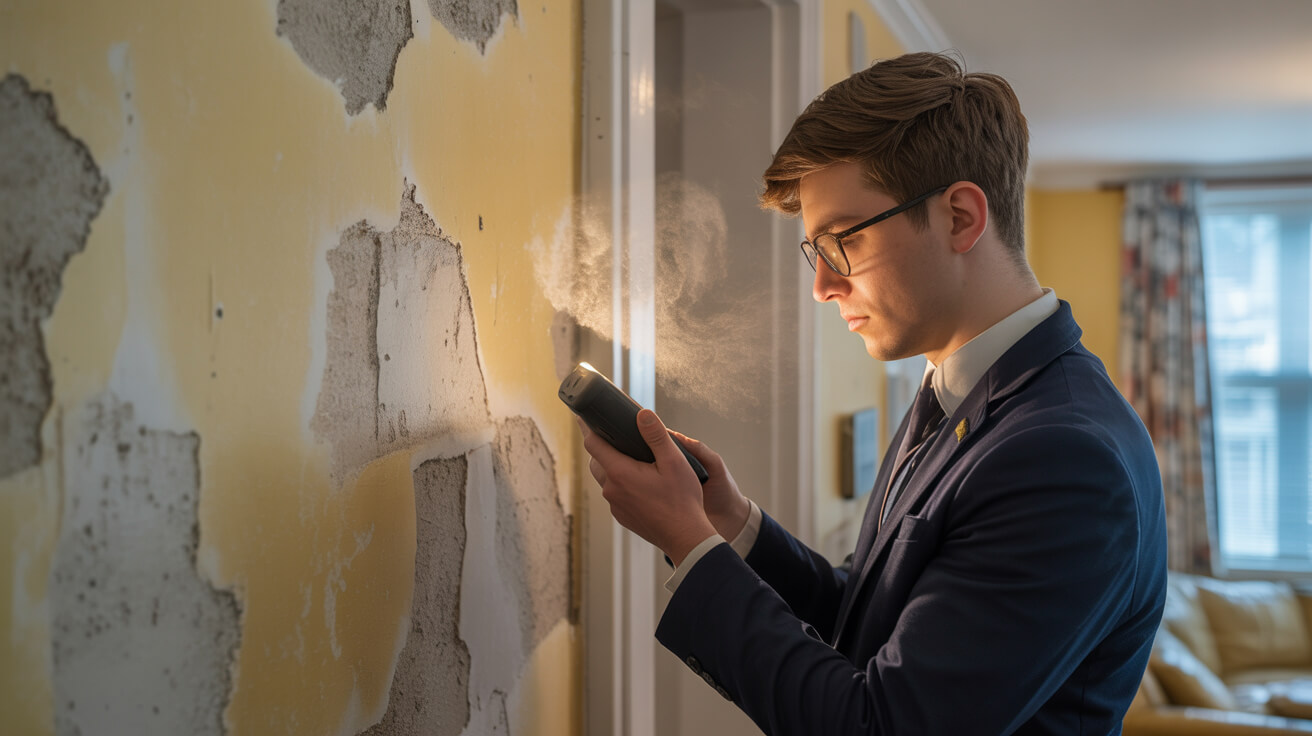
If you’ve ever walked into a flat and caught that musty tang or spotted a patch of mould above a window, you already know: these surface signs usually hide deeper trouble. Minor patches rarely stay minor. Black spots signal more than bad air—they may point to failed or bridged DPCs, old leaks, or ventilation left untouched for years.
Ignore the first complaint about condensation or the tell-tale ring around the skirting, and risk doesn’t just double—it snowballs. Missed repairs or low-level complaints don’t just exist in a vacuum. Insurers may knock out claims, mortgage lenders may freeze approvals, and buyers will walk away the instant a pre-sale survey sniffs out damp (nhs.uk; rics.org).
When tenants trust your documentation, complaints stop, voids shrink, and your rating climbs.
But the problem doesn’t stop with your wallet. The NHS draws a direct link between persistent damp, mould, and higher rates of asthma and respiratory illness. In Sussex alone, a property marred by unresolved damp—and the paper trail to match—can lose as much as £50,000 off its value, especially when surveyors raise flags and lenders back off (Source in outline/internal notes).
Landlords who stay ahead with compliance, invest in professional aftercare, and maintain an unbroken record don’t just see fewer complaints. They outpace the market—faster lets, steadier tenants, and financial risk kept to a gentle simmer.
How Penalties, Public Exposure, and Voided Claims Destroy Value
The era of light-touch enforcement has ended. If your compliance is patchy—missing paperwork, late repairs, or cosmetic cover-ups—today’s fines run eye-watering. Local authorities can and do levy up to £30,000 in penalties, not counting management orders, forced repairs, or being listed for public shaming (bbc.co.uk). In Sussex, a landlord stalled by enforcement averaged 38 lost days per incident (zoopla.co.uk).
Insurance and mortgage providers have grown sharper, too. A claim unsupported by photos, dates, and compliant survey evidence doesn’t stand a chance. Nor does a property up for sale with patchy records—buyers know that digital footprints and official logs matter more than any coat of white paint (lms.com).
In today’s market, failure to prove compliance stains more than your property—it stains your whole business.
Compliance isn’t a one-time checkbox. It’s a living file, always ready and always growing. Short-cut now, and months of income may be on the line—sometimes, for years to come.
What Makes a Damp Compliance System a Business Asset?

Proactive landlords don’t just fix damp; they systemise its prevention, treatment, and proof. That means working with PCA-accredited surveyors, running digital records, logging before-and-after photos, and setting regular aftercare on autopilot (peterbarber.co.uk). This isn’t just bureaucracy—it’s ammunition. Audit trails and documented fixes become assets in every negotiation, every review, every refinancing moment.
An up-to-date, surveyor-stamped record is your golden ticket through every audit, renewal, and resale.
Annual check-ups and robust guarantee management flip the compliance story—it’s no longer a burden, but a reason your next buyer, lender, or tenant says yes. In fact, visible, accredited compliance is now a common requirement for both insurance companies and institutional landlords, ensuring lower void risk, faster sales, and frictionless lease renewals (trustmark.org.uk).
A documented, real-time compliance plan isn’t just about avoiding risk. It tips the scales, turning letting agents and tenants into advocates—and letting your portfolio move nimbly, ready for whatever the market throws.
Why Compliance Is the Hidden Accelerator in Marketing and Lettings

A property with a “damp-free certified” stamp in today’s market is a magnet. Across Sussex, these homes rent faster, attract higher-calibre tenants, and fetch premium rents—sometimes 5–8% higher than similar properties lacking transparent documentation (lettingagenttoday.co.uk).
The surest way to raise value is to make compliance a tangible asset—visible, documented, and undeniable.
It’s not just about attracting better tenants. Buyers, lenders, and insurance panels all inspect your visible records: up-to-date inspection reports, guarantee paperwork, and digital photos mean faster deals and fewer queries (directlineforbusiness.co.uk). Delay it, and you risk longer voids, more repair queries, and piles of extra surveys—each one a drag on your value and name.
But when your compliance is clear and easy to show, you’re not only selling a property—you’re demonstrating a method, a brand, and a standard that sets you apart. Every logged inspection, every definitive guarantee, is new leverage in your next negotiation—tenant, insurer, or buyer.
How Most Landlords Slip: The Diagnostics and Process Traps That Hurt

Where do landlords most often go wrong? Not through ill intent—but through gaps in process, shortcuts in record-keeping, and failed diagnosis at the critical stage. Treating “condensation” as rising damp, skipping the dry-down period, or missing a vital photo for your claim: all can void expensive guarantees, erode your legal position, and give an opening to a sharp-eyed tenant or eagle-eyed surveyor (propertyindustryeye.com).
Winning landlords build systems; everyone else leaves gaps for tenants, lenders, or regulators to exploit.
In Sussex, the quickest way to trouble is inconsistent paperwork or trusting a non-accredited contractor’s word over solid inspection evidence. Successful landlords set a clear process: log every sign of damp, order professional inspection, match treatment to root cause, and keep a neat, dated record every time. This approach means every guarantee stands up to scrutiny and every regulatory audit passes—often, without so much as a raised eyebrow (nationwide.co.uk; buildit.co.uk).
Reliance on solid systems isn’t optional—it’s the engine-room of risk reduction, lease wins, and recurring value year after year.
Turn Compliance Into a Competitive Advantage with Sussex Damp Experts

Damp compliance, properly managed, is more than a legal shield. It’s the lever for stronger income, reputation, and operational calm. Sussex Damp Experts deliver more than a tick-box survey. Their PCA-accredited teams fuse advanced moisture mapping, specialist diagnostics, and full BS6576/8102 standards—plus a digital photo record and watertight guarantee management (sussexdampexperts.com).
Our service catches what most providers miss: from salt analysis in heritage buildings to critical digital audit trails demanded by insurers. You gain not just a document, but a living compliance asset that supports audits, claim reviews, and even tenant disputes long after the last fix carries out.
Annual aftercare, digital certificates, and ten-year warranty backing put a moat around your business. With more than 100 Sussex properties covered, zero failed checks, and a decade of warranty security for smart operators, Sussex Damp Experts are the quiet engine behind resilient, outperforming landlords.
Serious landlords protect reputation and profit the same way they protect walls: with systems, inspection, and honest records.
It’s not just the fix. It’s proving, showing, and certifying that you’re the expert—now and in the future.
Speak to Sussex Damp Experts Today
Move beyond patchwork repairs and half-kept records. If you want tenants to stay longer and your assets to keep their value, you need an end-to-end system: accredited surveys, digital proof, and actionable advice that makes legal duties pay off commercially.
Protect your properties and build trust that keeps income stable—ask Sussex Damp Experts for a compliance audit or full specialist consult. With us, every document is a tool that future-proofs your business and cements your standing—tenant, lender, and buyer all notice the difference.
Frequently Asked Questions
Why does damp compliance failure expose landlords to greater financial risk than in previous years?
Unchecked damp in 2024 doesn’t just bring repair hassle—it’s now the fastest route to uncapped fines, legal orders, and asset devaluation, even for minor slips in documentation or preventative care. Today’s enforcement ticks faster, with councils launching intervention at the first sign of neglect—be it a musty smell or crumbling plaster. Insurance, mortgage renewal, and property valuation quickly become casualties when compliance lags, leaving landlords open to financial shock if evidence trails don’t pass muster.
How have enforcement and red tape changed the playing field?
- Enforcement expansion: Councils empowered by Part C, HHSRS, and the Homes Act now demand documented action at nearly any hint of damp. Fines exceeding £30,000 have been publicly reported for repeat cases. Unlike earlier years, proactive, unannounced inspections and cross-checks mean trouble finds landlords—no need for a tenant to file a formal complaint.
- Tenant leverage: Under new legal standards, tenants can trigger full compensation claims or withhold rent, sometimes for issues first reported months before. A single overlooked report may become the foundation for costly tribunal action.
- Mortgage and insurance pressure: Lenders now run digital checks on damp-proof evidence and sometimes freeze products if paperwork, aftercare logs, or technical sign-off aren’t current. Insurance policies are written with pre-existing damp exclusions and instant claim denials if routine maintenance isn’t proven.
In property, risk doesn’t just accumulate in the walls—it grows in the gaps between paperwork, maintenance, and legal defence.
Partnering with Sussex Damp Experts arms your properties with layered, surveyor-grade documentation that satisfies every scrutinising eye—from council inspector to mortgage auditor—defusing risks before they escalate while insulating your long-term portfolio value.
What practical gains do landlords see when they exceed mere legal damp compliance?
Going beyond tick-box repairs—using survey-led diagnostics, traceable standards, and expert aftercare—transforms compliance from a sunk cost into a measurable asset. Landlords adopting a “prove, not promise” approach consistently see reduced voids, improved rental yields, and access to the kind of mortgage products that were previously reserved for portfolio giants.
Why does this work where basic compliance doesn’t?
- Portfolio insulation: Digital, standards-based compliance records (using BS6576/8102, PAS2035) protect against down-valuation and unlock faster mortgage turnaround, especially for multi-unit landlords. Buyers and brokers prefer “no-surprises” documentation.
- Premium market share: Recent sector reviews show properties with robust damp surveys command as much as 6-8% higher rents and cut average void periods by several weeks.
- Tenant stickiness: Health-conscious families and high-earning professionals—who prefer documented safety—commit to longer tenancies, reducing turnover and re-letting admin.
It’s not what you spent; it’s the certainty you can prove that turns compliance into cash flow.
Sussex Damp Experts’ approach amplifies your documentation trail, giving you a competitive voice with lenders, insurers, and upmarket tenants—not just box-ticking your way through the year but elevating your properties to sought-after status in the rental market.
How do credible damp compliance credentials win and retain the most desirable tenants?
Top-tier tenants—families, professionals, and long-term residents—don’t just browse for the nicest photo; they filter for visible evidence of health and maintenance discipline. Listing a property with real compliance proof is increasingly the shortcut to the top of their shortlist, outpacing rivals who rely on shallow claims or cosmetic retouches.
What “proof” signals actually compel the new tenant class?
- PCA or BS-certified reports: Properties with up-to-date, signed surveyor documents reassure against hidden mould or cold spots.
- Visual audit trails: Before/after images and mapped moisture readings in digital packs make maintenance transparent.
- Aftercare logs and explicit guarantees: Transferable guarantee documents, plus annual aftercare notes, provide long-term security tenants can verify.
- Direct referencing in listings: Mentioning compliance with standards and independent experts draws the right eyes to your rental offer.
Tenants now check your paperwork as closely as your paintwork—well-documented health is the new trust currency.
Properties handed over by Sussex Damp Experts show every step, from diagnosis to aftercare, winning trust from the first viewing and often attracting longer initial lets with less haggling over rent or security.
What documentation do letting agents and sellers need to reliably market a “damp-safe” property in 2024?
Marketing a truly “damp-safe” property means backing every claim with auditable, third-party proof ready to satisfy agents, buyers, council inspectors, and mortgage underwriters. Self-written logs, verbal assurances, or historic DIY notes are routinely rejected at survey—or even by buyers’ solicitors pre-completion.
Which records define market-ready compliance?
- Current, surveyor-signed reports aligned with BS6576/8102 or PAS2035—displaying the property’s address, inspection date, and all findings.
- Annotated photographic evidence—images mapped to each intervention and moisture reading, with timestamping.
- Copies of all guarantee documents—highlighting transferability and reference to works completed.
- Longitudinal aftercare logs—proving preventative care, re-inspections, and open repair trails.
Agencies rushing the marketing step without such packs are left fielding follow-up queries, renegotiating on survey setbacks, or seeing lets and sales collapse late in the process. Sussex Damp Experts issue agent-ready, digitally formatted compliance files as a baseline, helping document Damp And Mould issues clearly, expediting transactions and supporting professionalism and risk reduction in the housing market.
Which acts and regulations determine true “damp compliance” for landlords and property managers in the UK today?
True compliance transcends basic repairs—it weaves together legal obligations, technical standards, and robust audit trails. The most significant statutes and frameworks include:
- HHSRS (Housing Health and Safety Rating System): Classifies mould and excess moisture as health hazards, authorising immediate council enforcement and fines.
- Homes (Fitness for Human Habitation) Act: Gives tenants power to claim for health-affecting damp or mould, forcing immediate landlord remedies.
- Landlord and Tenant Act 1985: Obligates structural protection from water ingress or decay—enforced not just at complaint but during HHSRS audits.
- EPA (Environmental Protection Act): Treats chronic damp as a public nuisance, often triggering fines or enforced works.
- Building Regulations Parts C and F: Demand explicit systems for moisture exclusion and adequate ventilation, interpreted via standards BS6576/8102, PAS2035.
- PCA/TrustMark/PAS2035 Certification: Preferred by lenders, recommended by insurance, demanded by tenant and buyer advocates, certification fills the trust gap left by older “builder’s word” claims.
When regulation, insurance, and tenancy law pull in the same direction, only proactive, independent compliance stands up under real scrutiny.
By working with Sussex Damp Experts, you ensure every remedy and inspection is mapped to the latest framework—not last year’s guidance—future-proofing your properties in a market where legal inertia is a risk you can’t afford.
How do surveyors, councils, and lenders now fail properties for damp compliance—and how can diligent documentation ensure easy passage?
Properties pass or fail based on the traceability and detail of their inspection and repair records, not just the outcome of a single visit. Modern surveyors use layered evidence—digital moisture data, thermal imagery, substrate tests, professionally signed reports, and mapped aftercare chains—all cross-checked for anomalies.
What common mistakes or gaps lead to rejection?
- Missing, outdated, or unsigned surveyor reports
- Gaps in before/after photographic evidence—especially if method or date isn’t logged
- Aftercare details that don’t show scheduled checks or escalation points
- Guarantee documents that lack clear assignment or expiry references
- “Owner-asserted” maintenance statements with no third-party or professional corroboration
In the spotlight of a council audit or insurer’s desk, every undocumented step becomes an expensive ‘unknown’—prevention is always cheaper than cure.
Sussex Damp Experts deliver pass-ready evidence portfolios: each repair and visit is logged, certified, and built for straightforward hand-off to agents, new buyers, or council inspectors. With our files, your compliance journey stays drama-free, letting properties stand strong as a benchmark—not a cautionary tale.
Choosing expertise over shortcuts isn’t just a defence against fines; it’s a claim on higher returns and peace of mind—every file in order, every corner protected.
For relentless compliance—and the reputation, value, and stability it attracts—rely on Sussex Damp Experts to future-proof every asset in your letting or management portfolio.

