
 By
By  June 2, 2023


How Does a Damp Proof Course Actually Safeguard Your Property?
Damp proof courses aren’t an upgrade—they’re the basic line separating a healthy, durable property from one facing persistent decay, financial loss, and regulatory issues, which is why prompt damp proofing more cost-effective than delay remains a practical reality. A damp proof course (DPC) is a targeted, engineered barrier built into walls to block rising moisture from underlying ground conditions. Without a compliant DPC, capillary action in walls lets water and damaging salts climb, silently degrading finishes, weakening structures, and threatening your long-term investment.
Why Is a Damp Proof Course a Necessity?
Properties without an effective DPC steadily lose both value and liveability. The upward movement of damp leads to:
- Persistent plaster damage and paint failure
- Swelling or rotting of timber components
- Higher energy bills from insulation breakdown
- Poor indoor air quality tied to mould and allergens
Compliance matters: BS6576 and PAS2035 are not paperwork—they are the regulatory shields that mortgage lenders and insurers use to judge if your property is safe and saleable.
You don’t notice moisture costing you money until something suddenly feels wrong.
What Are the Immediate Payoffs to You?
- Asset protection: Ongoing moisture control retains structural integrity and resale value
- Health: Lower risk of respiratory issues linked to mould and dust mites
- Cost avoidance: Proactive DPC installation is a fraction of future wall rebuilds or litigation exposure
When you rely on Sussex Damp Experts, your property’s unique risk profile is matched with a specific, certified solution—not just a quick application—making damp proofing more cost-effective.
Which Materials and Engineering Choices Ensure Lasting Damp Proofing?
Roof Leak Checker
- 1 Roof Type
- 2 Symptoms
- 3 Results
Most Likely Cause
—
—
Who Do You Need?
—
Estimated Repair Cost Range
—
Temporary Measures
Roof leaks often cause hidden damp damage in walls and timbers. Book a combined roof and damp survey.
Book a Roof & Damp Survey →Materials and their correct deployment aren’t theoretical—they are day-to-day choices with clear outcomes. The right DPC stops damp for decades. The wrong system rapidly fails, often hidden until repair costs escalate.
What Components Are Used—and Why?
- Plastic sheet (polythene): Flexible, chemically resistant and the current default for new construction due to extended life.
- Slate or bitumen layers: Longstanding historic options; vulnerable to ground movement and chemical exposure over decades.
- Silicone or resin injection: Ideal for retrofit—these penetrate existing mortar, block capillaries, and bond internally.
- Electro-osmotic wires: Used for specialist or heritage applications; change water flow at a molecular level without altering heritage fabric.
How Do These Materials Perform Under Scrutiny?
Each option is rigorously chosen based on wall substrate, moisture profile, local history, and regulatory requirement. Sussex Damp Experts never fit “the usual”—your property receives a curated, evidence-based approach.
| Material/Method | Best for | Durability | Compliance Ready |
|---|---|---|---|
| Plastic DPC | New builds/Retrofit | 30+ years | Yes |
| Slate/Bitumen | Older properties | 20–70 years | With evidence |
| Injection Resin/Cream | Brick/block retrofits | 20–40 years | Yes |
| Electro-osmotic | Heritage/special cases | 10–30 years | Conditional |
The most overlooked risk is assuming any damp proof course will do; the best defence is proof—on paper and in the results.
How Do Injection and Electro-Osmotic Methods Actually Differ in Practice?

The decision between injection and electro-osmotic DPC isn’t about preference; it’s about fit for context, risk, and long-term reliability. Both methods have technical subtleties that owners need to know—before costs or compliance become club over solutions.
What Does an Injection DPC Involve?
A technician drills a series of precise holes into mortar joints along the base of each affected wall. Injection cream or resin is pressure-fed, saturating the substrate to line every capillary. After curing, it forms a waterproof shield, permanent if installed with proper coverage and depth.
When Is Electro-Osmosis Used?
Wire is installed at DPC level and linked to a safe, continuous electrical supply. A subtle current inhibits water’s upward movement. Electro-osmotic systems excel in historic or sensitive builds—where chemicals might be too invasive or where wall construction is variable.
How Do You Choose Wisely?
- Modern builds or standard solid walls: Injection DPC is robust and efficient
- Irregular, heritage, or hybrid walls: Electro-osmosis avoids chemical incompatibilities and preserves architectural value
| Attribute | Injection | Electro-osmotic |
|---|---|---|
| Best for | Standard walls | Heritage/special |
| Installation time | Moderate | Moderate |
| Longevity | High | Good |
| Maintenance | Low | Periodic check |
| Regulatory alignment | Excellent | Good/conditional |
When to Refuse a “Price-First” Decision
Teachers—whether a council or insurer—look for evidence, not cheap fixes. The right fit is proven by diagnostics and post instal moisture readings reported in your compliance pack—something Sussex Damp Experts never leave out.
What Is the Professional, Step-by-Step Damp Proof Course Installation Process?

Precision distinguishes a durable DPC from a ticking timebomb. Each phase—diagnosis, preparation, barrier installation, and finish—matters equally and is documented for your reference.
The Four Phases of DPC Installation
- Professional Survey and Substrate Diagnosis
- Complete moisture metre mapping
- Salt and thermal analysis for deeper wall mapping
- Removal and Access
- Remove affected render/plaster back to brick
- Identify and neutralise all previous failed treatments
- DPC Installation
- Drill or cut at prescribed pattern and depth
- Insert chosen barrier (injection resin/cream, sheet, or wiring)—above external ground
- Monitoring units or markers for future checks
- Reinstatement
- Instal salt-resistant backing plaster (not gypsum)
- Complete decorative finish with aesthetic match
- Document result with photographic and metre evidence
| Phase | Key Steps | Compliance Check |
|---|---|---|
| Survey/Diagnosis | Mapping, historic check | Yes |
| Removal | Strip, neutralise | Yes |
| Instal | Drill/insert/barrier-sensor | Yes |
| Reinstate | Plaster, finish, report | Yes |
A DPC’s regulatory trace is established via standards (BS6576) and survey reports. Sussex Damp Experts transparently provide this at every handover—no exceptions.
If a survey doesn’t map the risk, you’re being sold a shortcut.
Why Is Prompt, Professionally-Installed Damp Proofing More Cost-Effective Than Delay?
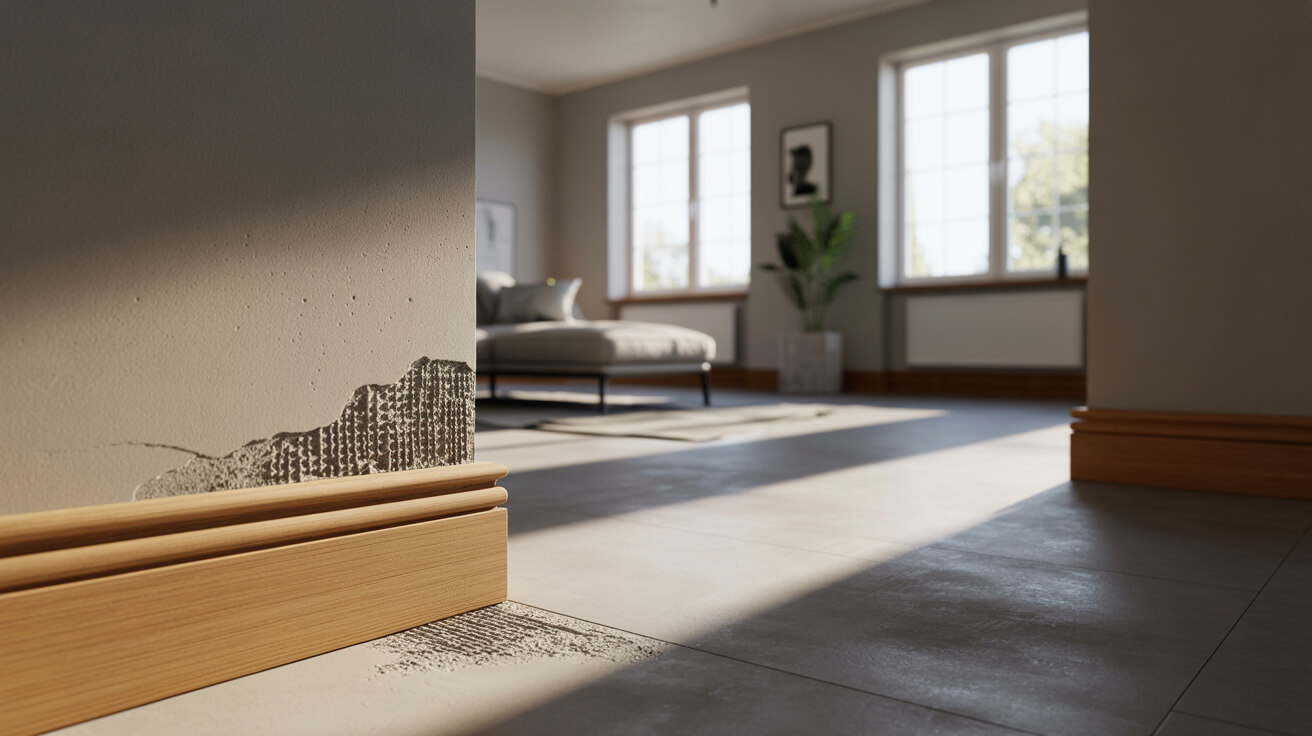
Unchecked moisture causes “silent costs”—wall rebuilds, insurance denials, and compliance fines. Every delay raises risk, lowers property value, and reduces tenant safety.
Real-World Cost and Regulatory Risks
- Major repairs following DPC failure run £8k–£30k per wall
- Surveyor and lender documentation gaps stall or invalidate sales and refinance
- Poor-quality fixes remain visible to surveyors and future buyers
- Regulatory frameworks (HHSRS, PAS2035) penalise non-compliance with repair mandates or fines
Escalating Losses: When Delay Reaches a Tipping Point
Most property owners act when visible signs finally overwhelm—but by then, structural intervention (including wall demolition) may be unavoidable.
- Immediate: Cosmetic damage, tenant complaints, higher energy bills
- Medium: Plaster decay, skirting or joist damage, developing rot
- Long-term: Joist/wall tie corrosion, building movement, legal escalation
No one budgets for rebuilding, only for shortcuts—until the real cost is revealed.
What Are the First Signs You Need a Damp Proof Course Assessment?

You’re not expected to be a building scientist. But knowing early threat signals means you’ll act before costs and risk spiral.
Recognise Early DPC Failure Symptoms
- Persistent musty odours near flooring or ground-floor walls
- Bubbling paint or blistering finish less than 60cm up the wall
- White salt patches, especially after rainfall or high humidity
- Localised mould patches or black spots near skirting/floor
- Flooring feeling colder than it should, even post-heating
Diagnostic tools like moisture metres and infrared imaging uncover invisible risk. Sussex Damp Experts’ survey provides you with a mapped risk profile.
50-Word Insight Block
Professional diagnosis provides clarity—invisible risks are mapped, not guessed, and repair is specified to lender, insurer, and legal standards. That means your action is always proof-driven.
How Does Compliance with Modern Damp Proof Standards Protect Property Value?

BS6576 and PAS2035 exist to ensure damp proof courses are not only functional, but fully compliant for survey, insurance, and tenant safety.
Why Regulatory Alignment Protects You
- BS6576: Details correct DPC diagnosis, material selection, and placement—your property’s compliance passport.
- PAS2035: Required for new retrofits, council-funded instals and social housing; blends energy efficiency and moisture control as part of habitable property assessments.
- Documentation: Surveyor-ready handover includes proof of installation, diagnostic maps, and warranty/insurance eligibility.
A compliant DPC isn’t bureaucracy—it’s your evidence for buyers, lenders, and local authorities.
| Regulation | Scope | Needed For |
|---|---|---|
| BS6576 | All retrofits/new | Lender, insurer, resale |
| PAS2035 | Social/retrofit | Council, welfare, grants |
| HHSRS | Legal/letting | Rented, sale/tenant safe |
The paper trail is as important as the barrier. Without both, you’re back at risk.
What’s Your Next Best Action to Guarantee a Damp-Proofed Property?
The only moment you control is right now. Sussex Damp Experts deliver a warranty-backed diagnosis, regulated installation, and ongoing compliance reporting. Every property gets a mapped and certified fix—designed for comfort, value, and regulatory clarity.
How Sussex Damp Experts Turn Uncertainty Into Proven Protection
- Fast, evidence-driven surveys
- Risk-specific moisture mapping for your building and context
- BS6576/PAS2035 compliant documentation with clear guidance for buyer/lender
- Priority repair scheduling tailored to your calendar and occupancy needs
Decide with proof, not pressure. Owners, buyers, and managers across Sussex trust our approach because each step—from assessment through finish—is designed for lasting value, not just paperwork.
Contact Sussex Damp Experts today. Get assurance that you don’t just hope your building is safe—you know it is.
Frequently Asked Questions
What Is a Damp Proof Course and Why Is It Essential to Your Property?
A damp proof course (DPC) is not just a technical requirement—it’s the difference between a property that quietly holds its value and one that becomes a liability. Rising damp is relentless, feeding on the weakest point of your building envelope. Left unchecked, moisture travels up brickwork, mortar, and even insulation, undermining finishes and, in time, core structure.
Why Moisture Control Defines Resilience
- Rising damp: Capillary action lets ground water pull contaminants up through walls.
- Consequences: Warped skirting boards, ruined plaster, internal mould, failed surveys for buyers—and relentless property devaluation.
- Immediate benefit: A properly installed DPC severs the moisture path. The invisible shield ensures air stays breathable and surfaces stay dry.
- Compliance: Standards like BS6576 and PAS2035 exist specifically because lenders, surveyors, and insurers won’t trust properties without a traceable damp barrier.
Your property’s health is not just about now—the DPC guards your investment for every season, every market cycle, and every inspection. If you’re not sure your wall is protected, Sussex Damp Experts can perform a definitive assessment and set a new standard for reliability.
How Do the Materials and Mechanisms Behind Damp Proof Courses Work Together for Lasting Protection?
Not all DPCs—and not all materials—are created equal. The best protection comes from integrating the right substance, placement, and diagnostic insight for your specific risk. Each layer is engineered to do more than block: it must adapt to your home’s age, substrate, and history.
The Material Science of Damp Proofing
| Material | Typical Use | Lifespan | Ideal Context |
|---|---|---|---|
| Polythene Sheet | New builds | 25–50 yrs | Standard block/brick |
| Slate/Stone | 19th-century builds | 40–100 yrs | Heritage/period homes |
| Bitumen Membrane | Retrofit, layered walls | 15–30 yrs | Mix-fabric structures |
| Injection Cream | Modern remediation | 25–40 yrs | Retrofits, solid walls |
| Electro-Osmotic | Heritage/sensitive restoration | 10–25 yrs | Where drilling is risky |
- Physical: Polythene and stone block moisture at the molecular level.
- Chemical: Modern injection creams chemically bond to mortar, forming a water-repellent matrix inside the wall.
- Electrical: In specialist cases, electro-osmotic systems repulse water with micro-current, ideal for thick, mixed-material heritage walls.
Each material’s performance depends on fit, installation precision, and follow-up. Sussex Damp Experts profile your substrate, environmental pressure, and post-instal risk to deploy the optimal system. This isn’t cosmetic—it’s about lifecycle ROI and keeping surveyors satisfied.
How Do Injection and Electro-Osmotic DPC Techniques Differ—and Which Is Right for Your Walls?
Selecting a DPC method is not about trend or convenience. Property integrity (and resale) hinges on matching solution to substrate, moisture profile, and compliance needs.
Injection DPC
- How it works: Technicians drill precise holes, saturating wall cores with specialist resins or silane/siloxane creams.
- Strengths: Fast, minimal disruption, ideal for standard brick/stone. Bonds to mortar in situ for long-term reliability.
- Risks: If skipped or mis-spaced, leaves “wet bridges”—rapid failure and missed property goals.
Electro-Osmotic DPC
- How it works: A discrete wire network is embedded at the DPC line. Low-voltage current subtly reverses water ascent.
- Strengths: Best for heritage, random rubble, or listed builds where chemical or mechanical solutions are ruled out.
- Risks: Requires power continuity, periodic testing.
| Aspect | Injection DPC | Electro-Osmotic |
|---|---|---|
| Ideal for | Standard walls | Heritage/complex mix |
| Disruption | Minimal | Low |
| Maintenance | Low | Annual check |
| Regulatory Ready | Yes (BS6576/PAS2035) | Conditional |
If you’re unsure what’s inside your walls, or you can’t face invasive work on historic surfaces, Sussex Damp Experts surveyors will guide you to the safest, most future-proof solution. Smart selection is asset protection.
How Is a Damp Proof Course Installed for Reliable, Survey-Ready Performance?
Effective installation is the silent contract behind every dry home. Quality isn’t about speed—it’s about following the steps that close off hidden paths moisture loves to find.
Sequence for a Surveyor-Approved DPC
- Risk Assessment:
- Map moisture ingress points
- Document wall type, previous treatments, and external factors
- Surface Prep:
- Strip render, plaster, or finishes down to bare structure in affected zones
- Neutralise surface salts and contaminants
- Installation:
- *Injection*: Drill strategic holes at DPC level, inject approved resins with controlled flow
- *Electro-osmotic*: Insert wires, connect to microcurrent source hidden within finishes
- Sealing and Restoration:
- Plug and seal injection points
- Apply salt-resistant plaster or breathable lime finish (never gypsum on ground floors)
- Restore finishes to match original or improved state.
- Proof of Work:
- Post-instal moisture readings
- Certification and warranty documentation (essential for buyers, lenders, compliance)
Anything less invites rapid recurrence. Nearly 40% of failed repairs in Sussex trace to skipped substrate prep or off-spec chemistry. Don’t risk it—invest in process-driven precision with third-party certified outcomes.
Every shortcut today becomes someone’s headache tomorrow. Trust the system. Demand proof.
How Does a Failed or Missing Damp Proof Course Impact Structure, Value, and Health?
Damp is not just a cosmetic problem—it’s a recurring liability that compounds every season it’s ignored. The costs aren’t linear; they escalate with every rainfall and every day of structural exposure.
Immediate and Downstream Effects
- Timber decay and internal rot (floor joists, skirting, lintels)
- Persistent musty odour and visible mould
- Rapid plaster and paint finish failures
- Progressive wall staining and masonry damage
- Lower EPC score and reduced insulation efficiency
- Mortgage surveyor flags, insurance exclusions
- Potential HHSRS legal notices (landlords)
Escalating Risk Table
| Neglect Time | Minor Cost | Structural Cost | Sale Penalty | Legal/Regulatory Trigger |
|---|---|---|---|---|
| <6 months | £300–1,500 | — | — | — |
| 12–24 months | £1,500–4,500 | £5k–20,000 | Up to 15% | Warning/Order |
| 3+ years | £5k+ | £20,000+ | Unsaleable | Fines/Suit |
The legal and financial dominoes always fall hardest on those who wait.
With Sussex Damp Experts, you avoid escalation. Every diagnosis comes with a compliance roadmap, asset-preserving remedy, and supporting documentation—ready for lender, surveyor, or council review.
How Can You Detect Early Warning Signs Your Damp Proof Course Is Failing?
Most property owners and professionals spot “obvious” damp too late. Early intervention is an operational edge—a way to head off cost and dispute before they gain momentum.
Signals to Act Immediately
- White salt efflorescence on lower wall or skirting
- Isolated areas of paint blister or flaking close to floor
- Persistent musty odour even after airing
- Localised damp patches, especially after wet weather
- Recurring surface mould or black spots at base of walls
Forensic Diagnosis Tools
- Moisture metres (pin-type, non-invasive)
- Thermal imaging for hidden cold bridges
- Laboratory salt analysis (confirming source and ingress pattern)
Catch a single item on the list and you win a critical window: reliable repairs cost less, face no regulatory push-back, and secure lifetime comfort.
Ignoring the first symptom just hands the final bill to someone else.
Identify and act—Sussex Damp Experts make sure you always choose repair over regret.
How Do Industry Standards and Compliance Ensure Damp Proof Course Reliability—and Why Does It Matter?
BS6576 and PAS2035 aren’t suggestions—they are the DNA of properties banks, councils, buyers, and insurers will trust. Without genuine compliance, even the best repair can cost you future liquidity or legal trouble.
What Adherence Actually Buys You
- Smooth mortgage and sale processes (surveyors rely on traceable certification)
- Mobile asset: Visibility in property file raises resale value
- Warranty validation for buyer/insurance claim
- Rapid proof if council or regulatory dispute arises
- Tenant safety guarantee for landlords (no legal surprises)
Certification is not a sticker—it is signed, dated, and indexed to property record. Sussex Damp Experts issue full documentation for every installation, mapped to the applicable compliance logic and regulatory calendar.
This is about more than staying on the right side of paperwork. It’s about defending value in every market and under every scrutiny. In property ownership, legacy always outlasts shortcut—compliance is identity.

