
 By
By  June 7, 2025

What to Do About Woodworm in Your Floorboards
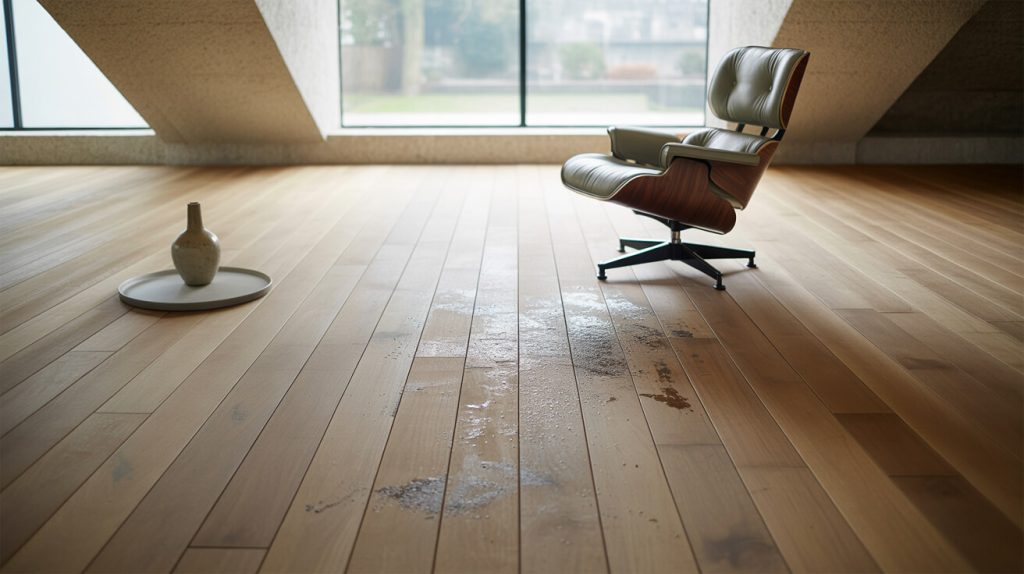
Your floorboards often reveal issues long before they cause visible harm. Spotting fresh bore dust, small exit holes, or a soft patch underfoot are key Woodworm Warning Signs and can mean the difference between preserving your home and facing major structural repairs. Responding early isn’t about overreacting—it’s about securing the value of your property, maintaining a healthy environment for your family or tenants, and ensuring regulatory compliance if you’re a landlord or manager. Delays are costly, both in terms of potential timber replacement and insurance limitations. If you act swiftly and document everything from the outset, you set yourself up for the most cost-effective, least disruptive resolution possible.
What Should You Do the Moment You Suspect Woodworm?
- Isolate affected areas and limit foot traffic (especially children and pets).
- Increase ventilation and lower humidity around the site.
- Remove surface coverings but leave boards undisturbed for inspection.
- Photograph all damage, marking new holes with tape or chalk for tracking.
- Record the date and observations—documenting timelines speeds up insurance and remedial action later.
- Avoid DIY insecticidal sprays, drilling, or patching over exit holes, as these can worsen infestation and mask professional detection.
Why Early Action Is Never Wasted
When you observe possible signs of infestation, waiting for “just a little more evidence” amplifies both repair cost and risk. Accredited specialist intervention—like the response provided by Sussex Damp Experts—achieves faster identification, clearer reporting, and more effective, warranty-backed outcomes. Regulatory bodies and insurers now routinely require professional survey data before supporting claims or permitting property use changes.
A hidden risk doesn’t stay hidden for long—it compounds, then demands your attention with a far greater price.
Engage with a documented, accredited specialist as your first action: it’s your route to peace of mind and proactive stewardship.
Recognising Telltale Signs and Stages of Infestation
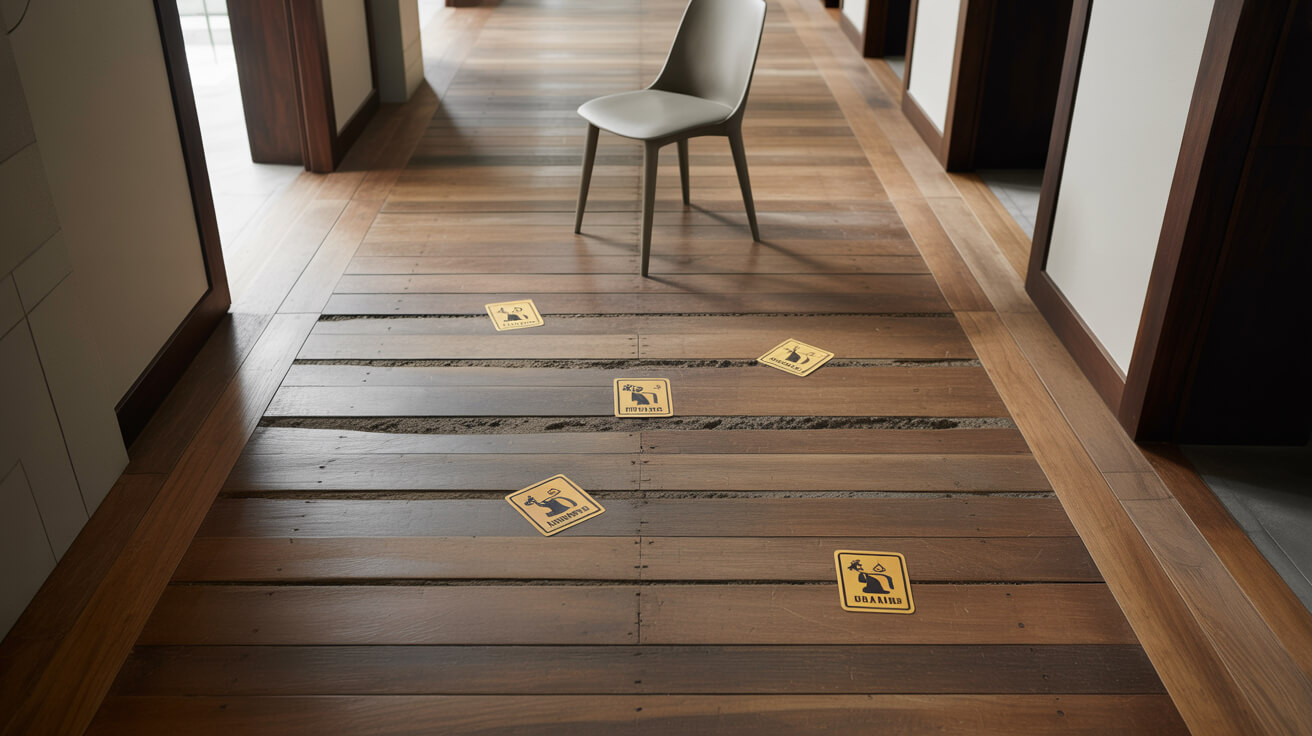
Every infestation has a lifecycle, and the earlier you interrupt it, the less disruption and cost you’re likely to face. Many owners miss active problems because they mistake surface blemishes for old injuries, overlook powder as house dust, or assume squeaks are a sign of age rather than warning.
What Visual and Behavioural Clues Reveal an Active Woodworm Threat?
- Pin-sized, sharply-edged holes with pale wood inside indicate recent beetle emergence.
- Accumulations of frass (pale, gritty bore dust) on or beneath the boards, particularly after vacuuming, suggest unseen larvae at work.
- Soft or buckling planks, especially in high-traffic corridors, hint at deeper structural compromise.
- Hollow sounds or lack of firmness when boards are probed with a screwdriver.
How to Distinguish Live from Old Activity
- Mark suspicious holes and inspect weekly; new, active sites tend to multiply rapidly in spring and summer.
- Frass that reappears after cleaning is a live-activity warning.
- In heritage properties or older homes, faded, smooth-edged holes may be historic—yet even a dormant outbreak can destabilise resale value or tenant confidence.
When Should You Escalate to Expert Assessment?
Any instability, persistent dusting, or recurrence of small holes after cleaning signals the necessity of professional diagnosis. Sussex Damp Experts perform thorough, non-invasive diagnostic checks—moisture readings, borescope inspections—ensuring your next step is informed and evidence-based.
Most infestations are invisible until insurance won’t pay, a tenant complains, or a survey derails your sale.
A robust signs checklist can guide your self-inspection, but don’t mistake it for an expert’s report.
Understanding What Puts Your Floorboards at Risk

Risk isn’t random; it’s constructed through the convergence of material type, environment, age, and oversight. Knowing why your floorboards are vulnerable lets you preempt problems and engineer out the recurring costs that frustrate so many owners and property managers.
Why Are Some Floorboards So Prone to Infestation?
- Unventilated or damp-prone rooms—kitchens, basements, shower rooms—support larvae and speed damage.
- Inadequate repairs or expired surface treatments to heritage boards often expose fresh timber, inviting attack.
- Temperature swings and condensation cycles create microclimates where beetles thrive.
How Building Use and Context Shape Risk
Commercial spaces see more footfall, amplifying minor weaknesses into major compliance failures. Let properties risk infrequent checks and missed leaks. Heritage properties often require complex documentation and risk-permission loops, extending response times.
Compliance and Record Keeping: Your Shield and Sword
For landlords and commercial operators, proactive humidity readings and maintenance logs, aligned with PAS2035 or HHSRS, aren’t box-ticking—they’re essential blocks in insurance defence and value protection.
| Property Type | Main Vulnerability | Mitigation Priority | Compliance Must-Have |
|---|---|---|---|
| Heritage/Listed | Aged timber, ventilation | Breathable finishes, logs | PAS2035, listed consent |
| Rental | Missed leaks/humidity | Timely survey, routine logs | HHSRS, tenancy record |
| Commercial | High-use, slow repairs | Pro schedule, resilient boards | Service log, insurance |
A property health check from Sussex Damp Experts can expose these hidden risks and help you design out future downtime.
How Professional Treatment Eradicates Woodworm—and Why DIY Fails

Many property owners reach for over-the-counter sprays or try patching up affected boards, only to discover months later that the infestation has spread, their warranty rights are lost, or their property value slips at survey.
What Does Professional Remediation Actually Deliver?
Your certified survey incorporates:
- Non-invasive diagnostics (digital moisture mapping, thermography, substrate soundness)
- Infestation mapping with risk scoring
- Water-based, sustainable insecticidal treatment (safe for children/pets)
- Where needed, deep-gel injection or heritage-compliant wood repair
- Inspection log, post-treatment diagnostics, and full compliance documentation
Why DIY Lags Behind and Poses Greater Risk
Retail sprays mask symptoms but rarely reach subfloor larvae. They lack the reporting, guarantees, or compliance assurance now essential for letting, insuring, or selling high-value properties. A certified, eco-safe intervention by Sussex Damp Experts does more than treat the boards—it locks in value, insurability, and marketability.
The Role of Official Warranty and Court-Ready Documentation
Mortgage surveys, council repairs, and tenant/landlord disputes hinge on third-party evidence. Our interventions conclude with the reports you need to close insurance, legal, or compliance loops.
Bitter experience proves: the cheapest fix always takes the longest to forget.
The Real Value of Long-Term Prevention and Proactive Maintenance

Treating an outbreak is just the start; sustainable resilience comes through planned maintenance, ongoing vigilance, and smart environmental control.
What Maintenance Steps Keep Your Floor Secure for Years?
- Regular humidity and moisture monitoring, with intervention if readings spike
- Quarterly visual checks for dust, holes, or board movement
- Professional re-survey yearly, especially in shared, let, or heritage spaces
- Immediate response to leaks or new water ingress
- Checklist-completed logs for compliance and property records
How Does Ongoing Vigilance Save You Stress, Cost, and Value?
With most insurers unwilling to cover preventable infestations, ongoing logs and inspections not only protect the asset but support rental, resale, and audit obligations.
| Prevention Step | Frequency | Compliance Benefit |
|---|---|---|
| Humidity Monitoring | Continuous / Quarterly | Warranty, insurance scoring |
| Visual Inspection | Quarterly | Tenancy, audit readiness |
| Pro Survey | Annually | Value retention, legal shield |
Our aftercare programmes with Sussex Damp Experts can transform maintenance from a reactive cost into proactive value-building.
Heritage and Listed Buildings: Navigating Regulation with Precision

Owners of listed or heritage-protected properties face a double challenge—preserving original material while controlling pest damage within complex legal parameters.
What Must You Consider Before Acting on Heritage or Listed Floors?
- Check for all necessary consents—a single unauthorised intervention can incur fines or devalue your property.
- Only use treatments compatible with historic timber and breathable construction (avoid bitumen and high-VOC chemicals).
- Maintain logs for all interventions—a must for future audits or sales.
- Partner with accredited specialists who can balance preservation with effective intervention.
How Sussex Damp Experts Ensures Compliance and Conservation
Our heritage consultants possess specific training aligned to PAS2035 and work directly with local authorities to pre-clear proposed actions, select products that respect original timber’s breathability, and document everything for legal review or future projects.
Every unauthorised shortcut risks erasing history as surely as the beetles do.
Insurance, Legal, and Management Requirements: Future-Proof Your Asset

Regulators and insurers are no longer content with hearsay or minimal repairs—your documentation not only proves compliance, it speeds property sales, lets, and resolves disputes before they escalate.
When Do You Need Certified Intervention, and What Are the Process Steps?
- Letting, sale, or grant of new mortgage triggers formal survey and certified reporting.
- Failed insurance claim or compliance audit can be traced to lack of prior documentation.
- Landlords and agents should maintain intervention and log packs as part of their compliance handbook.
How to Avoid Roadblocks in Claims, Sales, or Audits
Our reports provide a dispute-proof trail—accepted by both regulators and all major insurers. If you’re facing a portfolio audit, tenancy changeover, or sale, your pack from Sussex Damp Experts gives both buyer and regulator rapid confidence.
| Event | Required Document | Authority Acceptance |
|---|---|---|
| Let / Tenancy | Survey, warranty, action plan | HHSRS, local council |
| Insurance claim | Survey, proof of work | Major UK insurers |
| Listed property action | Conservation logs, work logs | National heritage bodies |
Take Control—Secure Your Floor, Asset, and Confidence
Whether your role is owner, manager, landlord, or steward, prevention, fast identification, compliance, and futureproof care start with a single decision. Sussex Damp Experts provides not only the right diagnosis and solution, but traceable assurance, transferable warranty, and strategic aftercare to keep your asset—and your identity as a diligent steward—beyond reproach.
Schedule your no-obligation consultation today and take command of your asset’s legacy and resilience.
Frequently Asked Questions
What immediate steps protect your property when you suspect woodworm in your floorboards?
The moment you notice small holes, powdery frass, or soft planks beneath your feet, you are discovering a vulnerability that can quietly undermine your floor’s integrity and your asset’s value. Wood-boring beetles are opportunists—their larvae excavate hidden cavities, weakening boards from within, just as the surface appears unchanged. If delay is your default, you accept escalating repair, lost insurance leverage, and the potential for regulatory snags if you rent, let, or list your property.
Practical, high-impact steps:
- Isolate the area and limit traffic across suspect timbers
- Remove coverings (rugs, mats) but leave boards intact for inspection
- Open windows for airflow and lower ambient humidity
- Document with timestamped photos, noting exact locations and dates
- Never spray or patch holes—this can mask live activity and void insurance protection
- Avoid disturbance that could scatter beetle eggs to other rooms
Hidden infestations often reveal themselves only when timber fails under load, a tenant files a complaint, or a survey sabotages a property sale. Regulatory bodies and buyers increasingly require proof of professional assessment, not just “DIY diligence.” Every action you log, every photo you store, and every swift call to a certified team sharpens your defence if future disputes, insurance claims, or council visits arise.
Resilience in property care is less about what you fix—more about how you prove readiness at every stage.
Behind every effective response to woodworm lies traceable assurance. Sussex Damp Experts provide not just a survey, but a roadmap and evidentiary posture that safeguards your floor, reputation, and long-term value.
Which warning signs confirm active woodworm—and how can you distinguish new from historic infestation?
Not all holes, dust streaks, or squeaks are threats, but any sign ignored at this stage is a bet against your property’s structural future. True detection means separating active damage (which spreads) from benign blemishes (which don’t). A persistent owner or manager always chases the most subtle changes—not just obvious failure.
Authoritative markers of live woodworm:
- Clean-edged, small exit holes (often lighter inside than surrounding wood)
- Accumulated bore dust (“frass”) regathers soon after cleaning
- Boards that flex or yield when pressure is applied in high-traffic areas
- Musty odours localised to timber sections
- Fresh tunnels visible in removed skirting or along tongue-and-groove joints
Historic (inactive) signs:
- Dull, darkened holes lacking frass or live larvae
- Hard, brittle boards exhibiting no new softness over time
- Smooth, filled holes with no change after several seasons
Prove activity by marking holes with chalk or tape. Inspect a week later—new emergence signals a live outbreak and demands specialist intervention.
Escalation triggers:
- Recurring activity after attempted surface treatment
- Creaking boards in increasingly larger areas
- Frequent, unexplained dust patches
Proof demands discipline—tenant or surveyor photos, humidity logs, and professional notes matter more than instinct. Today’s insurance, letting, and sale environments require more than anecdotal comfort; they require documentation.
Unless your risk tolerance is ironclad, pass your log and evidence to Sussex Damp Experts for calibrated, substrate-level diagnosis—engineering confidence before the timber collapses.
What conditions allow woodworm to thrive beneath your floor, and how do you cut their lifecycle short?
Beetle larvae are not casual tenants; they colonise only where conditions favour incubation and migration. Their natural enemies are vigilance, dryness, and the absence of undetected ingress.
Environmental triggers for infestation:
- Persistent dampness, leaks from plumbing or appliances
- Basement or ground-level boards prone to rising moisture
- Newly disturbed or restored timber (exposed via renovation or forced ventilation)
- Unsealed junctions, giving entry routes from older adjacent boards
Heritage or listed buildings add complexity: lime mortars, unvented voids, and irregular maintenance cycles all boost risk, yet most conservation rules outright ban aggressive chemical treatments or major timber swaps. Here, pre-emptive substrate profiling and tailored ventilation strategies—planned and signed off by credentialed specialists—are not luxury, but legal necessity.
Operational impact of undetected woodworm:
- Stealth spread across shared flooring in flats or semi-communal spaces
- In commercial portfolios, downtime and litigation risk if failings breach compliance
- In rental, HHSRS enforcement and insurance exclusions become very real
| Risk Vector | Underlying Cause | Prevention or Mitigation |
|---|---|---|
| Ground moisture | Faulty DPC, rising damp | Borescope, moisture survey, remedial DPC |
| Airborne humidity | Blocked or absent venting | Retrofit passive and active vents |
| Heritage restrictions | Conservation rules | Minimal-impact, eco-safe treatments |
Dry timber, robust logs, and periodic humidity audit protect more than your boards—they secure your record as a responsible custodian. Sussex Damp Experts marry building science to risk management, installing what rivals overlook: containment by design, not apology after collapse.
How do professional methods guarantee eradication—where DIY cannot—and how do you validate the outcome?
The marketing on a hardware store insecticide can is comforting. The reality: that solution rarely penetrates deep enough to extinguish larvae, nor does it come with the evidence required when questions arise from insurers, lenders, or a next owner.
What professional eradication unlocks:
- Non-destructive diagnostics: thermal imaging, moisture grads, advanced probe logs
- Water-based, low-VOC treatments with deep penetration—approved for both new and period timber
- Protocols aligned with BS6576 and PAS2035 for guaranteed regulatory acceptance
- Issued warranties and certification for property compliance logs
DIY offers false comfort:
- Partial kill—external beetles, not hidden larvae
- No paper trail for insurance/resale
- No compliance with modern legal or building standards
Commercial, rental, or heritage compliance is now built on a narrative: discovery, evidence, treatment, and guarantee. A professional intervention not only removes risk; it enhances documentable value—whether facing a surveyor’s scrutiny or a regulatory audit.
Every success leaves behind proof: signed logs, process photos, and a warranty that will echo as long as your floors do.
A do-it-yourself patch may feel like control—until the next audit or resell wipes it away.
Precision work is rarely seen; its value is always felt. Trust Sussex Damp Experts to inscribe confidence in both wood and words.
How do you ensure woodworm will not return—turning routine care into assurance, not anxiety?
After every fix, the future is up for grabs. Control is not a mindset—it’s a schedule, a checklist, and a partnership with both technology and people who care about results as much as you do.
The cycle that secures floors for years:
- *Annual board and moisture log with digital/hard copy backup*
- *Integrated humidity monitoring and vent scheduling (smart sensors or manual)*
- *Every maintenance action recorded—ready for claims or audits at any time*
- *Re-inspection by certified professionals every 12-36 months or at tenancy change*
Effective prevention aligns human commitment to physical infrastructure—when downtime means lost value, and silence (in a portfolio audit) is strength.
Scheduled aftercare with Sussex Damp Experts is not a contract; it is an identity: the landlord, owner, or manager who never faces a second emergency. If each problem solved is a one-way ticket to future anxiety, then proactive prevention flips that equation into effortless resilience.
When do legal, insurance, and compliance obligations demand certified intervention—and what does that process require?
Most real losses are not monetary; they are losses of trust—by buyers, tenants, regulators, or even your team. For floorboard woodworm, process beats improvisation every time.
Triggers for formal remediation:
- Housing health outcome failures (tenant or EHO report)
- Sale or remortgage triggers (lender/surveyor check)
- Insurance claim for collapse or gradual decay
- Audit query from freeholder, estate manager, or council
What defines a compliant intervention:
- Pre-action photographic and humidity log
- Non-invasive survey with evidence chain
- Formal certification and warranty of treatment process
- Registration with approved regulatory/insurer databases
| Process Stage | Required Evidence | Stakeholder Impact |
|---|---|---|
| Discovery | Photos/time-stamps/logs | Buyer, tenant, lender |
| Survey | Digital + physical logs | Landlord, insurance |
| Remediation | Certified contractor docs | Insurer, council, audit |
| Aftercare | Warranty, recurring checks | All future stakeholders |
Shortcutting these steps is a fast-track to loss—of value, defence, and reputation. Sussex Damp Experts streamlines this journey with a compliance-first approach, designed for seamless documentation, stress-free transactions, and audit-proof aftermath.
A well-documented repair is not just a fix—it’s a passport through every future challenge.

