
 By
By  March 8, 2025

How to Dry Out Damp Walls: Your Step-by-Step, Compliance-Ready Guide
Managing damp in walls isn’t about masking stains—it’s about conservation, risk reduction, and permanent restoration. Understanding damp or condensation the costly difference hiding in your walls matters because unresolved moisture devalues property, heightens health and legal exposure, and disrupts operational confidence whether you own a single terraced home or a nationwide portfolio. Each step within this guide—anchored in UK compliance and proven technical reasoning—empowers you, your property, and your organisation to move decisively from detection to documented resolution.
What Makes Early Damp Treatment a Proven Investment?
Damp Treatment Cost Calculator
- 1 Property
- 2 Damp Type
- 3 Details
- 4 Estimate
Estimated Total Cost
£2,400 – £3,800
Based on 2 rooms with moderate rising damp in a semi-detached property
| Item | Estimate |
|---|
How This Compares
This is a guide estimate based on typical Sussex projects.
Get an accurate, no-obligation quote from our surveyors.
You don’t need to see run-off or mould to be exposed—a faint stripe of damp is often the first indicator of deeper risk. Early interventions not only cut escalating repair costs but safeguard occupant health and meet modern legal standards.
Immediate Gains When You Act Before Damp Escalates
Acting swiftly protects what matters most:
- Building integrity: Prevents core timber, plaster, and substrate damage before remediation costs balloon.
- Legal compliance: Avoids Section 21 disputes, HHSRS enforcement, or tenant action against landlords and agents.
- Operational certainty: Removes tenant and owner anxiety around devaluation or forced rehousing.
- Survey and sales confidence: Properties with recent, resolved surveys close faster, avoiding late-stage price haggling or pulled offers.
Damp is silent at first, relentless as it waits—the repair is always easier than the avoidance.
The Pitfalls of Delay: Where Price Meets Risk
Deferred action nearly always results in:
- Higher project costs (access, materials, refinishing).
- Loss of warranty or insurance claim eligibility.
- Amplified health risk for sensitive occupants.
- Quicker value erosion for ageing or heritage assets.
Turn your first sign of damp into a pathway for preservation—our assessment pinpoints moisture issues before you face them in a tribunal, insurance desk, or buyer walkaway.
Which Type of Damp Is Threatening Your Walls (and What’s the Real Cause)?
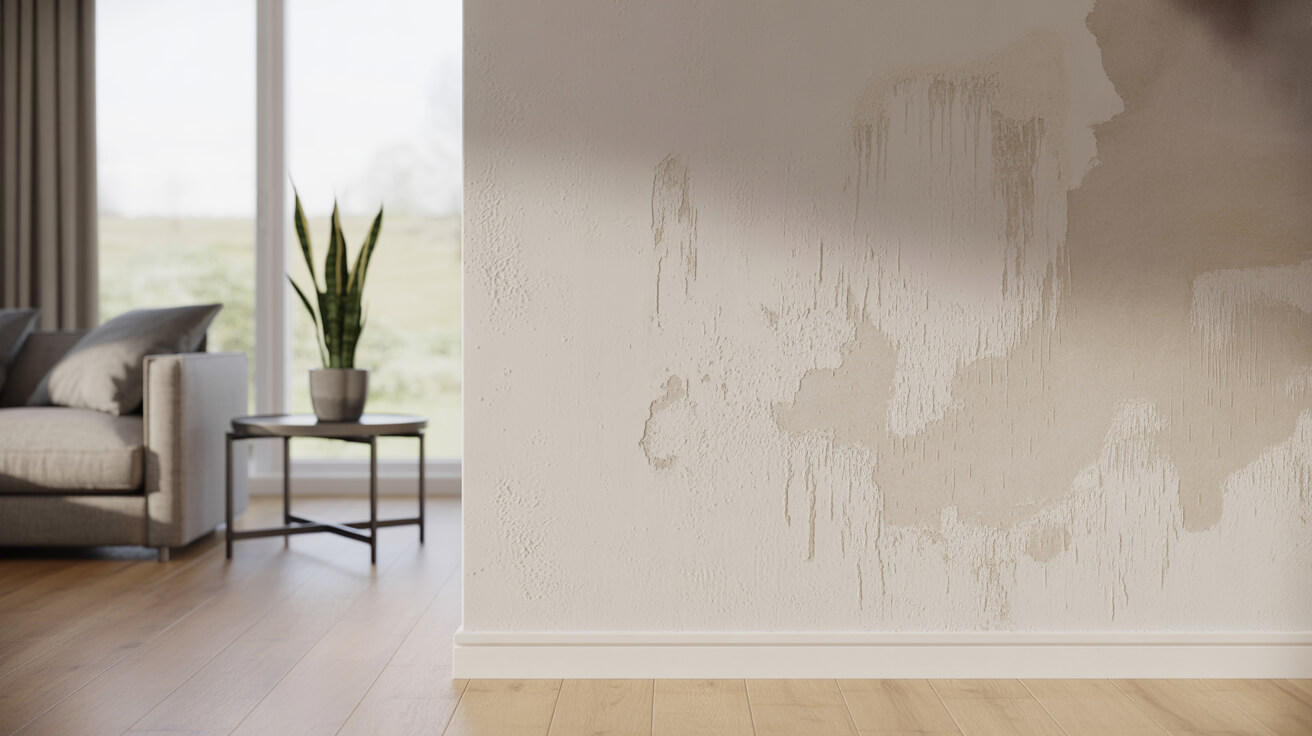
Every damp patch tells a story—a ground-up migration, penetrating leak, air-borne condensation cycle, or historic fabric conflict. Correct diagnosis is the difference between a one-off fix and a legacy of repeat mistakes.
Recognisable Types of Damp in UK Buildings
| Damp Type | Key Symptom | Typical Location | Primary Cause |
|---|---|---|---|
| Rising damp | Tide marks, salt blooms | Lower wall segments | Capillary action from ground |
| Penetrating damp | Localised patches | Near windows/roof/joins | Water ingress from failed weathering |
| Condensation | Mould & cold surface beads | External corners, kitchens | Poor ventilation, thermal bridge |
| Leak/plumbing | Wet, rapidly worsening | Below pipe runs/ceilings | Failed internal supply/waste |
| Hygroscopic damp | Salty stains, reappearing | Chimney breasts, historic areas | Salt-rich old bricks/plasters |
Precision Tools: Beyond Guesswork
- Moisture metres: , for data-backed surface readings.
- Thermal imaging: to identify unseen cold/wet spots.
- Salt analysis: to differentiate remediation approach.
- Borescopes: for inside-wall visual confirmation.
The best result? Use diagnostic evidence as your roadmap; every Sussex Damp Experts survey fuses real-time data with compliance-ready documentation for audit, insurance, and heritage needs.
How Does Inaction Against Damp Become Your Biggest Liability?
Ignoring a minor patch can catalyse a string of failures: failed surveys, rejected claims, council notices, or health issues that force you to relocate tenants. The longer excess moisture remains, the sharper the cost gradient becomes.
Health, Legal, and Value Scenarios
- Family impact: Persistent mould impairs respiratory health, especially for children and vulnerable adults.
- Compliance cascade: Letting agents or managers miss one HHSRS trigger, and tens of units risk council enforcement.
- Market value impact: Buyers discount or withdraw when surveyors flag “history of damp—unresolved.”
- Warranty and insurance forfeiture: Claimable failures require documented, qualified remediation. Serial DIY or incomplete work voids most policies.
Compliance documents are only as strong as the action they record; without intervention, every legal protection is temporary.
Why Acting Before Damage Escalates Is a Strategic Move
- Primed repairs are lower risk and more affordable.
- Tenant retention and positive reviews improve.
- Portfolio value stabilises during compliance audit.
- Your leadership as a landlord, owner, or project steward is reinforced.
Where Should You Check for Concealed Damp—And What Gets Missed?

The visible wall is never the whole story; damp finds the least expected route. Rigorous inspection—organised, repeatable, and evidence-based—eliminates missed zones that come back as insurance exceptions or asset write-downs.
Hotspots and Missed Zones: The Real Checklist
- Floor/wall intersection (skirtings, behind built-ins).
- Loft/ceiling junctions and parapet ends.
- Cellars and underfloor crawl spaces.
- Party and external walls (near junctions and compromise points).
- Historic or listed features: lime render, chimney breasts, wattle and daub.
Inspection Protocol
- Conduct room-by-room assessment with moisture sensor.
- Log readings and visual state for portfolio audit or surveyor handoff.
- Photodocument accessible and hidden findings.
- Flag any area (even small) with odour, flaking, or bristle-texture as needing correlation with technical diagnosis.
| Inspection Area | Warning Sign | Diagnostic Action |
|---|---|---|
| Skirting boards | Peeling, soft ‘give’ | Probe, log reading |
| Basements/cellars | Odour, white staining | Salt test, mapping |
| External corners | Cold, persistent patch | Thermal image |
| Chimney/heritage | Salty/gritty residue | Plaster salt test |
Our services provide a full inspection protocol that not only logs present risk but arms you for any lender, council, or compliance event.
Which Approach Fits Your Diagnosis—DIY or Professional Damp Survey?

Not all damp demands intervention by a certified specialist, but most recurring or high-stakes risks do. Knowing when to escalate is the cost-saving move that preserves your assets, time, and ownership peace of mind.
When DIY Diagnosis May Suffice
If you recognise a recent, localised water event (e.g., after small leak), your symptoms are isolated, and the first round of drying resolves within two weeks, then documenting your process might be adequate.
When Professional Assessment Is Non-Negotiable
- Repeat appearance after surface drying.
- Any pre-sale, pre-purchase, or rented tenure where compliance documents are scrutinised.
- Heritage, listed, or multi-unit asset where non-compliance increases liability.
- Untraceable or multiple symptom zones (including odour, salt deposit, multiple wall involvement).
Professional diagnosis includes:
- Detailed visual and data-logged inspection.
- Root-cause isolation informed by UK/BS standards.
- Actionable remediation plan, costed for decision.
- Documented report that withstands legal, insurance, and lender review.
It’s the diagnosis that brokers trust, the action that owners value, and the documentation that tenants recognise.
Anchor your next move with confidence—use our downloadable DIY guide or book a compliance-grade inspection.
What Steps Work for DIY Damp Wall Drying (and When Should You Escalate)?

If you choose the DIY path, follow a proven protocol—safety and certainty override speed. Effective drying is staged, methodical, and carefully logged.
Stepwise Protocol for Safe, Reliable Dry-Out
- Remove all finish materials—wallpaper, trim, dado, to expose the moisture zone.
- Cross-ventilate: Create movement—not just open windows, but use fans if needed.
- Apply gentle heat; avoid space heaters or rapid temperature changes that risk structural cracking.
- Monitor moisture with accurate metres every 48–72 hours.
- Log results: If moisture plateaus or never fully declines, escalate to a professional.
When to Transition Out of DIY
- Two weeks of drying, but new patches or odours emerge elsewhere.
- Material remains spongy, colour changes persist, or new surface salt appears.
- Heritage finishes or listed assets reach risk—the wrong approach can cause irreversible damage.
| DIY Limit | Result | Escalation Cue |
|---|---|---|
| Drying plateaus | Persistent high readings | Call a pro for survey |
| Mould returns | After cleaning/drying | Book specialist visit |
| Complex walls | Conflicting readings | Order technical mapping |
If you aren’t certain, or your damp history keeps repeating, your next action determines the safety and compliance of your asset. Sussex Damp Experts’ proven escalation workflow is tailored to carry your responsibility forward.
A facility manager once documented two weeks of stagnant readings. One hidden pipe joint and six months later, insurance denied the claim.
What Defines an Industry-Standard Damp Drying Protocol?
Only recognised, audit-ready procedures secure survey, warranty, and compliance signoff now. Your approach must integrate root-cause diagnosis, planned intervention, and systematic aftercare.
The Drying & Aftercare Sequence Used by Leading Experts
- Survey and diagnosis: Multi-layer mapping, salt and humidity analysis, and full-room assessment.
- Tailored remediation: From DPC injection to tanking, all work fitted to building type, regulation, and asset value.
- Surface and hidden monitoring: Scheduled instrumented checks, with all readings logged for regulators or warranty validation.
- Aftercare roadmap: Routine inspection cadence, annual survey reminders, resident/tenant education.
- Documentation: All work, logs, and compliance checks stored and handed off with asset.
Warranty is not a marketing point—it’s a timeline of attestation.
Table: The Professional Protocol Advantage
| Step | DIY | Professional (Sussex Damp Experts) |
|---|---|---|
| Surface Drying | Manual/fans | Data-driven, targeted airflow |
| Moisture Tracking | Infrequent, guess | Systematic, calibrated, data-logged |
| Compliance | None | Full UK, PAS, HHSRS audit traceability |
| Aftercare | Ad hoc | Scheduled, documented, portfolio-ready |
Secure the long-term asset health and warranty you expect. Our documentation stands up to scrutiny—ours is the process that lenders, surveyors, and tenants cite.
Why Booking With Sussex Damp Experts Changes Outcomes
You expect more than patches. You want enduring value, legal and survey-ready confidence, and the assurance your repairs won’t need a repeat visit. We deliver audit-ready inspection, targeted diagnosis, and certified repairs for residential homes, managed properties, and listed buildings.
Strong building stewardship is your hallmark. Secure your asset, safety, and compliance—book your assessment today and set a lasting example as a leader in property care.
Frequently Asked Questions
What Unusual Signs Reveal You’re Facing More Than Simple Wall Damp?
That persistent smell after rain or the cold zone on a living room wall can hint at persistent moisture intrusion, not just ordinary indoor stuffiness. Damp isn’t always loud—its subtlest warnings are usually easy to ignore until structural integrity or occupant health is at stake.
Hidden Red Flags That Predict Escalating Repair Costs
- Stains appearing in consistent patterns: —horizontal tidemarks, irregular shapes, or discolouring below windows signal rising or lateral damp, not a one-off spill.
- Wallpaper lifting in corners: or behind radiators betrays humidity’s grip long before visible water breaches the surface.
- Plaster crumbling with little provocation: often means moisture migration beneath paint is now overwhelming the wall fabric.
- Black spots on exterior walls’ interior face: suggest cold bridging and condensation cycles—especially on north-facing or poorly ventilated rooms.
- That faint earthy or mushroom smell: lingers even after cleaning, hinting at fungal growth (dry rot risk) within the unseen void.
Delaying action while monitoring these small symptoms gives time for decay to spread—sometimes unnoticed for months until timber, plaster, or even embedded wiring becomes compromised.
Building health only defers to those who act before their eyes demand proof.
As a prudent homeowner or property manager, see these signals as an advanced notice. Trusted damp proofing transforms your response from a reactive repair to active asset protection.
Why Does Damp Keep Coming Back, No Matter How Many Times You Fix or Paint Over It?
Damp that returns after every DIY touch-up is your building’s way of insisting “the cause is not fixed.” Solutions that target only what’s visible—fresh paint, a fan in the window, or surface chemical blockers—inevitably fail where moisture keeps returning by another path.
Rebound Damp: What Typical Repairs Miss (and How to Break the Cycle)
Most recurring damp falls into three traps:
1. Underlying source left untouched—such as a breached DPC, leaking gutter, or bridging plasterwork.
2. Surface sealants creating vapour traps—especially problematic on heritage walls or where modern, “waterproof” paints block breathability.
3. Structural humidity imbalance—condensation cycling under carpets, behind wardrobes, or in naturally cool rooms.
The real solution always follows root-cause evidence:
- Map moisture gradients with calibrated metres, not guesswork or anecdote.
- Trace origin points (external, rising, internal plumbing) before authorising any treatment.
- For listed or period properties, refuse any “quick-fix” that covers over historic fabric or unique construction features.
A specialist damp survey builds certainty into your repair—closing the loop between diagnosis, documentation, and targeted treatment. The reward isn’t just dry walls; it’s freedom from maintenance recursion and confidence as a proactive steward of your property’s legacy.
When Can You Dry Out Damp Walls on Your Own—And When Is Professional Help Critical?
DIY can work if you’re dealing with minor, recent damp episodes—think a specific plumbing mishap, a window left open during heavy rain, or a clear single-source event. Anything outside this scope—recurrence, pattern growth, or simultaneous health complaints—demands an expert’s perspective.
Safe Steps for Self-Directed Wall Drying
- Remove any non-essential wall coverings: —wallpaper, artwork, shelving.
- Ventilate thoroughly: cross-draught windows, deploy fans to move air steadily.
- Apply moderate, steady heat: —avoid quick temperature swings that fracture finishes.
- Use a digital moisture metre: (not just touch) to track actual drying progress day-by-day.
- Inspect adjacent floors, skirtings, and ceilings: —hidden moisture spreads in all directions.
Escalate to a specialist when you observe:
- No improvement after 10–14 days
- Mould or odour returns after attempted remediation
- Any element of the wall/substrate, especially in older buildings, feels soft or shows salt blooming
- Multiple rooms or levels signal parallel damp intrusion
A good rule: Confidence in DIY fades as uncertainty rises. If your property’s health or asset value holds material weight, invite a damp expert to offer compliance-aligned testing and remediation.
How Dangerous Is It to Ignore ‘Cosmetic’ Damp Wall Problems?
What appears minor today—a hairline crack, a small stain, or a slightly musty smell—often marks the start of a chain reaction that can undermine both value and wellness in a matter of months.
Escalation Pathways and Hidden Perils
- Internal timber rot: Even low-level, unchecked damp accelerates decay in hidden joists—a common source of insurance refusals and major re-plaster costs.
- Conductive electrical hazards: Moisture wicks along embedded wires, heightening fire risk or causing fixture failures.
- Tenant and health risk: Mould released by persistent damp triggers Health & Safety, Housing Health and Safety Rating System offences for landlords or letting agents; unresolved cases draw council action or tenant claims.
- Heritage features lost: A single untreated spot on a lime or lath wall in a listed property can erase centuries of detail through gradual but relentless mineral migration and spalling.
| Escalation Stage | Homeowner Impact | Landlord/Facility Risk |
|---|---|---|
| Initial damp sign | Surface repair bill | Maintenance call, minor disruption |
| 6–12 months | Redecoration, flooring | Tenant complaint, housing inspection |
| 12–24 months | Timber/structural rot | Major works, dispute, insurance excess raised |
| >24 months | Loss in market value | Legal action, portfolio compliance breach |
If you believe “a touch of paint will hold off disaster,” the real threat is not visible. Diligent inspection and specialist intervention or documentation prevent this timeline from ever being your reality.
What Factors Determine the Real Cost and Dry Time for Permanent Damp Wall Repair?
No two damp repair scenarios deliver the same invoice or timeline unless you’re willing to cut corners—which means paying twice. Permanent rectification integrates diagnosis, structural science, and regulatory compliance with transparent material proof and aftercare.
Core Factors Shaping Outcomes
- Source and severity: A localised condensation patch and a failed DPC drainage system offer starkly different challenges.
- Property type: Heritage or multi-unit properties demand techniques (breathable render, internal tanking) and timeframes bespoke to age and structure.
- Method compliance: True value hides in whether work meets BS6576, PAS2035, or insurance-mandated criteria.
- Moisture evacuation: High-impact cases require phased drying—sometimes monitored for weeks to prevent cosmetic masking of deep-seated migration.
Table: Cost & Duration Guidelines
| Scenario | Estimate (£) | Typical Duration |
|---|---|---|
| DIY minor spot | 100–250 | 1–2 weeks |
| Basic pro intervention | 300–900 | 2–4 weeks |
| Full remediation | 900–2,500+ | 4–12 weeks |
| Heritage property set | 2,000–10,000+ | 8–20 weeks (phased) |
Strategic stewardship means investing in a warranty-backed, surveyor-approved fix rather than losing both value and time to mismanagement or hidden defects. Choose precision—your future self (and every future resident or buyer) will thank you.
How Do Sussex Damp Experts Guarantee Long-Term Wall Health and Legal Protection?
Securing your wall’s future requires more than industry jargon. Sussex Damp Experts root every inspection and treatment in forensic investigation, ethical guidance, and transparent reporting, moving from problem to prevention with every touchpoint.
Our Guarantee Loop: Asset Value, Documentation, and Confidence
- Every inspection executed by PCA, TrustMark, and BS 6576/PAS 2035 accredited specialists:
- Full-site reporting: —moisture maps, substrate analysis, legal compliance annotated for mortgage, insurer, or regulatory use
- Flexible solutions: for every context—whether you manage heritage apartments or contemporary builds, you get breathable, DPC, or tanking options adapted for asset and compliance context
- Aftercare with teeth: scheduled moisture checks, warranties, and handover documentation so that one successful job future-proofs against silent recurrence
Every solution moves with your intent—whether that’s hassle-free letting, safeguarding residents, or preserving architectural heritage. Your decision to bring in true experts becomes the leadership move your stakeholders recall.
The only mistake is to hope old methods will solve tomorrow’s threats. Real stewardship demands seeing damage before it multiplies, acting before failure.

