
 By
By  February 23, 2025


Should Wood Borers Always Be Treated?
Wood borer infestation is never just a cosmetic matter. For property owners, every new symptom—small exit holes, fine dust, brittle timber—signals a decision point that will impact the stability, compliance, and value of your asset for years. Yet, the urgency to act is shaped by several factors: the type of timber, the presence of active insects, property history, legal status, and future plans for sale or let.
Who Needs to Act Immediately?
When live larvae, fresh frass, softening beams, or visible beetles are detected, your property is under active threat. Untreated, these pests weaken structural timbers, expose you to legal risk, and undermine your warranty or insurance coverage. This is especially acute for landlords, commercial facilities, and anyone with plans to remortgage or sell.
Key treatment drivers:
- Lender or insurance documentation requires professional survey
- Health and Safety or dweller comfort at risk
- Evidence of active infestation in supporting structural timbers
- Regulatory obligations for landlords, heritage, or communal asset owners
| When Action is Mandatory | When You Can Pause (with Evidence) |
|---|---|
| New fresh frass (powder dust) | Old, unchanged exit holes |
| Structural weakening | No fresh frass, solid beams |
| Sale or remortgage hurdles | Isolated, stable surface marks |
| Tenant/HHSRS complaints | Confirmed, documented inactive history |
Unchecked timber pests silently compromise strength—until the only option left is total replacement.
Why Blanket Treatment is Not Always Warranted
Routine, ‘spray and hope’ approaches fail both for compliance and for your wallet. A PCA-accredited inspection, like those provided by Sussex Damp Experts, offers clarity: when targeted action is truly required, and when monitoring plus environmental adjustment suffice. Avoiding unnecessary work preserves both original timber and budget.
Acting with evidence protects your position—financially, legally, and structurally. The fastest path to certainty is a survey grounded in current risk, not legacy assumptions.
Which Wood Borer Species Cause Serious Structural Damage?
Woodworm Treatment Cost Calculator
Estimated Total Cost
£700 – £1,000
Common woodworm treatment for 15 m² of softwood
| Item | Estimate |
|---|
About This Treatment
How This Compares
Get an accurate quote with a professional timber survey. We’ll identify the pest, assess the damage, and provide a fixed-price treatment plan.
Book a Timber Survey →Not all wood borers present equal risk, and treating the wrong problem is as costly as doing nothing at all. Effective response depends on understanding which species actually undermine your property’s core.
Main Threats: The Four Primary Species
1. Common Furniture Beetle (Anobium punctatum)
The frequent culprit in UK homes, attacking softwoods in floors and joists, signalling risk when found in large numbers or with live frass present.
2. Death Watch Beetle (Xestobium rufovillosum)
Hidden inside hardwood beams, this beetle often escapes detection in listed or historic properties until serious harm is done.
3. House Longhorn Beetle (Hylotrupes bajulus)
Concentrated in South-East England, it causes rapid, devastating loss mainly in modern softwoods (pine, fir), especially in roofs.
4. Powderpost Beetle (Lyctus brunneus)
Targets the sapwood of hardwoods, more a cosmetic than structural threat but can signal poor timber sourcing.
The Cost of Misidentification
Surface similarities mask real risk. The wrong treatment wastes money and can invalidate insurance or heritage status. Sussex Damp Experts provide a species-accurate diagnosis, with reporting designed to stand up in compliance checks or property transactions.
| Species | Typical Damage | When Treatment is Needed |
|---|---|---|
| Furniture Beetle | Moderate–High | If active, frass present, or structural |
| Death Watch | Severe | Any sign in main beams, listed properties |
| House Longhorn | Catastrophic | Any detection, especially in roofs |
| Powderpost | Cosmetic | Only if visually or functionally intrusive |
You should not rely on guesswork or “one size fits all” recommendations. Your assessment must start with specialist identification before a single intervention is planned.
How to Identify the Signs of an Active Timber Infestation
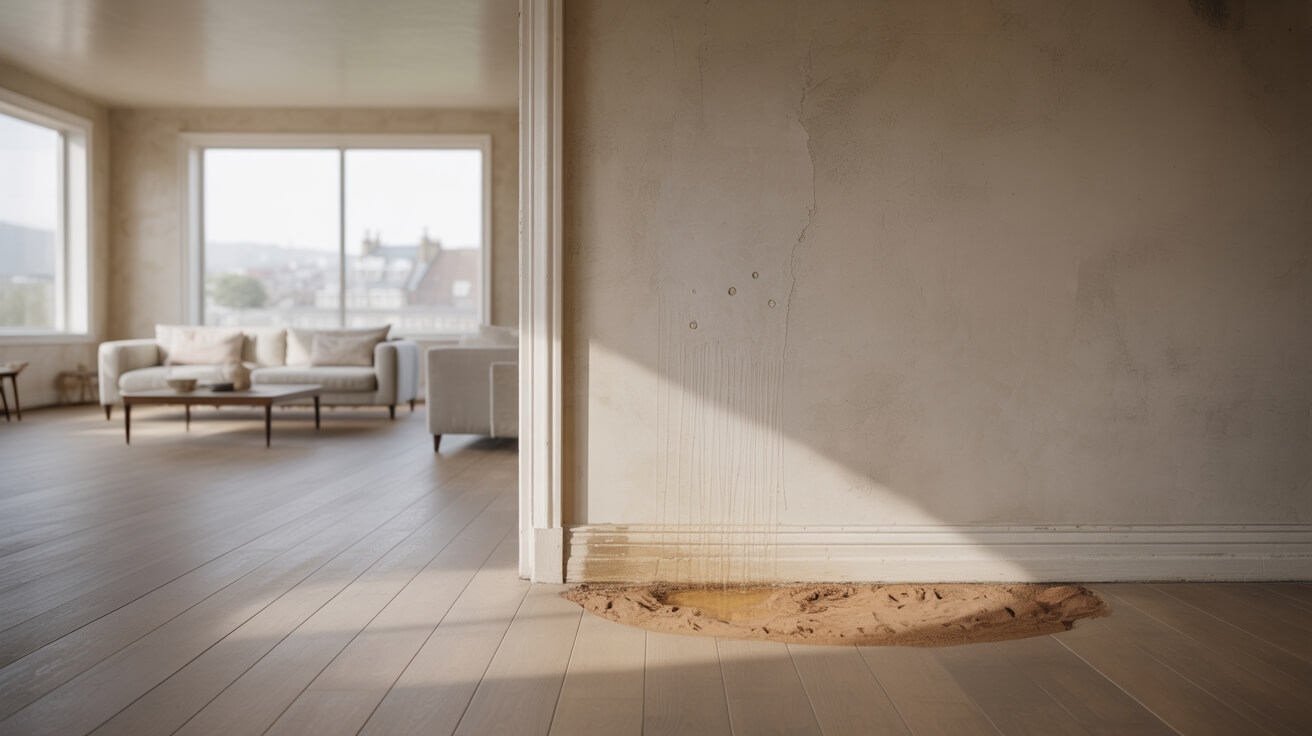
Detecting whether your wood borer problem is current, dormant, or historic saves both money and unnecessary disruption. The difference is more subtle than many property owners realise.
Core Symptoms of Active Infestation
- Fresh, powdery frass (typically during spring or summer)
- New exit holes, often clustered or spreading
- Soft or hollow-sounding timber on probe or percussion
- Sightings of live beetles, especially near windows or light sources
Inactive or Historic Infestation Indicators
- Exit holes unchanged in number or appearance over time
- Hard, dry beams that withstand probe testing
- No fresh frass during active beetle months
- Previous documented, warrantied professional treatment
Why Surface Checks Are Not Enough
Small holes can linger for decades; only a professional woodworm survey using moisture metres, borescopes, and substrate analysis can confirm the true status. DIY misses put you at risk of missing deep infestations or misclassifying harmless cosmetic marks as requiring action.
Every missed larvae today becomes tomorrow’s urgent cost—and regret.
When in doubt, request a Sussex Damp Experts assessment to receive an evidence-backed, insurance-ready diagnosis and plan.
Why Immediate Action Prevents Escalating Damage and Financial Loss

Wood borer infestations are progressive, not static. Delaying remediation multiplies repair and regulatory costs, often silently until a critical threshold is passed—when beams bend, floors dip, or a sale or audit fails.
Escalation Triggers
- Ongoing, untreated activity converts minor damage to critical failures quickly, especially in damp, poorly vented areas.
- In rental or heritage properties, legal responsibility can land regardless of the scale of initial symptoms.
- Loss in resale value is immediate if an open infestation appears on survey, even if later treated.
| Delay vs. Decisive Action | Average Consequence |
|---|---|
| Wait and watch | Hidden hollowing, structural integrity loss |
| Take targeted action promptly | Preserved asset value and compliance, lower cost |
| DIY or unaccredited treatment | Voided insurance, repeat outbreaks, greater risk |
Financial and Compliance Fallout
Claims on insurance are often denied if woodworm issues are designated as “existing and untreated.” Landlords or commercial managers face HHSRS penalties or occupation bans for non-action. The up-front price of a PCA-accredited surveyor and remedial plan is the lowest-cost, reputation-protecting option every time.
Where and When Is a Professional Wood Borer Survey Legally or Structurally Required?

Timber risk is a legal, insurance, and regulatory issue—not just a maintenance concern. There are situations where only a PCA-accredited survey and remedy satisfy legal, financial, or compliance thresholds.
Compliance Mandates for Landlords, Agents, and Commercial Owners
- The Housing Health and Safety Rating System (HHSRS) enforces remediation for rented homes; lack of timely action can lead to fines or Section 21 barriers.
- Property sales, refurbishments, or mortgage applications universally require surveyor-signed, warranty-backed evidence of inspection and, if needed, treatment.
- Listed and heritage properties must secure consent before intervention, with evidence from a recognised expert—a role Sussex Damp Experts fill for planning and conservation authorities.
Case-Driven Need for Professional Inspection
A property manager or landlord might “pass” a routine inspection, only to be flagged on audit if timber deficiency is suspected—even if no structural failure occurs yet. Using an accredited, written survey neutralises such disputes before they arise.
Failure to meet these standards not only causes immediate legal challenges but can tie up portfolio management, sales, or insurance renewals for months.
What Are the Best Treatments for Lasting Wood Borer Elimination?

Treatment is not a commodity—it is a process of matching method to species, context, property age, heritage requirements, and occupancy profile. The lasting protection of your timber requires integration of correct approach and guarantee.
Main Accredited Treatment Modalities
- Targeted Professional Insecticide: PCA- and TrustMark-accredited, low-odour treatments tailored by species and risk assessment, with minimum property disruption and full aftercare.
- Selective Timber Replacement: Only damaged areas removed, conservative on heritage, full restoration for structural safety.
- Heritage-Approved, Low-Impact Interventions: Passive control, breathability enhancements, collaboration with conservation authorities for listed buildings.
- Integrated Prevention: Environmental controls, ventilation, and moisture management that future-proof repairs.
| Treatment Type | Use Case | Warranty-Eligible? | Occupant Safe? |
|---|---|---|---|
| Accredited insecticide | Active, structural infestations; most homes | Yes, PCA | Yes |
| Timber replacement | Advanced damage, structural risk | Yes, if PCA | Yes |
| Passive/heritage | Listed, consent-driven, preventative cases | Yes, sometimes | Always |
Every engagement from Sussex Damp Experts includes a transferable warranty, explicit reporting for insurance and compliance, and aftercare support. Our solutions meet all legal, safety, and comfort requirements for homes, managed assets, and commercial properties.
Can Ongoing Monitoring and Prevention Stop Repeat Infestations?

Reliable timber health is not a “set and forget” event. Prevention and continued monitoring are indispensable to maintaining value, safety, and compliance over decades.
The Pillars of Lasting Prevention
- Scheduled Annual Inspections: Moisture and visual tests catch environmental changes or hidden recurrence before issues escalate.
- Upkeep of Ventilation and Moisture Control: Controlling internal environment suppresses the ecosystem that allows beetle and larvae life.
- Rapid Response on Suspicion: Any anomalies—new holes, surprising frass, unexplained floor movement—demand immediate professional assessment.
- Warranty Adherence: Keeping up with prescribed aftercare keeps insurance and legal protection in force.
Ongoing vigilance matters more than a single intervention—risk ignored is risk multiplied.
With Sussex Damp Experts, you receive more than a one-time fix; you get a prevention plan, reminders for monitoring, and support that strengthens your position with auditors, insurers, and buyers.
Book Your Free Wood Borer Consultation With Sussex Damp Experts
Decisive property stewards do not leave risk to chance, nor do they trust a surface inspection to secure long-term value, compliance, or historic status. Your next move should be rooted in knowledge, not speculation.
- Sussex Damp Experts provides PCA-warrantied, insurance-ready surveys and treatments
- Every intervention is tailored to your building, context, and regulatory needs
- Ongoing aftercare protects your investment for future generations or next audit
Make your asset the one that stands up to time, scrutiny, and change. Request your consultation today—protect your property, your portfolio, and your peace of mind.
Frequently Asked Questions
Should Wood Borers Always Be Treated?
If you wait for a wood borer infestation to become visible—or leave “minor” symptoms to luck—you’re risking both your property’s stability and your standing as a responsible owner. Proper timber health management isn’t just a checklist—it’s a safeguard for your building’s structure, salability, and compliance status.
Weighing Evidence, Not Just Surface Clues
The moment you spot frass, a new exit hole, or soft timber, you have a decision: intervene on your schedule, or let nature—and regulatory delays—make the decision for you. Active infestations don’t pause for hesitation. Even timber that passes a casual probe can conceal tunnels weakening joists or heritage beams.
- Active woodworm or beetle: demands timely and certified intervention, especially if your property will face surveys, insurance reviews, or tenant scrutiny.
- Trace, historic, or dormant evidence: doesn’t always require disruptive action—but only a professional diagnostic (surface, pin-probe, and substrate mapping) can prove the risk is truly past.
Neglect is a position—one that triggers cascading repair costs, compliance failures, or halted sales. If you’re uncertain what you’re seeing, you’re not alone. Smart owners leverage expertise long before a defect climbs to the surface.
Ready to shift out of uncertainty? A targeted survey from Sussex Damp Experts can pinpoint whether your property needs immediate action or just a documented clean bill—turning a potential countdown into asset control.
Which Wood Borer Species Cause Serious Structural Damage?
Most people call any insect hole “woodworm,” but property risk comes from the small details: species, location, and your building’s use. The truly destructive beetles operate covertly, escalating risk from cosmetic flaw to core instability far faster than visual checks reveal.
The Real Offenders: More Than Just “Woodworm”
- Common Furniture Beetle: (*Anobium punctatum*): quietly devastates boards and joists.
- Death Watch Beetle: (*Xestobium rufovillosum*): has a legendary reputation among heritage building owners for hollowing out oak, chestnut, or other valuable hardwood—sometimes without external sign until failure.
- House Longhorn Beetle: (*Hylotrupes bajulus*): rare, but can wreck entire roof timbers in southern England within a season.
- Powderpost Beetle: (*Lyctus brunneus*): shades more towards surface and aesthetic damage but, unchecked, has knocked sale values and caused failed mortgage checks in portfolio apartments.
When Does a Species Matter for Your Risk?
Certain species are localised, some prefer damp, others only attack fresh-cut timber—but any can persist in the right environment. DIY misdiagnosis—the number-one driver of expensive but ineffective treatments—occurs when cosmetic signs are taken at face value. Regulatory compliance, insurance cover, or successful sales rest on professional, species-level confirmation.
| Species | Timber Preference | Urgency | Typical Risk |
|---|---|---|---|
| Furniture Beetle | Softwood, joists | High | Structure |
| Death Watch Beetle | Hardwood, beams | Acute | Structure/Heritage |
| House Longhorn Beetle | Modern pine, fir | Severe | Trusses/Roof |
| Powderpost Beetle | Hardwoods, finishes | Variable | Aesthetic |
Your best move isn’t guessing—it’s mapping risk. Sussex Damp Experts synchronise diagnostic skill with real-world property dynamics, ensuring you never under- or over-treat: the standard for anyone who manages value, not just repairs wood.
How Do You Distinguish Active Wood Borers from Old Damage?
You can’t always trust what you see—surface scars may be decades old, or could signal a live infestation destabilising your building’s future. The right reading of these clues is the difference between minor remediation and catastrophic structural loss.
Essential Detection Moves
- Active infestation signs:
- Light, powdery frass (dust) builds up beneath holes, especially in spring and early summer.
- New exit holes or increasing patterns across seasons.
- Subtle “give” in timber, surprising flex, or hollow resonance when tapped.
- Live beetle sightings, particularly near windows or doors.
- Old (non-active) evidence:
- No change in hole number/size year-on-year.
- Frass is hard, absent, or sealed within painted/varnished surfaces.
- Timbers are solid to probe, even adjacent to suspicious marks.
- No new beetle activity during peak flying months.
Professional Verification
Distinctive, surveyor-grade techniques—moisture level mapping, static probe, borescope examination—bridge the gap between guess and decisiveness. The “I’ll keep an eye on it” mindset is what leads to failed property sales, or unanticipated repair costs in a tenant changeover window.
A well-documented ‘no action required’ report is worth more than any can of DIY spray in your cupboard.
Calling in Sussex Damp Experts secures you a result that isn’t just relief today, but a credible assurance for future audits or asset transfers.
Why Does Waiting Make Timber Infestations More Costly to Fix?
Time isn’t neutral for timber pests—the longer wood borers are left to operate, the better they become at hiding their tracks and multiplying costs. It isn’t just about the repair scope; it’s about missed opportunities to preserve your property’s compliance, value, and market appeal.
Threats Amplified by Delay
- Silent structural decay: By the time you ‘see’ a problem, underground tunnels may have already undermined major supports. This silent risk ramps up the price of recovery.
- Escalating repair costs: Early intervention might be a targeted spot treatment. Waiting until your surveyor or tenants lodge concerns? Expect remedial works to spread to adjacent joists, beams, or decorative features.
- Transactional gridlock: A single unaddressed infestation is enough to stall property sales, freeze a commercial tenancy agreement, or drop your asset’s survey rating.
- Insurance and regulatory exposure: Insurers routinely deny claims for untreated or poorly-documented infestations. Landlords or portfolio managers can face fines, repair mandates, or loss of letting status from councils.
Scroll-Depth Scenario
A property manager ignored a single cluster of fresh holes—twelve months later, tenant safety checks triggered a seven-times-larger repair bill, and a compliance investigation.
If proactive intervention means converting a £500 fix into a ten-minute call, what’s waiting for certainty really buying you? Let Sussex Damp Experts give you command—the value isn’t just repair, but preserving the confidence others have in your ownership.
Where Does Regulation or Best Practice Demand Expert Diagnosis?
For anyone managing rental portfolios, heritage housing, or properties for sale, expert diagnosis is no longer a “nice to have.” It’s the border between transaction-ready operation and regulatory friction.
When Precision is Non-Negotiable
- Rental regulation: Landlords must prove professional inspection to meet HHSRS or local authority standards. A tenant observing “bugs in the skirting” today could be your legal default tomorrow if documentation is missing.
- Mortgage and sales cycles: Buyers’ surveyors, insurers, and banks increasingly demand evidence of accredited diagnosis and treatment. Lack of proof in the chain stalls progression, creates renegotiation, or even forces fire-sale pricing.
- Heritage/commercial certificate regimes: Unauthorised treatments—especially in listed properties—can invalidate compliance documentation and expose owners/managers to significant penalties.
- Litigation safeguard: Only accredited, well-documented surveys can settle disputes with council, agency, or buyer.
| Trigger | Required Document |
|---|---|
| Tenant complaint | PCA or regulated survey report |
| Sale/mortgage check | Third-party diagnosis, repair history |
| Insurance claim | Warranty, treatment attestation |
| Heritage approval | Consent, low-impact method certification |
A professional report is your “go/no-go” card. It smooths transitions, upholds value, and beds in your reputation among buyers, auditors, and lenders. Sussex Damp Experts serve as both shield and stepping stone for those committed to compliance and reliability.
How Do Modern Timber Treatments Deliver Lasting Protection?
You might think any hardware store solution can do the job. But long-term protection against wood borers is a function of alignment—species, substrate, property use, and aftercare all in balance.
What Sets Lasting Remediation Apart?
- Correct species ID: Effective treatment always tracks the beetle, not just the hole.
- Targeted, PCA-approved methods: Whether insecticide, heat, or humidity control, improper technique is more likely to void warranties than solve the infestation.
- Active site controls: Managing environmental moisture and follow-up monitoring guard against re-infestation.
- Insurance-ready, transferable guarantees: Only professional providers like Sussex Damp Experts can supply paperwork recognised for future sales or claims.
| DIY / Generic | Professional/Accredited |
|---|---|
| Surface sprays (cheap) | Full-depth, species-targeted remedy |
| No warranty | 20–30 year insurable warranty |
| No compliance doc | PCA or TrustMark certification |
| Untested aftercare | Scheduled inspections, reminder system |
Scenario Snap
A first-time buyer tried a £12 spray; the infestation returned under a new laminate floor—costing over £3,000 to remedy during a relocation. Experienced hands wouldn’t have made that gamble.
Real protection is the sum of accuracy, assurance, and aftercare. Align your outcome with a plan worthy of your property’s value.
How Does Proactive Property Care Minimise Timber Risk?
Property management—especially portfolios or regulated assets—is a marathon, not a sprint. The secret to asset longevity isn’t just a one-off fix, but disciplined, ongoing vigilance woven into your annual cycle.
Sustained Risk Reduction: The Annual Blueprint
- Regular scheduled inspections: Use moisture metres and structural checks before problems spiral.
- Climate and ventilation control: Keep the environment hostile to beetle breeding—dry, ventilated, and maintained.
- Rapid follow-up: Identify and close loopholes the moment surface symptoms reemerge, with immediate recourse to trusted experts.
- Warranty and compliance management: Stick to aftercare protocols to keep your property protected and insurable.
Identity Signal
Asset leaders spot risk patterns others ignore—they don’t just hope for another clean cycle, they audit for it.
Sussex Damp Experts help you build this structure. Each annual visit or digital check-in is less about policing and more about permanently raising your operational bar, sidestepping the costs (and the doubts) that keep rivals awake at night.

