
 By
By  December 25, 2024


What is the Difference Between Wet Rot and Dry Rot?
Most property owners—whether managing a period townhouse or investing in a compact buy-to-let—encounter timber decay and wonder if it truly matters what label applies. The consequences for repair scope, financial risk, and whether timber is Dry Rot Treated hinge on this distinction. Wet rot and dry rot are fundamentally different—not only in their biology but in the repairs and the regulatory outcomes they trigger.
Dry Rot vs Wet Rot: Science and Impact
- Wet rot: results from sustained, high moisture, causing softening and decay confined to the immediate damp area. The typical culprit is a persistent leak or poor drainage.
- Dry rot: is a systemic threat, spreading aggressively even across dry-looking timber and masonry with minimal moisture. Its signature: rapid destruction and mushroom-like fruiting growth.
| Wet Rot | Dry Rot | |
|---|---|---|
| Area | Local, near moisture | Travels through building fabric |
| Appearance | Crumbly, darkened, persistent damp | Brittle, cracks, white-grey mycelium |
| Urgency | Serious, often slow to escalate | Severe, rapid, high structural risk |
| Triggers | Leaks, poor groundworks, plumbing faults | Minor moisture, bridging, poor airflow |
Repair costs escalate nine-fold if the wrong diagnosis is left unchecked for one year. The legal context is equally unforgiving: insurance claims, tenant disputes, or failed sales often hinge on specialist documentation. If you’re planning upgrades or addressing defects, prompt, specific identification is the foundation for protection.
The cheapest repair is the one that stops the right threat, the first time.
Why Do Wet Rot and Dry Rot Occur in Buildings?

Persistent moisture is the unifying enemy: left unmonitored, it triggers rot. Yet, not all buildings face these risks equally. Environmental conditions, the era of construction, and specific flaws in maintenance conspire to make some homes and assets far likelier candidates for decay.
Triggers and Environmental Patterns
- Leaking downpipes, blocked gutters, and defective roof details
- Poorly ventilated subfloors and cellars
- Damp-proof course breakdown or omission (common in Victorian and Edwardian properties)
- Bridging fixes in heritage buildings
- Inadequate or incorrectly applied waterproofing during extensions or retrofit
Properties Most at Risk
- Older homes with lime-based plasters and solid walls
- Properties with history of unmonitored alterations, especially DIY insulation or tanking
- Commercial tenancies with infrequent, schedule-driven maintenance cycles
Industry audits indicate nearly two-thirds of failed damp claims in the UK stem from missed maintenance rather than unpreventable wear. For professionals, compliance frameworks like the HHSRS or PAS2035 demand transparent, systematic monitoring—not ad hoc interventions.
Homes and assets that anticipate risk remain habitable, mortgageable, and insurable without contest. Every upgrade or repair should invite a root-cause check, linking visible damage to underlying failure, not just cosmetic cover.
How Do Professionals Identify Wet Rot and Dry Rot?

No effective survey relies on surface symptoms alone. Modern property diagnostics combine visual skill, precise moisture mapping, specialist tools, and forensic reporting, ensuring that each problem is documented for insurers, planning authorities, and property managers.
Stepwise Identification Protocol
- Full visual mapping of all accessible timber, supported by colour, texture, and smell observations
- Moisture metre readings at surface and core, calibrated and recorded for compliance
- Targeted thermal imaging and borescope inspection for inaccessible areas
- In ambiguous or high-stakes scenarios—laboratory testing of spores, tissue samples, or airborne particulates
- Every finding logged with timestamped photography, measurement tables, and statutory references (BS6576, TrustMark)
Tools Used by Surveyors
- Moisture metres (both pin and non-invasive)
- Thermal imaging for hidden cold/damp zones
- Borescopes for cavity and underfloor assessment
- Sample kits for lab analysis in ambiguous or legal contexts
As a client, your expectation should never be guesswork or generic advice. Diagnostics executed to this standard yield reports that are defensible to landlords, mortgage lenders, historic authorities, or tenants—empowering you to act with data-backed certainty at every turn.
A report that stands up to legal challenge is your best form of prevention—and repair budget protection.
Where Are Wet Rot and Dry Rot Most Commonly Found?

Every building is unique, but experience reveals that threats cluster in predictable hotspots—places where construction leaves timber vulnerable, or maintenance is easy to overlook.
Major Risk Locations by Area
- Cellars, basements, subfloors, and voids in both historic and modern buildings
- Kitchens and bathrooms with recurring leaks or condensation
- Window and door reveals exposed to wind-driven rain
- Roof voids, valleys, and flat roof abutments
- Behind skirting, panelling, and joinery in heritage and retrofitted settings
- Commercial premises: plant rooms, lift shafts, ground-contact timber, older facade systems
Heritage & Commercial Hotspots
- Lime plaster and solid wall interfaces in listed properties
- Bridging repairs over time in older blocks
- New joinery mated back onto damp structural timber
Neglect in any of these sites inevitably results in escalation—more timber at risk, rising costs, or a compliance failure that puts lenders, insurers, or tenants in opposition to you.
Most expensive repairs begin where no one thought to check.
Maintaining regular, targeted inspections and acting at the first credible warning is a hallmark of elite asset management.
What Are the Signs and Symptoms of Wet Rot versus Dry Rot?

Not all forms of timber decay look or feel the same. Wet rot is usually more visible, with clear links to active leaks or saturation. Dry rot often manifests at a distance from the original moisture trigger and, even when later Dry Rot Treated, is notorious for creating the illusion of “safe, dry” timber until its spread is advanced.
Recognising Wet Rot
- Wood feels spongy, dark, or crumbly only near a persistent source of damp
- Black fungal streaking stays within moist perimeter
- Paint lifts, blisters, or flakes above affected site
- Repairable by cutting out affected timber and stopping water source
Recognising Dry Rot
- White, grey, or mushroom-like mycelium across timber, brick, or plaster
- Brittle timber, deep cracks, orange or cinnamon dusting (spores)
- Hollow sounds when knocking suspect wood, even if it appears visually unremarkable
- Damage often extensive, visible in new or multiple locations weeks apart
| Symptom | Wet Rot | Dry Rot |
|---|---|---|
| Spread | Local | Systemic, fast |
| Fungi/Distress | Black streaks, soft wood | White/grey mycelium, brittle wood, orange dust |
| Typical Cause | Visible leak or high humidity | Poor airflow, minor leaks, inaccessible damp |
| Ease of Repair | Routine joinery | May require major remediation |
If any doubts remain, requesting a professional diagnosis is, statistically, the lowest-cost and quickest route to recovery. Landlords and managers have a regulatory obligation to act promptly.
How Are Wet Rot and Dry Rot Treated and Remediated?

Both types of rot have different repair journeys, costs, and compliance requirements. Proper intervention depends wholly on precise identification—failure to do so can lead to repeated costs, compliance penalties, tenant disputes, or mortgage delays.
Wet Rot: Stepwise Local Control
- Remove all moisture sources (leaks, gutters, downpipes)
- Excise affected timber, assessing for secondary decay
- Antifungal or PCA-recognised treatments for affected zones
- Repair or replace timber and ensure future ventilation/moisture controls
Dry Rot: Full Systemic Eradication
- Map spread using all diagnostic tools, including in non-visible areas
- Strip and replace all infected timber, including masonry interfaces
- Apply biocidal chemical barriers to both timber and adjacent surfaces
- Enforce drying strategies, sometimes involving forced air or environmental modification
- Schedule follow-up inspections, especially in heritage or multi-occupancy buildings
| Treatment Principle | Wet Rot | Dry Rot |
|---|---|---|
| Source Elimination | Essential, singular | Essential, multi-site |
| Timber Removal | Local, as needed | Extensive, full tracking |
| Chemical Treatment | Fungi control zone | Masonry and air paths |
| Ongoing Monitoring | At-risk rooms | Whole building, months/years |
Blockquote:
Effective repair starts when you stop treating rot as a minor leak and start treating it as a system-wide warning.
Timely professional intervention ensures you’re not just buying another short-term patch, but restoring value and compliance in the eyes of insurers and statutory bodies.
When Should a Rot Specialist Be Consulted?
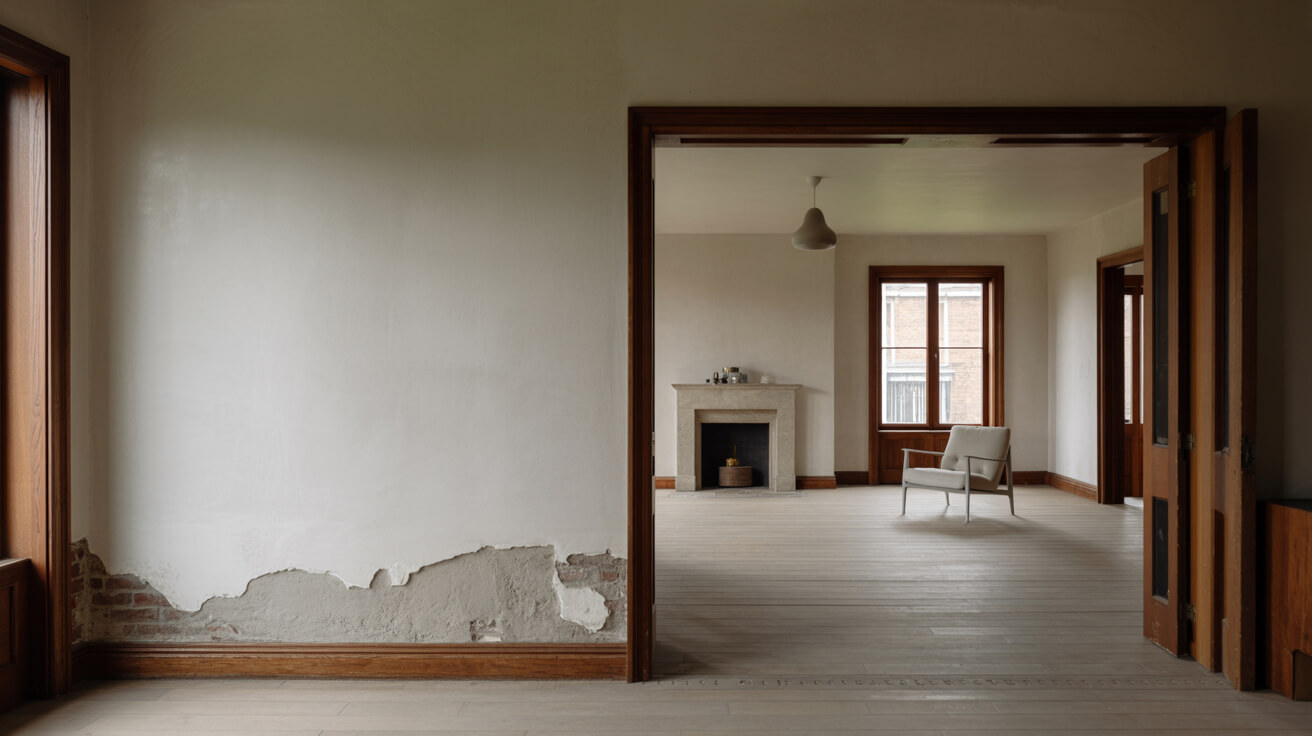
Knowing when to escalate is as important as understanding rot itself. The least impactful problems can lead to the largest outcomes when warning signs are ignored, especially in managed estates or in buildings with active tenancy or regulatory oversight.
Red Flags for Professional Escalation
- More than one area shows spreading decay, especially in different rooms
- Audible hollow knocks or dust around timber (spores)
- Survey, loan, tenancy or insurer demands a credentialed expert opinion
- Repeat repairs or failed attempts to remedy in the same place
Legal, Mortgage, and Compliance Events
- Mortgage lenders or insurers withhold approval without credible reports
- Commercial or heritage managers must retain compliance for ongoing audits
- Landlords are facing HHSRS, council, or tenant enforcement
- Properties sold, transferred, or renovated under risk
A credible specialist transitions your issue from uncertainty to evidence, offering a path to compliant, lasting repair. Sussex Damp Experts operates to PCA and BS6576, giving your reports and interventions life-long credibility.
You earn your property’s security the moment you call in verification that withstands scrutiny—not the day after a dispute.
Book Your Free Consultation With Sussex Damp Experts Today
Sussex Damp Experts stands as your local partner in precise diagnosis and technical remediation—combining advanced survey methods, insurance-compliant reporting, and heritage-sensitive approaches for every type of property. Homeowners avoid escalating repair bills, landlords remain legally compliant and insurable, buyers and sellers move forward without last-minute discoveries.
Every engagement with our team is designed to deliver documented, defensible action for whatever stage your concern is at—proactive risk mapping, urgent diagnostics, or remediation after failure. We approach each case with the calm, detailed focus of PCA-accredited professionals and the flexibility that only comes from longstanding regional experience.
Ready to move from guessing to knowing—and from short-term patching to lasting protection? With Sussex Damp Experts, your property’s health, value, and compliance are never left to chance.
Frequently Asked Questions
What is the difference between wet rot and dry rot?
Most repairs unravel from a single, unexamined detail—missing the form of decay you’re actually facing. Wet rot and dry rot are distinct adversaries; confusing one for the other risks spiralling costs, uninsurable losses, or even lender refusal. Wet rot: results from persistent, visible damp—around leaky sills or flooded floors. Its damage claws outward only as far as the latest spill or drip. Dry rot waits invisible, thriving on brief moisture, then using your structure’s voids and brickwork as a private highway.
| Wet Rot | Dry Rot | |
|---|---|---|
| **Moisture Needed** | Constant, usually >40% | Starts at ~20%, grows after drying |
| **Spread** | Local, stops with drying | Rapid, travels past visible leaks |
| **Signs** | Dark, spongy, crumbling timber | Brittle, cracked, fruiting bodies, orange dust |
| **Risk** | Local repair, contained | Systemic, major joinery/structural risk |
| **Who’s At Risk** | Leaks, ground contact timbers | Heritage, mixed-materials, under-ventilated spaces |
Dry rot’s power is silence: structural collapse can follow months of unnoticed subfloor invasion. Your repair options contract the longer you guess. Early, expert distinction is not trivia—it shapes whether this month ends with a patch, or a rebuild. Sussex Damp Experts build every diagnosis for lender proof, legal defence, and real durability.
Why do wet rot and dry rot occur in buildings?
Decay emerges where water and inattention intersect. Wet rot: results from soaked window ledges, chronic leaks, or groundwaters soaking floor joists. Here, timber never breathes free of damp, and the rot never strays from the wet. Dry rot is the tactician: a failed gutter or blocked underfloor vent gives birth to an outbreak that may vanish only to reappear in a back bedroom, months later, after you fixed the evident issue.
Property Age and Risk Patterns
- Heritage buildings: Solid walls, lime mortars, and historic patch repairs create moisture traps. Cement render or modern insulation layered over old walls can trap condensate unseen.
- Modern homes: Tanking failures, compromised DPCs, or patch fix membrane systems channel water into unfamiliar parts of your structure.
- Commercial/properties in disrepair: Vacant annexes, under-heated wings, or asset portfolios with reactive-only maintenance see dry rot travel unchecked.
Statistically, over half of the UK’s serious rot cases stem from unresolved leaks or missed ventilation upgrades—a regulatory gap. Legislation holds asset managers and landlords (not tenants) responsible in both the HHSRS and Homes (Fitness for Human Habitation) Act.
The “tell” isn’t always where it starts. Sussex Damp Experts reverse-engineer every outbreak, tracing not puddles, but moisture’s pathways—then recommend not just repair but risk insulation for the next audit, sale, or tenant.
How do professionals identify wet rot and dry rot?
You can’t rely on eye or fingertip. Surface clues fade, or worse, deceive—paint peels for both. A professional armamentarium includes calibrated moisture mapping (not just cheap metres), borescopes to scan inside cavities, thermal images for hidden leak trails, and salt contamination tests for condensation vs. capillary rise. Sussex Damp Experts document every reading, photo, and lab result in a lender-ready, HHSRS-compliant report.
Diagnostic Steps for Certainty
- Visual/texture mapping: Check for crumbly, stained, or brittle wood, fungal threads, bulbs, or dust—every finding logged.
- Moisture gradient profiling: Surface and deep. If it’s all surface, odds favour wet rot.
- Substrate & air pathway tracing: Is the attack confined or travelling beyond visible damp?
- Salt testing: To distinguish rising ground damp from condensation sources (especially in heritage fabric).
- Fungal sampling/lab analysis: Where legal, insurance, or dispute-proofing is non-optional.
Insurers refuse “gut feel” assessments. Our reporting not only gets quotes approved, but hands you ironclad traceability if warranty, sale, or compliance questions strike years later.
Being able to pinpoint the enemy—before it tunnels beneath the surface—is the difference between a property that holds value and one that quietly accumulates liability.
Where are wet rot and dry rot most commonly found?
Decay obeys its own tactical map, exploiting weak spots by property era, use pattern, and management regime. Wet rot’s territory sprawls anywhere with perpetual wetness: floor joists in flooded voids, sash window sills, basement stair stringers, corners where gutters direct streams, or beneath washed-out render along the DPC line. Dry rot specialises in stealth and distance, favouring timber cradled by buried walls, bathrooms with periodic leaks, subfloors above old cellars, or any zone where air goes stale after sealing up a “draught.”
Sector Patterns
- Victorian/Solid Wall: Behind skirtings, at floor-wall interfaces, under bay windows.
- 1950-80s: Extensions, kitchen re-fits, loft conversions—junction lines hide silent spread.
- Commercial blocks: Subdivide spaces lose airflow, so unstaffed corners rot quietly.
- Heritage: Intersections of old/new, under over-clad render, around floor ducting upgrades.
- Asset portfolios: Risk compounds in neglected annexes or infrequently inspected voids.
If your property’s corners, cellars, or voided extensions haven’t seen the light of day since the last sale or council visit, those are the sentinel zones. Sussex Damp Experts’ surveys include detailed site-mapped diagrams, giving owners, managers, and buyers a literal picture of what’s protected—and where risk still lurks.
What are the signs and symptoms of wet rot versus dry rot?
Wet rot announces itself with local symptoms—musty odours, darkening, and crumbling timber wherever water lingers. Expect soft, decayed skirting, particularly near obvious leaks. Paint may flake or bubble, but once the leak is stemmed and soft timber is replaced, it doesn’t return. Dry rot subverts expectations. It starts generic—fine cracks, pale fungal threads, a brittle feel in wood seemingly safe a room away from damp. Suddenly, a patch of orange-brown dust or a “mushroom” fungus appears, and adjacent wood collapses or sounds hollow.
| Symptom | Wet Rot | Dry Rot |
|---|---|---|
| Surface | Soft/dark/moist | Brittle/cracked, pale mycelium |
| Fungal Growth | Local, black streaks | Spreads, white strands, bulbs |
| Smell | Musty, concentrated | Deeper, sickly-sweet, room-wide |
| Repair Urgency | Slow, direct | Fast, can escalate system-wide |
| Error Risk | DIY often suffices | Professional diagnosis mandatory |
If your property cycles through leaks and repairs, pay close attention to spread, not just depth. If you see orange dust, trailing white threads, or collapse outside the leak area, dry rot’s likely at work—and only precision surveying isolates its reach. Our guidance transforms horror stories into asset protection, arming you with knowledge (and diagrams) to win future complaints or claims.
How are wet rot and dry rot treated and remediated?
Remediation isn’t about “drying out and patching over”—it’s surgical and systems-focused, especially for dry rot. For wet rot, once you’ve resolved water ingress, all visibly weak timber must be cut out to sound wood or brick. Replace with pre-treated, ideally like-for-like material to secure building compliance. Biocidal washes ensure any remaining fungus can’t wake with next season’s rain.
Dry rot remediation multiplies the job: strip all infected timber, open access along potential fungal highways (sometimes removing finishes, panelling, even wall tiles). Treat surrounding masonry with biocidal barriers. Reinstate only after persistent monitoring shows an all-clear. In listed or heritage settings, the approach may require phased works, discrete surveys for consent bodies, and historic material retention—Sussex Damp Experts coordinate not just work crews, but planning, warranty, and compliance expectations.
| Treatment Step | Wet Rot | Dry Rot |
|---|---|---|
| Remove water | Essential | Essential |
| Excise timber | Only visibly affected | All infected plus “buffer” zone |
| Treat area | Local biocide | Area + masonry/barrier, repeat as needed |
| Monitoring | Single check-upon repair | Multi-phase, long tail (legal/heritage) |
Choosing shortcuts—especially with dry rot—harms your asset, your compliance position, and sometimes, your professional reputation. Sussex Damp Experts align repair plans to BS6576 and heritage best practice, integrating each step with robust monitoring—so the only “legacy” left in your building is the one you choose to preserve.

