
 By
By  August 4, 2024


What Official Definitions and Standards Explain Subsidence?
Subsidence describes the downward movement of ground supporting a building’s foundation, distinct from standard settlement, which affects the entire structure uniformly during or after construction. This is not a rare concern: RICS, British Geological Survey (BGS), current UK Building Regulations, and even broad reference sources such as wiki subsidence all underline the need for close attention to subsidence for property compliance, insurance, and safe occupation. Recognising the exact definition—subsidence is local, progressive loss of subsoil support resulting in cracks, structural rotation, and functional damage—is essential for your ability to protect your home or managed estate from unnecessary financial and operational disruption.
What Distinguishes Subsidence from Settlement or Heave?
Subsidence is abnormal, site-specific ground movement causing cracks wider at the top, commonly tracking diagonally through brickwork or plaster, where any repair compatible with substrate depends on first distinguishing the cause correctly. Settlement happens at build or after major change, and is generally uniform and self-limiting. Heave is the opposite of subsidence: it is the upward movement of ground, often after tree removal on clay, and brings a different crack pattern altogether.
Key Principle Explained
Cracks that run inside and outside, especially at the intersection of doors and windows, and which widen over time, signal probable subsidence. Uniform, narrow cracks may merely reflect standard settlement; progressive, deep, diagonal cracks should trigger immediate concern.
| Movement Type | Pattern | Timing | Typical Cause |
|---|---|---|---|
| Subsidence | Diagonal, wide at top | Ongoing, local | Clay shrinkage, roots, leaks |
| Settlement | Vertical, uniform | Early after build | Building load |
| Heave | Vertical, bulging/troughs | After tree removal or infill change | Upthrust on clay |
A crack is more than a blemish—it’s the ground setting terms your survey can’t afford to ignore.
Legal and Transactional Implications
UK property sales and insurance policies legally require you to declare current or past evidence of subsidence. Ignoring or downplaying these requirements increases risk of voided cover and post-sale legal action. Proactive, documented compliance via professional inspection—aligned to RICS/BGS guidance—shifts you to a position of long-term control.
What Causes Subsidence According to Leading Authorities?
Legal Rights Checker
- 1 Who
- 2 Situation
- 3 Timeline
- 4 Results
Need professional evidence for a legal claim? Our survey reports are accepted by courts and solicitors.
Book a Survey for Legal Evidence →Your property’s risk profile for subsidence is governed primarily by geology, water management, local vegetation, historic land use, and foundation design. BGS heatmaps pinpoint the southeast, London basin, and parts of Kent and Yorkshire as high-alert regions, with clay-based subsoils amplifying vulnerability across all property sectors.
How Does the Ground, Trees, and Water Impact Structural Movement?
- Clay soils: These soils expand in winter and contract rapidly in summer, producing cyclical stresses. BGS mapping highlights much of East and Southeast England at higher risk.
- Trees and hedges: Trees within 30 metres, especially willow, oak, plane, or poplar, extract water aggressively, drying out clay and shrinking subterranean support.
- Ageing or leaking pipes: Long-term pipe failure, poorly mapped historic drains, and unmonitored soakaways lead to soil washout and local foundation voids.
- Historic mining: Unmapped mineworks or old tunnelling can precipitate ground collapse years after neighbouring sites are redeveloped.
- Inadequate foundations: Victorian and Edwardian homes frequently rest on insufficient footings for contemporary living; new builds may struggle if rushed or sited on made ground.
- Floodplain and drainage flaws: Persistently saturated ground offers inconsistent support, raising the stakes for unnoticed underfloor leaks or chronic roof runoff.
Composite Table: Key Subsidence Triggers
| Trigger | Risk Factor | Common Location |
|---|---|---|
| Clay subsoil | Shrink/swell cycle | London, Kent |
| Trees/roots | Water extraction | Gardens, avenues |
| Leaks/drainage | Soil washout | All regions |
| Mining/voids | Sudden collapse | North, Midlands |
| Foundation spec | Initial underdesign | Period property |
What Preventive Steps Can You Take Immediately?
- Keep trees pruned and, where possible, select low-risk species
- Conduct regular underground service and drain checks, not just visual “walk-arounds”
- Monitor crack development monthly in suspect areas, photo logging changes
- During property improvements, clarify ground conditions and get foundations checked
Vigilance before the surveyor’s report is the only real insurance you control directly.
How Do Experts Recognise Subsidence Symptoms?

Professional diagnosis goes far beyond spot-checks or patch painting. The earliest signs are visible but easy to rationalise away: a subtle diagonal crack, a window frame out by half an inch, a door that starts to catch after heavy rain. By the time insurance is involved, what seemed minor has become definitive.
What Are the Early Signal Patterns?
- Cracks: Widen over time, often >3mm (credit card test), crossing mortar joints and through both exterior render and internal walls.
- Patterned emergence: Doors and windows sticking even after seasonal change, or new resistance in opening.
- Surface distortion: Ripples in flooring, separation at skirting or architrave level, or a gap forming between path and foundation.
- Environmental cues: Tree removal, drought, localised flooding, or nearby building works coinciding with these changes.
Visual Guide: Strategic Checklist
- Track every visible crack monthly—note size, spread, and direction.
- Log event history (treeworks, flooding, home improvements).
- Use a physical or digital gauge for precision.
- Take timestamped photos showing a scale.
| Symptom | Severity Indicator |
|---|---|
| Diagonal crack | High (subsidence likely) |
| Hairline only | Low (monitor, settlement?) |
| Internal/Ext | Higher if both present |
| Widening/fork | Escalate – seek survey |
When Is Escalation Warranted?
If cracks widen faster than 1mm per month, if you observe movement across multiple rooms, or if insurers flag reporting/show hesitation, escalate to a BS6576-accredited surveyor or Sussex Damp Experts for damp-linked diagnostic review. Using reporting aligned with this audit trail is a unique asset—especially in complex, multi-owner, heritage, or portfolio contexts.
A crack in your diary is a financial safeguard in your portfolio.
Why Is Subsidence a Structural and Financial Threat?

Subsidence isn’t just a “property issue”—it threatens long-term value, operational liquidity, and legal standing simultaneously. For homeowners and managers, the impact unfolds on multiple fronts.
What Are Immediate and Cascading Effects?
- Structural loss: Progressive ground movement reduces bearing strength. Chimneys, bay windows, and extensions are first to distort.
- Devaluation: Agents and mortgage surveyors will re-rate or pull offers on flagged properties by 10–25%. These losses are rarely recovered after fact.
- Insurance penalty: Excesses for subsidence typically exceed £1,000; repeated claims can bar future cover outright.
- Liquidity block: Transactions may stall or collapse. Buyers demand guarantees or certificates, often unavailable post-loosening of reporting standards.
- Asset insecurity: Unremediated risk can trigger legal duty-of-care claims from tenants, freeholders, or local authorities.
Table: Real-World Consequences
| Impact | Ramification |
|---|---|
| Foundation loss | Repair, underpinning |
| Sale devaluation | 10–25% reduction |
| Insurance refusal | Increased premiums/void |
| Regulatory action | Fines, improvement orders |
Neglect’s real cost is measured not by repairs, but by lost trust, time, and value.
What Proof Is Required for Stakeholder Trust?
- Official, time-sequenced surveys
- Insurance and lender-aligned repair certificates
- Full crack history and event timeline
- Heritage/consent documentation for listed assets
- Damp mapping and proof of remediation, especially where linked to high-risk structures
When Do You Need Expert Help with Subsidence?

Expert support is justified by more than peace of mind—it’s often a legal, asset, or operational requirement. Waiting for “clear evidence” risks irrecoverable structural, transactional, or compliance harm.
What Are Your Critical Decision Triggers?
- Repeated, progressive, or new cracks of concern
- Windows/doors sticking seasonally or after modifications
- Transactional urgency: sale, valuation, re-mortgage, or letting
- Listed or shared properties with shifting risk profile
- Divergence between builder, surveyor, and owner opinions
Expert Escalation Matrix
| Scenario | Escalation Path |
|---|---|
| Cosmetic, not growing | Monitor monthly |
| Widening/propagating | Call surveyor/damp expert |
| Transactional block | Secure full audit, report |
| Heritage context | Professional/adaptive report |
Prompt action means documented steps, clear event logs, and expert assessment—our services provide surveyor-calibrated diagnostics and route mapping to help you satisfy lender, insurer, and legal obligations reliably.
Risk is managed by standards and steps, not speculation or hope.
How Is Subsidence Investigated and Fixed to Regulatory Standards?
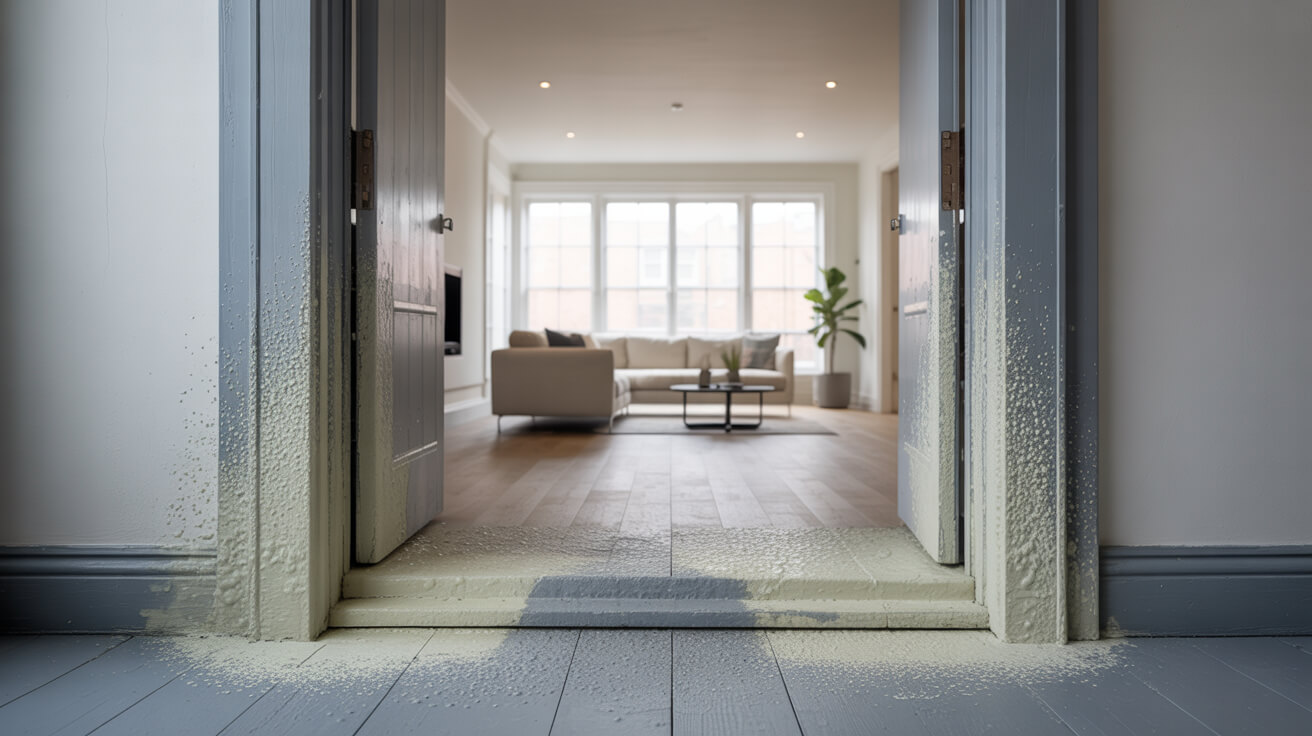
Subsidence remediation is multi-phase, combining survey, monitoring, engineering, and material science—all of which must align to UK Building Regs, RICS, and (when relevant) Historic England.
What Does a Compliant Remediation Process Look Like?
- Symptom review: Compilation of historic and emerging evidence (photos, logs, environmental history)
- Technical survey: RICS or engineer-site visit; instal movement gauges, soil tests, and drain/utility scans
- Monitoring period: Mandated in most insurance/transactional contexts (often 3–12 months); crack, soil, and moisture log required
- Diagnosis and design: Engineering review for underpinning, resin injection, or drainage correction
- Regulatory checks: For listed properties: consent forms, method statements, conservation review
- Execution: Only after formal approvals—prefer FeRFA-certified, heritage-aligned contractors
- Certification and guarantee: Lender and buyer-recognised documents (usually 10–20 years) for post-repair value protection
Table: Typical Methods by Building Type
| Method | Modern Homes | Heritage/Listed | Consent Needed | Insurer-Backed |
|---|---|---|---|---|
| Mass Underpinning | Yes | Rare | Yes | Yes |
| Mini-piling | Yes | Sometimes | Yes | Yes |
| Resin injection | Sometimes | Rare | Yes | Yes |
| Lime/Mortar repair | No | Yes | Consent only | Sometimes |
How Does Sussex Damp Experts Streamline This Journey?
Our audit-ready reporting and specialist contractor network close the compliance, evidence, and risk loop that typical “surface-only” solutions miss, especially for heritage and commercial assets. For complex sites, we navigate consent, regulatory, and operational requirements, often securing faster approval and lower total risk profiles.
Compliance is only real when it’s proven before the audit, not after.
Where Do Listed Building and Regulatory Standards Shape Subsidence Solutions?

Owning or managing a listed or heritage building adds unique complexity to every subsidence intervention. Statutory frameworks—Planning (LBCA) Act 1990, Historic England, local council directives—require that every work phase has pre-approval.
What’s Different for Heritage & Listed Scenarios?
- All remediation (even “invisible”) must avoid material, visual, or historic harm
- Lime and vapour-permeable mortars or flexible barriers (not cement tanking, rigid resins) are typically mandated
- Consent from conservation officers/council with method statement before action
- Full photographic and evidential documentation with every step
Heritage Consent Process
- Gather historic and current risk/repair documentation
- File impact/reconciliation statement
- Submit method/material specification to council/conservation
- Phase works in line with official sign-off and retention periods
In protected buildings, patience, process, and paperwork guard every brick.
Sussex Damp Experts—Your Heritage Compliance Partner
Our experts handle listed consent from paperwork to on-site notes, collaborate with conservation authorities, and only deploy methods pre-approved for the unique heritage, insurance, and regulatory terrain of your property, supporting you from pre-survey through sign-off.
Book Your Free Consultation With Sussex Damp Experts Today
You value control, foresight, and operational clarity—especially when outcomes hinge on evidence, compliance, and protection of physical and financial legacy. Whether you’re facing new cracks, a stalled sale, tenant escalation, or listed property audit, you deserve a process anchored in standards, science, and swift results.
Your next move is the difference between a controllable risk and a lasting liability. Sussex Damp Experts are your trusted partners for every step—survey, monitoring, remediation, documentation, heritage compliance—giving you confidence, compliance, and value protection in one.
You can become the decision-maker your organisation or family relies on. Reach out now for an evidence-driven, audit-ready, stress-evaporating subsidence solution—and see why your peers, tenants, buyers, and lenders choose partners, not suppliers, for their most vital assets.
Frequently Asked Questions
What Official Definitions and Standards Explain Subsidence?
Subsidence is defined by the RICS and UK Building Regulations as a localised, progressive downward shift of the ground beneath a building—unlike general settlement, which is uniform and expected after construction. This specific type of property movement is recognised by insurers, mortgage lenders, and local authorities as a red-flag issue: not merely for its structural risk, but for the implications it brings to asset security and financial resilience.
Why Terminology Matters for Your Asset and Reputation
Distinguishing subsidence from harmless settlement or seasonal heave is a foundation for every insurance claim, transaction, or remediation plan you’ll ever make:
- Subsidence: Local, active loss of ground, leading to diagonally oriented, widening cracks (often above windows/doors), changes in floor profile, and functional shifting that doesn’t self-correct.
- Settlement: Early-stage overall settling, mostly vertical, that resolves post-build and rarely recurs.
- Heave: Upwards movement after abrupt change (like felling a large tree), buckling floors and breaking up ground slabs.
| Movement Type | Typical Triggers | Primary Indicators |
|---|---|---|
| Subsidence | Clay shrinkage, roots, leaking drains | Diagonal cracks, sticking doors, sloping floors |
| Settlement | New build, compaction | Narrow, uniform cracking |
| Heave | Tree removal, flooding | Upward buckling, separation at skirtings |
A mortgage lender expects evidence rooted in these standards; an insurance assessor will defer or deny claims for any ambiguity. Sussex Damp Experts’ compliance-driven survey outputs anchor your liability and value on the right side of the legal and regulatory line.
The only cracks that threaten value are those that go unmeasured and unexplained.
When the integrity of your asset is under review, standard-driven proof isn’t bureaucracy—it’s your entry ticket to risk-free property management.
What Causes Subsidence According to Leading Authorities?
Leading authorities including the British Geological Survey and the Association of British Insurers pinpoint subsidence risk with forensic clarity. Your region, your soil, and your building’s history each combine to determine the scale of threat—but it’s your vigilance that determines the outcome.
Which Underlying Factors Expose Your Building?
-
Clay-Rich Soils
These dominate subsidence postcodes across Sussex and Southeast England. Clay contracts and expands with changing moisture, pulling footings out of alignment with every drought and downpour. -
Tree and Large Plant Root Systems
Whether it’s a mature willow or a new hedge planted too close, aggressive roots extract moisture and shrink the supporting subsoil, sometimes more than three metres deep. -
Unseen or Persistent Water Leaks
Broken underground drains, leaking service pipes, or poor guttering accelerate soil erosion, undermining slabs and revealing themselves with sudden, spreading cracks. -
Historic Mining or Unstable Infill
Areas above old tunnels or filled ground—including many urban centres—can experience delayed, unpredictable collapse as voids migrate or fill. -
Shallow or Non-Standard Foundations
Period houses and terraces, especially pre-WW2, often rest on insufficient depth, putting every repair or retrofit decision under greater scrutiny.
| Factor | Consequence | Who’s Most At Risk |
|---|---|---|
| Clay soils | Wide, recurring cracks | Homeowners, Landlords |
| Trees near property | Foundation lift/drop | Heritage, Landlords |
| Drainage issues | Sudden settling | Commercial, Agents |
| Mining history | Rapid, severe drop | Urban, Heritage |
Preventive routines—inspections, soil moisture management, and tree distance compliance—pay for themselves ten times over compared to the cost of late-stage underpinning. Sussex Damp Experts blend empirical risk mapping, local soils intelligence, and standards-based intervention for the kind of outcome your portfolio, insurance, or family depends on.
How Do Experts Recognise Subsidence Symptoms?
A practised eye sees what casual glances miss: the pattern, pace, and repeatability of structural change. It’s not about fear—it’s about prediction.
Recognising the Right Warning Signs
- Crack Analysis:
Professionals look for diagonal, expanding fissures through both masonry and plaster, tracking especially from corners of doors and windows. Any crack over the width of a credit card—and especially any that widens seasonally or year-to-year—demands rigorous attention.
- Functional Displacement:
Problems aren’t always visible; doors and windows that begin sticking without visible cause, bathroom flooring that undulates, or walls that bow outward are canaries in the coal mine.
- Environmental Cues:
Spot checking after droughts, heavy rainfall, or construction next door yields vital context for when and why a property begins to deviate from its baseline.
- Heritage/Listed Properties:
Period buildings require a nuanced approach—with all symptoms cross-referenced against regulatory restrictions, conservation materials, and prior remedial histories.
Scenario:
A managing agent logs monthly photos of a seemingly minor crack. Two years later, that record compels the insurer to pay out for full underpinning—while the neighbour’s undocumented, similar crack remains an ongoing expense.
Survey-Grade Checklist for Owners & Pros
- Photograph all new or changing cracks at the same angle and scale.
- Map progression quarterly or after extreme weather.
- Keep records of past repairs and interventions.
- Note nearby works, droughts, or tree removals.
_Attention to detail isn’t a cost centre; it’s an asset multiplier._
Rigour now means leverage later—whether you’re negotiating with buyers, insurers, or planning authorities. Sussex Damp Experts embeds documentation rigour in every assessment.
Why Is Subsidence a Critical Structural and Financial Threat?
Subsidence cuts deeper than cracks. It unravels assets that would otherwise support entire portfolios, family wealth, or community infrastructure. The practical impact isn’t abstract—it affects transactions, compliance, and trust.
Quantifying the Risks—What Missing One Crack Can Cost
- Unmanaged subsidence devalues property: by 10-25%, requiring significant price drops, sale delays, or outright collapse of deals.
- Insurance excesses for subsidence claims: routinely exceed £1,000, with many policies refusing future cover for subsequent movement.
- Mortgage lenders and buyers: will walk away if a property’s movement isn’t documented, explained, and certified by an accredited surveyor.
- Regulatory and compliance obligations: on landlords and managing agents mean that non-action can become a formal improvement notice, forced repairs, or court case.
| Threat | Immediate Impact | Extended Loss |
|---|---|---|
| Asset value drop | Discounted/failed sales | Compounded loss vs. market |
| Insurance refusal | High excess, no payout | Long-term uninsurability |
| Compliance risk | Fines, repairs, void tenancies | Legal action, blacklisting |
Case:
A landlord waits six months after new cracks. The repair jumps from local patch to full structural intervention—plus cannot re-let until documents are corrected. A week’s doubt means a year’s lost rent.
_Real owners don’t leave asset security to chance. They build reputational capital with every audit, not just every pay-in._
This is why Sussex Damp Experts are trusted by agents, landlords, and institutional owners: our reporting is a risk offset, not just a commodity.
When Is It Essential to Seek Expert Help for Subsidence?
You know when your asset changes: it’s not subtle. What’s more subtle is the speed with which small problems become unsolvable when left for “a better time,” or as someone else’s issue, especially when prompt repair compatible with substrate is overlooked. Beneath every ignored crack lies the risk of financial drift or operational breakdown.
When to Move from Checklist to Command
- Escalate Immediately if:
- Any crack exceeds the width of a pound coin.
- Visible movement correlates with environmental or construction-triggering events.
- Two or more rooms or elevations show change within a 6–24 month span.
- Heritage-listed or council-regulated properties show symptoms (require consented intervention every time).
- Triggers for Mandatory Surveyor/Expert Intervention:
- Transaction (sale, mortgage, insurance renewal, or letting update) within the last 12 months.
- Post-repair recurrence—especially after previous surface-only remedies.
- Documented rejection or challenge by insurer, buyer, or regulator.
Self-checklists are good, but in the eyes of buyers, banks, and councils, only surveyor-backed, BS6576-aligned reports will suffice. Sussex Damp Experts ensure all paperwork, evidence, and remedial steps work not simply for aesthetics—but for legal, financial, and lifecycle predictability.
_The only legacy that matters is documented oversight—not just intent or energy spent._
A property that commands the highest trust is the one with the deepest paper trail.
How Is Subsidence Investigated and Fixed to Regulatory Standards?
Remediation is never a one-click solve. Instead, it’s a forensic pathway: beginning with calibrated diagnosis, moving through methodical documentation, and culminating in repair and compliance with all codes (BS8102, BS6576, Historic England).
The Seven-Stage Solution, From First Signal to Signed-Off Value
- Initial Substrate Profiling:
- Moisture readings, salt testing, structural checks.
- Document all historical, recent, and environmental data.
- Movement Monitoring:
- Instal/track gauges, imaging, and geotechnical data.
- Require a 3–12 month record unless urgent.
- Causal Attribution:
- Trace movement to root cause using regulatory-acceptable analytics.
- Document all findings for insurer or conservation officer signoff.
- Consent/Planning:
- For any substantial works on listed or community properties, council or heritage consent is non-negotiable.
- Only commence approved repair protocols.
- Remedial Intervention:
- Underpinning: mini-pile, resin injection, or lime mortar as dictated by building use, value, and status.
- Repair compatible with substrate for heritage/modern split.
- Documentation and Certification:
- Attach engineer’s reports, method statements, insurance/valuers’ acknowledgement.
- Keep a digital and physical archive (buyers and banks will demand it).
- Warranty and Ongoing Care:
- Track care plan, warranty, and monitoring as evidence of compliance and repeatability.
| Step | Deliverable | Who Requires It |
|---|---|---|
| Profiling | Report, photo log | Insurers, buyers, regulators |
| Monitoring | Crack gauge data, logs | Insurers, lenders |
| Attribution | Cause mapping | Architect, council, buyer |
| Consent/Planning | Approvals, method statements | Council, Historic England |
| Remediation | Engineer signoff, photos | Owner, buyer, agent |
| Documentation | Certification, archive | Asset manager, lender |
| Warranty & Care | Post-care, annual logs | Landlord, buyer, council |
Sussex Damp Experts brings not only technical mastery but a stakeholder-centric process—underwriting you with compliance, data, and reputation at every remit.
_Every dataset stamped by an expert turns a challenging project into a defendable asset._
When you’re accounting for the price of security, remember: the only number that matters is the one that survives audit, buyer, or crisis.

