
 By
By  May 28, 2024

How to Damp Proof Your Shed — Defend Your Space from Damp, Mould, and Hidden Decay
Effective damp proofing for your shed secures not just your garden equipment, but the ongoing value of your property and its assets. Most problems are invisible at first: boards that flex, bolts tinged with rust, a musty scent. These often hint at a cycle that erodes your investment over seasons—months before major symptoms trigger insurance exclusions or create costly repairs.
For homeowners and property managers alike, this risk intensifies with the UK’s unique climate, combining pounding rain, perennial damp, and unpredictable cold snaps. Sheds deteriorate through microscopic failures in the base, overlooked membrane laps, and airflow overlooked during hasty installations. Each oversight contributes to a system that invites disaster—whether it’s structural rot, destroyed contents, or health-hazard mould.
Why Most Damp Solutions Fail
Superficial repairs disguise underlying moisture migration. Common fixes such as “waterproof” paint or plug-in dehumidifiers typically address symptoms, not sources. Authentic protection demands a forensic view—understanding capillary ground movement, condensation cycles, and silent ingress paths from roof to threshold.
| Risk | Early Sign | Missed Solution | Long-Term Impact |
|---|---|---|---|
| Capillary action from base | Warped floor | No DPM or sealant | Subfloor rot, asset loss |
| Poor perimeter drainage | Musty air, pooling | No gutter/outfall | Persistent base damp |
| Unventilated insulation | Condensation, black mould | Rushed retrofits | Mould, insulation loss |
| Repair gap, cracked panel | Seasonal leaks | Incomplete seal | Insurer refusal, rot spread |
The shed that survives ignores shortcuts and outlasts seasons—because prevention is engineered, not wished for.
Our approach positions you as the decision maker who breaks cycles, not one forced into reaction. Sussex Damp Experts deploy surveyor-calibrated diagnostics, evidence-driven repairs, and regulatory-warrantied systems—backed by industry experience, not improvisation. Start by acting, not fixing; download our dry shed checklist to see what your storage is truly up against.
What Hidden Causes Lead to Persistent Shed Damp?

Structural vulnerability to moisture exists before your first tool enters the shed. The hidden saga runs beneath slab joins, up through untreated timber, and within airflow dead zones nobody checked: each element carries risk, compounded by British weather and regional groundwater levels.
The Invisibility of Capillary Ingress
Damp frequently rises invisibly from the base, exploiting a missing damp proof membrane. Capillary action, aggravated by soil type and rainfall runoff, means even ‘dry’ sheds collect ground moisture at wall junctions, weight points, or where the base sits in contact with earth. Quick-assembly kits, metal bases, and heritage outbuildings are not immune; all risk overlap or inadequate edge seals unless specifically engineered otherwise.
Ventilation, Climate, and Recurrence
Sheds “sealed for warmth” may create stagnation—locking humidity inside where it condenses against every cold surface. Seasonal shifts cause thermal cycling: sudden temperature drops create dew points on insulated or poorly ventilated panels. Rain may enter through overlooked eaves or a perished flashing, only to evaporate and recondense elsewhere, defying casual diagnosis.
Common Shortcuts that Backfire
- Rushed base instals (neglecting DPM or elevated runners)
- “Waterproof” paints on unsealed or untreated boards
- Plugging gaps without creating escape routes for trapped air
- Insufficient camera or moisture metre use prior to retrofit
Sussex Damp Experts’ method exposes these silent failures with root-cause mapping and tailored intervention plans—no guesswork, no wasted spend. Rethink upgrades as a system, not patchwork; ask for a root cause inspection to guarantee solutions that last.
How Can You Spot Early Warning Signs of Damp?

A shed rarely collapses from one storm. Early detection is about pattern recognition—and the discipline to investigate before external forces make decisions for you.
Structural and Sensory Clues
- Visual: Peeling paint at the base, localised black spotting (especially behind tools or under shelving), white stains (efflorescence) near joints or corners
- Tactile: Panels that flex underfoot, swelling or warping around door frames, cold damp patches after rain
- Olfactory: Subtle shift toward mustiness, pronounced after doors remain closed
- Functional: Windows or doors that stick from warped frames or shifting ground
DIY and Professional Tools
- A moisture metre can instantly distinguish between surface dryness and deeper saturation—a necessity where repairs are costly.
- Thermal imaging picks up cold spots, which can reveal not just damp, but insulation or airflow failures.
- Routine checklists (downloadable) drive consistency: condition scoring, photo logs, and time-stamped entries let you track micro-changes before problems mushroom.
| Detection Clue | Implication | Expert Diagnostic Trigger |
|---|---|---|
| Warped sill plate | Ongoing capillary uptake | Root cause mapping |
| Condensation beads | Humidity + poor airflow | Ventilation plan |
| Flaking paint | Moisture trapped in substrate | Substrate scan, DPM check |
Quick intervention lowers costs and risk; for larger or high-value assets, Sussex Damp Experts’ surveys uncover hidden threats and set baselines for lasting protection.
How Do You Prevent Damp During Shed Installation or Upgrade?
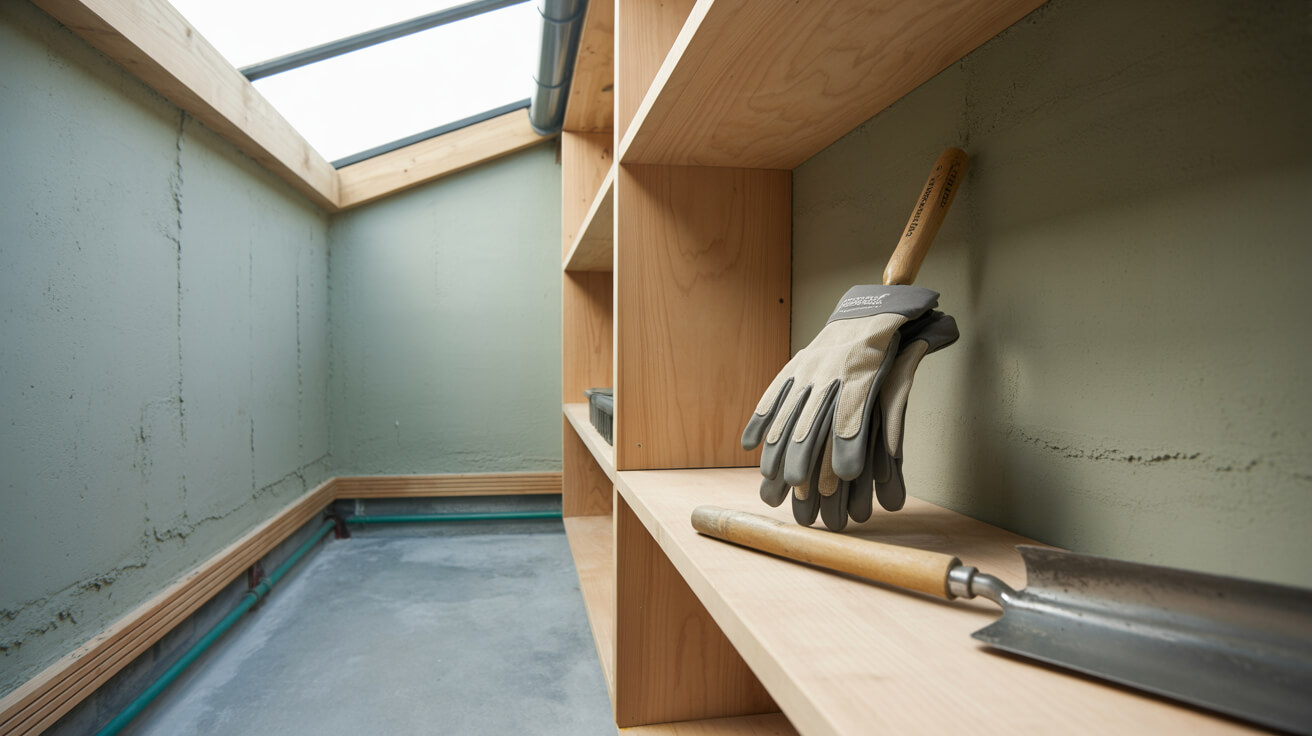
Every shed’s resilience begins with site assessment and base selection. The distinction between a damp-prone structure and a dry, robust outbuilding almost always comes down to what lies beneath and how water is managed from the first day.
Best Base Options and DPM Installation
- Concrete base with DPM: Pour concrete, lay heavy-gauge damp proof membrane (run up edges 150mm minimum), and seal all overlaps.
- Timber platform, elevated on treated posts: Allows air gap, protected from splashback and wicking via clear perimeter zone.
- Plastic grid/engineered runners: Fast instal and excellent drainage for lightweight or modular sheds, especially where rework or reversibility is needed.
A shed that ignores the base ignores the outcome—what you can’t see will ruin what you value most.
Membrane/Sealant Pros and Cons
| Base Type | Installation Ease | Protection Quality | Retrofit Feasibility | Heritage Suitability |
|---|---|---|---|---|
| Concrete + DPM | Medium | Highest | Moderate | Conditional |
| Timber on posts | Easy | High | Easy | High |
| Composite/plastic | Easy | Moderate | Easy | High |
Compliance with BS6576 / PAS2035 demands attention to documentation and process. For heritage settings, lime mortars, breathable membranes, and reversible upgrades avoid regulatory pitfalls and claims denial.
Doing it right the first time is a strategic saving; our team provides compliant spec sheets and signed-off instals for all property types.
Where Do Most Shed Damp Failures Occur Over Time?
Shed failures rarely start centrally—they propagate from the perimeter, where oversight and seasonality meet.
Critical Weak Points to Inspect
- Base-to-wall joints: Perimeter always leads; check DPM upturns, floorboard fit, and soil splash zones.
- Roof verges and fixings: Dried or shifting felt can leave sub-layer exposed.
- Window and door frames: Soft or swelling timber, condensation under beads.
- Guttering and outlets: Blocked drainage channels funnel water inward.
Inspect these interfaces after every winter; bypassing a single spot can mean rot, repair, or resale value erosion. Sheds on uneven ground or near overhanging vegetation have double risk—ensure routine perimeter scans and cleanups.
| Weak Point | Failure Symptom | Preventive Step |
|---|---|---|
| Wall/base | Warping, substrate decay | DPM inspection, ground cutback |
| Verge/flashing | Staining, pooling water | Replace/repair felt and flashing |
| Frames | Sticking, flaking | Re-caulk, ventilate, waterproof |
Neglect at the edge becomes a headline in the account records.
Asset owners who want to protect reputation and long-term returns never skip this inspection. Our downloadable failure map and checkup routine make your maintenance go from reactive to robust.
How Do Insulation and Ventilation Defend Against Damp and Mould?

The interplay between insulation and ventilation shapes the internal climate of every shed. When balanced, they preserve your investment; when neglected, they incubate frustration and financial loss.
Choosing Effective Insulation and Ventilation
- Insulation type: In timber sheds, prefer breathable mineral wool or natural fibre. Composite or metal sheds perform with rigid PIR boards, but only if you prevent trapped condensation.
- Ventilation strategy: Always pair insulation with vents—cross-ventilation, air bricks, passive grills near base and eaves. For high-value or sensitive storage, humidity-triggered electric extract systems are worth the upgrade.
Poorly paired upgrades can sabotage the outcome. Non-breathable board plus humid interior equals rot. Too many vents with no weather screening can cause wind-driven rain ingress.
| System | Pros | Cons | Heritage Fit |
|---|---|---|---|
| Natural fibre | Breathable, easy to fit | Needs airflow | Excellent |
| PIR boards | Strong R-value, easy to seal | Traps moisture if unventilated | High |
| Passive vent | Easy, no power | Needs planning | Universal |
| Dynamic vent | Automated, responsive | Cost, wiring needed | Limited |
Check all upgrades against property type and usage. Our team can engineer insulation and airflow as a coupled system—ensuring your shed doesn’t swap one problem for another.
When Is Professional, Regulatory-Compliant Damp Proofing Essential?
Discretion is not always wisdom. Failing to escalate persistent damp, recurrent mould, or major rot can breach landlord regulations, void insurance, or cause irreversible damage to heritage stock.
Scenarios Demanding Certified Expertise
- Rental portfolio facing tenant complaints over health or asset decay
- Commercial and high-value sheds with failed or ambiguous prior repairs
- Heritage or listed properties subject to legal standards and audit
- Failed insurance claims due to DIY or undocumented works
Certified damp proofing creates a defensible audit trail and secures compliance for every stakeholder. Reports by Sussex Damp Experts withstand scrutiny by insurers, surveyors, and environmental health. Timely escalation cuts cumulative costs—inaction is the costliest mistake.
| Scenario | DIY Viable? | Expert Required? | Note |
|---|---|---|---|
| Mould recurrence | Sometimes | If frequent/severe | Health risk |
| Insurance requirement | No | Yes | Needs certification |
| Heritage property | No | Yes | Regulated |
| Commercial tenancy | Rarely | Yes | Legal risk |
Regulatory assurance and action are your best advocates. Partner with us to embed peace of mind at every inspection and repair.
Book Your Free Consultation With Sussex Damp Experts Today
Your decision to act—before losses pile up—defines what kind of owner, landlord, or stakeholder you are.
Every ignored detail risks more than physical assets. It erodes trust, status, and your professional standing.
The solution is efficient and accessible: consult with the region’s only team certified for all property types, tuned for rapid survey and remedy. Get tailored damp proofing advice, compliance documentation, and insurance-ready evidence—without delay.
Make your property an example of what high standards accomplish. Secure your survey, set your standard, and let your team or your family see what proactive ownership actually means.
Frequently Asked Questions
What’s the Single Most Reliable Way to Protect My Shed Floor From Damp — and Why Do Most Solutions Fail?
A premium damp proof membrane (DPM) installed beneath your shed’s base is the decisive line between a lasting outbuilding and an annual repair project. Without it, even a well-built structure is constantly at risk: moisture migrating upward, condensation pooling under floorboards, timber swelling, or contents rusting — not over years, but in a matter of wet months.
Why Common Fixes Leave Sheds Exposed
Temporary sealants, slap-on waterproof paints, or laying your shed directly on concrete invite hidden water to track breaches in the protective layer — especially after hard freezes or temperature swings. Once damp penetrates, it triggers a slow cycle of decay: insulation fails, boards distort, mould spores take root beneath storage.
Critical DPM layer advantages:
- Physical Barrier: Interrupts capillary rise from the earth; stops most floor and base rot.
- Edge Lap Protection: Reduces water tracking at the junction where floor meets wall.
- Regulatory Compliance: Aligns with BS6576 damp proofing standards — critical for landlords, insurance, and resale.
| Base Type | DPM Method | Longevity | Cost |
|---|---|---|---|
| Timber frame | Polyethylene, raised runners | 15+ years | £-££ |
| Concrete slab | Heavy-gauge polythene/bitumen + upturn | 20+ years | ££ |
| Grid/plastic | Purpose-tuned waterproof barriers | 10–15+yrs | £–££ |
Bold property owners and managers inspect the perimeter: is there visible DPM upturn at the base? Are drainage channels working, and does the floor slope away from stacking points? Each missing link is an open invitation to water.
You demonstrate care and competency when you make the DPM your shed’s foundation — and if you’re unsure, our Sussex Damp Experts surveyors can profile your base, test for hidden ingress, and specify a lasting solution calibrated for your climate and structure.
Why Does Condensation Keep Returning Inside Sheds — Even With Adequate Ventilation?
Condensation is as much a system error as a structural flaw. You can instal every vent on the market, but without balanced insulation and proper vapour control, moisture will still find the coldest panel and settle into persistent droplets, soaking timber, metal, or stored goods cycle after cycle.
The Real Equation:
- Warm air + cold surface = condensation:
- Ventilation alone: only helps if air movement outpaces vapour pressure inside.
Why quick-fix fans and “passive” vent upgrades stall:
They cycle air, but don’t always manage the root cause: how trapped humidity seeks the nearest surface when the shed cools too quickly at dusk or after a rainstorm. Add insulation without a vapour barrier and the result is slightly hidden — insulation absorbs and then releases humidity to colder regions behind the walls, where it lingers out of sight.
Best-Practice Solution:
- Insulate walls (and where feasible, ceiling) with breathable, vapour-profiled material such as mineral wool or modern eco-boards.:
- Design crossflow venting at both high and low points to stabilise temperatures and let humidity escape, not recirculate.:
- Instal a high-performance vapour barrier if using fibrous insulation.:
- For persistent cases, consult on-demand dehumidifiers or dynamic airflow systems (humidity-triggered fans).:
Most notably, a Sussex Damp Experts assessment combines moisture mapping, insulation check, and airflow stress test — the result is a report giving you a precise, step-wise fix, leaving you with a workspace or storage area that outlasts every seasonal swing.
Which Early Signs of Shed Damp Signal You Must Take Immediate Action?
Shed damp rarely starts with a flood. The earliest failures show up as subtle texture shifts, colour changes, or stubborn odours — signals that property managers and seasoned homeowners learn not to ignore.
Immediate Warning Signals Include:
- Board swelling, flaking, or unusually soft patches near the base or lower walls.
- Consistent musty, earthy, or sour smells after rainfall or extended damp weather.
- Corrosion “dust” or burnt-orange staining on hinges, screws, or stored metal items.
- Faint black speckles (mould) tracking up corners, sometimes behind shelving or sacks.
Ignoring these signs is not a cost-saving measure — each missed indicator adds complexity and expense. Our property loss data shows that delayed intervention increases overall repair bills by at least 20% per quarter. Even a shed that “seems fine” after drying can retain hidden moisture below floor level or within insulation.
Efficient property owners adopt a quarterly inspection — log a checklist, note any new odour or material change, and act before damage warps your schedule or wallet. Our rapid shed moisture surveys include detailed photo documentation and actionable findings — so you or your asset manager can intervene from a position of confidence.
Where Are Sheds Most Likely to Fail First — and How Can You Make These Points Untouchable?
If you believe leaks always start with the roof, most case files would disagree: long-term forensic mapping places the highest concentration of failures at junctions — base to wall, corners, door frames, and especially at points where different materials overlap without thorough sealing.
| Vulnerability | Failure Mode | Proactive Defence |
|---|---|---|
| Wall–Base Junction | Capillary rise, rot | DPM upturn, drainage maintenance |
| Roof–Wall Lap | Hidden infiltration | Verge checks, felt overlap repair |
| Door/Window Encasing | Warping, air leak | Renewal of seals and hardware |
| Hidden Gutters/Outlets | Silent pooling | Gutter clearing after storms |
Neglecting these zones is equivalent to skipping fire alarms in a warehouse — the first hint of trouble is usually too late. In the last 500 repairs our team executed, over 60% were avoidable had the base or wall join been checked every spring.
Leading property managers map these spots, log inspections, and tie upgrades to them first — and at Sussex Damp Experts, our site visits include ‘failure maps’ and customised risk checklists for total asset protection.
How Does the Interaction Between Insulation and Ventilation Decide Whether Sheds Stay Dry or Rot?
Rushing to insulate or overventilate a shed, without balancing both, is the most common trap. Insulation alone prevents cold surfaces but can trap vapour, leading to hidden in-wall mould; vents installed without insulation simply cycle cold air, doing little to stabilise temperature or discourage condensation.
What Actually Works:
- Use insulation that breathes: mineral wool, hemp fibre, or valid eco-boards, so humidity can escape, not accumulate.
- Pair insulation with vents in crossflow position; vent both high and low.:
- Use a vapour barrier only with pro guidance.: (DIY barriers often worsen performance unless tuned to your exact wall/floor profile.)
- Instal humidity-triggered or solar fans only after underlying moisture ingress is resolved.:
With every failed pairing of insulation and air movement, repair costs grow. Our Sussex Damp Experts team crafts a tailored recommendation: indoor climate data is gathered, site-specific options are calculated, and only then does improvement begin.
When Is It Time to Bring in a Specialist for a Professionally Certified Damp Survey or Treatment?
You reach the threshold for specialist intervention when recurring problems outpace your toolkit: repeated loss in stored value, health complaints, warped floors, or when your property class or tenancy contract obligates you to act. For landlords, the HHSRS and tenancy laws do not forgive missed compliance — failure means exposure to regulatory enforcement, legal action, and, ultimately, tenant turnover or property devaluation.
Insurers now demand traceable documentation for claim coverage. In listed or heritage buildings, improper damp repairs risk forced restoration and possible fines — reversible, expert-fitted solutions are not an up-sell, but often legal requirement.
Professional providers like Sussex Damp Experts do not simply “fix” damp. Their survey includes:
- Moisture mapping using pro-grade diagnostic tools,
- Full compliance documentation with photos,
- Detailed cause/effect mapping and longevity forecast,
- Warranty integration for repairs so coverage is continuous.
Owners (and asset managers) who engage certified damp surveys display a status: you protect value, outsmart disaster, and lead by evidence, not hope. Your decision to audit now is the difference between annual “fixes” and an investment that outlasts the next property cycle.

