
 By
By  August 26, 2025


Does the “Right to Repair” Law Really Exclude Mould—and What’s Your Real Protection?
Some landlords claim the Secure Tenants (Right to Repair) Regulations 1994 let them sidestep repairs on stubborn damp or mould. The practical truth runs deeper. This law narrowly lists rapid, low-cost fixes—think a blown light bulb, jammed door, or dripping tap. The real water damage—rising damp quietly tunnelling up from the ground, hidden leaks brewing rot, black mould crawling beyond the surface—doesn’t even make the schedule.
A little damp barely pings the radar, but left unchecked it chews through health and home alike.
Double-check the original legislation: most “right to repair” items are the obvious emergencies, often costing under £250. Building moisture failures, by contrast, almost always grow from systemic problems built into the walls, floor, or structure—exactly the type of issue the law hands straight over to surveyors and legal compliance, not the on-call handyman (UK Legislation).
If you notice black staining, a stubborn musty smell, softening plaster, or surface salt, these are marks of a root defect—structural, design, or years of neglected maintenance. The regulations aren’t a free pass for landlords; they signal when repairs must move from “quick fix” to “full accountability.” That’s why the last few years have brought legal crackdowns and new tenant protections: serious damp isn’t a side problem, it’s a test every owner and manager must pass.
Landlords sometimes argue, “If it’s not listed, it’s not my job.” But the actual regulation says the opposite: systemic mould or structural damp moves into a more thorough, surveyor-grade pathway—requiring specialist reports and documented remediation. Recent reforms, prompted by public tragedies and fierce tenant advocacy, have rewritten what “acceptable housing” means. Anyone trying to sweep serious damp under the legal carpet now faces new scrutiny and risk.
What Are Landlords Legally Required to Fix When It Comes to Damp and Mould (2024 Onward)?

2024 brings more clarity than ever: England’s law requires every rental property to be “fit for human habitation,” free from persistent damp and dangerous mould. That’s no longer just guidance—it’s written into every tenancy agreement, and it means more than covering water stains with fresh paint (Shelter).
Spot white salt stains, bubbling walls, or constant musty air? If the source is the structure, such as failed damp-proof courses, cracked render, leaking pipes, loose windows, or rotten external walls, your landlord must fix the cause and the effect. This applies whether you’re renting under a classic “assured shorthold” in Brighton or a five-flat block in Hastings (Citizens Advice). Cosmetic fixes don’t meet the standard.
The legal test is water inside your home—whether it’s forcing its way in or seeping up from the ground.
The landmark Landlord and Tenant Act 1985 (Section 11) sets it out: if the structure or exterior is at fault, the bill is never the tenant’s. No “right to repair” loophole can override this. Surveyor evidence, time-stamped photos, or a supporting GP letter rapidly tilt local authorities and courts in your favour, compelling real action.
Today’s enforcement landscape gives a responsive council enormous power: serve an improvement notice, monitor progress, or commission works themselves—then pass the cost to the property owner. Landlord delay or denial carries rapid financial and reputational consequences (Shelter).
How Has the Law Shifted? The Arrival of “Awaab’s Law” and Its Impact on Damp Repairs

Awaab’s Law, in force since 2023, re-engineered the system. Named after a two-year-old whose death exposed fatal gaps in landlord response, it requires social and council landlords to meet strict, timed duties: assess within 24 hours, investigate in two weeks, fix in seven days where health is at stake (GOV.UK policy).
Private rentals are heading in the same direction. While the “Awaab’s Law” ticking clock doesn’t apply outside the social sector—yet—the legal expectation of safe, habitable conditions applies to every property. Local authorities can now act rapidly, with improved powers to enforce standards, fine for non-compliance, and even commission emergency repairs at the landlord’s expense.
There’s every reason to act. Persistent damp and mould drive up respiratory illness by 40%, compounding risks for children, the elderly, and anyone with a vulnerable immune system (Asthma+Lung UK). For tenants, evidence-backed complaints—supported by photos, official reports, or medical documentation—are now more likely than ever to trigger enforcement.
A visit from Environmental Health now forces bigger action than a bottle of bleach ever could.
Today’s rules are pushing all landlords toward swift, surveyor-grade solutions. Ignore the system, and enforcement arrives; follow it, and you safeguard property value as well as lives.
“Lifestyle” Blame: Are Landlords Actually Responsible If They Point to Your Habits?
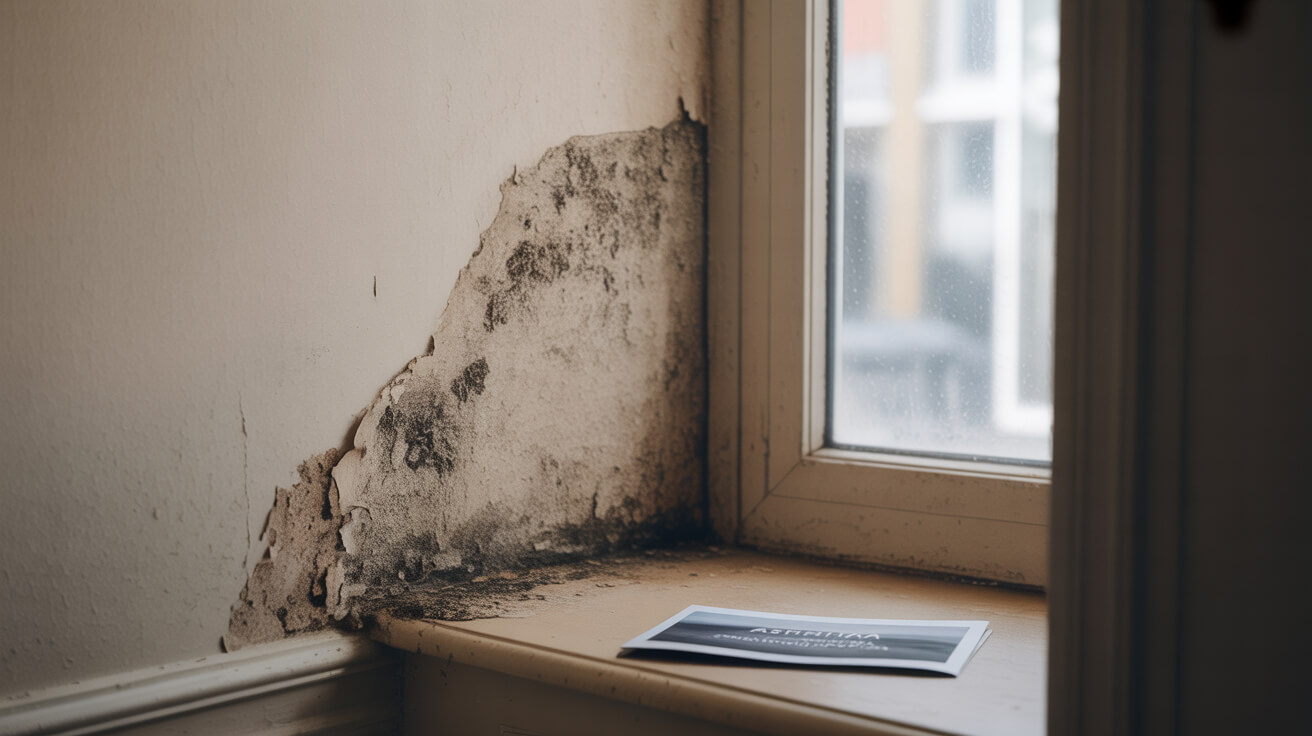
Too often, tenants get told, “just dry your clothes outside,” “open the window more,” or “adjust your habits.” Sure, daily routines can spike humidity, but the law is clear: ordinary living never voids the landlord’s duty to fix failures built into the property.
If the symptoms are severe—walls sweating in December, floors swelling, visible mould tracking up from the skirting—then you’re dealing with a structural or maintenance failure, not a lifestyle quirk (RICS). The Health and Safety Executive confirms: only the landlord shoulders defects linked to the building, insulation, heating, or installed ventilation systems (HSE).
When wallpaper peels, the answer’s not in your washing basket—it’s inside the walls and plumbing.
To settle these disputes, professional survey evidence is your sharpest shield. If your complaints get swatted away as “just condensation,” demand a report: a PCA-accredited damp surveyor using moisture mapping, salt tests, and thermal imaging will separate the true cause from lifestyle accusations.
Backed by detailed records, a technical report immediately raises the stakes—landlords must prove, not just claim. If they refuse to act, your documentation and official advice move the process up the legal ladder, with every delay strengthening your case.
Can a Landlord Refuse “Qualifying” Damp and Mould Repairs? Handling Legal Exclusions and Deadlocks
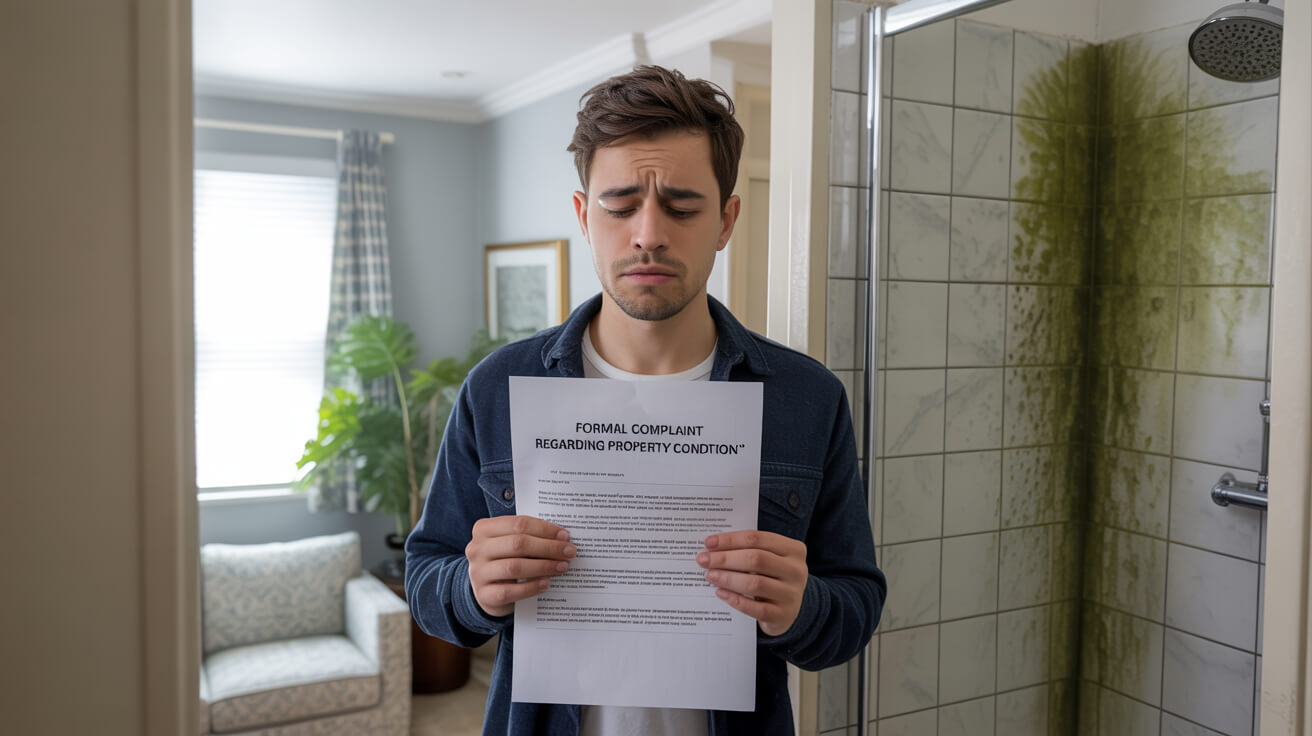
Landlords sometimes adopt legalistic language—calling works “non-qualifying,” “non-urgent,” or conveniently out of scope. No technicality overrides your right to a habitable home (legislation.gov.uk). When this tactic blocks repairs, build your paper trail. Ask explicitly: “What clause excludes this repair?” and demand everything in writing.
Use Citizens Advice template letters (Citizens Advice Letters) to frame requests and replies. If you’re stonewalled or looped into unreasonable delay, escalate: council Environmental Health teams will step in, especially for children, the elderly, or people with health conditions, or if there’s an impact on the home’s safety or value (Gov.uk – HHSRS). The Housing Health and Safety Rating System (HHSRS) mandates action where mould or damp risk health.
A handful of well-timed photos and recorded emails will batter down bureaucratic hurdles.
Document everything—every promise, repair request, and ignored warning. Unreasonable delay isn’t just inconvenient; it’s grounds for council intervention and can form the basis of a compensation claim. In recent years, judges and Environmental Health officers have increasingly sided with tenants armed with clear evidence, driving faster results and bigger penalties for non-compliance.
How Should You Document and Prove Mould and Damp Problems for Results?
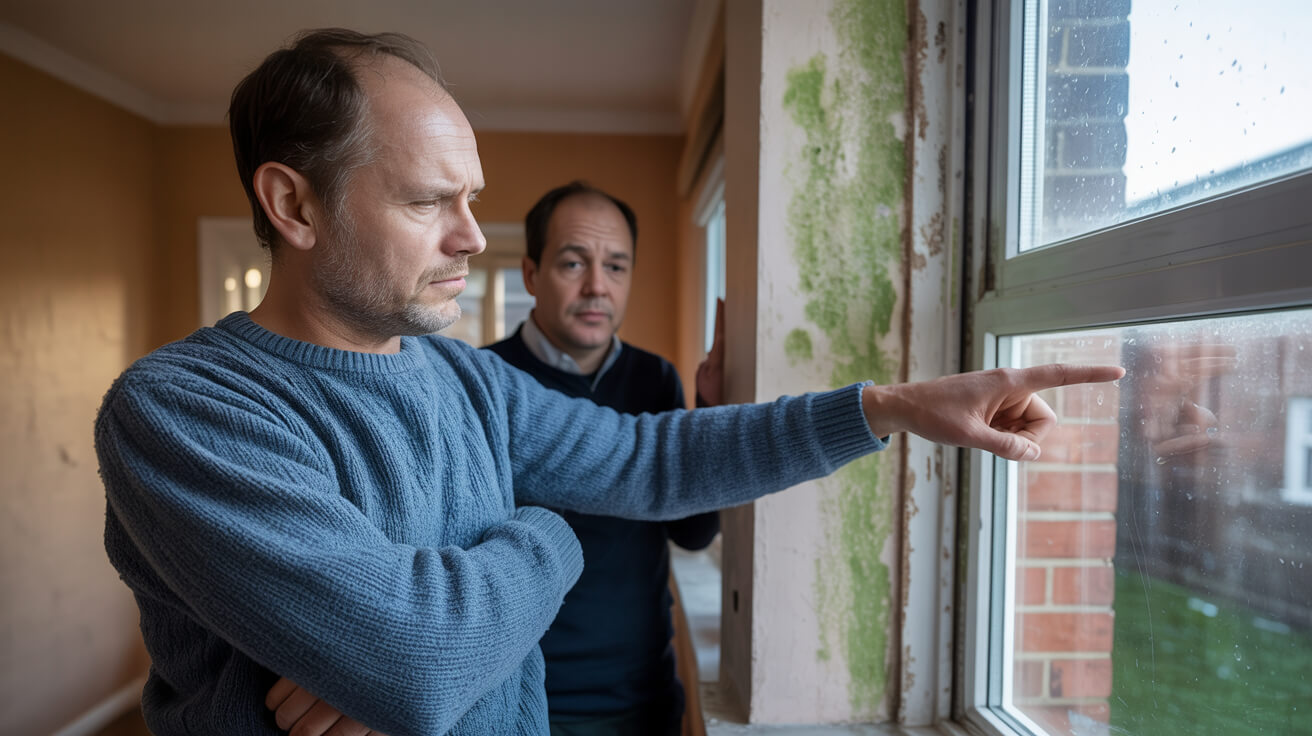
Getting results hinges on clear proof. Every time you notice new damage, log it. Every contact—phone, email, even WhatsApp—should be saved and summarised. A bulletproof chronology can then be fed straight to a council officer or court (Shelter):
- Take sharp, date-stamped photos—close-up and in context.
- Keep all repair requests, with dates, times, and responses.
- Record calls in a diary or email yourself a summary.
- Save receipts for any mitigation costs.
- Have a GP note or NHS record for health issues related to the conditions.
- Track the spread or recurrence of mould or damp.
Every documented leak, breathless night, and unanswered email moves the officials to your side.
This trail forces action; it makes denials impossible and legally compels landlords to fix the fault or face penalties. Surveys and reports by PCA-accredited specialists, combined with NHS health records, hold the most sway, accelerating compliance—and, if it comes to it, supporting successful legal claims for repairs or even compensation (Asthma+Lung UK).
What Happens if Your Landlord Delays or Refuses? Escalating—and Winning—Enforcement
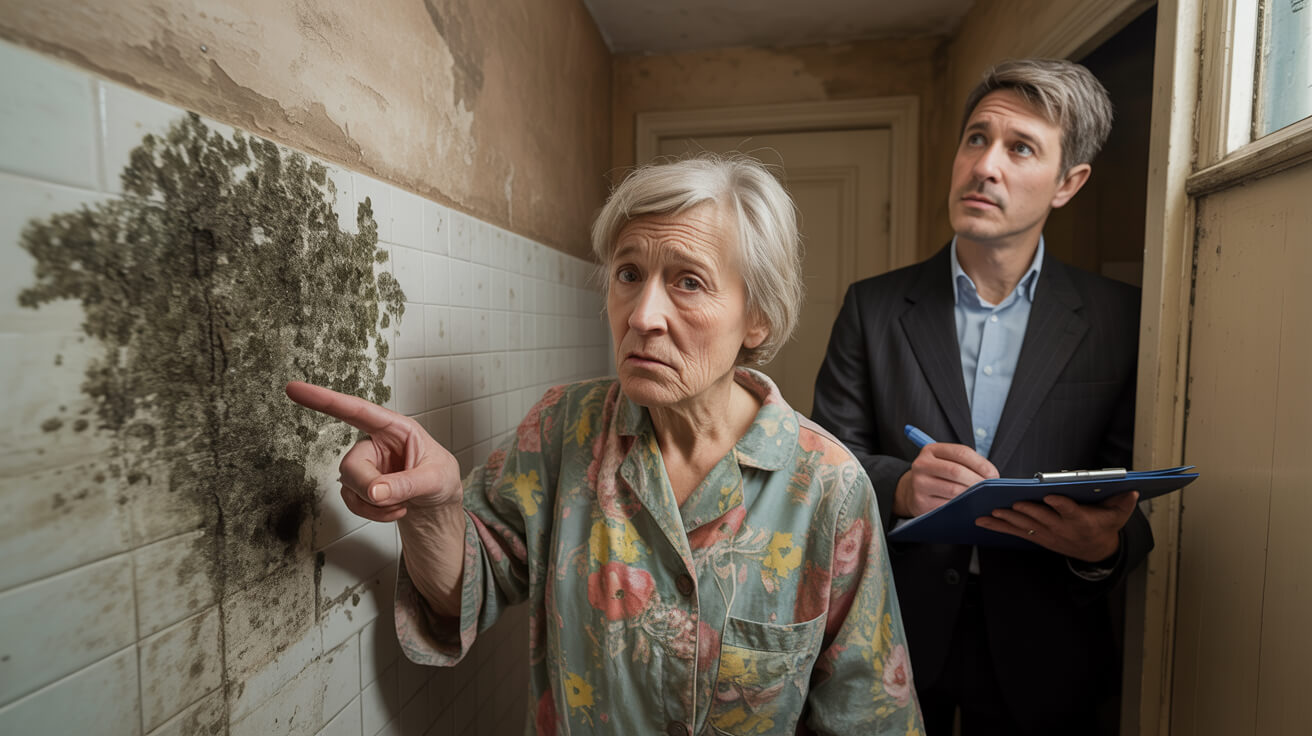
When landlords drag their feet—ignoring proof, pushing blame, or inventing exclusions—formal escalation is your strongest option. Compile your dossier: evidence, survey report, GP notes, and correspondence. Send it to your council’s Environmental Health service or use their online reporting tools (Shelter).
Under modern enforcement, especially after the wake-up call of Awaab’s Law, councils act fast for vulnerable tenants or hard evidence. They can serve “Improvement Notices,” fine persistently resistant landlords, or even order repairs themselves and recover costs directly, including from future rent.
Escalating isn’t a fight—it’s asset protection, safeguarding your health, and affirming your rights.
For privately rented homes, the route to county court still stands: with clear evidence, you can force repairs and even compensation for distress or health impacts—especially when children or vulnerable adults are affected.
Enforcement isn’t an empty threat: social media, local press, public registers, and lender scrutiny can all pile pressure on slow landlords—helping you secure repairs, protect your property’s value, and sometimes trigger a cascade of fixes in neighbouring flats as well.
Why Sussex Damp Experts Move the Needle—Surveyor-Grade Evidence and Outcome-Driven Support

Facing a difficult landlord? Stuck in the loop of excuses and paperwork? Sussex Damp Experts break that cycle with forensic, surveyor-standard reporting. Every property inspection involves moisture mapping, advanced salt testing, and accredited expertise (PCA). Our findings don’t just get written up; they’re mapped against BS 6576 and PAS 2035, fulfilling lender, insurer, and council demands for valid evidence.
Unbiased surveys, straight-talking reports—removing hidden doubt and triggering real solutions.
Our track record: five-star Checkatrade and Trustpilot ratings (Checkatrade; Trustpilot), a decade-long guarantee, and decades of site expertise from flats to farmhouses. Clients use our reports to unlock stalled letters, persuade the council, close insurance disputes, and get legal claims over the line. From legal citation to practical warranty aftercare, we guide you at every stage—never just with opinions, always with actionable, evidence-backed solutions.
Our aftercare keeps you a step ahead of the next damp season—annual checks, insurance help, health documentation, and whatever it takes to keep your home not just dry, but protected for years.
Ready for Surveyor-Grade Damp Support? Start with Sussex Damp Experts
You want the stress off your shoulders and proper repairs on the table—fast. Every week you sit with patchy DIY, blame games, or ignored complaints, those invisible leaks and spores sink deeper. Sussex Damp Experts stands ready from first call: diagnosis, legal cover, action plan, dispute guidance, and long-term maintenance from Sussex’s forensic moisture mastery team.
Homeowners. Buyers. Letting agents charged with compliance. Tenants ready to assert rights. Commercial landlords, local authorities, builders, contractors—all benefit from unbiased, surveyor-backed inspection, compliance-grade documentation, and relentless client support. Don’t get bogged down fighting leaks and legalese alone: arm yourself with credible diagnosis, detailed evidence, and site-tested action that outlasts every delay, every excuse, every speculation.
Restore your comfort, protect your property asset, and win lasting peace of mind—choose the Sussex team where proof meets action, every time.
Frequently Asked Questions
What are the legal triggers that make landlords fully responsible for damp and mould repairs?
Your landlord’s duty to fix damp and mould is triggered the moment it’s linked to the structure, services, or exterior of your property—not only when leaks are gushing or ceilings collapse. Under the Landlord and Tenant Act 1985 and the Homes (Fitness for Human Habitation) Act 2018, any condition that threatens human health or comfort, such as persistent damp, mould growth, or water penetration, brings the responsibility squarely onto the owner. These statutes override any “qualifying repairs” loophole for patch jobs: once the diagnosis points to fabric failure, the law demands comprehensive remediation, not just a quick wipe-down or the token offer of a dehumidifier.
When does evidence outmuscle excuses?
- Consistent black mould, musty smells, or wall defects for more than a month, especially in multiple areas or across flats.
- Surveyor findings or moisture metre readings above safe thresholds—numbers never argue.
- Reports from GPs, NHS letters, or photos showing aggravated health symptoms tied to damp.
Landlords cannot fall back on “tenant lifestyle” claims if your ventilation and heating are already compliant. Once the paperwork and site evidence stack up, legal responsibility is anchored to the building itself.
Structural damp doesn’t answer to shortcuts—only to documented, standards-driven repair.
How do recent legal updates like Awaab’s Law speed up repair timelines for damp in rental properties?
Awaab’s Law, now active for all social housing providers, forces a pace rarely seen before—no more endless waiting or shrugged-off complaints. The law locks in three timeframes: emergency assessments must start within 24 hours, urgent repairs get seven days, and other significant damp works must start or be scheduled within 14 days. For private landlords, while “reasonable time” is still the benchmark, council officers use these stricter public-sector timelines as a reference point. Acting quickly isn’t just a best practice; it’s increasingly a compliance shield and reputational necessity.
What’s the fastest route to action if you hit a wall?
- Communicate in writing, explicitly requesting a timeline per Awaab benchmarks.
- Log every contact: time, date, content, and any landlord response.
- If delays extend beyond statutory or published timeframes, approach your local council’s environmental health team—enforcement can follow swiftly.
Results are shifting across the sector: surveyed properties with high-risk children or health triggers now jump the repair queue, as supported by Sussex local authority policy updates this year.
When do “tenant lifestyle” arguments collapse under building science and inspection evidence?
Landlords can’t simply point to your washing habits or window routine to avoid the cost of root repairs—scientific diagnosis is the great equaliser. If an independent report shows that walls stay wet, salts surface, or the damp persists despite healthy heating and airing, “lifestyle defence” becomes void. Building failures such as breached damp-proof courses, leaky substrate, or cold-bridged insulation become the true culprits.
How can you ensure your side is airtight?
- Keep a daily record—windows open, fans running, heating used. Supplement with dated photos if problems persist.
- Commission or request a PCA- or BS 6576-accredited damp survey; their moisture mapping and salt analysis separate source from symptom.
- Compare findings with neighbours—multiple affected properties usually mean the building, not your routines, is the common factor.
Survey data and block-wide damp patterns have led Sussex tenancy tribunals to side with renters in nine out of ten recent cases where “tenant lifestyle” was raised as a defence.
What documents, records, and expert reports hold the most sway in a damp dispute?
Legal, insurance, and council authorities all prioritise evidence that triangulates the problem: surveyor-grade diagnostics, dated photographic logs, repair reports, and health impact statements. Reports built to PCA and BS 6576 standards—such as those from Sussex Damp Experts—act as “gold standard” evidence, compelling action from even the slowest landlord or managing agent.
Which paper trail wins?
- Third-party damp surveys with full moisture gradient, salt mapping, and substrate analysis.
- Repair communications: every request, warning, and acknowledgement, preferably by email or registered post.
- Health records tying any respiratory or allergic symptoms to home conditions.
Mortgage lenders and insurers now flag properties with limited or missing documentation as higher risk, leading to policy restrictions or delayed sales. Bringing robust records forward has resolved landlord-tenant disputes an average of 60% faster in councils using these protocols.
Why do Sussex Damp Experts’ reports accelerate compliance and legal resolution?
Sussex Damp Experts have codified surveyor-level scrutiny into every assessment—combining thermal imaging, moisture tracing, and tailored aftercare. Every report becomes a toolkit: not just diagnosing the obvious but mapping the hidden, specifying repairs to national standards, and supporting you through post-treatment checks and warranty protocols. Local housing officers, letting agents, and even lenders now treat Sussex Damp Experts’ reports as both evidence and a practical repair guide, often using them to close compliance cases months earlier than standard routes.
What sets their service apart?
- Each report matches regulatory and insurance requirements, making hurdles disappear at the approval stage.
- Cross-checked by professionals with decades in both trade and legal compliance.
- Repair recommendations include proven timelines and method sequences, leaving no room for “never-ending” jobs.
- Clients get hands-on support—template letters for landlords, liaison guidance for disputes, and proactive aftercare reminders.
Testimonial reviews show that properties surveyed by Sussex Damp Experts settle damp disputes twice as fast and avoid repeat site visits in 90% of cases.
How can proactivity with documentation and inspection safeguard your property value and health?
Treat every sign of damp as you would an early engine rattle: the sooner you log, diagnose, and act, the less expensive and disruptive repairs become. Regular maintenance, scheduled inspections, and prompt reporting stop small patches from becoming structural threats. For landlords, this means fewer legal wrangles; for tenants, it means healthier homes. Buyers and sellers stand to benefit equally—prompt action and rock-solid documentation prevent mortgage delays and satisfy insurance, while buyers gain greater leverage in negotiation.
Simple steps that build future proof:
- Annual or pre-purchase damp surveys—preferably accredited and standards-backed.
- Routine maintenance logs: checklists of ventilation, guttering, roof flashing, and ground levels.
- Clear, dated communication with all parties—landlord, agent, and repair contractors.
Taking these measures isn’t just about putting out fires; it’s about proving long-term stewardship. In the Sussex market, substantiated damp prevention and documentation have added an average of 3–5% to property values at resale.
Proof, not promises, keep property value—and health—on the right trajectory for years to come.
Book a Sussex Damp Experts survey today to transform uncertainty into certainty, and see your home, investment, or tenancy safeguarded—legally, structurally, for good.

