
 By
By  April 30, 2024

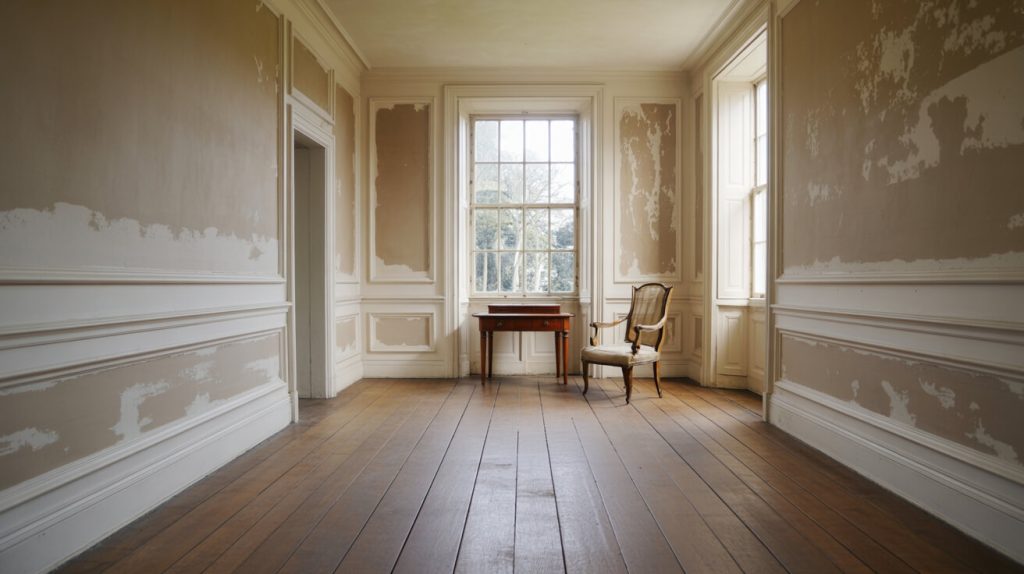
How to Treat Rising Damp in an Old House
When you spot damp patches climbing up from a skirting board or catch that persistent musty odour after a rainy week, you’re not just facing a minor inconvenience: you’re encountering a well-documented threat to asset value, health, and regulatory peace of mind. Heritage properties and period homes are structurally and legally vulnerable to rising damp in ways modern buildings rarely match. Addressing this issue isn’t optional if you have any interest in preserving long-term value, reducing operational disruption, or keeping future lenders and insurers on your side.
Why Rising Damp is a Strategic Risk for Property Owners
- Mortgage refusals, insurance exclusions, and legal notices often begin with unresolved damp.
- Repairs that simply mask symptoms or ignore compliance can cost hundreds more in hidden damage, enforcement penalties, or loss of original features.
- Hesitation brings compounding risk: moisture advances each season, and costs escalate with every deferred decision.
The Asset Protection Imperative
Rising damp management isn’t about “patch and hope.” It starts with forensic investigation and ends with a regulator-recognised solution and warranty. If you want your listed brickwork protected, your tenants’ complaints pre-empted, or your next sale to clear inspection instantly, you need damp proofing that merges science, compliance, and conservation with local expertise. Sussex Damp Experts deliver all three.
Delay is never invisible. Every season the hidden damage compounds, not just in the brick, but on your balance sheet.
The only way to break this cycle is diagnostic precision, tailored remediation, and verified aftercare. Anything else is a gamble against the odds.
Why Do Heritage Properties Face Unique Damp Risks?
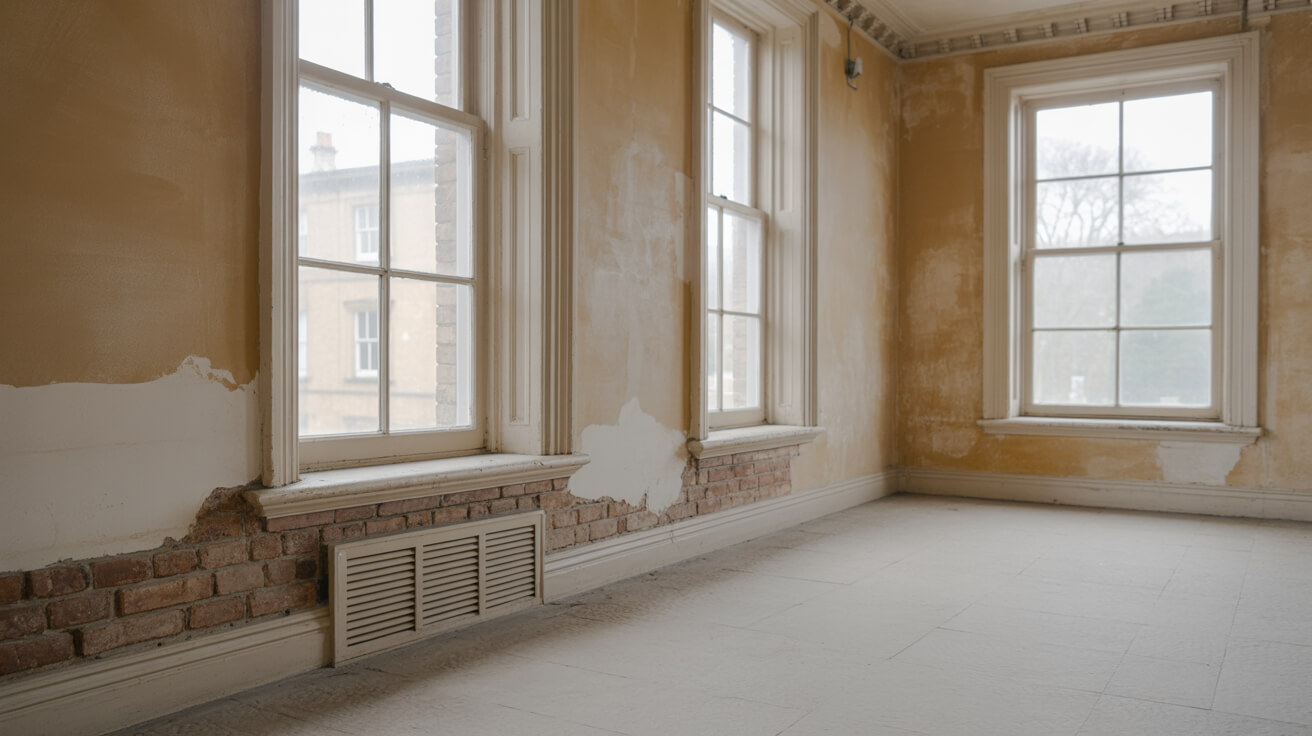
It’s easy to assume that all homes suffer from the same moisture risks, but heritage and period properties confront a more complex equation. The materials and techniques used in older construction are uniquely prone to upward water migration and modern repair errors.
Critical Factors in Historic Property Damp Vulnerability
- Solid walls (often without cavity gaps) lack modern barriers and allow capillary moisture rise.
- Lime mortar and soft brick/stone are more absorbent than new, hard-fired equivalents.
- Past “solutions” like cement render, chemical paint, or impermeable membranes often trap moisture, enhancing substrate failure.
- External changes—patio elevations, blocked drains, garden beds—alter water pathways and create new, invisible risks.
- Recurring renovations stack incompatible materials, causing chemical incompatibility and structural decay.
The Compliance and Conservation Challenge
- Listed and historic buildings are protected by local and national frameworks demanding:
- Reversible, non-destructive, and moisture-permeable solutions.
- Materials, methods, and documentation commensurate with BS6576, PAS2035, and conservation authority stipulations.
- Assurance that all fixes can be traced for sale, insurance, and audit purposes.
A quick DIY fix that works for a new build frequently devastates a listed Georgian or Victorian asset. The regulatory cost of an error is often higher than the original repair bill.
Table: Heritage Damp Risk Factors
| Construction Feature | Why It Matters | Typical Mistake | Regulatory Requirement |
|---|---|---|---|
| Solid brick/stone walls | Allows upward moisture & salt migration | Use of cement render | Use breathable lime plaster |
| Missing/bridged DPC | Water rises unchecked | Skipping physical or chemical DPC | Instal DPC with council consent |
| Incompatible repairs | Traps moisture, promotes decay | Impermeable paints/membranes | Require reversible solutions |
| Raised ground/external | Changes drainage, increases capillary load | Landscaping above DPC | Maintain external ground below DPC |
Heritage properties demand more than technical intervention—they require procedural discipline, material fluency, and total documentation.
What Are the Telltale Signs of Rising Damp?

Accurate symptom recognition divides owners who protect value from those who let invisible damage accumulate until costs skyrocket. Unmasking rising damp means looking beyond obvious signs for subtle flags that betray the early infection.
Distinguishing Genuine Rising Damp
Primary indicators often cluster near ground level:
- Persistent tide marks up to 1 metre, fading higher up.
- Plaster softening, crumbling, and powdery residues—especially in corners and behind skirting.
- Paint or wallpaper liftoff, even after repeated reapplication.
- White, chalky salt blooms (efflorescence) along the wall base.
- Musty, earthy odours that linger despite airing the room.
Rising damp almost always starts from floor level; patches appearing higher without ground connection often signal a different cause (roof leak, condensation, gutter fault). If multiple signs converge, especially after periods of rain or cold weather, it’s prudent to escalate from self-diagnosis to a professional survey.
Diagnostic Shortlist for Fast Self-Assessment
- Is damp confined to the base of walls (within ~1m)?
- Do symptoms return after cosmetic repairs or painting?
- Has your property undergone previous, failed remedial work?
- Are external levels higher than internal floors?
- Can you crush surface residue between your fingers?
Every overlooked sign is a silent permission slip for decay.
Quick action when even a subset of these symptoms emerges protects not just today’s comfort but tomorrow’s sale or insurance eligibility.
How Are Rising Damp Problems Accurately Diagnosed?
Guesswork in diagnosis is the root of spiralling costs and failed warranties. Regulatory, legal, and insurance frameworks mandate rigorous assessment as the basis for any action—auditable, transparent, and standards-driven.
The Stepwise Professional Diagnostic Process
- Moisture Metre Mapping: Profile conductive and capacitance readings at multiple wall heights and points.
- Salt Analysis: Test for nitrates/chlorides to confirm capillary groundwater origin—excluding surface leaks or condensation.
- Substrate and Plaster Testing: Invasive checks for porosity, material compatibility, previous repair tapes/films.
- Thermal Imaging: Visualise cold bridges and hidden moisture migration paths invisible to the naked eye.
- Ground and Drainage Inspection: Verify external elevations, downpipes, and potential bridges that could invalidate even the best internal fix.
- Compliant Reporting: Lay out all findings with photographic, mapped, and standard-referenced evidence ready for council, lender, or insurance review.
Accredited consultants, like those at Sussex Damp Experts, combine these approaches into a survey compliant with BS6576 and PAS2035—protecting you from both future claims and regulatory backlash.
Proof Impact Matrix
| Diagnostic Layer | Outcome | Risk if Skipped |
|---|---|---|
| Moisture/probe mapping | Confirms spread | Undetected migration |
| Salt/chemical test | Excludes false cause | Costs on wrong repairs |
| Thermal imaging | Reveals cold/damp bridge | Hidden “future” damage |
| Drain assessment | Prevents bridging | Rapid recurrence |
A compliant survey is your shield, not just against early failure, but against legal challenge, resale disputes, and warranty shortfalls.
Which Damp Proofing Methods Work for Period Homes?

Old buildings and listed sites require both technical and legal calibration; not every “damp solution” on the market qualifies. Regulatory compliance, longevity, and material compatibility dictate which methods will pass approval—and perform in the long term.
Comparative Table: Approved and Prohibited Remedies
| Treatment Method | Heritage Safe | Typical Use | Regulatory Approval Needed |
|---|---|---|---|
| Chemical DPC injection | Sometimes | Porous, soft brick/mortar walls | Council/heritage officer |
| Electro-osmosis | Select | Substrates incompatible with DPC | Written consent/plan review |
| Breathable membrane, lime plaster | Yes | All heritage/solid wall contexts | Strongly preferred/required |
| Cementitious tanking, vinyl paint | Never | Traps moisture, destroys fabric | Explicitly forbidden |
Highlights
- Chemical DPC Injection: Only suitable where porosity is right and installation meets heritage/building codes. Requires post-instal testing and proof.
- Electro-osmosis: Use for walls/masonry where chemical DPC would damage fabric or has repeatedly failed. Must be permitted and technically warranted.
- Breathable Plasters/Membranes: Universal for old, solid, lime-based, or listed walls; allows moisture to exit. Often mandated by regulation.
- Cement Tanking & Paints: Trap more moisture than they repel, quickly leading to hidden surface and substrate decay—never compliant for listed/valued construction.
A compliant repair is better than any clever workaround. If it can’t be inspected or reversed, it isn’t suitable.
Choosing Sussex Damp Experts means precise, heritage-compliant specification, council-aligned documentation, and restoration-ready warranty.
When Should You Act to Protect Your Property Value?

Time is the pivotal risk multiplier when dealing with damp in older properties. Every week deferred turns small repairs into budget-draining emergencies and pushes surveyors or authorities closer to forced intervention.
Who Needs Immediate Action?
- Managers facing mortgage retention due to surveyor’s damp note.
- Landlords with tenant/council allegations of housing fitness breach.
- Property owners who see visible rot, soft skirtings, paint failure.
- Anyone hearing from an insurer about lapsed or pending policy due to building condition.
- Any occupant experiencing recurring health complaints potentially attributable to damp/mould.
Timeline: From Symptom to Secure Outcome
- First indications: Patches, mould, odour detected.
- Internal review: Existing work, warranties, repairs assessed.
- Professional survey booked: Documentation assembled.
- Action plan executed: Compliant contractor/methods chosen.
- Documentation filed: For lender/insurer/local authority compliance.
You’re not judged on the patch, but on how fast you made it future-proof.
Hesitation is a strategic liability. Working with Sussex Damp Experts closes the compliance loop before financial, legal, or health consequences can spiral.
How Can You Safeguard Period Homes From Future Damp?
Lasting asset protection isn’t just about fixing now—it’s about ongoing vigilance, data-driven monitoring, and proactive compliance. Damp rarely returns silently; established, repeatable protocols block recurrence, safeguard warranties, and maximise ROI.
The Proactive Owner’s Blueprint
- Schedule annual professional damp inspections—every missed year multiplies undetected damage potential.
- Leverage smart humidity, substrate, or leak sensors for remote or hands-off monitoring.
- Maintain seasonal and post-weather event logs for drainage, downpipes, and landscaping.
- Confirm all internal works remain compatible with original survey—avoid DIY “upgrades” that may void warranty/regulatory cover.
- Store all maintenance records, reports, and aftercare documents together for re-sale, claim, or future audit.
True asset stewardship is a season-by-season commitment—not a one-off procedure.
Ongoing aftercare means you never again need to fear survey failures, value loss, or post-sale liability. Sussex Damp Experts provide not just repairs, but ongoing assurance.
Book Your Free Consultation With Sussex Damp Experts Today
Take the step that anchors your status as a proactive, future-focused property steward. Your choice of specialist is as visible and lasting as the damp you remove—the difference is, it defines asset value and legacy rather than undermining it.
Experience Survey-Led Consultation
When you connect with Sussex Damp Experts, you gain:
- Surveyor-calibrated diagnostics custom-built for your property, asset class, and regulatory needs.
- Heritage-compliant repair planning and execution backed by warranty, documentation, and insurer/lender/council recognition.
- Full-spectrum aftercare, annual documentation, and intelligent monitoring—making you the reference point for best practice in your sector.
The longer you wait, the less control you hold and the more others (surveyors, insurers, authorities) decide. With Sussex Damp Experts, you take back control—achieving lasting compliance, enduring value, and operational security.
Define your place as a guardian of history—choose asset protection that’s as advanced as your property deserves.
Frequently Asked Questions
How do I treat rising damp in an old house without risking damage to property value or original features?
Rising damp in older buildings is not simply a stain or minor inconvenience—it is a corrosive process that, left unchecked, can eat away at both your property’s value and its heritage. Tackling this threat requires you to recognise what you’re actually fighting: capillary water movement through porous walls, accelerated by missing or failed protective barriers beneath decades of paint, plaster, and good intentions.
The Hidden Risk of Passive Measures
Failing to act decisively allows moisture to breach substrates, dissolve mineral salts, and compromise decorative details. Decorative overcoats, generic damp-proof paints, and retail “injections” not only fail to stop the problem—they can amplify underlying decay, trapping moisture inside masonry and accelerating substrate loss. Cement renders, in particular, suffocate the wall’s breathability, forcing damp both sideways and upward. In period buildings, every guess carries the risk of forfeiting regulatory compliance or erasing the very features that distinguish your property from the bland and the mass-produced.
The Active Solution Path
A disciplined system always begins with a forensic-grade survey—moisture readings at multiple heights, salt tests, substrate checks, and mapping of external water routes. Only then do effective treatments follow: chemical damp proof course installation (matched to your wall chemistry and heritage sensitivities), smart ventilation upgrades, lime-primer re-rendering, and finishing with vapour-permeable surfaces. Each intervention is supported by documented compliance and survey-ready evidence, allowing your property’s value to withstand the scrutiny of insurers, lenders, or prospective buyers.
| Step | Purpose | What To Ask Before Next Step |
|---|---|---|
| Survey (moisture/salt) | Diagnose true source | Is this rising, lateral, or condensation? |
| External Drainage | Eliminate water at source | Are levels/soil/fall worsening the ingress? |
| DPC Installation | Block capillary action | Will it damage original substrate? |
| Lime Re-render | Restore breathability | Does plaster and paint allow vapour escape? |
| Aftercare | Prevent recurrence | Are regular checks scheduled? |
Preventing further loss comes from robust evidence over cheap promises. Your choice of a seasoned, compliant, regulator-recognised specialist is the single best way to defend both your asset and its legacy.
Why are heritage and older properties especially vulnerable, and what’s wrong with quick “damp fixes”?
Period homes—whether a Georgian row, an Edwardian terrace, or a rural farmhouse—are fundamentally different from new-builds. Their walls are denser, more porous, and often completely missing the damp-proof courses now mandatory in modern design. Eigenvalue is not just a mathematical concept; in your property it’s the story of energy and water movement, written into the DNA of lime, handmade brick, and timber-framed walls.
The Myth of Modern Magic Bullets
Generic solutions—silicone injections, cement tanking, waterproof plasters—attempt to seal up the past. But when applied to solid-walled, lime-mortared structures, these treatments backfire. Water, denied an exit, finds new, destructive routes and may drive salts to critical decorative details. Because these homes “breathe” moisture, sealing them suffocates not only the damp, but the building itself.
Historic buildings are also subject to a tangle of protection: planning permissions, conservation rules, and insurance conditions require documentation, reversibility, and substantiation. Ignoring governance is a shortcut to legal, financial, and resale friction.
Legacy Meets Modern Craft
When you call in a surveyor with true heritage fluency, you receive a care plan attuned to both building science and the legal landscape. That means identifying original materials, tracing changes in ground levels, and diagnosing historic repairs that may have redirected moisture unintentionally. Only bespoke, regulator-approved treatments—breathable lime renders, smart drainage, and compliant DPCs—preserve value and avoid future disputes.
Few investments match the peace of mind from knowing each intervention honours heritage and meets tomorrow’s insurance, resale, and compliance needs. A home’s story survives when your stewardship is documented and defensible, not generic and invisible.
What are the unmistakable indicators of rising damp that I should never ignore?
Rising damp is a shape-shifter. Its first clues are rarely catastrophic: subtle tide marks, gentle crumbling at skirting level, a powdery bloom of salt, a single cold, damp touch. Yet these are not idle details—they are actionable warnings that time is not on your side.
Bulletproof Warning Signs
- Tide marks or staining: Always starting at ground level and rarely rising above chest height.
- Salt efflorescence: Fine, powdery deposits where evaporation is drawing minerals outward.
- Peeling paint, flaking plaster: Usually recurs after every attempt to redecorate.
- Warped skirting boards and soft joinery: Suggests long-standing water ingress.
- Localised black mould: Stubborn in corners and behind furniture even with window ventilation.
Why These Signs Demand Action
Ignoring these indicators is gambling against escalating damage, failed sales surveys, tenant complaints, and future legal claims. DIY or aesthetic fixes produce only temporary improvement, giving water and salts time to infiltrate further, damaging what isn’t yet visible.
Today’s surface problem is tomorrow’s structural, legal, or financial crisis. The smarter path? Arrange for a diagnostic survey designed for listed, period, or complex assets—one that comes with documentation ready for any authority. Each symptom, if properly acted upon, is your opportunity to intercept cumulative loss. Passive management guarantees nothing but increasing regret.
How do leading experts accurately diagnose the true cause of damp in old properties?
Damp diagnosis is not a game of “try and see.” Precision is everything, because in heritage properties, false assumptions rapidly compound cost and frustration. The only reliable approach is sequential, standards-driven, and leaves no variable to chance.
Steps of a Faultless Diagnosis
- Multi-point moisture mapping: Electronic readings at different wall and floor heights, coupled with drilled probe samples.
- Salt profile analysis: Laboratory or field test for nitrate/chloride signature—only rising damp leaves this mark.
- External terrain and drainage check: Plotting downpipe terminations, soil heights, and ground/floor relationships.
- Substrate compatibility test: Determines if the masonry will accept chemical DPC without heritage risk.
- Infrared/thermal scan: Non-invasive imaging to spot cold bridges, hidden ingress, and failed past interventions.
Every finding must be mapped to BS6576 or PAS2035 code, and the result is a written, photographic report with explicit recommendations. These aren’t just for your peace of mind—they are also your evidence for lenders, buyers, insurers, or planning officers.
| Diagnostic Step | Tool/Method | Output |
|---|---|---|
| Moisture mapping | Metre, drill probe | Damp gradient and ingress origin |
| Salt analysis | Reagent or lab test | Confirms rising damp vs. other sources |
| Substrate test | MPA, visual check | Determines DPC or re-render compatibility |
| Terrain/drain check | Visual, laser level | Establishes external contribution to risk |
| Infrared scan | Thermal imaging | Uncovers unseen damp bridges or affected area |
When the future value of your asset is at stake, diagnosis must be documented and defensible. That’s where Sussex Damp Experts set the compliance standard—delivering insight that stops future insurance, planning, or resale shock.
Which treatments deliver lasting results for period homes, and what approaches should be avoided?
In heritage buildings, choice of damp remedy is the line between stewardship and deterioration. Correct selection safeguards your investment and legal standing; the wrong fix can lead to irreversible loss of value or even regulatory enforcement.
Approved Systems vs. Risky Shortcuts
- Permitted: Chemical DPC injection (compatible with historic substrates, and only with evidence of need); breathable membrane barriers; lime render/plaster re-finishes; localised smart drainage to recover original ground/floor ratios; low-impact electro-osmosis.
- Prohibited/high-risk: Cement-based tanking; non-breathable waterproofers; generic DPC creams without prior substrate confirmation; plastic paints or vinyl wallcoverings; undiagnosed, aesthetic-only “quick fixes.”
Side-By-Side Comparison Table
| Method | Heritage Safe | Regulatory Approval | Long-Term Proof |
|---|---|---|---|
| Chemical DPC (injection) | Often | Sometimes required | Requires documentation |
| Breathing render | Yes | Yes | Surveyor/insurer ready |
| Cement tanking | No | No | Banned for period walls |
| Smart drainage | Yes | Frequently needed | Must meet planning |
The safest path is the one that moves at the speed of regulation, matches your property’s construction, and provides audit-ready documentation for every surveyor, insurer, or conservation officer who might ever inspect your building.
When regulatory or legal scrutiny is inevitable, working with Sussex Damp Experts gives you confidence that every fix supports asset value, compliance, and legacy in one step. Your building is a living inheritance—treat its damp with the same strategic command.
When is immediate action a must to safeguard my property’s value and compliance risk exposure?
Damp rarely waits for an invitation; neither do insurers, tenants, or council surveyors. The lines blur quickly from a musty odour or small patch to letters referencing HHSRS, withdrawn insurance, or mortgage retention. When rising damp is highlighted in a home survey, lease inspection, or insurance renewal, time becomes your greatest liability.
You Must Act When:
- Damp is cited in any survey tied to sale, tenancy, or insurance
- Tenants, elderly, or children experience health triggers linked to property conditions
- Skirting, joists, or plaster deteriorate visibly after rainfall or plumbing fails
- Planning, council, or listed building status attaches compliance at the point of diagnosis
Timelines Matter
Many insurance policies, lender requirements, and council directives create strict remediation periods. Delay breeds not only additional costs, but loss of legal recourse and greater repair scope (think rotten structural timber, failed floors, or legal “works in default”).
It is never just about the cost of repair. Delay risks your ability to sell, rent, or claim. For asset managers or multiple-property landlords, response time becomes the difference between portfolio growth and legislative or maintenance bleed.
Sussex Damp Experts is positioned as the partner that delivers audit-ready, regulator-compliant rapid intervention. Owners who move first, with documentation and evidence, do more than solve current risk—they ensure long-term asset command.

