
 By
By  April 6, 2024


What Physical and Scientific Forces Cause Rising Damp?
Rising damp exposes a foundational flaw: water from the soil moves vertically through masonry, exploiting a building’s porous nature. This isn’t a seasonal nuisance—when capillary action is unchecked, the ground invades your internal spaces as an invisible tide.
Capillary Action and Building Material Risks
Capillary action is the science behind every rising damp case. Water is pulled up through finely connected pores in bricks, mortar, and stone. The potency depends on:
- Porosity: Older bricks and lime mortars actively draw more water, especially when replaced with less-breathable modern materials.
- Groundwater Levels: Frequent rainfall and clay-heavy soils in regions like Sussex increase your building’s exposure.
- Evaporation Balance: Where evaporation can’t match upward flow—due to insulation, finishings, or internal conditions—moisture accumulates and damages fabric.
Ignored, capillary rise quietly rewrites your home’s interior from the ground up.
Flowchart: How Rising Damp Proliferates
- Groundwater saturates foundation soils.
- Water moves upward through microscopic masonry pores.
- Salts and mineral residues concentrate at the evaporative boundary.
- Internal finishes fail—peeling paint, crumbling plaster, and timber decay manifest.
If you spot salt stains, tide lines up to 1.2m, or recurring mustiness, you’re seeing natural forces at work—every property is subject to these principles, but only some are protected.
Why Do Damp Proof Courses (DPCs) Fail in Real Buildings?

You expect a damp proof course to act as an impenetrable defence. Yet survey after survey finds new and old buildings braving repeated failures. Why? Because the DPC is vulnerable in ways most owners and even contractors overlook.
Types of DPCs and Their Failing Points
| DPC Form | Typical Lifespan | Primary Weaknesses | Real-World Triggers |
|---|---|---|---|
| Slate (historic) | 80–120 yrs | Brittle, cracks with settlement | Floor levelling, historic renovations |
| Bitumen/plastic | 30–50 yrs | Prone to bridging, UV/collapse | Raised patios, gardens, insulation works |
| Chemical Inject | 15–40 yrs | Needs perfect instal, can miss gaps | Poor dosing, blocked pores, salt attack |
Bridging—a process where internal plaster, new screeds, or external landscaping bypass the DPC—renders it functionally obsolete. Even a flawless horizontal barrier fails if a vertical route emerges.
British Standard BS6576 and Historic England repeatedly highlight that misdiagnosis (“the DPC failed”) is usually a shortcut for missed bridging, site modifications, or flawed materials.
No certificate survives a patio poured too high, or a builder who plasters over a DPC. Diagnosis isn’t paperwork—it’s process.
Visual Infographic Guide: Common DPC Failures
- External ground/drive raised above original DPC line.
- Renovation plaster bridging from floor to wall base.
- Historic DPC cracked by structural settlement.
- Poor chemical injection with incomplete wall saturation.
A professional surveyor from Sussex Damp Experts approaches DPC checks as forensic puzzles—never assuming history or certificates reveal the true state or risk.
How Can You Reliably Identify Early Warning Signs of Rising Damp?
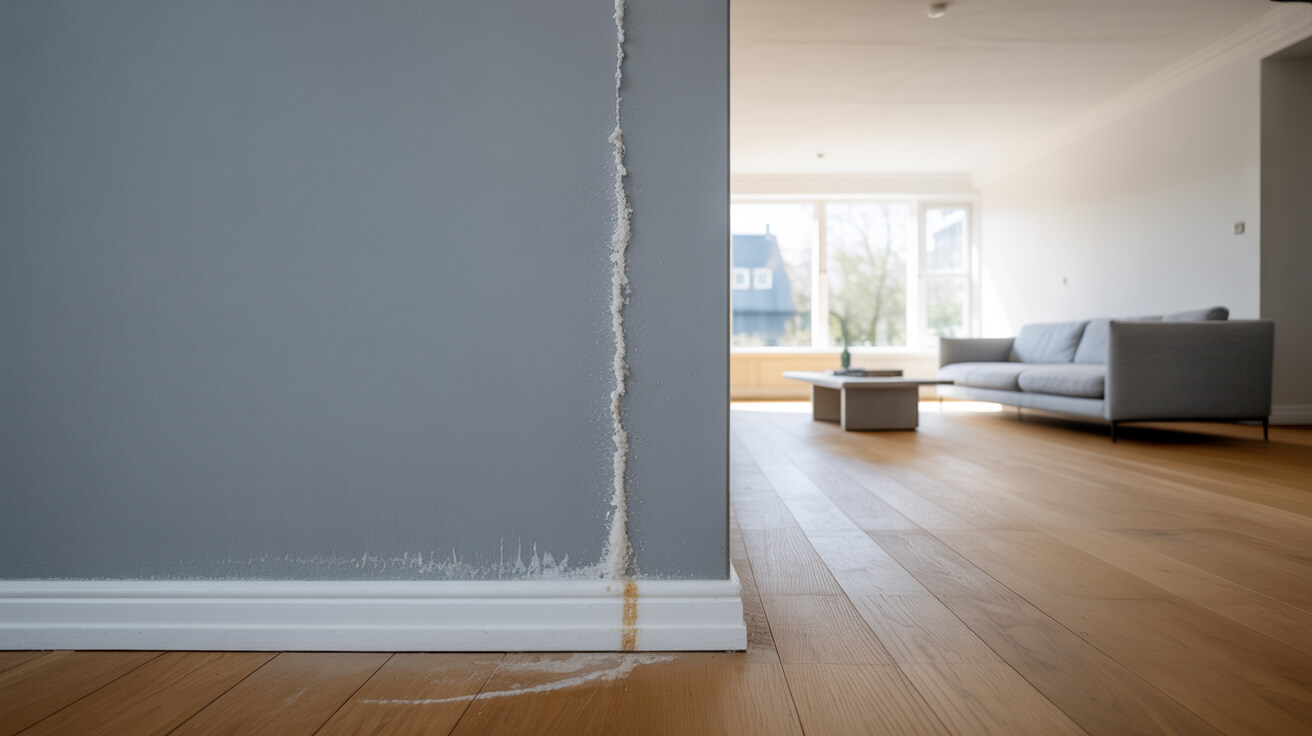
Early-stage rising damp is a master of disguise. Most symptoms look like minor wear or routine condensation—yet every one is a red flag for structural compromise and, for landlords, future legal risk.
Critical Signs to Watch
- Tide Lines: Horizontal stains or discoloration 300mm–1.2m above floors.
- Salt Efflorescence: White powdery residue blooming on walls or plaster residues.
- Persistent Peeling: Localised paint and plaster detaching at skirting/floor junction.
- Musty Odour: An “earthy” smell persisting even after routine venting.
- Timber Rot/Softening: Skirting, floors, or joists decaying—especially at wall contacts.
Table: Distinguishing Rising Damp from Lookalikes
| Symptom | Rising Damp | Alternative Cause |
|---|---|---|
| Low wall stains | Consistent stripes | Local flooding, leaks |
| Salt deposits | Ground-derived | Surface cleaning residue |
| Peeling finishes | Localised, repeat | Poor preparation, leaks |
| Mould (dark, above) | Not typical | Condensation |
If you notice the same defects coming back year after year, your property isn’t unlucky—it’s unprotected.
Keypoint:
Salt lines, low-level damage, and local “shadows” on internal walls usually indicate an unresolved source. Repeated surface repairs signal systemic failure needing expert assessment.
What Building, Site, and Environmental Factors Make Properties Vulnerable?

No two properties share the same risk profile for rising damp. Your building may seem solid until unforeseen site shifts—or even a neighbour’s landscaping project—subtly upend its environmental balance.
Primary Vulnerabilities and Real-World Influences
- Building Era: Historic, pre-1920 properties are engineered to breathe—when covered with modern, impermeable materials, their risk skyrockets.
- Wall Type: Solid walls (single-wythe), now rare in new builds, move water more freely than modern cavity designs.
- External Groundworks: Raised flowerbeds, patios, or tarmac above the DPC encourage bridging. Internal finishes or new screeds can do the same from inside.
- Rainfall and Soils: Properties built on clay, or in regions with fluctuating water tables, face year-round saturation risk.
- Heritage Status: Listed buildings confront unique restrictions—only specialist, breathable systems are approved.
Bulletproof Vulnerability Checklist
- Check that all external ground and paving sits a minimum of 150mm below internal floors.
- Review whether modern plaster or insulation covers originally “breathable” walls.
- For heritage homes, confirm all damp works and materials have conservation officer approval.
It’s not just your maintenance decisions—a neighbour’s driveway or local flooding can create a new risk overnight.
Access our property guide to assess your unique vulnerability profile, with QR-coded regional rainfall maps and compliance checklists tailored for Sussex, Hampshire, Kent, and Surrey.
How Do Accredited Professionals Diagnose and Report Rising Damp?
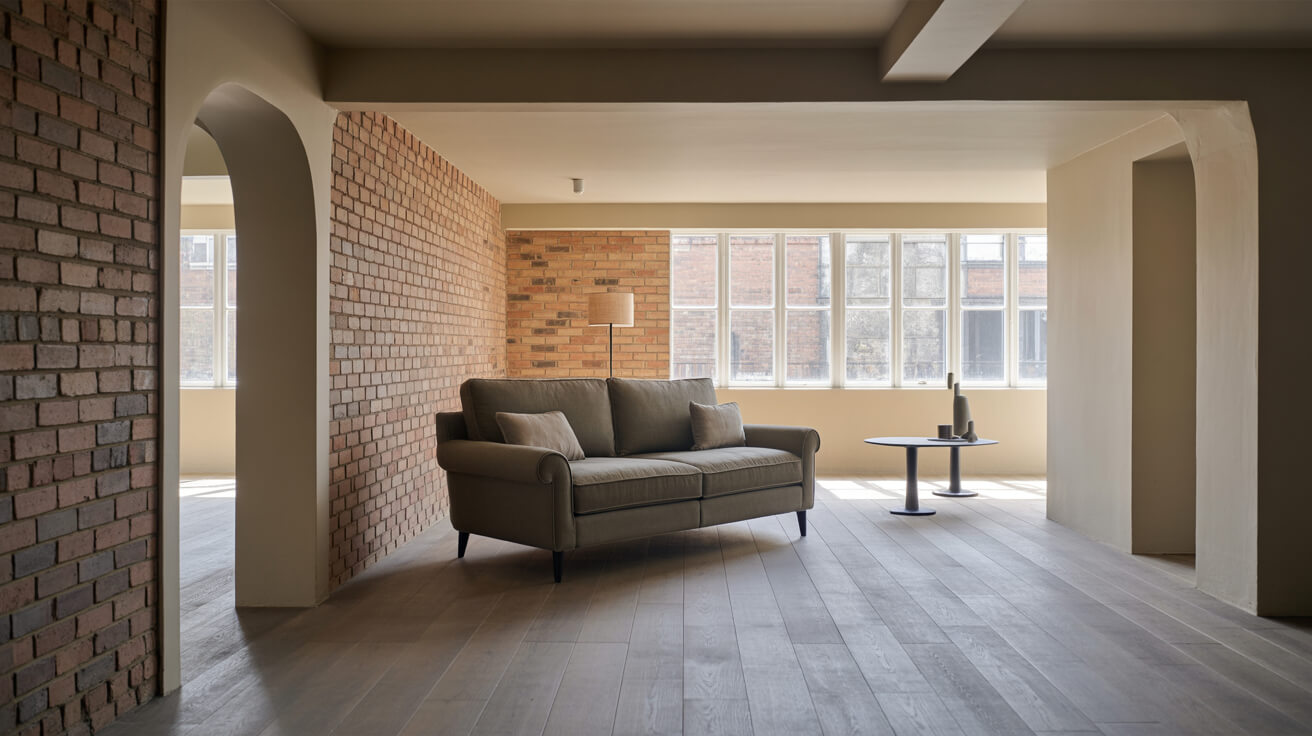
A professional diagnosis reaches much further than a visual guess. Mortgage lenders, insurers, and local authorities expect forensic rigour—a checklist you can’t meet with mere observation.
Stepwise Surveyor Diagnosis Process
- Structured Visual Inspection: Every external and internal surface is mapped, referencing floor, wall, and adjacent property changes.
- Moisture Profiling: Calibrated readings are taken at intervals vertically and horizontally across suspect areas—detecting gradients, not arbitrary “wet spots.”
- Salt Analysis: Wall and plaster samples tested for nitrate/chloride (ground-derived)—key evidence versus common condensation.
- Bridging and DPC Check: Internal and external DPC integrity is visually cross-referenced with construction records. External site levels and post-renovation alterations are photographed and diagrammed.
- BS6576/PAS2035 Reporting: All evidence assembled in a standardised format that meets mortgage, insurance, and statutory documentation protocols—with diagrams and photograph appendices.
A survey isn’t a guess in a suit—it’s a signed map of risk, cause, and solution you can defend in court or to your buyer.
What Sets Expert Diagnosis Apart
- Clarity and structure—no ambiguous “it looks damp” language.
- Legal and mortgage-readiness: documentation tailored for regulatory and transaction milestones.
- Scenario modelling: Assessment covers both obvious and future-risk areas.
Download our report template or book a survey to see the process in action—every section mapped for easy lender and legal sign-off.
Why Do Treatments, Chemical Barriers, and Quick Fixes Frequently Fail?
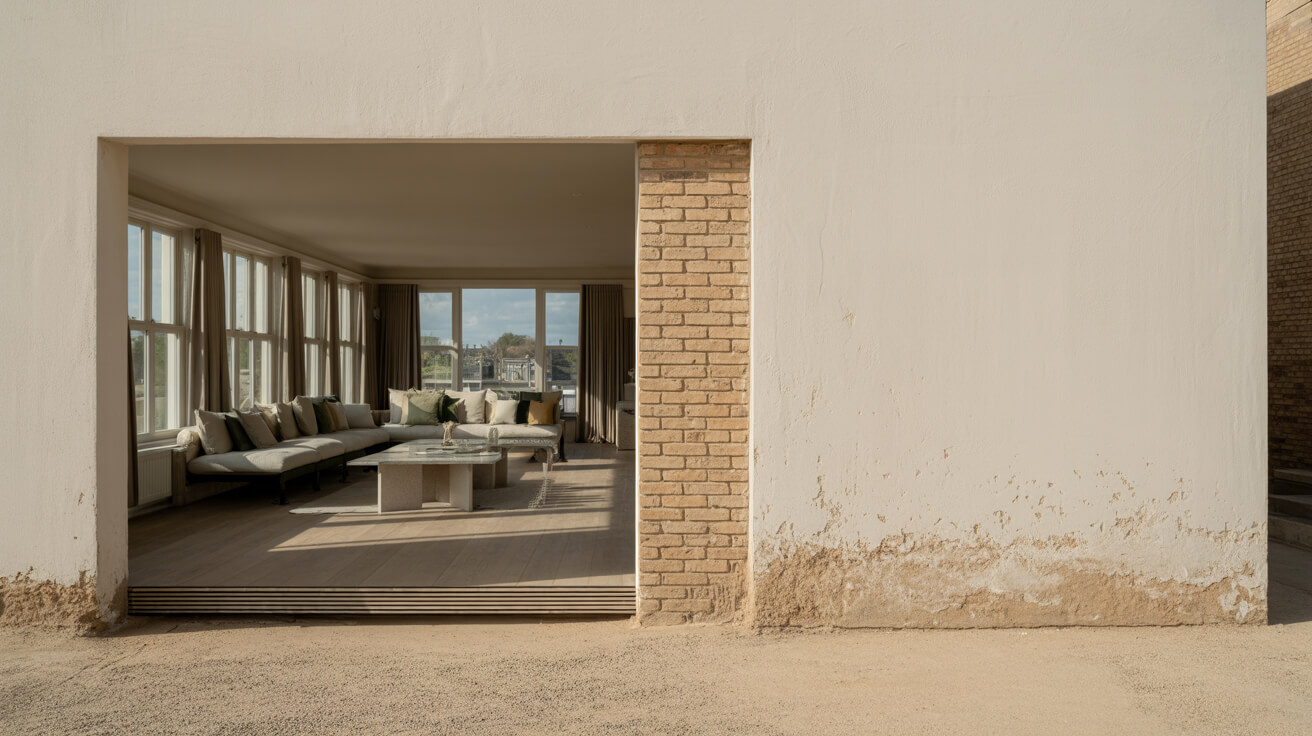
Owners frustrated with repeated repairs often ask: “How can damp come back after the last fix passed inspection?” The answer is deceptively simple: most treatments don’t address your property’s actual, often hidden, causes.
The Truth Behind Common Failure Modes
1. Incomplete Remediation
Treating damp only at the visible surface, rather than finding the source, means the next local weather event or ground shift will force a recurrence.
2. DPC Application Errors
Both chemical and physical DPCs are only as good as the continuity and saturation achieved. If even a short section is missed, the whole treatment is likely to fail.
3. Bridging Overlooked
New patios, raised beds, or interior floor build-ups that touch or overtop the DPC instantly bypass protection.
4. Material Incompatibility
Applying modern, impermeable tanking or cement plasters to heritage or lime-based walls traps moisture, accelerating “internal” degradation.
5. Non-Compliant Works
DIY or non-specialist remedies risk insurance/warranty invalidation—and non-conformity with local authority requirements.
Every shortcut leads back to the first quote—only with more zeroes.
Table: Failure Vectors and Prevention
| Failure Vector | How It Happens | How to Prevent |
|---|---|---|
| Surface masking | Paints/plasters cover damage | Diagnose before, use compatible repair |
| Patch DPC instal | Incomplete, bridged, or missed | Full-length, compliant re-instal |
| Legacy mismatch | Modern material on old wall | Heritage-approved breathable system |
| Unplanned groundup | Raised exterior/interior finishes | Confirm all surrounds pre-work |
If your repair cycles are growing shorter, the root cause has never been tackled. Our team approaches each project as a puzzle with a solution that fits context, compliance, and future-proofing—never a one-size “quick fix.”
What Are the Legal, Health, and Financial Consequences of Ignoring Rising Damp?
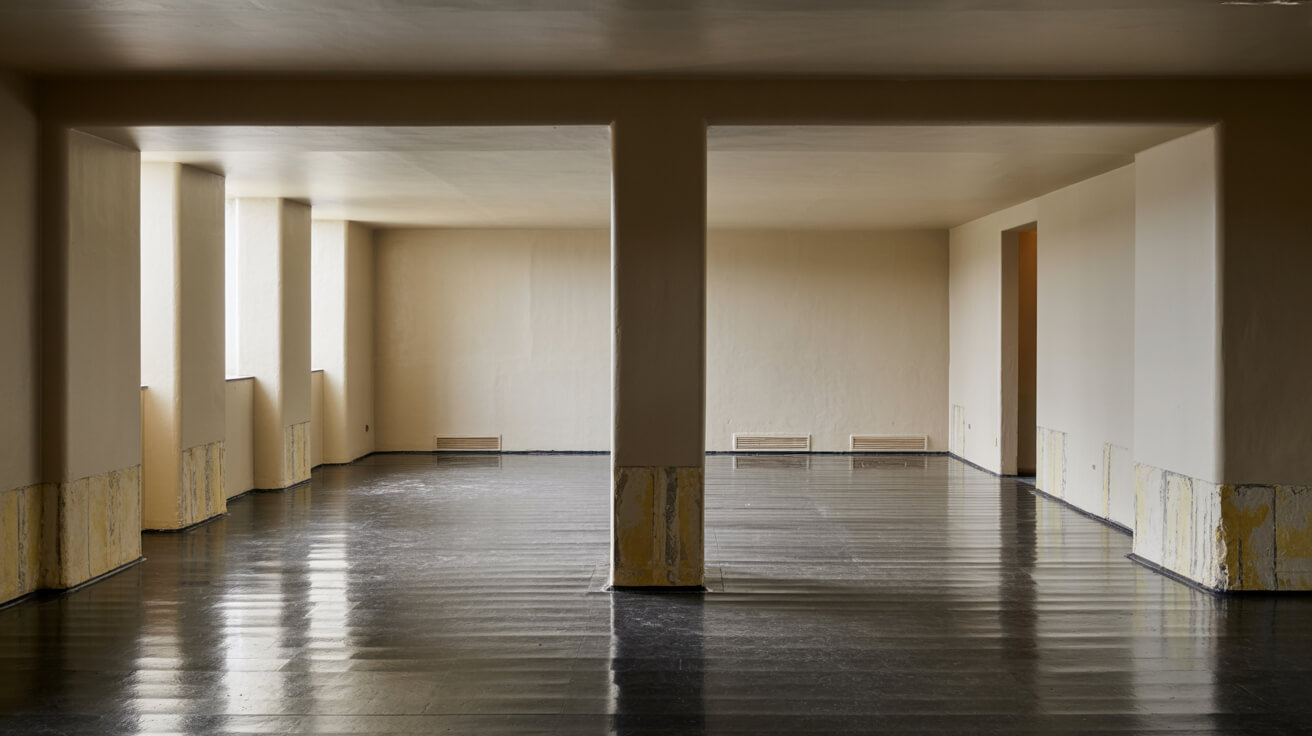
Letting rising damp persist is not a way to save money or preserve value. It’s a legal, health, and financial risk stratified across your property’s lifecycle—outcomes that accumulate silently, often outside your direct line of sight.
Three Risk Realities for Ignoring Rising Damp
1. Legal and Regulatory
- Failure to resolve persistent damp is punishable under the Homes (Fitness for Human Habitation) Act.
- Landlords and agents can face enforcement notices, remediation orders, and damage claims.
- Mortgage and insurance coverages may be withdrawn or denied in presence of unresolved or disputed damp.
2. Health
- Chronic damp supports black mould and bacteria, increasing risk of respiratory illness, especially in sensitive tenants or children.
- Legal action for health issues is increasing, with authorities requiring rapid remediation.
3. Financial
- Damp repeatedly flagged by surveyors leads to property devaluation and failed sales.
- Insurance claims for moisture-related damage (rot, mould, infestation) may be denied without evidence of prevention.
- Heritage owners face added costs for “unauthorised” repairs.
Ignoring rising damp is an investment….in sleepless nights, lost tenants, health claims, and forced resale discounts.
Risk Assessment Matrix
| Risk Area | Potential Consequence | Who’s At Risk | Typical Remediation Cost* |
|---|---|---|---|
| Legal | Court action, fines, repair order | Landlords, managing agents | £2,000–£25,000+ |
| Health | Respiratory, neurological harm | Families, tenants | Not always insurable |
| Financial | Lost sale, declining asset value | Buyers, sellers, investors | Up to 15% property value |
*Estimate by Sussex Damp Experts, variable by scope/context
Mitigating these risks is about more than ticking boxes—it’s about ensuring that your asset, your health, and your reputation all remain dependably intact.
Book Your Free Rising Damp Consultation With Sussex Damp Experts
If you’re confronted with persistent wall damage, odd smells, or repeated failed fixes, there’s no need to gamble with your property, finances, or peace of mind. Every journey to a lasting, compliant, and value-enhancing solution starts with a single action—one that defines you as an owner, manager, or professional who refuses to accept recurring risk.
Why Choose Sussex Damp Experts
- We operate with evidence-first precision—our diagnostics and repairs are always customised, compatible, and warranty-backed.
- We provide documentation that meets the strictest standards of BS6576 and PAS2035, giving you leverage with lenders, insurers, regulators, and heritage officers.
- Our solutions address the root cause, matching material, era, and regulations, so repairs last rather than repeat.
- Post-treatment, you have access to monitoring, guidance, and aftercare you can trust—for lifelong value protection.
In the end, every home tells a story. Let yours be defined by wise decisions, not endless repairs.
You’re invited to reclaim your peace of mind, protect your property, and demonstrate the high standards your role demands.
Contact Sussex Damp Experts today to arrange your free, evidence-led consultation—and be recognised as the owner, manager, or adviser who leads with certainty, not risk.
Frequently Asked Questions
What Physical and Scientific Forces Allow Rising Damp to Invade Buildings?
You may think a brick wall is an unyielding barrier, but capillary action quietly transforms every porous wall into a conduit, pulling ground moisture upward day after day. This isn’t theoretical: laboratory and field data confirm that brick, block, stone, and even cementitious mortars absorb water against gravity under the right conditions. The UK’s damp climate, intermittent sunshine, and regionally high water tables compound the effect—if your property’s defences weaken, moisture will not hesitate to seize the opportunity.
The Unseen Mechanism of Capillary Rise
Capillary action exploits interconnected pores within masonry much like a thousand microscopic straws. Water at ground level migrates upward until it reaches equilibrium with evaporation or an effective barrier. Traditional lime mortars and older bricks—prized for their breathability—are especially susceptible because their open pore structure surrenders to moisture travel. Meanwhile, houses built on clay or close to rivers contend with persistent hydrostatic pressure, taxing defences even more.
To visualise the science, picture the slow crawl of moisture: the lower 1–1.2 metres of affected walls often show tide marks, a silent rebuke to unreliable DPCs and the havoc of unchecked bridging. The real damage occurs out of sight—within plaster, between brick courses, or in concealed timber ends—making proactive assessment invaluable.
- Capillarity drives vertical water migration
- High humidity and persistent groundwater amplify the problem
- Solid walls, lime mortar, and poor evaporation guarantee progression
What’s left unaddressed can take your flooring, skirtings, and indoor air quality hostage. The physics don’t discriminate, but with awareness and targeted action, you gain the upper hand. Before your asset absorbs any more risk, consider a scientific evaluation from Sussex Damp Experts—where every diagnosis starts with building science, not guesswork.
Why Do Damp Proof Courses (DPCs) Fail—And How Do You Fix the Hidden Gaps?
Even a perfect DPC—the invisible shield inside most UK buildings—has a weakness: time and circumstance. Slate, bitumen, plastic, or modern chemical treatments can all break down, and it rarely happens on schedule. More often, the real “failure” is from outside intervention or bridging—landscaping, replastering, new floor levels, or misplaced insulation, each providing moisture an unintended shortcut.
Failure by Omission, Bridging, and Modern Missteps
The DPC was only ever as good as its continuity—one gap, compression, or bridge, and capillary action finds its detour. Historic builds are notorious for missing or broken slate; plastic and bitumen corrode or collapse under ground movement; chemical DPCs flounder if injected into saturated or dense masonry. External changes—patios, render, soil—obscure DPC lines and promote bypass.
| DPC Type | Typical Weakness | Common Triggers |
|---|---|---|
| Slate (pre-1920) | Brittle, settles and cracks | Age, ground movement, repairs |
| Bitumen/Plastic | UV, bridging, compression | Landscaping, raised internal floors |
| Chemical Inject | Gapping, bridging, wear | Poor instal, saturated wall |
Most DPC failures stem from secondary works, not age. The only remedy is a forensic examination—mapping DPC height, continuity, surrounding ground, and internal finishes—before any repair. With compliance (BS6576) and compatibility at stake for every property and heritage scenario, Sussex Damp Experts approaches DPC checks as a zero-assumption science, not a box-tick.
“A certificate in your files doesn’t keep moisture out—context and continuity do.”
How Can You Reliably Identify the Early Signs of Rising Damp—And What Should You Do?
Rising damp rarely announces itself with drama; instead, it whispers warnings through patterns most miss. A tide mark, powdery white crust, or local floor decay—if you’re seeing or feeling these, your building is telling you action won’t wait.
The Pattern Recognition Your Investment Depends On
- Tide lines: up to chest height indicate persistent vertical moisture, almost always signalling rising damp unless local flooding is a known culprit.
- Efflorescence: , or salt crusts, mark the border where evaporation meets infiltration. These are ground salts, not surface cleaning residue.
- Failing paint or plaster: at skirting or floor—especially after repeated repairs—clarifies internal sources, not cosmetic blips.
- Distinct musty odour: after cleaning flags chronic, not seasonal, challenges.
- Rotting or softened skirting/floor: is a downstream sign, and often a compliance warning for landlords and asset managers.
The critical error lies in mistaking condensation, leaks, or persistent moisture for isolated incidents. If low-level damage repeats, the problem is systemic. Our approach triangulates visible cues with metre readings, salt checks, and a mapped sequence of prior repairs. Only with this methodical, BS6576-informed workflow can you preempt both valuation decline and spiralling costs.
“If the warning comes in low-level signals, listening early keeps your options wide—and your repair bills narrow.”
What Building, Site, and Environmental Factors Make Your Property Vulnerable to Rising Damp?
No two structures face the same challenges, but several underlying factors quietly amplify your risk. Many owners, managers, and landlords overlook how environmental context and past building decisions pre-determine vulnerability.
Site Factors and Configuration Risks
- Heritage build or solid wall scenarios: increase susceptibility, especially where lime or early cements meet unique environmental stressors.
- Ground level adjustment: Landscaping, patios, and external render too high create a “by-pass.” Moisture exploits these routes every time.
- Rainwater management: Blocked gullies, poor grading, or eliminated air bricks raise the odds.
- Basement/cellar influence: Below-ground rooms draw in groundwater as a matter of course and rely heavily on sound DPC barriers.
- Neighbouring works: Adjacent building projects, new driveways, or poorly considered fencing can redirect water toward your home.
In each scenario, context trumps intention—the failure to validate surroundings, wall construction, and ground conditions ensures even the priciest damp remedies may lose. The trick is getting the diagnosis, vulnerability mapping, and risk scenario right on the first attempt. Sussex Damp Experts provides vulnerability audits tailored to property type, age, and site circumstances—transforming surprises into planned, compliant stewardship.
“Environmental indifference is the most expensive strategy you can choose—planned defence is the mark of a responsible owner.”
How Do Accredited Professionals Actually Diagnose and Report Rising Damp?
Your lender, insurer, or council cares less about opinions and more about actionable, evidence-backed diagnosis. Every step in true rising damp assessment is designed to eliminate ambiguity and defeat shortcut repairs.
Methodical Precision, Documentation, and Regulatory Alignment
- Structured visual mapping: Survey every internal and external surface, DPC continuity, bridging, and finish interfaces.
- Moisture metre grid: Record readings at multiple elevations; damp “profiling” uncovers hidden concentrations.
- Salt testing: Nitrate and chloride presence flag rising damp, sulphate for condensation.
- Site audit: Track renovations, landscaping, drainage from blueprint to “today,” exposing every detour.
- Formal reporting (BS6576): Provide diagrams, photos, and actionable risk narratives. Reports are insurer, council, and lender ready.
| Step | Purpose | Compliance Impact |
|---|---|---|
| Visual mapping | Context, not just symptoms | Lender, heritage req. |
| Profiling | Scientific proof, severity | Warranty, JCT, survey |
| Salt test | Confirms cause | Insurance, legal |
| Documentation | Future-proofs asset | Sale, transfer |
Partial checks, ambiguous conclusions, or generic forms always cost you more in the end—repairs fail, coverage gaps widen. Work with those who value your compliance as much as your outcome.
“The difference between a quote and a compliant survey is one that stands up equally in a boardroom, a courtroom, or an auction room.”
Why Do Treatments, Chemical Barriers, and Quick Fixes Frequently Disappoint—And What Actually Lasts?
It’s easy to waste money on action that only hides the message. Most quick “fixes” break down because they circumvent real cause, are ill-matched to the substrate, or ignore external context—risking warranty, compliance, and value.
Unmasking the Patterns of Failure
- Cosmetic repair: Paint, plaster, or tanking may cover up the issue but never prevent recurrence.
- Incomplete or incorrect DPC: Partial installation, poor saturation, or “bridging” gaps guarantee fast failure.
- Material mismatch: Modern, rigid repairs on heritage or lime-based structures entrap more water, often accelerating decay.
- Unchecked environment: Ignoring high water tables, landscaping, or internal insulation traps can sabotage any interior repair.
Smart strategies always connect drains, DPC continuity, compatible materials, and monitoring—proving efficacy and warranty before you sign off. Sussex Damp Experts engineers every solution end-to-end, with context, compliance, and long-term stewardship built in. No more cycles of “fix, fail, repeat.” Instead, own a result that becomes your property’s best asset for sale, audit, or letting.
“Durable damp proofing is more than a fix—it’s an attestation that your property’s best days are ahead.”
What Are the Legal, Health, and Financial Consequences If Rising Damp Remains Unchecked?
Ignoring rising damp is rarely an act of willful risk-taking; it often stems from hesitation or uncertainty. Unfortunately, legal, financial, and health systems rarely accept indecision as a defence.
Real Risks That Erode Value, Safety, and Compliance
- Legal/Compliance: Under HHSRS and the Homes Act, landlords can face statutory notices, forced repairs, and loss of letting privileges. Insurers put damp exclusions into renewal clauses, and councils target persistent infractions.
- Health/Well-being: Chronic damp propagates allergic reactions, increases respiratory illness rates, and brings the spectre of black mould into tenant and asset conversations.
- Financial: Sale blocks, mortgage refusals, and downward valuation are certain companions to unmitigated damp—especially where survey responses aren’t evidence-backed.
| Impact Zone | Outcome for Owner | Resolution Path |
|---|---|---|
| Legal | Statute action | Formal survey, swift remedy |
| Health | Tenant claims | Warranty-proof solution |
| Financial | Asset decline | Audit-worthy compliance |
If you’re reading this with a concern for your reputation, asset, or long-term income—now is the time to defend that status. Work with proven damp proofing and compliance partners who anchor your asset in resilience, not reactivity.
“Ownership isn’t just about bricks—it’s your signal of responsible, reputation-building leadership in an environment that remembers every oversight.”

