
 By
By  February 14, 2024


How Does Radon Gas Threaten Homes and Health?
Radon gas represents a tangible health and property threat across the UK. As an invisible, radioactive contaminant, it enters buildings through the ground, accumulating in living spaces without any warning signs. This risk is present whether your property is modern or historic, city apartment or country home. Regional variations and unpredictable geology mean no building is exempt, driving an imperative for every owner, manager, or resident to understand their property’s unique vulnerability.
Radon as an Unseen Occupant
Radon is generated by natural uranium decay in soils and rocks, with the greatest concern for properties built on granite or certain sedimentary beds—areas including Cornwall, Derbyshire, and large parts of Wales. However, shifts in ventilation, retrofits, or damp proofing can just as easily create new zones of high concentration in other regions.
- Average UK home: 20 Bq/m³ (becquerels per cubic metre).
- Action threshold: 200 Bq/m³—yet health effects begin well below.
- World Health Organisation designates radon as a Group 1 carcinogen; non-smoking residents are most at risk.
Where Your Property Sits in the Statistics
| Property type | Typical radon risk | Action required |
|---|---|---|
| Ground floor flat | Moderate | Initial test + ventilation review |
| Detached house | Variable – check location | Area map + full ground test |
| Basement or below-ground | High | Continuous monitoring advised |
| Historic/listed | High (due to lack of barriers) | Breathable, conservation-friendly interventions |
Key takeaway:
If you have never measured radon in your property, you are operating on an assumption—regardless of your postcode.
No dataset protects your family—only action does.
Health and Long-Term Impacts
Long-term radon exposure is the major cause of lung cancer among non-smokers in the UK, with Public Health England estimating over 1,100 deaths per year. Even below the regulatory action level, cumulative exposure over time erodes peace of mind and property value, especially for families and those planning future sales.
You have a choice: remain in ignorance, or gain certainty—with minimal effort and cost, especially when compared to eventual health implications or legal disputes.
What Does Waiting on Radon Really Cost?
Legal Rights Checker
- 1 Who
- 2 Situation
- 3 Timeline
- 4 Results
Need professional evidence for a legal claim? Our survey reports are accepted by courts and solicitors.
Book a Survey for Legal Evidence →Reactive approaches to radon concern don’t just place your health at unnecessary risk; they create layers of avoidable financial and legal exposure. Most urgent situations emerge not from sudden increases in radon, but from years of benign neglect—until forced action is required due to a mortgage, letting dispute, or failed compliance audit.
Costs Multiply When You’re Unprepared
- Delayed sales: Mortgage lenders routinely demand current radon documentation for flagged areas or properties with underground rooms.
- Insurance exclusion: Some policies now exclude claims where radon was not disclosed or properly remediated.
- Tenant escalation: Renters in high-risk areas are increasingly aware and may seek council intervention over untreated radon.
Neglect may feel cheap now, but it sells at auction later—for much less.
Why Regulation Has Teeth
Landlords, agents, and property managers are legally required to maintain buildings free from health hazards—including radon. The Housing Health & Safety Rating System (HHSRS) and the newer Homes (Fitness for Human Habitation) Act place the compliance burden squarely on ownership, covering both social and private portfolios.
Regulatory snapshot:
- HHSRS classifies radon as a “serious hazard.” Failure to remediate can trigger enforcement action, legal redress and fines.
- The UK action level (200 Bq/m³) is enforceable—documentation is demanded by authorities and buyers alike.
- For listed or heritage assets, you face a dual burden: health compliance and conservation requirements.
The Operational Advantage of Proactivity
Engaging with certified experts early secures both your legal position and property marketability. Early testing and, where needed, mitigation, allow for cost-controlled intervention at your timeline—not the market’s.
What Early Signs Should Trigger Radon Checks?
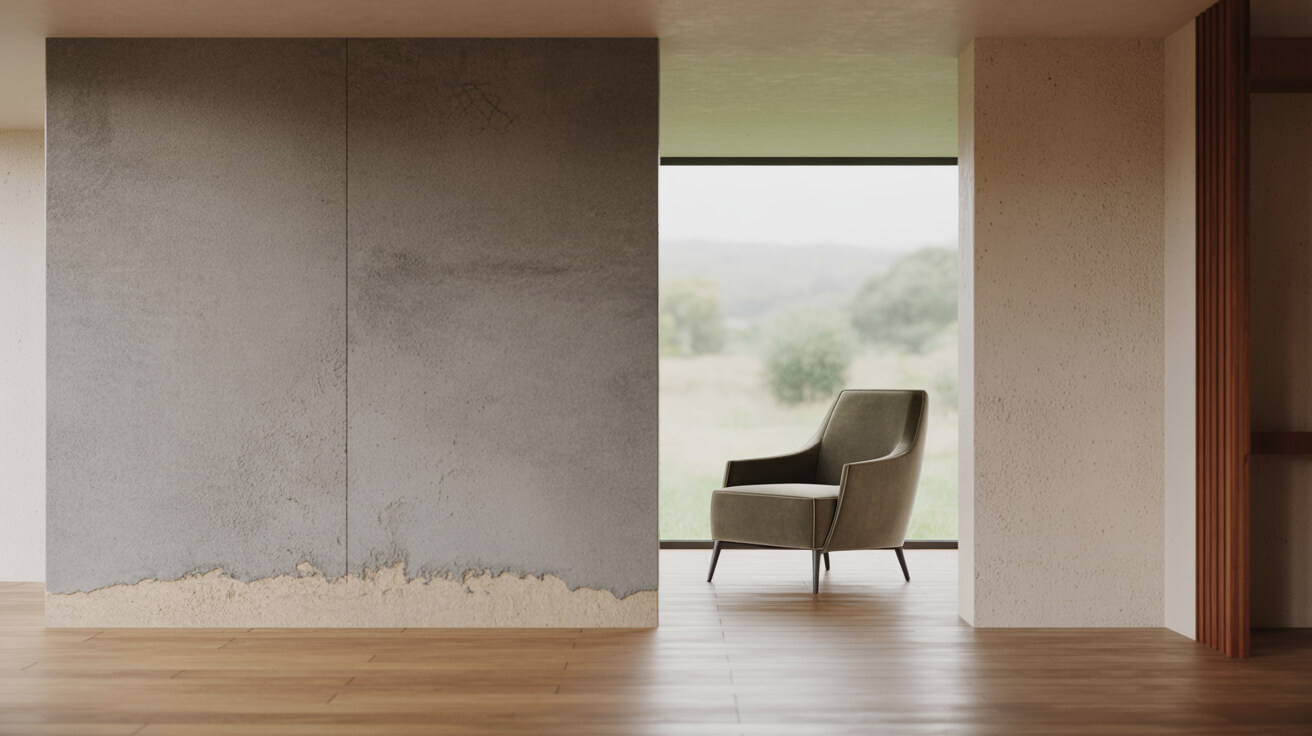
Radon infiltration is silent, lacking the dramatic cues of a drought or flood. Still, attentive home and asset managers can spot patterns that merit swift assessment—often overlapping with damp or condensation problems. Recognising these triggers helps prevent emergencies and preserves long-term asset health.
Subtle Signals in Everyday Life
- Persistent chest tightness or cough among residents without obvious environmental triggers.
- Unusual or persistent damp patches, especially in areas with no clear path for water ingress.
- Tenants or colleagues reporting “heavier” or “stale” air in ground floor or basement areas.
- Damp proofing or insulation that inadvertently reduces air flow, altering pressure and causing unseen accumulation.
- Recurring “failed” property surveys or high insurance premiums for undiagnosed issues.
Proof block:
Seemingly innocuous issues like condensation, minor headaches or reduced indoor air quality may indicate deeper radon and moisture risks—especially after building changes, sealing, or renovations.
The Role of Sussex Damp Experts in Early Detection
Our team is configured to flag risks the moment subtle patterns emerge—testing is non-invasive, with fast reporting.
Signal for action:
“Pattern recognition is your best friend—let us create certainty where there is doubt.”
When and Where Is Radon Testing Essential?

Radon risk is dynamic, not static. While region and property type set your baseline vulnerability, events like extension builds, new tenants, or groundworks can generate overnight exposure. Knowing when and where to test allows you to protect both value and occupants, closing compliance gaps before others discover them.
Critical Testing Intervals
Testing is vital:
- Before buying, selling, or refinancing a property.
- When new construction or retrofitting affects airflow, floor, or substrate conditions.
- After major weather events, flooding, or earthworks in the neighbourhood.
| Trigger event | Testing required |
|---|---|
| New purchase/sale | Yes, always recommended |
| Change in tenancy | Strongly advised |
| Groundworks/renovations | Always, especially for basements |
| After major weather event | Proactive testing |
Where to Place Detectors
- Instal kits at ground and basement levels for most accurate readings.
- Always position away from direct draught sources or windows, but not in cupboards or sealed spaces.
- For heritage or complex sites, expert placement maximises both regulatory acceptance and risk detection.
Testing at the right time and place isn’t overkill—it’s your best practice.
Answer Block
Property risks change—routine and event-based radon testing is core to responsible management and compliance. Only up-to-date documentation stands up for lenders or authorities.
What Makes Professional Radon Testing and Diagnosis Essential?

DIY radon test kits offer only partial answers to a complex question. Professional testing transforms uncertainty into certainty—with reports accepted by insurers, buyers, and legal authorities. This process is inherently detail-oriented, with protocols to prevent errors and supply you with defensible, actionable insight.
What a Professional Survey Actually Delivers
- A specialist sets up detectors precisely where your specific risk lies.
- Testing duration covers the real lived exposure—two weeks at a minimum, with optional long-term or advanced analytics.
- Results arrive with actionable findings: do nothing, review annually, or proceed to mitigation—no guesswork.
- Reports are formatted for all stakeholders: buyers, landlords, insurers, compliance authorities.
| DIY Kit | Professional Survey |
|---|---|
| Limited areas tested | Full property or portfolio mapped |
| No compliance proof | Audit-ready, legal documentation |
| Inaccurate readings | Third-party verified, traceable |
| No clear advice | Next-steps and solution path |
Short Answer Block:
Professional radon testing means audit-ready documentation, trusted by all stakeholders, and immediate clarity on how to proceed.
What Protection and Mitigation Solutions Offer Real Assurance?

Mitigation demands specificity and preservation: lifespan, suitability, and property type matter. Choosing the right system means understanding property constraints—heritage, commercial, or multi-unit—all with minimal disruption and maximum value retention.
Professional-Grade Radon Solutions
- Passive membrane barriers: Ideal for new builds, extensions, or major refurbishments—fully traced in project documentation.
- Active ventilation: Positive Input Ventilation (PIV) systems and sub-floor solutions, often the only viable approach for heritage or constrained spaces.
- Hybrid designs: For complex commercial or mixed-use, combining membrane, sump, and ventilation as appropriate for occupancy type.
Table: Radon Solution Suitability by Property
| Solution | Suitable for | Compliance Level | Disruption | Warranty |
|---|---|---|---|---|
| Membrane barrier | New build, basement | High, with full traceability | Medium | 10+ years |
| PIV/sub-floor | Heritage, let, retail | Conservation-aligned | Low | 5–10 years |
| Hybrid system | Commercial/portfolio | Maximum, future-proofed | Variable | Up to 20y |
A single yes–no isn’t enough—only custom solutions control risk across value, conservation, and compliance.
Assurance Through Expert Installation
Our certification and aftercare guarantee installation performance and legal compliance for as long as you own or manage your property.
Heritage or portfolio property? Our specialists work with conservation and operational teams to prevent disruption—ensuring value protected and restrictions honoured from day one.
Do Professional Services Guarantee Long-Term Safety and Regulatory Value?

You may resolve today’s risk with a DIY kit or one-off fix, but long-term compliance and peace of mind come from planned, expert aftercare. Think beyond the next tenant or annual audit to asset value five, ten, or twenty years out.
Ongoing Risk Management Components
- Annual review and re-certification for at-risk buildings or rental portfolios.
- Total documentation—ownership easily transferred during property sales, acquisitions, or letting renewals.
- Clear escalation protocols for when regulations, standards, or local bylaws evolve.
- Linkage to insurers and legal teams—prevents policy lapses or sanctions down the line.
Checklist:
- Annual radon check scheduled.
- Certification document up to date.
- Upgrades tracked and logged.
- All tenant handover files complete.
Ownership means stewardship—our aftercare programmes make you the standard bearer.
Who Gains the Most From Professional Aftercare?
- Landlords, institutional investors, and housing associations facing evolving compliance threat.
- Private owners intent on defending asset value across generations.
- Heritage asset managers balancing future-proofing with legal and conservation standards.
Secure Your Radon Confidence With Sussex Damp Experts
Radon risk management isn’t just about ticking the compliance box—it’s about achieving confidence in your property’s safety, market readiness, and legal standing. Sussex Damp Experts offers practical assessment, tailored solutions, and ongoing assurance—fit for any property type, at any lifecycle stage.
- Access certified assessment, tailored to your specific risk and property profile.
- Heritage, letting, commercial, and private portfolios accommodated, from risk consultation to ready-to-file documentation.
- Partner with specialists who understand both compliance and conservation imperatives.
- Receive full documentation, warranty, and ongoing support—no matter what new risk, regulator, or challenge emerges.
Radon risk doesn’t resolve itself—choose stewardship, certainty, and security that stand the test of time.
Your position as a diligent homeowner, proactive landlord, or portfolio manager deserves every assurance. Partner with Sussex Damp Experts, and build more than a property—you build peace of mind, legal certainty, and the freedom to focus on what’s next.
Frequently Asked Questions
Why does radon gas matter, and how might it undermine your property’s value and safety without warning?
Radon gas is the silent variable few property owners factor into their plans—yet it can erode your confidence in your home’s safety without a hint, much like rising damps silent cost how hidden decay risks your home and health. This radioactive gas seeps up from beneath your foundation, collecting in still air pockets and jeopardising what you thought was your sanctuary. In high radon areas, or any property with basements, subfloors, or ageing damp-proof membranes, the threat is not hypothetical: prolonged exposure is a leading cause of lung cancer for non-smokers, and UK Health Security Agency mapping highlights broad swathes of the country as at “above average” risk.
Even if your address isn’t flagged today, a forgotten vent, a new extension, or an upgraded window system can shift the radon baseline overnight. The financial and legal implications are clear: mortgage lenders, councils, and insurers routinely require radon testing and may freeze transactions or claims if mitigation is lacking. Your diligence protects not just the structure, but the lives and finances entwined with it.
Radon risk is invisible. But your reputation, tenant safety, and property value rest on the certainty you’ve addressed it. Sussex Damp Experts translates technical assessment into actionable upgrades, compliance validation, and asset preservation. When silence could cost you, acting places you in the camp of owners who earn trust and certainty.
Radon Risk Table (UK Context)
| Zone | Action Level | Re-test Interval | Mortgage/Insurer Constraint |
|---|---|---|---|
| High risk | 200 Bq/m³ | 2–3 years | Mandatory report/mitigation |
| Moderate | 100–200 Bq/m³ | 3–5 years | Often triggers lender audit |
| Low risk | <100 Bq/m³ | 4–6 years | Pre-sale checks advised |
How can you recognise radon problems before they result in health or financial consequences?
Radon issues provide no alarms. The hazard accumulates beneath your awareness; even a new build or a recent damp fix can inadvertently worsen conditions. While physical symptoms—cough, chest tightness, unexplained fatigue—can hint at chronic exposure, they only emerge after long-term risk. The most common “early warning” is actually an unwelcome surveyor’s note or, worse, a failed property transaction.
Key operational flags include:
- Recurring condensation or unexplained damp patches, especially at ground and sub-ground level.
- Air in rooms that persistently feels “heavy,” or fails to clear with ventilation.
- Previous installations of non-breathable membranes or unsanctioned fixes that might inadvertently block safe ground gas dispersal.
- Regulatory letters, tenant complaints, or insurance queries about “ground gases” and “ventilation adequacy.”
Absolute certainty only comes from measurement—a strategic placement of accredited radon detectors and time-calibrated exposure logging. Sussex Damp Experts closes these gaps with sector-certified audits, root-cause analysis, and future-proof recommendations that anchor your asset’s safety on data, not assumptions.
What are the best practices for testing and verifying radon in diverse UK property types?
Every property scenario demands a different test protocol; what satisfies a homeowner in Brighton does not suffice for a landlord, commercial operator, or heritage custodian. DIY kits provide a baseline, but lack chain of custody, audit-readiness, or robust placement logic. Professional-grade, multi-point testing with extended exposure windows is now the gold standard, especially for landlords (HHSRS), mortgage applicants, and those with subfloor, basement, or high-occupancy risk.
Breakdown of best practices:
- Homeowner: Dual-point, government-recommended detectors, placed for 2–3 weeks, ideally during heating season.
- Letting/Managing Agent: Multi-unit cycle, staggered to capture occupancy variation, paired with a compliance audit trail.
- Heritage/Listed: Collaboration with conservation bodies, non-invasive placement, and vapour-permeable systems to avoid damage.
- Commercial: Continuous logging and electronic record-keeping; integration with building management systems.
Once measured, results should not just be stored—they must drive next actions. Post-test, a compliance-ready certificate and optional mitigation plan ensure your documentation holds up to scrutiny. Sussex Damp Experts ensures your process traverses all these paths, with tailored methodology per asset type.
What steps should you take if radon is confirmed in your property—and which solutions actually prevent recurrence?
A positive radon result isn’t just a warning—it’s your chance to secure the property’s future. Ventilation upgrades, active extraction, and bespoke membrane systems all offer robust risk reduction, but the right fit is utterly dependent on your property’s structure, age, legacy repairs, and usage.
Comparative Table: Solution Effectiveness & Context
| Solution | Best For | Maintenance Level | Heritage Compatibility |
|---|---|---|---|
| Membrane Barrier | New builds, refurbs | Low – visual check | Moderate (vapour-permeable variant needed) |
| Positive Input Ventilation (PIV) | Tenancies, basement flats | Medium – fan checks | High |
| Active Extraction (fan+sub-slab) | Commercial, multi-unit | Medium – sensor check | Variable |
| Hybrid with Monitoring | Heritage, high value | High – data logging | Highest |
Beyond system selection, sustained performance demands annual re-tests, documentation renewal, and tenant/buyer evidence. Your choices do not just close regulatory gaps—they make your asset more attractive to buyers, lenders, and tenants.
Proactive risk management communicates status and reliability. Sussex Damp Experts integrates installation, annual verification, and proof documentation into a seamless, value-preserving service.
Why is certified aftercare and monitoring the cornerstone of long-term radon safety and compliance?
Radon mitigation is not a one-off spend; regulatory and property demands change, and new construction nearby can subtly shift underground airflows. Without ongoing monitoring, even the best system risks obsolescence and compliance failure when you least expect it.
Certified aftercare delivers:
- Automatic compliance renewal and template-driven documentation for councils, lenders, and insurers.
- Scheduled system inspections to detect wear, fan failures, or blockages before they impact safety.
- Direct linkage to tenant management or asset tracking software, ideal for portfolios.
- Real-time escalation should post-instal readings climb or standards evolve.
A property with continuous radon oversight protects its primary value: trust. Whether you own a single family home or a network of mixed-use spaces, consistent aftercare from a proven service provider transforms regulatory hassle into operational peace and asset liquidity.
A lead indicator of high-value property is not location—it’s continuous, documented care.
How does working with Sussex Damp Experts elevate your property’s risk profile and long-term value?
When your approach is defined by measurable stewardship, not box-ticking, your asset stands out—both to occupants and stakeholders. Sussex Damp Experts combines forensic diagnostics, system design expertise, and audit-grade aftercare to transform radon risk into an operational asset.
For home owners, integrators, and portfolio managers alike, that means:
- Reduced transaction delays, lending denials, and regulatory stand-offs.
- Occupants, buyers, and tenants recognising your commitment to safety.
- Legacy or heritage spaces retaining their full market and community worth without compromise.
- Your documentation stack ready for sale, letting, refinancing, or audit—never left behind by technical drift.
Most providers offer checklist compliance; only a few build systems designed to withstand shifts in climate, construction, or law. Engagement is not maintenance alone—it’s reputation, liquidity, and assured transfer. You are not merely protected against penalty; you’re recognised as part of the new standard for property stewardship.
Sussex Damp Experts provides the signal, not the noise, in damp and radon risk—earning trust, value, and the confidence that your property, company, or investment leaves nothing to chance.

